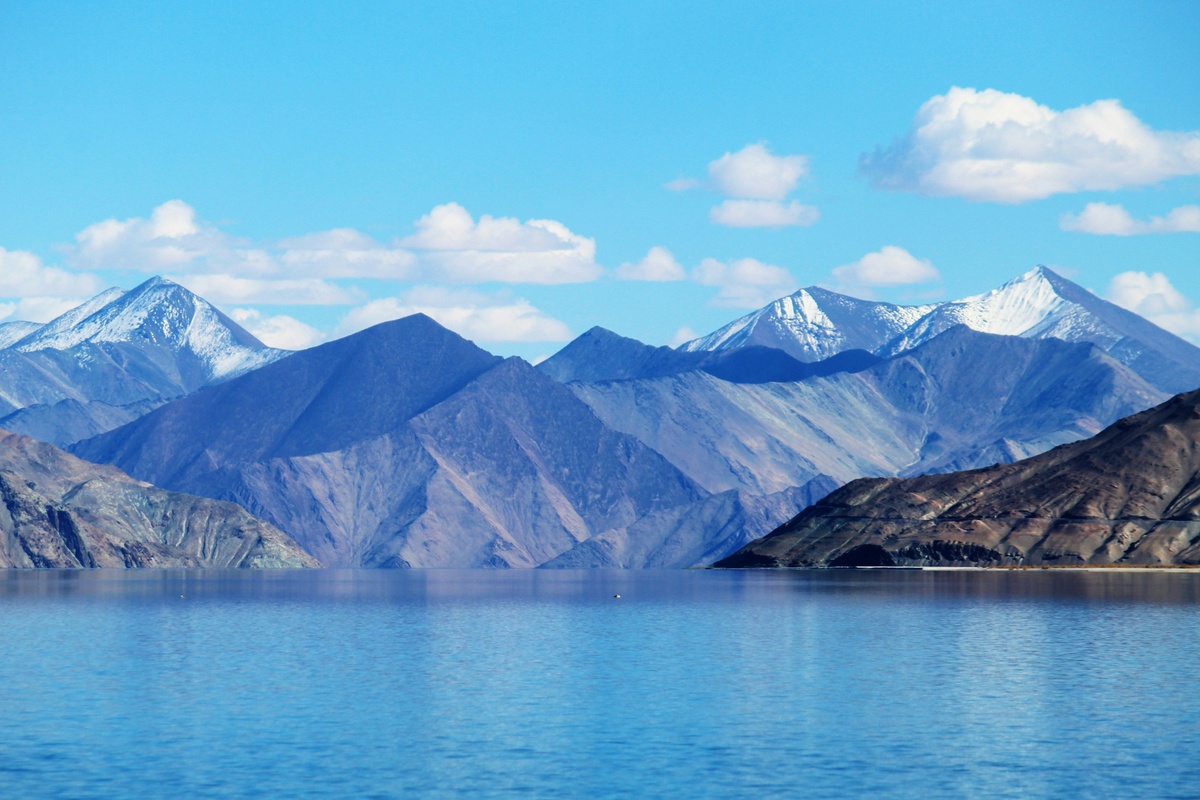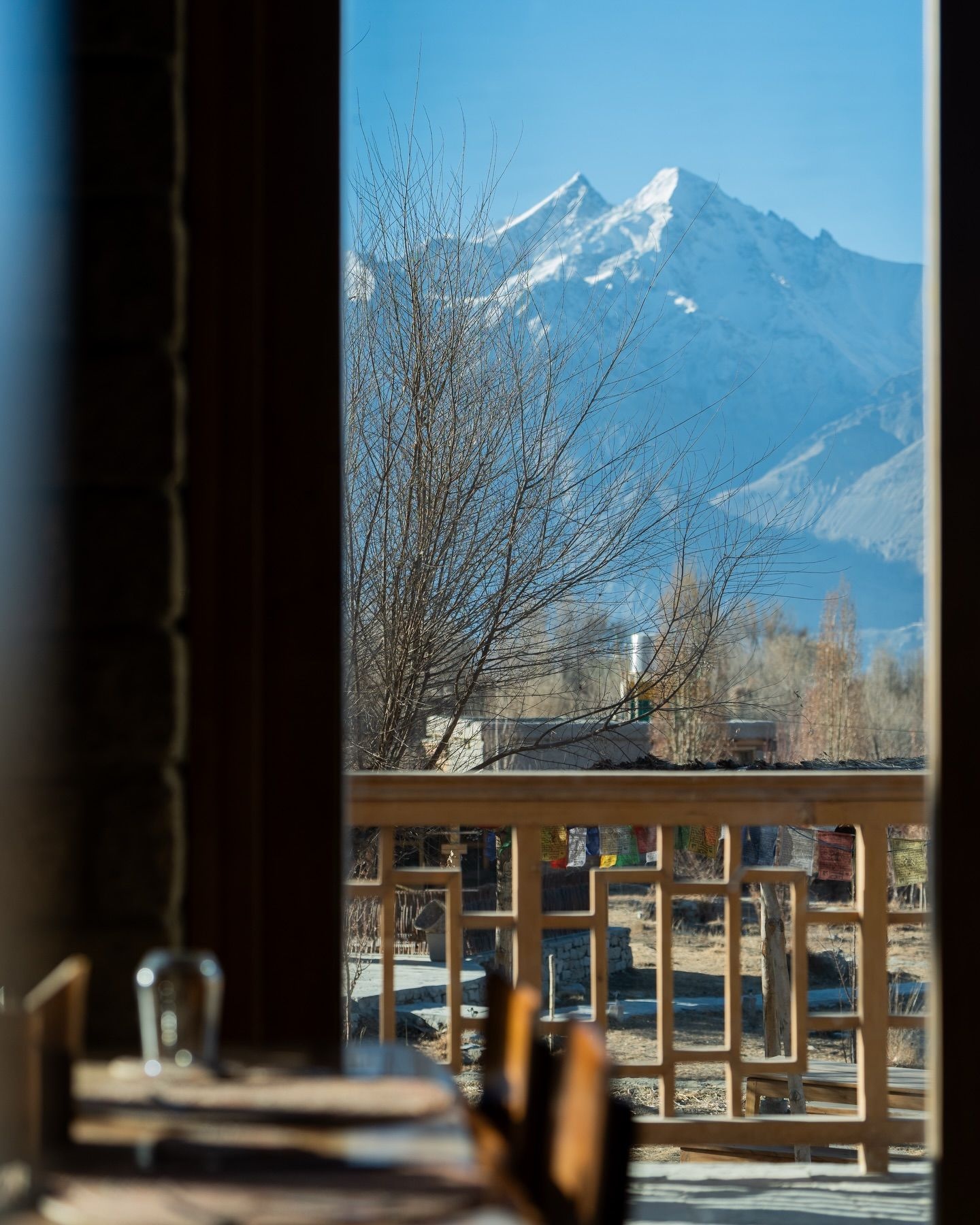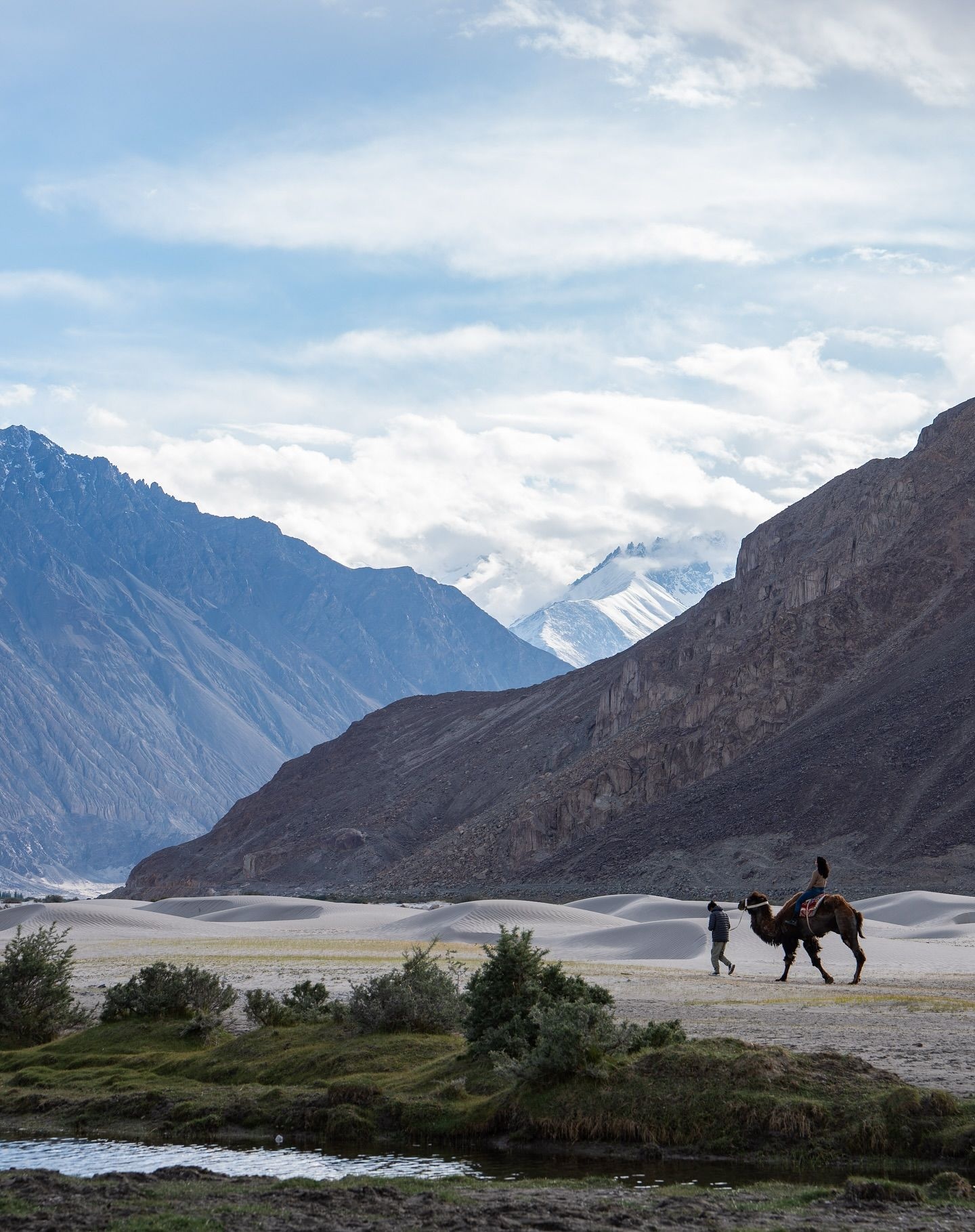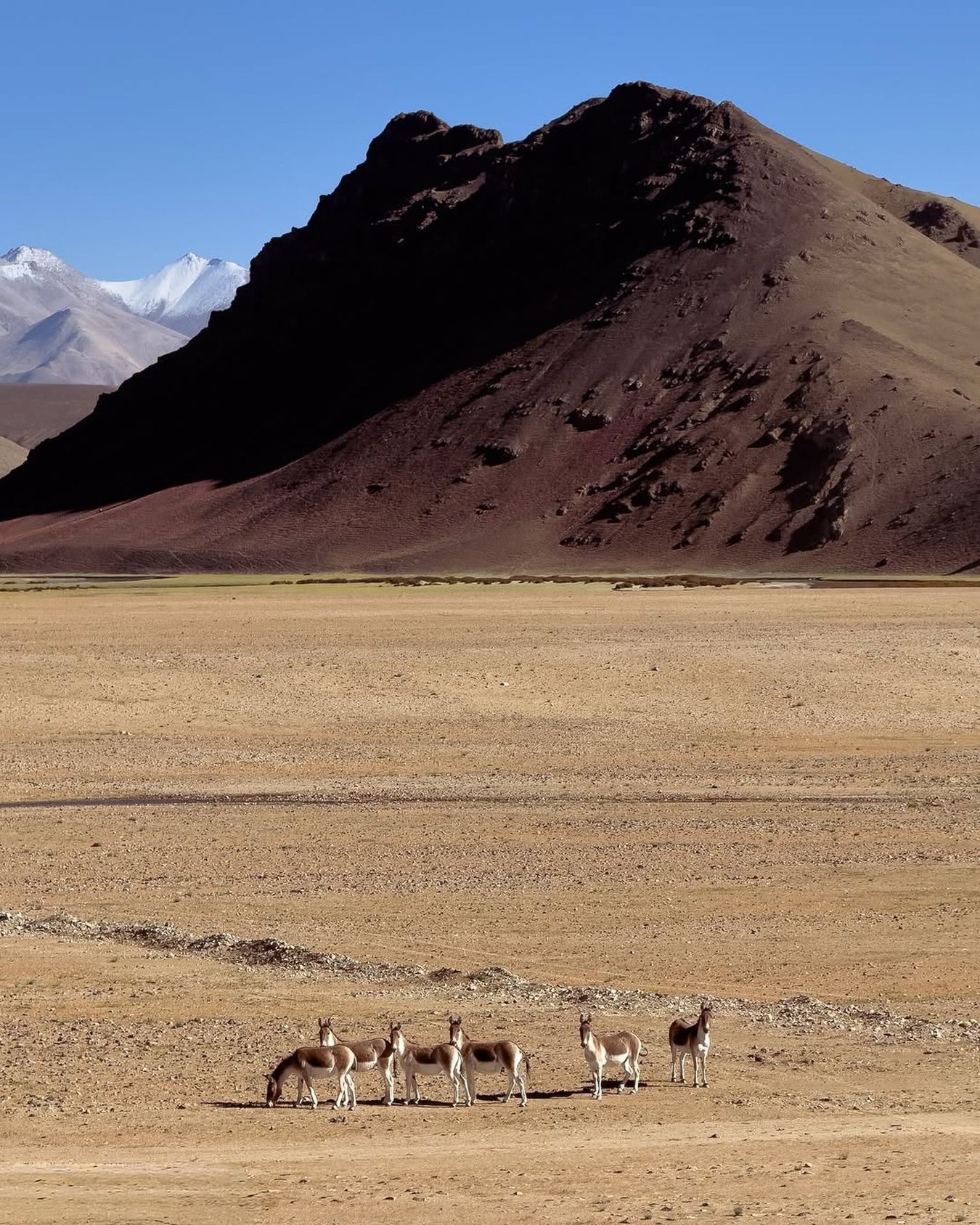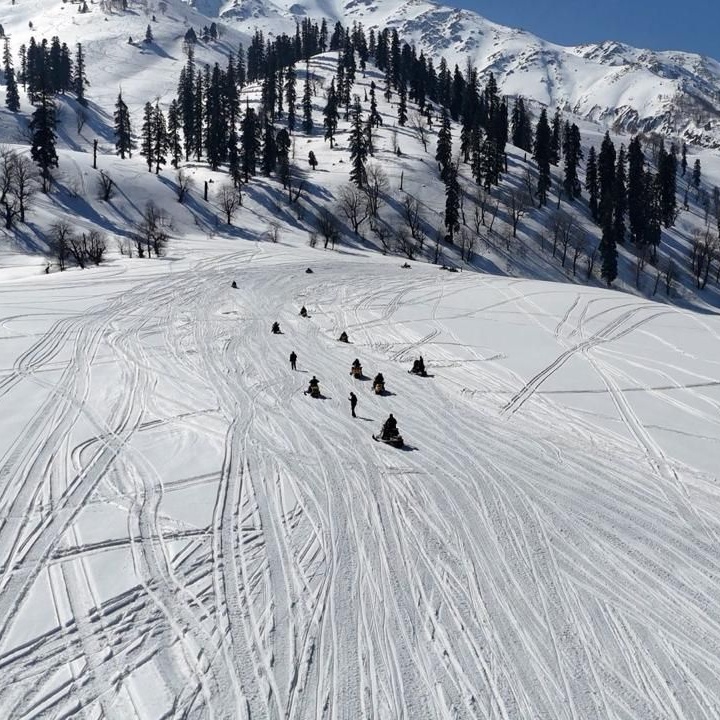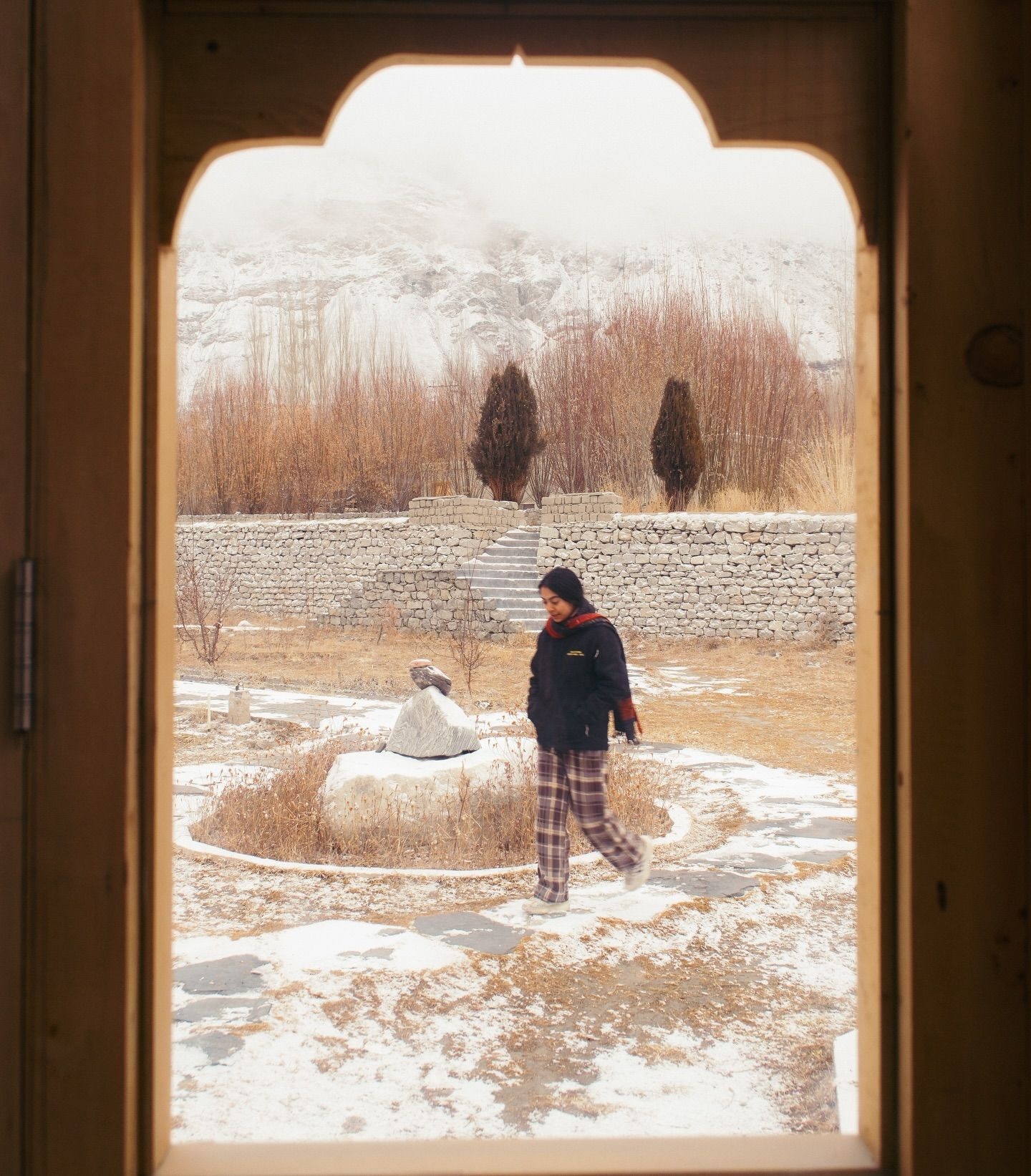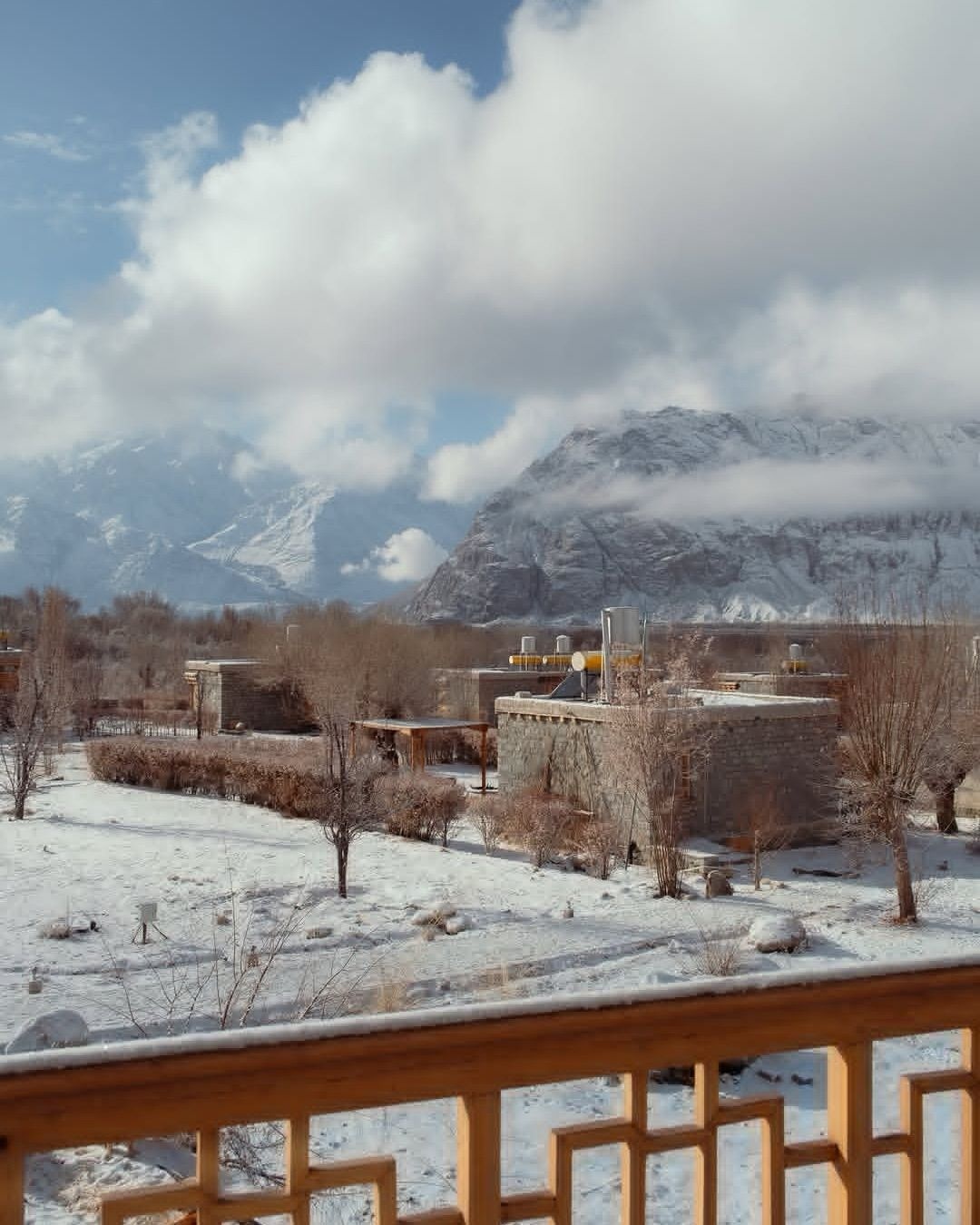




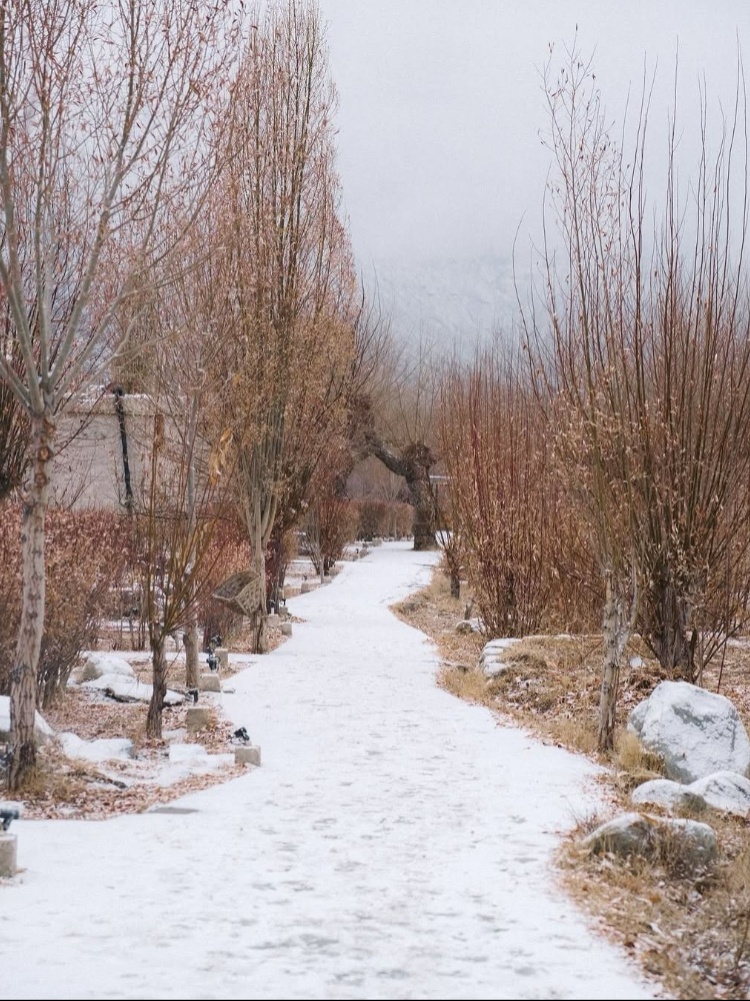

I stand an hour away from the Siachen glacier, with China and Pakistan just around the corner. I’m looking up a looming cliff dripping in light that seems to have set off the ochre stones in a golden blaze. There are snowcapped peaks behind me and I’m toe-deep in a sand dune. The surreality only gets more bizarre as I stare at a petroglyph dating back centuries of a hunt so distinct I can hear hooves and shouts in the distance. I am in Ladakh. My short travel through its lands is taking me through the original Silk Route, and I see a Ladakh very few have access to. Until now.
Last autumn, in 2025, Lchang Nang - The House of Trees started curating a three-night journey that revives the rhythm of the Silk Route. The project is the vision of owner Rigzin Wangtak Kalon, brought to life with research and curation by Shaurya Shukla’s The HeartCraft Project, whose work in sustainable hospitality has shaped some of the region’s most thoughtful experiences. It is a route that avoids Ladakh’s tourist checklist. There’s no cafe-hopping. No monastery visits. No “top 10 viewpoints”. Instead, it moves through villages where caravans once paused, where the past is not performance but memory, some of it still alive and part of daily life.
At the heart of this journey is Acho Rigzin Wangdus, part guide, part historian, and complete storyteller. A lifelong resident of Nubra, he seems to know everyone along the trail: the monks who brew butter tea at dawn, the farmers beating back aggressively unruly seabuckthorn bushes from the roadside, the children who wave from rooftops. He is one of Ladakh’s foremost authorities on its terrain, culture and lore, and “guide” feels far too small a word. There’s a moment on the road from Sumur to Panamik when phone signals drop out completely. One minute WhatsApp loads. The next, it doesn’t. And it’s Wangdus’s voice that keeps going.
I can see the shutters of the region’s first ‘shop’. I can hear the rush of water in the river nearby as it freezes and melts. I’m seeing the exact horizon and scene that a Mongolian saw 500 years ago. I’m as hungry as him, and I’m about to consume the exact same bread, churned butter, and beer as him in 15 minutes. It feels unreal, except that’s very, very IRL. It’s not been recommended on an any reel I’ve saved, probably because it’s impossible to capture the stories that pour out prompted only by a change in the breeze or a placement of the stars: “Did you know this shift in breeze was a sign for the caravans to take a break? And that pattern of stars you’re seeing up there? That would be the map the caravans followed, knowing civilisation was now just a sunrise away.”