



Everyone's talking about16 Dec 20256 MIN

Mahjong’s most loyal audience? Ladies who lunch

Where do you find affluent women of a certain age with disposable income in their free afternoons? Behind a pile of tiles, of course

Image

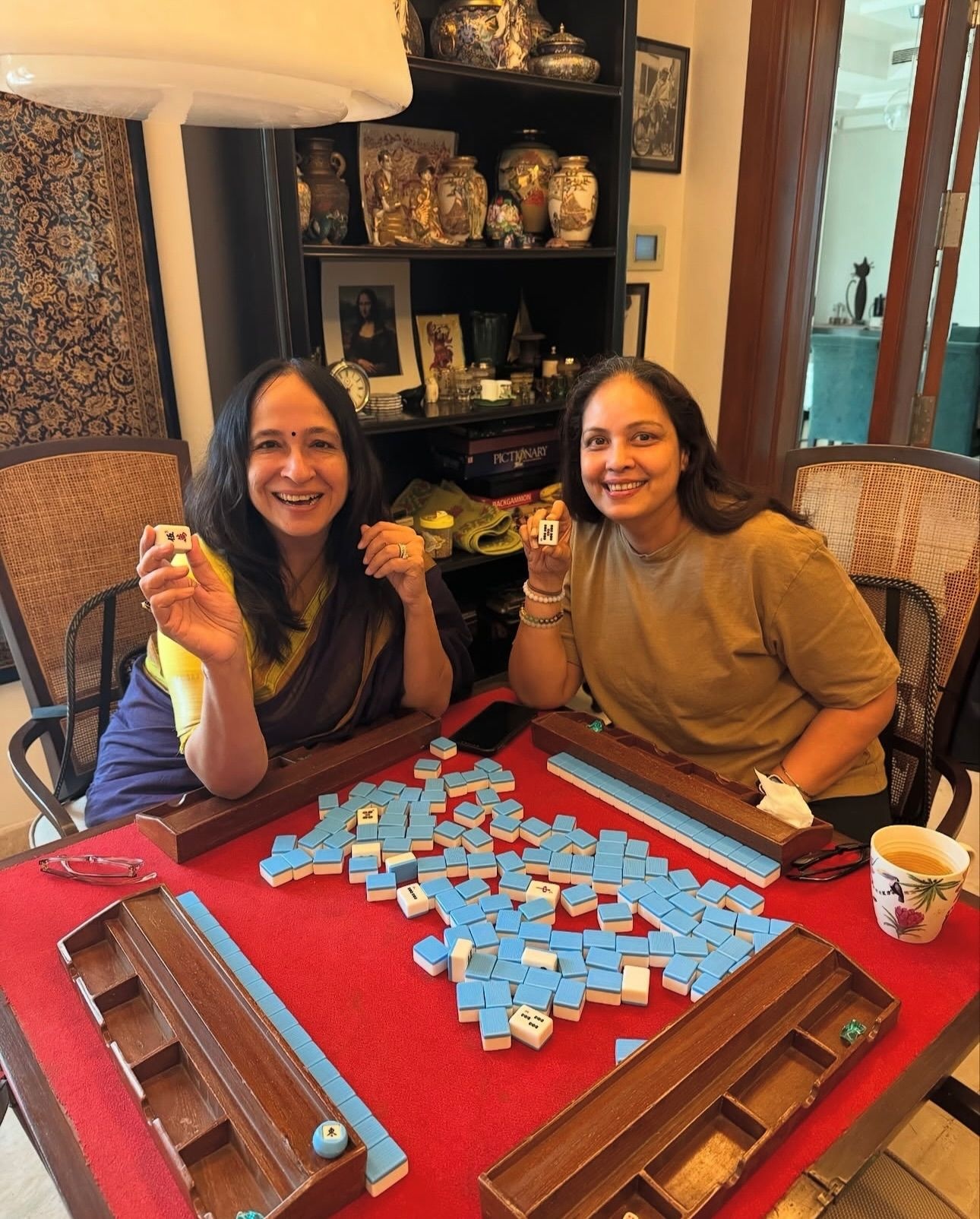
On Karwa Chauth this year, while married women across India sang bhajans, exchanged light gossip or napped in that late afternoon hour, Maneka Jain Daswani was orchestrating a mahjong session in her Mumbai home. Eight women gathered around two tables—one permanent fixture, one dining table hastily conscripted—to play three rounds (or 10 games) of mahjong as they bided their time till their partners returned and the moon rose. “In the second half of the day, when you’re done with all your poojas and everything, restlessness creeps in,” Daswani says. “This was a lot better than sitting around, hungry and waiting.”

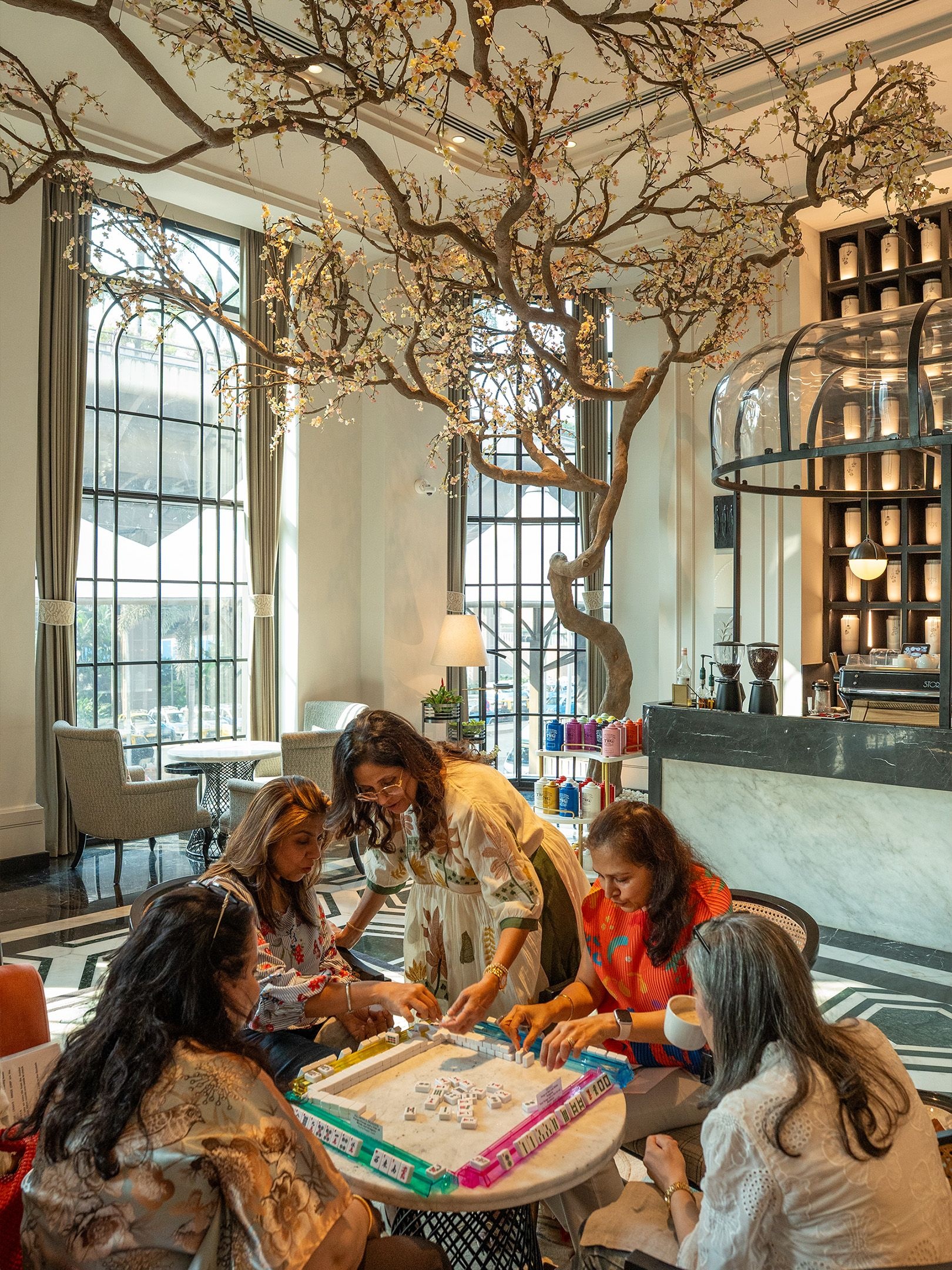
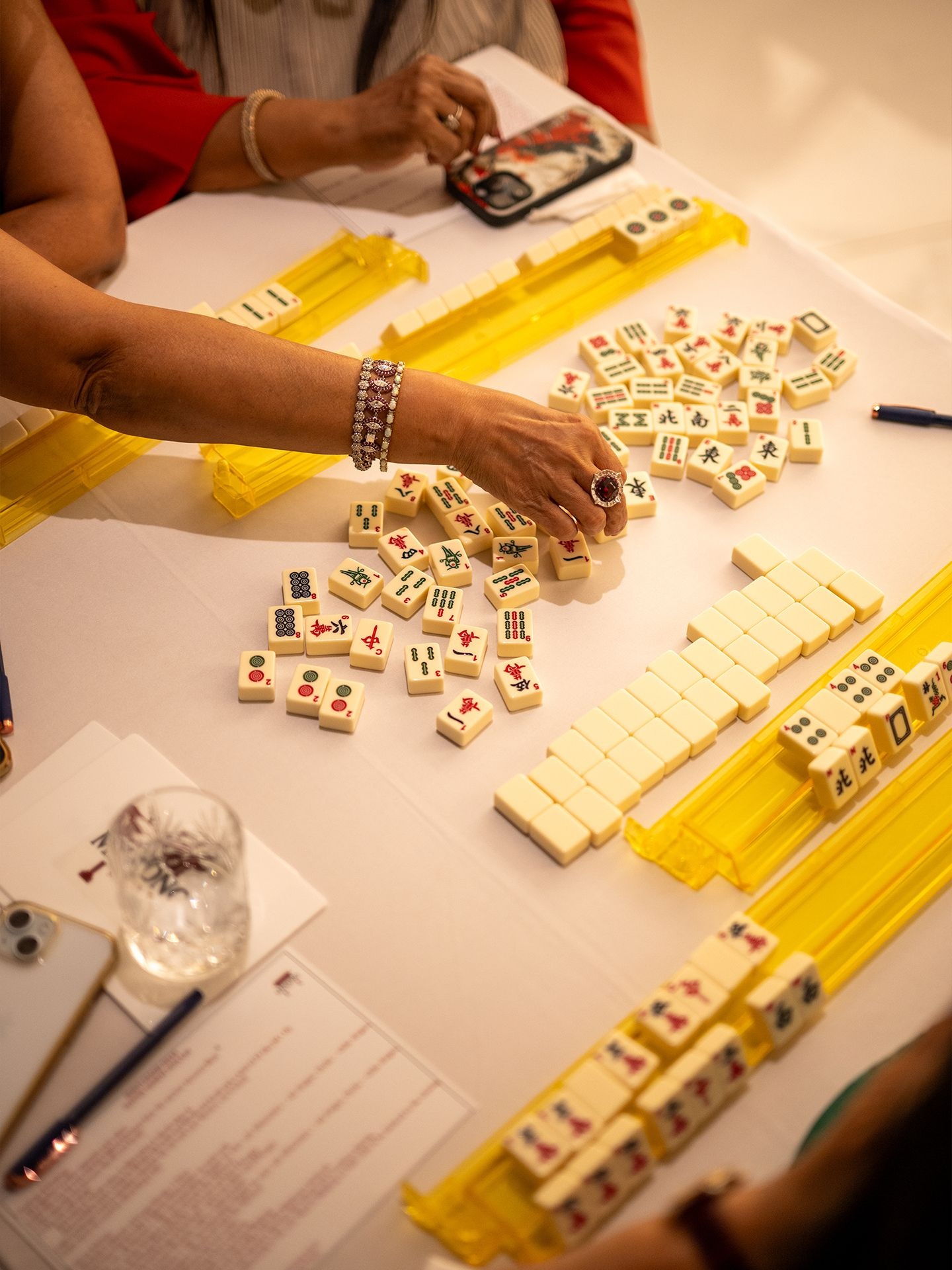
The idea for this session came to Daswani in the middle of a busy week of Diwali mahjong parties—in Dubai, Delhi, Bengaluru, and Mumbai—that she and her partners at The Mahjong Network were organising. One such party at the Clearing House in Ballard Estate, Mumbai, had such a good response that they decided to organise a second one at Jio World Plaza. “The party at the Plaza sold out in 15 minutes after we announced it,” recalls co-founder Ria Bhatia. “We had a setup of 10 to 12 tables. There was no dancing, no music. An area was cordoned off, and everyone put their phones away. Just complete silence.” All that rang through the air of the atrium that October afternoon was the click clack of mahjong tiles.

A tile game invented by the Chinese 150 years ago, when then entered the living rooms of American Jewish women by way of post-WWI USA and Britain, it’s now flapped through India’s soaring, sprawling gated communities and oldest clubs with the velocity of a WhatsApp forward in the society aunties’ group. We can call it 2025, or we can call it the year of mahjong.

Like pickleball and padel before it, mahjong has transcended its original purpose—a game of strategy and luck—to become a full-blown lifestyle movement complete with luxury merchandise, themed parties, and an ecosystem of teachers, networks, and vendors scrambling to meet demand. And as if it were the sporting equivalent of the Birkin, the waitlists are only getting longer.

“We’re not able to cope with the number of people who want to learn,” admits Sheetal Patel of Let’s Mahjong, who, with partner Kanika Sachdeva, launched their “360-degree mahjong” venture in March 2024. What began as two friends noticing increased requests to play has mushroomed into a 10-person operation conducting classes, tournaments, and events across multiple cities. Their first event at the Mumbai bar 145 sold out in minutes. When they organised an inter-school tournament for parents and alumni last month, 96 women from 15 Mumbai schools turned up over two days. Monthly gatherings at Soho House? Standing room only.

The numbers tell their own story. The Mahjong Network, founded just six months ago by three women who met while searching for a fourth player, now boasts 3,000 active players on their app, across seven chapters, including Alibaug and Dubai. Mahjong instructor Sangeeta Kewalramani, who has been playing for 16 years and began to teach just before the Covid-19 pandemic hit, now conducts four to five classes daily.
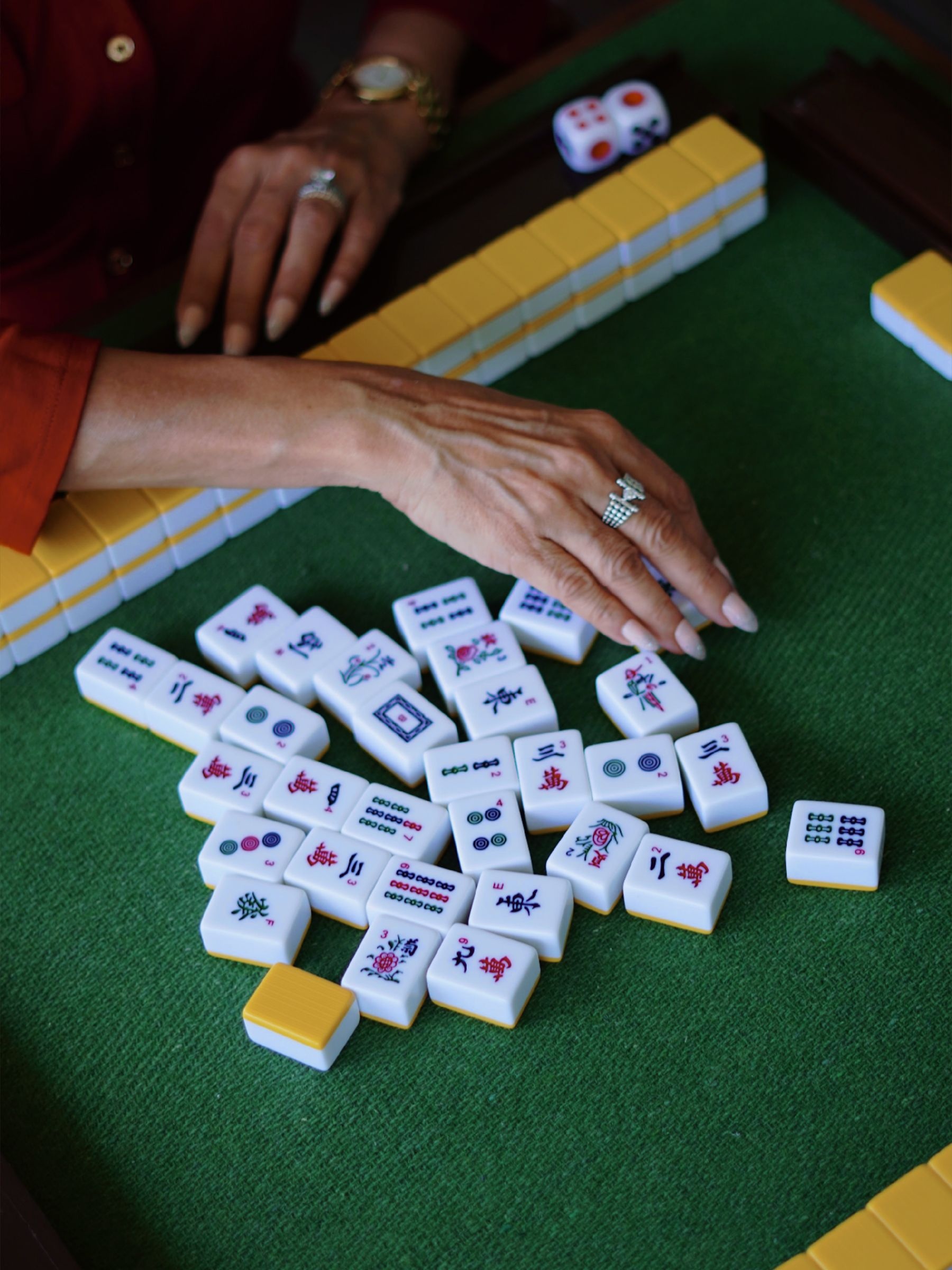
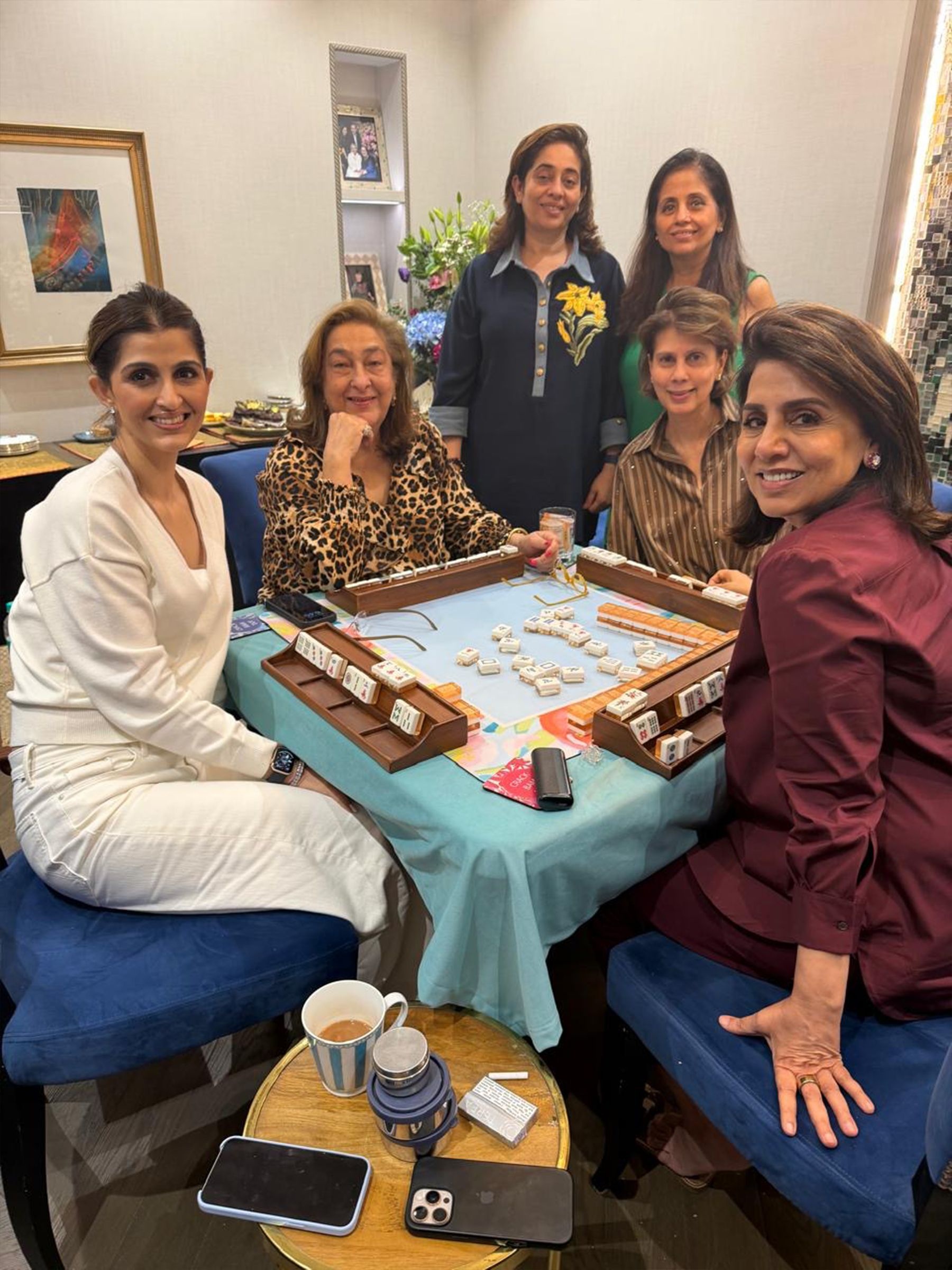
Delhi is a “if she’s doing it, I gotta do it” kind of place,” observes Sharmila Chug, a mahjong teacher based in Safdarjung Enclave, who’s coached 200 women out of her living room in the last couple of years. “It used to be poker that was all the rage, and there was also bridge, but people found that too difficult. Now everyone’s about mahjong.”

The explosion has spread beyond the metros. Kewalramani has recently returned from her first private teaching session in Ahmedabad and hints at a year of much travel in 2026. Let’s Mahjong has taken the game to Vadodara (with FICCI Flo), private parties in Surat and Jaipur, and Royal Turf Club in Kolkata. The Mahjong Network has received requests for teachers to be sent to Ludhiana and Chandigarh. At YPA Ludhiana, 24 women recently completed an intensive workshop under a senior Willingdon teacher (the Mumbai variation of the game).

At Terttulia in Miramar, Goa, a group of 65 to 70 women, part of the group Mahjong Lounge, gather every Tuesday to play across seven tables. “They’re housewives and career-oriented women from all over Goa who know it’s a trend and also that it provides mental stimulation,” says Sheetal Sabharwal, an empty nester and Donna Paula resident who’s been playing the game since 2016. She launched Mahjong Lounge earlier this year with her friend Vini Keni after they observed how quickly the fever was catching on. “We’ve taught couples, we’ve taught groups of ladies on holiday. We’ve even taught a group of women in the age group of 65 to 80 who live in the expat community of Aldeia de Goa. And they play every single day.”

But it’s the party circuit where mahjong’s transformation from game to lifestyle becomes most apparent. Private Diwali parties now routinely feature two or three mahjong tables alongside the traditional card games. Kitty parties, alumni gatherings, birthday bashes—all have a mahjong flavour. Let’s Mahjong was an integral part of Sunita Kapoor’s Karwa Chauth party this year. The Mahjong Network’s Christmas party (on December 10) at Jio World Plaza had 31 tables along with lunch at Ritu Dalmia’s Diva, Christmas carolling, mulled wine, and DIY mahjong candle-making and cookie-making stations. Prizes included leather racks from sponsor brands. Everyone got a gift hamper just for showing up.

Upscale restaurants like Yauatcha in Mumbai and Maruchi in Delhi, clubs like Willingdon, and hotels like Fairmont and ITC Grand all collaborate frequently with these networks and teachers for special mahjong afternoons. Jio World Plaza just hosted its second major mahjong tournament with Kewalramani, while Patel and Sachdeva are planning a ‘Battle of the Towers’ event in Mumbai, inviting the residents of elite residential gated communities, like the Imperial, IndiaBulls Blue, and Lodha Towers, to duke it out with their suits and honours come January 2026.

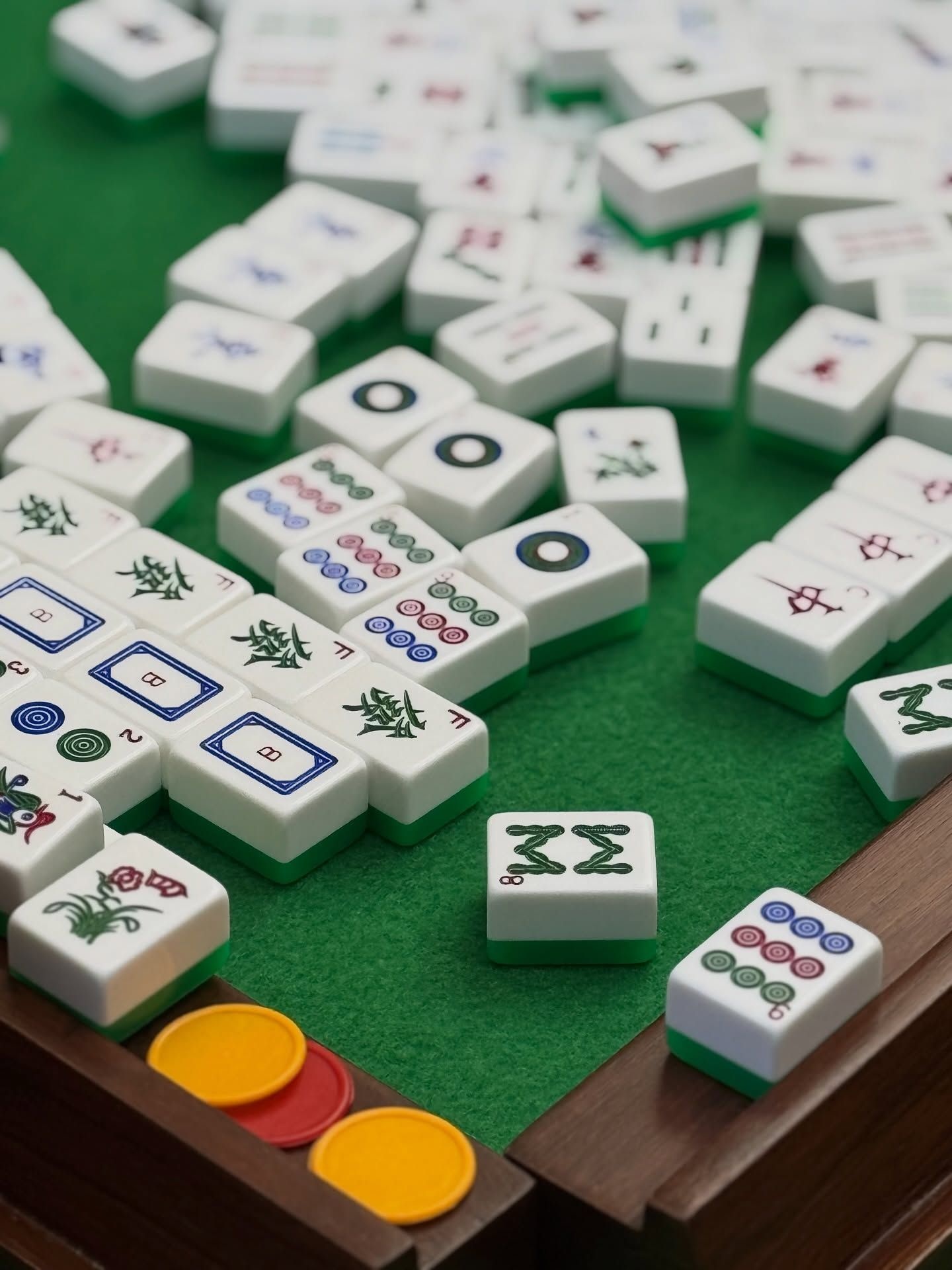
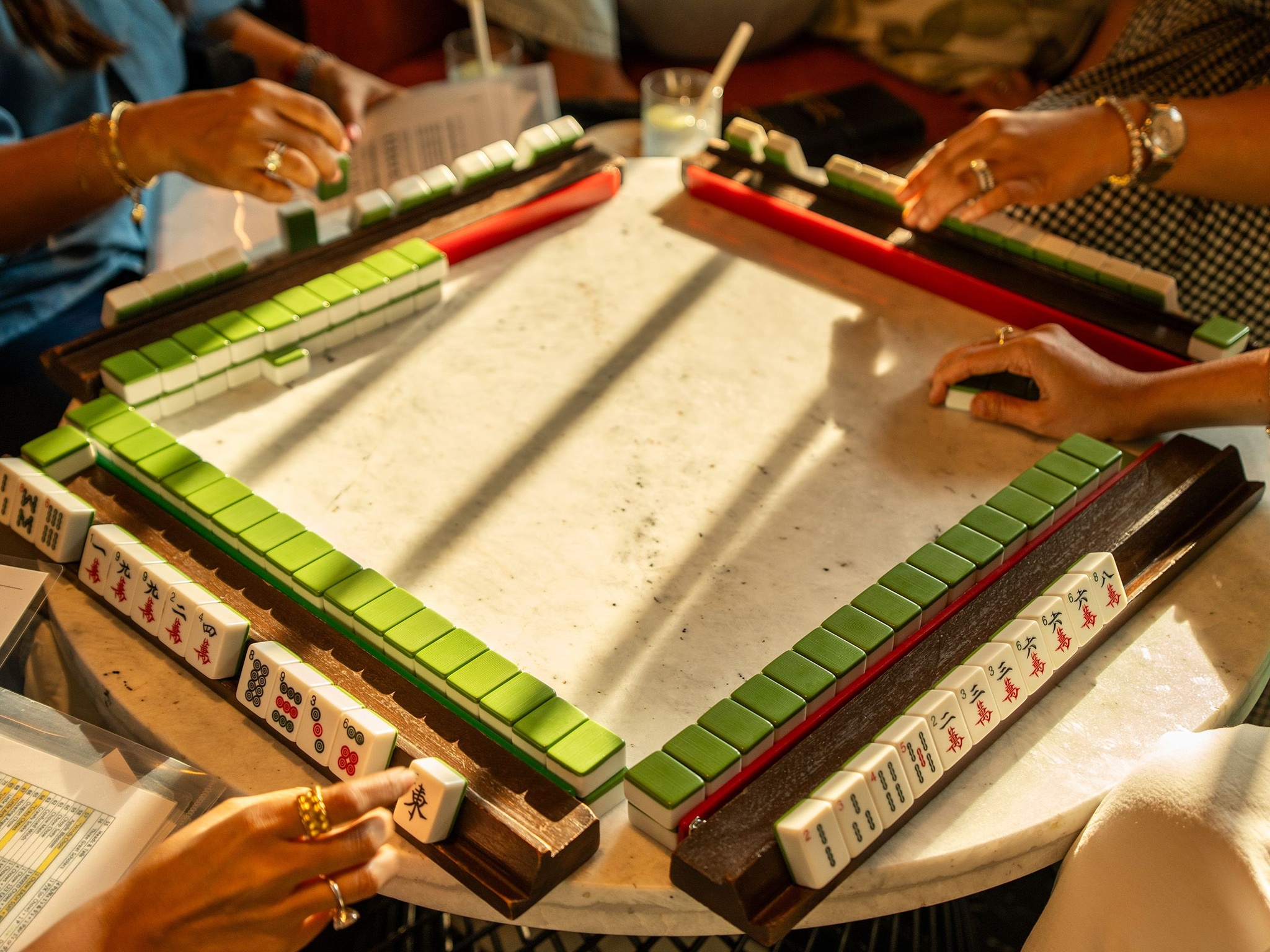
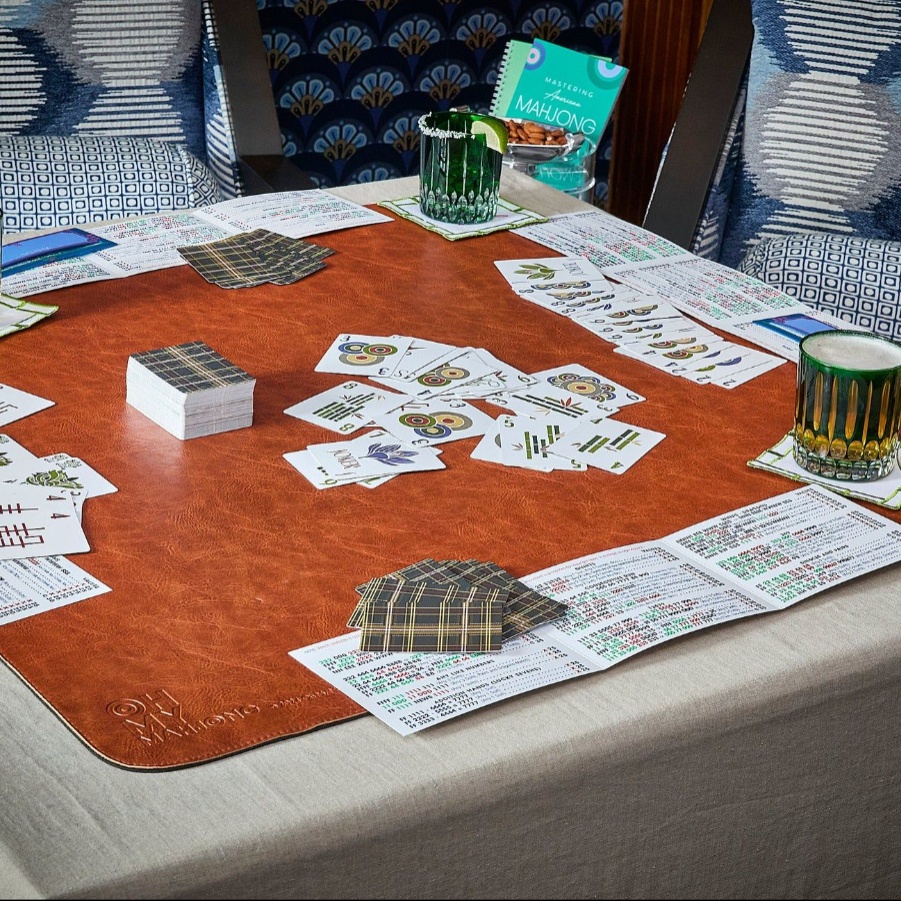
As with any other truly viral trend, there is an aesthetic spillover. Bakeries are creating mahjong-themed cookies, cupcakes, and madeleines. Fashion brands are designing bags emblazoned with tile symbols. Even basic mahjong equipment is getting a makeover. Let’s Mahjong has developed its own line of sets, mats, and “much prettier” playbooks because, as Patel puts it, the previously available paraphernalia was “very clinical—made purely by older people”.

Then there are the luxury players. “St Dupont launched a set that costs ₹9 crore!” Daswani points out. “I think there’s no limit on what you can spend.” Hermès offers a set with leather-printed tiles in signature orange, housed in solid palisander wood and Swift calfskin, while Louis Vuitton’s Vanity set comes in a monogrammed trunk with duck-blue interior. A limited-edition LV jade mahjong set reportedly costs around $1,08,787—though whether anyone in India actually owns one remains unclear. No one we speak with has spotted one yet. “But I’m certain it’s not far away,” laughs Chug.

Luxury, though, might also lie in the eye of the beholder. Chug’s first and most prized mahjong set is her late father’s, but she has also sourced several more from Dubai, China, and Singapore. Sabharwal is amazed at the business acumen of Mumbai’s carpenters who are now creating beautiful wooden racks. Daswani says she’s seen an automated table or two—where tiles rise from under the surface of the table—on a few Bollywood wives’ Instagram pages.

Even at its most basic, mahjong is an expensive proposition. “I was telling my father-in-law the other day that mahjong is like golf,” says Sabharwal. “Not everyone can play it. We charge anywhere between ₹6,500 to ₹7,000 for three classes, and it’s a lot more expensive in Mumbai.” Even without the frills, the average player spends ₹20,000 to ₹25,000 on a set—tiles, a table, racks, and mats. Tiles can range from ₹8,000 to, well, infinity if you’re commissioning diamond-encrusted tiles from that one jeweller everyone’s heard about. “Hosting is also expensive,” says Bhatia. “If you’re putting together a mahjong evening, you’re going to want to do it with a bit of taste.”

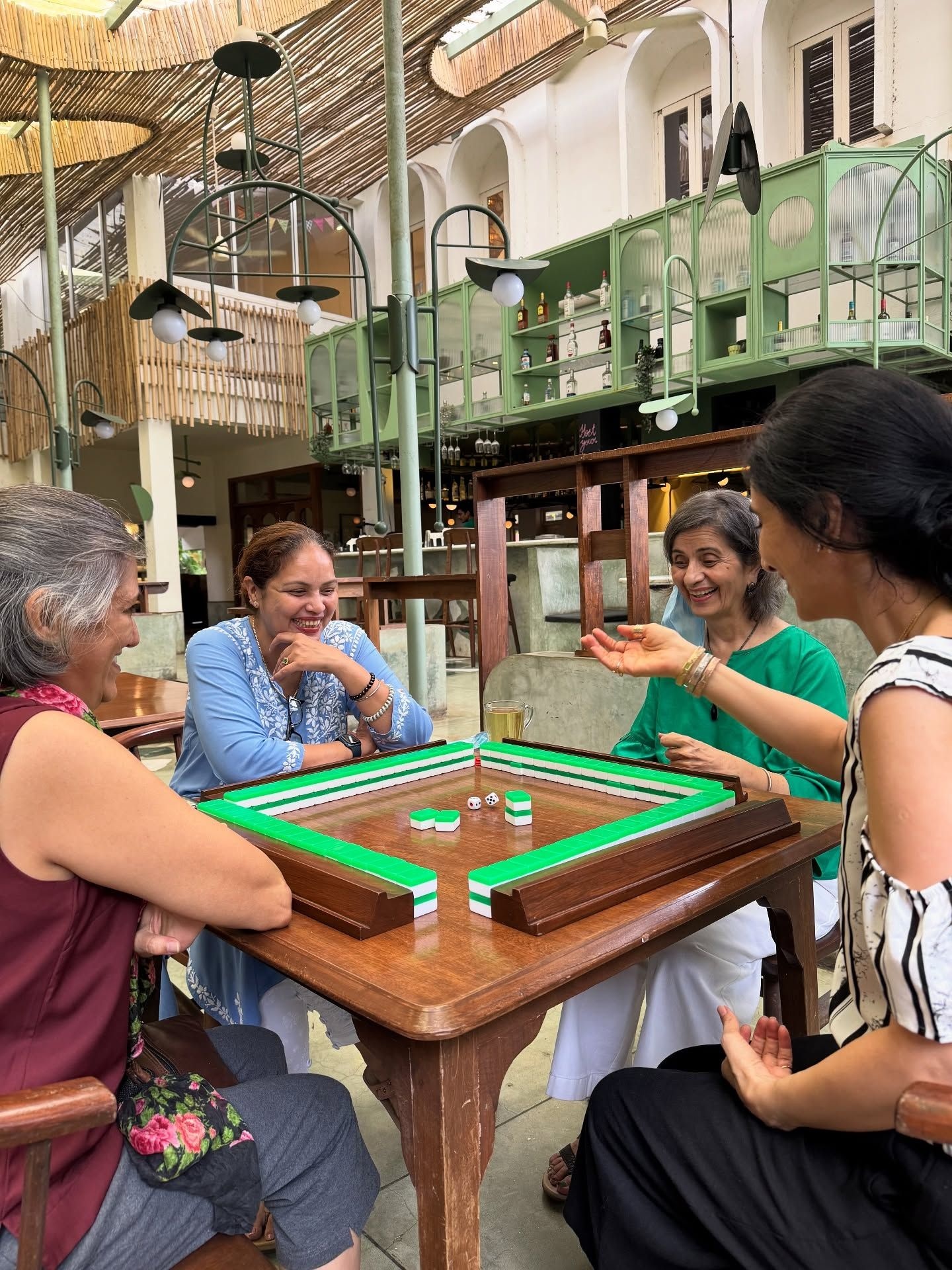
All of which raises an obvious question: who exactly is playing? The stereotype—and everyone acknowledges it exists—is “lunching ladies”, affluent women of a certain age with time and disposable income. And yes, that demographic dominates. “Our generation was not necessarily working women. We used to have kitty parties and lunches and so on. The generation before us used to play cards. It’s always been about getting together, but this is more structured, more productive,” says Kewalramani.

Mahjong is a “brain game” that requires a two-and-a-half-hour time commitment, which historically meant non-working women were its primary adopters. “But now, working women come and play at night,” notes Bhatia. Men are also interested, and kids as young as nine are picking up the game. “It’s a great decompression tool,” notes Bhatia. “Your phone is away, you’re looking at the hand you’re dealt and deciding how to play it. It’s like everything outside of you just falls off. And it’s teaching you life lessons while at it.”

If it sounds like the gospel of the successfully blue-pilled, it is. “For me, it’s just the feeling of the tiles and the sound when you’re twittering them,” says Sabharwal. “I’m a poker player too; I’ve won championships in Goa. In poker, it’s always the same—you get two cards, and you do what you gotta do. Here, you have a choice of 150 games to play from. A single tile can change everything.”

All this shine on mahjong also means there’s a certain crowd that’s in it for the sake of being “with it”. “There are definitely people learning because of FOMO, just to be seen in the right places,” says Patel. “Most of the girls are now learning mahjong because it’s a fad,” agrees Chug. “They meet over fancy teas and coffees and they have these lavish kitty parties over mahjong. But some of them are learning for pure love of the game and to excel at it.”

Beyond the novelty factor, the game’s appeal lies partly in its lack of the gambling stigma attached to poker or teen patti. Even if you take gambling out of the equation, unlike cards, mahjong carries an air of sophisticated exoticism, a certain cosmopolitan and intellectual cachet. It’s also, crucially, not as physically demanding as pickleball—you can play well into your seventies. Not just that—there are also different variations. “Most of Mumbai and Pune are playing Willingdon, while Delhi and Bangalore are playing ATF,” says Daswani. “Now people are beginning to play the Taiwanese style as well. Everyone likes a new challenge, right?”

The game’s portability, no doubt, helps too. As Kewalramani, who learned the game 17 years ago from Turkish diplomats’ wives in Mumbai, puts it: “You don’t need a special court or space. If you have a set, you’re good to go.” To wit, it fits practically anywhere: whether it’s squeezed into a hectic wedding day in Jaipur, between the haldi and the cocktail, or at the airport when your Indigo flight has been delayed endlessly, tiles balanced on Rimowa suitcases. “You can play anywhere,” says Sachdeva, “even if it is quite heavy to carry around.”

But then again, so is a Birkin. People manage.

The Nod Newsletter

We're making your inbox interesting. Enter your email to get our best reads and exclusive insights from our editors delivered directly to you.