



Fashion14 Jul 20266 MIN

Manish Malhotra is still full of surprises

After decades of dressing Bollywood’s biggest stars, the designer left behind the tropes that had come to define his brand in favour of an intensely personal collection inspired by his mother for his Paris haute couture week debut

Image

Two days after Manish Malhotra’s Paris haute couture week debut at the Pavillon Cambon-Capucines, we are seated in a large studio space a stone’s throw away from the Arc de Triomphe, surrounded by the collection that has marked one of the biggest milestones of his career. Malhotra has just arrived in high spirits, sporting what’s essentially a Parisian creative director’s uniform: a navy crewneck jumper layered over a crisp white shirt, jeans, and a pair of sneakers (though his are silver Louis Vuitton sneakers that catch the light). He’s visibly relieved after months of preparation. “I’m loving it so much. I went to a dinner last night hosted by the Fédération [de la Haute Couture et de la Mode] for the AIDS Foundation and met so many people who congratulated me on the show. Every actor in Bollywood has texted me. The reaction has been phenomenal. I’m happy,” he beams.

For most designers, a Paris couture debut is an opportunity to distill everything their brand represents. For Malhotra, the act was two-fold: an introduction and reinvention, an opportunity to show the world who he is, and to surprise those who already thought they knew him. “I wanted to let go of all the clichés that I’ve become associated with,” Malhotra says, holding a cup of oat cappuccino.

It’s a notable decision for a designer whose career has been inseparable from Indian cinema. Malhotra started his career as a costume designer in 1990 and established his label in 2005. He added high jewellery to his repertoire in 2023, and that same year started Stage5, his own film production company. “I think my career as a costume designer has still been more instrumental and path-breaking. There was of course Bhanu ji [Bhanu Athaiya], who went on to win the Oscar for Gandhi and did a lot of period work. I think my costume work is more embedded in pop culture. And for many actresses, it’s their best work in the movies,” he says.

And it’s true: Urmila Matondkar in Rangeela (1995), Priyanka Chopra and her “Desi Girl” moment in Dostana (2008), Deepika Padukone in Yeh Jawaani Hai Deewani (2013), Kareena Kapoor Khan in Kabhi Khushi Kabhie Gham... (2001) and Jab We Met (2007), Alia Bhatt’s debut Student of the Year (2012) and her saris in Rocky aur Rani kii Prem Kahaani (2023)... The list goes on. “I mean, to think of it, from working with Sridevi to Janhvi [Kapoor], and Chunky Panday to Ananya [Panday], it’s been a journey.”
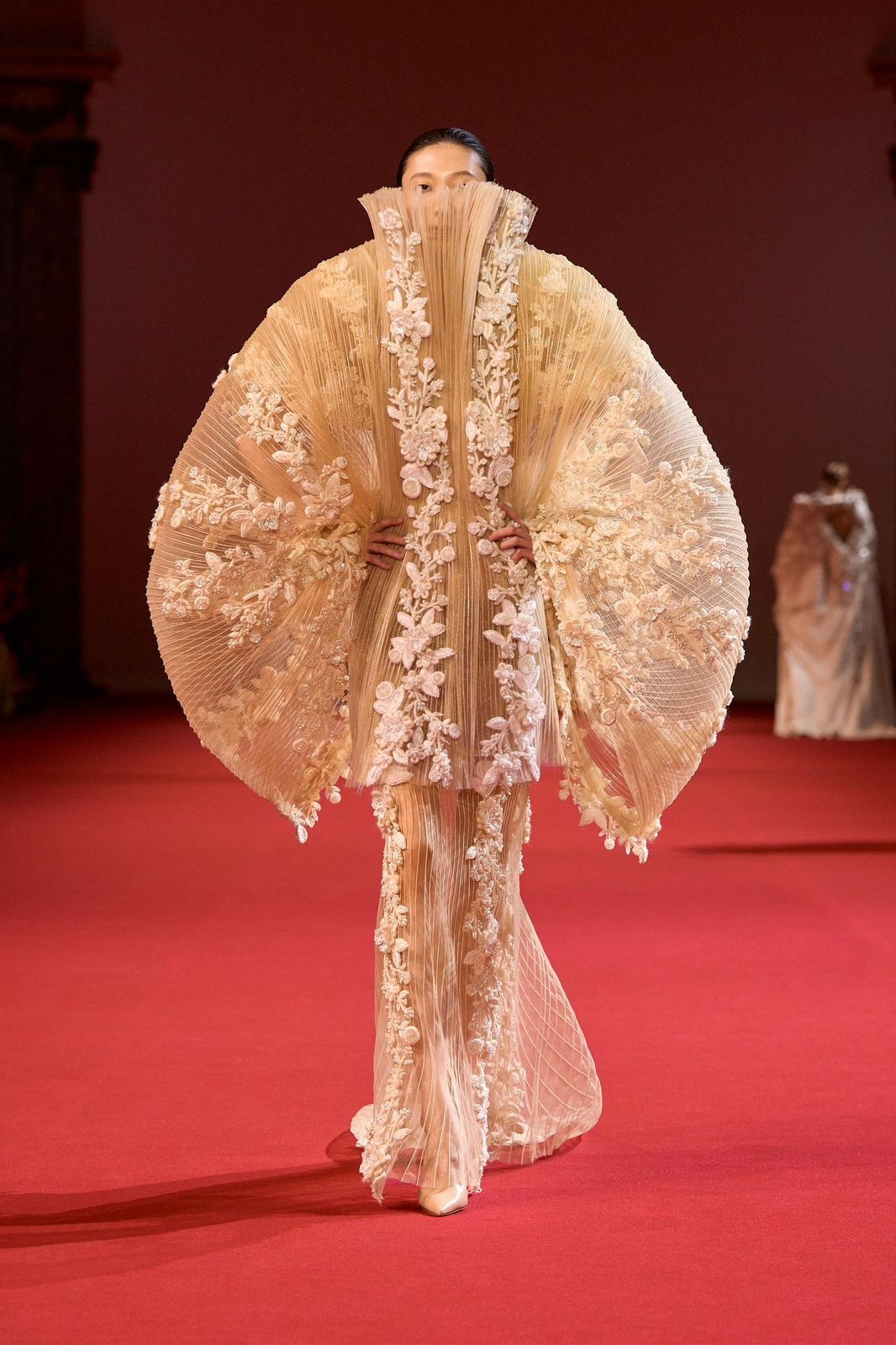
However, for his first-ever Paris haute couture week outing, he seized the opportunity to rewrite the script. It was a major departure from everything we’d seen so far: there was no celebrity showstopper on the runway, no Bollywood-heavy front row (apart from his long-time collaborator and dear friend Karan Johar). The focus here, instead, was purely on experimentation. “I wanted to push myself and my team to do things that we haven’t done before,” he says.

In preparation for the show, Malhotra and his design team explored ideas around cinema, theatre, and costume—natural reference points for a man who has spent more than three decades shaping Bollywood’s visual language—but they kept arriving at the same place. “We worked on lots of concepts before the show, but, somehow, we kept coming back to my mother because it’s where my mind was. My family and I were so affected by her loss. Even yesterday at lunch, we teared up thinking about her,” he admits. His mother, Sudarshan Malhotra, one of the most influential figures in his life, passed away in March. “She was the person I was most influenced by and attached to. I felt that Paris doesn’t know me. The world doesn’t know me. So, I wanted to present who I am. It was almost like an introduction to myself. This is me. And from here we take it to another level.”

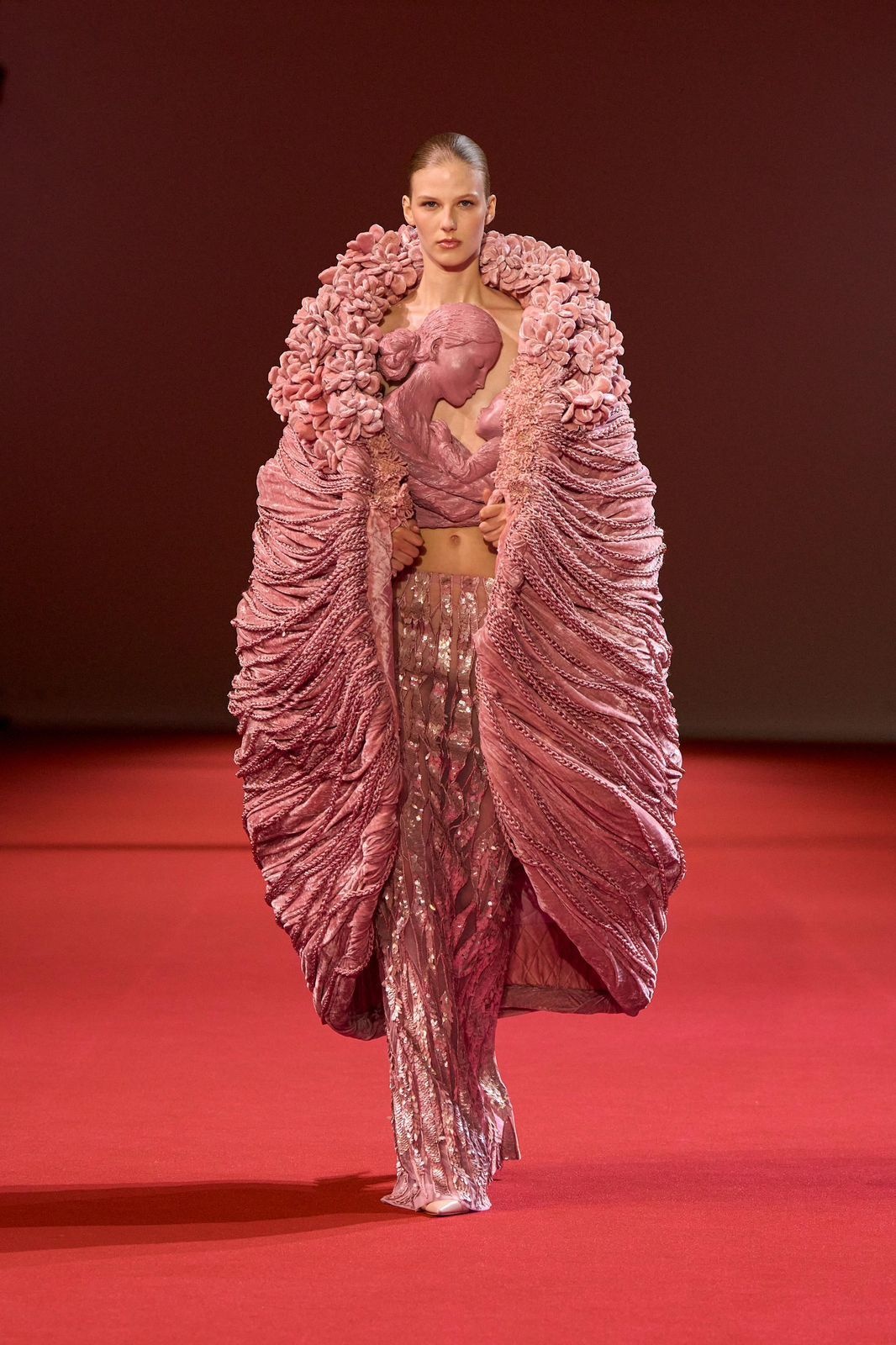
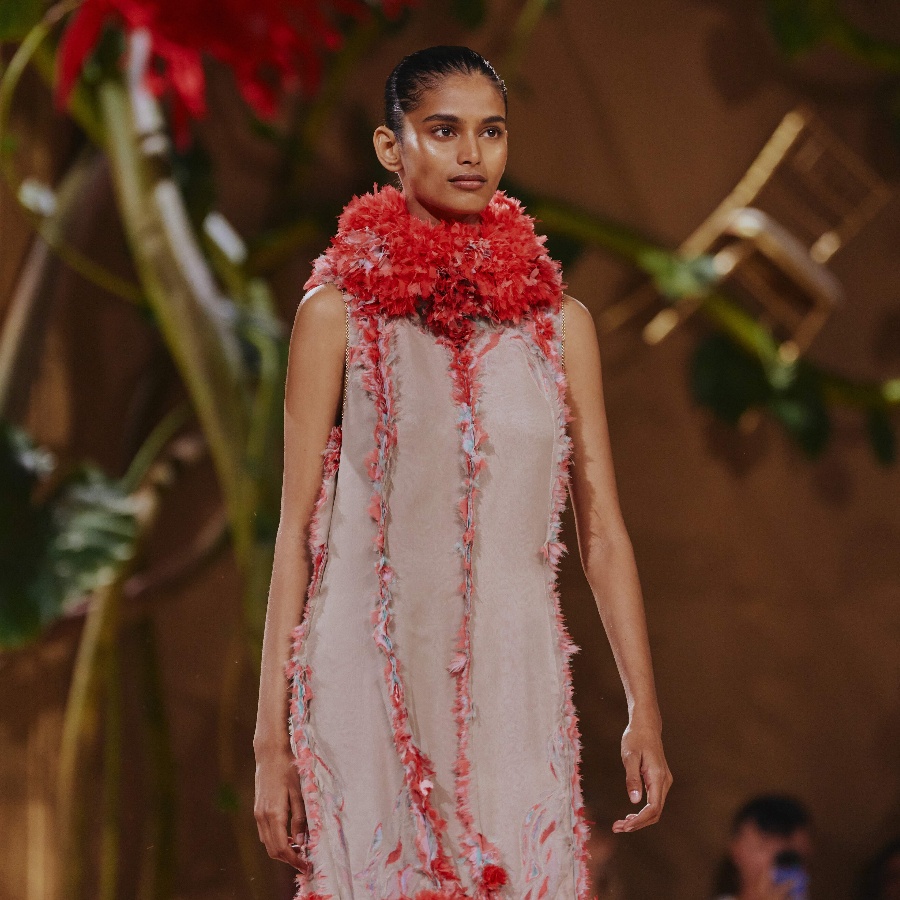
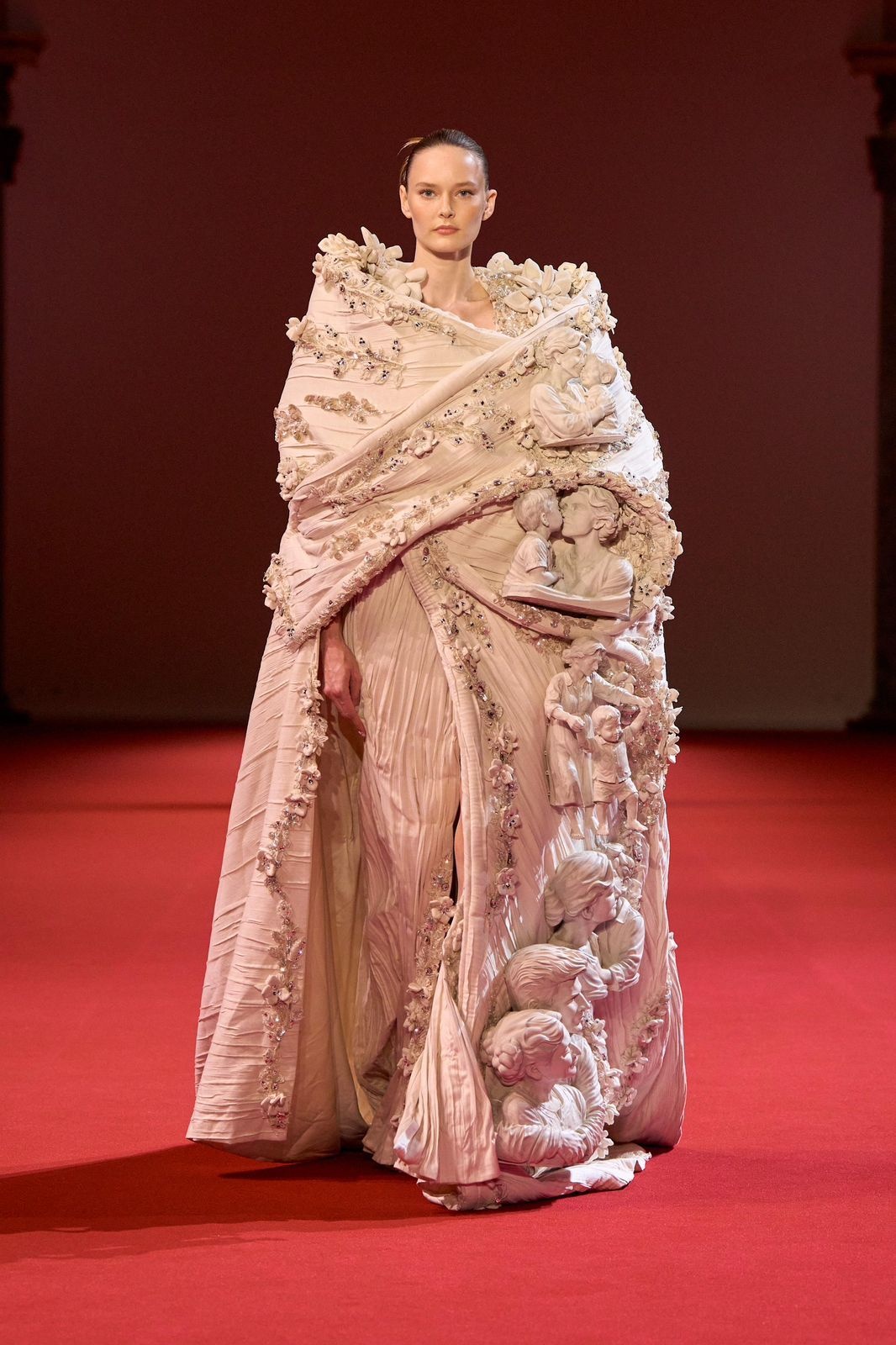
This sense of autobiography became the defining idea behind the collection. Titled ‘Maa’, in honour of his late mother, the show unfolded like an emotion-heavy film across four chapters that charted a journey from childhood dependence to coming of age. The first chapter, Cocoon, was punctuated with outerwear—capes, coats, and jackets—that enveloped the body, creating a sense of protection and nurturing, much like a mother’s embrace. The opening look was a voluminous crinkled pleated coat with 3D sculptural figures that depicted the evolving relationship of a mother and child from infancy to adulthood. “It’s so light,” he says of the sculptures adorning the looks. “We started trying 3D-printing with my look for the Met Gala. I was nervous about things coming off, but I was at the venue until the very end, and everything was in place.”

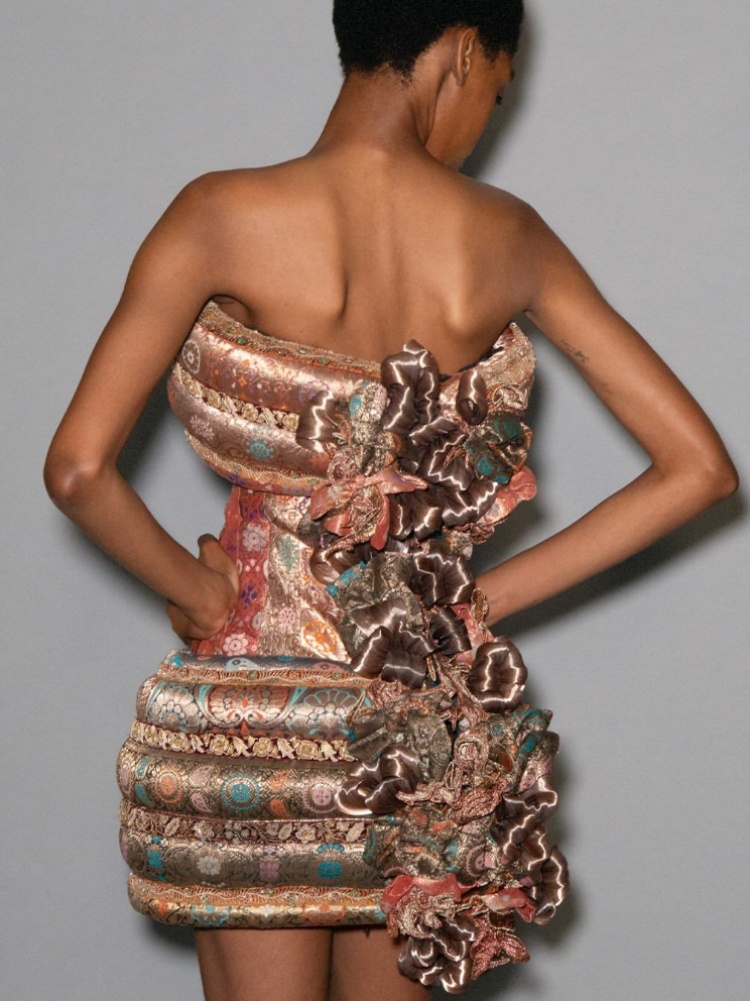
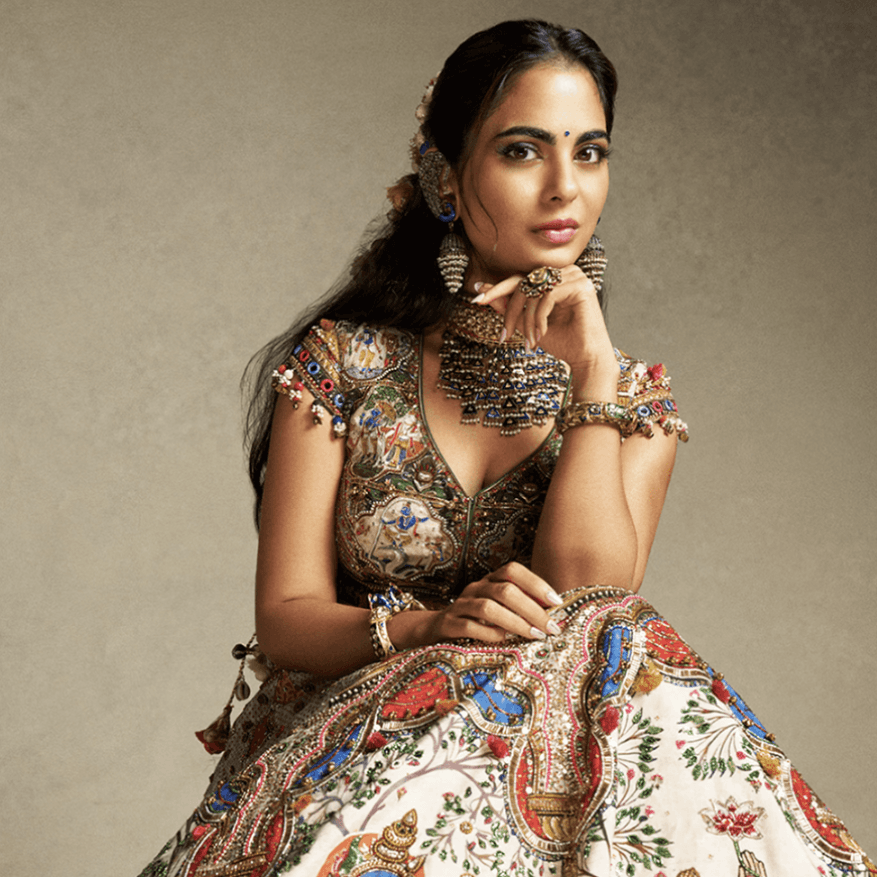
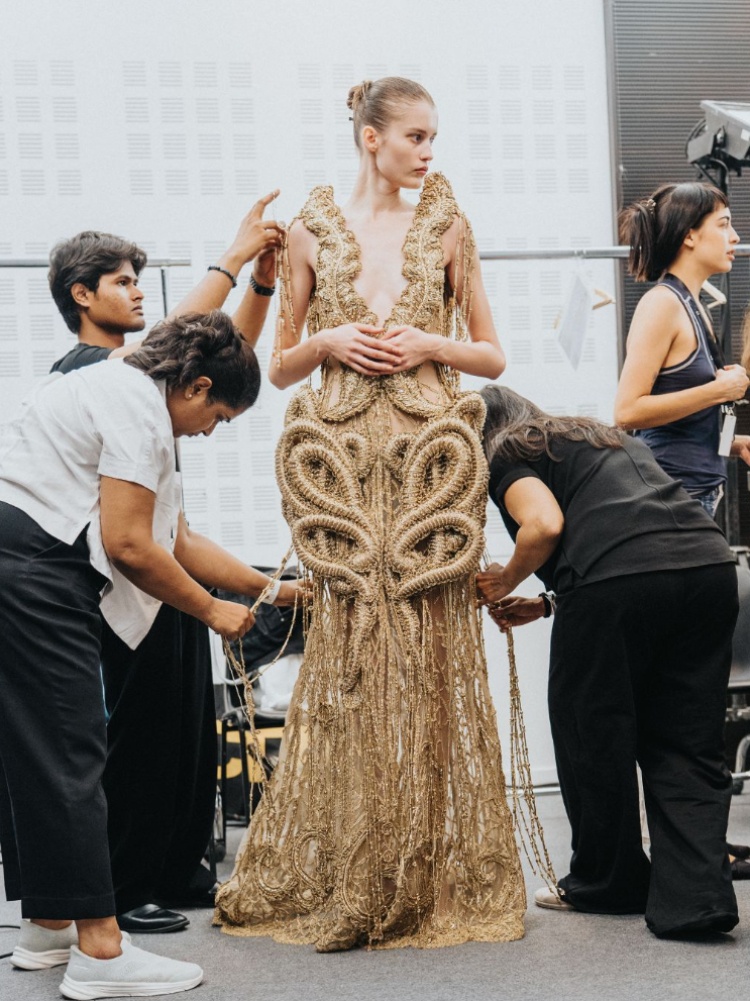
The second chapter, Bond, explored the inextricable connection between a parent and child, represented through gold knots, flowing tassels, and inventive shapes. “I truly believe that when you have parental support, you can take on the world,” says Malhotra, explaining how it was his mother who fuelled his dreams to pursue his passion without restraint. Throughout, memories of his mother appeared in subtle ways: like tulle printed with the motifs from her saris, looks embellished with her favourite flowers, and Benaras silk minidresses whose shapes were inspired by her stacks of bangles. “I remember when I was a child my mother would wear sleeveless blouses with saris to weddings, and she would rotate Benarasi saris. So, I wanted to do a Benarasi sari.”

e3b1059e-a3bd-475b-ad1a-0ee915aaa4a7.jpg
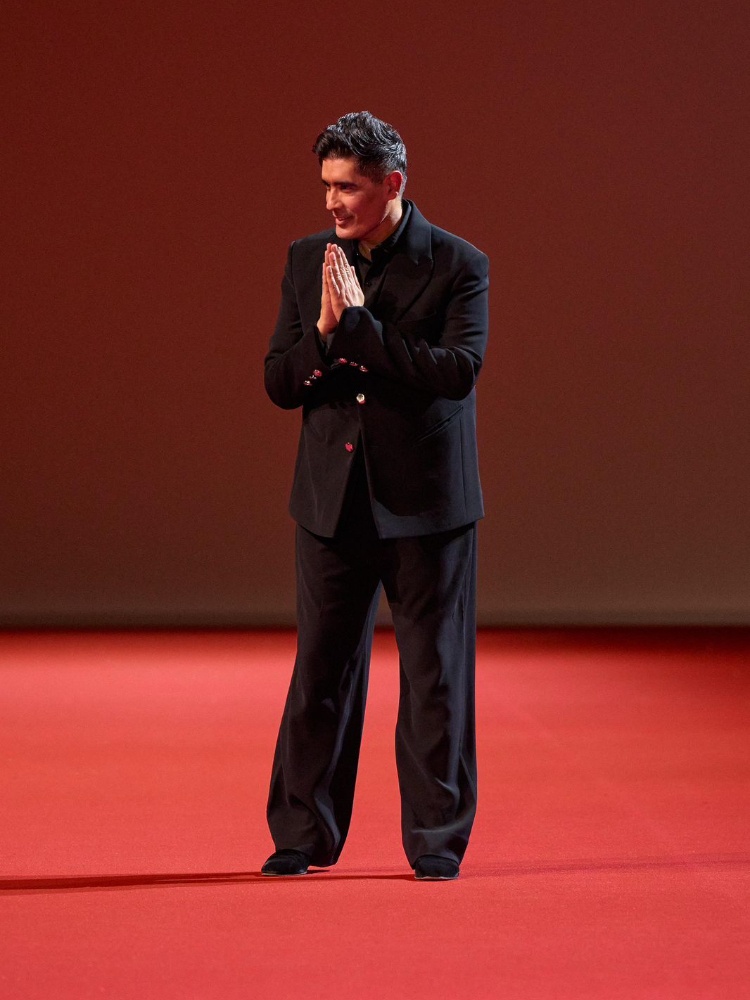
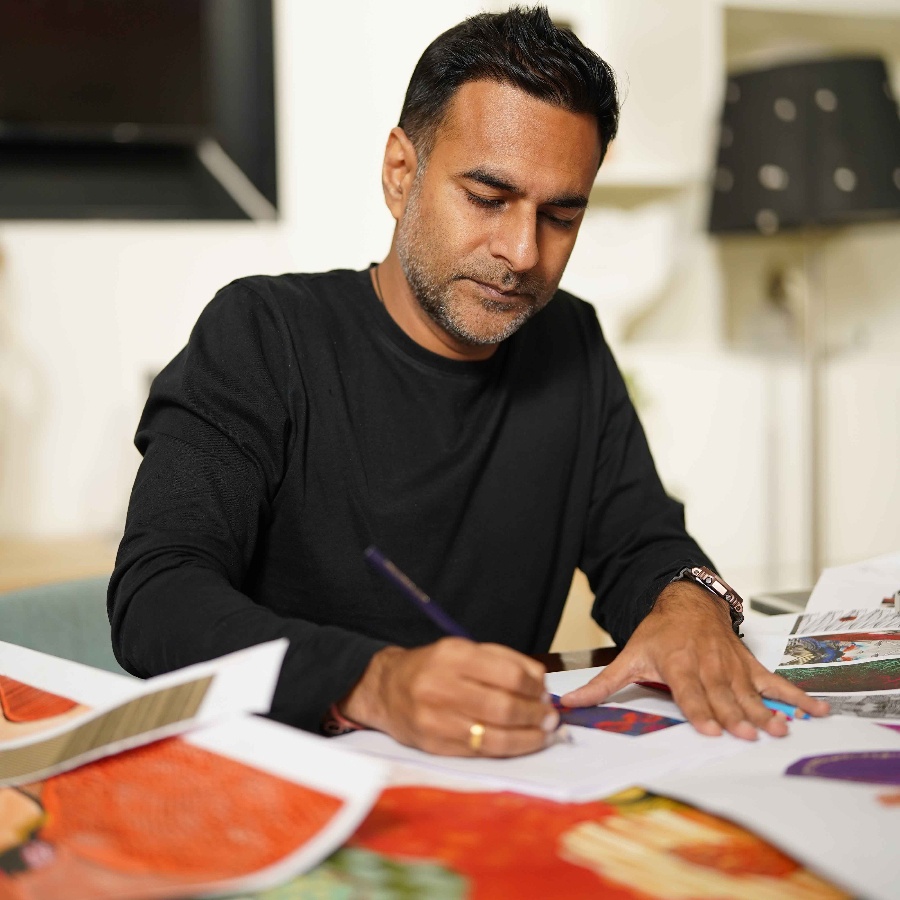
The designer Manish Malhotra

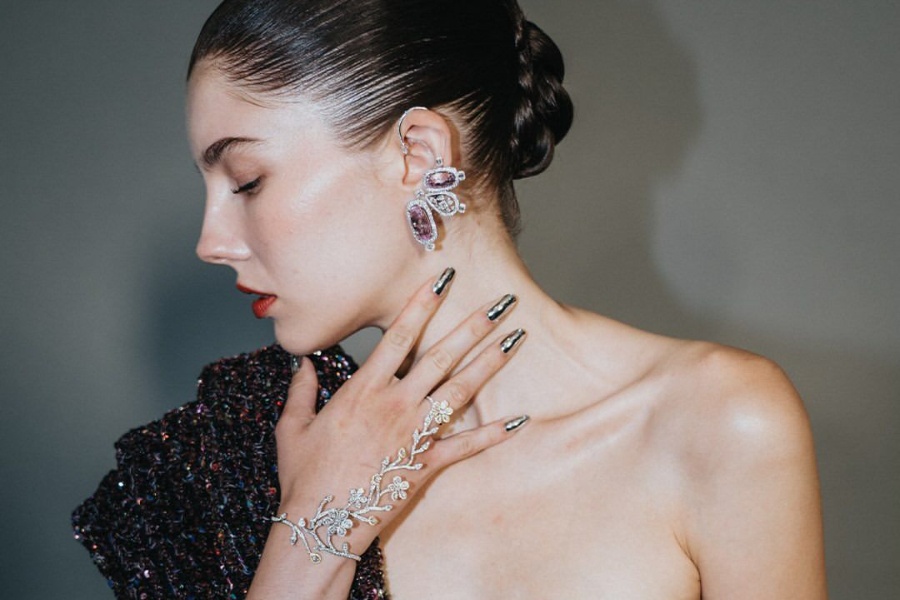
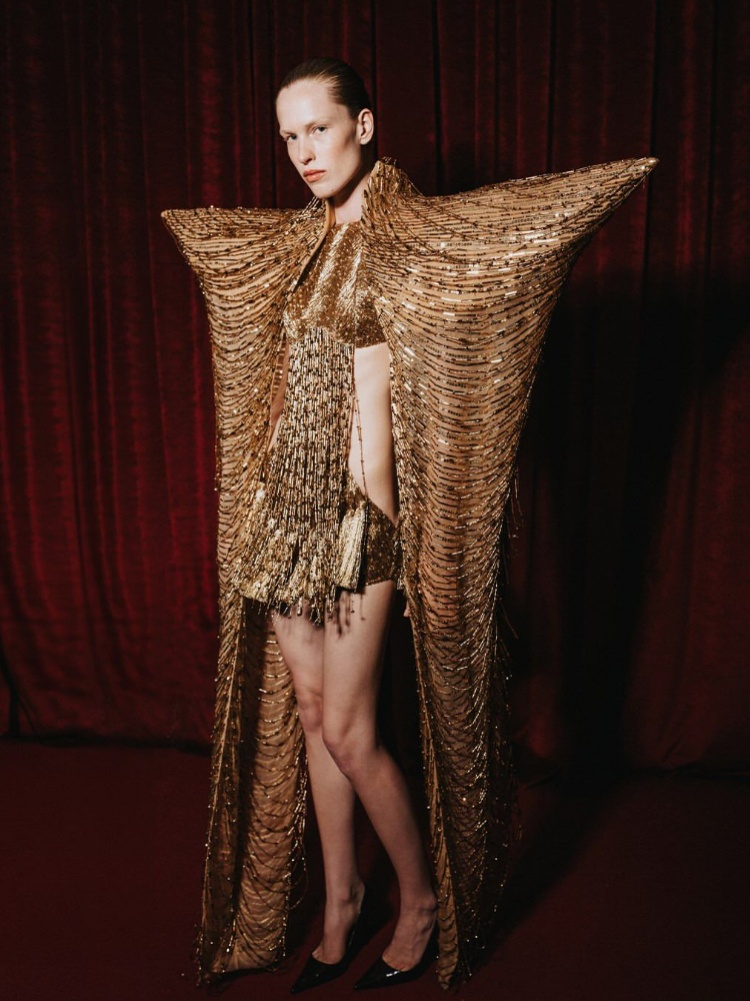
In the third act, Becoming, the shapes begin to billow and project outwards with architectural, razor-sharp power shoulders in glinting gold—a metaphor for coming into one’s own strength. Finally, in Abundance, the looks shift into celebration inspired by the energy his mother brought into their home, complemented by exquisite ear cuffs, haathphools, and necklaces from Manish Malhotra High Jewellery. “She was so hospitable. She loved having people over, eating food, and having runak in the house, and this part reflects that,” he says.

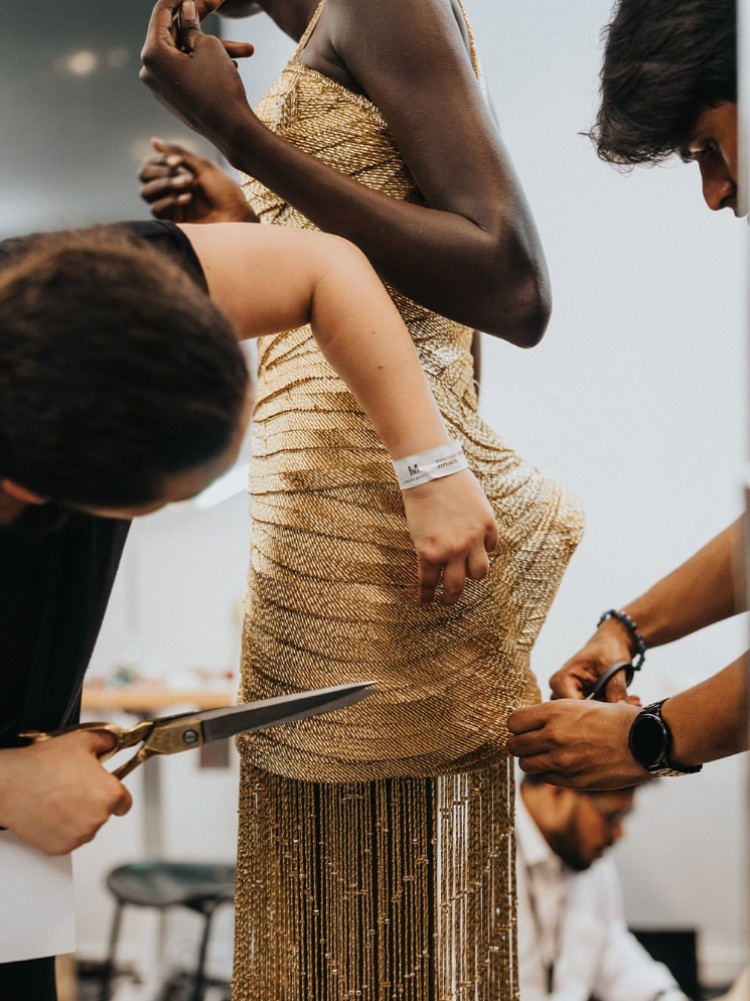
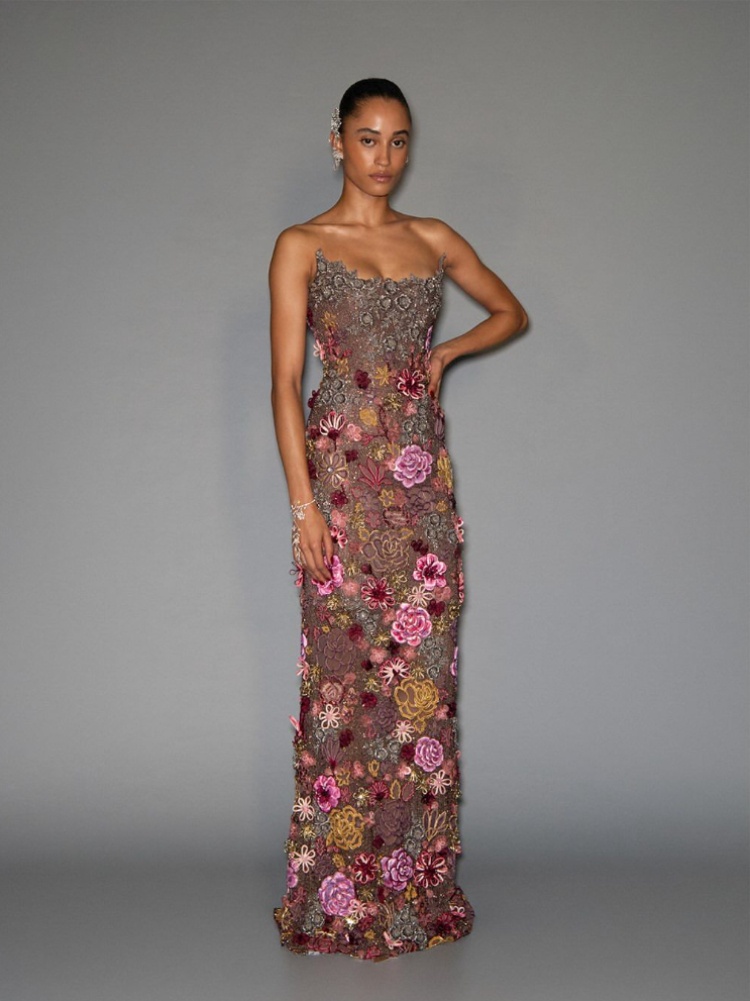
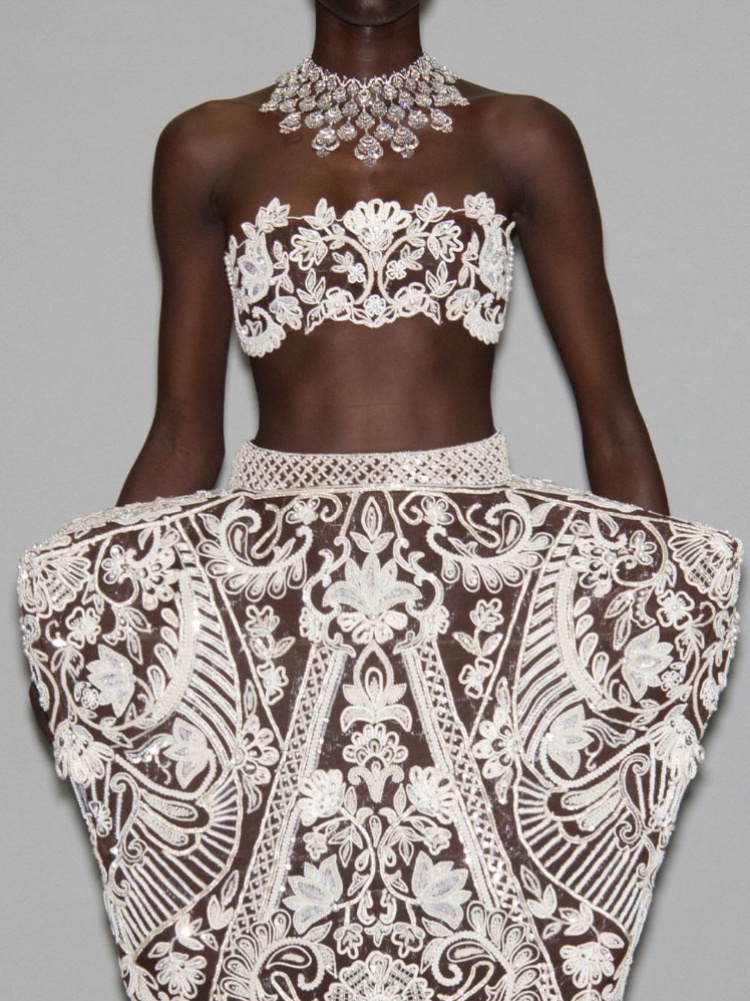
In addition to the 3D sculptures, the atelier experimented with multiple embroidery techniques layered within a single garment. “As a brand, we typically do one embroidery per collection and that’s it. But I wanted to challenge that,” he adds. One particular dress featured five types of embroidery, including dori, zardozi, hand beading, and appliqué work. Another dress, made on a base of hand-beaded fabric, was replete with flowers and vines with Kashmiri suzani embroidery. Elsewhere, what looked like feathers on a top from afar turned out to be handpainted panels.

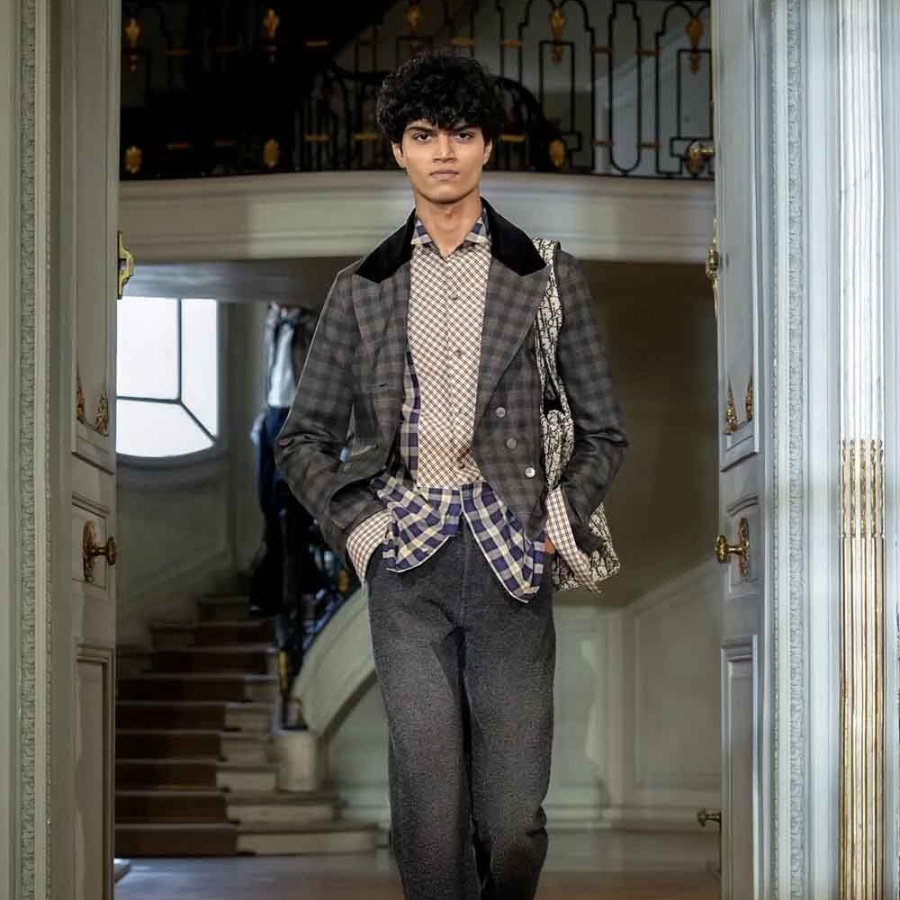
It was also the first time he experimented with larger silhouettes that haven’t been part of his design vocabulary in the last 21 years of his brand. “We’ve never done shapes or structures, and that’s another way I wanted to bring newness to the way we’re thinking.” Just as importantly, Malhotra wanted to challenge how Indian luxury is perceived abroad through these new shapes.

“On a global stage, I didn’t want to show what I already do in India. We have such a strong culture of textiles, textures, and embroidery. We must present it to the world in a global form because that’s a true reflection of India: we’re modern and progressive. I don’t want us to be looked at as... Okay, when I have an Indian wedding to go to, I’ll buy an Indian designer. I want people to even think of an Indian designer the same way you would think of a designer from Britain, Lebanon, or America.” There were sari- as well as lehenga-inspired looks, absolutely, but made in a way contemporary global audiences can appreciate.

“Everything is new because I’m at that stage of my career and life where I don’t want to look back in a decade and think, shit, it’s too late now,” he says. At 59, for Malhotra success isn’t about money or fame but having the freedom to do what he wants. “I want to do all those things that I’ve not done. Not because I’m more confident today—and I’ll never do something just because I’m being asked to—but because I want to. It’s been two years since I thought we were ready for Paris. So, it just felt like it was time,” he smiles.

As for what’s next? For the first time in months, Malhotra plans to step away from work—though only briefly—joining his family on a holiday in Switzerland. “Maybe I’ll take a five-day break,” he laughs. He’s philosophical about it all: “I’m a typical Sagittarius. I feel life is like a screenplay God has written for you. Aap kuch bhi kar lo, it’s not going to change.” Yet, listening to him describe ‘Maa’, it’s hard to pin it on just destiny. Paris wasn’t just about proving that he belonged on the couture calendar, it was about proving—to himself as much as anyone else—he could still surprise people. And he did.

The Nod Newsletter

We're making your inbox interesting. Enter your email to get our best reads and exclusive insights from our editors delivered directly to you.