




Every town has a story it tells about itself, and on Apple TV’s Widow’s Bay, that story involves myths, ghosts, a masked killer known only as the Boogeyman, and an immortal founding father. Led by Matthew Rhys as the town’s well-meaning mayor, Tom Loftis, the show is already being talked about as the best of the year. It arrives dressed in the familiar clothes of small-town Americana—a picturesque coastal town and its eccentric residents—that also harbours generations of buried secrets and is perpetually one bad decision away from disaster.
Part Jaws and part Twin Peaks, with a little Stephen King thrown in for good measure, the show delightfully toes the line between horror and comedy, creating a fictional town where centuries-old supernatural evil meets local gossip and civic dysfunction to nail-biting effect.
Every breakout show has a character that captures its fans’ imagination more than others, and on Widow’s Bay the competition is stiff. There’s Rhys’s perfect straight-man mayor just trying to bring tourists back to his little town. Then there are the cast of characters that make up the show’s constellation, including Jeff Hiller as the hilariously nervous Dale, and K Callan as Ruth, the mayoral assistant who prioritises naps above all else. So, it’s no small feat that Patricia, played with masterful precision by Kate O’Flynn, has emerged as the one character that audiences can’t stop simultaneously worrying about, laughing at, and rooting for. In the same way that Stephen Spielberg’s Disclosure Day belongs to Courtney Grace, the internet’s consensus is that Widow’s Bay increasingly feels like Patricia’s show.
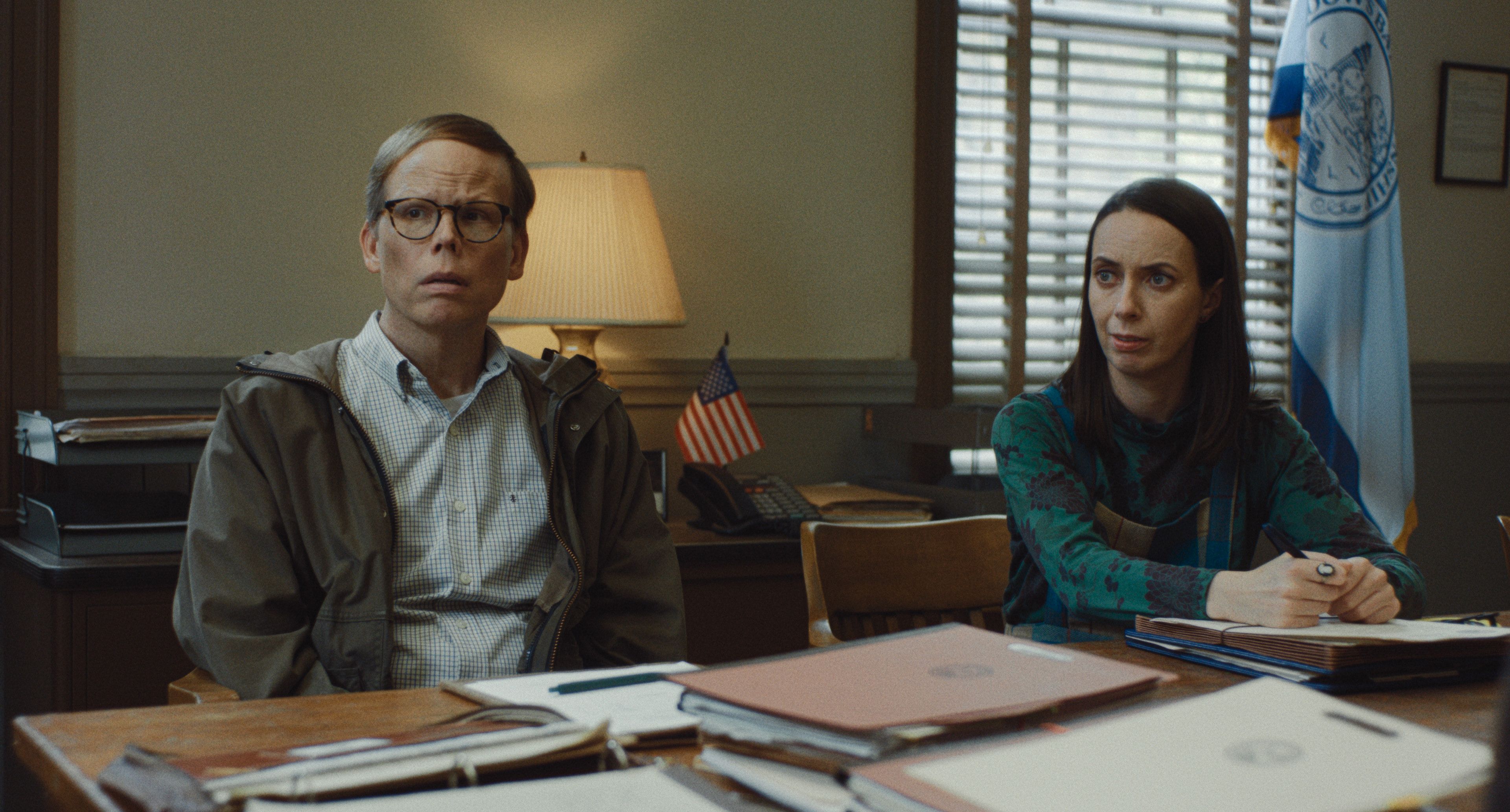
When we first meet her, Patricia is the textbook office eccentric—she talks too much, tries too hard, and can’t help but be stuck on the outside of every social interaction. For much of the season, her claims about having survived the town’s Boogeyman years are met with a heavy dose of scepticism. If this were a different show, Patricia would be background colour, little more than a quirky co-worker who delivers a few good lines before disappearing back into the scenery. But Widow’s Bay writer-creator Katie Dippold had different plans. She uses the character to riff on horror’s favourite ‘final girl’ trope in a way that the genre hasn’t ever really seen before.
Like Sidney Prescott in Scream or Nancy Thompson in A Nightmare on Elm Street, the ‘final girl’ is a tried-and-tested horror film archetype who confronts the killer after everyone else has been killed. The term itself was coined by film scholar Carol J Clover, who used it to describe female characters in horror films whose alleged caution and moral clarity allow them to outlast the chaos around them. Even as the trope has evolved, the one thing that has always been true of ‘final girls’ is their confidence—they are survivors, and their stories are built around the fact that they are believed.
But what happens when Patricia, a ‘final girl’ in her own right, must spend the next 20 years of her life attending high school reunions with people who refuse to believe her?
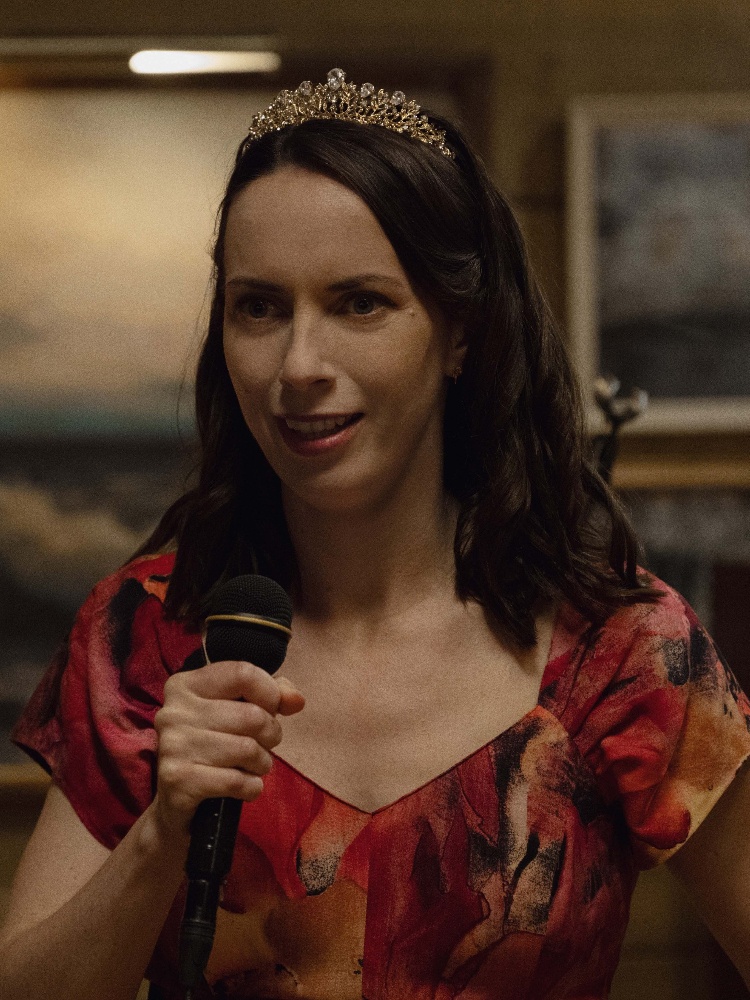
It’s a sly inversion of a decades-old archetype, and the show’s Patricia-centric episodes have rightfully been the ones to generate the most buzz because of it. In episode four, ‘Beach Reads’, Patricia discovers a self-help book titled Your Turn: Out With the Old and in With the You, and decides to use it to reinvent herself socially, hosting a sunset cocktail party for the town. Predictable disaster ensues when hardly anyone turns up and her high school classmate Kris publicly accuses her of using the Boogeyman murders as a ploy for attention. In typical Widow’s Bay fashion, this is followed by a decidedly unpredictable disaster when Patricia brews a punch that suddenly makes her guests start dancing and enjoying themselves, only to discover that the drink is actually a magical concoction that has put all the party attendees under a supernatural trance.
The comic framing of the episode falls away to reveal a surprisingly poignant emotional centre—the revelation that Patricia’s deepest fantasy is simply to be in a room full of people who actually want to be around her, and that the social humiliations that shaped her youth continue to plague her into adulthood. Suddenly, the qualities that seemed funny or quirky come into focus as coping mechanisms adopted by a person who has spent years carrying around a story that no one wanted to hear.
What prevents the character from tipping into sentimentality is O’Flynn’s performance as Patricia. In interview after interview, the actor has cited influences such as Shelley Duvall, whose hallmark was turning vulnerability into something that was both funny and heartbreaking, as she did in her landmark turn as Wendy Torrance in the Stanley Kubrick horror classic The Shining.
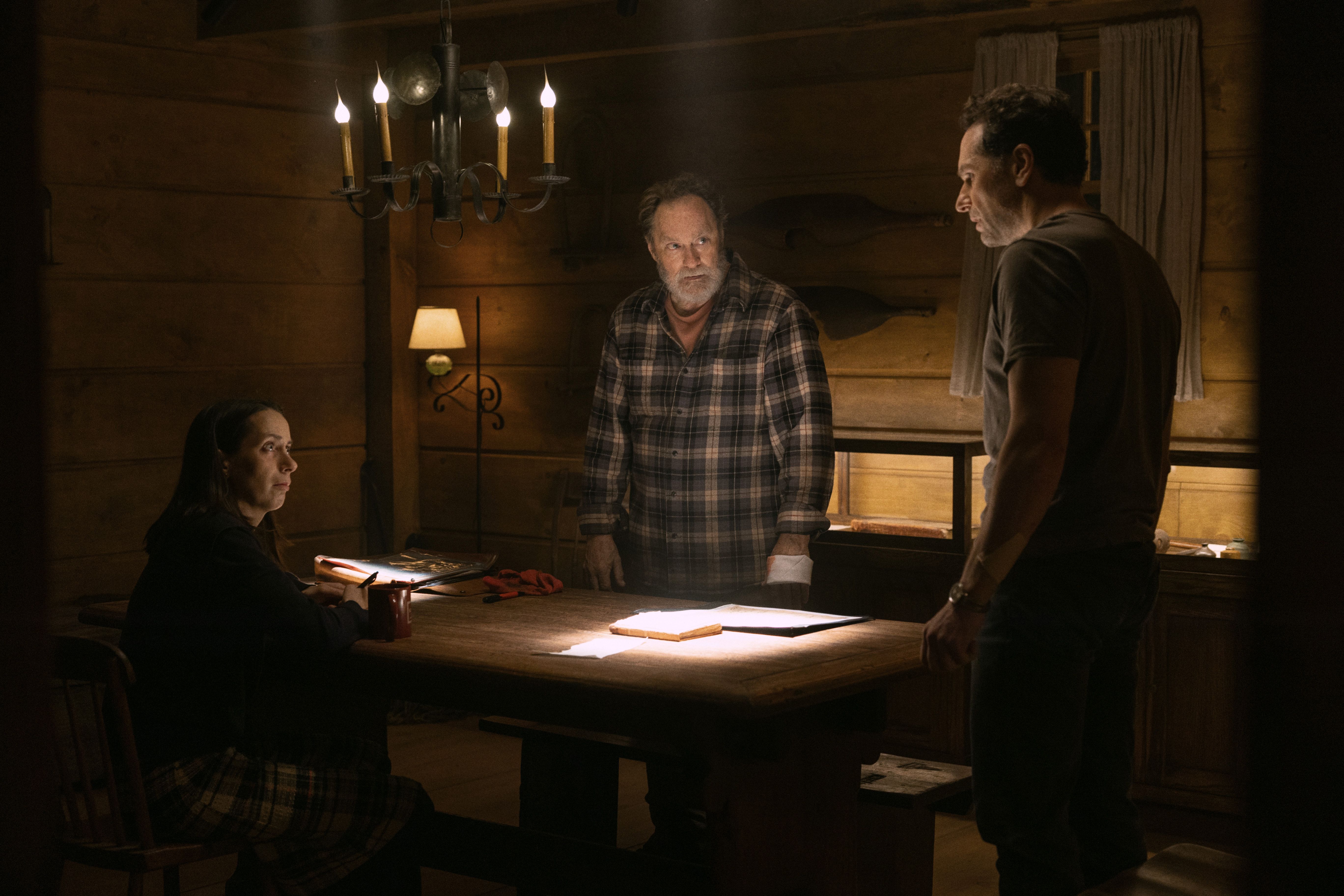
O’Flynn never tries to make Patricia cooler than she is. If anything, she leans into the character’s awkwardness, seemingly always overwhelmed by the world around her whilst also possessing a stubborn resilience that keeps propelling her forward. The performance has a magnetic effect that makes viewers root for her almost immediately—you laugh at Patricia, then she has you at the edge of your seat, but not before pulling at your heartstrings, sometimes all within the same scene.
If you’ve put stock in Patricia, there is no higher return on investment than the season’s second-to-last episode, ‘Emergency Shelter’. Here, the show delivers a loving homage to slasher films with a pastiche that includes Halloween-inspired imagery via director Hiro Murai, and a relentless masked killer. The episode allows Patricia to finally confront the Boogeyman who has haunted her for decades by setting him on fire, shooting him, and watching him collapse. The show’s funniest gag arrives in the form of a montage during which Patricia escorts the supposedly dead Boogeyman from the ambulance to the morgue and then finally the crematorium, all with a shotgun still trained on his body. It’s only when he is reduced to literal ashes that she is finally able to relax. Patricia does what generations of horror protagonists have failed—making sure the killer is dead—which is part of the reason why she has lodged herself so firmly in the audience’s imagination. Also, can you blame a girl for wanting to be cover her bases after spending a lifetime being told that she’s wrong?
Over the last few decades, TV has become increasingly interested in women who are messy and difficult and anxious, or simply uncool—think Fleabag, or Lexi on Euphoria, or the crown princess of the socially awkward, Hannah Horvath from Girls. Patricia belongs to that cohort of characters but also feels distinct from them, because she isn’t particularly aspirational, nor is she secretly a genius. And she’s also far from ever being the most powerful person in the room. Instead, Patricia is a little lonely and perhaps too earnest and cringe-inducingly awkward, and wants above all else to belong and to be believed, in a way that feels refreshingly ordinary
The fact that she ends up saving the day is almost secondary to everything else. For a show filled with monsters and curses, it feels surprisingly radical to have her emerge as the fan favourite. And now that Widow’s Bay has been renewed for a second season, the show has the opportunity to do what horror rarely allows for: sticking around long enough to find out what happens after the ‘final girl’ wins.