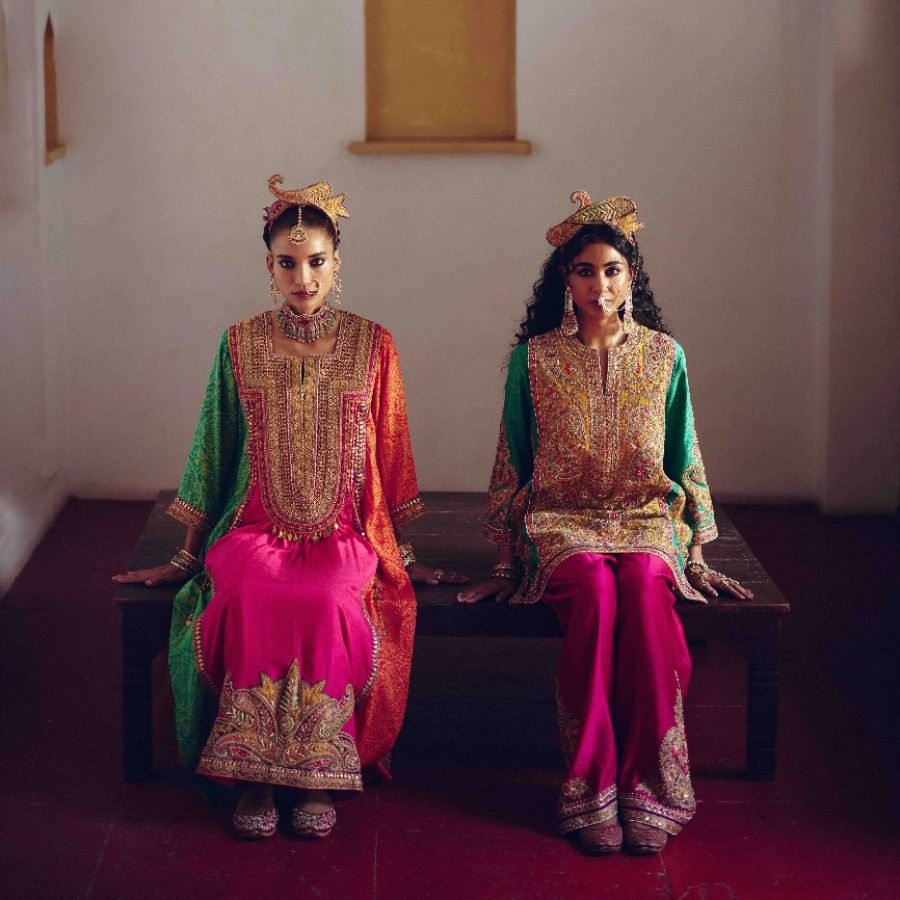




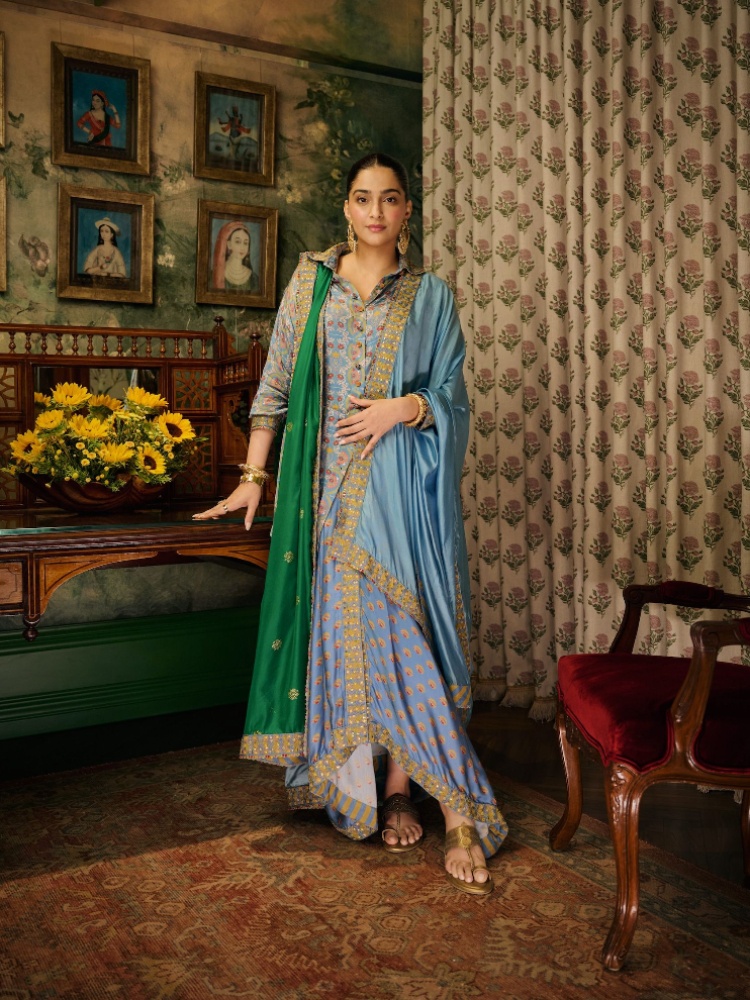

There are wedding outfits that look like they were made for the occasion, and then there are the ones that make you reconsider the occasion altogether. Sonam Kapoor Ahuja’s look for her sister Anshula Kapoor’s mehendi belonged firmly to the latter category. A printed button-down shirt, a lungi-inspired silhouette, two dupattas in contrasting shades of blue and green, and enough jewellery to hold its own against all that colour: it was distinctly Indian without looking conventionally dressed up, and festive without relying on the familiar shorthand of a heavily embellished lehenga. Custom-created by Punit Balana and styled by Rhea Kapoor, the ensemble drew from Balana’s ‘Noor Bagh’ collection, with its chidiya booti motif and signature print language doing much of the visual work.
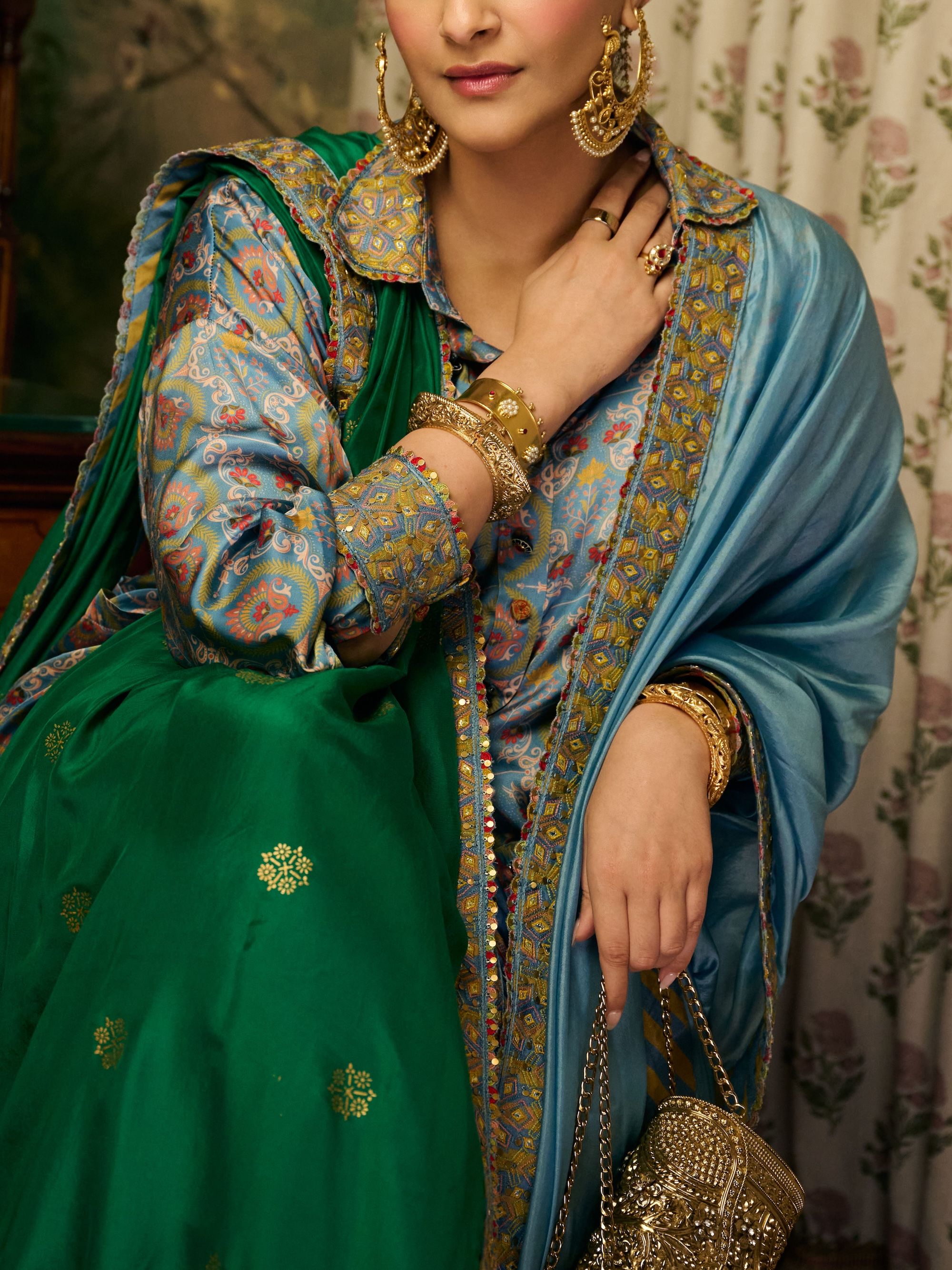
It also happened to be the kind of look that photographs well, travels quickly, and gets people talking, but its real significance lies elsewhere. The outfit made a persuasive case for something Indian wedding fashion has perhaps been underestimating for a while: a print can be every bit as occasion-worthy as embroidery when it is given enough thought, scale, and character.
For Punit Balana, the reaction was particularly gratifying because the look was never conceived as a deliberate attempt to make prints “happen”. “Prints come to me very organically. It’s very intuitive.” he says. “Our prints have definitely evolved but it’s still a very important part of Punit Balana’s brand language.” That distinction matters. The renewed appetite for prints may feel like a recent shift in the wedding wardrobe, but for Balana it is less a trend to chase than a design vocabulary he has been building for years.
The new rules of festive dressing
The appeal of Ahuja’s look was not simply that it was different. Plenty of wedding outfits are different for the sake of being different. What made this one work was the way its contradictions were styled: a Western button-up shirt against an unmistakably Indian lungi silhouette; a soft, printed palette sharpened by an emerald dupatta; heritage cues brought into a silhouette that felt entirely relevant in the present. “It’s a fresh take on a mehendi look, where we have the right amount of Indian-ness and, at the same time, it’s very, very, very modern,” says the designer.
That may be the mark of the shift underway in wedding dressing. The modern bride is not necessarily moving away from grandeur; she is becoming more particular about where grandeur belongs. Balana puts it more directly: “Our brides are ready for a change. They are no longer looking for something that is super heavy or embellished, especially for the pre-wedding festivities,” he says. “They want something that is more playful, which is lighter, something they can breathe and have fun in. Prints are the right answer for that.”
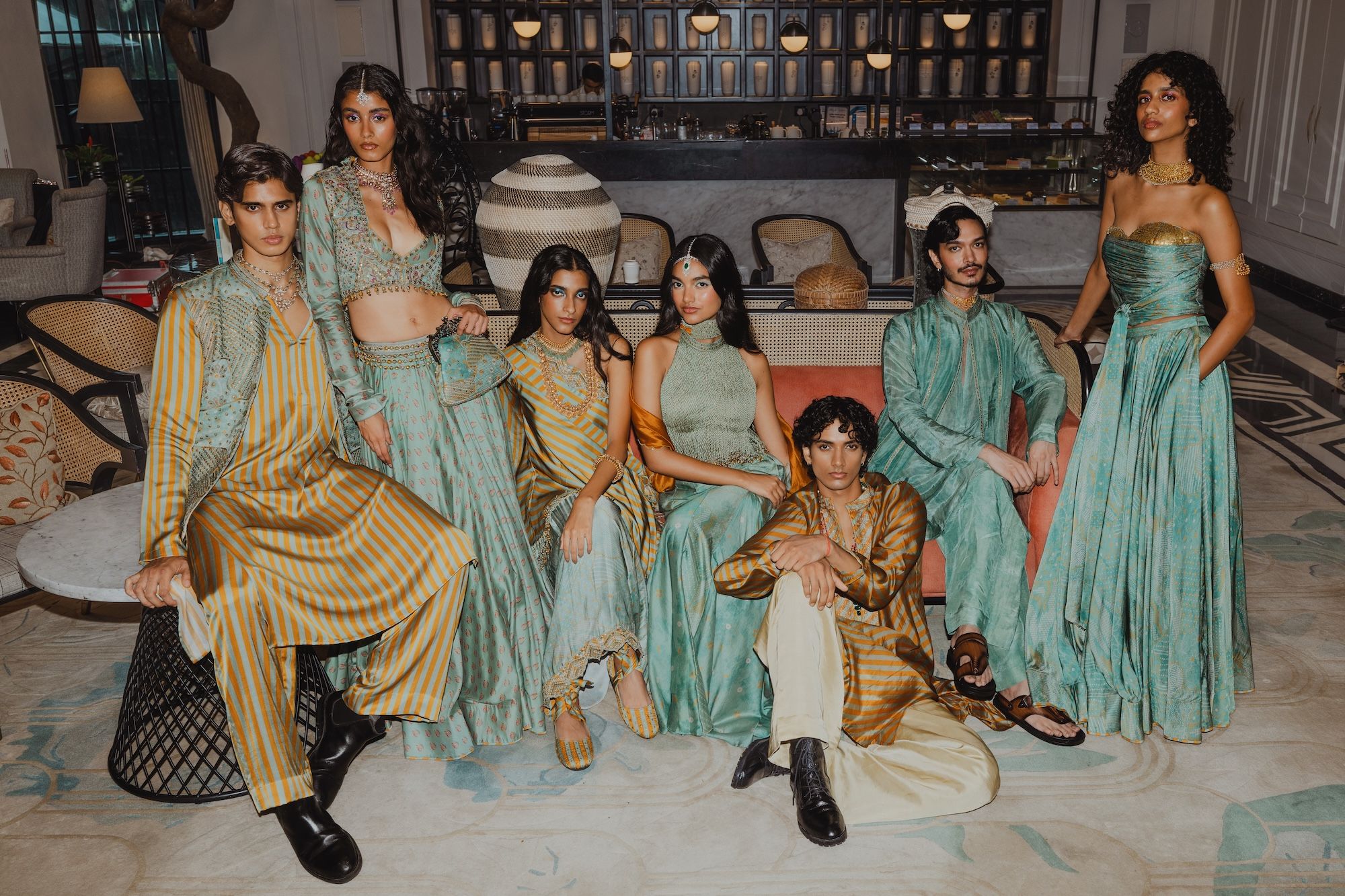
The important caveat, of course, is that “printed” should never become another word for “easy”. Balana is particular about what makes a print feel worthy of a wedding wardrobe. “The first most important thing is the choice of fabrics,” he says. “It needs to be rich, like silk. Or a breathable, flowy fabric.” Then comes the pattern, colour, and motif: “They need to tell a story. For me, it’s very, very important that there’s a thought behind it.” And finally, construction and embroidery, which he considers equally instrumental in giving a garment its finish.
India has never really been print-shy
Block printing developed distinct regional languages across Rajasthan and Gujarat; kalamkari brought painted and printed narratives to cloth in Andhra Pradesh; ajrakh developed its complex geometric vocabulary in Kutch and Sindh; and Indian chintz, with its intricate floral patterns, became such a coveted export that Indian textile-makers were adapting their designs for international markets.
As for Balana, one of the earliest techniques he learnt was “Mom ka Chhapa, a traditional wax-printing technique from Bikaner in which specially made metal blocks are filled with wax before gold powder is applied to create a raised, embossed effect”. More than two decades later, he continues to work with the karkhana of the artisan who taught him this technique.
Perhaps that is why the current love for prints feels less like a revival and more like an expansion. Indian fashion is not rediscovering print; it is rediscovering how much a print can do. And Balana’s own checklist is telling because it places the print within the construction of the garment rather than treating it as an afterthought. “The right construction can create a look,” he says. “A very ordinary basic shirt can look luxurious and can be a couture piece if the construction is right.”
Perhaps the print deserves the first word, not the last
For a bride who has spent years saving solid-coloured lehengas to her mood board, the idea of wearing a print can feel like a slightly adventurous choice. For her, Balana has an advice:
“Pick prints for your lighter, fun celebrations,” he says. “It could be for the mehendi, haldi, carnival, or a pool party.” The common thread, he points out, is that these are occasions where you need an outfit that is “playful, easy, modern, sexy, breathable”, and printed silhouettes give you the option to experiment and try different looks, rather than your entire wedding wardrobe being a roll-call of heavy lehengas.
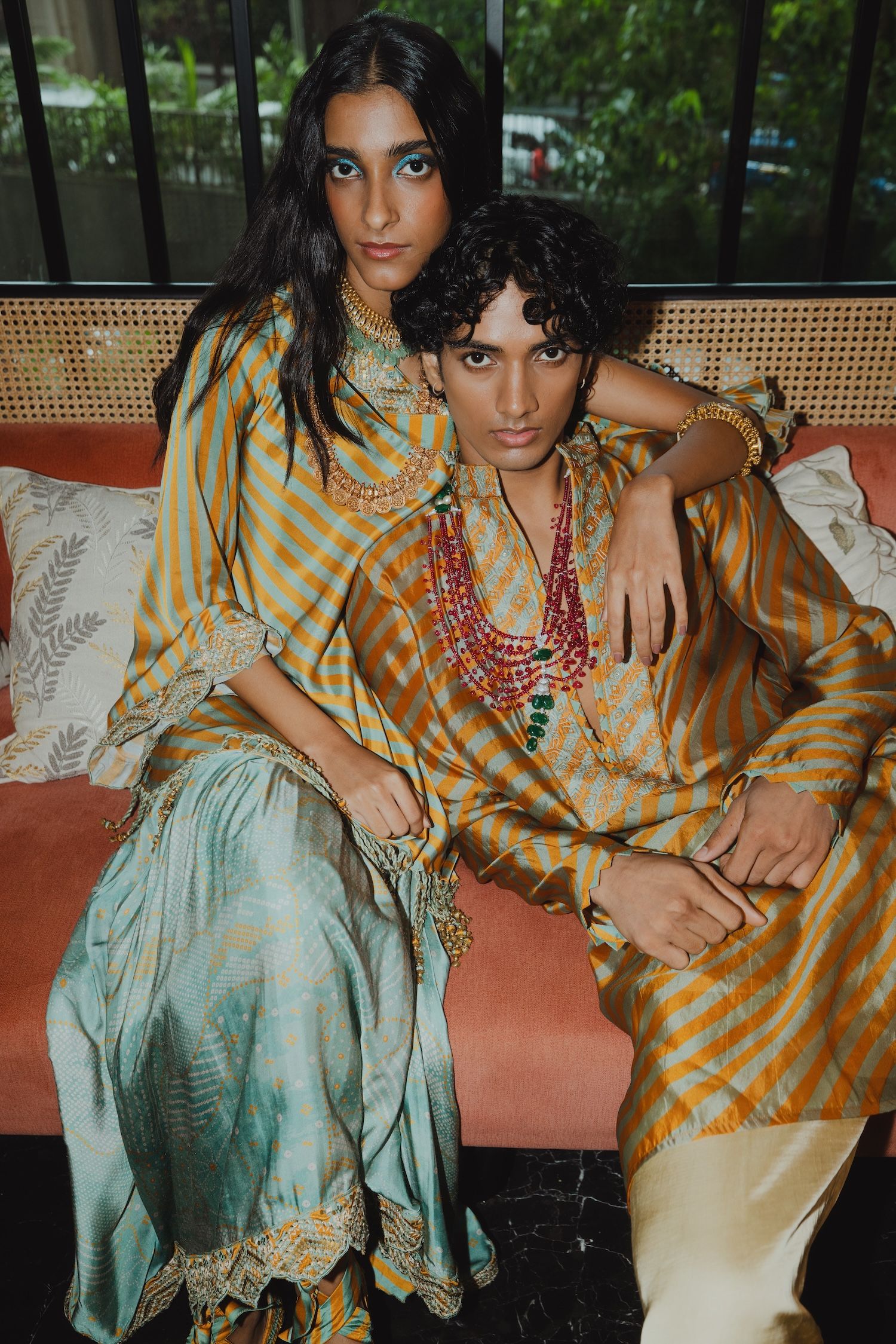
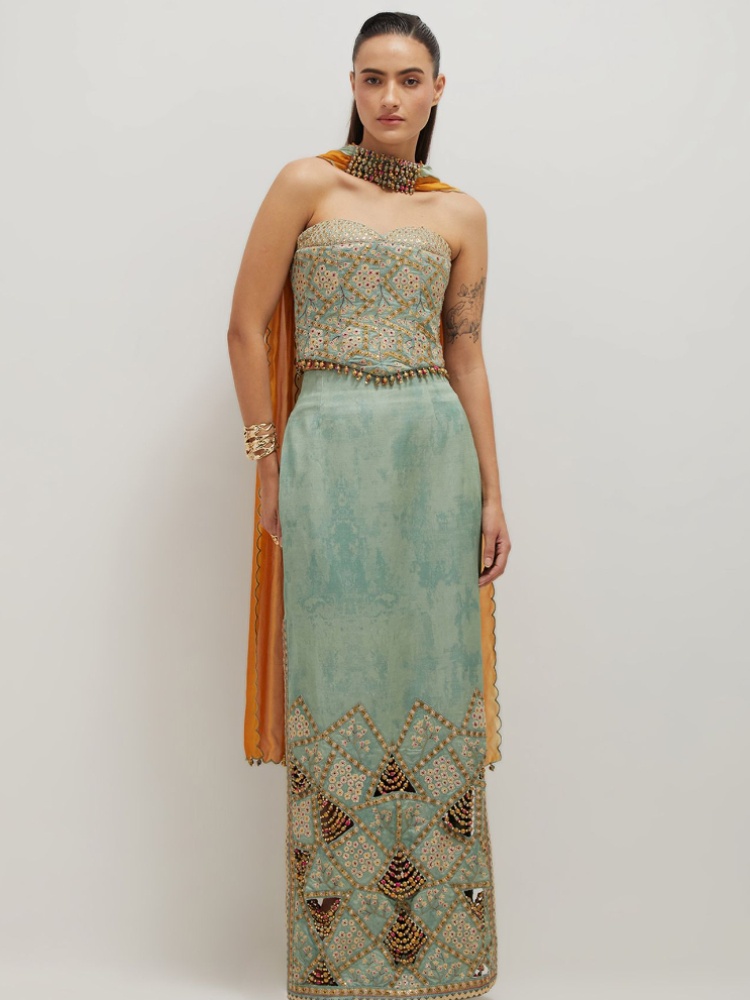
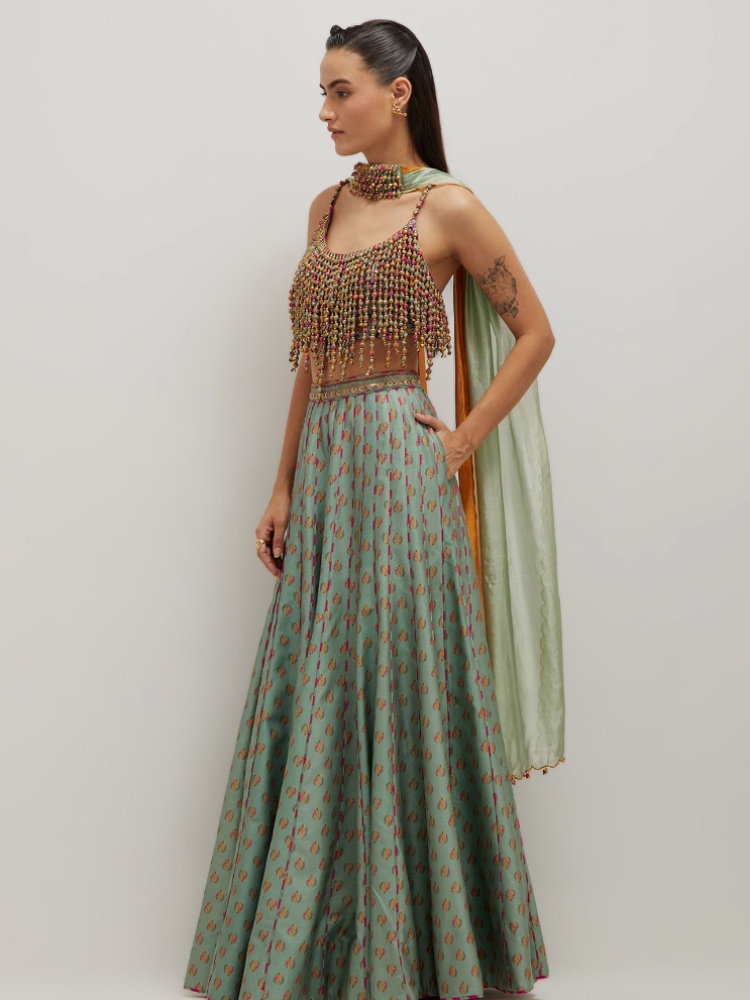
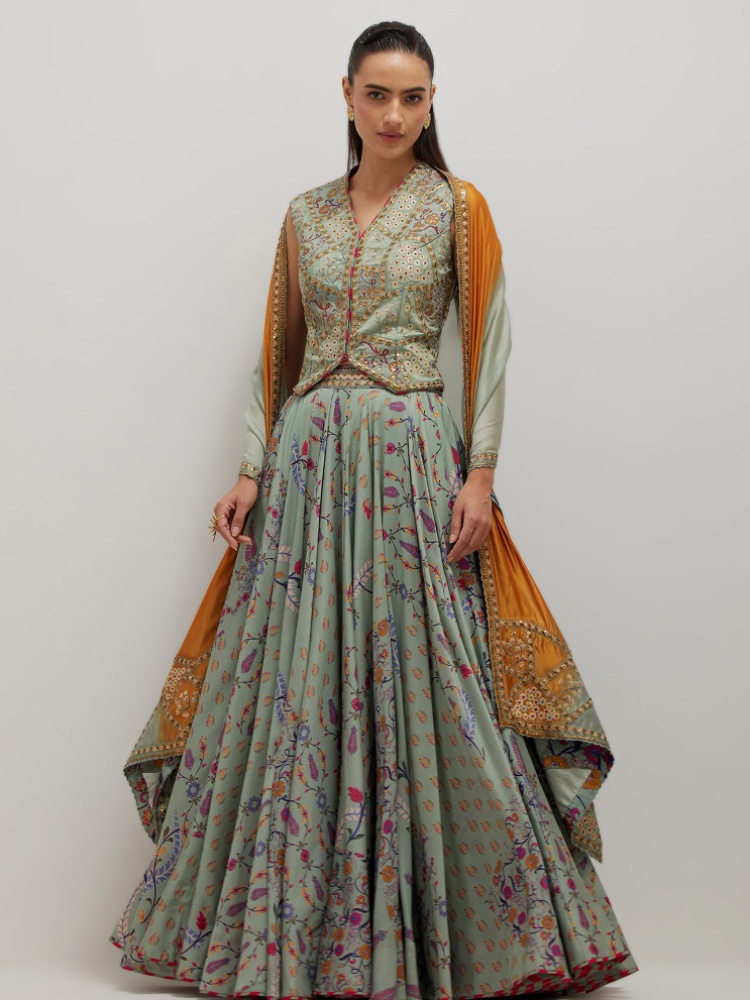
Balana points to the many silhouettes he has explored over the years for these occasions: draped skirts with corsets, tassel tops with lehengas, and other combinations that move away from the expected three-piece wedding set. For anyone still unsure where to begin, Balana’s advice offers a useful filter: look beyond the prettiness of the motif. Ask what fabric it is on. Ask whether the pattern, colour, and motif have a story. Look at how the garment has been constructed. Then decide how much embroidery is actually necessary.
Moh, and a wardrobe that doesn’t end at the wedding
For The Wedding Collective season three happening later this August, Balana takes that idea further with ‘Moh’, a new collection that treats the print as a thread running through an entire occasion wardrobe rather than something confined to one hero garment. There are tassel tops that can be paired with pencil skirts, draped skirts, saris, and fluid lehengas, creating combinations that can be dressed up, paired apart, and styled depending on the occasion. Well, from Sonam Kapoor Ahuja’s much-discussed mehendi look to his new collection, Balana sure has made a compelling case for giving print the starring role in occasionwear.