



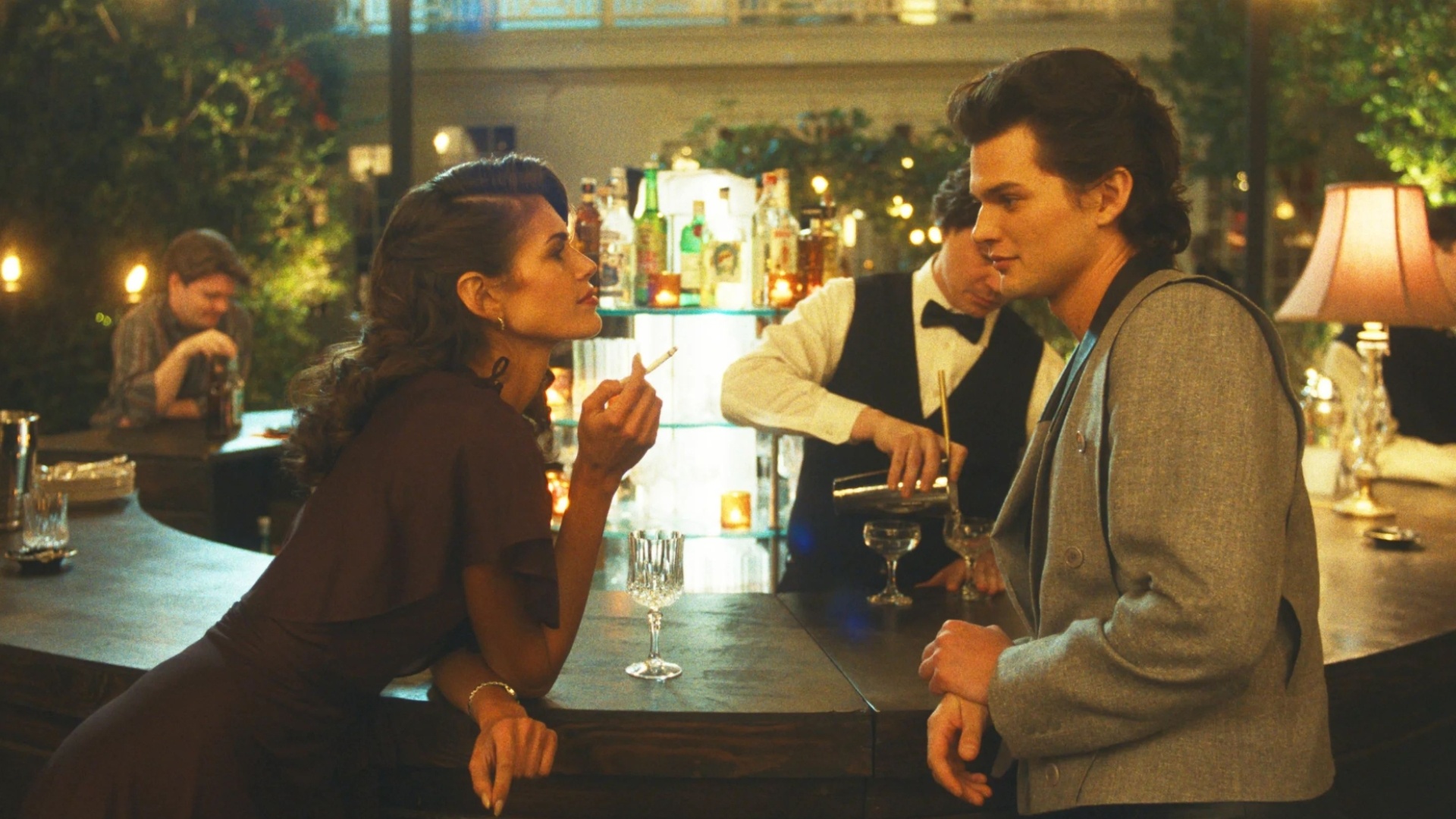

In the opening scene of The Shards, which is now streaming on JioHotstar, Bret Easton Ellis (Igby Rigney), the protagonist, arrives at a theatre in Westwood, Los Angeles, to watch Stanley Kubrick’s The Shining. He describes himself as dressed in, “a fashionable new Ralph Lauren shirt, brown with a touch of white-grey stripes, Calvin Klein jeans with Gucci loafers”. It’s clear from the outset that fashion is woven into the fabric of the story. Set in 1980s Los Angeles and adapted from Bret Easton Ellis’s metafictional novel of the same name, the show follows a group of wealthy, unsupervised teenagers navigating the dramas of their social lives amid a spate of murders by a serial killer known as the Trawler.
Like us, if you’re obsessed with high-school dramas and are recovering from an Off Campus or Sterling Point hangover, then The Shards is for you. Except this show trades green-flag characters for complex, murky protagonists and a voyeuristic peek into the rarefied world of wealthy 1980s Los Angeles, where 90210-style teenage adventures meets the high-gloss glamour of Dynasty.
Move over, shoulder pads
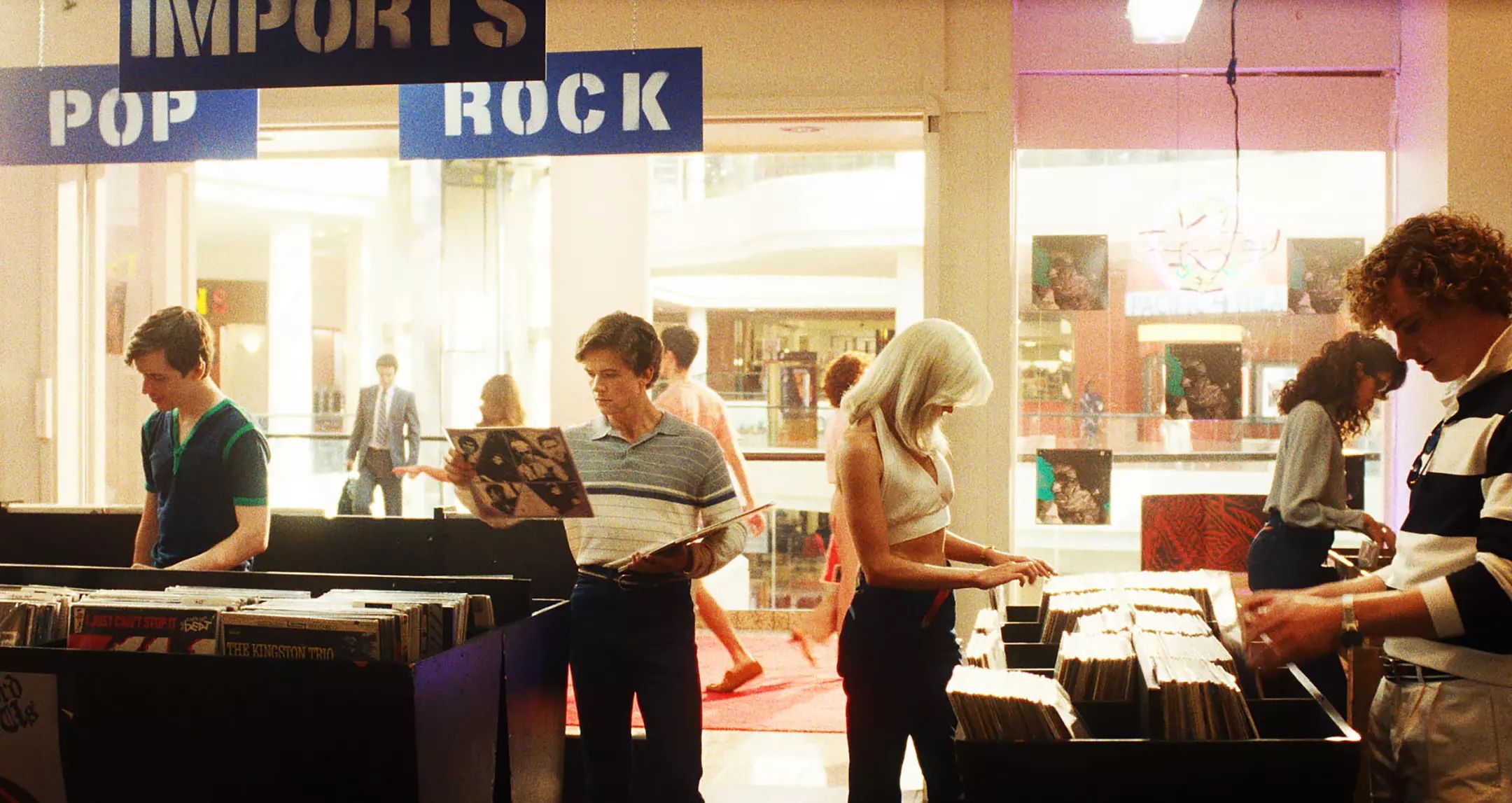
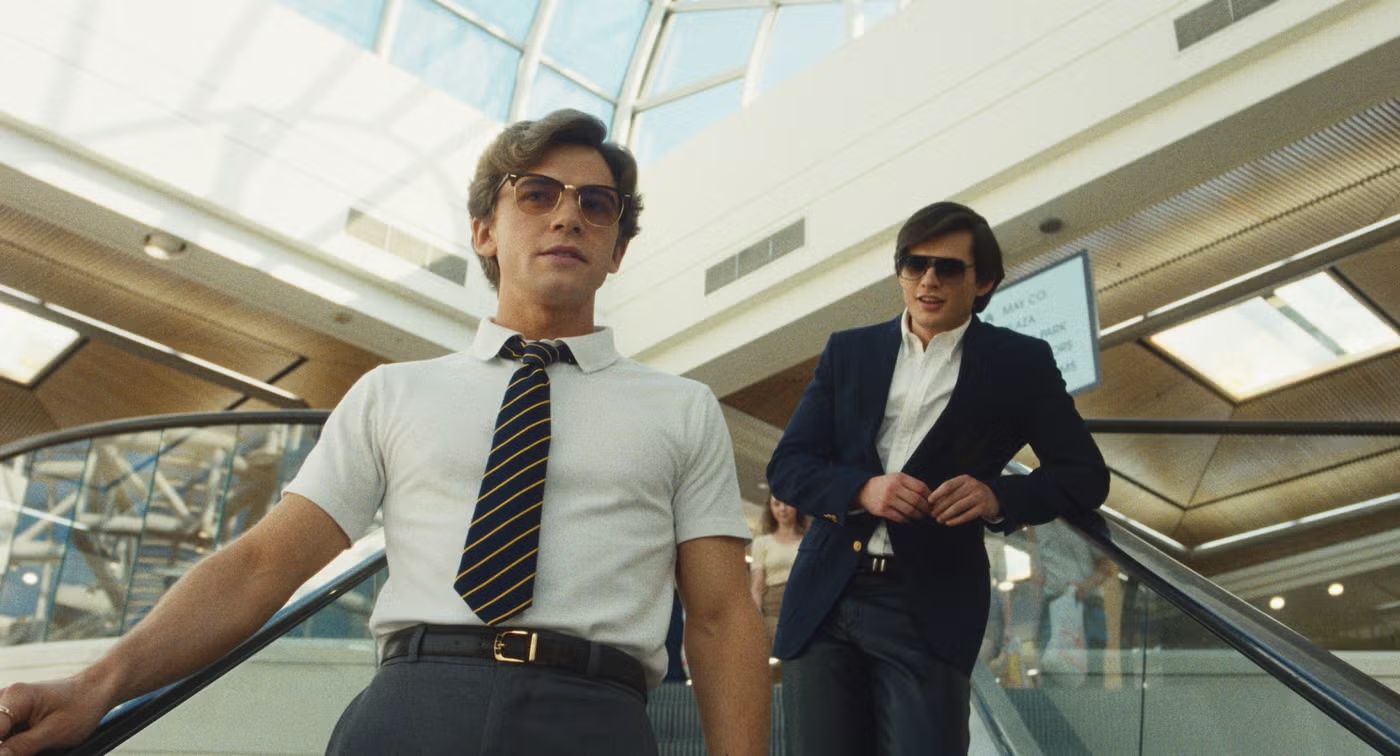
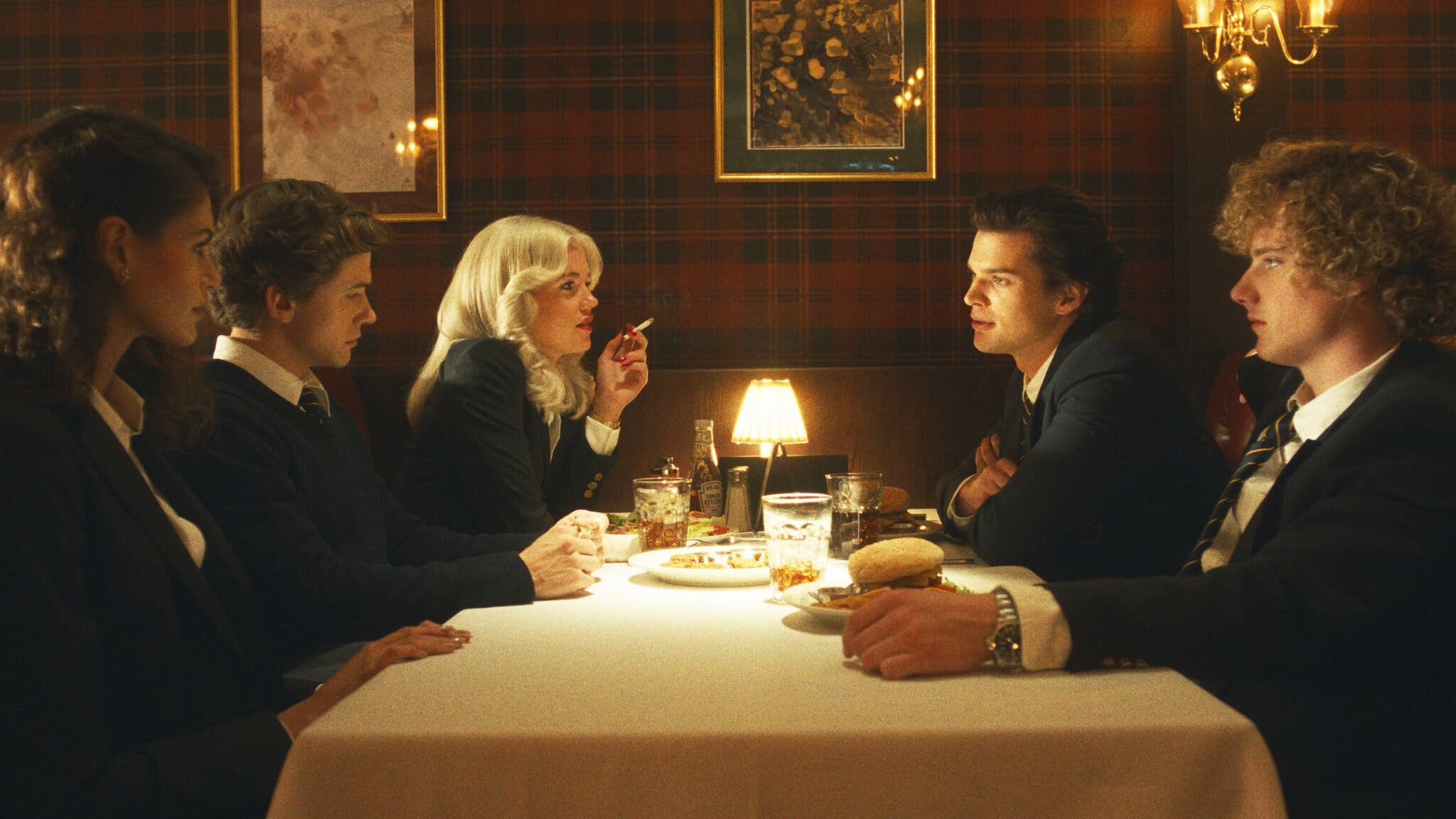
Set in an era that usually conjures images of Jane Fonda in spandex and glittering power-shoulder dresses, the show’s costumes instead draw from a preppie, collegiate style. The tone is set in the school uniforms worn by the gang, where the crisp white shirt is a constant—but never quite worn the same way twice. The narrator, Bret, wears his shirts short-sleeved, tucked into his trousers, which are extra high-waisted and cinched with a slim belt, an ensemble that accentuates his lithe frame. His classmate Thom Wright (Graham Campbell), the quintessential jock, is more WASP-ey with his full-sleeved shirt, a Rolex Submariner peeking out from the cuff. Robert Mallory (Homer Gere), the enigmatic newcomer, takes a different approach, draping a dark, well-tailored blazer over his whites, with his leather trousers slung lower to elongate and broaden his already towering frame—a deliberate play with proportion that asserts his presence within the geometry of the clique.
What’s most fascinating is that none of the clothes ever feel costume-y or gimmicky. Despite the obvious displays of wealth—the parties, the lavish homes, and the fancy cars—costume designers Lou Eyrich and Joshua Marsh kept the wardrobe remarkably restrained. The clothes are expensive, but they rarely announce themselves as such. This choice also reflects the fact that these teenagers exist in a kind of pseudo-adulthood. With their parents away on indefinite vacations, school hours seamlessly transition into cocktail hours: sleeves are rolled up for post-school martinis, while The Hamburger Hamlet, a white-tablecloth, candlelit institution, becomes their haunt for the rare occasion they’re seen doing homework.
Archetypes rewritten
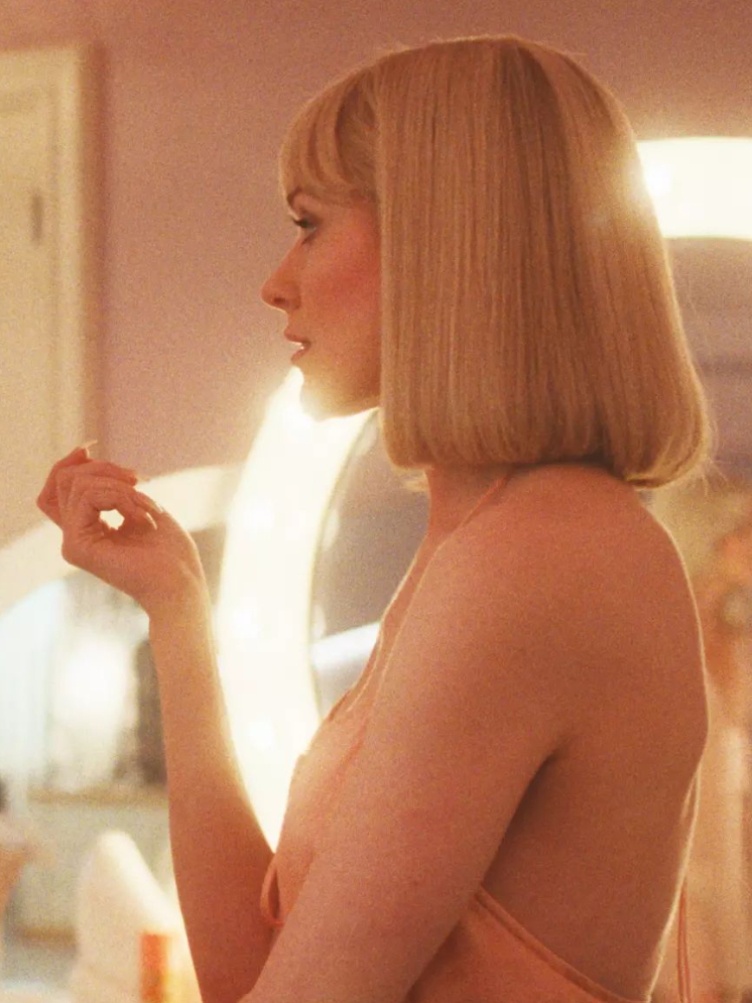
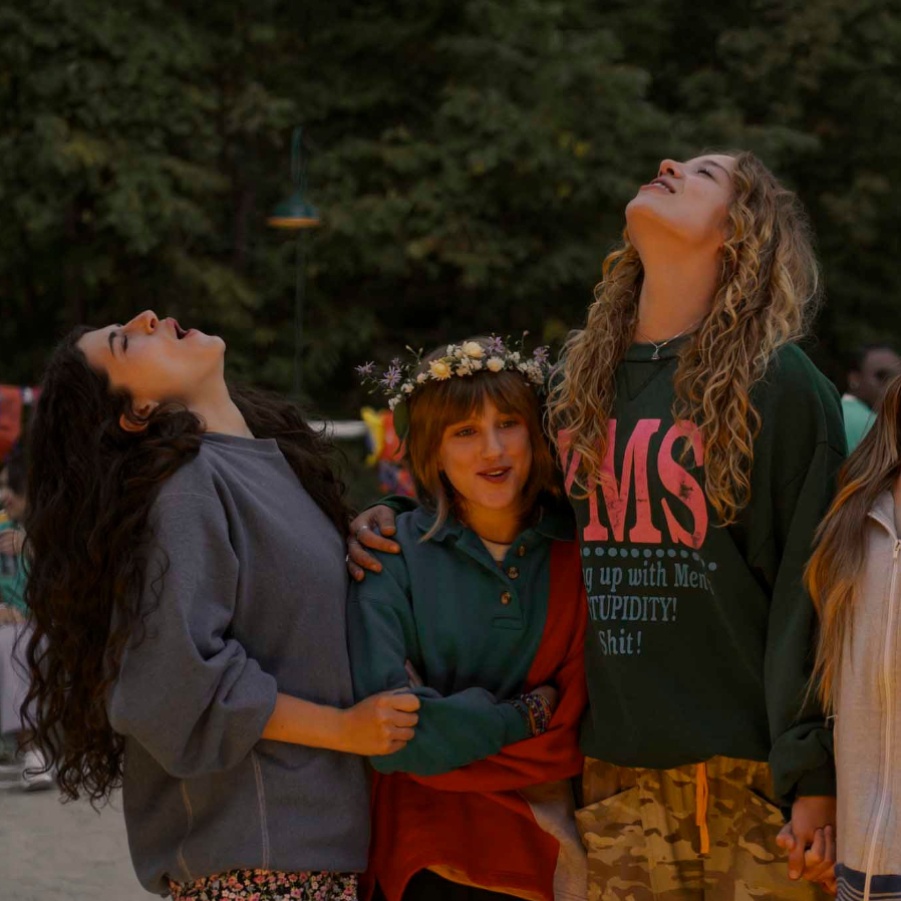
The female leads, Susan Reynolds (Kaia Gerber) and Debbie Schaffer (Hayes Warner), play out a beautiful study in contrast. The best friends—or something like that—spar not only through their sharp one-liners but through their clothes. Susan is the class valedictorian, the quintessential good girl and the object of Thom’s affection. Perfectly coiffed, with a pageant-ready smile, her beauty is channelled through a deliberately conventional wardrobe. Off campus, she appears in conservative lace blouses, often high-necked and paired with pearl earrings, and delicate knit dresses. Some of the latter recall the body-conscious knitwear Azzedine Alaïa was beginning to make his name with in the early ’80s. Her ivory knit gymwear, however, has overtones of designer Norma Kamali’s iconic 1981 ‘Sweats’ collection, one of the earliest takes on athleisure clothing.
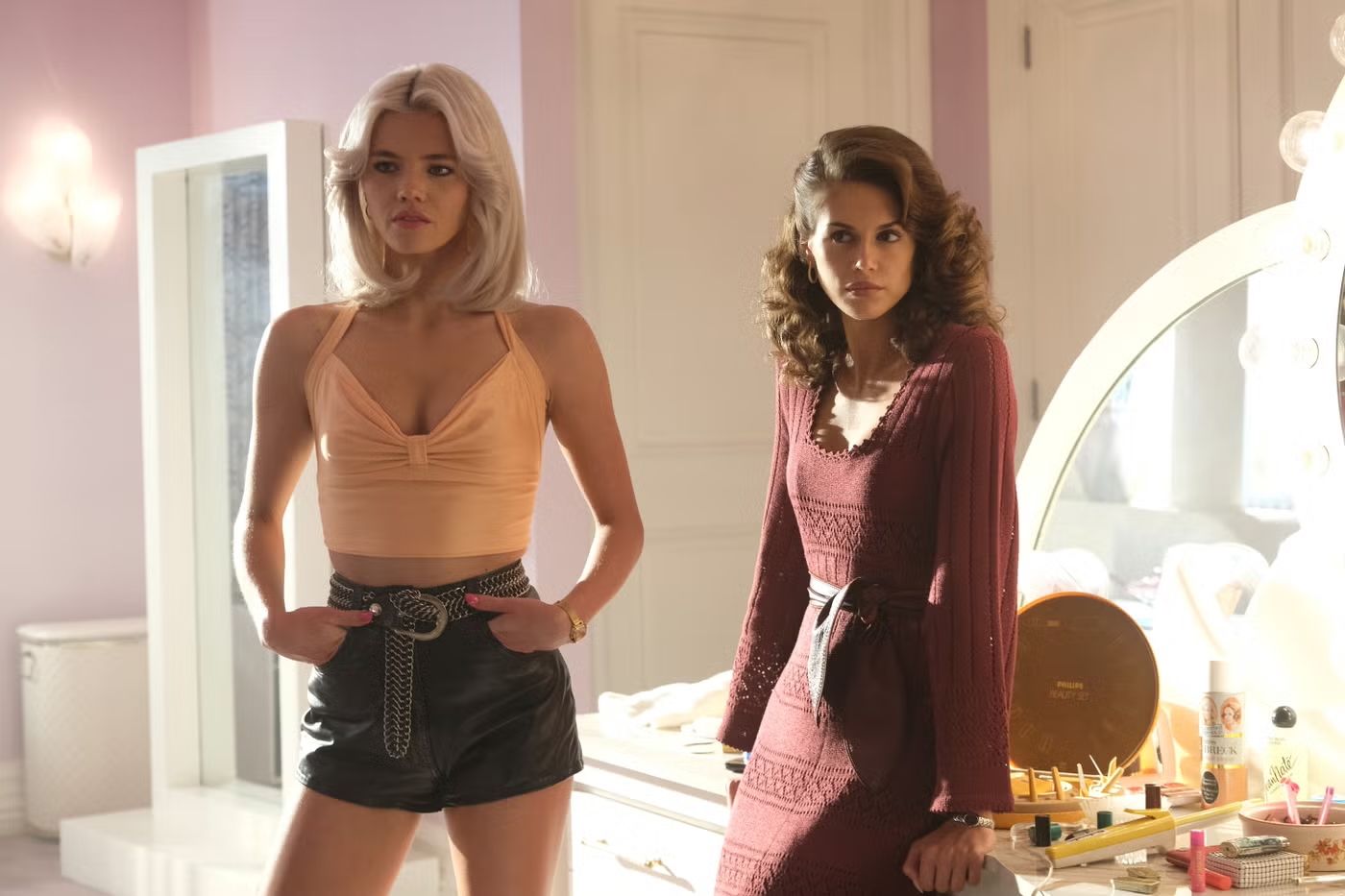
Where Susan is lowkey in virginal off-whites, hoop earrings, and Chanel flats, Debbie aims to provoke, her peroxide blonde hair and red lips offset by a wardrobe of electric blues and pinks. She’s always on a quest for the next accolade that might earn her universal validation—be it homecoming or prom—and her wardrobe is testament to that ambition. Worshipping at the altar of Emanuel Ungaro and Thierry Mugler, she wears her rich-girl status unabashedly, embracing glamour with an edge: form-fitting bodysuits and draped tops in jewel tones are paired with chainmail belts and American Apparel-esque disco pants.
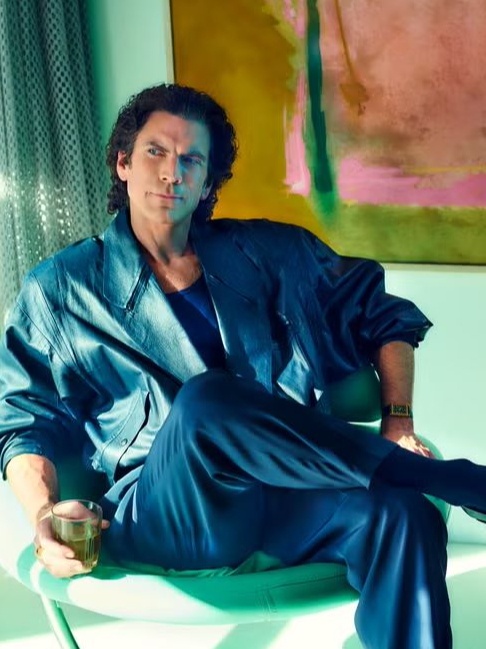
At Dance Fever, the televised dance competition, Debbie guns for the trophy in a carefully considered indigo minidress only to lose to Susan, who arrives in a more casual, mature coral-hued jumpsuit. Debbie’s hunger for attention seems inextricable from her dysfunctional parents, whose distinctive styles mirror their own complicated personalities. Her dad, Terry Schaffer (Wes Bentley), a celebrated film director and closeted gay man, dresses into the ambiguity of his two selves: louche leather jackets over expensive cashmere turtlenecks for his public persona, and silky shirts unbuttoned to the navel in scenes that reveal his more nuanced sexuality.