



Films23 Dec 20254 MIN

How ‘Twinless’, a funny sad movie about grief, conquered the festival circuit

The Sundance hit is now on Apple TV

Image

Grief can take you to some dark places. And filmmaker James Sweeney’s Twinless, which deftly flips between dark comedy and devastating sadness, understands this perfectly. In an early scene, the protagonist, Roman (Dylan O’Brien), dealing with the sudden loss of his identical twin, Rocky (also O’Brien), rips open the packaging of a Pop Tart. The camera lingers on the snack for only a split second, then focuses on Roman’s furious outburst for far longer. This is a grieving man who has moved into his late brother’s apartment, is surrounded by his things, and is wearing his clothes. Yet, it’s the sight of a Pop Tart missing its frosting that becomes his breaking point. Life is awful, the movie seems to be saying, so can he not just have one good thing for himself?

Earlier this year, Twinless premiered at the Sundance Film Festival, where it won the Audience Award (US Dramatic) and is now available to stream on Apple TV. The drama doesn’t spell its themes out loud, and what emerges is a funny sad movie or a witty, amusing take on hopelessness. Through O’Brien’s twin performance of two diametrically opposing characters, Twinless prompts some poignant questions: How do you deal with losing someone when the very act of looking into a mirror is a fresh reminder of that loss? How do you live as one when you’ve always felt like a half? And how do you continue telling stories when all of yours begin with a “we” instead of “I”? But at every given point, it also makes you think out loud: “Oh, no he didn’t”, “That’s messed up” and “WTF is going on!”.

The film opens with a shot of Rocky (Roman’s extroverted gay twin) meeting with an accident and dying, but minutes in you’re chuckling uneasily at his funeral. 
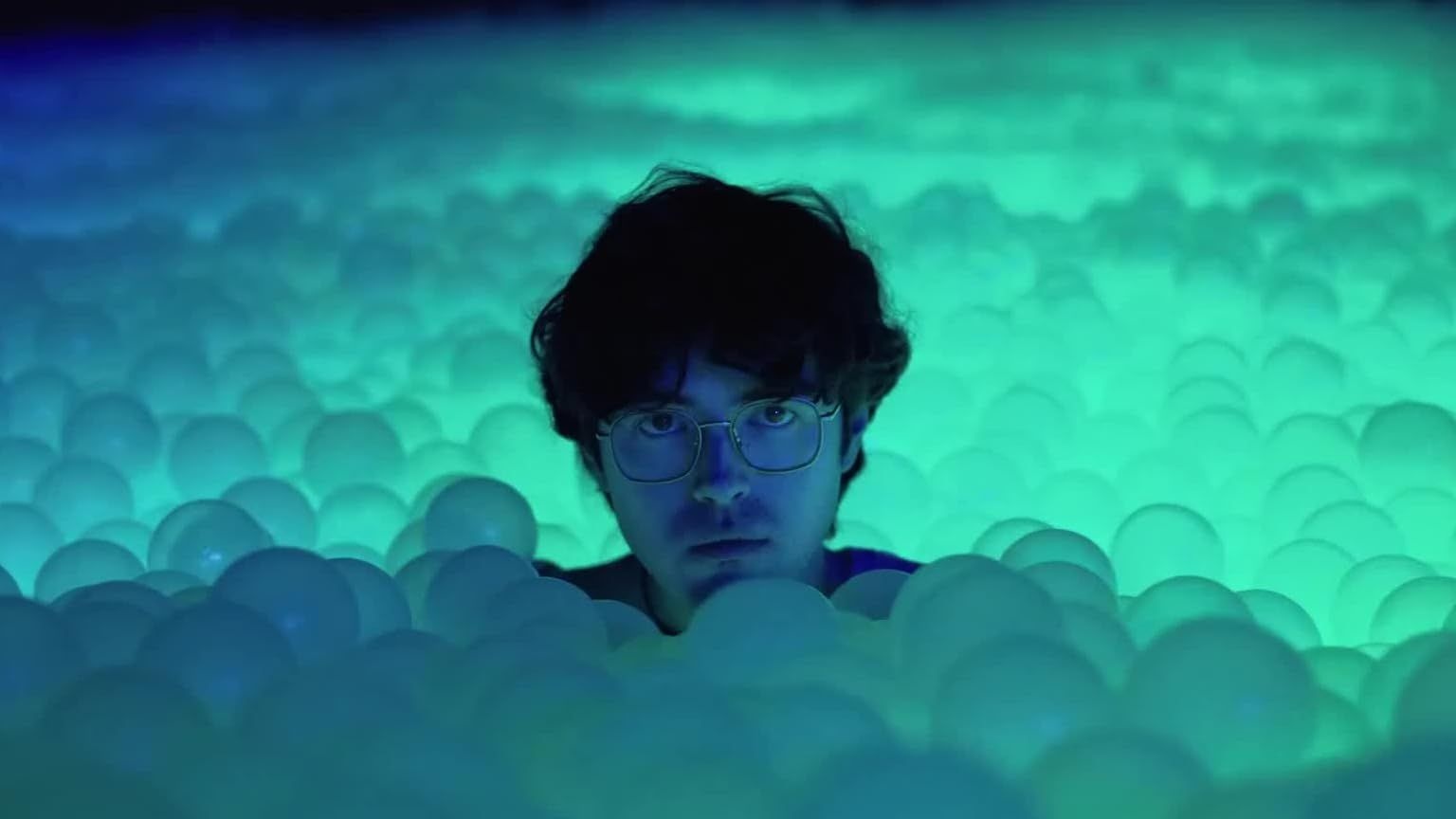
Over 100 minutes, the movie flips perspectives. The twist is best left unspoiled but suffice to say that it quickly evolves from a movie about a tragedy into a tense psychological tightrope. Grief is at the centre of the film, but the joy of watching Twinless lies in how it examines the way grief can also take you to some downright weird places. It raises perceptive questions about the nature of loss and then begins to question just how batshit crazy the process of dealing with it can make a person. Grief leaves you with an aching void, but the film examines the increasingly sociopathic measures a person can take to fill it.

Sweeney’s film is a cringe comedy-drama about a relationship based on a lie, with the suspense rising from a knowledge that the ugly truth will have to come out. The film centres around Dennis and Roman, two emotionally complicated characters, who forge a friendship. They find companionship with each other, but it’s clear this equation is fragile; if Dennis eases Roman’s loneliness, then Roman, inadvertently, fuels Dennis’s obsession. While Roman is grieving his lost twin, Dennis longs desperately to find his, if only to have someone he can count on to know him intimately.

In Twinless, loneliness quickly turns into fixation and mania; friendship slides into co-dependency and manipulation. This is also a film in which a friendly offer of help turns out to be a pretext to explore a fetish instead.

In the film, identities are constructed and deconstructed. People are stalked, spied on—which the movie depicts in a deliciously demented split-screen format—and lied to, in increasingly nonsensical ways, all in an attempt to ease the pain. Characters harbour secrets and suppress crucial bits of information, only to have their carefully constructed illusions come crashing right down on them. For a film about doubles, Twinless has far more fun exploring the dual (varyingly unhinged) identities that a single person could hold.

O’Brien, whom you may know from his work in the YA supernatural series Teen Wolf and the dystopian The Maze Runner series as well as Taylor Swift’s All Too Well short film, won the US Dramatic Special Jury Award for Acting at Sundance for his rich dual performance. As Rocky, the flamboyant gay brother, he’s easy-going and smooth-talking, cultured and confident—the life of a party. As Roman, he is quieter; his shoulders slump with the weight of his loss. Even his funniest lines are delivered with an undercurrent of sadness, and he’s more accustomed to being the butt of the joke.

Balancing out his sincerity is Sweeney’s barely suppressed sociopathy. Dennis’s deceptions begin to pile atop each other over the film, and a major revelation (and a very viral sex scene) seems to be just one ill-timed, unthinking comment away. Even then, the film doesn’t lose empathy for its characters, reminding us that even their worst impulses stem from a place of real hurt. 

In that sense, Twinless is smart, funny, and one of the most inventive and original movies about grief.

Twinless is now available to stream on Apple TV

The Nod Newsletter

We're making your inbox interesting. Enter your email to get our best reads and exclusive insights from our editors delivered directly to you.