



Is it us or is everyone tired, booked, overstimulated? Do you feel like you’re playing Tetris with your calendar everyday, trying to fill in every vacant spot with blocks, pretending you’re coping while your body quietly disagrees? This isn’t a personal failure or a productivity glitch. It’s collective burnout, normalised and renamed “busy”. New year, same shit, you might think. But there’s a reason why this year feels especially charged with energy—we’re on the threshold of the Year of the Horse. A Fire Horse, to be specific.
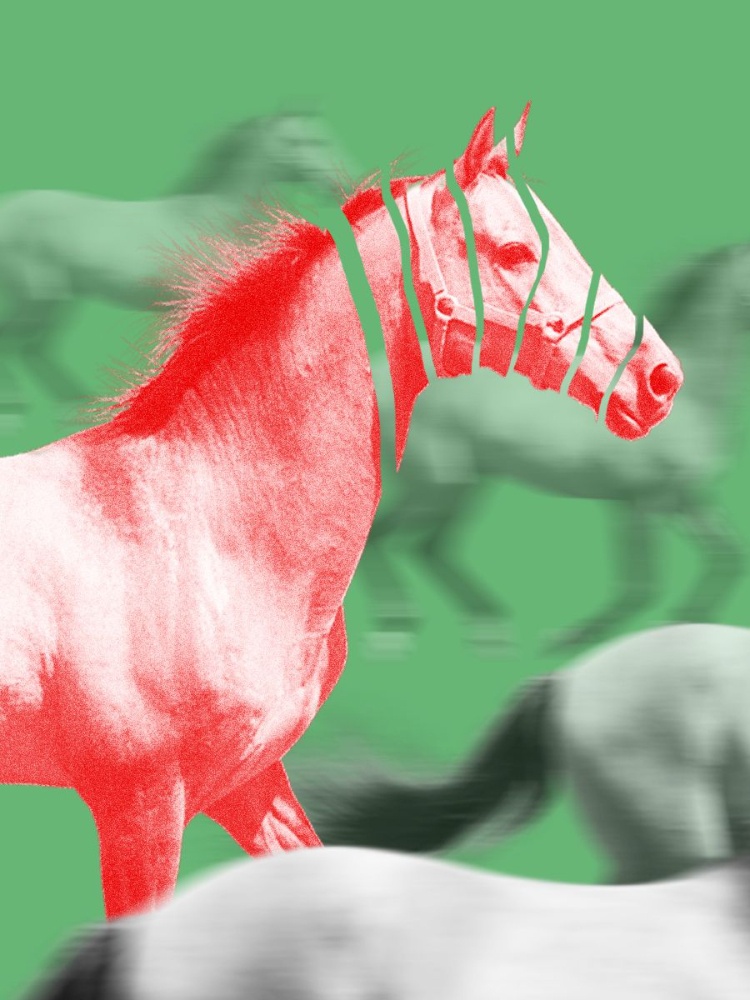
According to Chinese astrology, each year carries Yin or Yang energy: Yin folds inward, Yang pushes outward. The Horse is restless, independent, always moving. Add Yang Fire, and stillness feels awkward, almost indulgent, and motion becomes inevitable. When February 17 arrives and the calendar turns to the Year of the Fire Horse, subtlety will not make the cut.
Over a video call, Scheherazade Merchant, a Feng Shui and Chinese Metaphysics consultant with over 25 years of experience, better known as Sherry, tells us why this year feels combustible. “Yang Fire is like the Sun,” Merchant explains. “It exists on its own. In Chinese Metaphysics, Yang Fire is understood as independent and self-generating. Yang Fire is the Sun that shines in the day and does not need to be ‘created’. Hence, it is an independent entity.” The Horse, meanwhile, carries Yin Fire. “Yin Fire is the Fire of the Cauldron, needing wood, or resource, which depends on something to be created.” While both fall under the Fire element, “since their polarities are opposite, they combine to form a complete Fire element.”
That pairing is rare and signals intensity. With both Fires present, “we can look forward to intense Fire-related activity,” says Merchant. In life, this could manifest as volatility. “It relates to volcanoes, eruptions, war, fires, angry outbreaks, and tempers.” Fire is not all bad news, though. “On the happy side, it relates to fashion, so look forward to a change, a surge in the fashion industry, high visibility, and entertainment.” Will it be useful? Yes. Exhausting? Also yes. Stillness will start to feel suspicious, and it might be easier to keep moving than to explain why you have stopped.
Underneath this chaos, there’s structure. In Chinese astrology, the zodiac moves through the Ganzhi cycle, a 60-year system that pairs 12 animals with 10 heavenly stems. The animal shapes the year’s personality. The stem sets the energy, Yin or Yang, wood, fire, earth, metal, or water. Together, they explain why some years feel faster, hotter, or, frankly, messier. Fire Horse years land squarely in that thrilling but slightly unhinged category.
The shift did not arrive overnight. “The Chinese year transits every February, always from one dominant element to another,” Merchant explains. “The Year of the Snake [2025] already carried woodfire energy. And since wood feeds Fire, we were already feeling it, just in a milder form.” The Horse removes the buffer. This is where burnout creeps in. Not because ambition fades, but because exhaustion passes for drive and is routinely rewarded.
What Fire will amplify depends on what you already carry. Those with strong Fire in their charts may feel permanently turned up. Fire governs visibility, creativity, recognition, leadership, and fame. It wants attention. It favours momentum over perfection. Movement counts, even when it’s messy.
The downside is excess: impulsive decisions, emotional volatility, overreaction, and exhaustion. “These are all Fire qualities,” Merchant says, “but every chart is unique. Even people born two hours apart need very different things.” For those who require Fire, the year can be rewarding. “Those who don’t”, she adds, “would struggle a bit.”
Everyone experiences the Fire Horse differently. Some ride its momentum. Others feel pressed by it. Charts heavy in Water or Metal may heighten emotional or mental reactivity. Merchant avoids blanket prescriptions. Awareness matters as much as adjustment. “Feng Shui helps guide it,” she says, “but awareness allows better decisions and precautions.”
With my FYP clogged by reels predicting catastrophe, I ask whether the Fire Horse really deserves its cursed reputation. For centuries in Japan, the Fire Horse year, hinoe uma, made parents delay or avoid having children, fearing girls born then would be strong-willed and hot-tempered (insert eyeroll). The last cycle, 1966, saw birth rates drop 21 to 24 per cent, and Reddit threads today still erupt over the so-called “curse”, with users debating whether the superstition was justified or just cultural hysteria. Merchant dismisses it quickly. “No weight,” she says. “No year is more or less cursed than another.” Astrology, she reminds me, does not run on superstition.
Some of this energy can be managed at home. In 2026, the southern direction is sensitive. “We have the number 5, an Earth element, in the south this year, which creates an atmosphere of sickness, financial loss, and generally troublesome outcomes for those who occupy that sector, work facing it, or sleep with their head in the south. So, we avoid using the south room.” The north is less sensitive for daily use, but “repairs or renovations should be avoided because of the Three Killings. Feng Shui has many complex layers.” For a universal stabiliser: “A salt cure on February 4 in the south and water in the east works for everyone.” A “salt cure” is a Feng Shui ritual where salt is placed in a room to absorb negative energy. Merchant pairs it with water in the east to balance and stabilise the year’s tricky energies.
Whether it is thanks to the alignment of energies or your inability to get off the treadmill, burnout will inevitably lead to you getting yanked out of the race. Dr Shwetambara Sabharwal, clinical psychotherapist and founder of Mindcraft mental health centre, draws a clean line between locking in and crashing out. “After rest, someone who’s just busy feels better. With burnout, even after rest, the person doesn’t recover,” she says.
The issue isn’t always workload. “Being busy is external. Burnout is internal. It shows up in self-talk, self-esteem, and perfectionism.” Certain personalities take the hit harder. Type A traits, a high need for achievement, and being self-critical, she notes, are more vulnerable. “An introvert in constant social exposure will burn out faster. An extrovert in isolation will burn out faster.”
The fix is being smarter about the grind. Dr Sabharwal points out, “The best solution is to know yourself. Appreciate the process, not perfection. Learn to say no. Address the need for validation with a professional if needed.” And about slowing down? “A mindful pause will never make one fall behind. On the contrary, it is the foundation for problem solving and decision making.”
In a year like this, knowing when to move matters. Knowing when not to might matter more