



Food22 Jun 20268 MIN

The single most influential man in food

Over nearly four decades, AD Singh has built over 20 brands and as many chefs. At 66, he has no plans of stopping

Image

Photographs by Hunar Daga

Restaurants in Mumbai’s Bandra-Kurla Complex are determined to ensure their guests forget they are in BKC. To escape the massive glass-and-concrete business district beyond their doors, they offer dining rooms that seem like a series of somewhere-elses: a Goan beach shack, a Burmese teahouse, a Japanese manga-themed eatery, an Italian trattoria, an English pub. The city’s most corporate district is also, somehow, its most well-travelled.

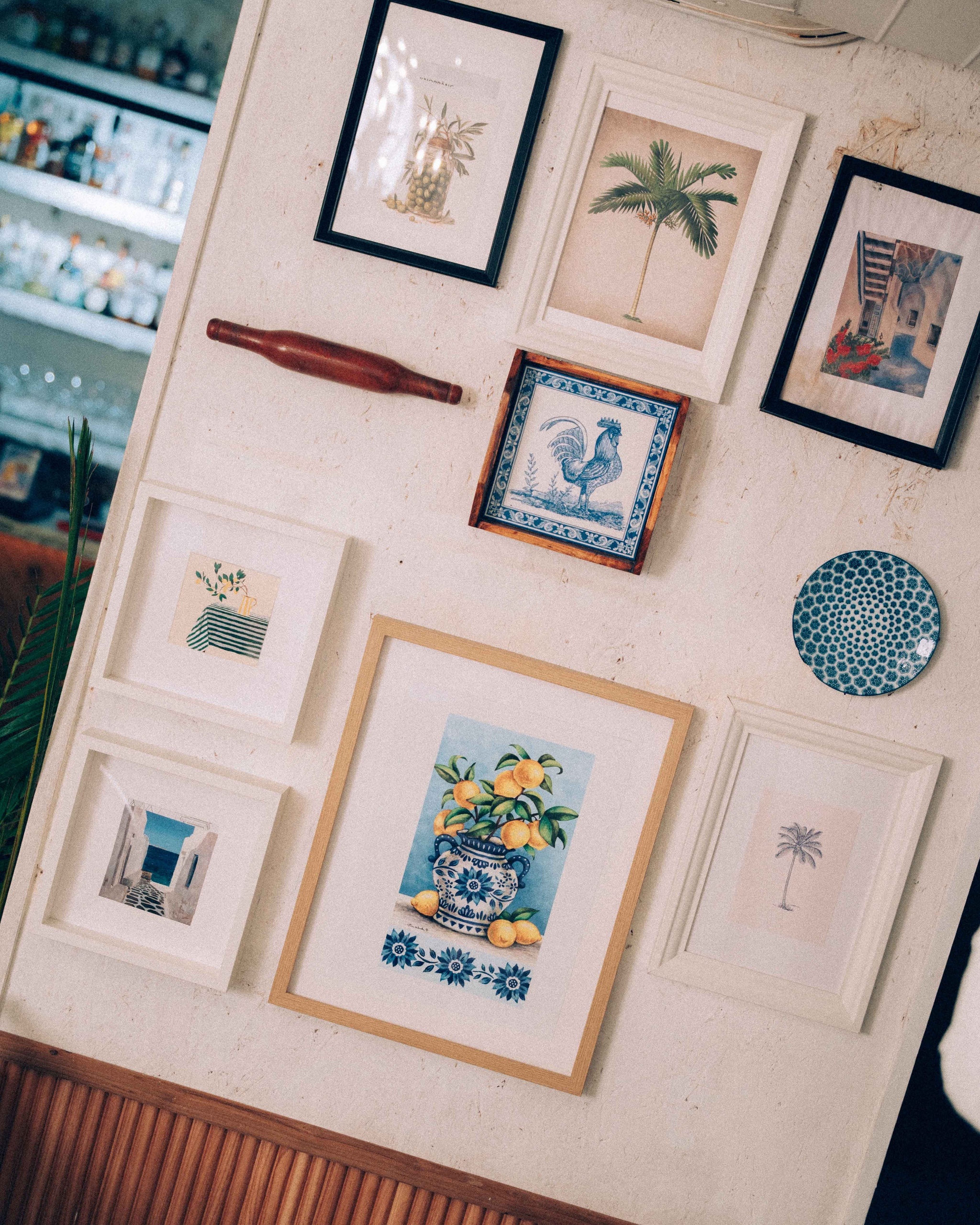
Olive Café & Bar, AD Singh’s latest restaurant, like its much older cousin in Union Park in Bandra, Mumbai, goes for the Mediterranean as its escape route. The room has whitewashed walls with accents of ocean blue on the roof tiles and upholstery, arched windows, sheer white curtains, some raffia overhead, rope-slung seats, and intimate booths. A long bar made of wood and white marble catches the diffused light from the corporate grid outside. Singh’s newest experiment is such a casual, lower-priced cafe that, in the six months since launch, it has been dispatched to smaller cities (Ludhiana and Chandigarh) and the outskirts of larger ones (Borivali East).

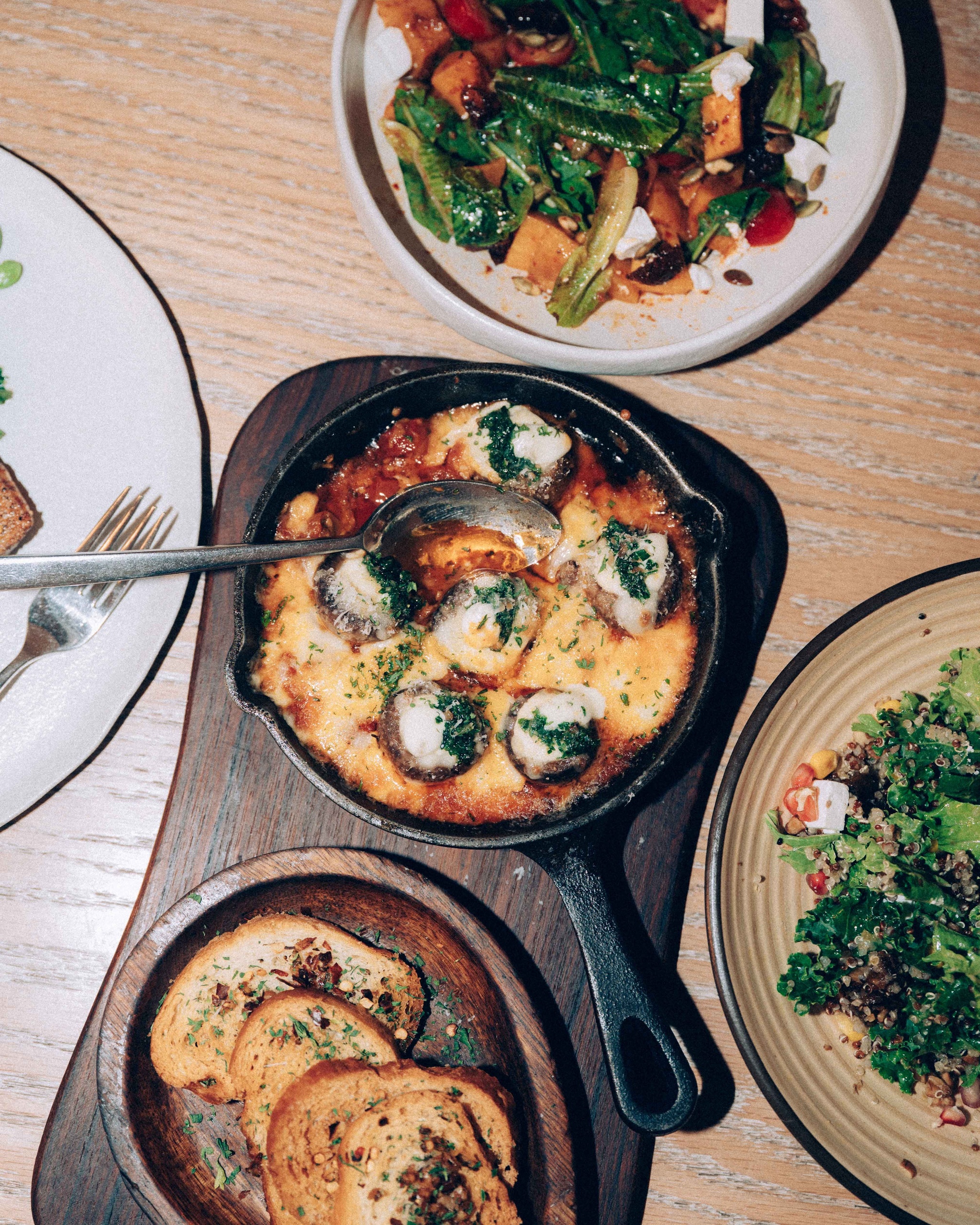
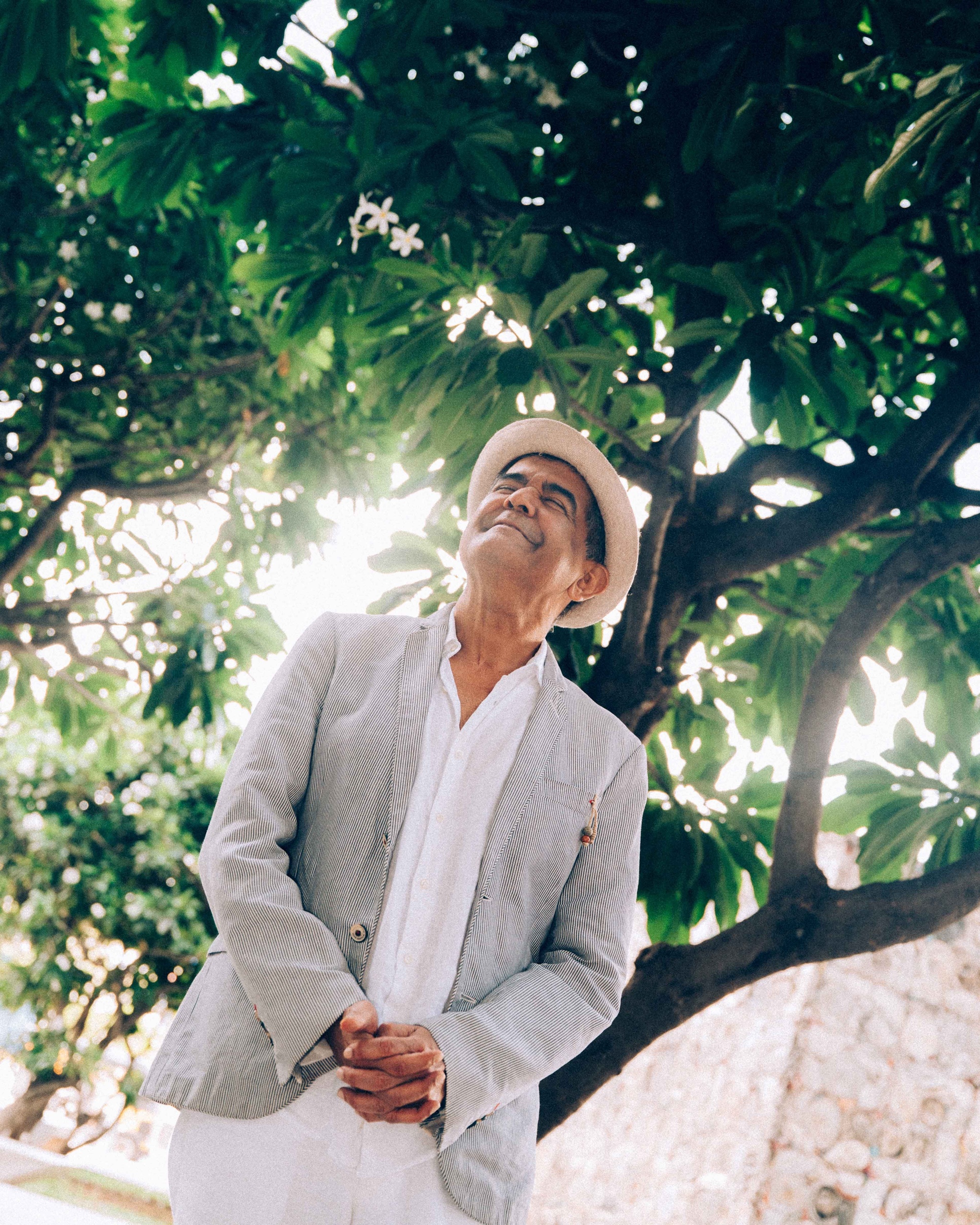
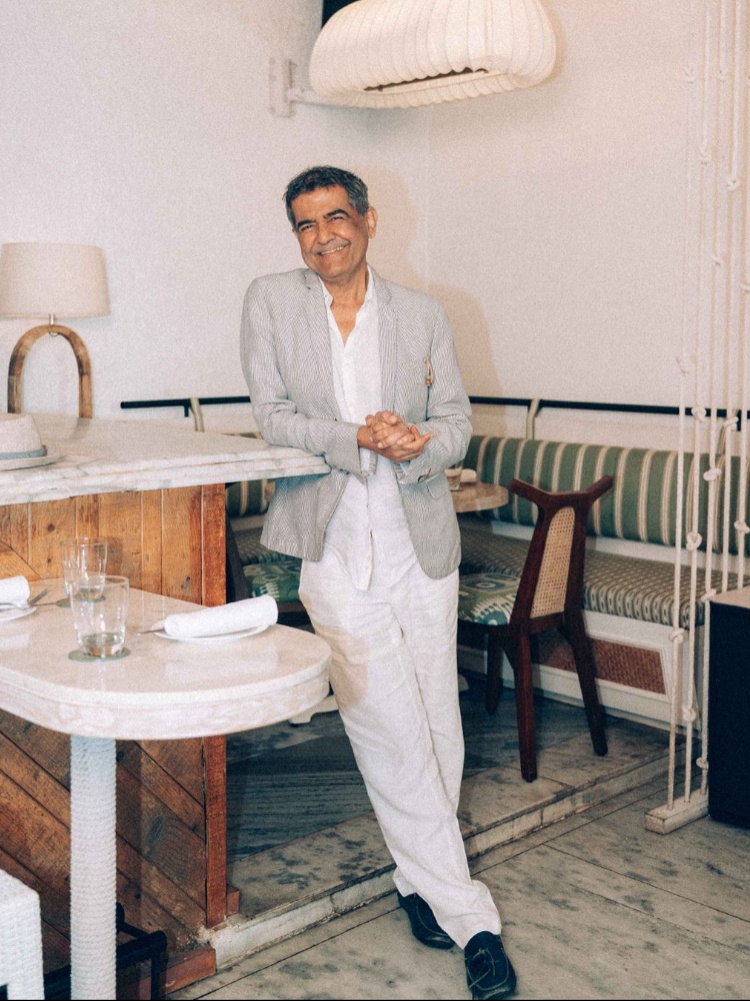
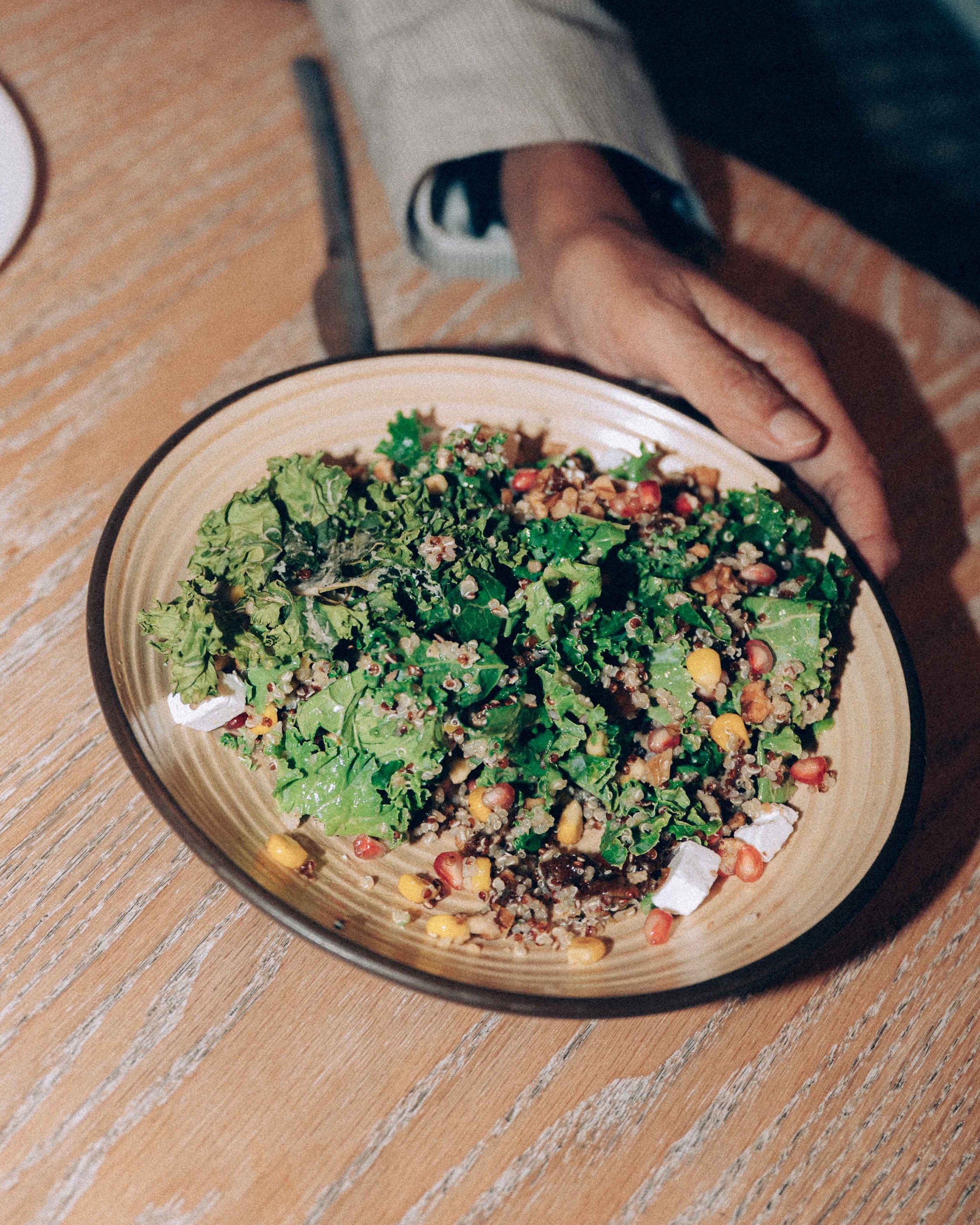
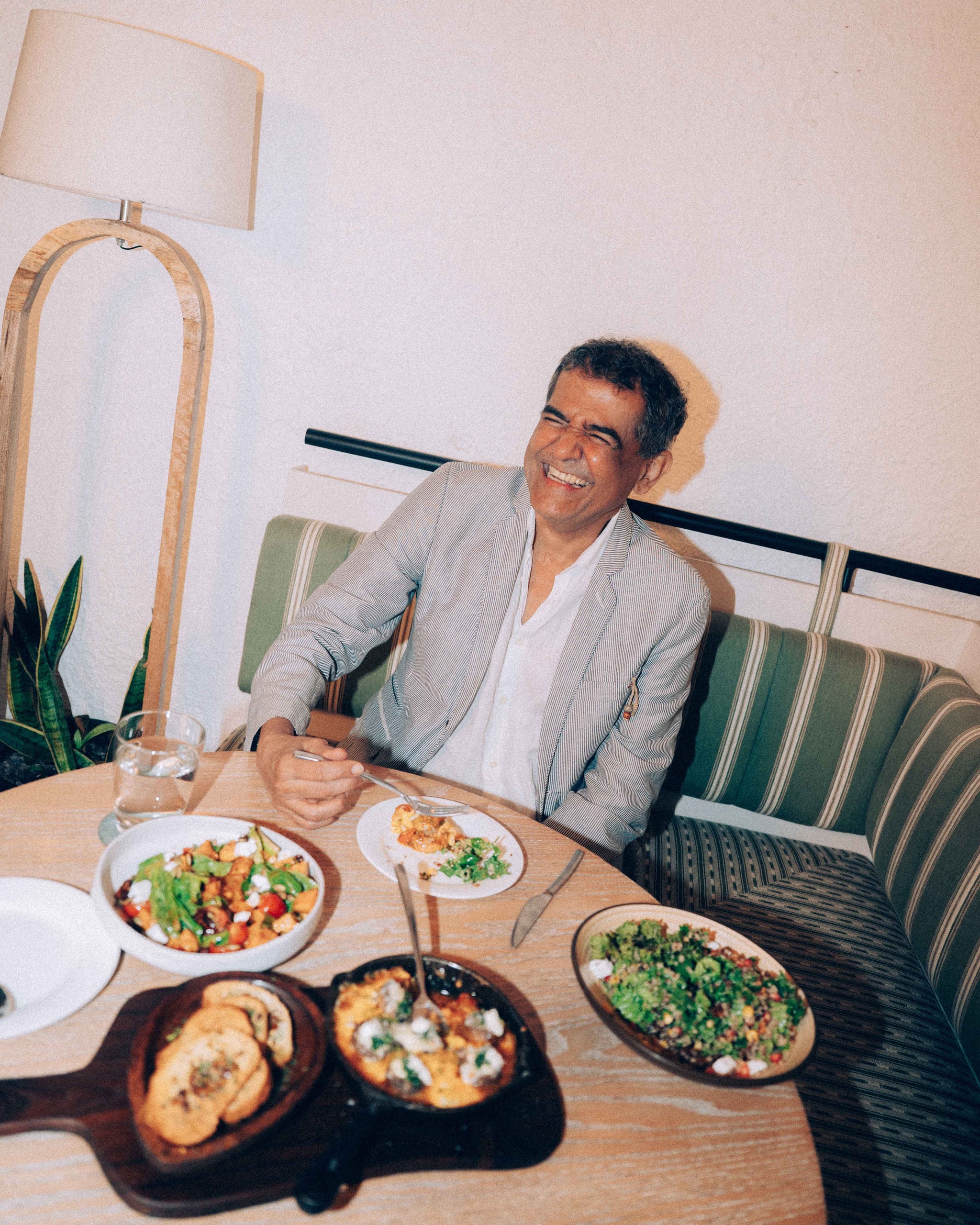
AD Singh arrives for our weekday lunch in a pale teal blazer and white shirt. He’s just back from Japan via Delhi, looking as breezy as the room’s vibe, and he settles in with the ease of someone who has spent decades making restaurants feel like home for everyone. He asks his team to send out a few of their greatest hits to our table: a perky salad of quinoa, kale, feta, dates, and toasted walnuts in jalapeño dressing; a bubbling skillet of cheese-filled baked cremini mushrooms over chilli-garlic sauce topped with walnut-fig gremolata, with crusty bread on the side (a dish that we want seconds of even before it’s done); and soy-marinated salmon, lightly cooked and glistening silkily with gari, sticky rice, lightly cooked greens, and edamame. He eats with focus and curiosity, as if it were not his own restaurant, as if he had not already done a dozen tastings of all of this just this year. After 35 years in this industry, it is quite something to watch.

The room is wife Sabina Singh’s work, curated by her and executed by architect Vivek Popli of Vipasana Designs. Sabs, as Singh calls her, shapes all aesthetic decisions across the Olive Group: from staff uniforms and seasonal looks at existing brands to shaping new brands and makeovers. For the longest time, Singh deliberately kept her out of the business; he didn’t want work to affect their relationship. Then, at a moodboard meeting for Lady Baga, their now shuttered Goa-inspired project in Mumbai, things turned. “I had a look at what [the designer] put together on his own and then what emerged when Sabs put her vision and her efforts into that design,” Singh says. “It really made me see clearly what she brought to the table.” She’s been at the helm of design ever since. He claims to stay out of it entirely after the conceptual stage, occasionally sharing thoughts on the layout and the furniture, that’s all.
Lady Baga was instructive on another front, too. Singh had loved Goa all his life. He and Sabina got married there and it’s where they spent most of their holidays. But Lady Baga didn’t work as well as he’d hoped. By the time the restaurant launched, most of the target audience was going to Goa to party. He set it up to capture the version of Goa he knew best: the beach, the shacks, the chill. “Which is magic,” he says, “but that is not tempting to recreate at home.”

Looking back, he can confidently say that plenty of plans didn’t work out (Ai, Lap, Olive Vagator), but, thankfully, some more did. And before any of this, the plan had been something else entirely. When Singh left Cadbury in 1988, he thought he was headed for the NGO sector. He would get there, somewhat, eventually, by a much longer route.

In the early 1990s, a younger Singh was writing a weekly food column for The Metropolis and encountered a problem no food writer would face today. Over four years, he kept revisiting the same places, because Mumbai’s nascent, limited dining scene then offered little else. He had also launched Party Lines in 1988, a boat party and event-planning gig and possibly a prototype for the floating bar he would open 12 years later. Just Desserts opened in 1990 on Homi Mody Street with chef Rahul Akerkar, filling the after-hours of an Irani cafe with jazz, coffee, and desserts made by Parsi ladies, but no alcohol. Fifty-year-olds today still talk about the chocolate brick they ate there on dates in their late teens.

Copa Cabana followed in 1996, a music-filled Latin American bar at Chowpatty. In 1998, Soul Kadi and Soul Fry showed Mumbai that coastal Indian food could be served outside formal or regional dining rooms. In 1999, Singh and adman Alyque Padamsee opened The Bowling Company, India’s first bowling alley and sports bar. Suzie Wong, a floating bar, came next in 2000. Each project seemed to meet the hungry city’s adventurous appetite for what it hadn’t tried yet.

Then came the idea that marked a turning point in the city’s and the country’s dining scene. So much so that he named his group after it. On Patong Beach, Phuket, on a family holiday in the late ’90s, Singh found himself returning to the same cafe every day. French jazz, beach light, decent food, good coffee. He wondered what kept pulling him back. It’s the vibe, he realised, the sum of all its small pleasures. “I thought, I live in Bombay, which has such a fast pace and is an urban jungle; I should try and bring this experience here,” he says. A friend pointed him to a property in Bandra. Architect Nazir Wadia joined. Olive Bar & Kitchen opened in Union Park in November 2000.

Olive’s real game changer was erasing the boundary that then existed between restaurant and nightclub. Before Olive, we chose one or the other. Singh made those categories redundant by building Olive Bandra. “You could go and enjoy Olive in your own many moods,” he says. “People come, read a book, have a coffee, and sit for hours. They come with friends, talk all night. They come and party hard.” All the stars descended on Olive—Bollywood, industrialists, creatives, everyone cool or stylish. It was where Page 3 lived for a while, before phone cameras and selfies took over and wiped out that era.

The decades since have run like a fill-in-the-blanks of what the market was missing. Ek Bar was one of India’s first cocktail bars built on Indian ingredients, eschewing bottled syrups for indigenous flavours, local fruit, and regional spices and offering a genuine rethink of what an Indian cocktail could be. Monkey Bar was our first gastropub, born after Singh noticed women drinking freely in London pubs and wondered why that wasn’t the case here. In 2013, after two Irani cafes closed in Mumbai and the city grieved the change, Singh sat up and paid attention. “Irani cafes are unique to India,” he says. “You don’t have them anywhere else in the world.” SodaBottleOpenerWala came along: air-conditioned, with a proper bar, its food and vibe a contemporary tribute.

This past year: Love Hotel, a cheeky cocktail bar; Call Me Sofia, an aperitivo bar for a moment when many people, including Singh, are drinking less and low-ABV; The Hood in Bengaluru, built around neighbourhoods rather than cuisines. Their Kyoto section is designed around how people actually eat in Kyoto, “the crockery, the rituals, the everyday details”, not just sushi and sashimi. And OCB is expanding outward, with many more to follow. “Even today, there is so much missing in India,” he says. “We entrepreneurs are lucky that way.”

Singh has built over 20 brands over nearly four decades. In food circles, The Olive Group has been called a training academy, and Singh has been teased for it. Famously, its alumni—Manu Chandra, Thomas Zacharias, Anahita Dhondy, Viraf Patel—have changed food trajectories in India in their own ways. Singh is unruffled. “The more rock stars you have in the company, the more it looks like a company of rock stars.”

His approach to his teams and talent is uncomplicated. If someone wants a public profile, Singh positions them for press and publicity. A chef on a Western menu who wants to learn Japanese gets moved across brands. His head of beverages needed to move home for his son’s health, so Singh made it happen, with remote work, no deductions. “We haven’t reduced his salary by a rupee.” Some departures have been messy too. “Some of our best people who left have left badly and then poached or tried to poach people,” he says. “Then, of course, we’ve not been able to keep our relationship with each other. That’s always been very sad.” But Singh returns to this: “The way you treat people is everything.”

Which brings the conversation back to 1988. A 28-year-old Singh had left Cadbury, thinking he was going to the NGO sector, inspired by Sanjoy Ghose (the late Indian rural development activist), a close family friend. He travelled to follow Ghose’s work and found a sanctimonious culture and a salary offer of ₹4,500 a month, which was ₹500 less than what he was already making then. He walked away. “I felt I had a lot to add. Hard work. Integrity. Leadership. Skills. Care. Wanting to give back. I was very disappointed with the approach as well. And it was a long way from becoming as professional as it is today.”

Entrepreneurship, he claims, is something he stumbled upon. Even so, his original impulse never left. Kitchens Against Hunger, the NGO he eventually started, adds ₹10 to every customer’s bill, matches it from the group’s side, and gives the full amount, with no admin fees, to every NGO vetted personally by Singh to provide mid-day meals for children. Last year, ₹30 lakhs went to Share Our Strength, which recently entered India. He is nudging other restaurants to join in. “Being in the restaurant business, thinking about kids going to bed hungry is really difficult,” he says. It is the first moment in the conversation where the ease in his voice vanishes. “It’s such a crime, and we’d like to do a little bit that we can.”

The man who spent decades encouraging people to have the best time now also receives a curated feed of heartwarming content and cricket scores. “The algorithms have figured me out, what I love,” he says of Instagram. “Soft stories, giving back, sports, good news.” He sounds pleased with this.

In the early days of Olive, Singh was always there. Even if he’s not, by his own admission, quite a party person, for decades he’s been encouraging people to have the best time at his brands. He’s still there, at every opening, and every brand event, being the affable host. “You know how you worry that youngsters will never go where their parents went?” he says. “People come up to me all the time and tell me how they met at Olive Bandra, how their first date was there. And then they come back years later with children. Then their children become regulars. It’s like three generations of people growing up [there], at least. The truth is that each passing generation is more and more sophisticated, more and more travelled, looking for better and better experiences, more international experiences. Olive is one of the brands that gives them that. For the last 25 years, it’s helped people have a really good time. It’s crazy because it’s so rare.”

He refills his coffee, checks something on his phone, and looks back up. There’s another opening coming. Of course, there is another opening coming.

The Nod Newsletter

We're making your inbox interesting. Enter your email to get our best reads and exclusive insights from our editors delivered directly to you.