Fashion27 Nov 20264 MIN

Angèlique Raina is stretching the possibilities of occasionwear

The designer behind Acquire on the painstaking process of developing her own textiles and making clothes that work around women’s bodies, rather than the other way around

Image

Courtesy Acquire

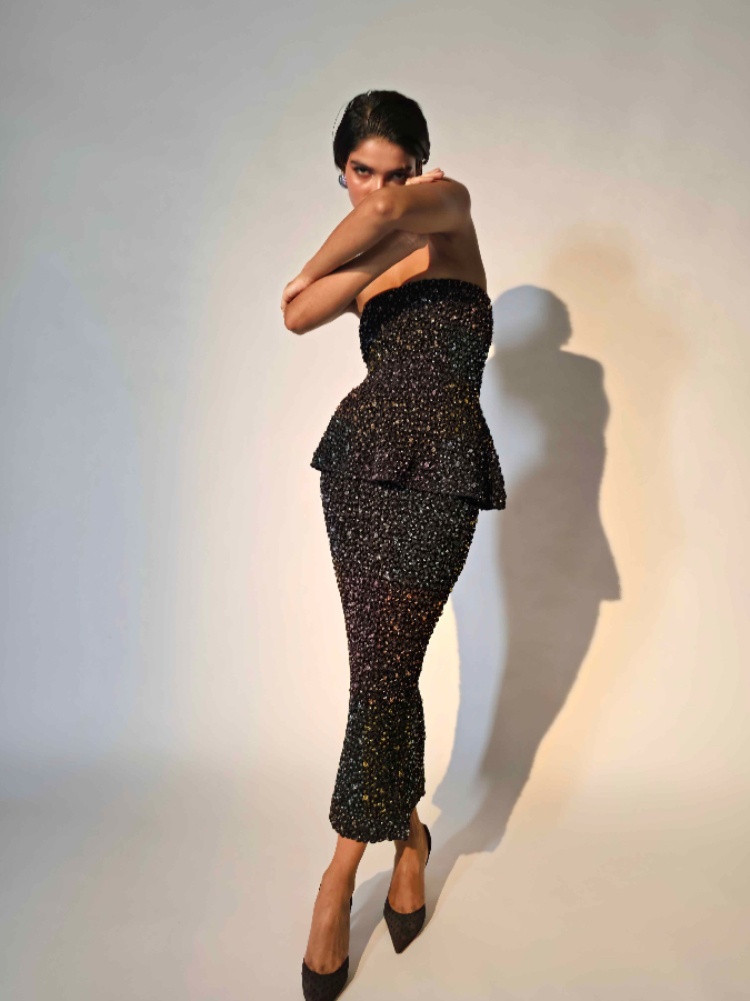
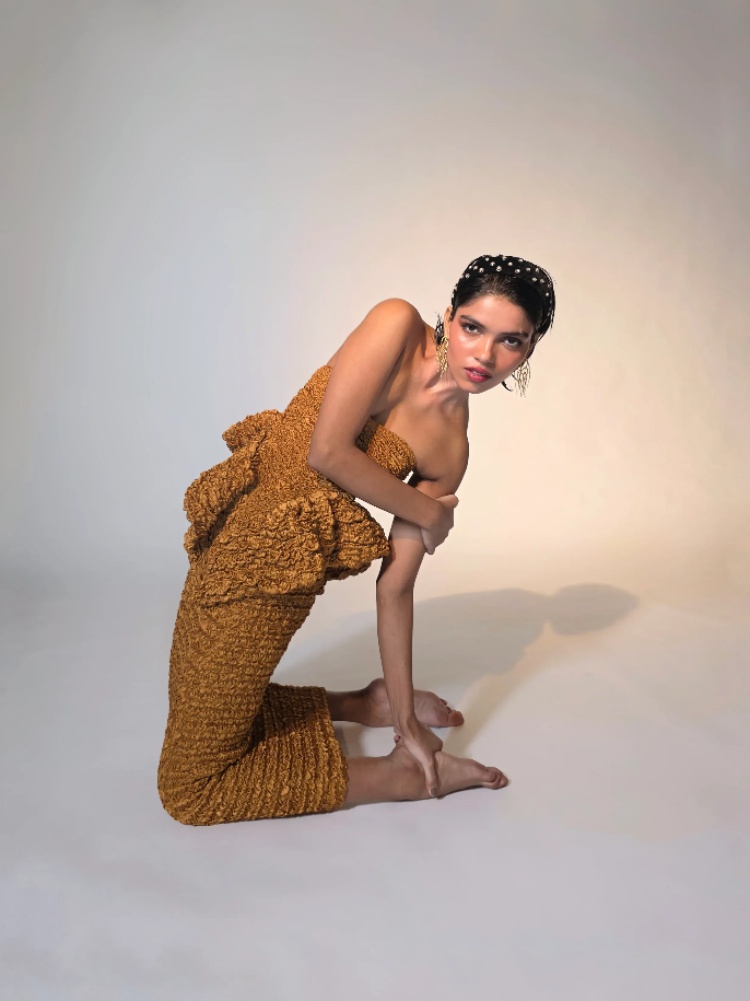
“In Hyderabad, someone approached me and asked if I’m Acquire,” recalls designer Angèlique Raina. Few things, for Raina, are as gratifying as being recognised by the clothes she creates. A regular client once sent her a voice note recounting how, the first time she wore Acquire, she had to tell people who she was wearing. Two years on, she no longer has to make that announcement—the outfit speaks for itself. Since launching her contemporary occasionwear label in 2023, Raina has developed a recognisable visual vocabulary built around smocking, sculptural silhouettes, and specially-developed fabrics rendered in colours that are notoriously difficult to pin down.

Born in New Delhi to an Indian father and a French mother, Raina spent her early years in the South of France and London before returning to India following her father’s passing. She credits much of her aesthetic sensibility to watching her artist mother working in her home studio. “You can’t always necessarily explain what you’re drawn to, but I’ve always needed a sense of aesthetic balance, whether in an outfit or in a space,” she says.
At 16, Raina left school, taking up summer jobs in PR and marketing while putting herself though her A-levels, before going on to study politics at the London School of Economics. Instead of a formal fashion education, she chose to learn on the job, spending a total of 12 years working across PR, brand consulting, marketing and design before founding Acquire. “I was bursting at the seams with what we needed to do. The world doesn’t need another fashion brand, so I had to first refine what value we would be adding,” she says.

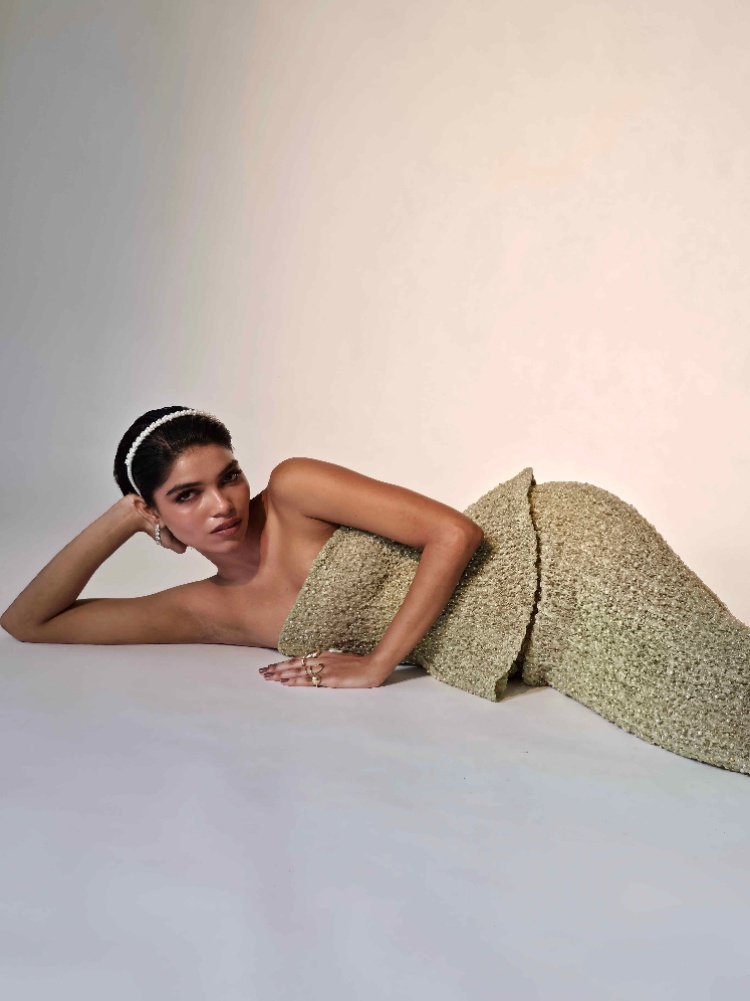
For Raina, much of that value lies in the fabric itself. She initially reworked deadstock cotton but soon realised developing her own fabrics would offer greater freedom to experiment with colour, yarn, and texture. Working closely with mills and weavers, she developed a repertoire of fabrics that includes metallic and quilted cotton, lustre organza, and waterfall satin—a luminous recycled polyester fabric made from fine, densely packed yarns and suited to India’s warm climate. Her design process often begins with the textile, considering how to best bring out its inherent qualities.

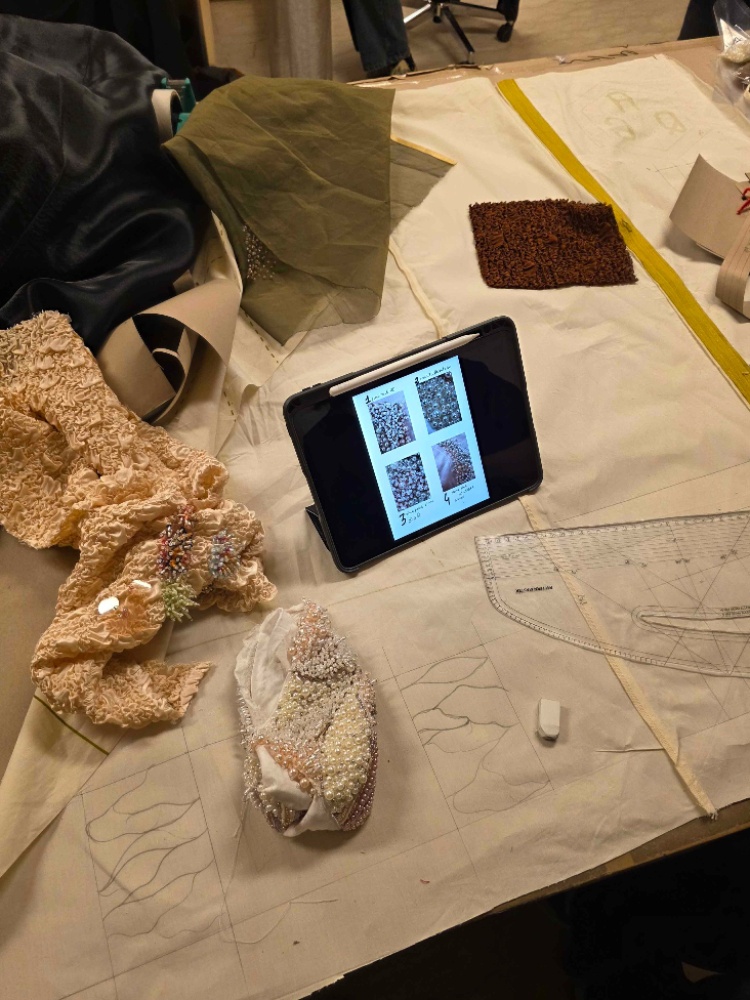
Acquire’s signature smocking is its most recognisable manifestation of this fabric-first approach. For the designer, it’s less a decorative detail than a way to rethink fit. One of her biggest frustrations with Indianwear was how often it needed alterations as bodies changed. “The perfect sari blouse that will always fit didn’t ever exist,” she says. She began exploring smocking to address this, experimenting with different stitch patterns and fabric weights. Each pattern is painstakingly stitched with elastic thread, then washed and steam-pressed in a specific direction to set its shape. The resulting fabric retains its structure while allowing for varying degrees of stretch.

What distinguishes Acquire’s approach to smocking is the scale at which it employs the technique. Often confined to smaller sections of a garment, such as cuffs, necklines, or waists, the technique here can extend across entire panels and, in some instances, entire garments. Depending on the pattern—from wave and scale smocking to the more complex galaxy smocking—it can accommodate three to four inches of fluctuation, sometimes even as much as ten.

“Women’s bodies are also constantly changing on a daily, weekly, monthly basis with weight fluctuations, pregnancy, and conditions such as PCOD, and our clothes should accommodate for that,” says Raina.

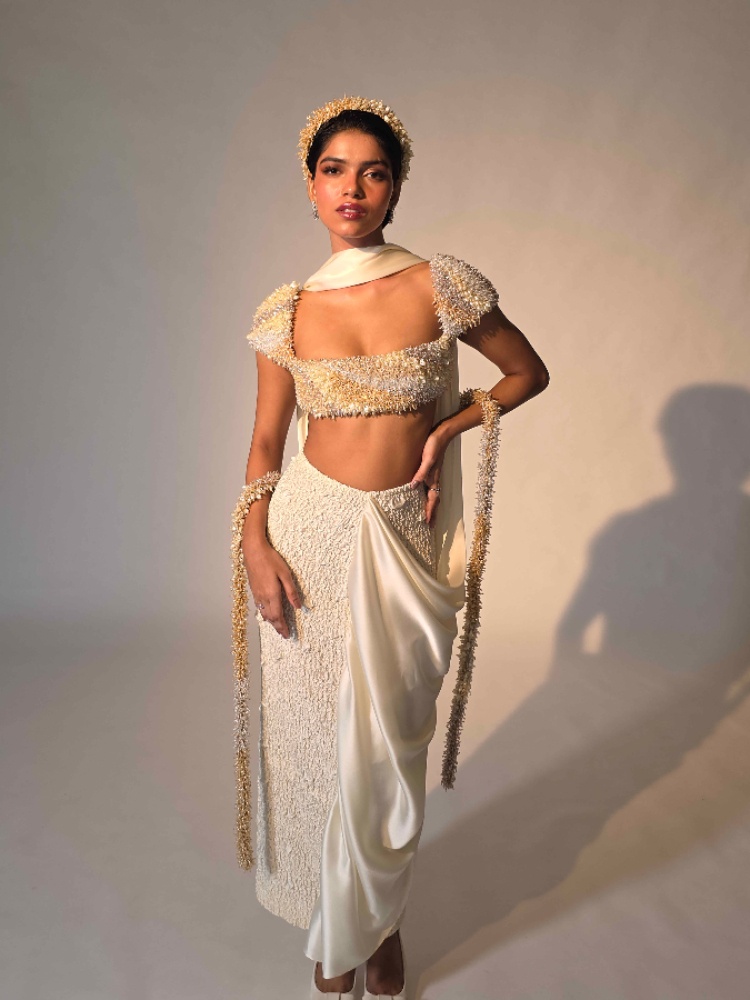
For all the aesthetic experimentation that goes into Acquire’s garments, much of Raina’s design practice is informed by a pragmatic concern: comfort. “I’m so tired of people paying lakhs of rupees for garments they cannot wait to rip off their bodies after two hours or host an event and not even be able to hug their guests properly,” she laughs. This finds expression in her silhouettes, from bodycon smocked dresses with concealed drawstrings and adjustable kaftans to boneless corsets and saris reimagined as pencil skirts with half-drape pallus. There’s room for frivolity too, in the generous balloon sleeves and ruffles that punctuate the collections. Getting the proportions right is an exercise in patience. Raina might revise a pattern five times over, making adjustments so minute that a client might not even notice them.

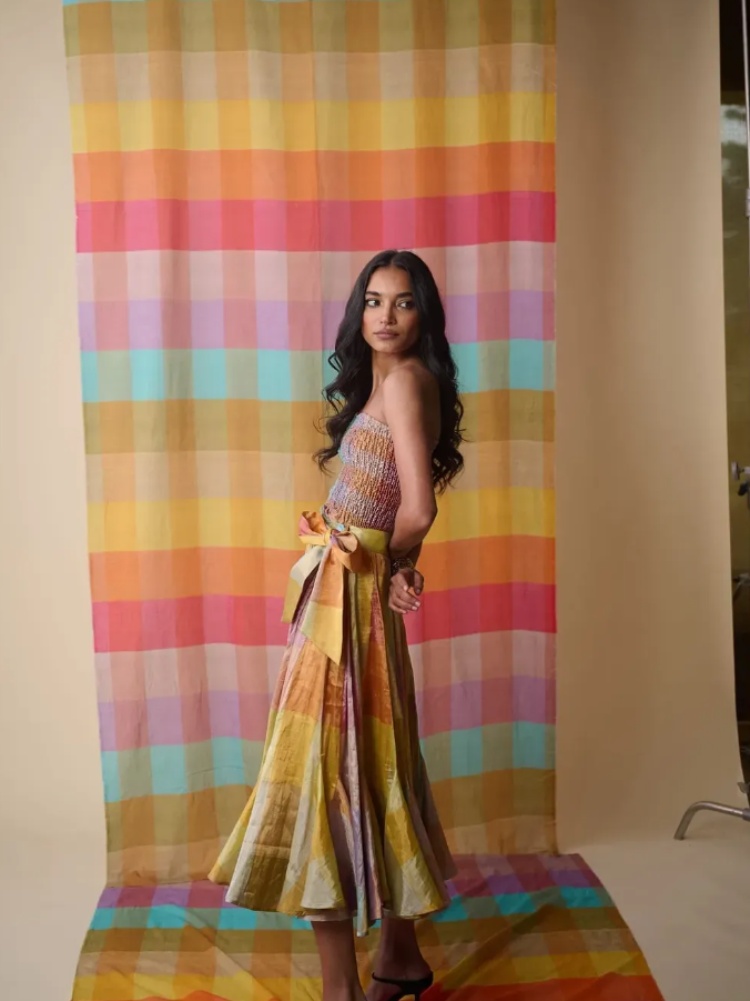
She has devoted equal attention to colour. “I feel like colour is the form; colour is magnetic,” she says. “I once rejected the same colour eighteen times just to get the tone right.” Acquire’s palette is built around liminal shades that shift with their surroundings. A warm green might read blue by night, while a colour called Alabaster, seemingly ivory at first glance, reveals pink undertones under warmer lighting. Yves Blue could also look purple, and Prism moves from pastel in daylight to a warmer hue under flash. Developing these shades, she says, is both a technical and aesthetic challenge. Producing its own fabrics allows Acquire to fine tune these nuances and maintain consistency across garments.

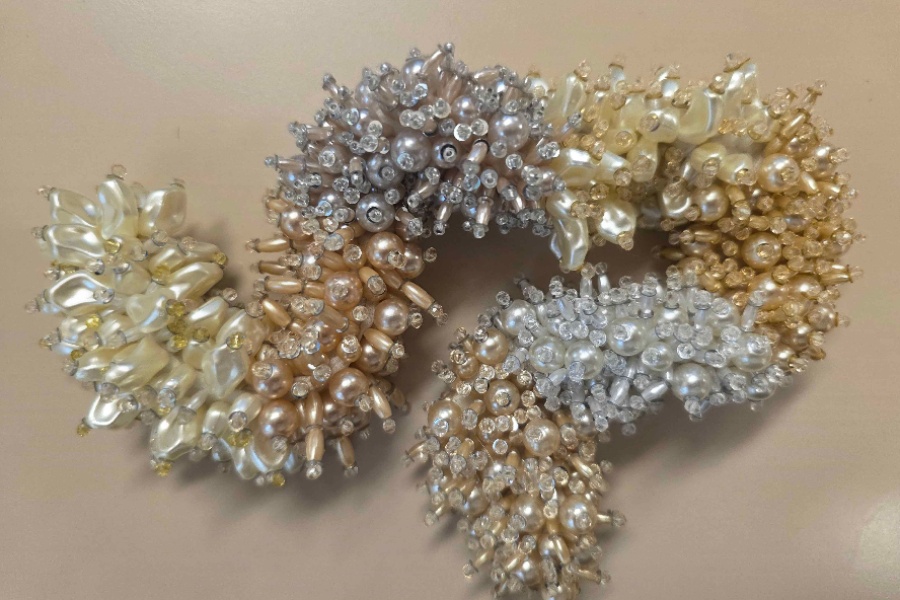
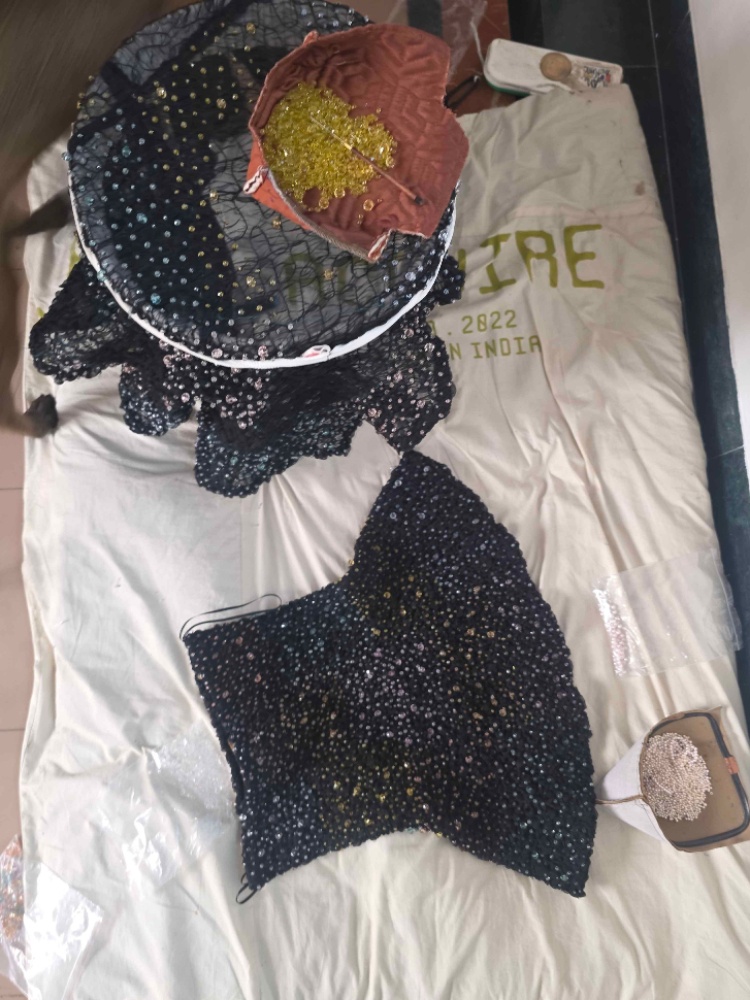
“I like the idea of things changing in nature,” she says. The natural world is a recurring reference point for Raina, informing everything from floral forms inspired by the gajra to embroidery that evokes the flicker of a starry night sky. Her other references are eclectic and often personal. Pieces worn by her grandmother, particularly garments from China and Burma have informed Acquire’s inimitable colour palettes, while French cinema, vintage wardrobes and film costumes offer fodder for silhouettes.

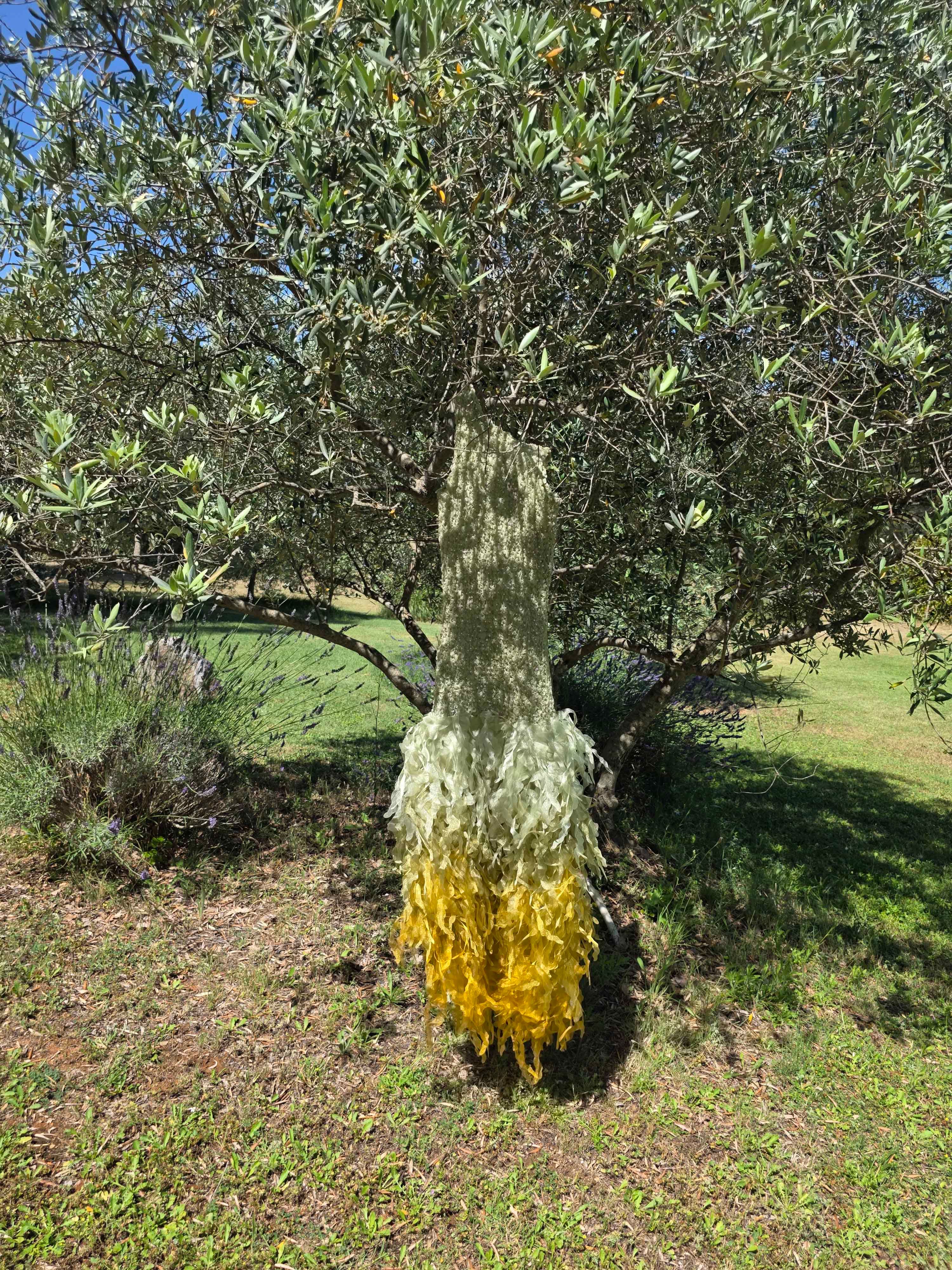
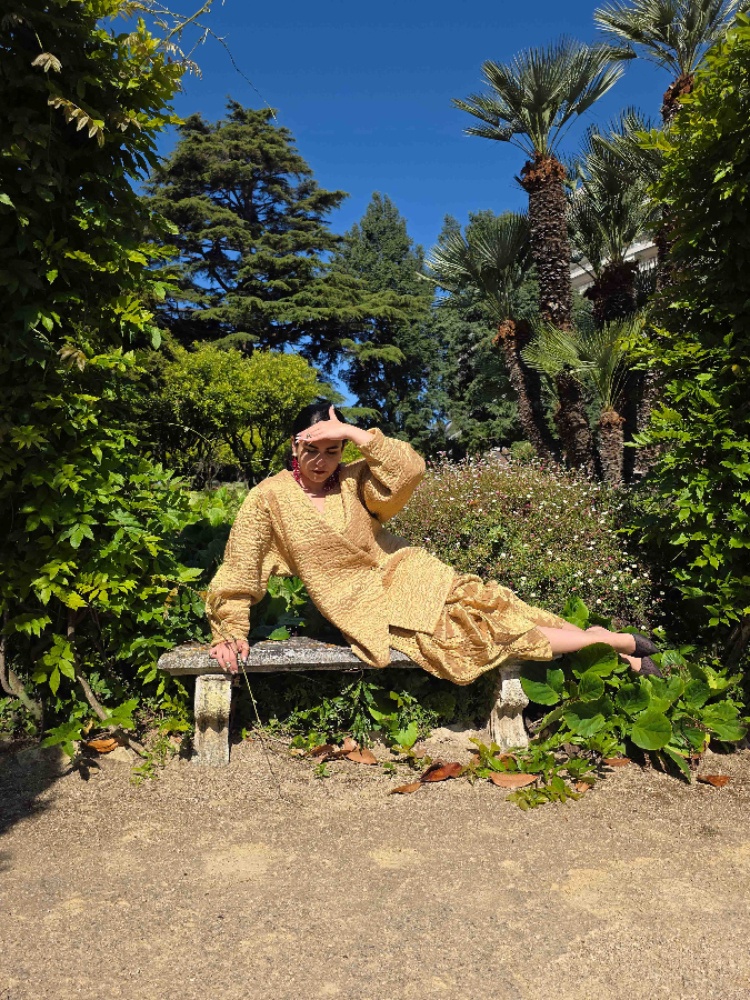
Acquire dress in nature_the Nod.jpg
An Acquire piece with its inspiration as the backdrop

Looking ahead, Raina is excited to expand into knitwear and launch bridalwear by the end of the year. “We are looking at bridalwear through the lens of function,” she says, adding that she wants to approach it with a greater sense of lightness. She doesn’t see her bridal line restricted to Indian weddings and is envisioning pieces that feel sculptural through three-dimensional embroidery, designed to move easily between the wedding and different occasions and cultural contexts. “It could also sit beautifully elsewhere at a gala or ceremonies which aren’t traditionally Indian,” she adds. The collection will also look to serve beyond the bride herself, to the people celebrating with her and occasions that follow the wedding. It’s a fitting extension of the premise she founded Acquire on: that the life of a piece of occasionwear need not be limited to the occasion it was bought for.

The Nod Newsletter

We're making your inbox interesting. Enter your email to get our best reads and exclusive insights from our editors delivered directly to you.