




The internet is loud. Not just noisy, but relentless. Open any app and you’re pulled into a vortex of “Sunday reset” vlogs, the fifth skincare haul of the week, hyper-edited shopping hauls, AI-generated art that looks suspiciously like other AI-generated art, and a carousel of hot takes that all start to blur into one another. Somewhere between the fifth and fifteenth haul, you feel it. Fatigue.
Call it algorithm exhaustion. Call it AI slop burnout. Whatever the label, the vibe is the same. We are overstimulated, over-scrolled, and increasingly under-touched. So, it makes sense that the pendulum is swinging back.
Across Indian cities, vinyl listening bars are drawing crowds who want to sit and hear an album from start to finish. Old digicams are selling out because harsh flash and grain feel more “real” than 4K perfection. Film clubs, crotchet circles, zine fairs, and pottery workshops are filling up. And quietly, in padded envelopes addressed in looping calligraphy, snail mail is staging its own comeback.
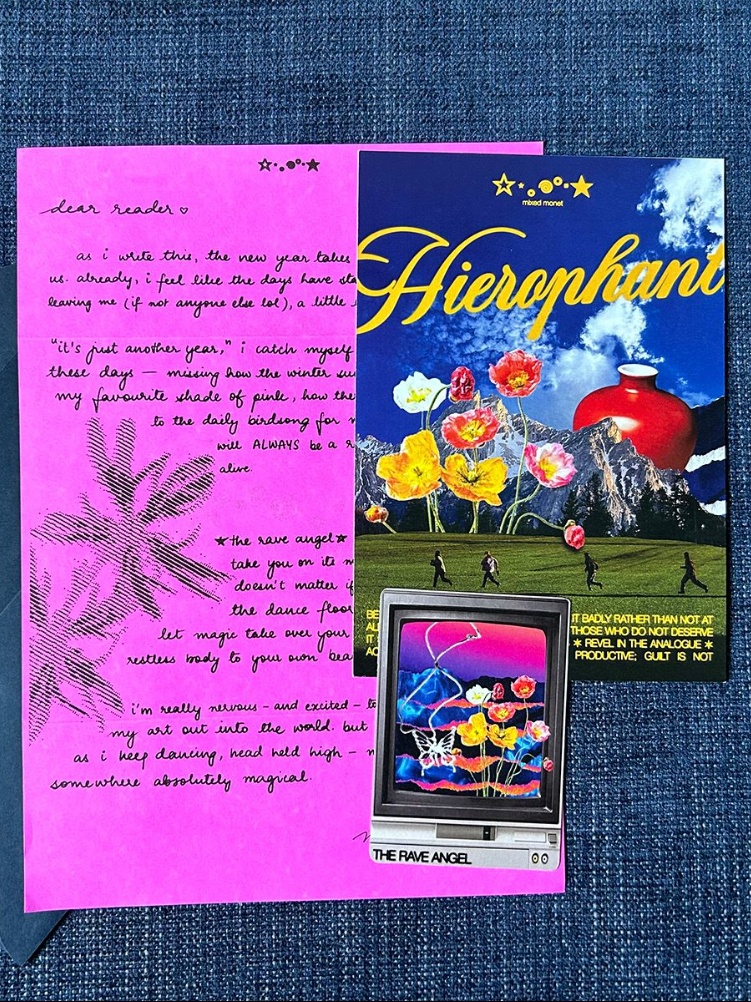
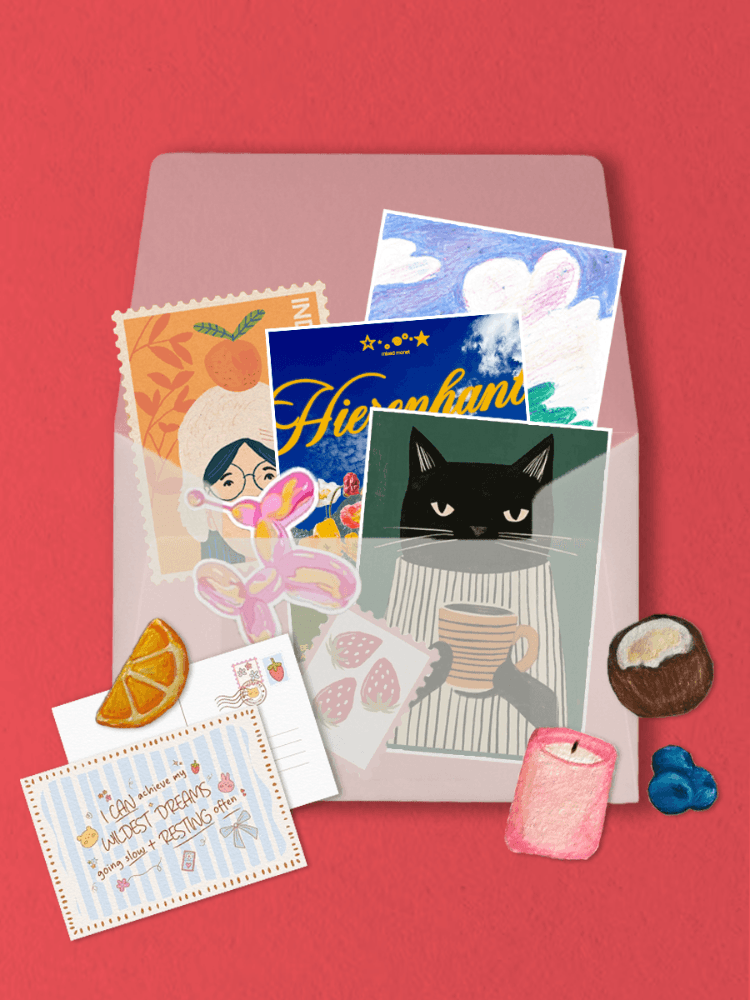
Not the kind that carries bank statements. I’m talking about art mail: monthly envelopes packed with handwritten letters, art prints, stickers, oracle cards, zines, and tiny surprises that feel less like content and more like care. If Pinterest’s 2026 trend forecast predicts a “letter-writing renaissance”, India is already inching towards it. Even India Post is getting a glow-up. In late 2025, it launched its first “Gen Z” post office at IIT-Delhi, complete with graffiti, Wi-Fi, QR-based bookings, and digital payments via IPPB. Other revamped, student-friendly spaces are emerging across campuses in IIT-Bombay to Andhra University and CMS College in Kerala. The post office, suddenly, is not just functional. It is aesthetic.
For a small but growing group of young artists, it is also becoming creative infrastructure.
For 30-year-old Goa-based tattoo artist Megha Jeevan, art mail is rooted in ritual and nostalgia. “Every year, my parents and I would sit down and write Merry Christmas or Happy New Year mails to all our relatives,” she says. “It was something we genuinely looked forward to.”
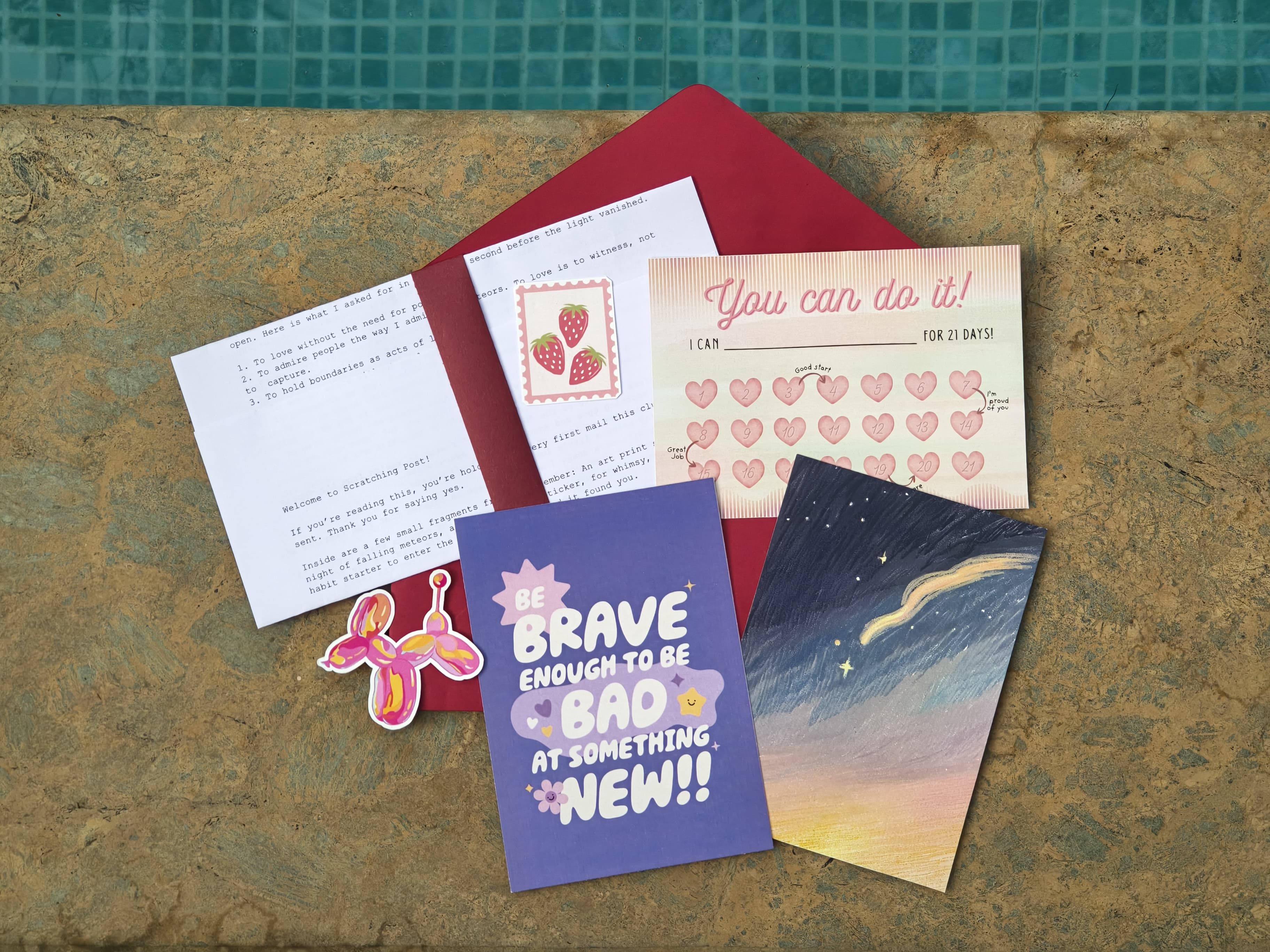
Her project, Scratching Post, is barely two months old but it has already built a small, tight-knit subscriber base. Each month, she dispatches envelopes that include a handwritten letter, one or two art prints, handmade stickers, and a rotating surprise element—a habit trackers, a journaling prop or a tiny puzzle piece. Visually, her art mails feel like care packages. Her last one featured an image of a night sky, a colourful sticker along with a bright affirmation card and a pink-themed habit tracker. “I wanted to send out tangible affection,” Jeevan explains. “We’re all chasing the next dopamine hit via doomscrolling. This is me sending out little dopamine packets every month.”
There is also something quietly subversive about her format. Her letters often hold her political opinions and personal angst—thoughts she is often hesitant to post online. “Online, the amount of hate and violence people get… I’m not prepared to talk about my opinions on a very open platform. This feels like a safer, more intimate space.”
In that sense, art mail becomes a curated audience. A consent-based community. A slower conversation that unfolds once a month instead of in real time.
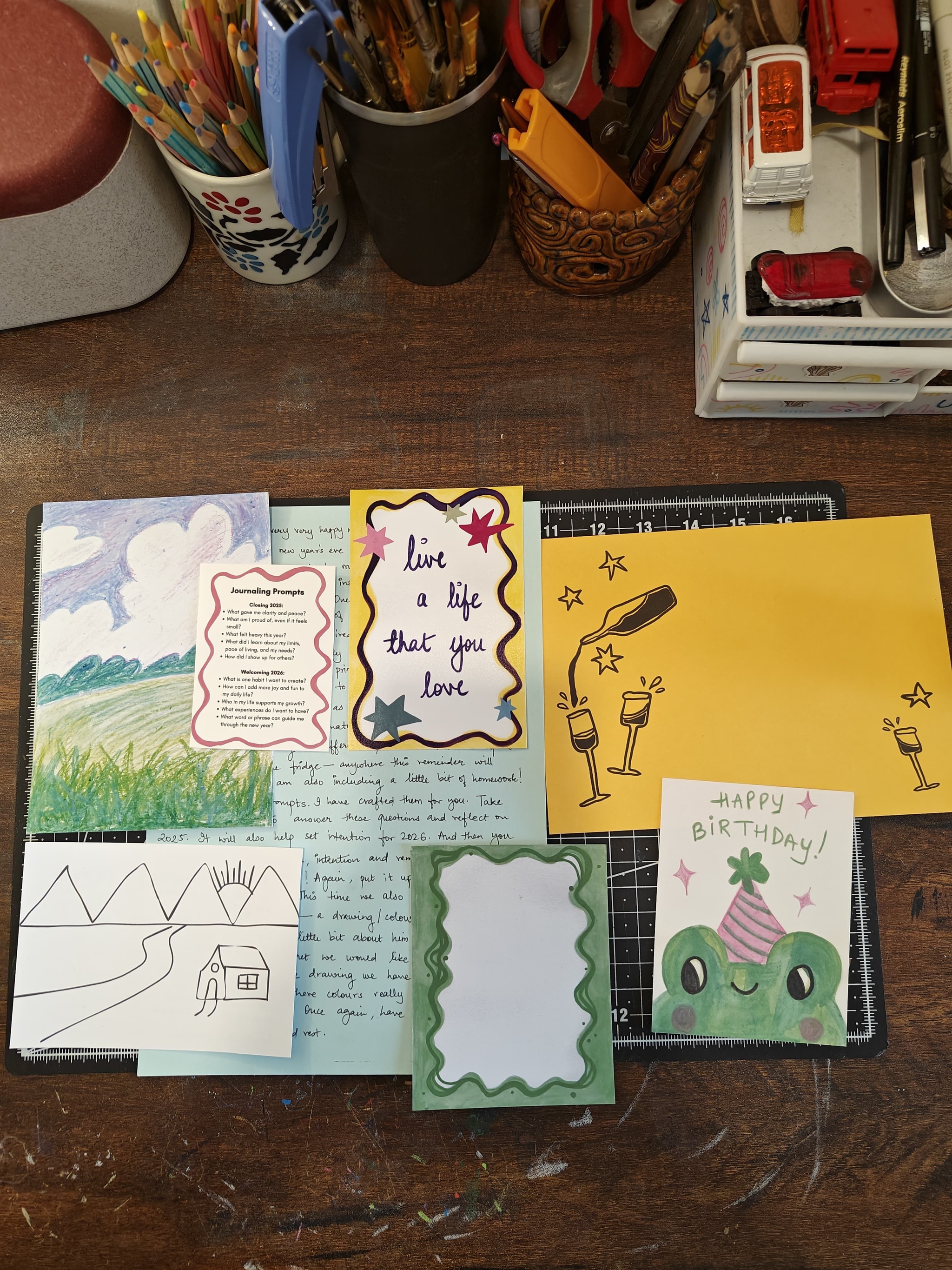
In Thane, 28-year-old Vedanti Shinde came to art mail through practicality as much as passion. A business psychologist and full-time creative, Shinde primarily works in watercolours and hand-drawn illustrations, often pairing playful landscapes and portraits with journaling prompts and interactive inserts. “I invested in a new printer. That was the game changer,” she says. Owning her own printer meant she could print to order instead of outsourcing in bulk, keeping costs lower while experimenting with formats. After a small trial run, she launched a ₹500 monthly subscription that includes a handwritten letter, a 5x7 artwork, and additional inserts such as affirmation cards, journaling prompts, and collaborative colouring sheets.
But sustaining a subscription model in India comes with its own logistical learning curve. As Shinde explains, many international platforms assume customers will pay via credit card or PayPal. “PayPal doesn’t work for everyone. Not everyone has a credit card. Indians prefer UPI. But Razorpay doesn’t integrate smoothly with my existing website,” she explains.