



Design10 Jul 20263 MIN

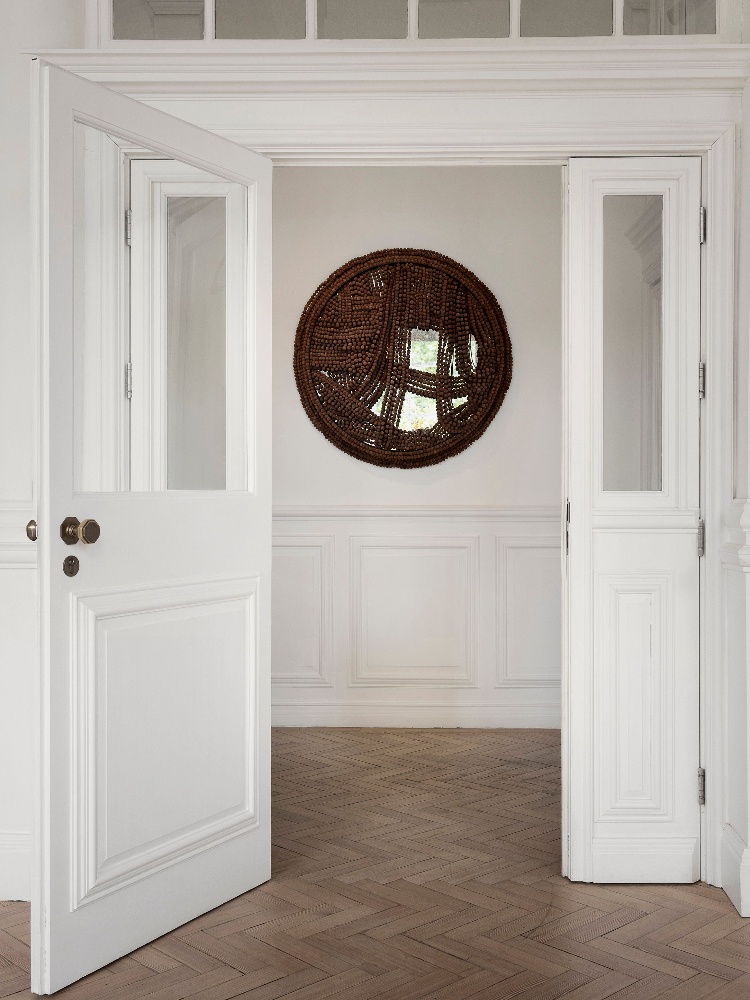
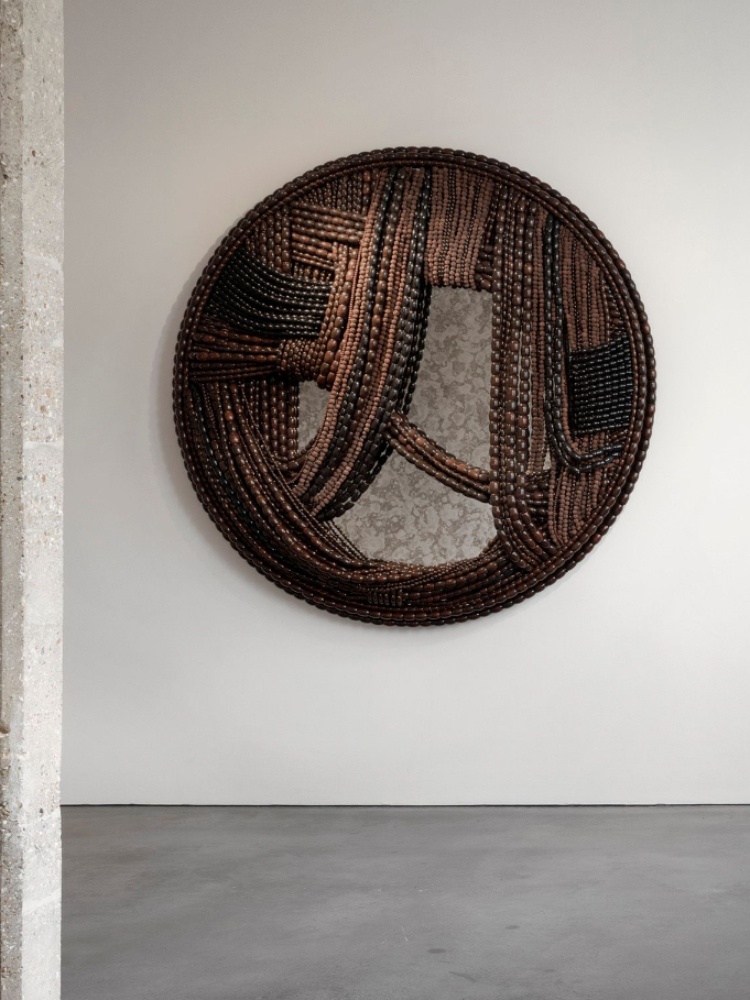
It took 10,000 Channapatna beads, 3500 rudraksha to make this mirror

For his first London solo at Carpenters Workshop Gallery, Ashiesh Shah transforms hyper-local craft traditions from India into nine sculptural objects built for the global stage

TAAMR, The Nod Mag

The exhibition is on display until September 20, 2026

“It’s any artist’s dream because it’s the number one gallery for artists in this genre in the world!” says Mumbai-based starchitect Ashiesh Shah, whose exhibition Taamr is on display at Carpenters Workshop Gallery in London. It’s true, ever since Loïc Le Gaillard and Julien Lombrail opened their first space in London’s Chelsea two decades ago, in 2006, it has attracted a roll call of edgy designers—from fashion designers like Rick Owens and the late Virgil Abloh to architects and furniture designers like the Campana Brothers and Maarten Baas.

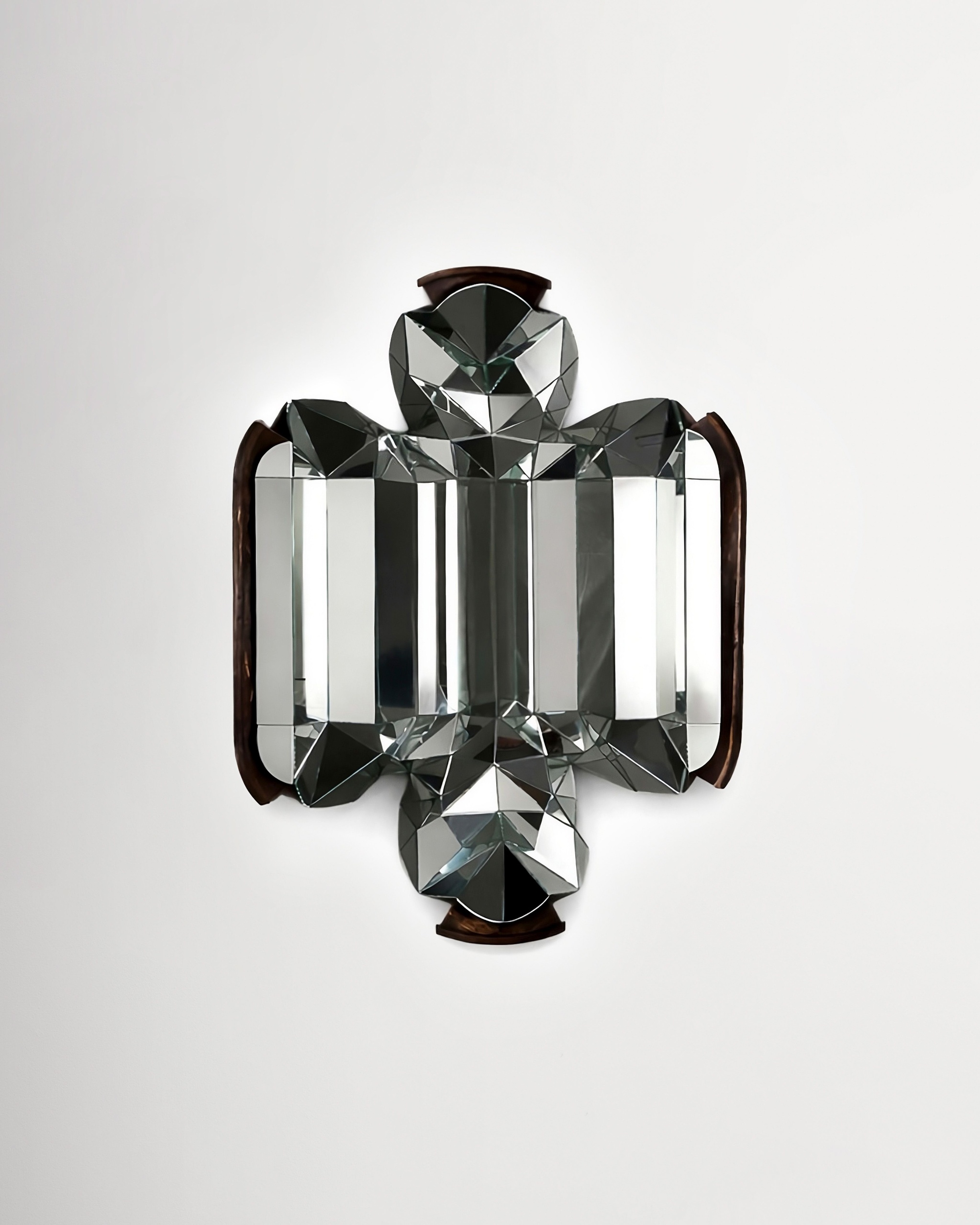
Staged at the gallery’s Ladbroke Hall location in London’s Notting Hill, the nine-work exhibition is Shah’s first solo showcase in the city, bringing together sculptural furniture, mirrors, and lighting that recast Indian craft traditions—Channapatna beadwork, mirror mosaic, rudraksha, and antique copper vessels, to name a few—through a contemporary lens. “I had been following their programme and chatting with their founders for a while and they had seen my work over time. They were interested, but my work needed a certain evolution for them to represent it and believe in it. When they saw all these pieces [at India Art Fair in Delhi last year] that are now in the show, they felt we were ready and said they would love to represent it.”

Taamr takes its name from the Sanskrit word for ‘copper’ and forms one chapter of a planned trilogy devoted to metal. “I’m working on metals because that is where you find craft in its finest form,” he explains. “But I’m not looking at copper only as a material—I look at it from the lens of colour too. We treated this body of work as a philosophy more than literally saying everything should be made in copper.”
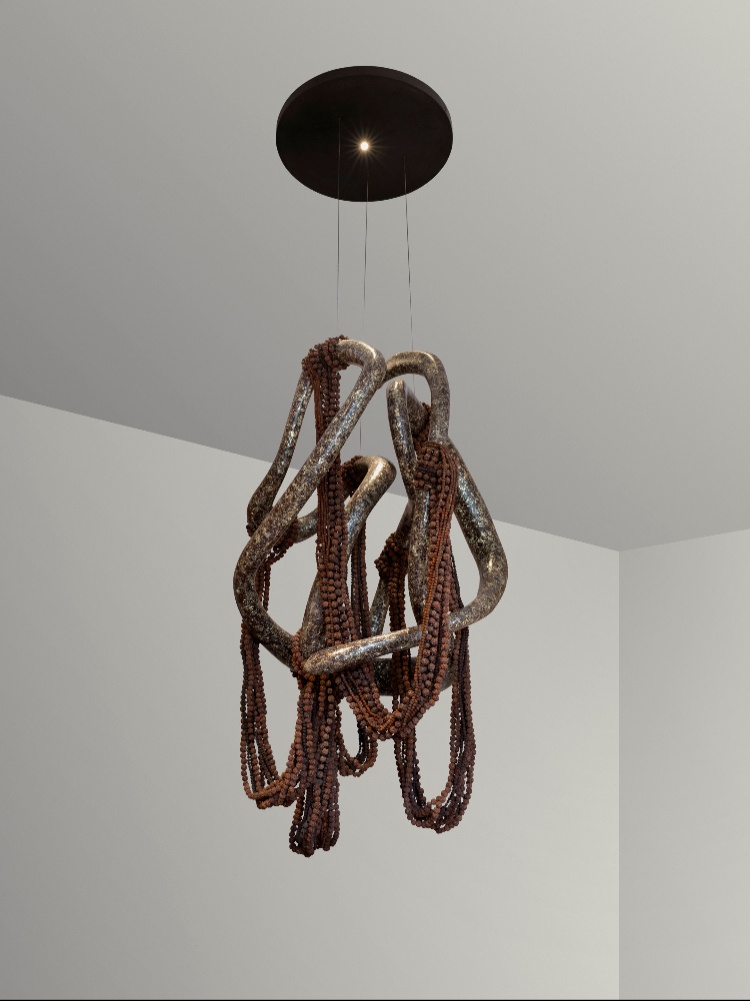
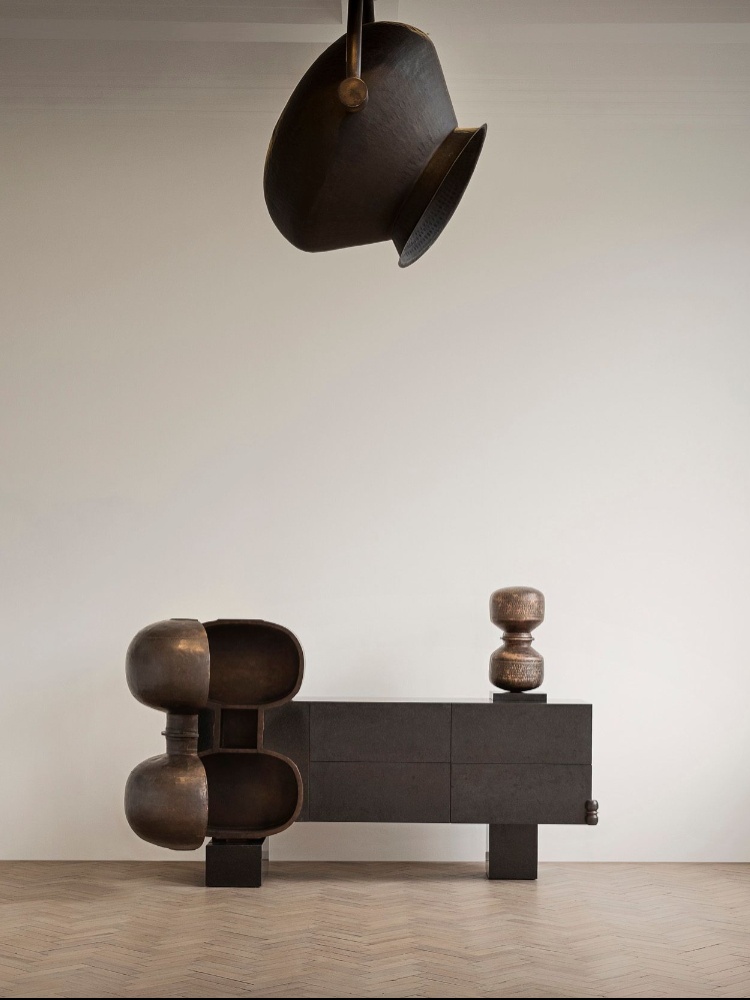
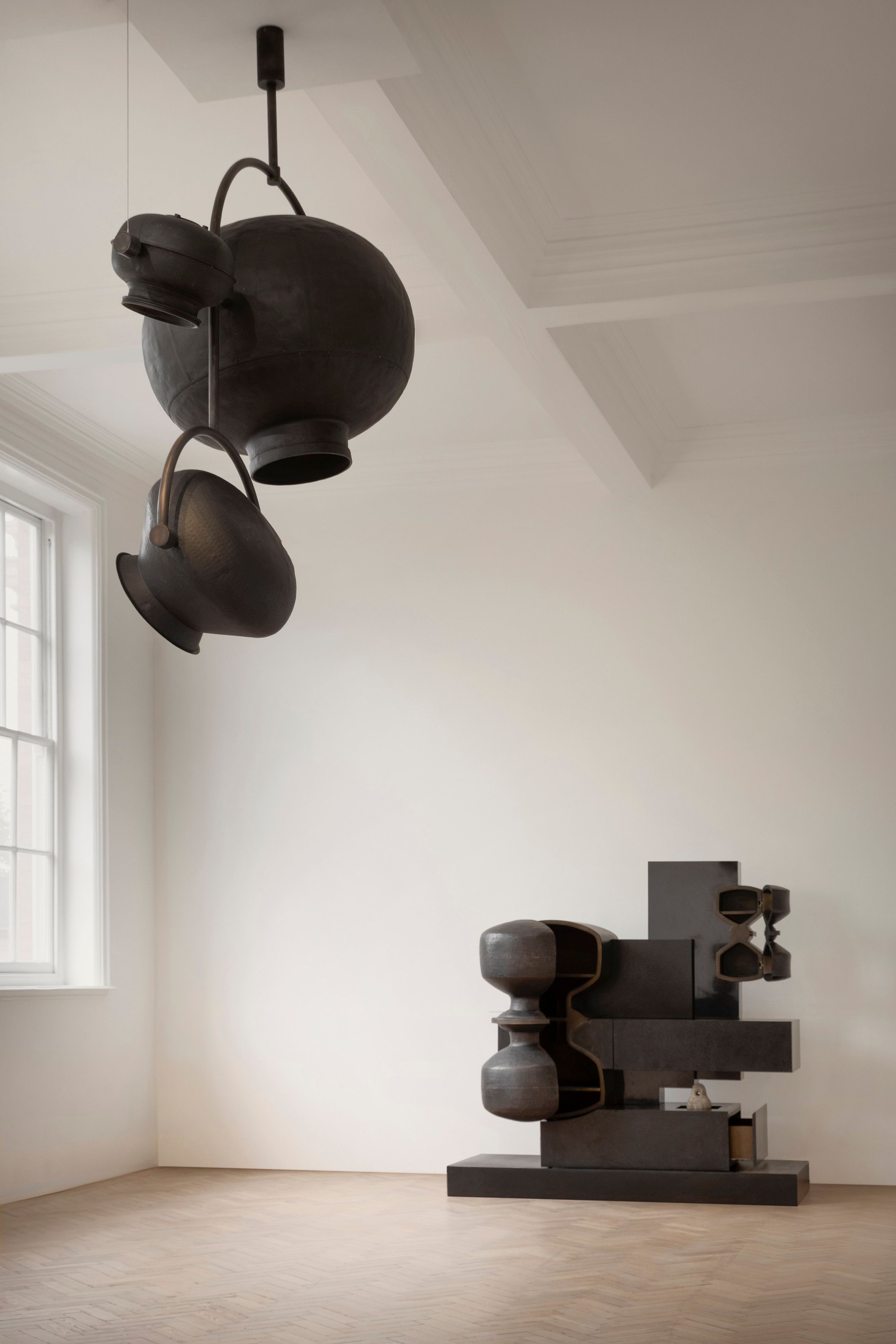
The philosophy pushed his artisans into uncharted territory: Channapatna’s famously candy-bright lacquered beads were rendered in brown for the first time, mirror mosaics were developed to catch and scatter light, and antique copper vessels were reimagined as sculptural cabinets. But beneath it runs a strict code. “The atelier functions as two facets: a library, where we research the crafts, and a laboratory, where we experiment. The most important thing for us is that whenever we delve into any craft, we first research for years and keep going back to the drawing board. In the end when we contemporise it, it’s done with restraint and respect.”

Across a mirror titled ‘Kumbh’, thousands of hand-turned beads strung like rudraksha malas engulf the piece’s patinated surface. “This is inspired by the Kumbh Mela and the Naga babas—the way they treat themselves as performance artists,” Shah explains, adding, “India is perceived globally on two extreme scales. We’re either seen as extremely poor or incredibly maximalist and grand, like the maharajas. There’s no in-between. And there’s a spiritual side of India that’s stronger and deeper than anything else. That’s the conversation I really wanted to have.” The ‘Swayam’ light, meanwhile, drips beaded strands recalling the street garlands of a temple town. “They overwhelm you with a burst of fragrance and hues. There is immense maximalism, but there’s strong restraint.”

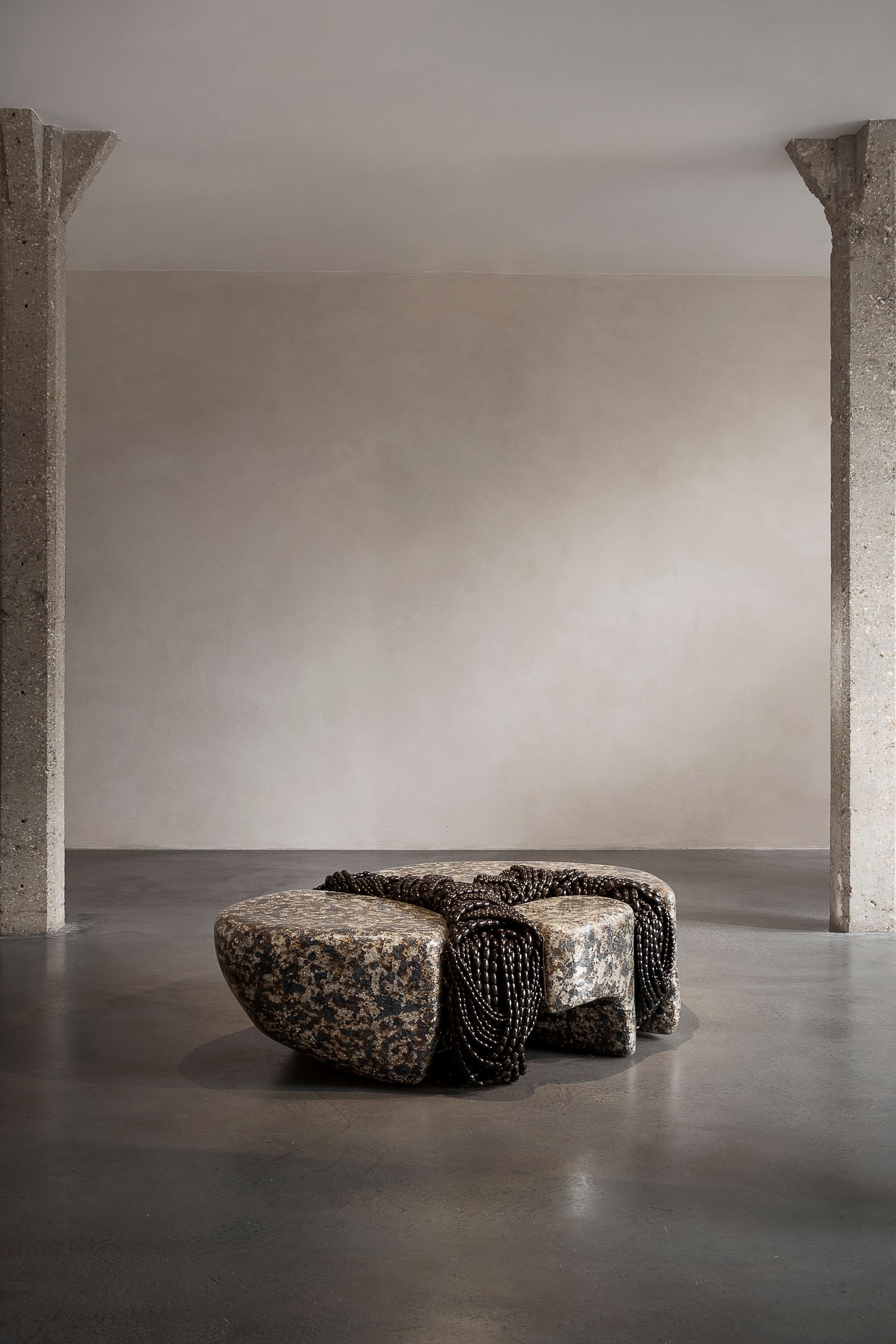
Such restraint is slow work. Each piece begins as a metal framework modelled in 3D, its bead strands woven on by hand with a copper wire. “The copper wire acts like a spinal cord marrying crafts together. Each work takes about eight months to a year, and that’s just the physical making. Sometimes we started working on something and came back to it after five years. It’s been a lesson in patience…to value every small bead, because every bead is an artwork, each one is unique, each one is handmade.”

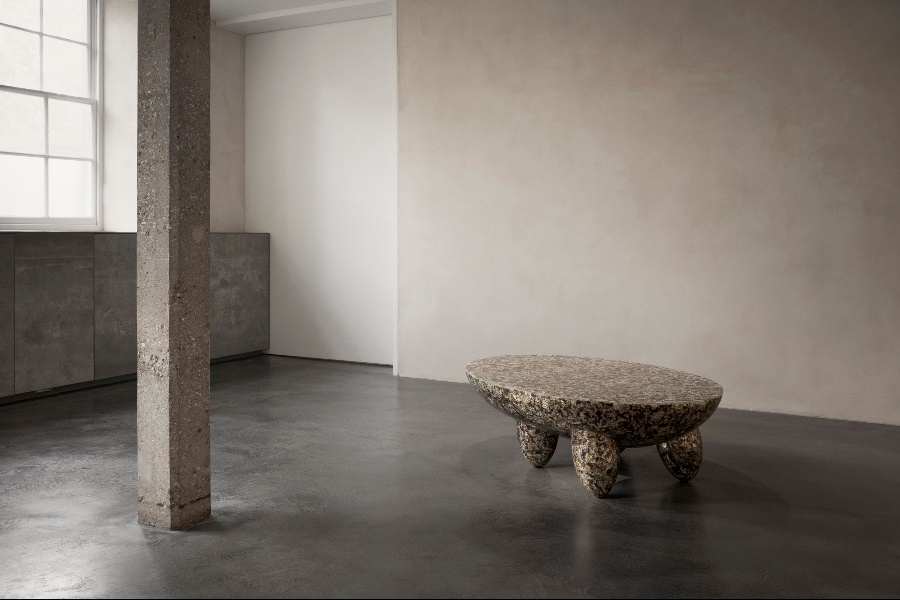
The nine collectible pieces on view feature everything from sculptural cabinets to a hand-cast resin coffee table and matka lights. “No one needs one more chair—we have enough of them. But people need more stories, more unique storytelling. Just because a piece has a function does not make it less of an artwork,” says Shah, shrugging at the art world’s disdain for collectible design. “It only approves of you once you’re dead. When Isamu Noguchi was alive, he was always met with ‘You’re not a serious artist’. Now galleries sell small aluminium maquettes for $20,00,000 to $30,00,000! Why was it not celebrated in his lifetime? I saw the Lalanne sheep 15 years ago lying in a Paris gallery, and nobody wanted to look at them at the time. Today, a small one costs around £3,00,000 pounds.”

With his works now entering museum collections, Shah hopes to hold the door open. “We are not the back-end manufacturers of the world—we create original designs here—and I see myself opening up a gateway for the rest of us to make a global impact.”

Taamr runs at Carpenters Workshop Gallery, Ladbroke Hall, London, until September 20, 2026

The Nod Newsletter

We're making your inbox interesting. Enter your email to get our best reads and exclusive insights from our editors delivered directly to you.