




It’s easy to think of Ayşegül Savaş’s writing as a person. Decidedly, it’s a 20-something leading an art-adjacent life (most of her protagonists are writers, teachers, artists, translators, and filmmakers), scrolling social media in bed while dealing with a litany of problems that often come with adulthood. Her stories are so distinctly millennial you could file them all under a genre called the great millennial bildungsroman.
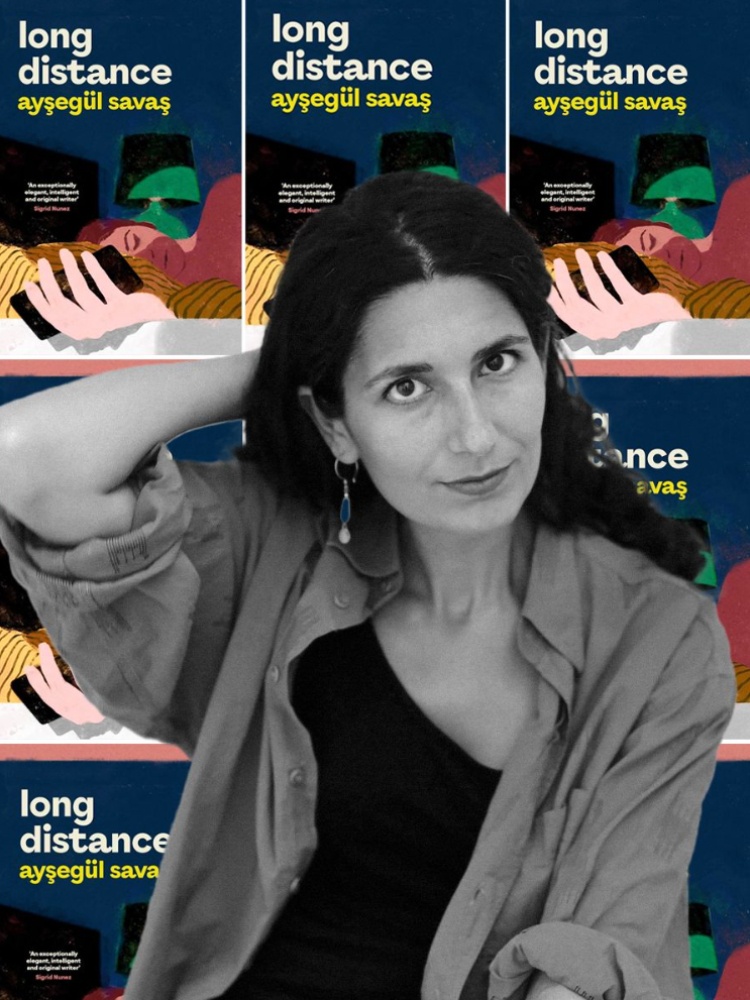
In Long Distance, a short story collection released in 2025, which is The Nod Book Club’s pick of the month, the Turkish writer captures this portrait of a generation through a selection of 13 lo-fi stories about ordinary people living ordinary lives in the most magical way.
It’s lo-fi because nothing bad happens to anyone here: there are no big reveals, no bold shenanigans, no plot twists. But Savaş’s genius lies in capturing the minutiae and messiness of everyday life and emotions. Through people and places, she presents certain archetypes that feel achingly familiar or, in some way, a version of our former selves or past lives. There are uni kids visiting home, school friends reconnecting after 15 years, couples in long-distance relationships, and harrowed new parents entrusted with a colic baby. But whether these meet-cutes take place in an al fresco trattoria in Rome or a charming little cafe in Paris is immaterial because they are universal portraits of what it means to be young, clueless and free.
“Most of the stories that went into the book have a similar preoccupation about living, about being an outsider, about being on the threshold of change, a threshold of real adulthood,” says Savas of this collection. “In the stories I am writing these days, my concerns have shifted a bit and my point of view has shifted a little bit from that period,” says the new mom, whose last novel, The Wilderness, dealt with motherhood.
Her prose may be simple, but these immaculately observed stories have the ability to transport you back to another time because the writing feels honest and the internal monologues feel so real. The house-hunting couple from ‘Future Selves’, the story which inspired her novel The Anthropologists, speaks to every young couple yearning to find a place of their own when she writes: “More than the prospect of a home, we were intrigued by all the different lives, the arrangements of space to work and rest, to store and display, the priorities of strangers that were so different from our own.” Her titular story, ‘Long Distance’, captures the messiness and silliness of young love by zooming into a bickering young couple. (In one instance, the readers are made privy to the narrator’s inner thoughts following a thwarted sex night: “Lea thought with frustration about her smooth, soft legs, her lace underwear, now wasted.”)
And that is what makes it a compelling read. Between these tiny actions of stalking old friends on Facebook, and shooting off throbbing red heart emojis while lying in bed, this voyeuristic collection takes us back to the charming old cafes, the curated apartments and the dimly lit bars that get more animated as the night progresses, which we all know too well and would never rather forget.
Excerpts from the conversation:
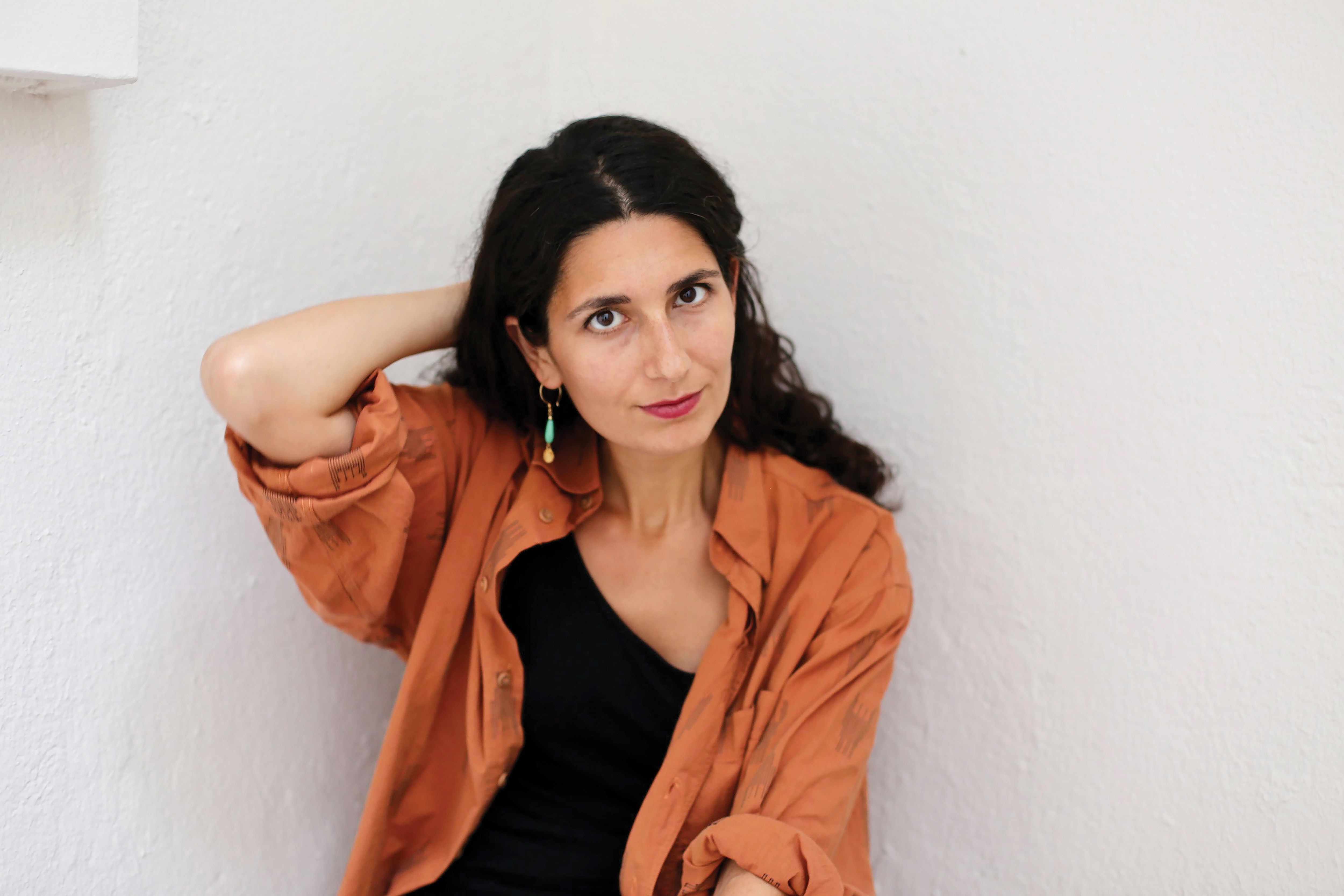
You were born in Turkey and lived in England and Denmark and studied in the US before settling in Paris. Most of your characters are also creatives who are on the move in foreign cities. Are the two interlinked?
Undeniably. That’s the only type of life I have experienced. My father worked as a diplomat, so I grew up in different countries. I’ve never really known a place where people are just born in a city and end up living there. That’s a different kind of writer—one who writes about their landscape very intimately. I can observe places.
The place I’ve lived longest is Paris. I moved here in my late twenties, but it seems impossible to know this city intimately. I feel like a newcomer even though I’ve lived here for 14 years. I wrote my first novel when we moved to Paris, and being a newcomer to this city was one of my big teachers in writing. I wanted to do something with this arrival and write about the city. My first novel [Walking on the Ceiling] is about a young Turkish woman who moves to Paris and starts going on walks with a writer.
Your characters also capture this immigrant experience within their day-to-day existence. They are students living in Rome, friends catching up in France, single women working in foreign cities…
Yes, I think it’s very difficult for me to think of another way of being. For me, writing about any sort of deep experience is based in a feeling of rootlessness. But it also is very surprising to me. I look back [and think] of course all of my books and all of my stories are about this immigrant experience, even though that’s not a theme I chose for them.
At what age did you know writing was your calling?
Quite late in life, actually—after I graduated from college. I knew that reading was my calling from the moment I could read. And those two things are connected. You can have a very intimate experience of reading a book and those characters becoming so dear to you, and owning these books is almost a secret knowledge that you would write one day. I didn’t study Literature in university because I didn’t think that would be allowed for me because it comes so easy to me.
In a New Yorker interview, you said you always write short stories when you know how they will end. But in your stories, you leave it to the reader’s imagination: Is this relationship going to last? Will these people ever meet again? Are they happy now? It’s not like Maupassant or O Henry; there is no twist in the tale. It’s like life—it goes on with no beginning, no end.
It’s true that even though I said it (and I still think it), a short story does have an ending to it. I write a short story knowing what a situation is, so it is a little more self-contained. A husband and wife run into a very close friend from their youth and it brings up memories of their youth and how things have changed. This is a situation and it has an ending, in the sense that the story will end when the conversation ends. It doesn’t mean that there is a definitive ending.The idea of a definitive ending is a bit troubling to me, because that’s not our experience of life. We don’t close chapters and say this is over, on to the next. We don’t have an idea of finality, so I think my writing explores that experience of living.
How do you think of such ordinary scenarios and regular characters and know that this is a universal story? Do your friends often complain that you use their life in fiction?
There are often two threads to a story and sometimes I’ll hold on to the thread for many, many years. For example, with ‘Long Distance’, I had many years ago heard something like the tragic story that Leo hears on the plane. Someone had heard it on a bus and that just stayed with me. Back then, I remember questioning the truth of the story. So, when I was writing about this couple in Rome, I thought: how could I get these people to fight? And that’s how it materialised in the story.
Most of your work revolves around the lives of young creatives. Stylistically, thematically, linguistically, it’s very elder millennial. Anyone in their late twenties and thirties can relate to the stories and the characters you bring alive. Do you consider yourself a young millennial writer?
I don’t, in the sense that I often have a lot of trouble with the terms. I am like, what’s the current young generation called? Is it Gen Z? I don’t know these terms. However, I do know when I was writing the book I wasn’t writing the book in that moment of life. I was no longer in that time of my life, going out sitting in the park and chatting all day. It was several years later that I started yearning for that time and realised that time was over for me. And then I started writing about it.
I’m always a few years older than my protagonist. In fact, I have a book coming out next summer and the protagonist is in her late thirties; it’s like they’re catching up with me. These are stories about infants and the rupture of becoming a parent before you really grow into being a parent. I’ve realised thati it’s in retrospect that you can define and see what that time was. Like, when you’re thinking about what to do when your parents age, or how to make a life, you can feel anxious. It can feel like a very stressful period. But when you’re out of it you feel you were so happy and those were the great days.
Though I do feel these were books [The Anthropologists and Long Distance] that responded to something of the time. There were a lot of books that were about finding a home, and I can see it in the writers of my generation who were grappling with very similar ideas. Clearly it is a millennial mindset.
Your writing reveals your background in Anthropology. You look at every little thing in detail, every silly thought in one’s head, like someone who has spent decades studying human behaviour. Is that something you enjoy doing, and do you have a favourite place to people-watch?
These days, I have very little time for people-watching, so I’ve been doing a lot of that with my daughter in the park, where I absorb a lot of child hierarchies. “Can I play with you?”, “Can I borrow your bucket”, and the tiny little humiliations children face every day. That’s my current fieldwork, I would say.
I studied Anthropology and that has influenced my thinking, but possibly the reason I studied Anthropology is that I find humans so fascinating. I really find the ordinariness of people, the differences in their ordinariness, very interesting. You know, like the different ways in which you can go through a single day. I’m always so fascinated by it. Like, what do you talk about to your friends? What’s your idea of a fun night out? Or what’s your idea of being really, really lazy? All these things I could listen to endlessly.
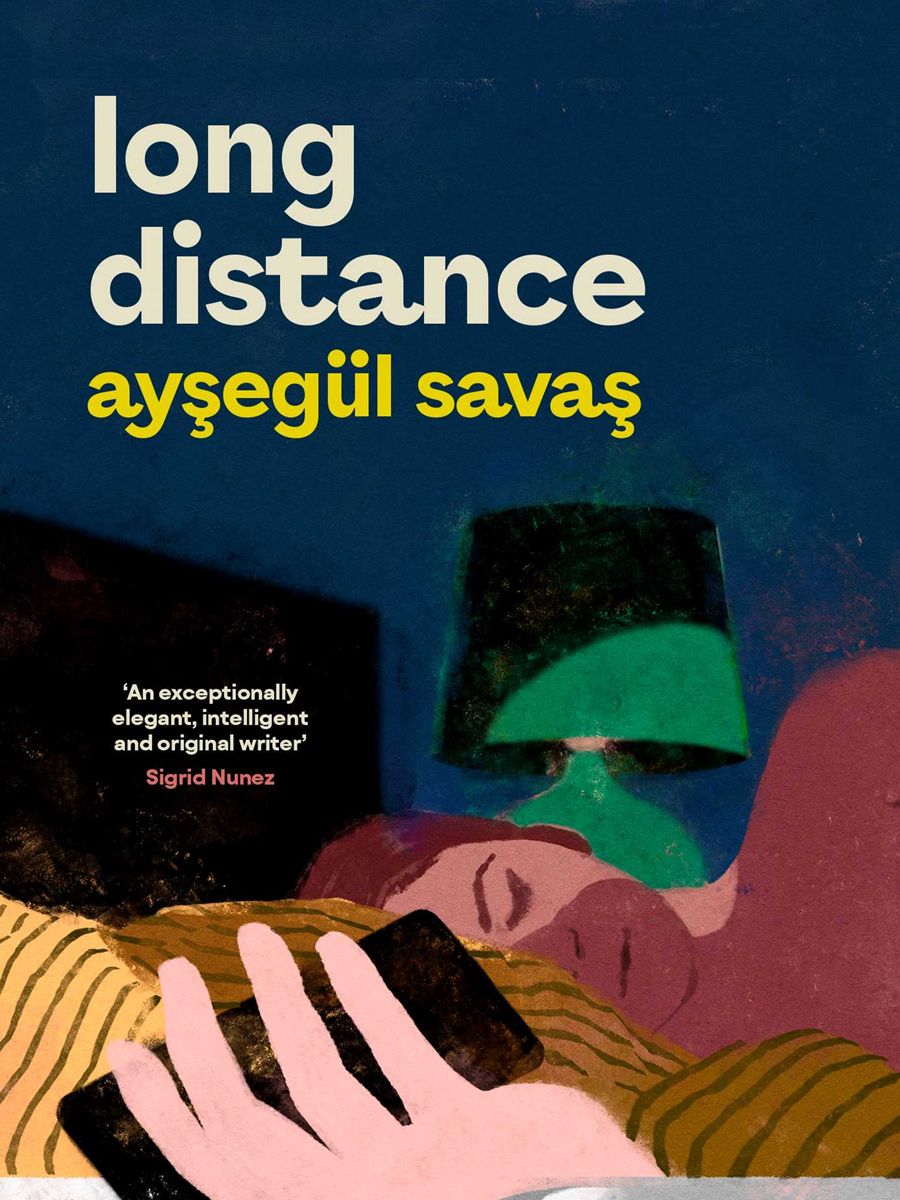
One of the stories in this collection that stood out for me was ‘The Ghost’. It somehow didn’t feel like it belonged here…
Besides ‘Ghost’, all the other stories in this collection were written around the same time, over the course of five or six years. ‘Ghost’ was written before that, before I wrote my first novel. So, there is a different style to it. When we were putting this collection together, we took out a lot of old stories because they didn’t fit with the voice of the collection. I said, “Well, what about ‘Ghost’? Maybe we should get rid of that too?” and my agent said she liked it, and it’s nice to have one variation in tone. She said something very interesting... that a lot of these stories are about ghosts in some way. They are about the ghost of past selves, the ghost of future possibilities, and it’s nice to have a story in which all that is materialised. I really loved that interpretation, so I included it in the book.
Joan Didion used to start her workdays with a can of cold Coke, Stephen King listens to heavy metal while writing a novel, and Murakami swears by running to keep himself productive. Do you have any writing rituals?
I think I was a bit more ritualistic before I had a child. I needed a certain amount of free time and I’d spend hours of the morning reading the texts that I found inspiring. While writing The Anthropologists, one of the defining texts for me was Natalia Ginzburg’s Family Lexicon. I love the simplicity and depth of her vision and how she manages to write in the most unornamental way to deliver a striking truth. For short stories, the writer that gives me extreme joy is Tessa Hadley.
These days, a general rule I have if I’m writing something is to try to write 500 words a day during the week. It’s a very modest number but that means that I can keep it up throughout the week and feel that I’ve succeeded. If I write more, that’s great; it’s cause for celebration.
Who is the first person you share your drafts with while writing a story?
Always my husband. And then I’ll send it over to my agent.