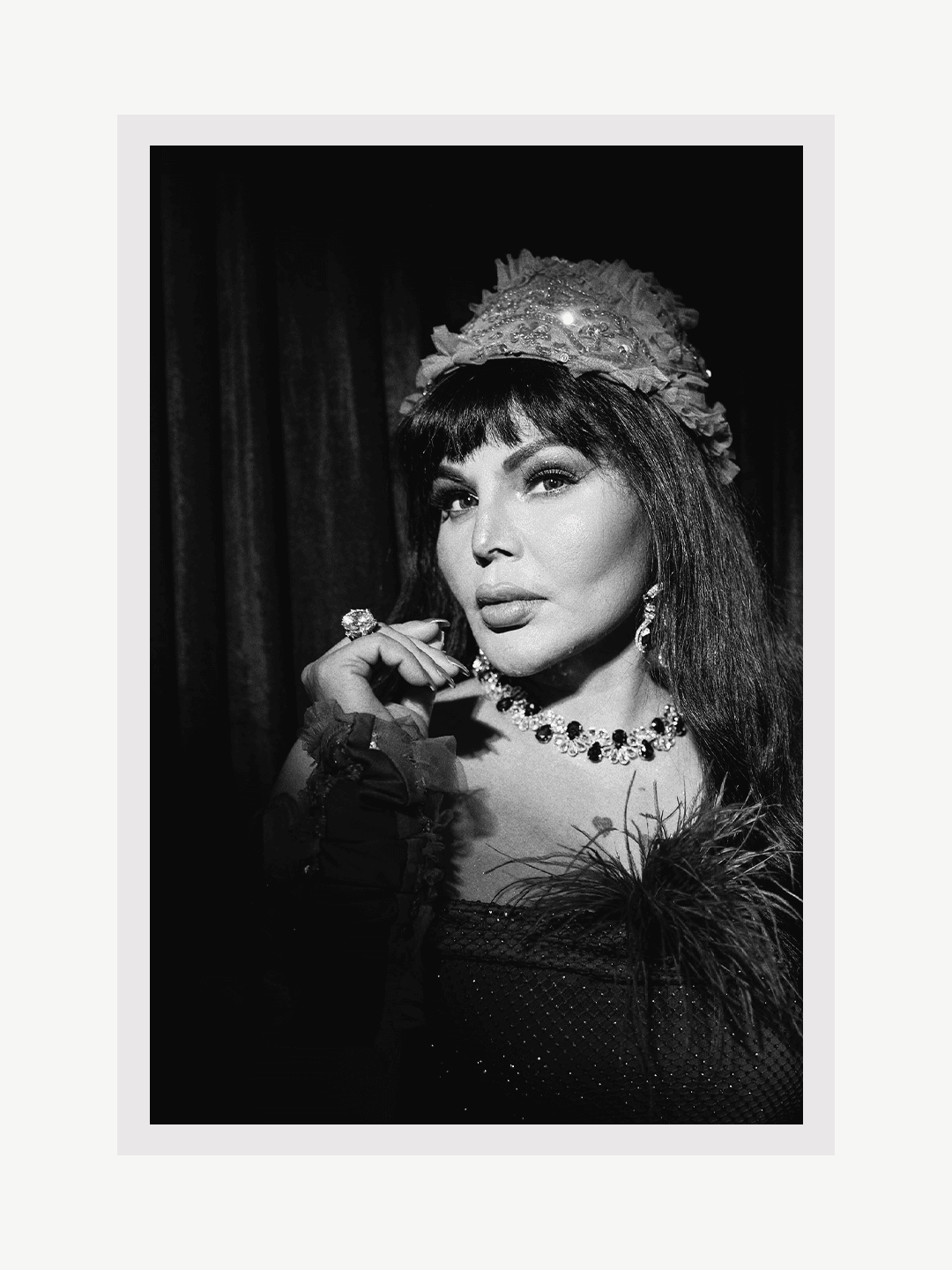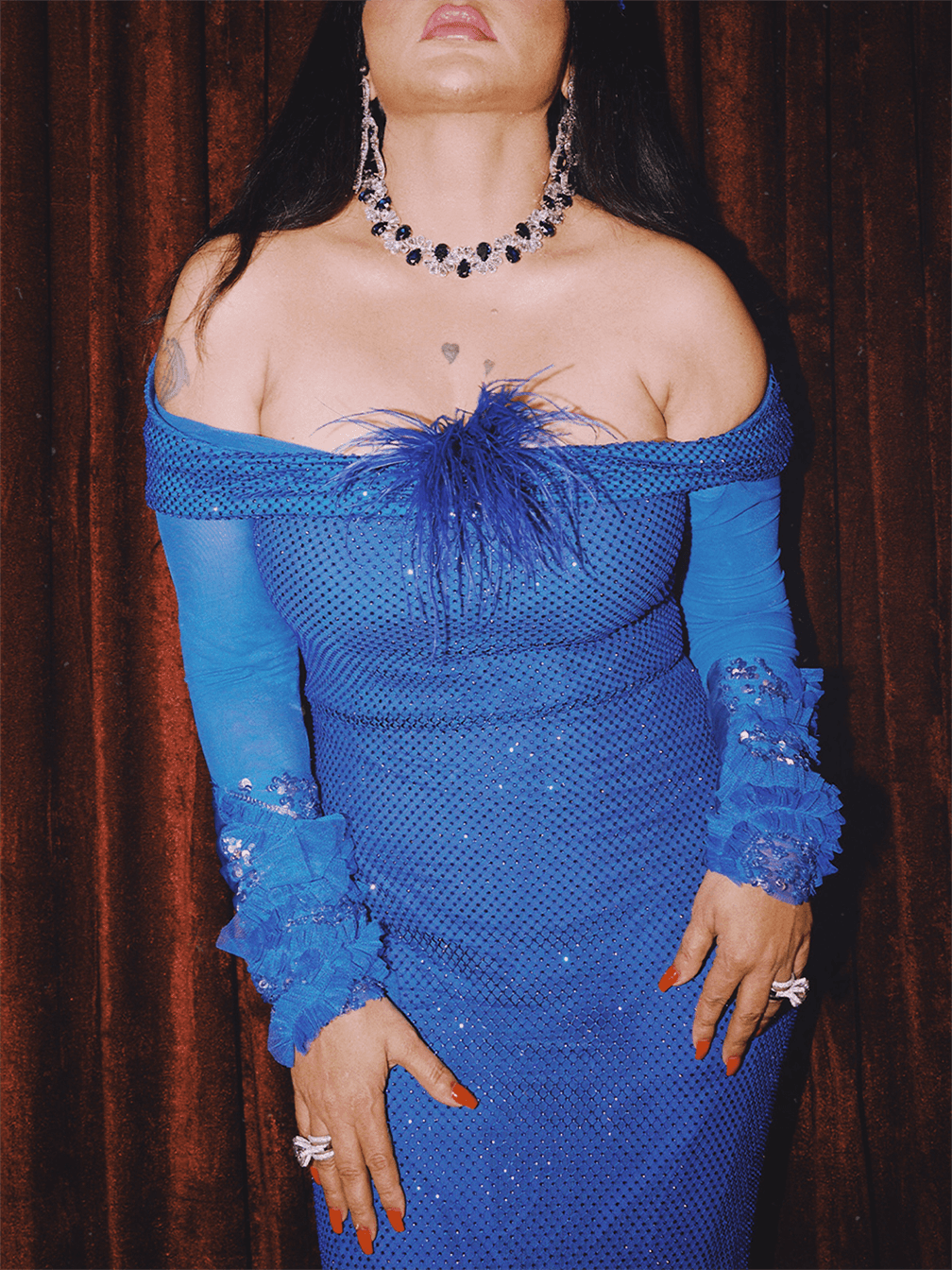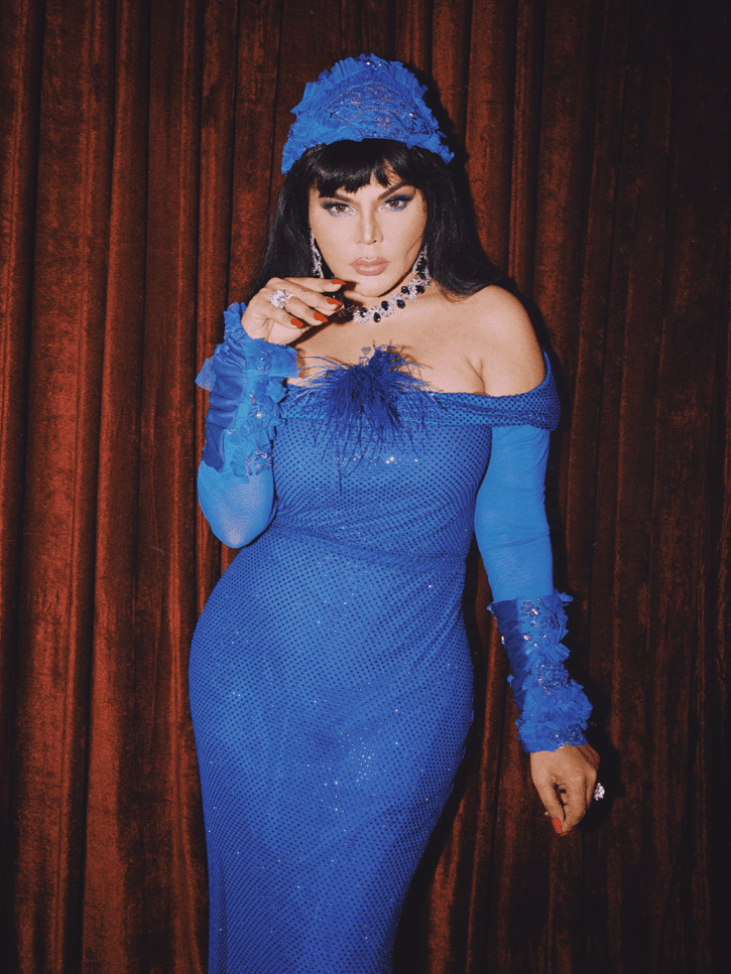

For six days last month, Rakhi Sawant was, on paper, a wanted woman. On October 16, a court in Jhansi ordered the Uttar Pradesh police to arrest her due to her repeated failure to appear over a matter that had been languishing in legal limbo for 15 years. A non-bailable warrant was issued and the police was strictly ordered to produce her in court by December 1. But then, a week later, it withdrew the warrant. In a straight-out-of-the-movies move, her lawyer arrived with a photocopy of a 2011 Allahabad High Court order, staying the trial. The order had sat on the record for 15 years. One court had simply forgotten what a higher court had told it to do.
The case in question concerned Rakhi ka Insaaf, a tabloid tribunal she hosted on NDTV Imagine in 2010. The format of the show was simple enough: warring couples brought their domestic squabbles to Rakhi’s court for her to pronounce judgement. One guest from Jhansi died by suicide. His family blamed Rakhi and her on-air humiliation. Nothing has been proved, and a stay is not a verdict. When I asked Rakhi what she thought about the abrupt summons and its dramatic dismissal, she responded with an anodyne, “God is great. I have his blessings on me.”
I’m obviously disappointed by the tepidness of her response. The woman who, almost two decades ago, calmly informed the nation, “Jo bhagwan nahi deta, woh doctor deta hai,” long before cosmetic transparency became the sacred incantation of the socially conscious, could surely tell me something more headline-worthy? Because if there’s one thing Rakhi Sawant knows how to do better than the many, many, many things she’s attempted and very publicly flamed out at, it’s news. How to make it, manipulate it, confound it, subjugate it.
It’s been a busy year for Rakhi—and a confounding one for those of us who try to keep track of her. In June, she confirmed her conversion to Islam because she married “that donkey”, referring to her marriage to Adil Khan Durrani in 2022. She tells me that she still follows the faith but no longer uses the name Fatima. “People search for love. I have spent my whole life searching for god. Love has always betrayed me, but god has saved me. I’ve finally found him in the skies,” Rakhi tells me of her relationship with her faith. “I believe in the aasmaani khuda. I hate idols or any form of god that humans think they can make. God makes us, we cannot make god.”
Last December, Shobhaa De called Rakhi her ‘Woman of the Year’ for her fusillade of bon mots. Her “Awaaz neeche, bees kadam peeche” has entered the canon of female lexicon and isn’t going anywhere. In 2026 alone, she’s had the internet in a perpetual frenzy with her sudden outbursts on Bigg Boss Marathi, running commentary on Govinda and Sunita Ahuja’s divorce, histrionics on Netflix’s I-Popstar and flamboyance as a judge on Battle Royale II. In July, she became embroiled in a public feud with Kangana Ranaut on Instagram. In August, she wept emotionally on camera over her Pakistani fans. The same month, Vogue India deemed her a drag icon. In September, on Samay Raina’s India’s Got Latent, where she once flung a chair on stage, she appeared again, this time unabashedly flirting with a guest while making viewers uncomfortable.
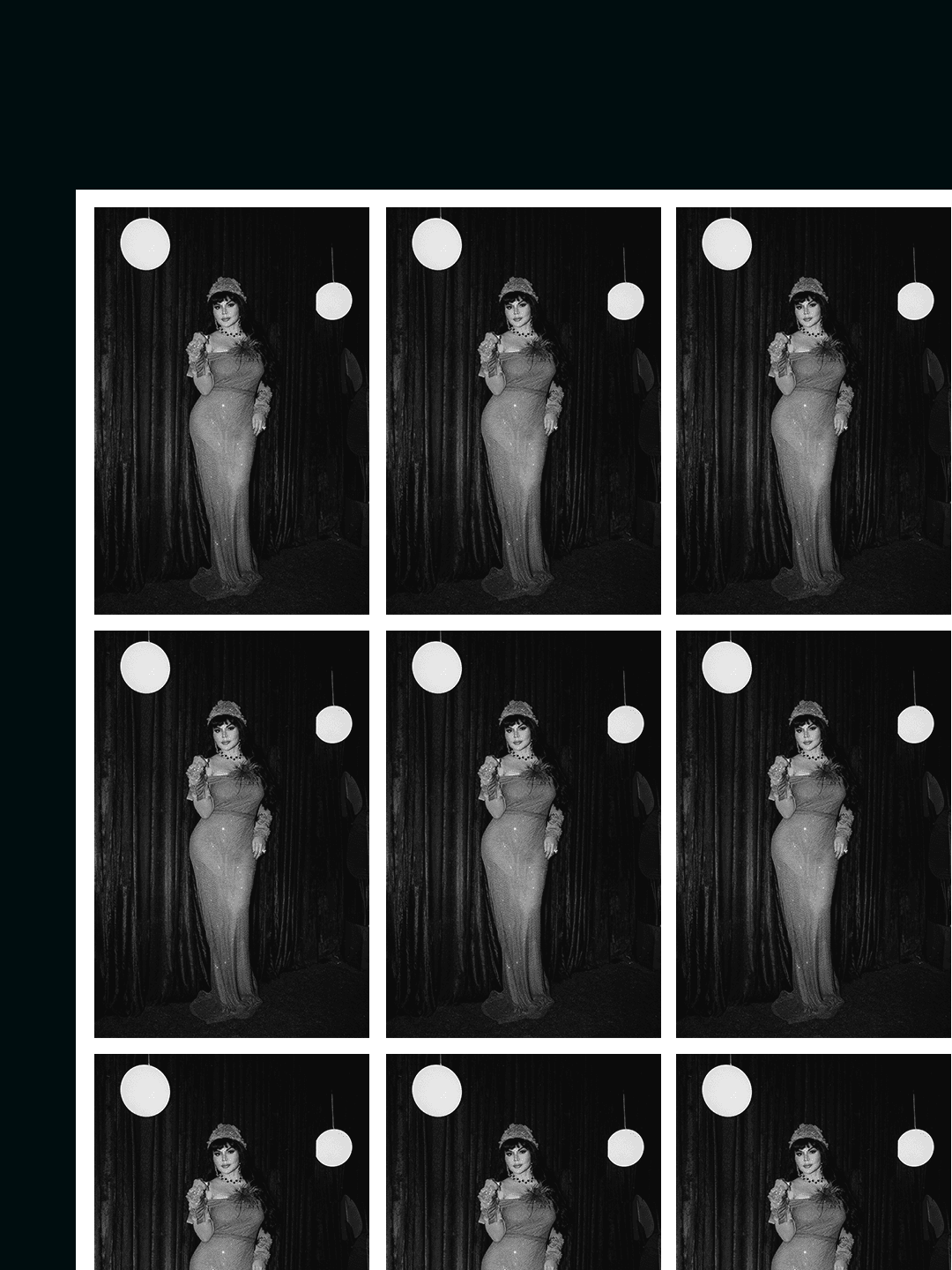
On her Instagram, where her 13.8 million fans are used to seeing her play with filters to offer unfiltered takes on everything from politics to personal style, her image change was even more evident. Most recently, Rakhi has taken to making Instagram reels espousing progressive politics in crisp cotton saris, a style made famous by the very Ranaut she excoriated. She’s also doling out financial advice for Cred Club’s latest campaign, which has in the past worked with names like actors Disha Patani and Bobby Doel and cricketer Gautam Gambhir. For Creyate, a new AI tool, she’s created hilarious videos that have outperformed those by Orry and Anupam Kher.
This is all to say, there is no dearth of shock-and-awe within Rakhi’s content factory. And her followers lap it all up with giddy delight. It’s likely the reason she’s recently been inundated with high-profile endorsement and promo deals from Netflix, Prime Video, Cred Foundation, Nykaa, Mamaearth, and several others. “Cred was my first English ad ever. I was so nervous, but Salman [Khan] Bhai strictly told me to do it, so I did. Now I want to do fancy diamond and gold jewellery ads. Ab mujhe iska taste aa gaya hai (now I have a taste for this),” she laughs, clearly delighted.
The question that crops up most faithfully alongside Rakhi’s unique brand of imperiousness and chaos is this: “Is she for real?” Over the years, Rakhi has been branded a joke, a shameless self-promoter, a publicity hound, a notoriety seeker, a charlatan, a suspect, and a plaintiff many times over, and, most recently, a feminist icon by my 13-year-old niece. “Who cares what they call me? What I care about is getting work and making lots of money. I’m not very educated. Entertaining people is the only skill I have and I’m very good at it. If tomorrow something else makes me more money than this, I will do that,” she says casually.
Entertaining people is the only skill I have and I’m very good at it. If tomorrow something else makes me more money than this, I will do that
It is, undoubtedly, a skill to always be standing at the centre of every room, whether you’re welcome in it or not. The easy explanation is that she is a fool who got fortunate. What I suspect might be closer to the truth is that she’s understood something about the country that the rest of us are only now beginning to discern.
Rakhi knows which words belong to everyone, and how to wield them like matchsticks in a tinderbox. When BJP MP Kangana Ranaut called the NEET scandal protesters cockroaches and Gen Z ‘Generation Gutter’, Rakhi tore into her. She called Ranaut a chudail and asked what she had done to deserve being an MP in the first place. Her fierce, loud, and virality-worthy support of the youth saw her get swiftly anointed ‘Mother’ by an impressed Indian internet. “I will always raise my voice for what I believe in. What is happening to these kids and to the country is very wrong. I will support them until my last breath.”
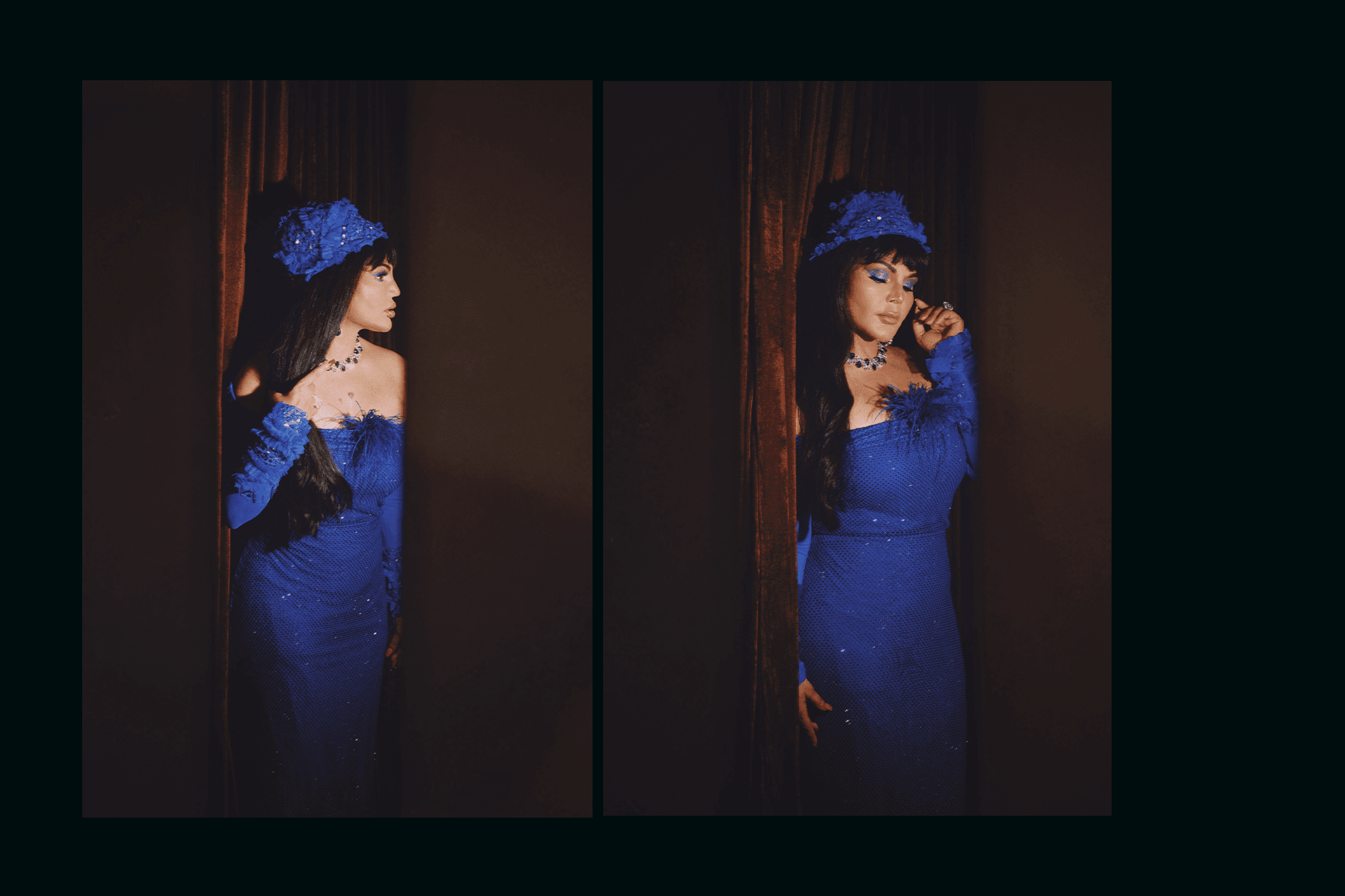
When the education minister finally gave in to protestors’ demands and resigned after a month of escalating protests, Rakhi took to the streets, handing out gifts while chanting “Bharat Mata ki Jai”. She’s still one of the most visible and consistent supporters of the ongoing anti-CEC protests. The revolution will be televised, sure. But every uprising needs a shrewd publicist. Rakhi Sawant happens to be this one’s.
As is almost always the case with Rakhi, the truth isn’t always linear. In 2014 she campaigned earnestly for the BJP and emotionally called herself the party’s daughter. “I was paid to do it. All of us do it. No celebrity campaigns for free in the heat,” is how she explains it today. In 2019, she offered to carry 50 or 100 bombs into Pakistan to “destroy enemy territory” after the Pulwama attacks. But just a month ago, she made several incendiary-bordering-on-libellous comments about the prime minister. It’s not the first time she’s criticised the PM.
Somehow, lambasting the current dispensation one day and serenading it with superlatives the very next is exactly on brand for Rakhi. One can only imagine the collective whiplash in the troll farms. I ask her if she’s ever been worried for her safety, saying what she does. The answer is an emphatic no: “What will they do? Kill me? Let them try. No one owns this country. It is OUR country and they are public servants, not our masters. They will never be able to silence me.”
What will they do? Kill me? Let them try... They will never be able to silence me
Beneath the antics, a deeper consistency couches the ideological somersaults. Allegiances can change, but the slogan does not. “Bharat Mata ki Jai” belongs to everyone and no one. Rakhi’s debatable genius lies in using the words every side accepts. And letting the moment decide what they truly mean.
Rakhi knows what an audience will forgive. She may have been positively itching to pulverise the “enemy nation” just a few years ago, but today, by her own account, some of her most loyal friends and fans are in Pakistan. “My fans across the border have always showered love on me and helped me when I needed them,” she tells me. “I wish our two countries become friends.” India and Pakistan are hostile by reflex, so Rakhi might just be a self-appointed one-woman peace contingent.
And yet, it’s quite likely that she’s allowed to continue for one crude reason: nobody takes her seriously.
Rakhi knows that people believe what they see done in public. Among her many flip-flops, her U-turns on the subject of marriage are probably the most dizzying. She’s often said she will never marry. But then in 2009, she personally developed Rakhi ka Swayamwar—an entire reality show built around the spectacle of her auditioning husbands on national television. I suspect she wanted the prime-time eyeballs far more than the husband.
Rakhi’s husbands and husbands-to-be (and there have been a few) have been impossibly hard to reliably verify. Her relationship with her Swayamwar pick, Elesh Parujanwala, soured within months. She was married to NRI Ritesh Singh for three years and to Durrani for one. All three of her publicly known relationships have been shrouded in gossip, controversy, and allegations of fraud. Rakhi admits that she picked Parujanwala “for his money but lost interest when I realised he was broke”. Her marriage to Singh ended when she learned he was married and had a child. She tells me that Durrani “scammed her and ruined her financially”. A 2009 Open magazine profile of Rakhi Sawant cites a police source as saying that as per their investigation, she had been married four times even before the Swayamwar rolled around. None of this can be independently verified. Today, Rakhi has only this to say about her tumultuous romantic past: “I have accepted that love, romance, and marriage are not in my destiny. I have the devil’s shadow on me. It’s why every man I get involved with becomes a devil and starts drinking, smoking, and gambling. I am a pious person. I do not believe in premarital sex. I tried having affairs when I was younger, but now I just want to be left alone in peace.”
Rakhi knows where to knock. She was born Hindu but converted to Christianity with her mother around 2009. In 2023, she converted again, this time to Islam, and visited a dargah in Ajmer to pray for her mother’s health. Weeks later she buried her mother in a Christian cemetery. I have noodled with this question for weeks now—is Rakhi’s religious journey a story about rapidly changing sides or is this simply about a woman so alone she’ll ask everyone for help?
Her accounts of her most recent conversion don’t agree with one another. In 2023 she said Durrani forced her to convert. A few days later she left for Umrah, claiming she was answering “the call”. Once back, she told reporters she had not adopted Islam, just that she was married by nikah. She’s also said, on occasion, that she accepted Islam because she was in love. So, her conversion story can be condensed thus: she was made to; she never did; she did it for love. Which one, if any, is true?
Being sexy is my job. If my god didn’t want me to do this, he would have given me a different life.
What I have come to understand about Rakhi is that the only truth that matters is the one she believes in right now. And right now, she’s a reality TV queen, LGBTQ rights activist, feminist, and devout Muslim. She spends a large portion of our conversation explaining the inherent contradictions within her many identities. “Being sexy is my job,” she tells me. “If my god didn’t want me to do this, he would have given me a different life. My god knows that in my heart I am a simple girl who works hard, takes care of her people, offers namaz religiously, and lives a simple life.”