Anant Ahuja, the 35-year-old founder of a studio in Delhi staffed almost entirely by people a decade younger than him, was standing at Jantar Mantar when his mother called to tell him to be careful. Not an employee’s mother—his own. A grown man, the head of a company, being told to not do anything stupid, the way you’d warn a teenager before a school trip. Ahuja clocked the absurdity of it even as it was happening to him.
Around him the crowd had swelled from a few thousands to something that no longer needed counting, and the mood was, in his words, angry and happy at once—a combination he couldn’t remember from any protest he’d stood in before this one. Not the anti-CAA marches, not the Nirbhaya candlelight vigils, not even the one that got him briefly hauled into a police station in his own youth. People said sorry when they bumped into you. Strangers fanned each other in the heat. It did not feel, he keeps saying, like the thing he’d assumed it would be.
ADVERTISEMENT
@alizehmehta Instagram
@siddhant.haste Instagram
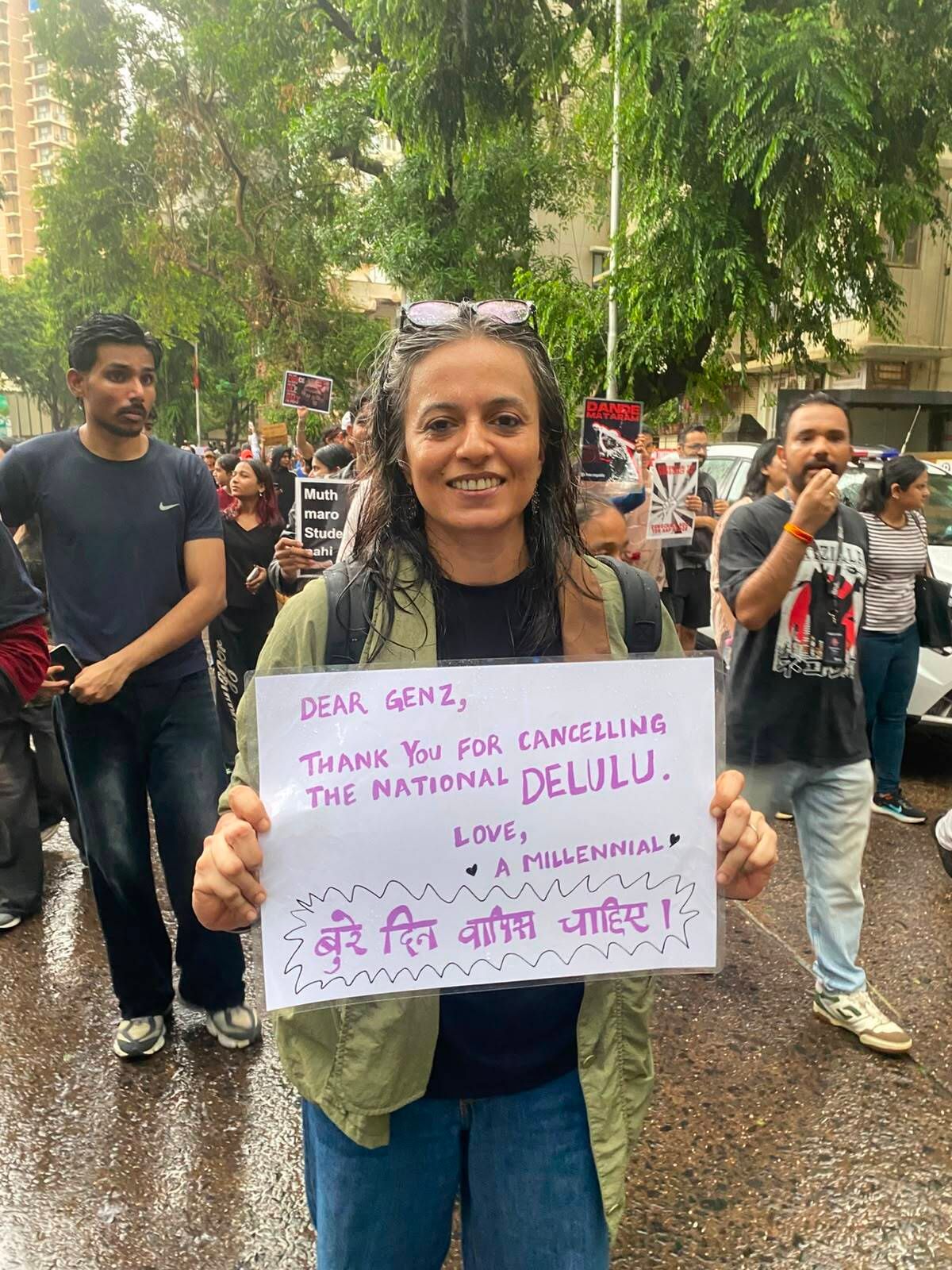
Like most millennial bosses today, Ahuja had spent the better part of the last five years being the guy who thought Gen Z didn’t have it in them. He is candid about the arc of it now, and about what it dissolved into once he watched 20-somethings—the same ones who’d tell him “not it” on extra work—walk into a crowd with more grace and manners than he’d managed at their age. “They will do what they want to do, not what you ask them to do,” he says now. This is not a complaint. It’s an epiphany.
He is not alone in what seems to be a 180-degree about-turn. Every millennial has a Gen Z story, and it is rarely the flattering kind—at least not from where we’ve been standing. We’ve all had thoughts about their work ethic (or lack thereof), their disrespectfulness and self-centredness, their inability to care. Fathima Abdul Kader, a freelance journalist living in Kochi, remembers being furious watching younger relatives drift toward marriage—or content creation as a career—with none of the desperate focus she needed to get herself educated. “I was one of those people who said I’d much rather do double the work than delegate to someone who isn’t going to take ownership of their work,” she admits, like the way our grandparents would talk about stories from their salad days.
The sheer surprise in Mumbai-based lifestyle commentator Aneesh Bhasin’s voice says more about his own pre-conceptions, although he admits they’re based on a limited survey of the Bandra Gen Z type, which may not speak to how the generation is like across the country. “I just did not think they would show up for anything serious.”
Comedian Kaneez Surka says she’s always been a fan of the generation, even if their work ethic “took some getting used to”: say, when a summer intern didn’t show up because, in her words, her “mental health” wasn’t good that day. Surka, shocked, realised this was apparently a legitimate excuse now, something her own generation would never have dared reach for.
Then came the student protests—and something about watching them up close, in real life and off our screens, has irrefutably shifted this narrative for many of us.
In Mumbai on Wednesday, 44-year-old Ekadish Bal, a former media professional turned linguist in training, found herself swept along a street of protesters in Shivaji Park, watching cops peel off the youngest-looking faces first—young women being quietly asked for their names and numbers before the protest had even properly begun, complying without a fight because, as she puts it, you probably don’t pick that battle at 18. The crowd kept relocating, thinning, and growing, before it swelled into the thousands and the cops gave up and started directing traffic instead. She remembers a poster of the education minister in a bikini, and a video of someone shooting a Reel from inside a moving police van. “They really don’t seem at all cowed by what’s happening,” she says, still sounding a little stunned by what she’s seen from a generation that she’d so far judged for not being able to sit through a book.
ADVERTISEMENT
@beghar__ Instagram
@esha.tiwari Instagram
@anaheezpatel Instagram
On the same day, comedian Abish Mathew was “picked up” almost before he’d properly arrived—he’d shown up on time, which he jokes puts you at the front of the line for the police to see. Locked up for about four hours with several others his age and many more much younger than him, what stayed with him wasn’t fear so much as how undramatic—even wholesome, dare we say—detention itself turned out to be. No scare tactics, just enough room to sit and talk, the police seemingly aware the whole batch would be released in a few hours anyway, and everyone on both sides quietly agreeing not to make it worse than it had to be, a red heart-shaped balloon bobbing in the air as they all played catch. “I felt like I was with people like me.”
Surka, recently back in Mumbai from New York, where she has spent the last five years, describes feeling something closer to relief. After the anti-CAA protests in 2019, she says, the silence that followed felt total, and she wasn’t sure whether to read it as fear or fatigue. Being back among people speaking up again made her feel like she was watching her country’s mental health repair itself in real time—even if protesters thanked her, an actual adult, for “coming in support”, as if standing next to 22-year-olds in a crowd had quietly reclassified her as an elder statesman. She, however, laughs, adding, “I feel so energised by this generation... We have to depend on the youth, because they are the ones who have the spark.”
Once the most hated generation, often labelled as entitled, lazy, delusional, and even deemed unemployable, the country’s young seem to have redeemed themselves in just a matter of a week. “I’m realising that their idea of not going above and beyond for those that don’t care about them in the long term is something I had to teach myself,” observes Fathima. “And now when they are protesting, they are meeting violence with humour and such maturity that I know I didn’t have in my early twenties.”
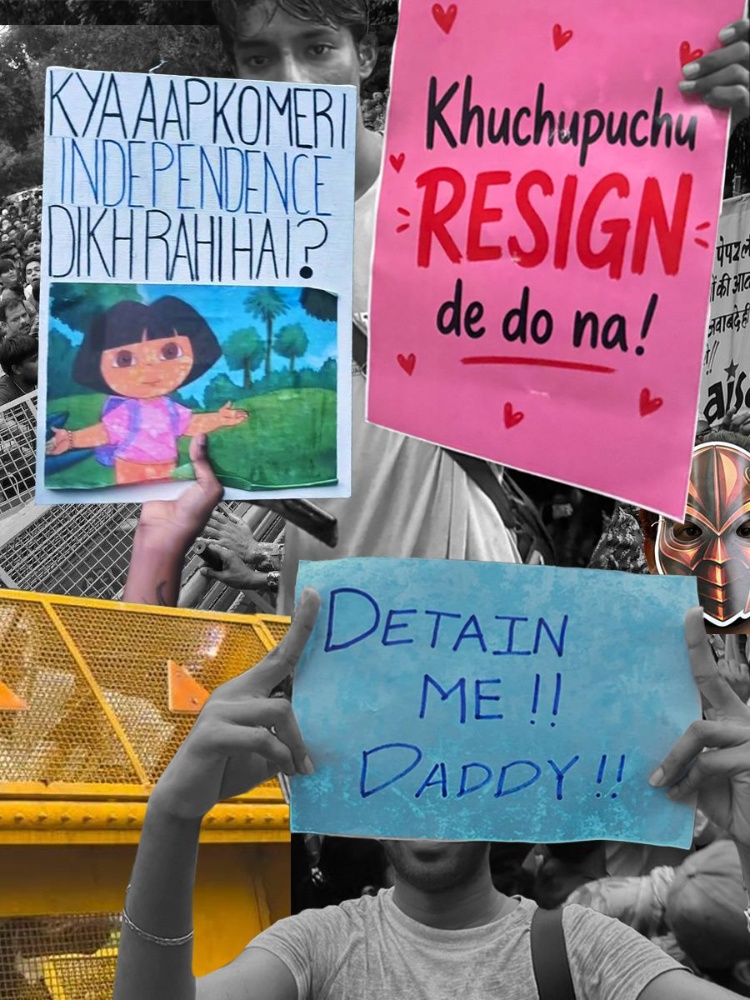
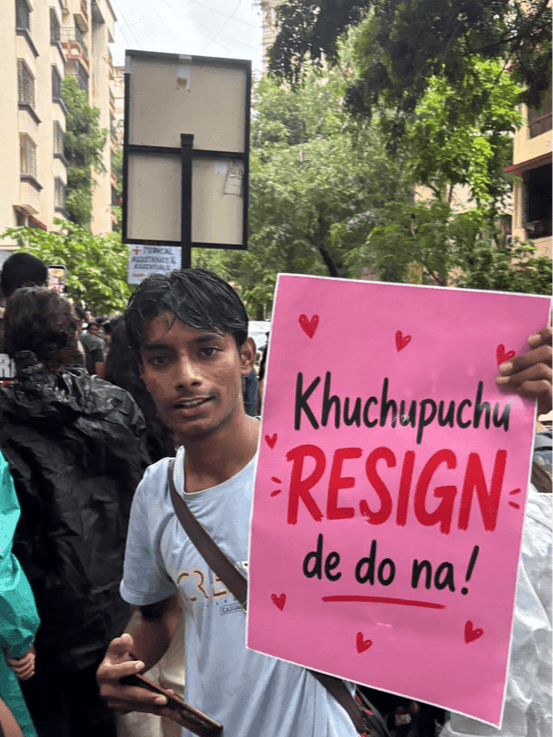
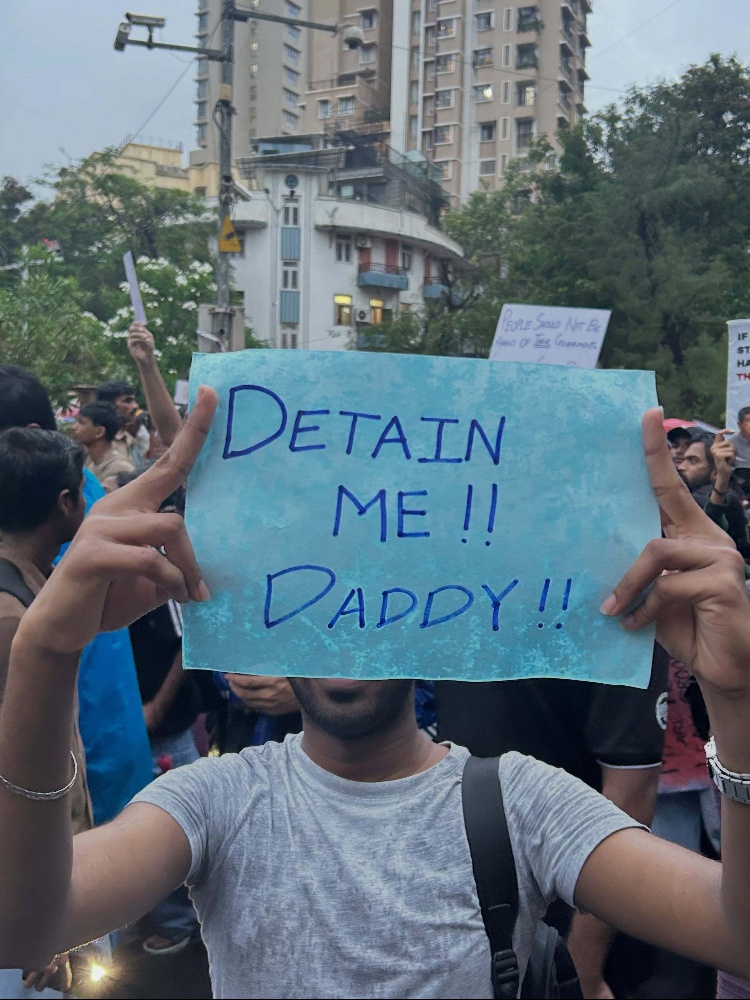
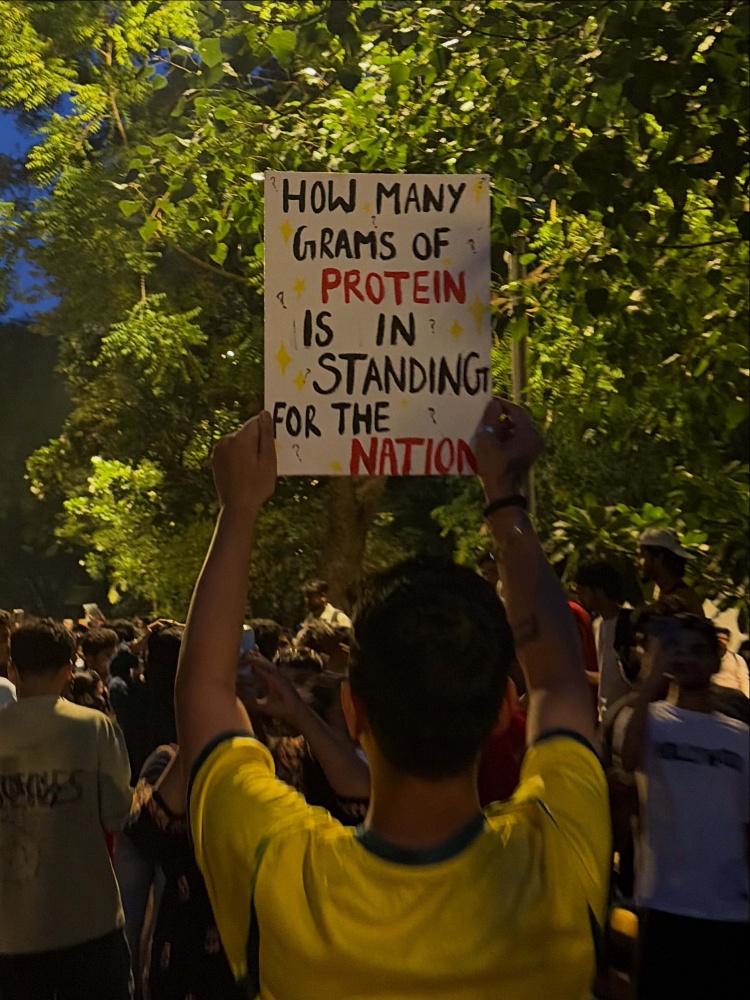
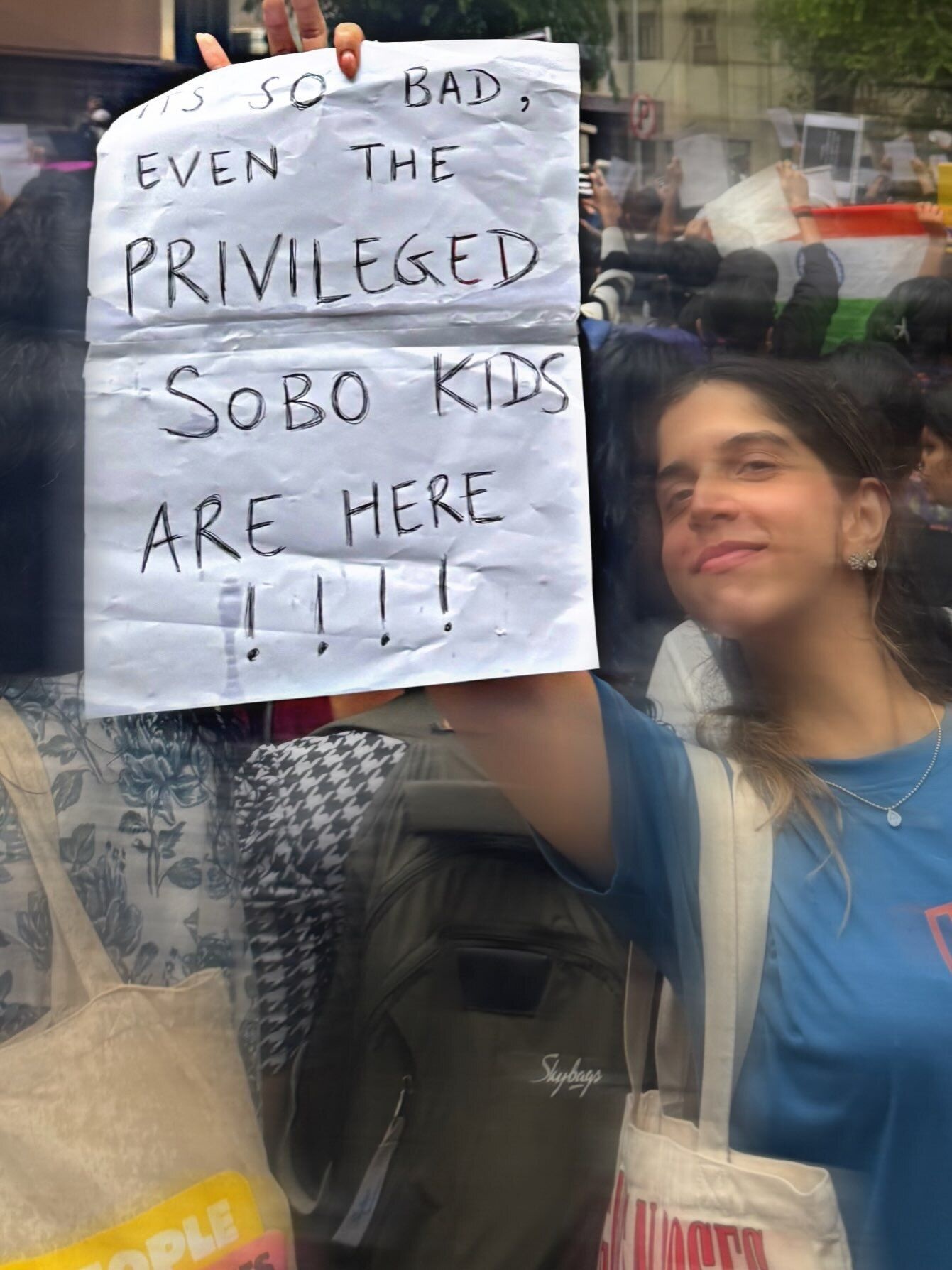
It’s the humour—weaponised, amplified—that’s kept those of us not able to be on ground, glued to our social media feeds. Three kids in red spandex enact the three Spider-Man pointing meme in the middle of a heaving crowd. One young man says to the camera, “Guys, the situation is so bad, even the privileged are here”, as actor Imran Khan talks to a TV crew in the background. A girl holds up a police van in Mumbai, another walks up to cops and asks them the all-important question: “Waaste guna huyeiin?” Besides calling to all the Daddies and twerking their bums to escape lathis, they have made sure that gorillas have walked off the wedding dance floor and into central Delhi. A Jantar Mantar football league might be about to take off.
We are watching a generation rewrite the protest playbook with a whole lot of gumption, sass, and complete flippancy. And this is not humour instead of anger but braided through it. It is a fearlessness none of us watching can quite claim we had at their age, says Surka: Kids narrating their own detention stories as if it were content, cracking jokes from inside a police van, clocking it, hearting it, singing to it—and recording it all.
Mumbai-based Ekadish Bal is amazed at Gen Z’s fearlessness at the ongoing protests and is among the many millennials who have newfound appreciation for them
Of course, when half the country’s population is under the age of 30, generalisations aren’t possible—and stereotypes have never stood. Generational friction is an inescapable reality—has perhaps always been—but that overarching sense of hope we’re all feeling? That’s the key, says Bhasin, who, battling FOMO in Hong Kong (which he is visiting for work), intends to head straight to Dadar or Azad Maidan when he returns. It has made the week, and maybe the internet along with it, feel briefly like a good place to be.
Mathew is already planning to go back tonight, he says, if only to beat his own personal record—ie, not get KO’d seconds after the game has even begun. Maybe it is the same instinct that explains the protests’ entire register. “I have a theory: that this is the post-trauma comedy generation,” he says. “We believed that tragedy plus timing equals comedy. These guys don’t have the patience for setup. They’re all about the punchline.”
ADVERTISEMENT
The Nod Newsletter
We're making your inbox interesting. Enter your email to get our best reads and exclusive insights from our editors delivered directly to you.