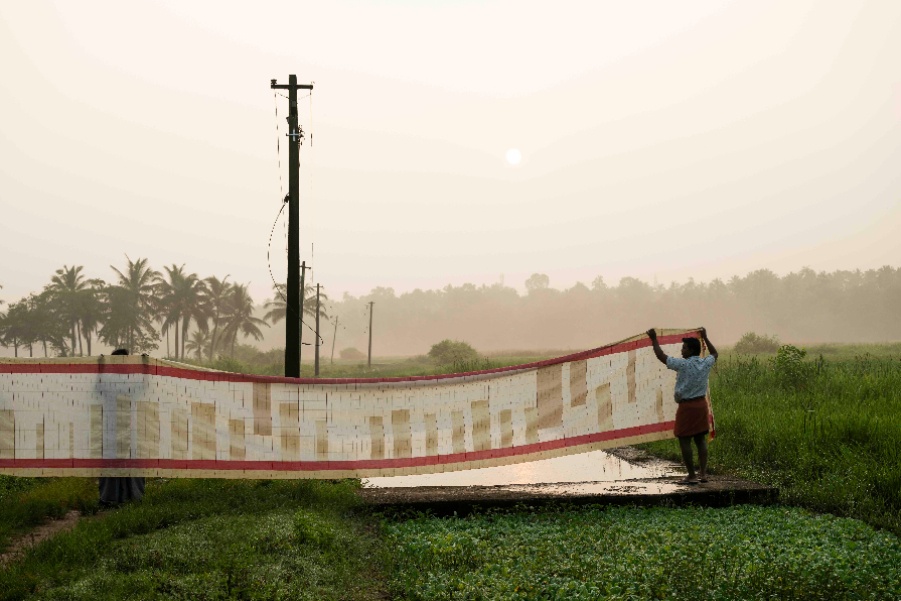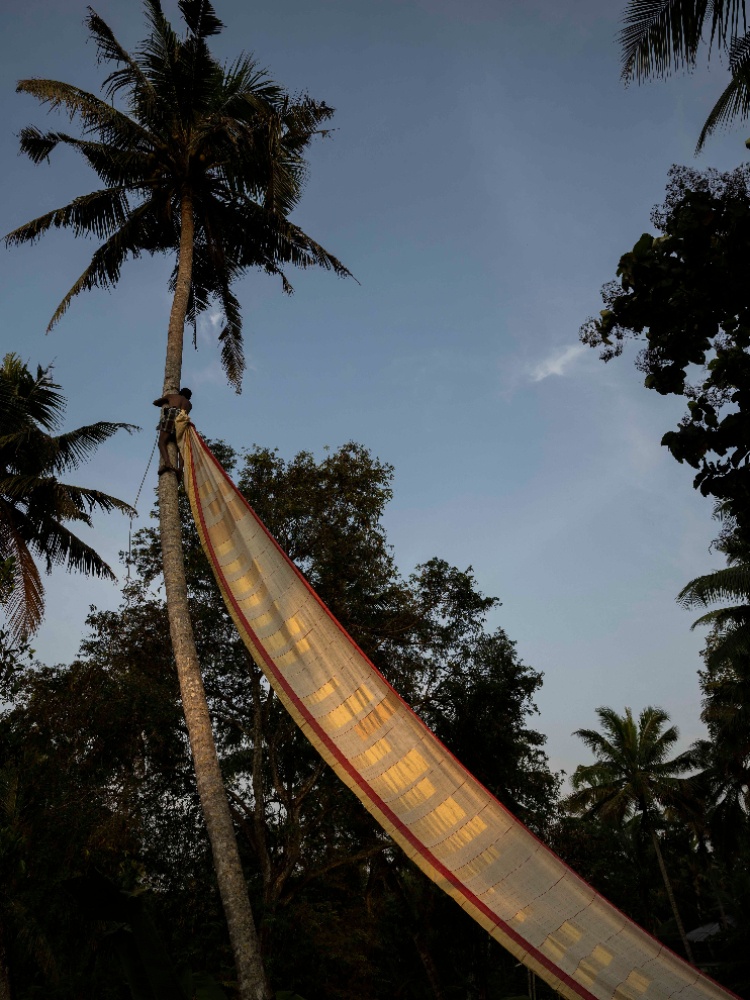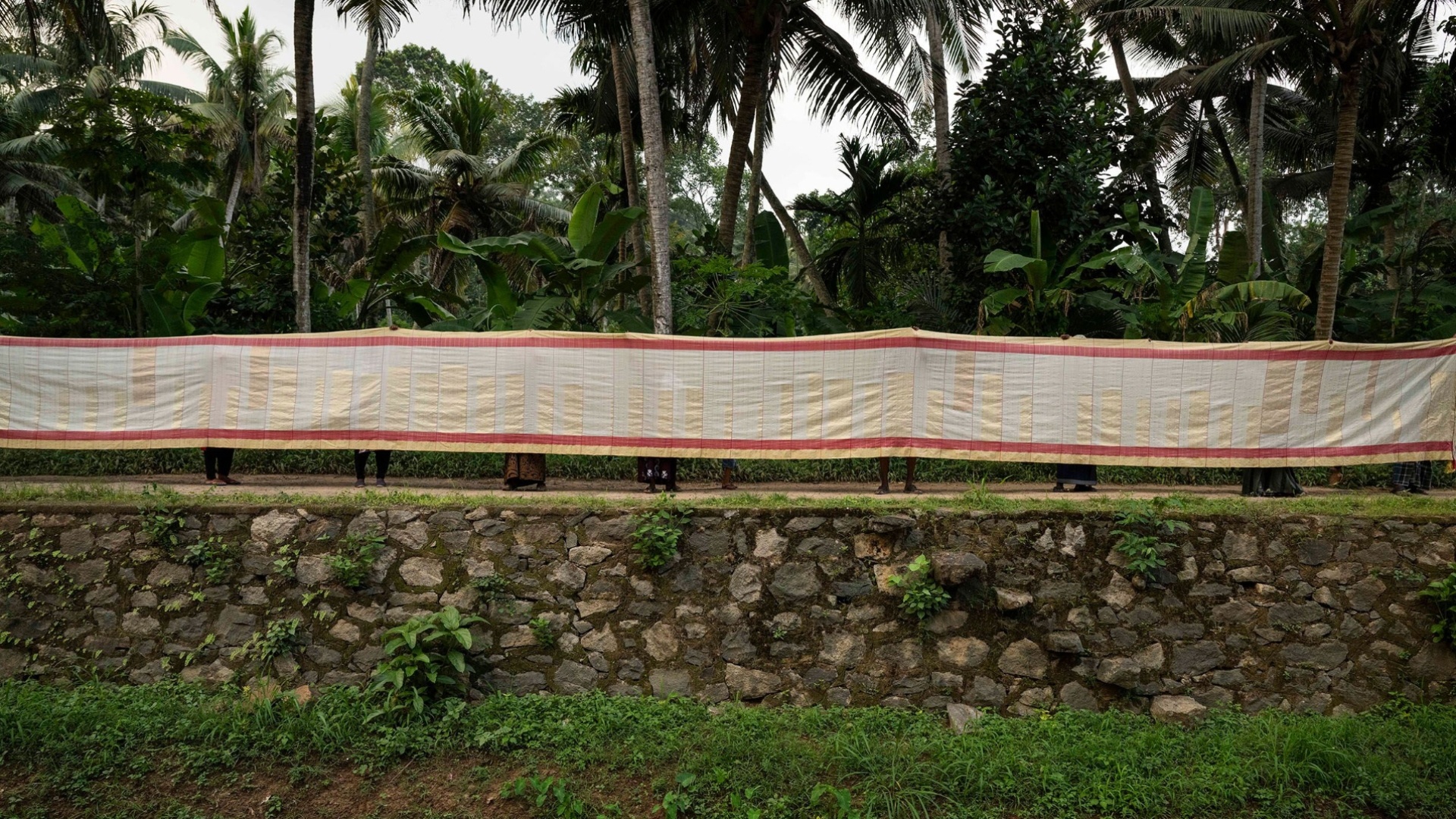

On the morning we speak, Lakshmi Madhavan has just realised that the most special show of her career is just a week away. The Balaramapuram Kasavu Project, in association with the Government of Kerala and the Directorate of Handlooms and Textile, opens tomorrow and is on till November 20 at Kanakakunnu Palace in Thiruvananthapuram. On display will be a 6,000-foot kasavu handwoven by 2,500 local weavers of Balaramapuram over nine months.
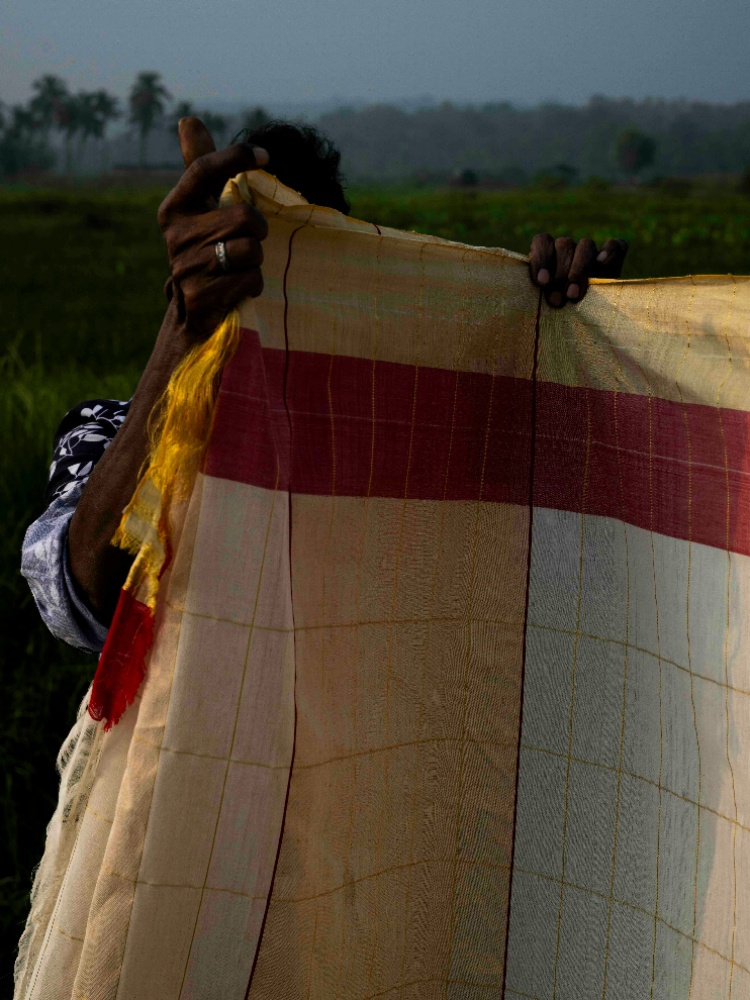
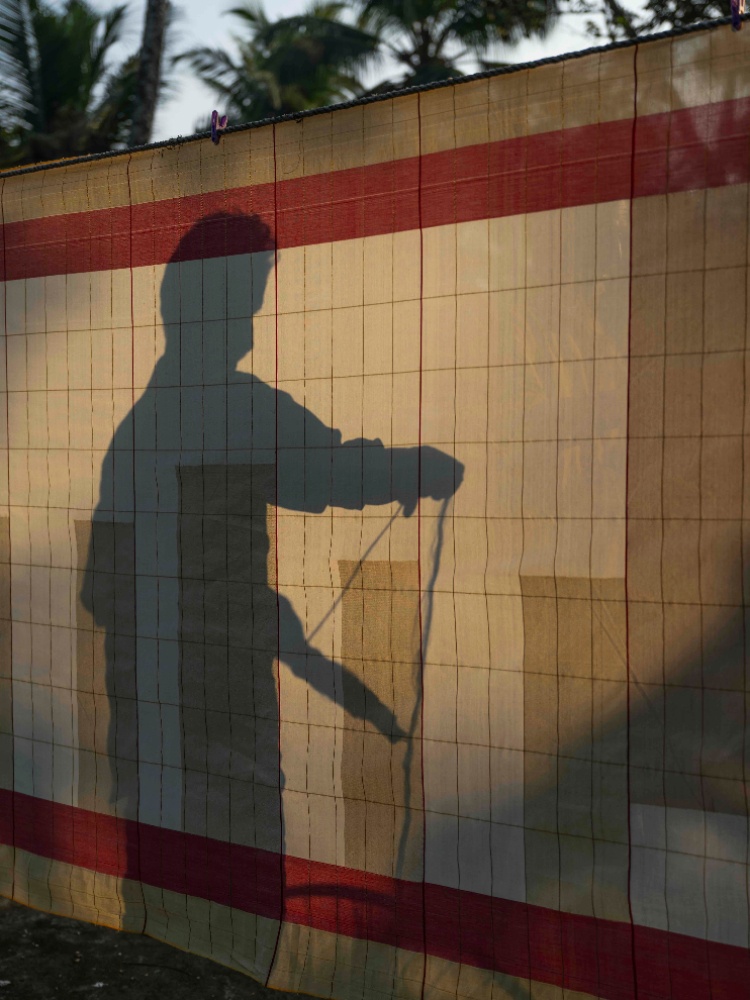
How many working hours does that add up to? She hasn’t done the math. What she would rather discuss is what the cloth holds. The traditional gold-bordered handloom fabric, which Madhavan has undying love for and has been at the centre of her art practice for about a decade now, has been reimagined as a gridded graph. The age of the weaver along one axis, years of experience along the other. Every weaver who sat at the loom wove two feet, then passed it on to the next, a relay Madhavan likens to Penelope’s endless weaving in The Odyssey. The two feet documented where the weaver sat on it, while shades of kasavu coded gender—light golden for women and dark bronze for men.
Madhavan, who works between Mumbai and Balaramapuram, describes it as “this sort of historic archival cloth that contains information about a living, breathing community”. The cloth was woven at the unit of master weaver Anand J, with whom the artist has worked for years.
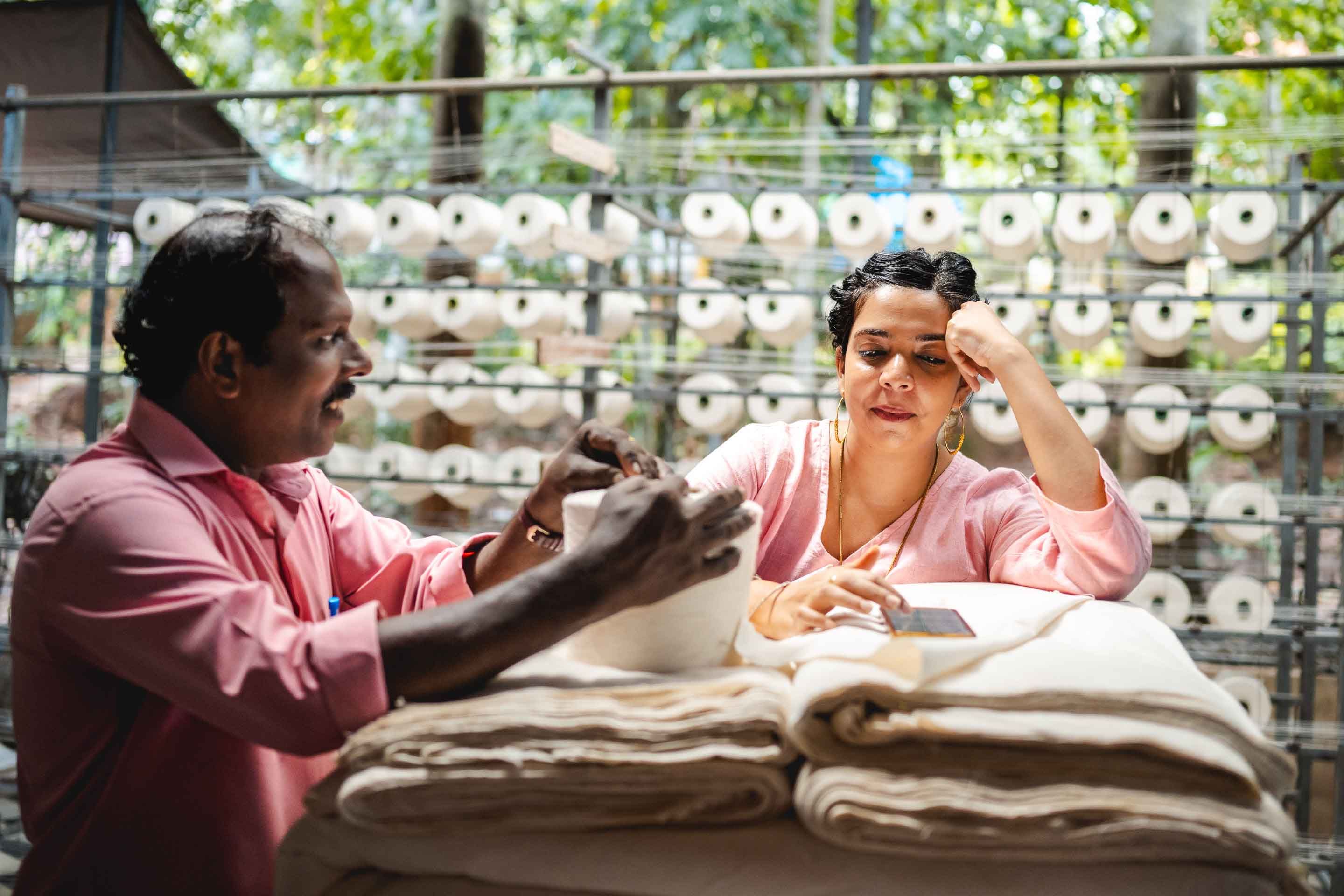
Weavers aged from 18 to well over 90 from across Balaramapuram took part in the project. It’s a community Madhavan has long worked with over the years. Women were scheduled for the afternoons, men for the mornings, while transport was arranged for weavers who lived further away. The idea was to make the project work around everyone’s regular day.
For someone who had never quite imagined the kasavu as part of her practice, The Balaramapuram Kasavu Project is ambitious and passionate. Madhavan’s work with the GI-tagged traditional handloom fabric began during Covid, when she was a new mother staying at her parents’ home with a 15-month-old. She was invited to respond to the idea of homeland for a large group show in Alappuzha by Bose Krishnamachari, called Lokame Tharavadu (the world is one family). The first image that came to mind was her grandmother, who wore a kasavu mundu every day of her life.