



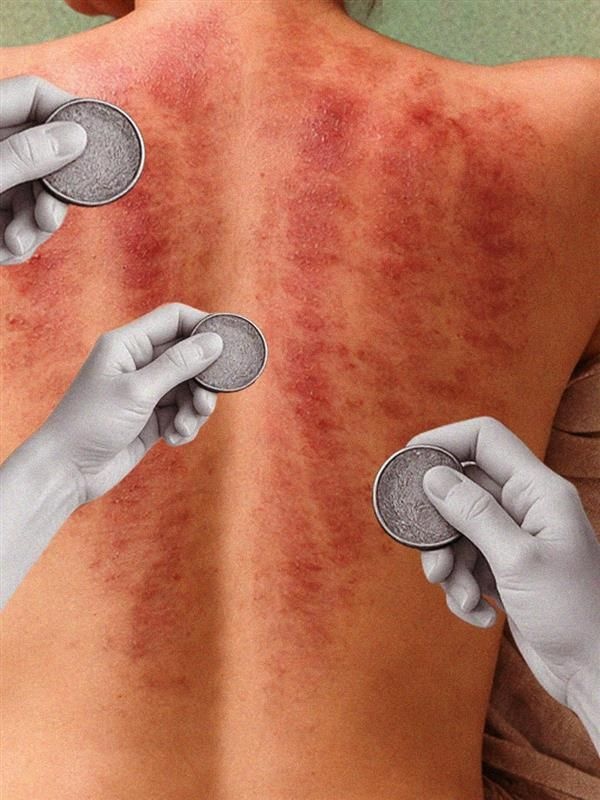
If your social media feed has recently been hijacked by videos of people scraping their necks and backs with coins and spoons to the point where they develop red or purple stripes, congratulations, you’ve discovered cao gió.
For the uninitiated, cao gió is the process of rubbing a coin against oiled skin for benefits ranging from treating a common cold to even cleansing ‘negative energy’. The ritual—often referred to as “coining”—is the latest ancient wellness practice to go viral, joining the ranks of hair oiling and gua sha. In traditional Vietnamese medicine, many ailments—from the common cold to fatigue—are attributed to “bad wind” (phong) entering the body. Cao gió translates roughly to “scraping the wind”. The goal of rubbing the coin is to release this trapped energy. The red marks left behind might look like you’re the long-lost twin of a pink zebra, but they are the hallmark of a successful session.
For those who grew up in Vietnamese or south-east Asian households, cao gió isn’t a trendy hack but a sensory memory: the sharp, medicinal aroma of menthol in the air and the sound of a metal edge clinking against a glass bottle. “The first time I experienced cao gió was when I was very young and it was definitely during a cold,” says Michelle Dolezal, a Minessota-based content creator who shares Reels about Vietnamese culture on her Instagram profile (@mishshellyy). “Anytime I got sick growing up, especially with cold-like symptoms, this was something my mom would turn to.” If you’re imagining a relaxing spa day, though, think again. The reality of cao gió is a hurts-so-good experience that borders on character-building. “[As a child], it honestly hurt. It wasn’t exactly comfortable, but it was oddly relaxing at the same time. It’s a mix of discomfort and relief,” she adds.
For Dolezal and many other Vietnamese kids, the practice was never optional—it was the law of the land. “This was something we did every time I was sick. Emotionally, it made me feel taken care of—like my mom was doing everything she could to help me feel better.”
But what do doctors think about us rubbing quarters on our collarbones to relieve cold and flu symptoms? “From a medical perspective, cao gió can be viewed as a form of vigorous skin stimulation or manual therapy, somewhat similar to massage,” explains Dr Farah Ingale, director of internal medicine at Fortis Hiranandani Hospital, Vashi. “It may provide short-term symptomatic relief for muscle pain, stiffness, body ache, fatigue, and chills by promoting local blood flow, reducing muscle tension, and activating modulating nerve pathways that temporarily reduce discomfort.”
However, there is a fine line between “releasing the wind” and damaging your largest organ. Dr Ingale warns that aggressive or improper technique can lead to bruising and skin abrasions. “If tools are not clean, there is a risk of infection. Contact dermatitis may also occur due to the oils or herbal preparations used.”
If you decide to give cao gió a try, there are a few ground rules to follow. First: sanitise everything. Don’t grab a random coin from the bottom of your handbag. Use a clean, smooth-edged tool—a ceramic soup spoon or a scraping tool that’s meant for this purpose. Second: lube up. You cannot “scrape the wind” on dry skin unless you enjoy the sensation of being sandpapered. Choose classics like Tiger Balm or essential oils to provide for necessary glide. Finally, know your limits. Dr Ingale advises that those on blood thinners, people with fragile skin (like the elderly) or those who are pregnant should skip the ritual or exercise extreme caution. And maybe...wear a turtleneck to your next meeting if you do give it a try.