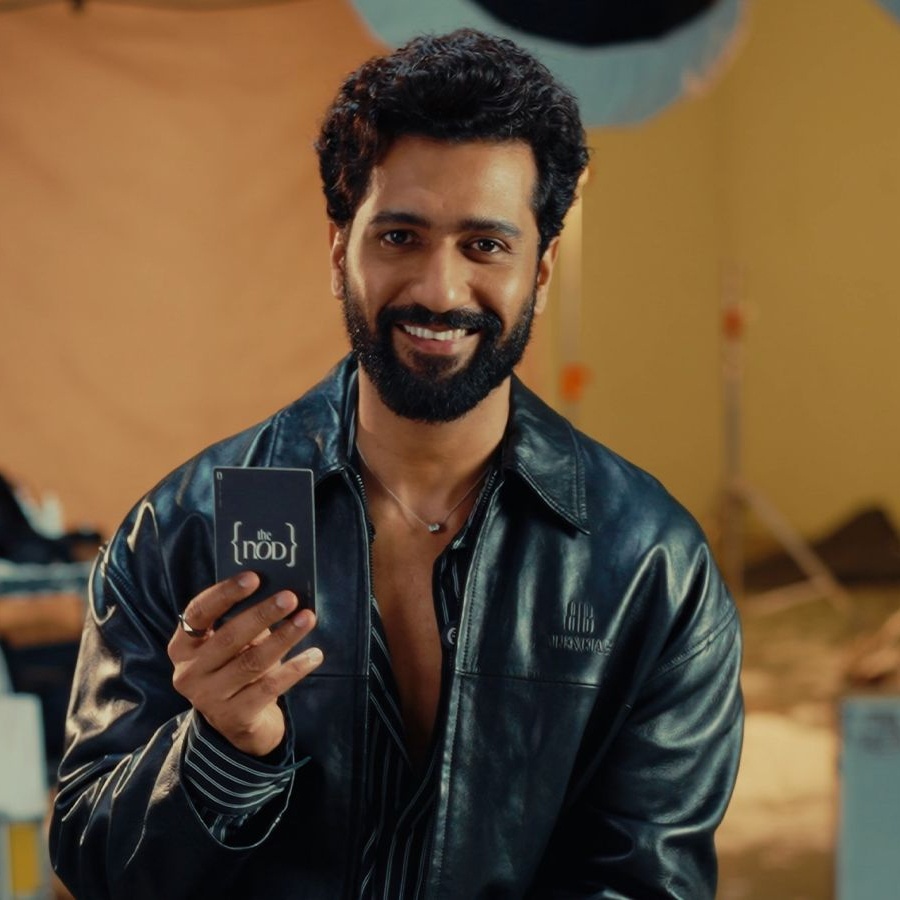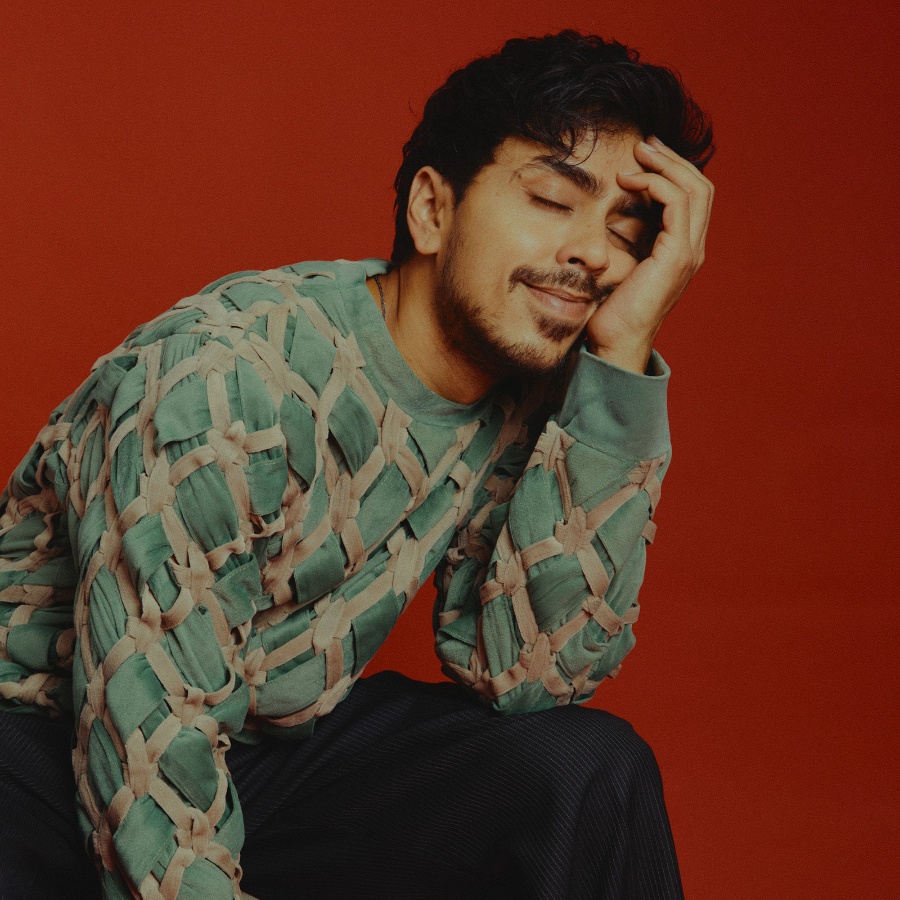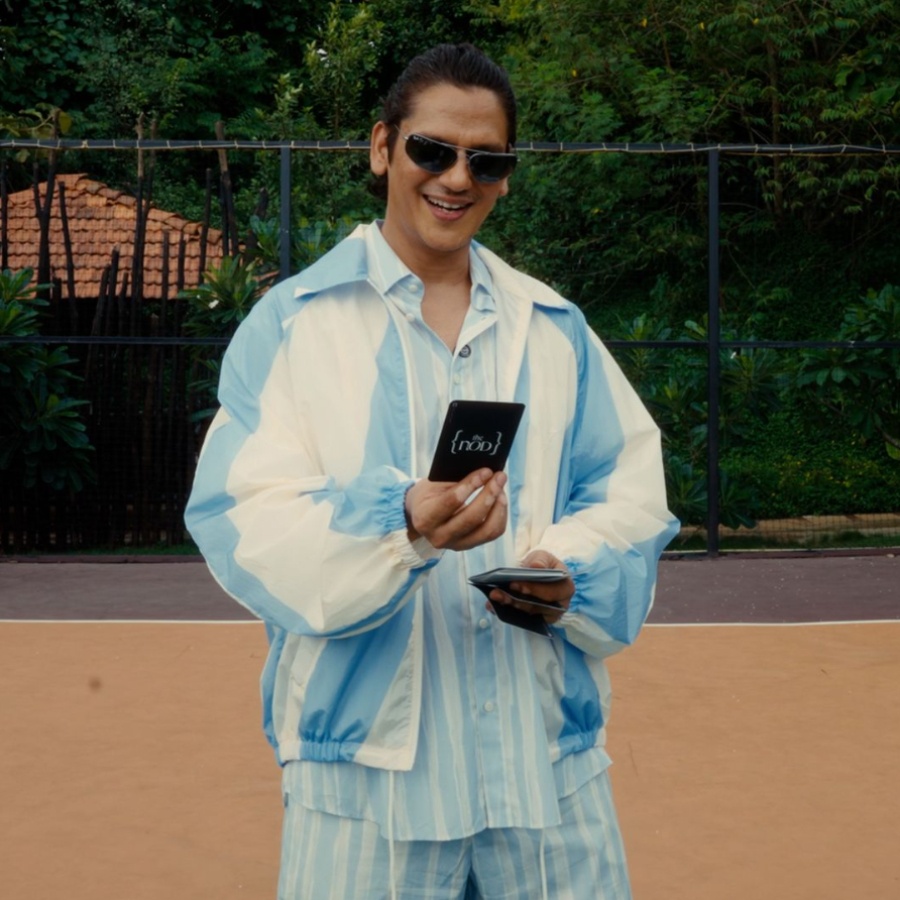




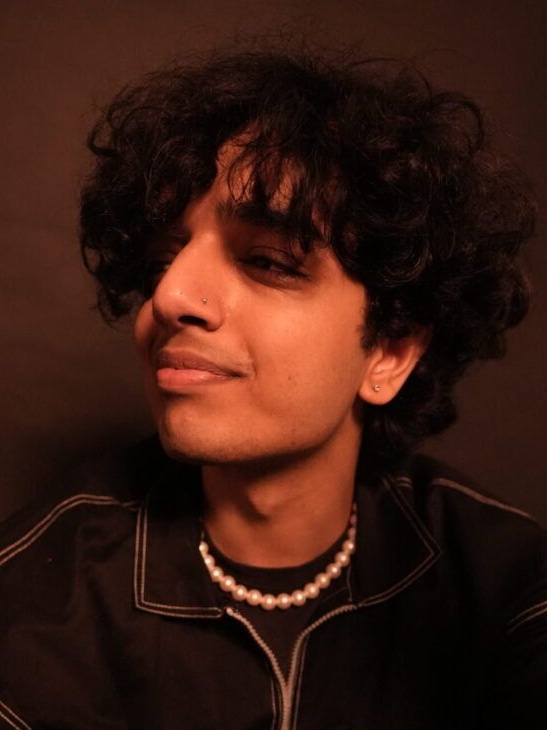

Name: Garv Taneja, aka Chaar Diwaari
Age: 23
Profession: Musician
Location: New Delhi
What’s the big deal: Few artists in India’s independent music scene resist being bracketed quite like Chaar Diwaari. His work dissolves the boundaries between rap, indie, alternative rock, Bollywood orchestration, and cinematic storytelling, creating immersive worlds where albums unfold like films. In February, he released Parvana, an EP that unfolds like a psychological narrative where every song, visual, and recurring character forms part of a larger world. The genre-hopping artist is also bridging generations with a roster of collaborations, which have seen the likes of legendary artists like Sonu Nigam and Indian Ocean to younger talents like Gini and Sanjith Hegde. His recent release ‘Iss Tarah’ with Nigam—an orchestral ballad layered over contemporary production—feels less like a novelty collaboration and more like a meeting point between two eras of Indian music. It’s this willingness to embrace contradiction—to blend his inherent oddness with a refreshing sense of realism and vulnerability—that has made him one of Gen Z’s most compelling cult artists.
Bollywood music taught him to be genre-free: Ask Chaar Diwaari about musical influences, and he’ll bypass the usual references to hip-hop, to make an impassioned case for Bollywood. “From the ’80s to the early 2000s, the arrangements were practically genre-less. Even when songs were borrowed from elsewhere, the way they were arranged was unique. ‘Aye zindagi gale lagaa le’ [composed by Ilaiyaraaja], for instance, uses synths, orchestral arrangements, strings, and even Indian instruments to create a very unique atmosphere, but you never feel the drastic shifts because of how it is arranged.” The refusal to sit neatly within a single sonic tradition continues to fascinate him.
He’s been rapping since he was 12: The same instinct shaped his own path. After spending three years at the True School of Music in Karjat, he chose to leave before graduating. “It wasn’t adding to my value system,” he says simply. His own musical education, however, began much before, with imitation. At 12, he was writing Punjabi rap verses despite not speaking the language. “I used to rip off Bohemia every chance I got, writing these really braggadocious verses because that’s what rappers did. You’re just trying things until you eventually find your own voice.”
He’s the unapologetic messy lover boy: Chaar Diwaari’s protagonists are often hopeless romantics, but they’re rarely aspirational. The recurring lover boy who inhabits his music is impulsive, obsessive, and “emotionally corroded”, a lot like himself. “I’m still figuring myself out through my music,” he says.
“Rather than presenting an idealised version of love, the EP inhabits the mind of a deeply flawed character whose one-sided obsession gradually spirals into something darker. It’s a tale of a creep. It’s not something to be idolised.” The criticism hasn’t escaped him. Some listeners have described tracks such as ‘Shama Interlude’ as misogynistic, an interpretation he doesn’t entirely reject. “I agree,” he says. “But Parvana isn’t a good person.” The EP remains firmly rooted in Parvana’s consciousness, culminating in a Taxi Driver-inspired ending that deliberately leaves the boundary between memory, fantasy, and reality unresolved.
The incidental nose piercing: “There isn’t really a story behind it. I got my nose pierced in 2023, just before ‘Violence’. My ex-girlfriend was getting her ears pierced, and I thought, ‘Theek hain, I’ll get my nose pierced too.’ I just liked how it looked.”
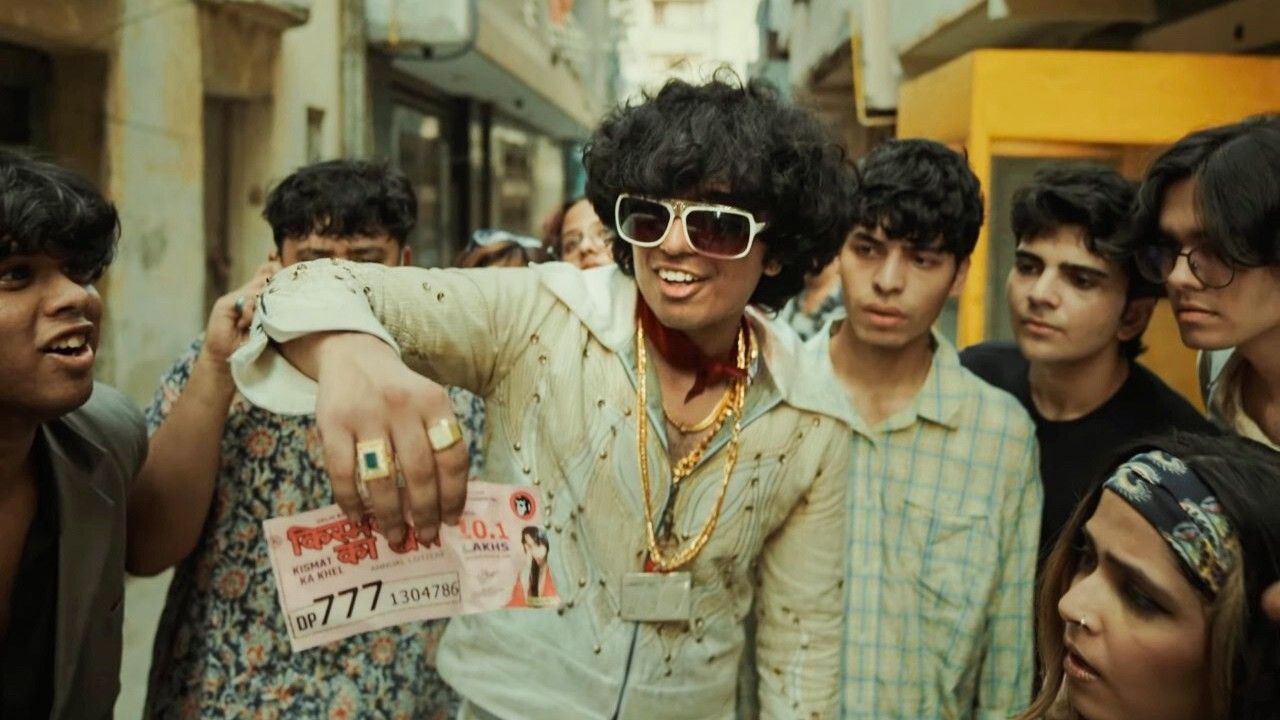
He’s a Gen Z polymath: “Calling myself an actor would be unfair to people who actually act.” The irony, of course, is that Chaar Diwaari has become the unmistakable face of his own visual universe. He writes, conceptualises and stars in every music video. 'LOVESEXSDHOKA!!!' for instance, unfolds like a kitschy Bollywood mini-film, complete with melodrama and sleaze. The track was originally written as the title song for Love Sex Aur Dhokha 2, before being rejected. “I didn’t know how to take that rejection well,” he admits. “So I decided to release it on my own, just to have fun with it.” Yet despite inhabiting these carefully constructed worlds, he insists his confidence comes from familiarity rather than performance. So far, he's only acted in stories he's written himself, inhabiting characters whose emotional landscape he already understands.
Ask him to cry on cue for someone else's script, however, and he's convinced he'd fail. “That single tear at the end of 'Farebi' just happened. It wasn't something we planned. We'd been shooting all day, I was exhausted, and it came naturally.
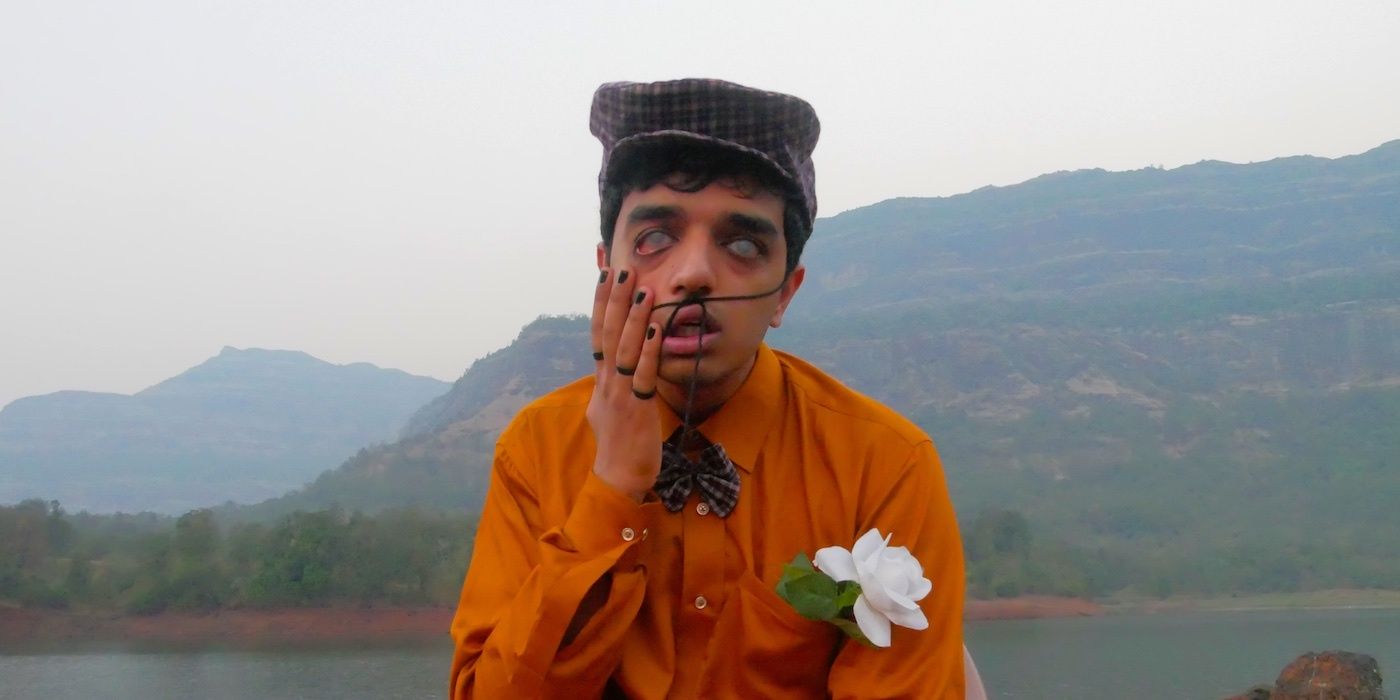
The brown clothes theory: Since the release of Parvana, he’s been dressing to echo the moth at the centre of the EP. “It’s the brown fur and brown wings,” he explains. “That’s why I wear brown clothes in all my shows.” Beyond that, he borrows liberally from designer friends such as Sagal Singh’s streetwear brand Lead A and garments custom-designed by stylist Shreelakshmi Nambiar. While he occasionally styles himself, he resists building an overly manicured image. Instead, he’s drawn to garments that quietly reference Indian dress: “I love wearing kurta-shirts, shawls... Recently I stole a chunni from somebody. Even if it’s a modern garment, I like there to be a small Indian element.”
A West Delhi boy with an imposter syndrome: Loneliness is a recurring thread through Chaar Diwaari’s music (it’s even in his moniker), and he doesn’t pretend he’s outgrown it. Growing up, his family moved frequently within West Delhi, living in Paschim Vihar, Tilak Nagar, and Vikaspuri and friendships used to reset themselves every few years. “I’ve lived with loneliness my whole life,” he says. “Even now, when on paper things are going well, that feeling never really leaves.”
Success, he admits, has only complicated things, bringing with it imposter syndrome and the nagging feeling that people are drawn to the idea of him rather than the person. “Even when people are cheering you on, sometimes it still feels like something isn’t real.”
He’s terminally online: Chaar Diwaari insists he’s trying to spend less time online. The problem is, it isn’t really working. “I deleted Instagram. So now I just open Instagram on Google Chrome.” YouTube has suffered the same fate. “I even deleted that from my phone. But I just can’t stop.” As for who he’s quietly keeping tabs on, it’s less celebrities and more creative rabbit holes. Recently he’s been stalking magician Jadugar Prince while researching an ad film, even confessing that he’d happily travel to Bhopal just to catch one of his live shows.
He wants to be like his fans: When asked how he’d describe his listeners, the answer is surprisingly simple: “Cool guys,” he laughs. “Whenever I bump into fans at cafes around Hauz Khas, I’m usually the one admiring them. They’re wearing fine shit—nice chains, nice bracelets.” Rather than seeing himself as someone his audience should emulate, he flips the equation entirely. “I want to be like my fans,” he says. “I think they’re cooler than me.”