There is something particularly fun about watching a Bengali-language comic book make its way onto the international comics circuit, especially as Indian readers are increasingly discovering just how much there is to read beyond the usual shelves. The Nod spoke to Dipta about building Lublu’s world, the philosophy tucked inside it, the comics that shaped his taste, and what happens when a very local creation starts travelling.
What does a typical day of creating look like for you?
I work as a freelancer, so fixed hours don’t really work for me. I usually start working as soon as I wake up, and I work throughout the day. I wake up at roughly eight in the morning and go to bed at around two at night. I don’t work constantly, though; I take breaks in between.
I work from my home studio, using Photoshop and a Cintiq 22, which is a Wacom tablet. For inspiration, I read a lot of books, comics, and newspapers. I watch movies and visit galleries. Recently, I visited California and went to several art galleries there. I really liked the California Museum of Fine Art. I also visited San Diego Comic-Con, which was a big source of inspiration for me.
You studied Philosophy at Jadavpur University but eventually found your way into illustration and comics. What prompted that shift?
My environment at home was very artsy, and my father was a Philosophy teacher. I was drawn to the subject, and after starting at Jadavpur University I gradually fell in love with it. But art had been my passion since childhood. I was not very fond of sports, so I used to draw between class periods. I took some home tuition for drawing, but it was not very serious. Eventually, that passion became my profession. Right after graduating in 2012, I started working as an intern cartoonist at The Times of India’s Kolkata edition.
Where did the idea for Lublu come from, and how did it eventually become a full-length graphic novel?
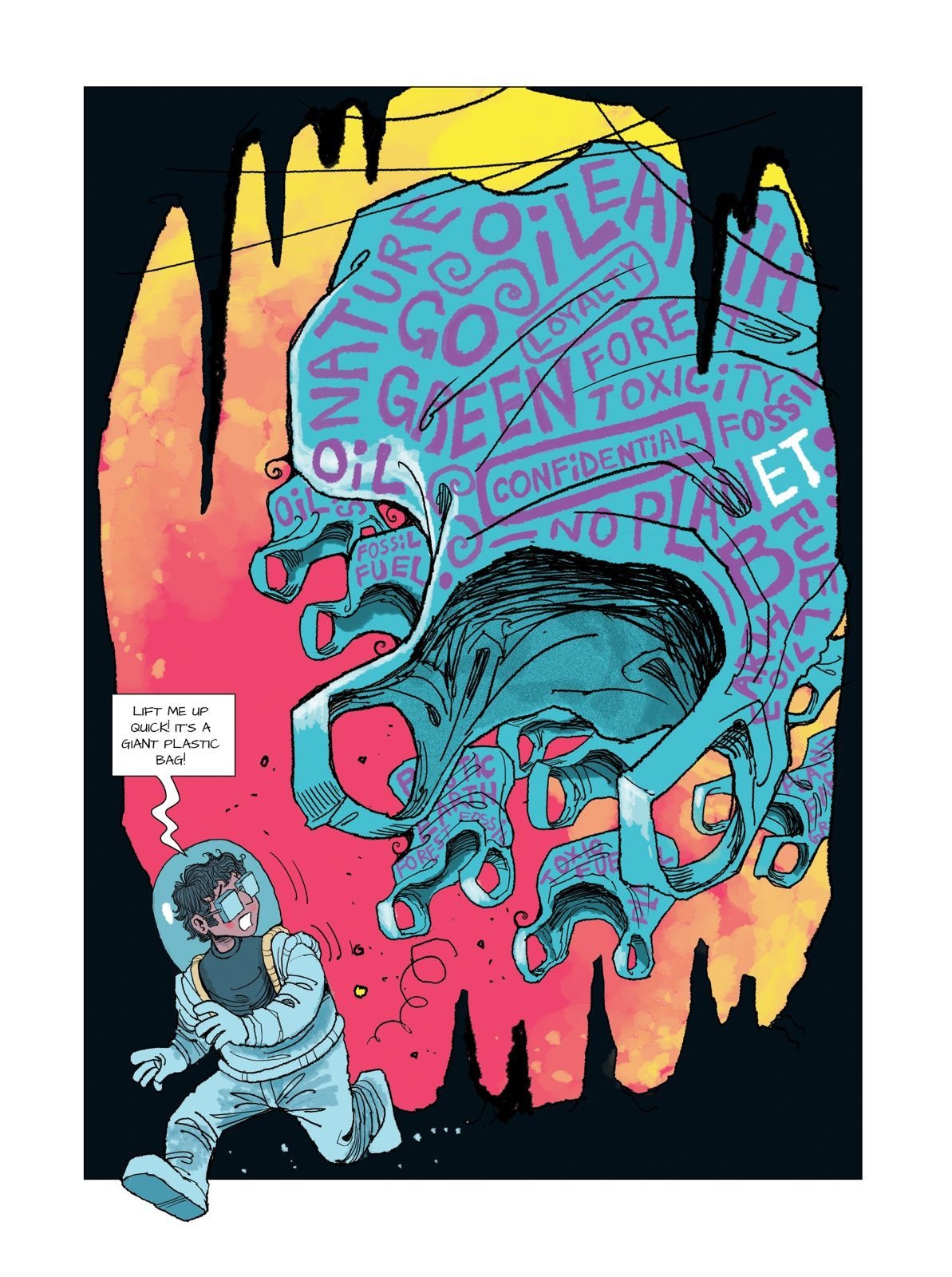
It actually started as a 360-degree comic series. I was a big fan of 360-degree illustration, so I combined it with comics and created what was, as far as I know, the first 360-degree comic series of its kind in India. As far as I know, only three or four people are doing this around the world.
I started working on The World Lublu in 2024. It took exactly one year to finish, from conceptualisation to illustrating, lettering, and sketching. I worked on the project in between my freelancing gigs, so I was developing it alongside my other projects.
The World of Lublu was initially rejected by English publishers. Has that experience changed how you view the publishing landscape?
Basically, The World of Lublu was originally written in English, but all the leading English publishers I submitted it to rejected it, saying it was “too out of the box”. I feel Indian English publishers are caught in a corporate loop. They’re playing it safe, choosing subjects like biographies of famous people rather than exploring different subjects. They’re not adventurous enough, and that’s why the book market is shrinking and readership is declining.
And Bengali publishers are more willing to take those risks?
Yeah. I noticed at the last Kolkata Book Fair that Bengali publishers were exploring varied subjects, while English publication stalls were very formulaic. I think the Bengali publishing scene is more adventurous and more risk-taking; they are exploring unconventional subjects, like the ponds of Kolkata and the history of Kolkata’s roads.
Has the nomination brought a new audience to Lublu?
It’s only been one month since this nomination, so it’s a little early to see that change. I am expecting change in maybe five years.
Lublu has a very specific personal style: a T-shirt and harem pants. Why did you choose that outfit?
Because I dress up like this. Most of the time, you can see me in T-shirts, basically black T-shirts, and harem pants. I started wearing this in college, so it has become my favourite and most comfortable outfit. I get my harem pants from a shop near Raj’s Spanish Cafe on Park Street.
Dumplings and momos are recurring motifs in The World of Lublu. Do you have a favourite momo place in Kolkata?
Yeah, I’m a big fan of momos. I really liked this momo called gondhoraj momo from Leon’s, which went quite viral. It’s a lemon-flavoured steamed green momo, and I took inspiration from that and incorporated it into the comic. I’m also really into chocolate momos. [Laughs]
If someone wanted to get to know you through the comics you read, which five would you recommend they start with?
Watchmen by Alan Moore and Dave Gibbons, Persepolis by Marjane Satrapi, Habibi by Craig Thompson, Raina Telgemeier’s Smile, and Maus by Art Spiegelman.
Your childhood influences also appear in the comic. What did you grow up reading?
Basically, I used to read Tintin and Asterix. Like most Bengali children, I also grew up reading Narayan Debnath’s comics, such as Bantul The Great, Handa Bhonda, and Nonte Phonte. My maternal uncle’s house had a huge collection of Indrajal Comics, so I used to read The Phantom. Of course, Chacha Chaudhary also used to come to my house.
What’s currently on your bedside table?
I’m reading Ginseng Roots by one of my favourite comics creators, Craig Thompson. It was also nominated this year for an Eisner.
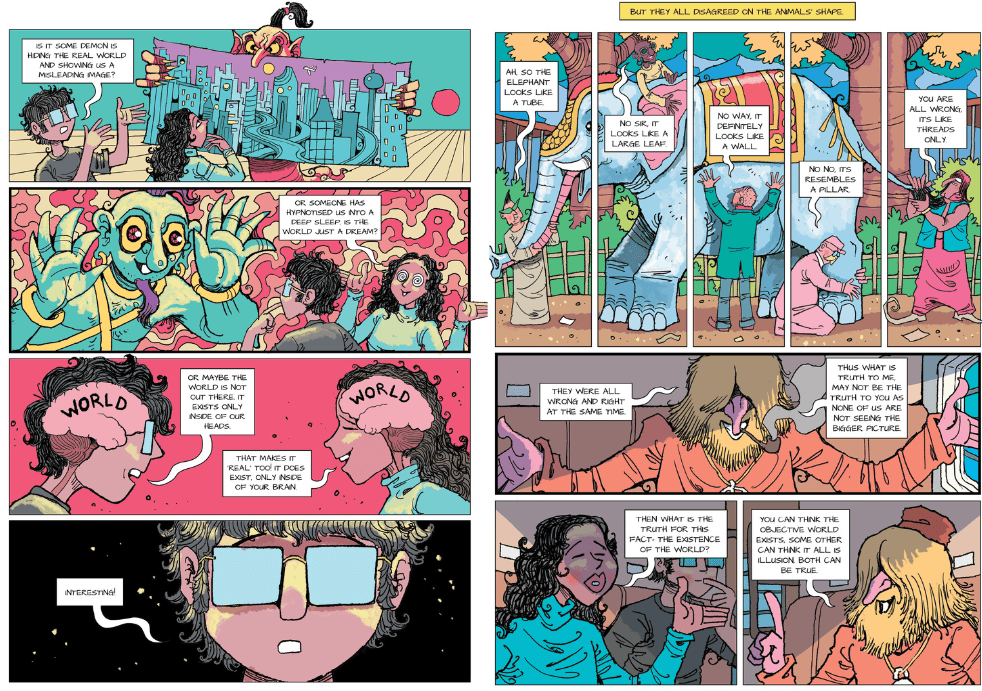
Lublu spends a lot of time questioning the world around him. Are they the same ideas you believe in in your life?
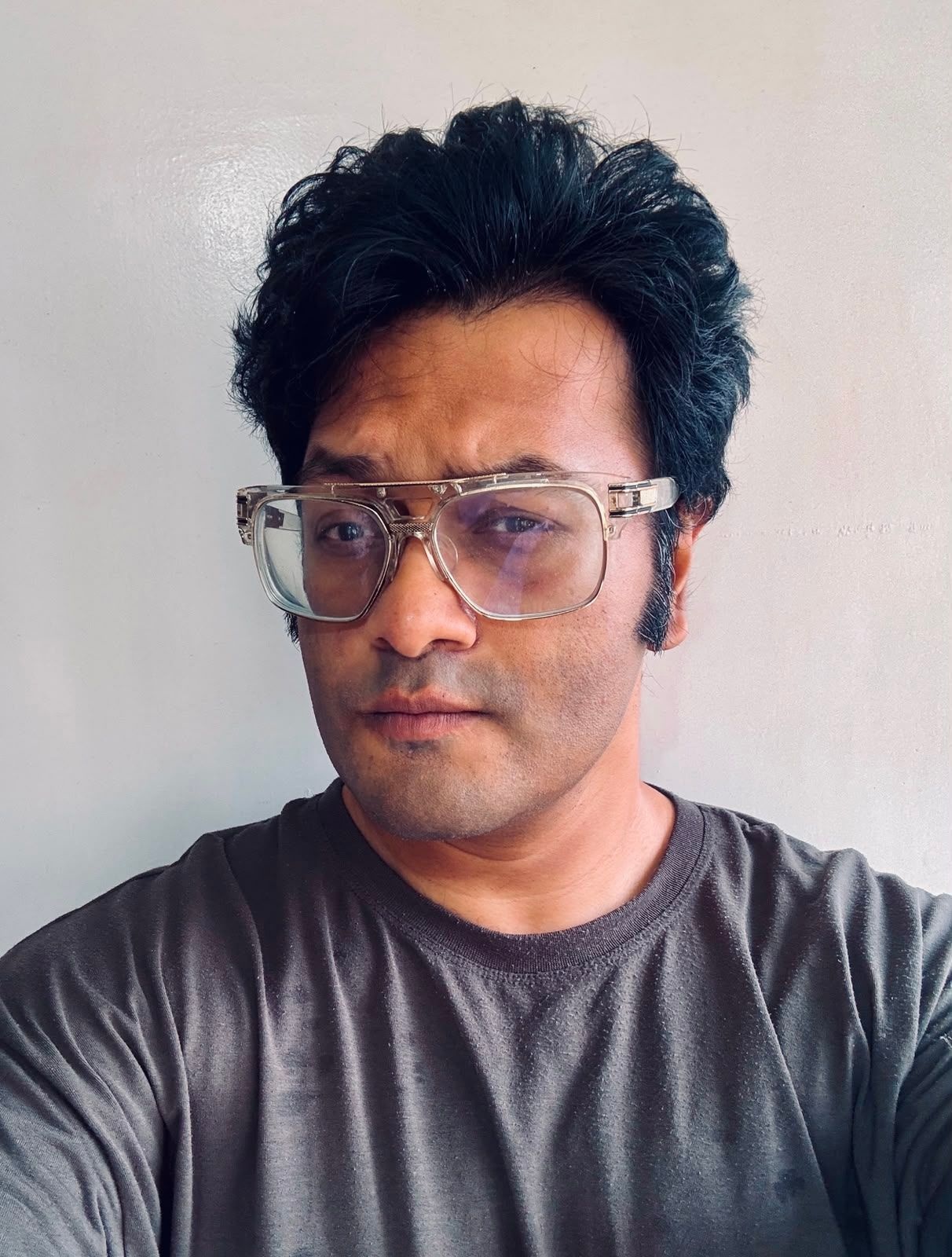
My name comes from the Charvaka school of philosophy, which is considered the first atheist school of philosophy in the world. The Charvakas emerged in the later Vedic period, when religious practices were heavily based on caste division and Brahmanical ideologies. They opposed these systems, including the division of human beings based on caste and religion. I am a big follower of this school of philosophy. So was my father, who named me Charbak.
What has changed for you since getting this recognition?
The recognition has given me more confidence that I am on the right track and doing the right thing. So, I want to continue in this direction and explore more things, including the riskier subjects I am taking on now.
I am currently working on the sequel to Lublu. I am also working on a series of graphic comics based on the Ramayana. The current motion comic is available on YouTube, and I am planning to make 25 episodes, exploring the Ramayana in greater detail across the series.