





When this year’s Oscar nominations were being announced, documentary filmmaker Geeta Gandbhir was fast asleep. She woke up to her husband—movie producer Nikon Kwantu—screaming. With a nomination for Best Documentary Feature for The Perfect Neighbor and Best Documentary Short for The Devil Is Busy, the Indian-origin director became the first woman to be nominated in both Academy Award documentary categories in the same year.
“It’s a huge honour,” she says, over Zoom from New York. “We’ve been around for a while and it’s only now that our work is finally beginning to speak for itself.”
Gandbhir’s Oscar-nominated documentaries are moving yet incisive chronicles of an America divided along the lines of race and sex. The Devil Is Busy (available on JioHotstar) is set in the aftermath of Roe v Wade being overturned and focuses on the subject of abortion as a political tool. The Perfect Neighbor (streaming on Netflix), meanwhile, follows the lead-up to a Black mother of four being fatally shot and inhabits the distressing intersection of racism and the ease of gun access.
Both films centre extraordinary women—while Ajike Owens was killed after she stood up for her children, security head Tracii Wesley puts her life on the line for strangers at the women’s healthcare centre she works at. “The strength and power of women have always been a feature of my work. They’re the cornerstone of any community,” says the director, producer, and editor who has worked on award-winning projects such as If God Is Willing and da Creek Don’t Rise (2010), Asian Americans (2020) and Through Our Eyes: Apart (2021). “The progress of a society can be determined by the status of its women, and you can see that ours is unfortunately slipping backwards.”
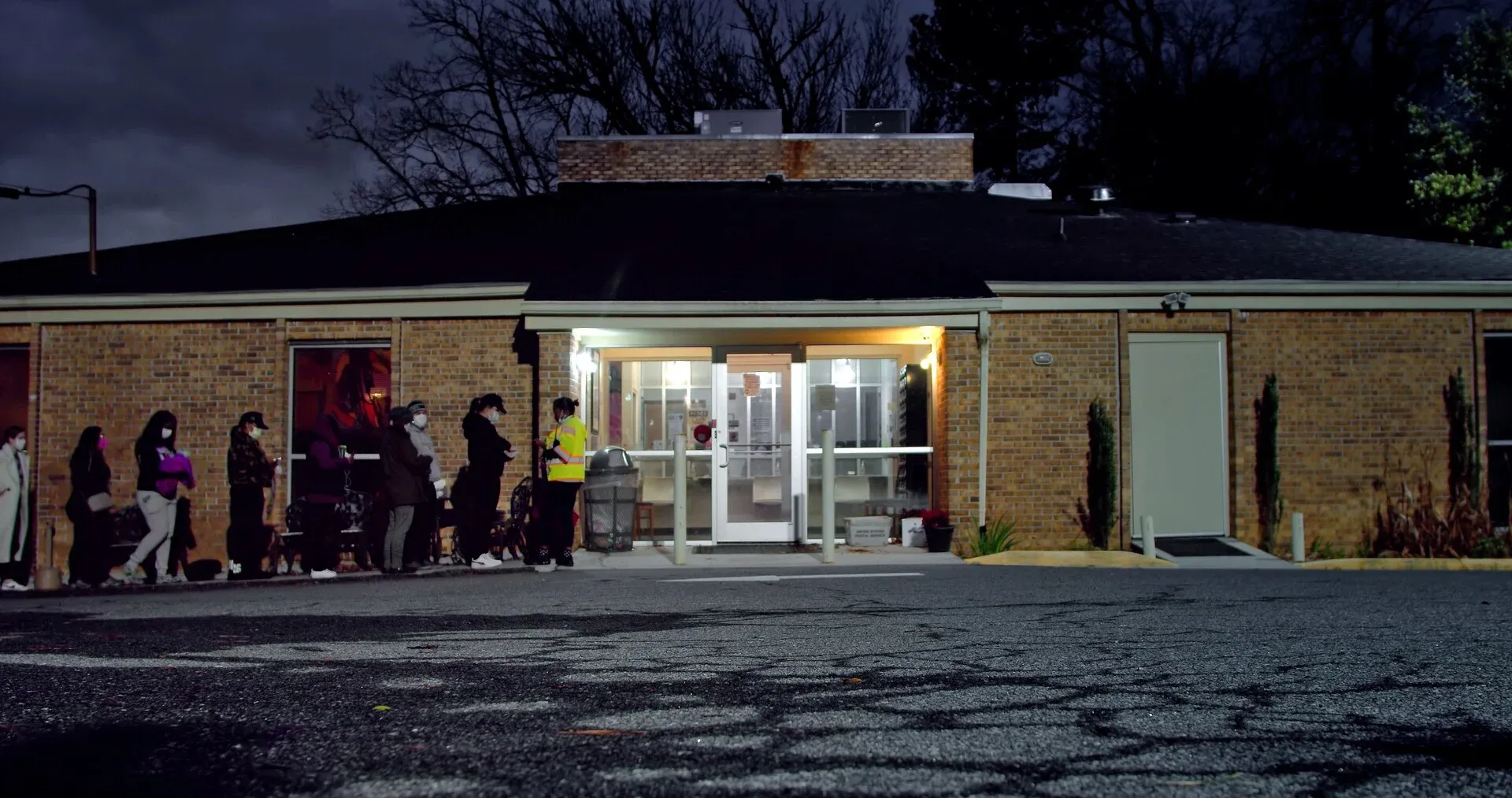
Women and their rights are under attack in The Devil Is Busy, and not just by the placard- and megaphone-bearing (all-male) protestors who besiege Atlanta’s Feminist Women’s Health Center each day and harass patients they assume are seeking access to abortion services. In 2024, the Supreme Court of Georgia reinstated a ban on abortion after the sixth week of pregnancy, which is when a foetus’ heartbeat can be detected but before many women even know they are pregnant. Like each season of The Pitt, The Devil Is Busy, which premiered at Doc NYC, unfolds over a single day at the clinic as staff attend to 46 scheduled appointments. In one scene, an appointment manager must turn down a caller whose pregnancy is past the six-week term. Instead she refers her to a clinic in Florida. Another patient is relieved when the sonogram technician tells her she’s just under the six-week cut-off.
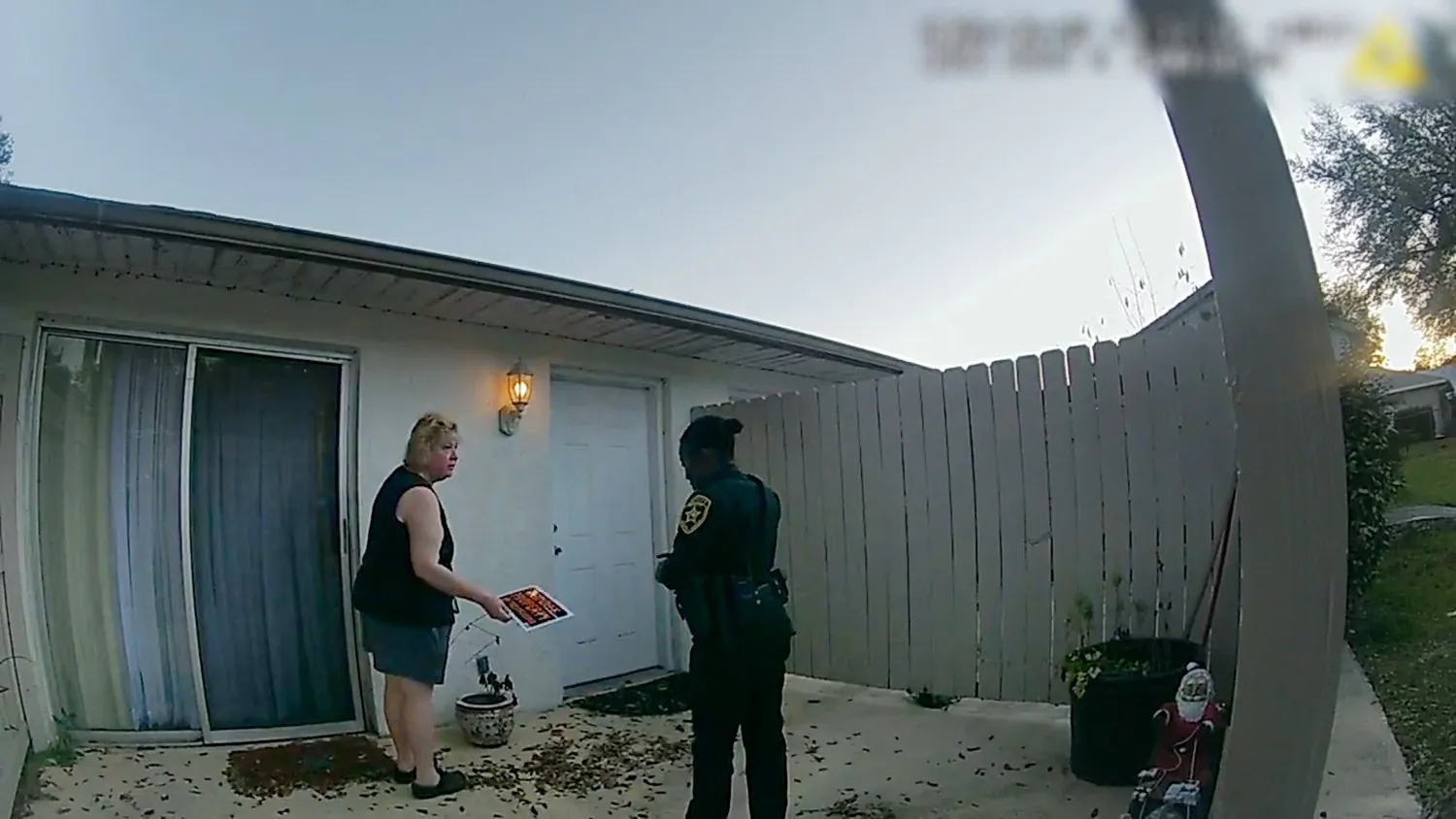
The title of The Perfect Neighbor, which premiered at Sundance, is ironic. Pieced together largely from two years’ worth of police bodycam footage, it follows 58-year-old White woman Susan Lorincz, who calls 911 over and over and over with complaints about the predominantly Black neighbourhood children playing in an adjacent yard. She’s angered by them trespassing, messing with her truck or knocking at her door and running away—accusations that no other adult backs up. Instead, the kids describe her as using hate speech and racial slurs. “I’m the perfect neighbour,” she tells the cops during one of her relentless calls. “I don’t bug anybody… I’m peaceful.” Soon after, she rams her truck through a neighbour’s gate.
A key theme in both documentaries is manufactured fear, says Gandbhir, whether it’s the protestors attempting to terrify patients into leaving without timely access to abortion, or Lorincz, who positions herself as the victim but whose hostility escalates. After 35-year-old Owens comes over with concerns about her children being harassed, Lorincz shoots her dead through her closed front door, claiming self-defense.
Like The Devil Is Busy, The Perfect Neighbor hones in on problematic legal frameworks. In effect in 38 US states, Stand Your Ground laws allow individuals to use deadly force in self-defense, should they fear death or serious harm. During the police interrogation, Lorincz admits to being aware of them. Was her shooting of Owens a spontaneous action, or a calculated setup? Court footage reveals the latter as she was eventually charged with manslaughter and sentenced to 25 years. Gandbhir describes the film as a “microcosm of our society, the best and the worst of it”.
“This community was the American dream—a multiracial society raising children together, looking out for each other,” she says. How did her background as the child of Indian immigrants shape her perspective of this ideal?
The director grew up in Massachusetts, after her father moved to the US in the 1960s to study Chemical Engineering and her mother later joined him. “I grew up in this big Indian family with a lot of aunts and uncles. It was a big, beautiful Indian family with a lot of love and autonomy.” She describes her upbringing as more liberal than most traditional Indian households, with a father who encouraged independence and a mother who was a feminist even if the label hadn’t been part of her lexicon.
Studying Visual Art at Harvard University, Gandbhir was introduced to Spike Lee, a guest lecturer. He hired her as an apprentice sound editor on Malcolm X (1992), his Denzel Washington-starring biographical drama about the African-American activist. “There could not have been a better film to be part of.” From him, she imbibed the ethos of scrappy independent filmmaking—fearlessness and the necessity of pushing back against authority in service of an uncompromising vision. “When the studio refused to give him additional funding for Malcolm X, he went and raised it on his own. His attitude was always: I’ll just do it myself.”
Working with Lee and his long-time collaborator Sam Pollard over the years, Gandbhir saw first-hand the power of art. “All art is political, but they were making art with a strong, organic social justice messaging and not caring if the stories they told made people uncomfortable,” she says. “Maybe the story needs to make people uncomfortable so it brings about change.”
Gandbhir also had a personal connection with Owens—the deceased was a close friend of her husband’s cousin—and the ability to affect change by telling her story was on her mind here too. If the documentary sold, she could offer the money to the family. “I had nothing else to offer them,” she says. “Only my filmmaking skills.”
If The Perfect Neighbor follows residents who are harassed and attacked in their neighbourhood, a place where they should feel the most safe, The Devil Is Busy, which Gandbhir co-directed with Christalyn Hampton, unfolds at a place where women are at their most vulnerable. The violation of a safe space is a recurring theme in her work.
While the 31-minute-long documentary came together quickly, assembling The Perfect Neighbor was a challenge. Through the Freedom of Information Act, Owens’s family attorneys were able to compel the police to release all material pertaining to the case. On a thumb drive, they handed over footage from ring cameras, dash cam, cell phones, and body cameras, 911 calls from both Lorincz and the community, and detective interviews. There was no production team, only small bodycams, which the police would sometimes turn off at crucial moments. The number of cops arriving at the neighbourhood each time varied between two and 15, which gave the director multiple vantage points but also added to the sense of disorganisation. The sound captured was of terrible quality, and matching the audio to the police officer became yet another task.
Over a couple of weeks, when they condensed 30 hours of footage into a 97-minute documentary, Gandbhir realised it played like a horror film, or a scripted thriller. “It made me think of [found footage movies] The Blair Witch Project or Paranormal Activity,” she says.
The film plays out as a steady stream of immersive bodycam footage. There are no re-enactments in The Perfect Neighbor, and no talking-head interviews. Gandbhir did not want the neighbourhood to relive a deeply traumatic event. Plus, she had access to the interviews with Owens’s family and friends conducted by detectives in the wake of her death.
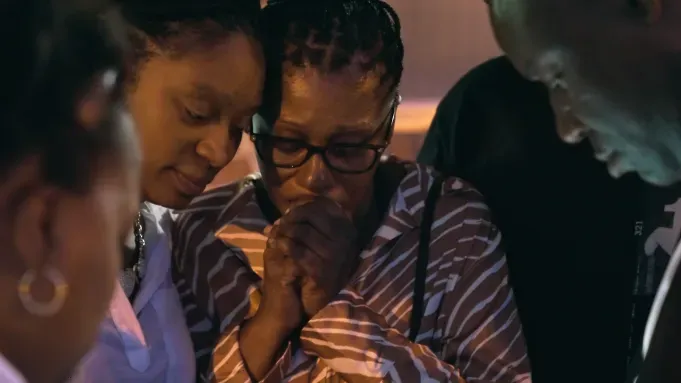
The director also chose to not show footage of Owens after she was shot, or to recreate her murder. “We were highly aware that we see violence against Black bodies on repeat, particularly in this country and in the news cycles. We thought about that a lot in the making of the film,” she says. One of the documentary’s most harrowing sequences instead features Owens’s family receiving the news of her death in real time. The decision to include it was left to her mother, Pamela Dias. To her, that scene depicted the true cost of gun violence. It had to stay in.
The first time she watched the documentary in its entirety, Dias felt “physically ill”. “Making it was a form of therapy or grief work for me, but this was Owens’s legacy,” says the director. “If her mother wanted the documentary to go away, we would have listened. It was her choice to make.” When Dias watched it a second time, her perspective shifted. She wanted her daughter’s story out in the world.
“We’re so numb to gun violence in this country. There’s a shooting every week,” says Gandbhir. “In Florida, you can buy a gun just as easily as you can buy a toaster or microwave.”
While Gandbhir brings to fore the cops’ biases in The Perfect Neighbor, she locates a hope in The Devil Is Busy’s hopelessness. “Every day that Wesley goes to work, she doesn’t know if she’s going to leave the clinic alive. But she begins and ends her day with prayer.”