



Fashion04 May 20264 MIN

Isha Ambani wears a Gaurav Gupta sari (and mango art) to the 2026 Met Gala

A look that treats Indian craft, history, and the body as inseparable, and incorporates 1,800 carats of precious gems

Image

Signe Vilstrup

You know you can always rely on Isha Ambani for a spectacular red-carpet moment. This year, the Met Gala dress code is ‘Fashion is Art’, while the Costume Art exhibition explores the relationship between fashion and the body, and garments as an embodied art form. To tackle this head-on, the businesswoman, philanthropist, and arts patron called upon her trusted collaborator stylist Anaita Shroff Adajania, who was also instrumental in putting together her Anamika Khanna look from last year as well as 2024’s floral Rahul Mishra gown.

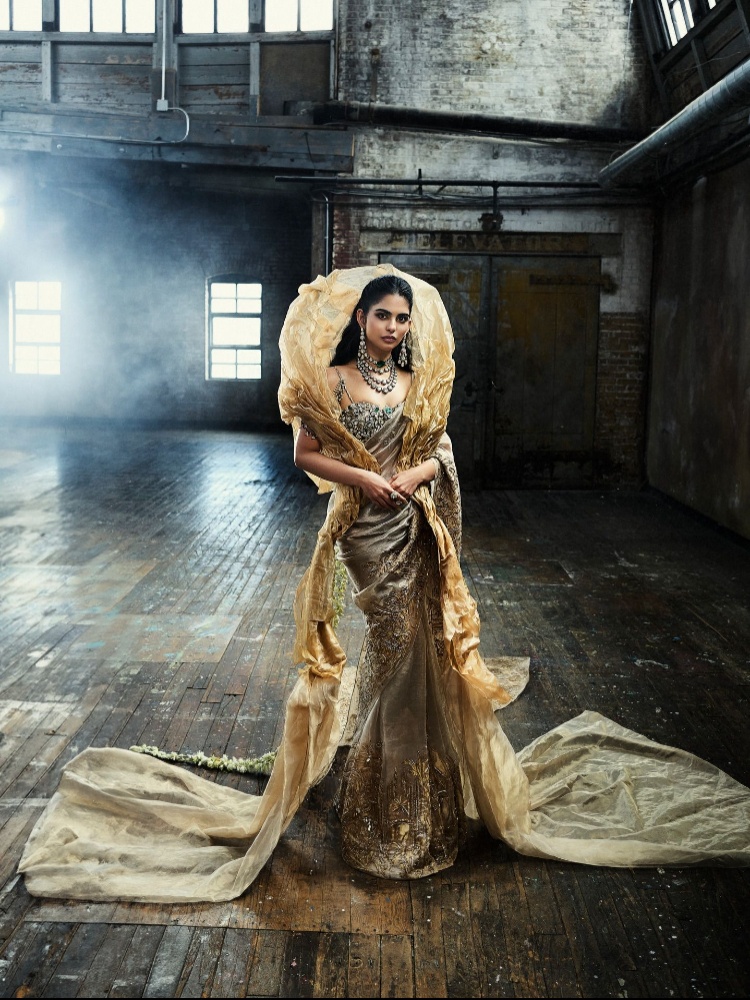
This time, Ambani and Shroff Adajania enlisted none other than couturier Gaurav Gupta for an elaborate look that treats the sari as a “living canvas”. For Gupta, the idea was to approach the sari as “a complete artistic form”. Not sari-inspired or a vague Western-Indian fusion—just a sari worn the traditional way, all nine yards of it.

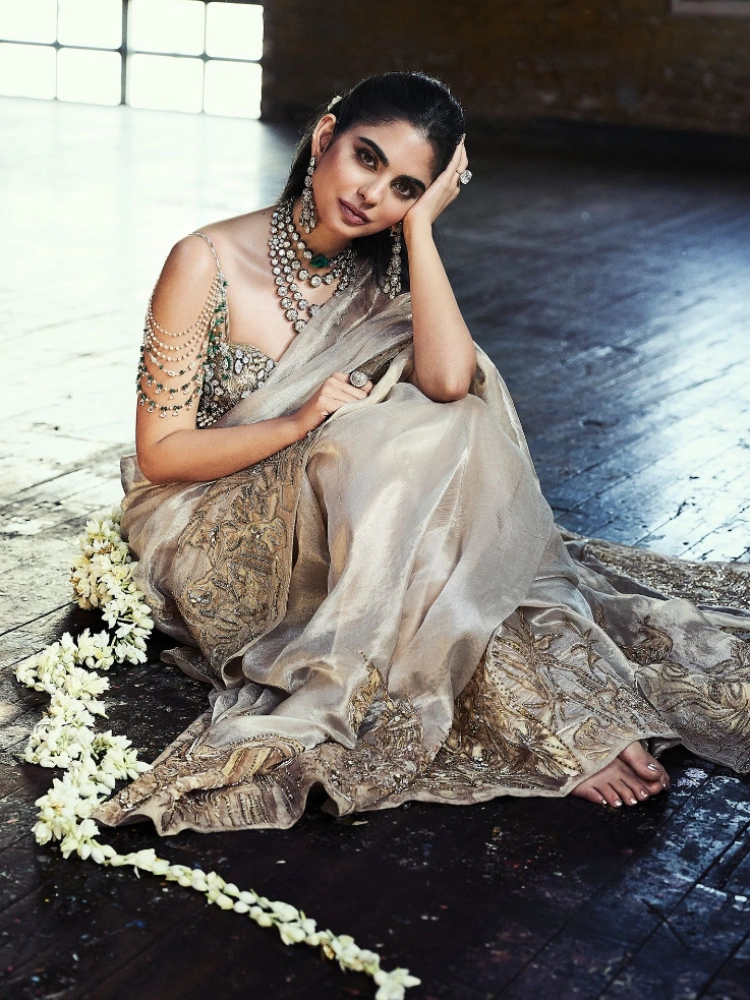
The lustrous tissue sari itself was hand-woven with gold threads by master artisans at Swadesh. A team of over 25 artisans poured in over 1,200 hours into creating it. “The sari is one of the few garments in the world that has existed continuously for thousands of years and is still worn today, which makes it incredibly powerful,” says Gupta. “We wanted to honour that continuity while approaching it with restraint.” His approach wasn’t so much about reinvention as about underlining the fact that the sari, in its original form, already holds sculptural, emotional, and historic weight.
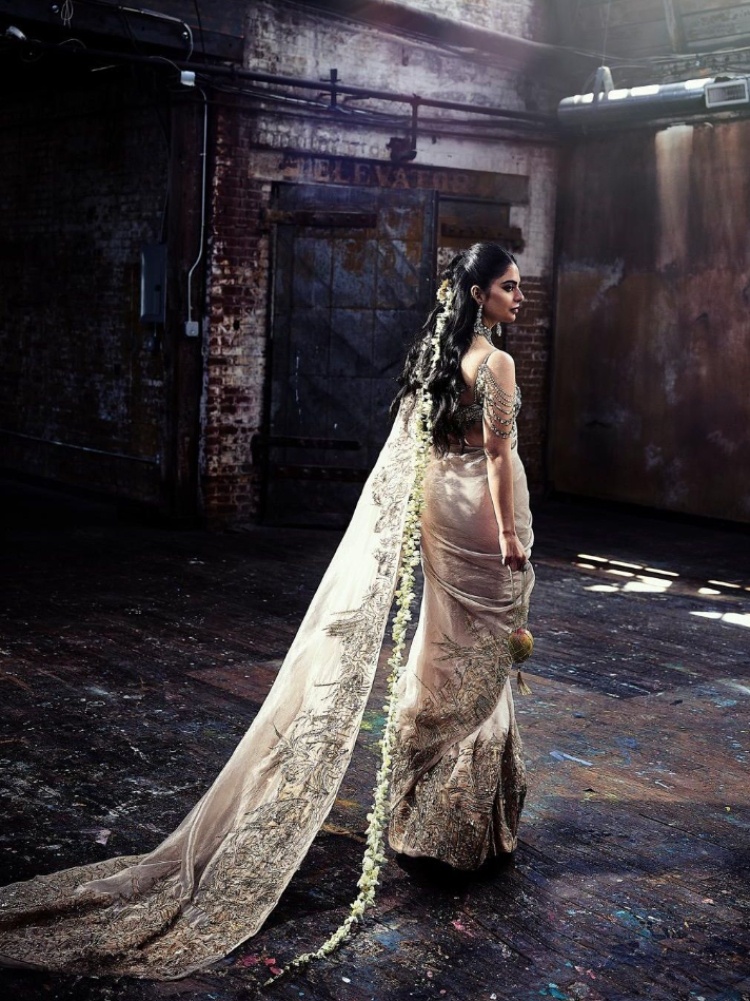
The sari, Sanskrit for a ‘strip of cloth’, has been part of the Indian lexicon for millennia. It sinuously drapes and swathes the body, taking the form of the wearer, caressing all its natural curves and contours. There is perhaps no garment that is a better representation of the “indivisible connection between our bodies and the clothes we wear” than it, nor is there one that is more democratic.

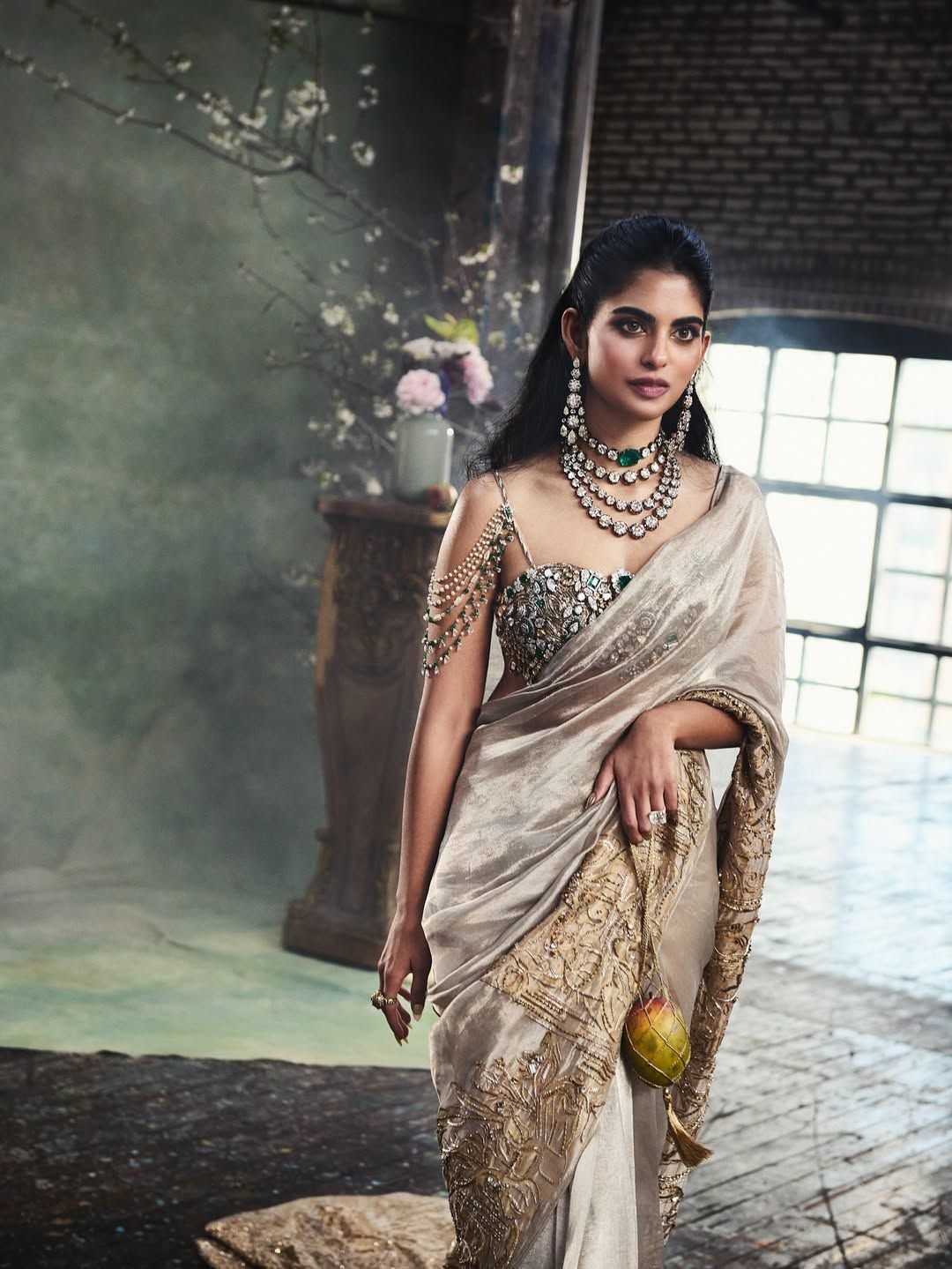
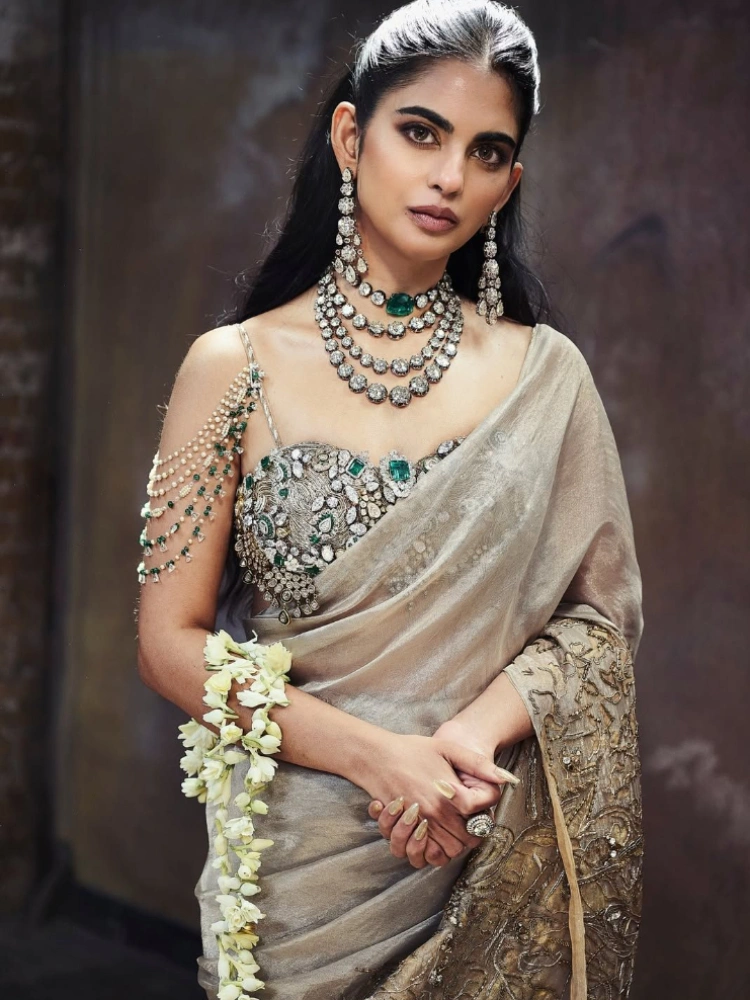
Coming to Ambani’s look, while from afar the garment overall does look restrained, upon closer inspection the border reveals hand-painted pichwai motifs that depict nature, ancient rock-cut murals as seen in the Ajanta caves, and classical Indian art, brought to life with zardozi, aari, and relief embroidery. Six artisans, led by pichwai artist Trilok Soni, spent 150 hours hand-painting the border alone.

Isha Ambani Met Gala jewel blouse_The Nod.jpg

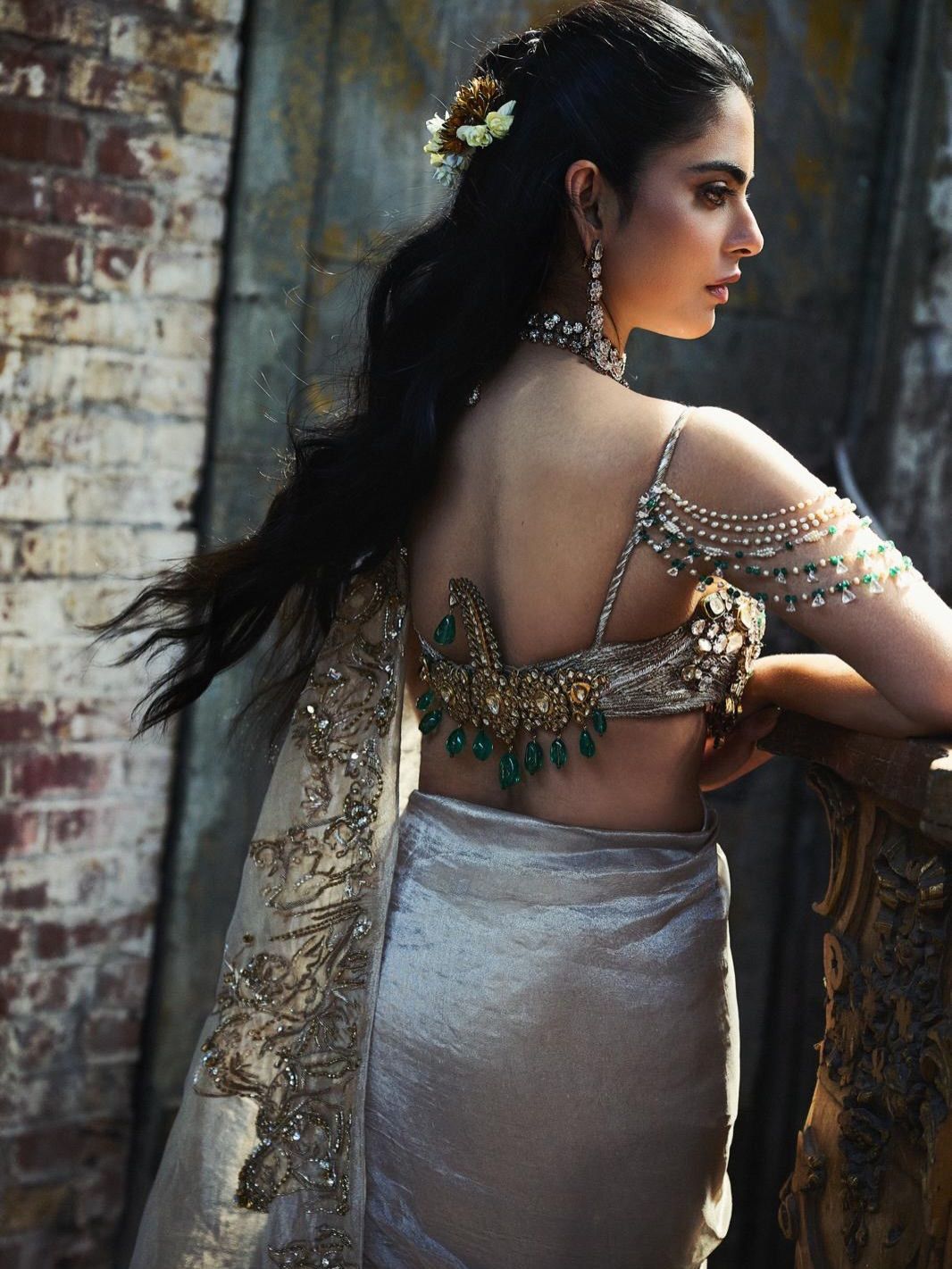
But the couture blouse, adorned with over 1,000 diamonds and precious stones totalling over 1,800 carats, undoubtedly, steals the show. Old-mine solitaires, emeralds, polki, and rose- and table-cut diamonds in kundan—all from her mother Nita Ambani’s private collection—are embedded directly into the base textile using zardozi anchoring and hand-tucking techniques, complemented by metallic zardozi, dabka, and nakshi embroidery on the fabric. 

There’s even a historic sarpech from the Nizam’s collection in the mix on the back with antique emerald bead drops. And it doesn’t end there. The blouse is finished with delicate strands of pearls, cabochon emeralds, and trillion-cut diamonds that cascade down both the upper arms like sleeves. The piece was developed by 40 artisans across India, with 500-plus hours dedicated to it, and designed not as a standalone piece but as an extension of the sari. “While the blouse carries richness, the focus remains on the sari, something we both [Gaurav Gupta and I] wanted to honour,” says Shroff Adajania.

The jewellery follows the same narrative, emphasising the continuity between body, ornament, and identity. A diamond choker with an emerald centrepiece is anchored with three graduated old mine-cut diamond necklaces, crafted using Kantilal Chhotalal stones, and sculptural floral diamond drop earrings, again pulled from Nita Ambani’s personal collection. A hand-painted bronze mango by artist Subodh Gupta nestled in a custom crochet 3.10 by Guggi bag adds a playful touch. The final flourish, a softly sculptural cape crafted with the couturier’s innovative resin-draping technique, hovers behind her like a cloud, adding volume without overwhelming the look.

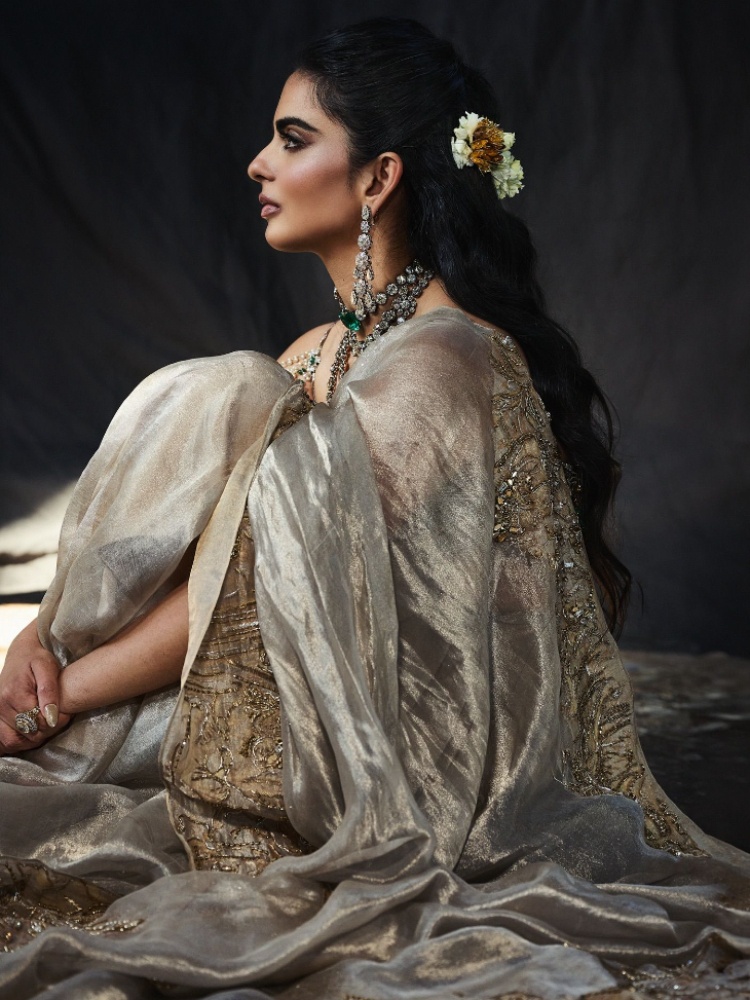
The look is complemented by a custom-made jasmine hair sculpture by Brooklyn-based artist Sourabh Gupta, whose lifelike botanicals have previously appeared on Ivy Getty’s and Tory Burch’s gowns at Met Galas past. The sculpture pays homage to the traditional mogra paranda and gajra, with each jasmine bud and bloom individually crafted from paper, copper, and brass.

“What interested me most about this look was bringing together multiple layers of craft, weaving, painting, embroidery, and jewellery, into a single, resolved form,” says Sourabh. “With Isha, there is a natural ease and clarity, which allowed us to approach the design with restraint and let the craftsmanship speak.”

Overall, it’s a look that nails the dress code as well as the exhibition theme.

The Nod Newsletter

We're making your inbox interesting. Enter your email to get our best reads and exclusive insights from our editors delivered directly to you.