



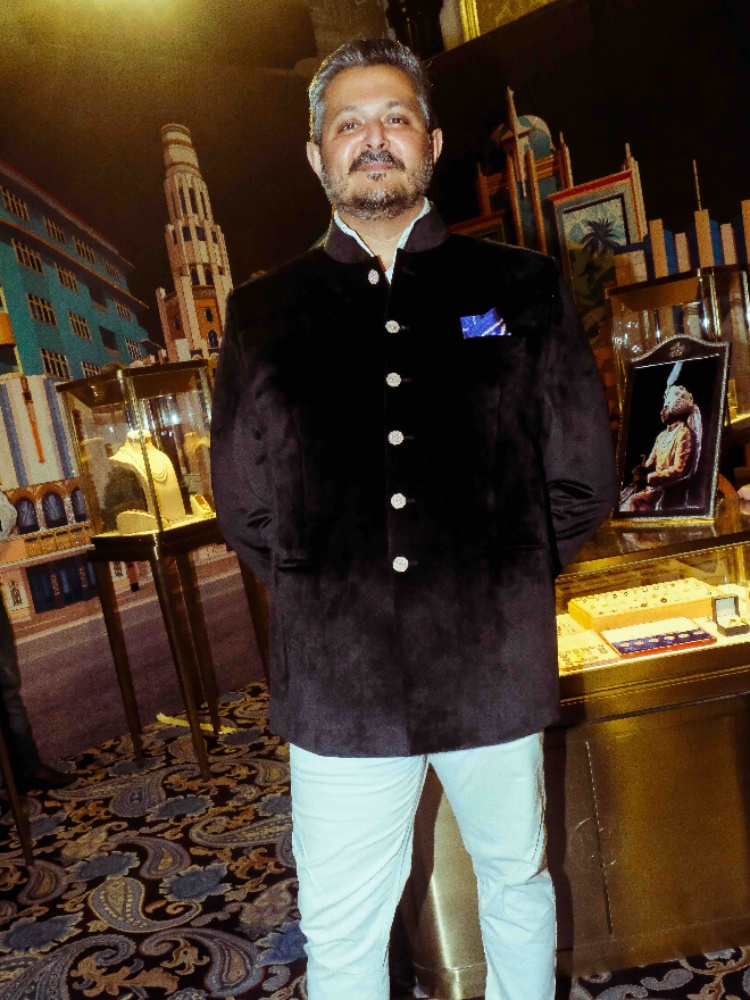

What is it like to be born surrounded by gemstones? If you really want to know, ask Jay Sagar, the fourth-generation jeweller at Pransukhlal Jewellers, Mumbai. Sagar has been in the business since 1998 but his initiation began when, as a child, he spent time at the family boutique amongst heirloom jewels and gemstones. A thorough Bombay boy, he studied at HR College of Commerce before joining the family business and developing a specialisation in vintage jewellery and watches. “I started as an intern at the family store and then learnt along the way,” he tells us when we swing by his home in Bandra, Mumbai.
Sagar is a wellspring of information about the jewellery business, telling us about figures like Ambaji Shinde, a master jeweller who moved from India to work with Harry Winston, eventually rising to become creative head of the house, or reminding us about Gazdar, a 90-year-old jewellery house based in Mumbai. No wonder that along with working in the family business as a designer and an antique jewellery specialist, he also, occasionally, curates vintage jewellery auctions and frequently writes and holds talks on all things around fine jewels.
But we’re at his home with an agenda. Sagar is opening up his vault, or more like his storage boxes, to show us some of the pieces in his extensive collection of Art Deco-era jewellery. Covering jewellery but also artefacts like a beautiful tricoloured gold powder compact and a sterling silver tea set, Sagar’s collection has been built over the years.
“What I love about the era is the opulence and class. Even the smallest things were designed beautifully. You had things like cigarette filters made of amber or jade, carved menu holders and cufflinks. Every element of life could be designed. Even the cars made in the Art Deco period were fantastic!”
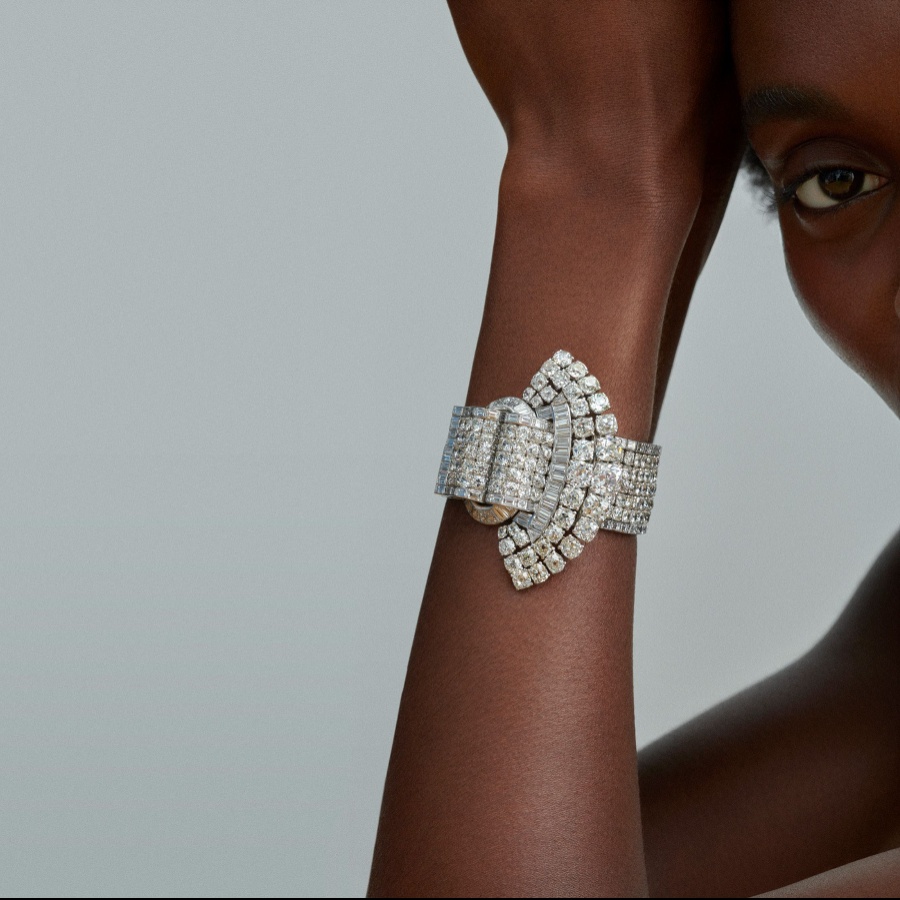
Through his collection, which includes pieces from brands like Cartier and more under-the-radar (yet equally iconic) names like N Bhau Jewellers from Mumbai and Hamilton & Co from Kolkata, you learn to recognise some of the distinctive markers of the Art Deco era. The preference for symmetry and geometrical shapes, a wide-ranging use of platinum along with uniquely cut diamonds and pearls, and even a distinct Asian or Indian influence in design.
Sagar gives us a little background, “Jewellery pre-Art Deco was very floral, more romantic almost. But after the war [World War I] people wanted to experiment with new materials and techniques. There was the great exposition in Paris in 1925 [Exposition Internationale des Arts Décoratifs et Industriels Modernes], which was sort of the peak of the era. That’s where one saw a burst of energy, of innovation in design and technique.” Today the fair is celebrated as the birthplace of the Art Deco movement.
Below, Sagar takes us through the five standout pieces from his collection: