The year 2026 marks the last summer before London Craft Week (LCW) enters its teenage years. A beautiful yet distant cousin of the more boisterous London Fashion Week, LCW’s 12th edition arrived just when humanity realised half of its day was spent trying to comprehend if the words on our screen are outputs of the human brain or just generative AI slop. As someone who entered university in the beginning of the Covid-19 pandemic and learned the hard way the importance of touch and feel to create emotion, the need for a space like this, which champions and celebrates the power of hand-led craft traditions from across the globe, seems urgently relevant and impossible to ignore.
This year, there was an electric mix of emerging and established south Asian creatives who were part of the fair. From bead-work traditions native to the Barmer region of Rajasthan to pop-coloured block-print mangoes, here are some of the things we spotted.
‘Serai’ by Puja Shah, co-founder of Moi
ADVERTISEMENT
Pieces from ‘Serai’ a contemporary jewellery line by Moi
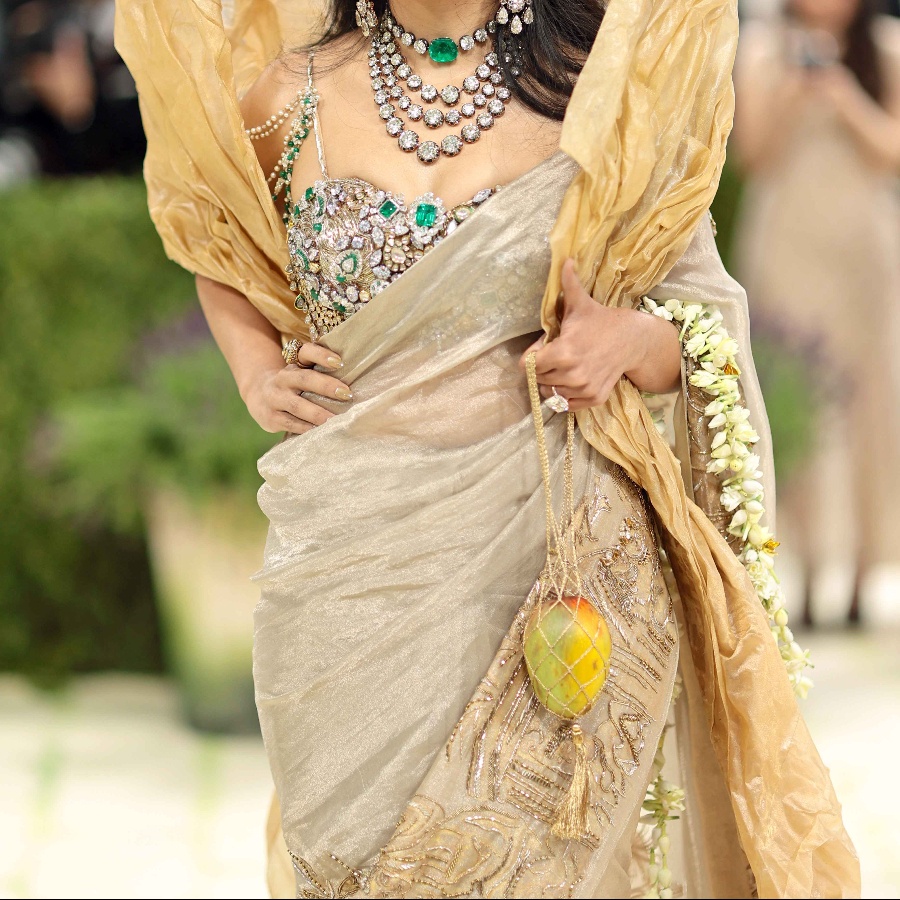
At first glance, there is a certain freedom to the glass-bead-led designs of Puja Shah at Moi fine jewellery. Think brooches with birds in flight and earpieces resembling turtles adorned with the most colourful assortment of stones. But what’s less known about Shah’s work is her long-term engagement with the history of the glass bead as an archive of memory and migration.
This year, through a collaboration with Gauravi Kumari’s PDKF Artisan Collective, Shah was introduced to women artisans from the Meghwal community in Rajasthan’s Barmer district and spent months on the ground researching the region’s bead-work traditions. The result? A set of limited-edition collectibles within Moi’s fine jewellery line that pay homage to this centuries-old economy of bead-work, which debuted at London Craft Week. Titled ‘Serai’, the collection’s visual language draws from traditional Rajasthani styles, like the hasli and amulet necklaces, yet the collection is rooted in a distinctly contemporary design idiom. “Craft conservation for me is not about preserving traditions in a static way,” explains Shah. “I think craft remains alive when artisans are given recognition, respect, and opportunities to sustain and adapt their work within contemporary contexts.”
The Friday Sari Project Pop-Up
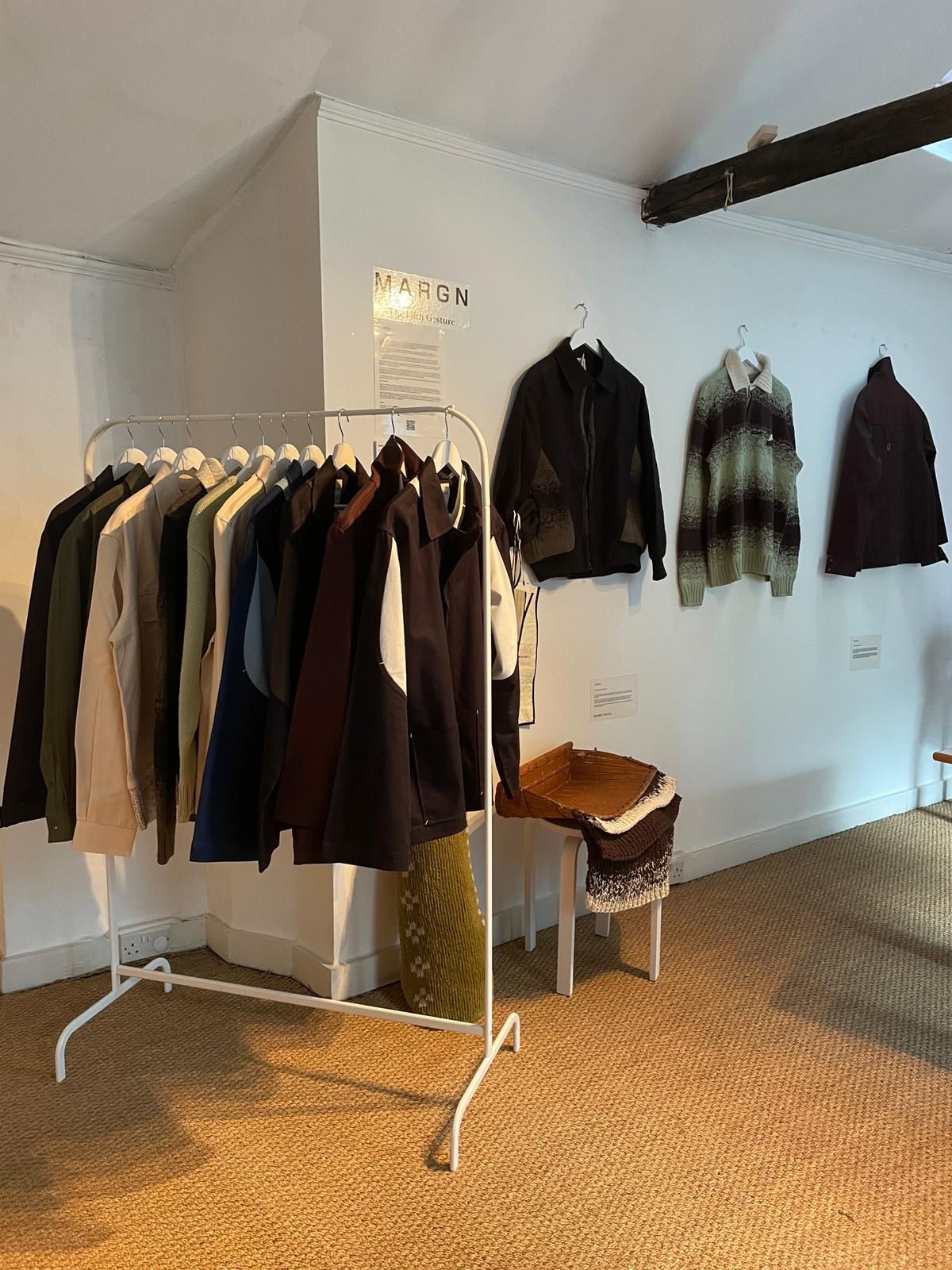
The Margn pop up at Friday Sari Project
Founded by Mehala Ford almost a decade ago, Friday Sari Project in Hampstead is a concept store that spotlights south Asian design. For LCW, Ford offered a curated mix of 11 Indian and Sri Lankan brands, with pieces ranging from the armour-like recycled brass jewellery of Alke by Sara Nazoor to the zero-waste embroidery and appliqué traditions of Ka-Sha, the minimalist tailoring sensibilities of Naushad Ali, and the playful patchwork designs of Jaipur-based Iro Iro.
A major highlight of this year’s showcase was also a trunk show by Delhi-based Margn—winner of Royal Enfield’s The Himalayan Knot Prize—whose collection centred around the sleeve as a symbol of protection. There were intricate hand-knit and crochet pieces—clothing but also objects that are commonly found in the homes of agricultural communities who live in the Himalayas—all crafted by a women-lead team of artisans from the region. “This pop-up has been in the works for three years and is like my own fashion week,” says Ford. “A curation like this, in such a specific context, allows me to open a dialogue on labour, techniques, craft traditions, conservation, land, and other topics that would usually get drowned in the noise of fashion week.”
’The Invisible Made Visible’ by Shivangi Vasudeva
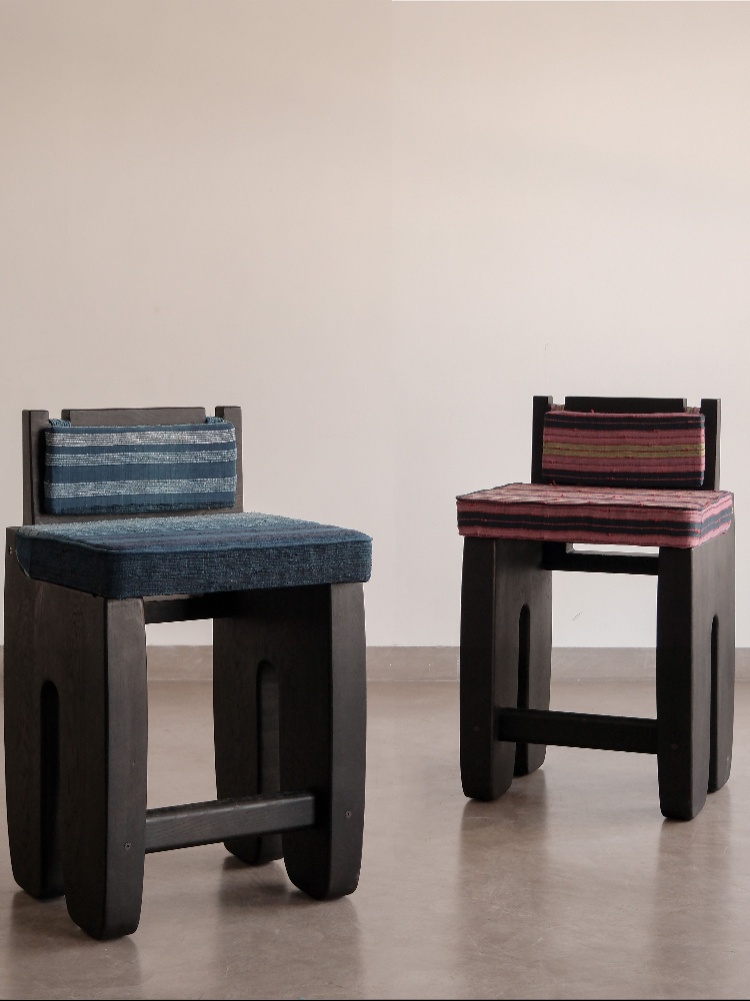
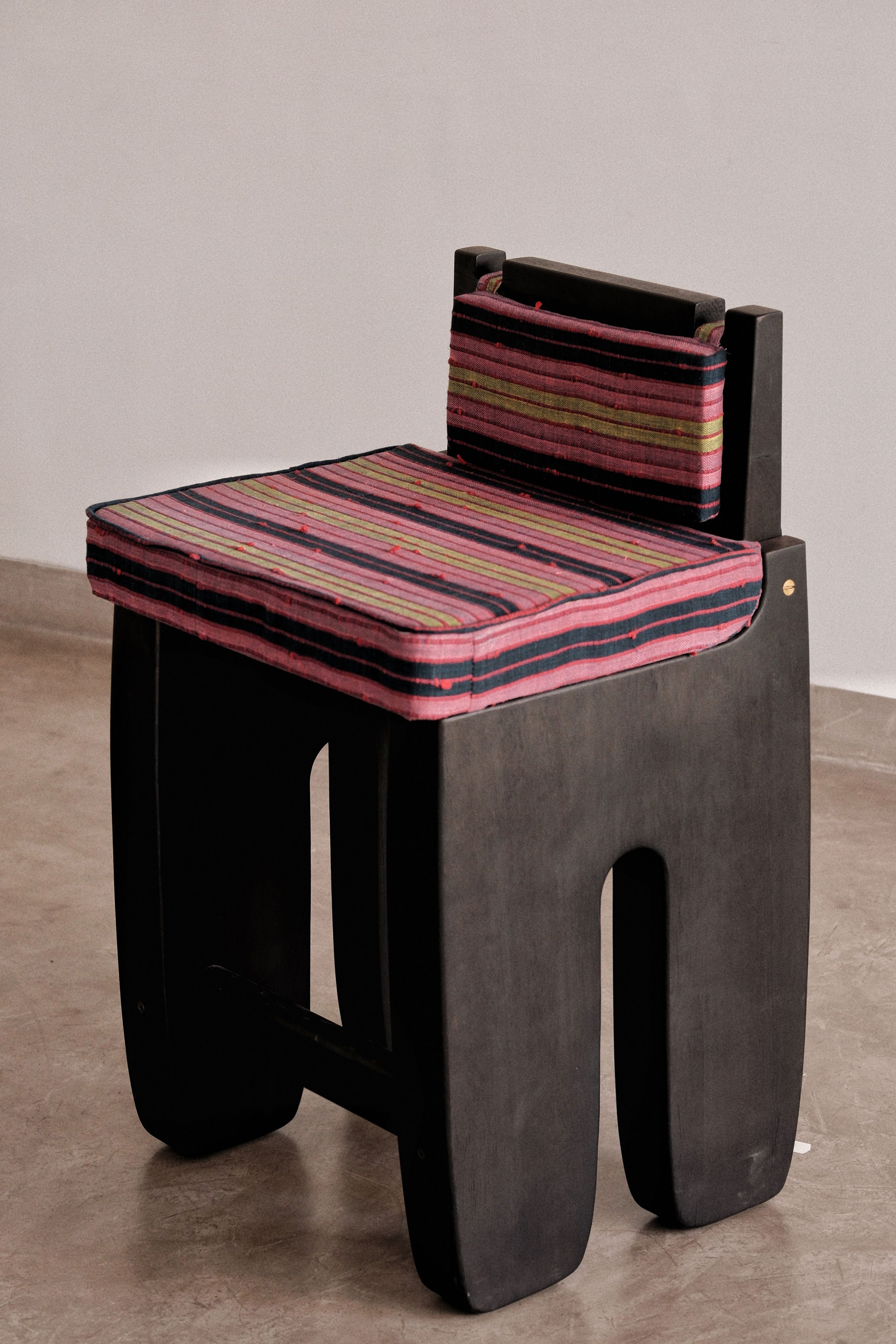
The Takhat Counter Stool by Shivangi Vasudeva
Part of a group show at Blackdot Gallery, designer Shivangi Vasudeva’s world is one where the sharp Brutalism of wooden forms meets the soft textures of indigenous crafts from India. Rooted in Indian traditional furniture design, her Takhat Counter Stool is a reference to the traditional low stools commonly used in Indian homes. Hers, however, is crafted through conversations with the Naga community and furnished using upholstery from Iro Iro.
She describes her objects as pieces that “challenge the idea of Indian craft as merely exotic and instead spotlight its incredible nuance, intelligence and power”.
Wood-block prints by Neera Sehgal
ADVERTISEMENT
A block print artwork by Neera Sehgal
Sehgal at work in her London studio
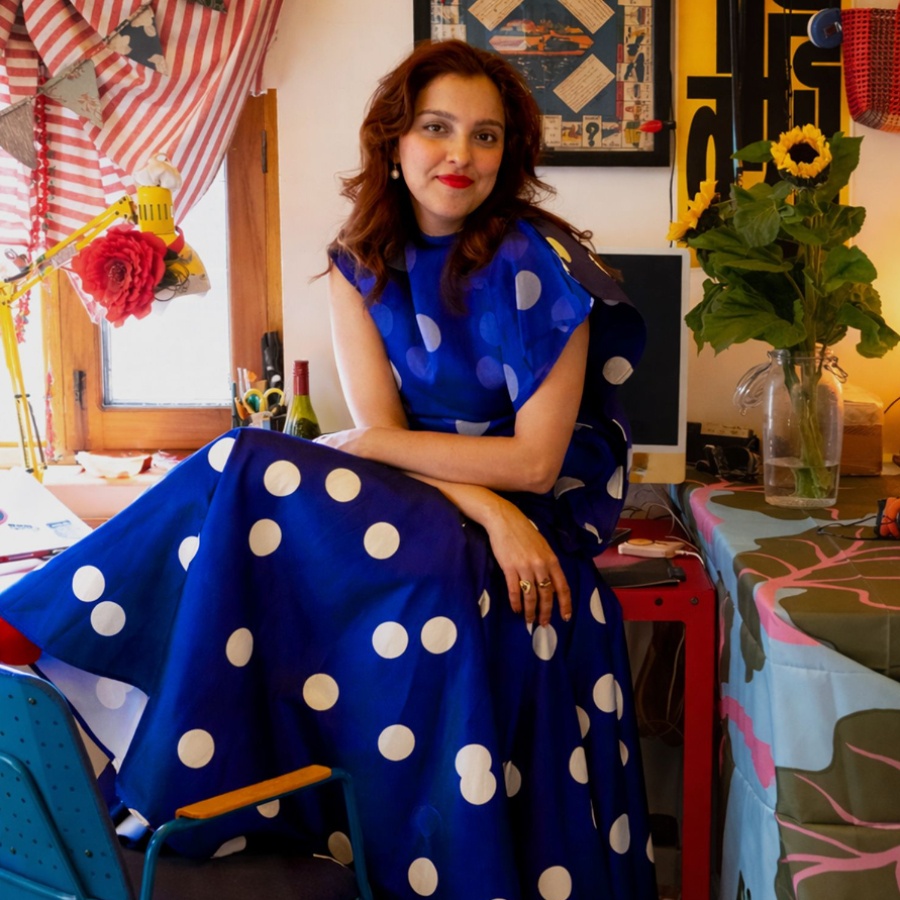
As part of the festival, the William Morris Society invited artist and printmaker Neera Sehgal to conduct a workshop on Indian wood-block printing. “This was a special experience because not many people know how Morris was deeply influenced by centuries-old printing traditions that he encountered for the first time in India,” says Sehgal. But this was far from Sehgal’s first rodeo.
After pivoting to wood-block printing from her career as a painter in 2017, Sehgal has spent the past decade championing wood-block printing as both an art form and a deeply human craft from her Chiswick House studio. Her workshops, which she describes as an exercise in “human engagement, connection, sharing, and learning through making”, have taken her from the British Museum to the Victoria and Albert Museum. Last year, her prints were also exhibited as part of the Royal Academy of Arts Summer Exhibition.
Sehgal’s blocks—made in India using local wood like sheesham and Indian rosewood—range from Klimt-like portraits of women with flowers to a repertoire of fruits, including the Alphonso mango, alongside a host of animals including an adorable, yet arguably ferocious, tiger. Together, they reveal a world of rarely seen whimsical abandon.