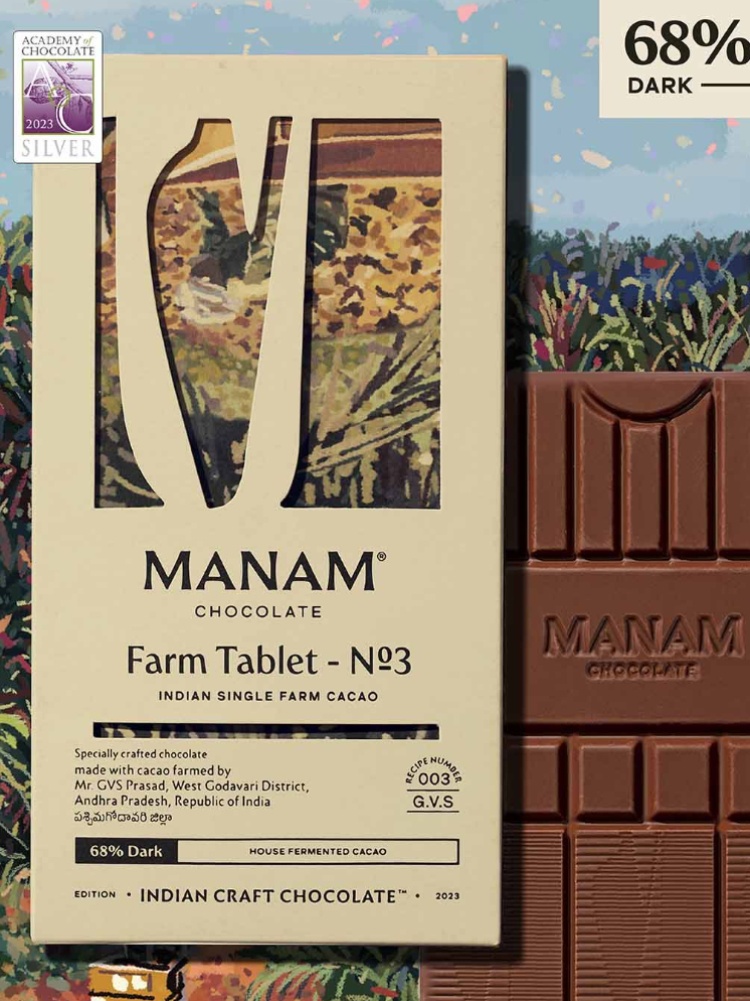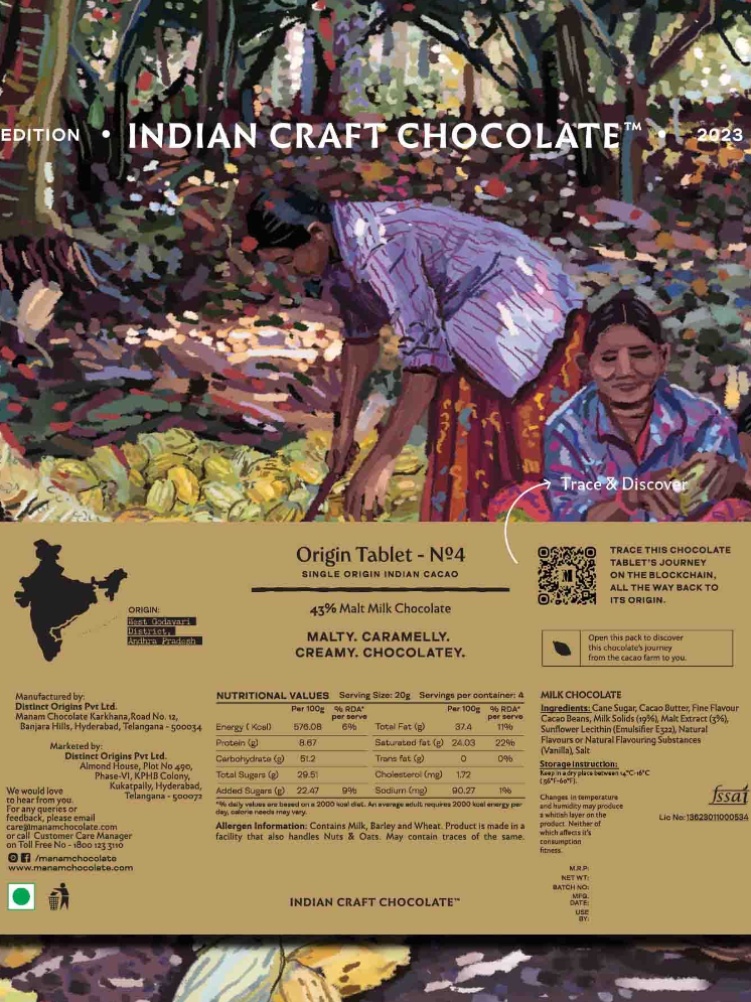





In Wonka, the 2023 film starring Timothée Chalamet, a young Willy Wonka crafts the Hoverchoc, an exquisite chocolate with a champagne-coloured outer layer, made of a measured mix of Peruvian marshmallows, cherries from Japanese Imperial gardens, and caramel sourced from Russian clowns’ tears. The Hoverchoc carries the magical power to make anyone who wolfs it down fly. While the offerings of Manam Chocolate, a homegrown Indian craft chocolate-make, may not induce literal levitation, they do leave consumers with a euphoric sense of delight. Manam, which has received recognition at the International Chocolate Awards and the Academy of Chocolate Awards, turns three this month.
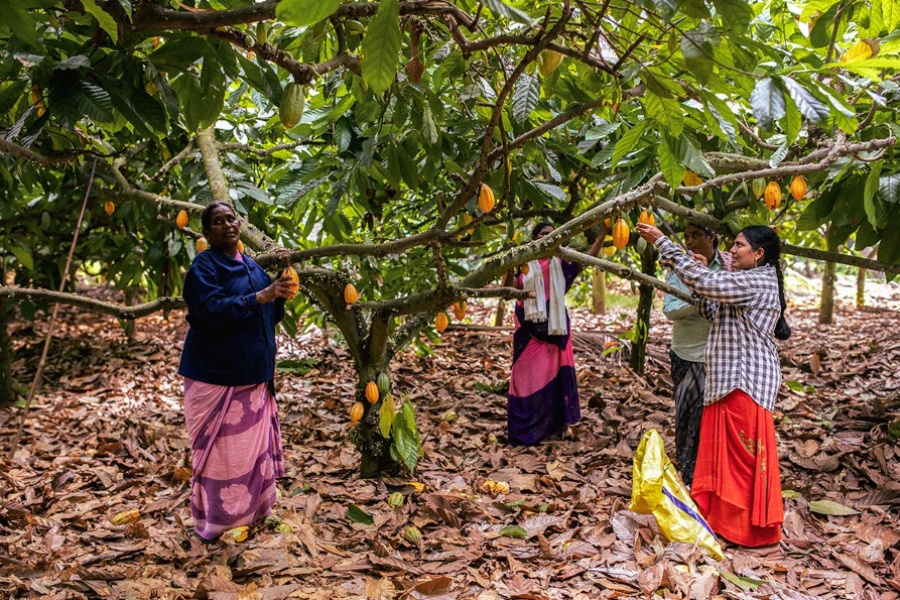
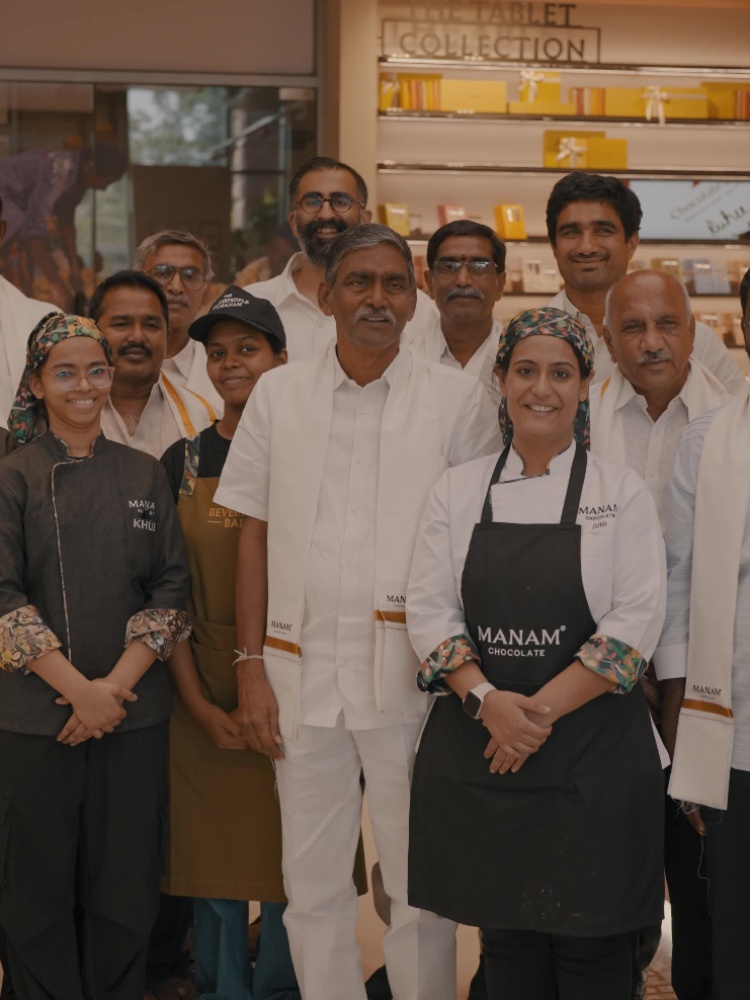
At its helm is a visionary entrepreneur: Chaitanya Muppala. The 35-year-old whom Hello! recently called India’s very own Willy Wonka, is determined to raise the standards of craft chocolate in India and bring it on par with the most reputed names in the world, like Lindt, Godiva and Valrhona. Muppala isn’t alone in this mission. Through Manam’s sibling arm Distinct Origins, he has built an army of over 300 farmers who labour across 3,000 acres of fertile land in West Godavari, Andhra Pradesh. These farmers cultivate the finest, Indian-born cacao beans, says Muppala. In Telugu, Manam means ‘we’ or ‘us’, and this craft chocolate brand is rooted in that ideology.
Like Wonka’s artisanal factory full of fantastical enchantments, the Manam Chocolate Karkhana in Hyderabad (listed in Time magazine’s World’s Greatest Places for 2024), too, plays with imagination. Spread across 10,000 sq ft, at this immersive craft chocolate factory you can pick up roasted cacao nibs flavoured with candied ginger, pumpkin seeds and dried apricots, or bite into mint-and matcha-chocolate thins that come in dainty capsule-sized tin boxes. Here, you can even make your own chocolate and eat it too.
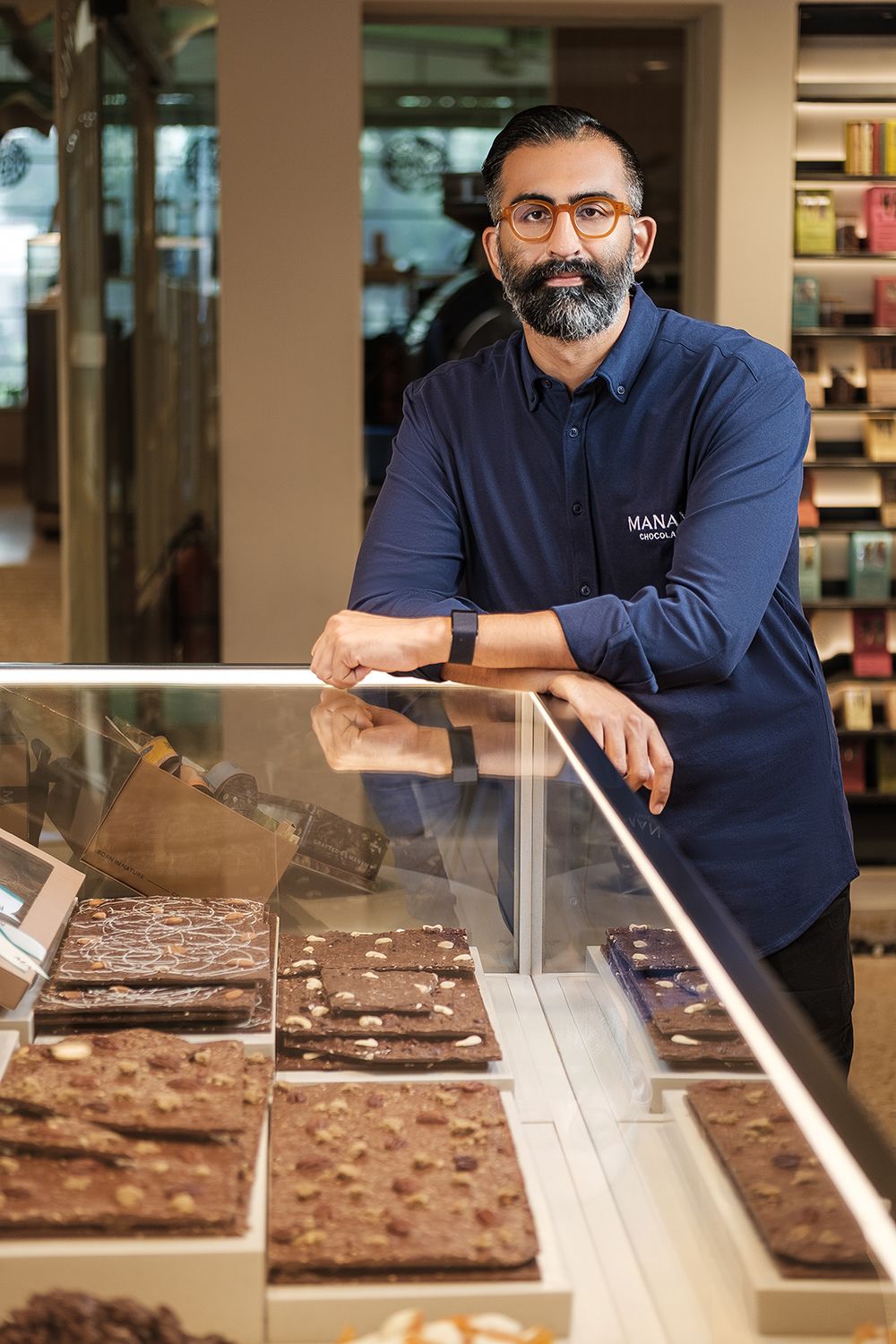
Photograph by Nishant Ratnakar
The farmer and the bean stock
While chocolate-making has evolved through technical innovation and complex flavours and textures, concerns regarding the environment and ethical farming continue to persist.
In 2005, Tony’s Chocolonely in the Netherlands started with a mission to become a Fairtrade-certified chocolate company that ends modern slavery and illegal child labour in the cocoa industry. Today, it’s a practice more chocolate manufacturers are hoping to adopt. In India, craft chocolate brands like Mason & Co, Paul and Mike, Anuttama and Naviluna are known to source their cacao from farms across Karnataka, Andhra Pradesh, and Kerala.
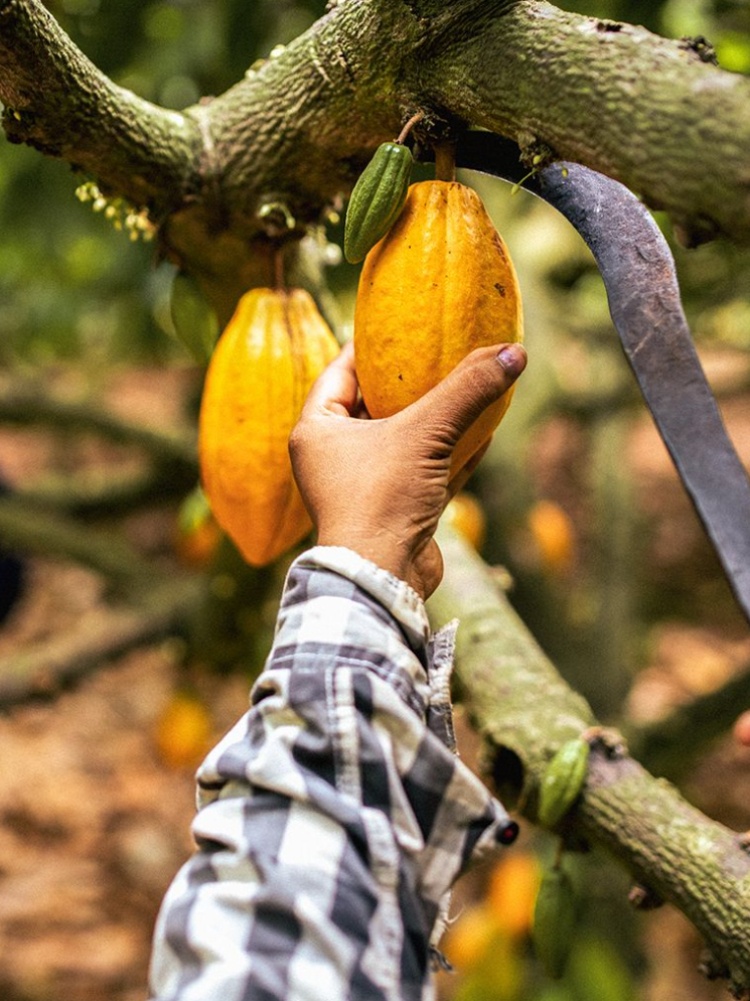
But Manam hopes to go further by not only supporting small farmers but building a proper infrastructure it believes is needed to improve the quality and global reputation of the Indian cacao. “Chocolate is only as good as your beans,” explains Muppala. Which means that instead of purchasing the poorly dried, low-quality beans from the middlemen, Manam’s sister company, Distinct Origins, buys the ochre-hued pods directly from the local farmers. “We realised we needed control of the entire chain to ensure quality. So, our chocolate-making starts on the farm with the genetics, terroir, quality farming, and harvesting practices,” says Muppala.
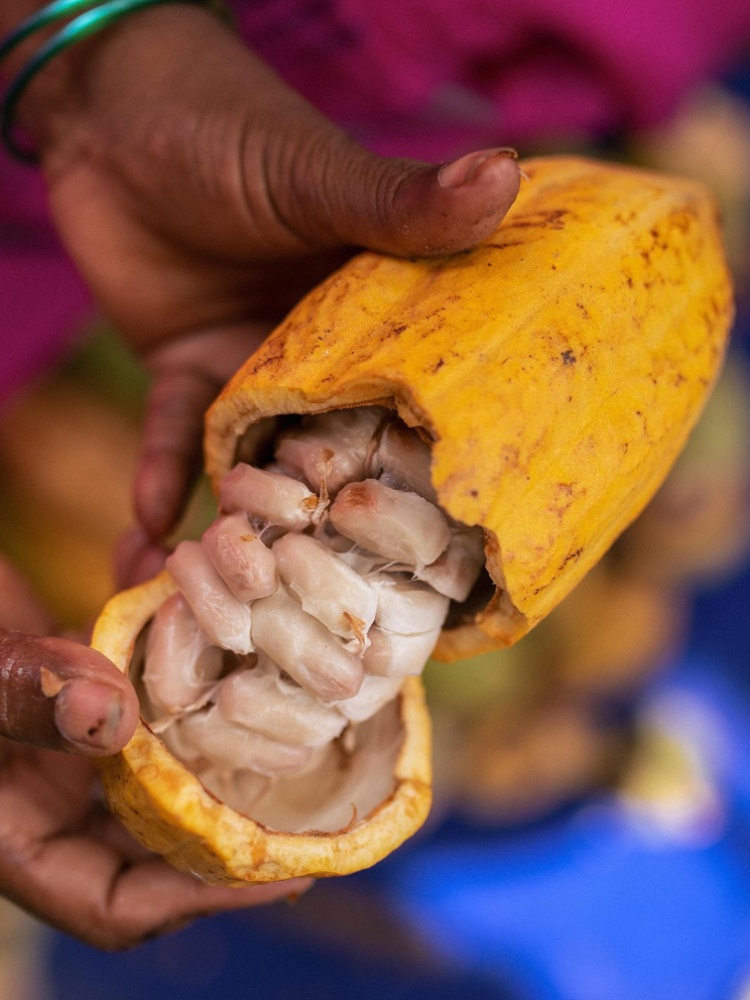
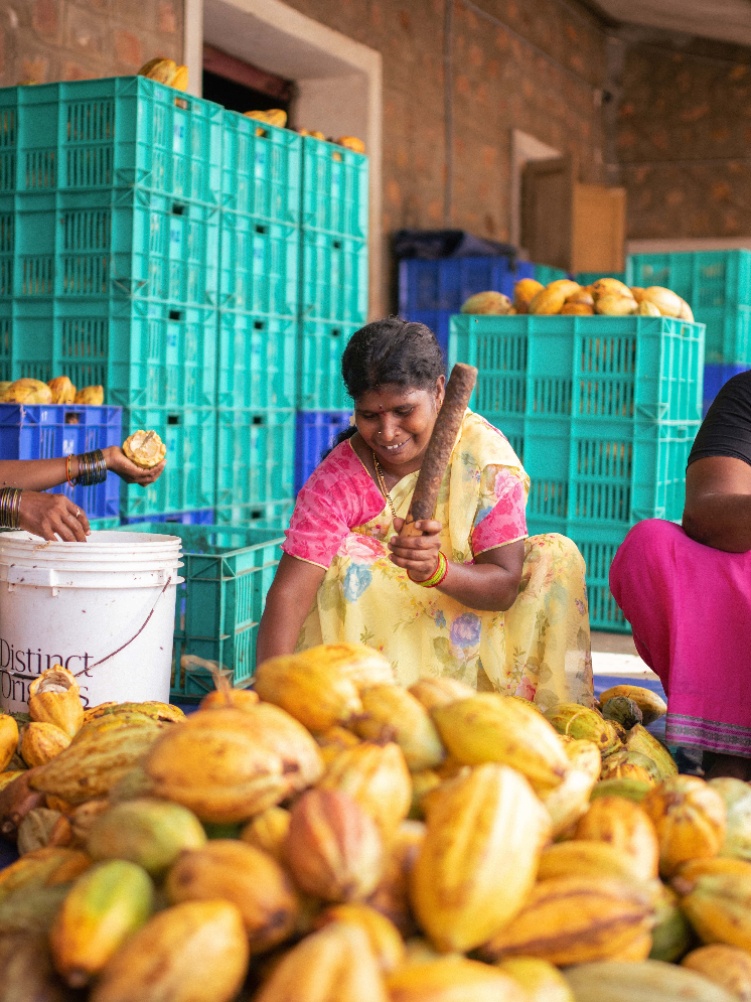
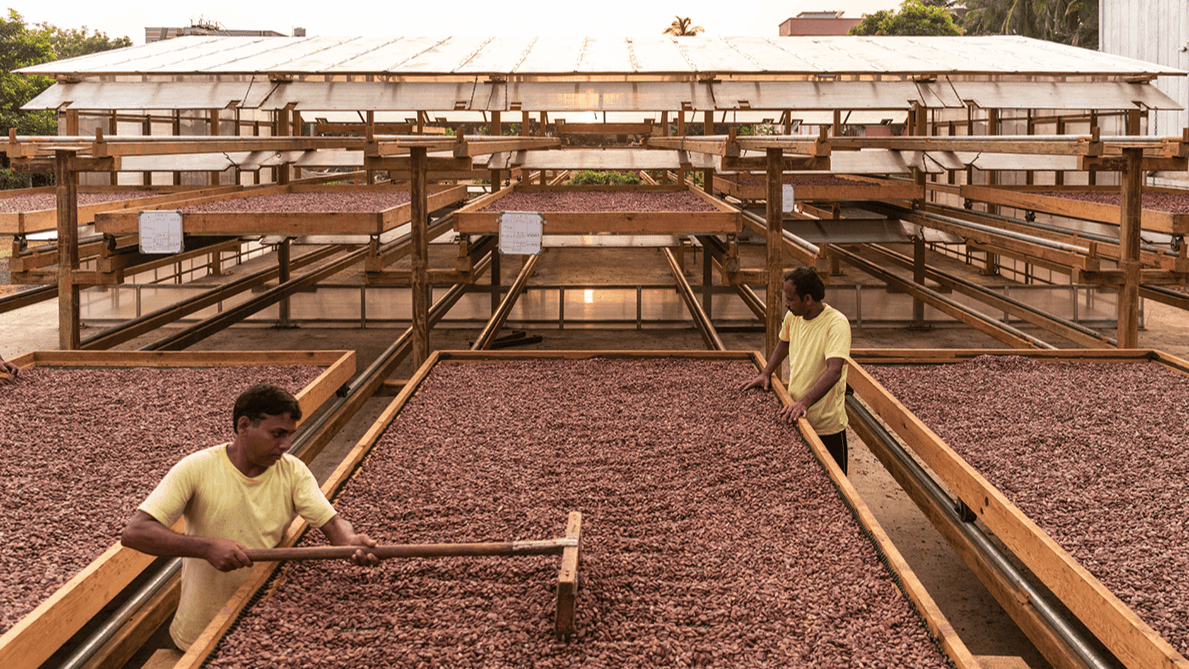
Distinct Origins’ primary operations focus on working closely with select farmers in West Godavari to produce high-quality cacao beans. “We oversee the harvest and make sure the right fruits are picked,” he continues. The pods are then carefully opened at the Distinct Origins fermentery at Tadikalapudi (said to be one of the largest facilities in the world), where the silky, white, sweet pulp and the bitter beans undergo proprietary drying, sorting, and fermentation processes to unlock their true flavour.
Closing the loop
The pod shells are reused as well. At the fermentation unit, the discarded shells are composted in a swimming-pool-sized pit, where they’re dried, mulched, and broken down into a nutrient-rich natural fertiliser. “And we give that to farmers. To those who want to create their own manure, we return the shells. This helps us close the ecological loop,” explains Muppala.
In traditional markets, farmers often wait six to eight weeks to receive compensation for their cacao beans. Distinct Origins ensures that not only are the farmers rewarded with a premium for following quality protocols, they also receive the payment digitally within just 24 hours. “Another incentive is that we take away all the costs,” says Muppala. “Our belief is that the farmer should focus on the soil, the tree, the farm, and not the post-harvest processes. We take over the fermentation, which is labour-intensive and expensive.” He adds, “In essence, it’s child-labour-free, deforestation-free, and fairly transacted cacao.”