



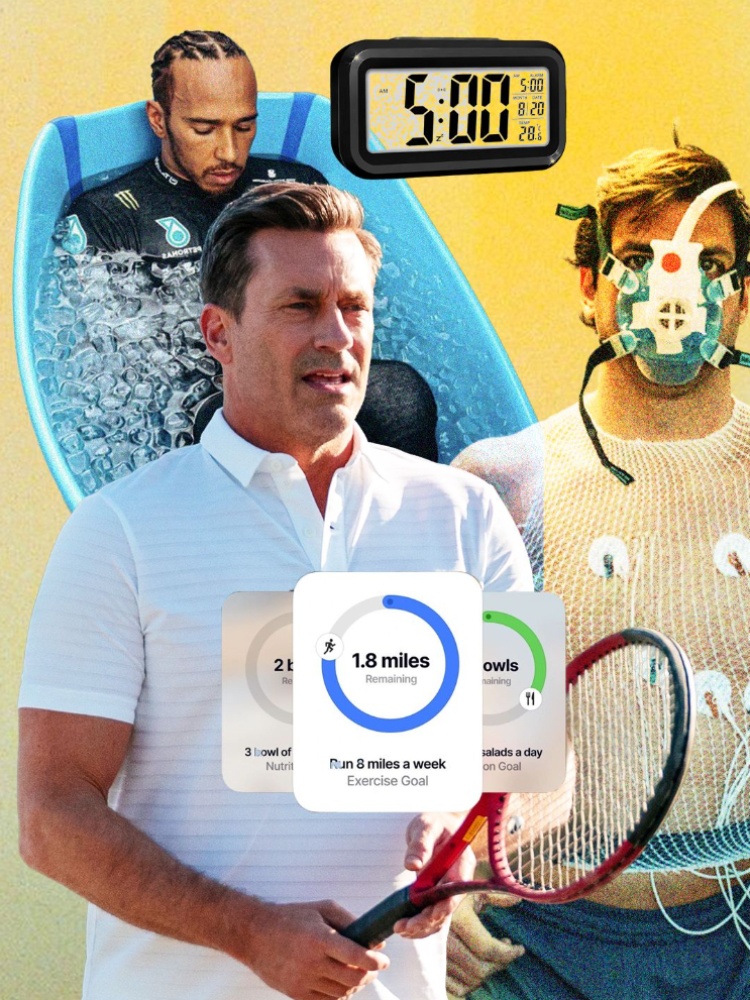

When Keenan Tham, 42, met an 81-year-old on the slopes while on a skiing holiday, he realised that’s who he wanted to be as he grew older. “My goal is—at 85—to be happy in the sun, ripped body, doing stuff a 35-year-old can do,” says the restaurateur. This translates into a hectic schedule involving weight training in the gym, regular racquet sports, and a rigorous recovery process that involves 5-degree ice baths (“I’ve set up a cold-plunge machine in my balcony—it’s the best start to the day you can have,” Tham adds.)
A lot of his desire to improve his health stems from watching his father’s battle with terminal cancer along with wanting the energy of a “younger me” to keep active for his daughter. “I think my routine is on the extreme end compared to others, but it makes me feel great…empowered. It’s about understanding what your body needs and optimising it for each decade. Currently, I’m working on my VO2 Max levels (a metric that helps monitor the risk of heart disease and early death). That’s what will decide how you live at, say, 85. And sleep. I need 8.5 hours, but I am struggling to reach that number,” he says.
Tham has been developing his longevity protocol for four years now, tempering his own research based on cutting-edge advice from the likes of human biologist Gary Brecka and ageing expert Rhonda Patrick with data-backed advice from Mumbai-based physician Dr Marcus Ranney.
Ageing, but make it data-driven
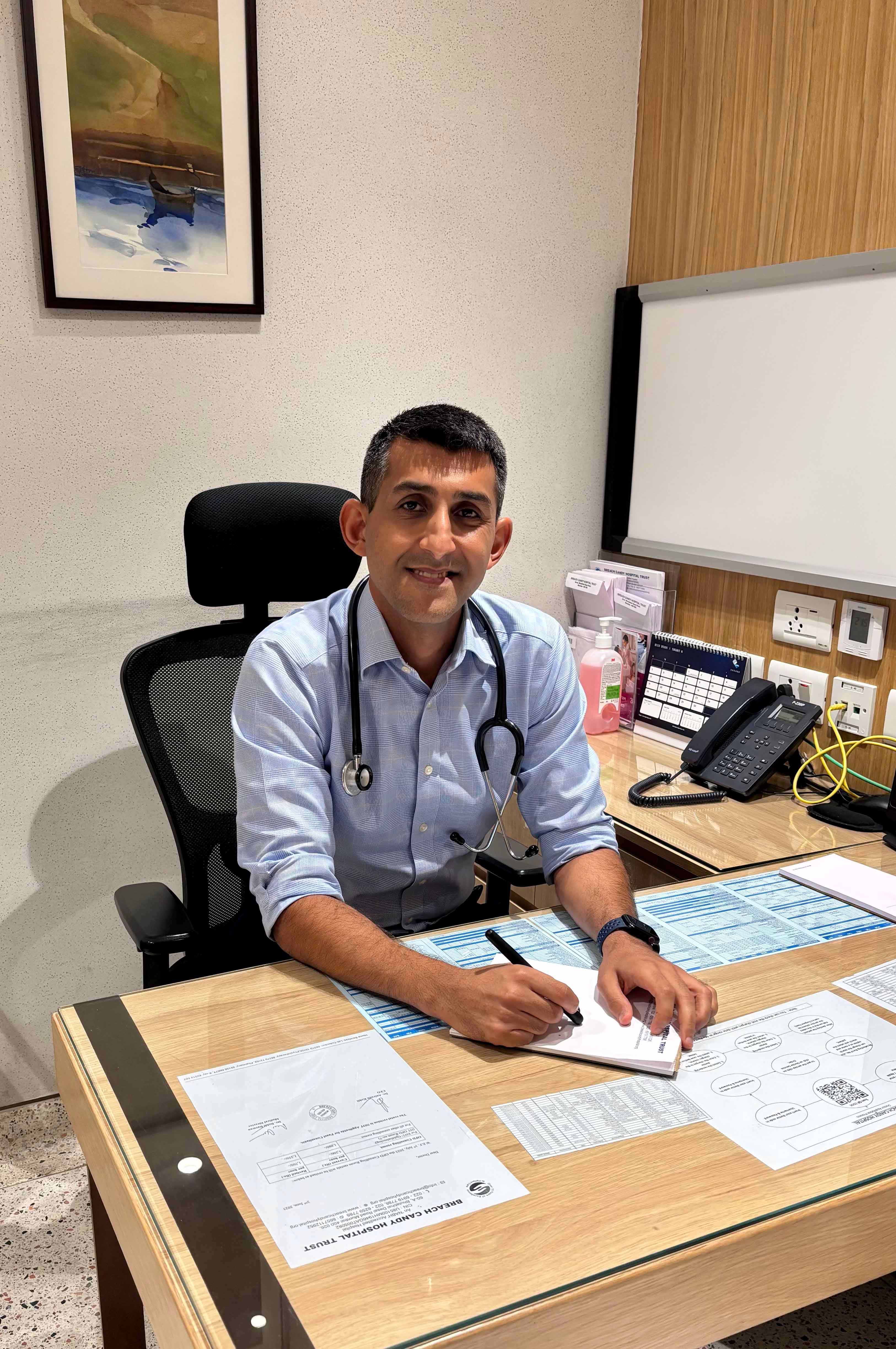
Perhaps India’s first longevity physician, Ranney set himself up under his HumanEdge banner—a precision longevity and preventive health programme—right at the start of the Covid-19 lockdown in 2020.
“No one was really talking about longevity then, so that early start added to the authenticity and the legacy behind what we do now. Today we collect more than 1,00,000 data points per client, score each of the systems our bodies function on, and assign and then devise interventions per system. Our core ideology is that ageing is inevitable but decline is optional,” he says.
Dr Ranney and his team collect data via diagnostic testing, which he says has gotten more complex and comprehensive in the last few years. And then there are wearables. Dr Ranney cites studies that suggest 32 per cent of Indians (mostly millennials and Gen Z) use them to monitor their health, making the country one of the fastest growing markets in the world. “We’re tracking everything from sleep to steps, VO2 Max and cortisol levels, our snore index and even air and light quality at home. So now people actively seek me out as they are naturally curious about what that data means and how they can improve them. They want to engage with [longevity protocols] as an alternative to just living a passive life and waiting for a disease to happen,” he says.
But he also points to a cultural nuance that makes quality of life, rather than just a long-life span, more appealing. “In the West a lot of clients migrate to longevity doctors because they want to extend life to 120 or 150 years. And we’ve seen it. Remember the hot mic conversation between presidents Vladimir Putin and Xi Jinping at the BRICS summit last year? But here, people come to me and they say we don’t want immortality. We’re not interested in it. But because we’ve seen our parents and grandparents suffer, and we know that life is changing, we want to ensure that we’re on a better pathway towards ageing,” he says.
This realisation comes at different stages. Some people lose a parent early, some have an illness they want to overcome. And for others, it’s the moment they become a parent. “Then we change the way we view how we live our lives. We want to become stewards rather than consumers. Also, I’ve seen that in men parenting is a very powerful catalyst. And then as their children get older—five, six, seven years old—men start to examine, especially if they have boys, the energy delta, which is where they started versus where they are now,” Dr Ranney says.
Searching for optimisation
For banker Prabhav Mehta, 42, a father of two, that delta became important close to the birth of his first child, when he needed corrective surgery for a knee injury sustained in his teenage years. “I got off my crutches a week before my daughter was born. Now I needed to ensure that I was fit and able to go for as long as possible for my kids, right? So, of course, fatherhood played a role in my quest to get healthy—that was quite a turning point,” he says. And as he hit his forties, this delta expanded. “Today, I think longevity is as much about the mental and nutritional aspects as it is about the physical,” he adds. A 4:30 am start helps him pack in yoga, running or a sport and, with the help of Dr Ranney, a customised approach to nutrition that works for his body.
“Of course, you can make significant improvements to your well-being with savvy research. But after a point you hit a barrier, right? I’ve been running half marathons in under two hours and wanted to push myself beyond that. And I felt I needed expert guidance to understand the tweaks in terms of nutrition, rest, and sleep I needed to make to get there,” Mehta adds.
It’s not just about living longer
So why is this culture of optimisation so deeply entrenched in the millennial male’s psyche?
I asked psychiatrist Dr Zirak Marker. “In a post-Covid world, where we often hear about sudden, young death, recognising that everything changes—and that life itself is finite—can help us recognise that we cannot always control what happens. But the solution is to challenge [ourselves] so we can change how we experience adversity,” he says.
And is following a longevity protocol a form of control in an increasingly uncertain world?
“Absolutely. I always encourage my clients to respond, not react. Creating a pause between an emotion and an action allows the thinking brain to regain control,” he adds.
Improving lifespan or health span is not just about biology, adds Dr Ranney—it’s also about making sure that you make the most of your life. “My family and I spend a lot of time with friends. We spend a lot of time in nature and going on adventures, because—and there is research being done at Harvard University to back this—having a tribe, a sense of purpose is the most powerful thing that helps you live longer.”