



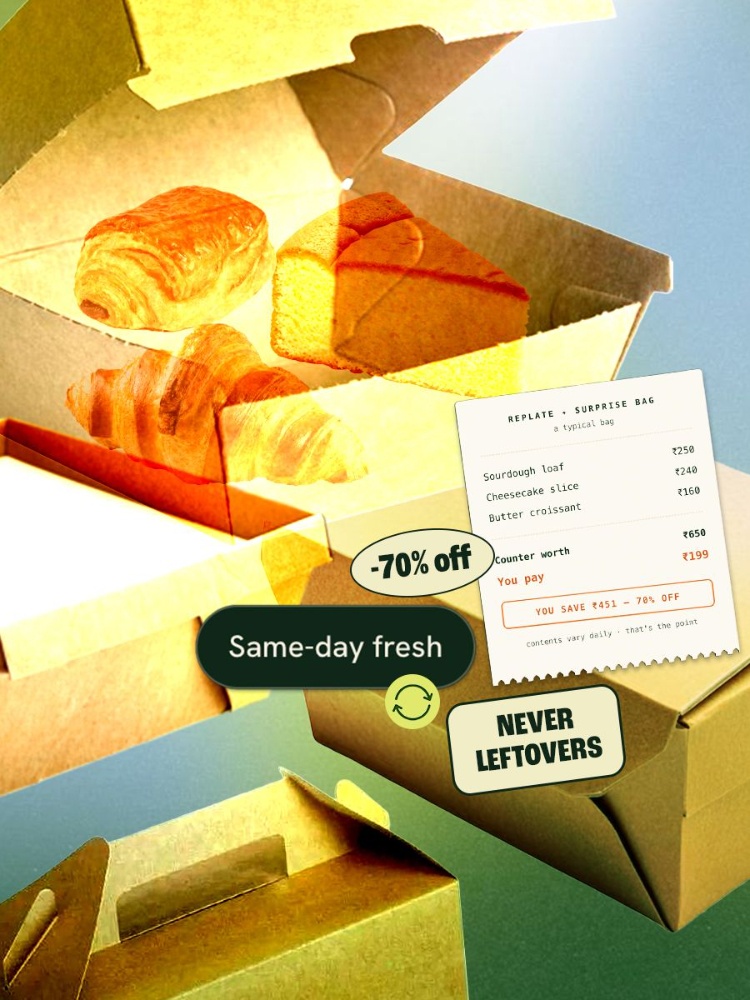

Padmaja Reddy was midway through back-to-back work calls when her teenage daughter texted that her friends were coming over. There was nothing at home to feed them. Reddy couldn’t step out. So, she opened the Replate WhatsApp group (a community of 700-plus members), found a partner bakery close by, and sorted snacks for a house full of teenagers: for a fraction of what she’d otherwise spend.
Reddy isn’t the only one to have benefitted from Replate, a service that rescues unsold food from bakeries and cafes at the day’s end, bundles stock into surprise packages, and sells it at a discount. You can get baked goodies worth ₹300 to ₹600 for ₹99 to ₹199.
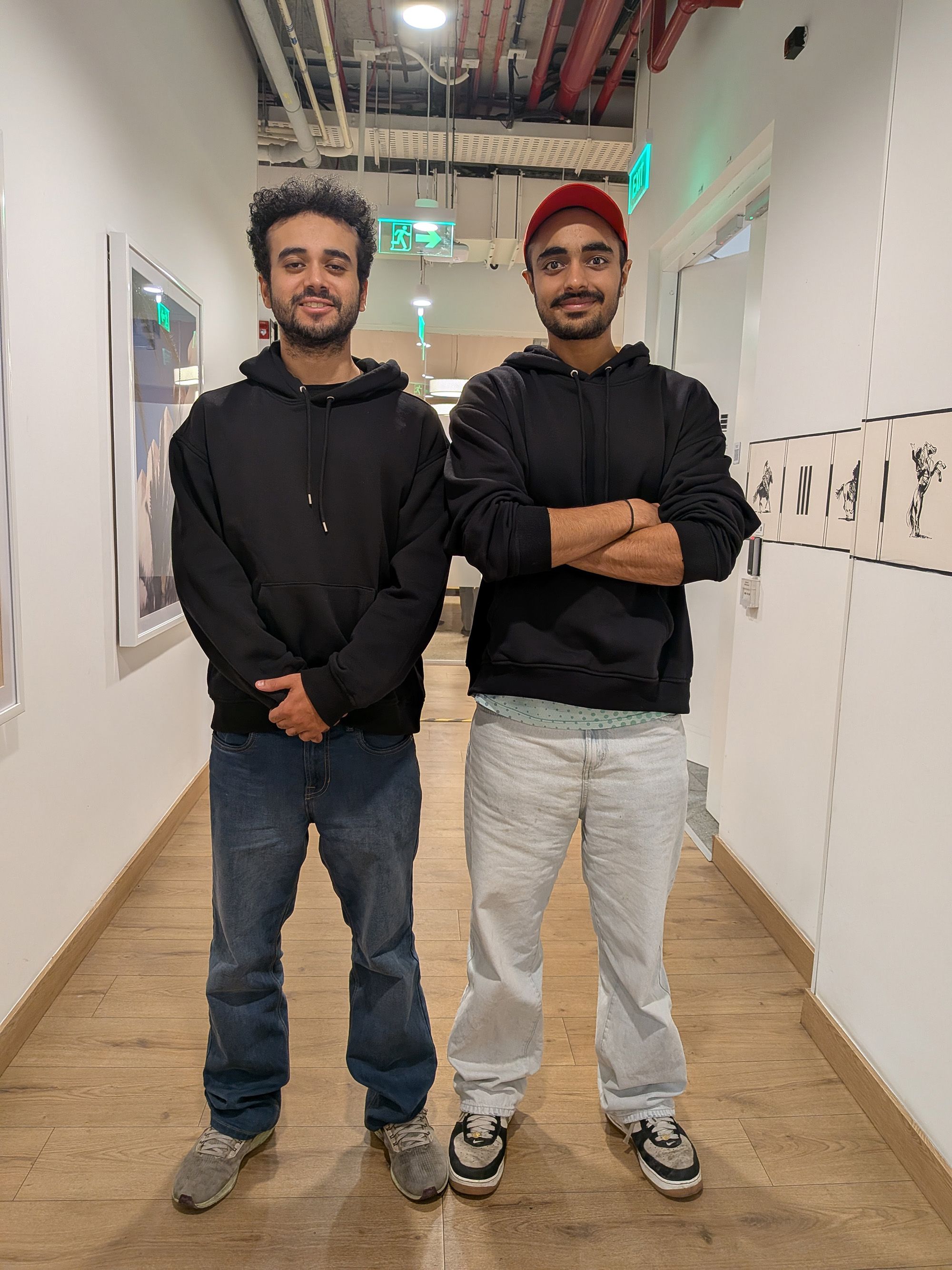
However, the discount is beside the point, at least for founders Aditya Arya, 26, and Karan Singh Gujral, 28. Replate is a sustainability play first. The aim is simple: to keep good food out of the bin. Inspired by the way Too Good To Go functions across Europe, the two friends launched the platform last month in Hyderabad. Since then, they have sold close to 2,000 bags to around 750 customers across 35 partner outlets in Hyderabad, growing entirely through word of mouth, a WhatsApp community, and Reddit.
Speaking to The Nod from Bengaluru, where the two had travelled to launch the next chapter of the service, Gujral traces the project to a simple observation. “Every night, bakeries and restaurants across the country throw away perfectly good food simply because the day has ended. There is no fix for that in India.”
Right now, Replate runs in Hyderabad and Bengaluru. You can order via WhatsApp or its iOS app (the Android app is on the way). A partner bakery tells Replate how many bags it has that evening. That listing goes up on the WhatsApp group and the app simultaneously. Checkout on the app is straightforward. On WhatsApp, you tap a link, land in a private chat, and complete the booking and payment right there. You get a pickup code that’s also sent to the bakery. Drops start as early as 6 or 7 pm and run through to 10:30 or 11 pm, since every bakery closes at a different time, which is why bags don’t all appear at once.
Because the food is perishable, quality has to be airtight. Replate only works with established, licensed bakeries—from stalwarts like Bikanerwala to local favourites like Bakelore and The Pizza Zone. The model is pick-up-only so nothing travels or sits around. And every partner eatery is rated daily. “The same croissant that was on the shelf at full price two hours earlier ends up in the bag: nothing about the food changes, only the price does,” says Arya, co-founder and CTO, who built the app’s consumer platform, partner app, and WhatsApp ordering engine.
Until closing time, nobody—not even the bakery—knows what’s in the ‘surprise bag’. Pastries, croissants, sandwiches...all can end up at your doorstep.
Of course, none of this works without bakeries signing up, and that took real legwork early on: walking into stores, cold-calling for a decision-maker’s number, working bottom-up at chains too corporate to hand one out directly. The pitch tends to land fast.
“Most people get it almost immediately: they’re already throwing food away, so this is a way to get some marketing done, look sustainable, and make a bit of money back on it instead,” says Gujral, co-founder and CEO, who leads partnerships and business development. Pushback, when it comes, is mostly from premium brands wary of being seen to discount. Gujral’s counter? “The bags are limited, only up for grabs near closing, and customers don’t know what’s inside, so they can’t replace a planned purchase. If anything, they bring the brand-new customers.”
The big surprise for the founders was the demand for these bags. Bags sell out in roughly three and a half minutes, and nearly four in 10 customers come back for more. (One regular has placed 19 orders.) It’s not only 20-somethings hunting for a deal: 35-year-old Praneet Nagarur discovered Replate when friends dropped by unannounced at month’s end, budget already stretched thin. “It came in exactly when I needed it—good food at a price that made sense, without having to plan ahead,” he says.
Next up: going deeper in Hyderabad, expanding into restaurants, QSRs, and eventually supermarkets, plus a third city (likely Mumbai or Gurugram) within a couple of months. Logistics, notably, are the easy part. “This is a sales business, not a logistics one,” as Arya puts it—no delivery leg to manage, just bakeries that need a nightly nudge to log their numbers. Fitting for a company whose name is shorthand for its whole pitch: giving good food a second plate.