



check-in25 Nov 20257 MIN

Safari fans, Brij Sone Bagh is the newest spot on your tiger trail

In Bandhavgarh, space out in thoughtfully designed villas, sample home-cooked meals at a local’s home or head out on a safari where a striped feline may cross your path

Image

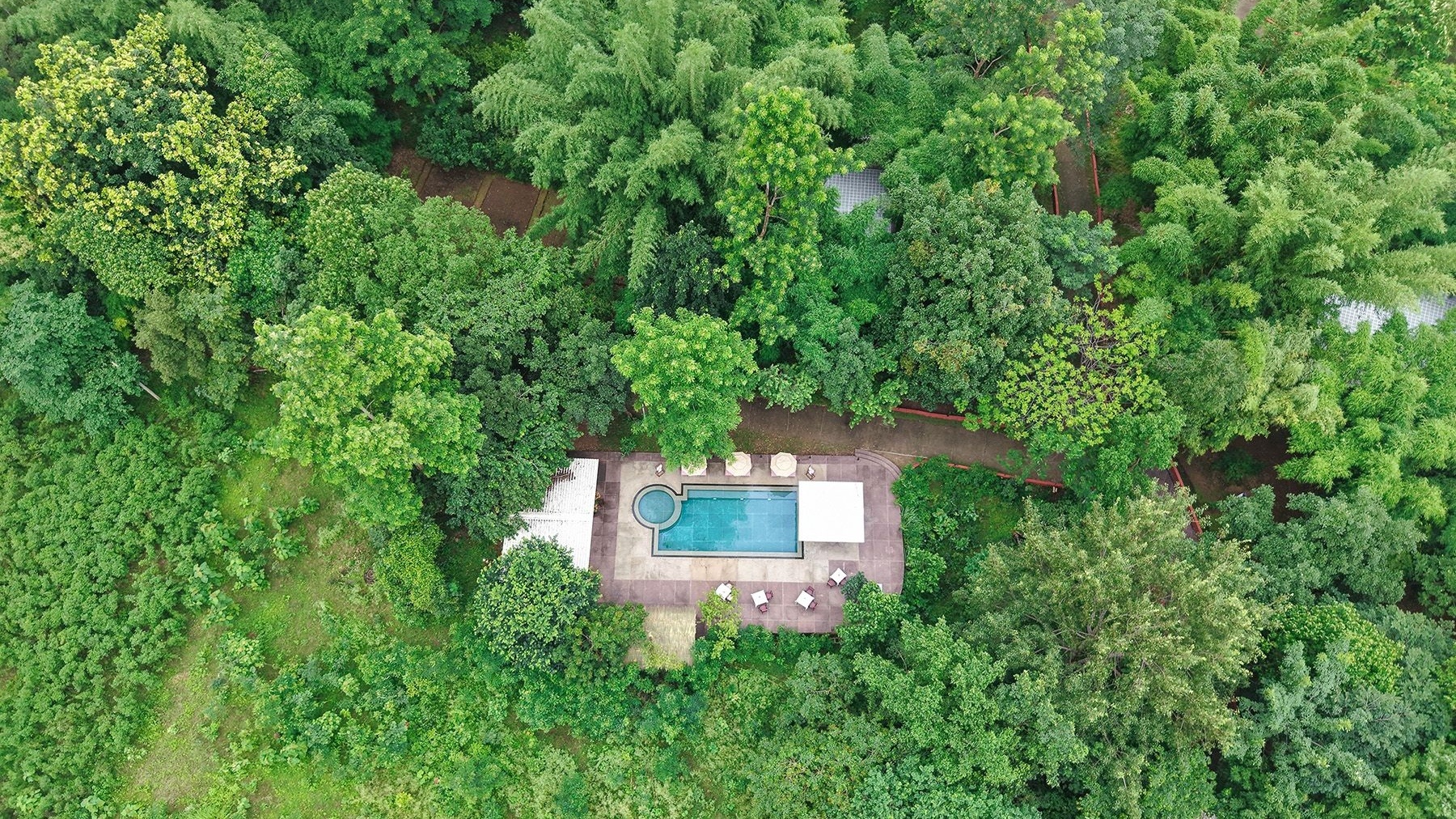
As I’m walking down a cemented pathway between the reception and the pool at the Brij Sone Bagh in Bandhavgarh, a set of paw prints embedded in the concrete gives me pause. “Tiger!” my city brain pings. Logic soon prevails and I realise they probably belong to the two furry canines, Blackie and Sweetie, who roam the property seeking company and belly rubs.

At the Brij Sone Bagh, located right on the edge of the Bandhavgarh Tiger Reserve, a four-hour drive from Jabalpur airport, you can’t help but be curious about encounters with the striped carnivore with astounding camouflage skills. Has it ever been spotted on the property? What about close to the property? What do you do if you see one? Are their cows okay? Will an evening stroll lead to more adventure than I bargained for? However, even if you set aside the allure of a tiger sighting, the property holds charms that will draw you in on their own merit.

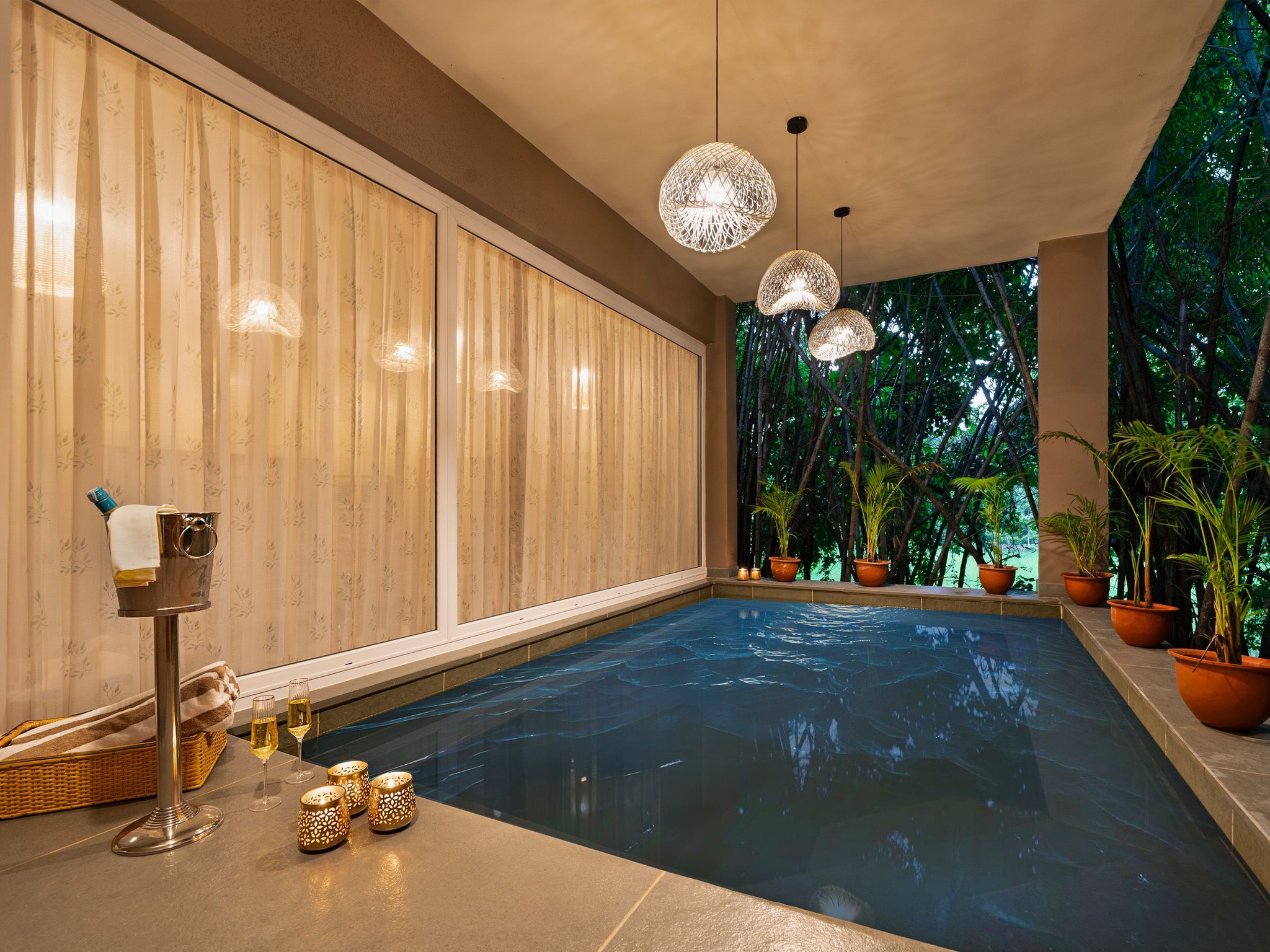
With just five villas spread across the 32-acre property, no one’s in anyone’s business. There are three categories of villas—three grand pool villas, one grand villa, and one deluxe villa. The grand pool villas are the most luxurious of the lot. Mine’s called ‘Vanar Villa’, after the primates who reside in the forest, and a brass monkey head outside the door reinforces the theme. A porch with a swing leads to a massive living room whose chief features include a munshi table whose surface is covered in warli art and a massive trunk-like table and matching minibar that look straight out of Out of Africa. In the bedroom, on the wall behind the headboard, tiny apertures carry dokra sculptures that a community in Madhya Pradesh’s Betul is known for.

Most of my days are spent sitting on the swing on my porch, the silence broken every few minutes by the startling sound of culm sheaths falling off the bamboo clumps that stand like sentinels everywhere. Evenings spell a soak in my very own plunge pool (heated of course), sipping my wine and coming up with a POA to find employment here.
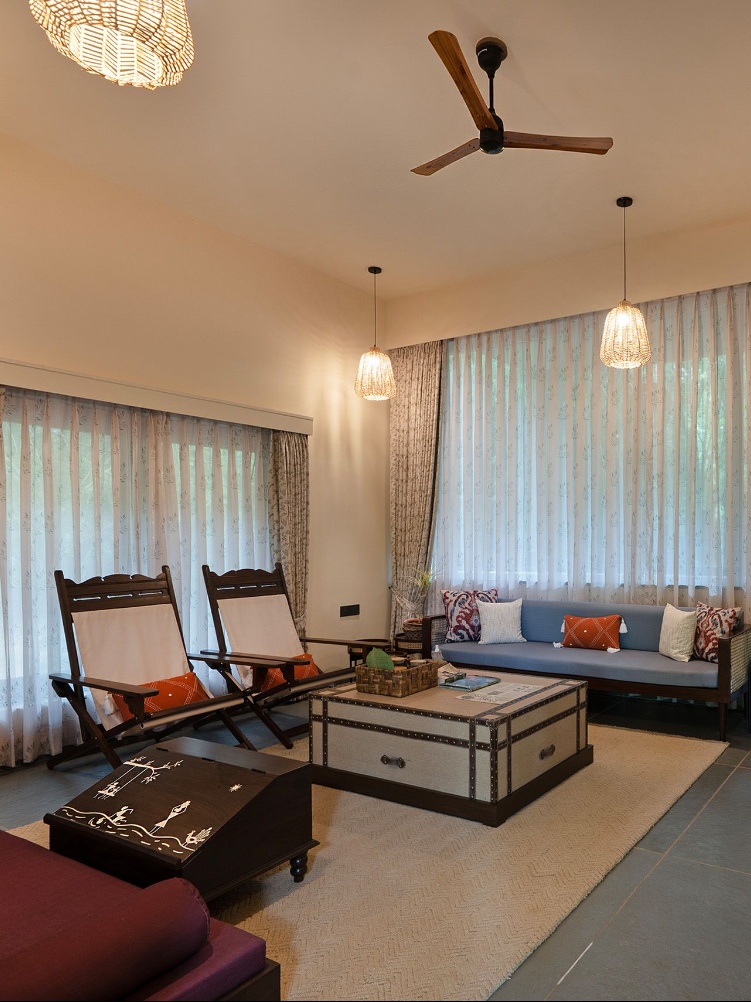
At the resort, there’s been a conscious attempt to integrate art forms native to Madhya Pradesh into the decor. Gond paintings, the traditional art form from the state that pays tribute to nature with its depiction of flora and fauna using natural dyes, and bagh art, traditional wood-block prints, adorn the walls in some rooms.

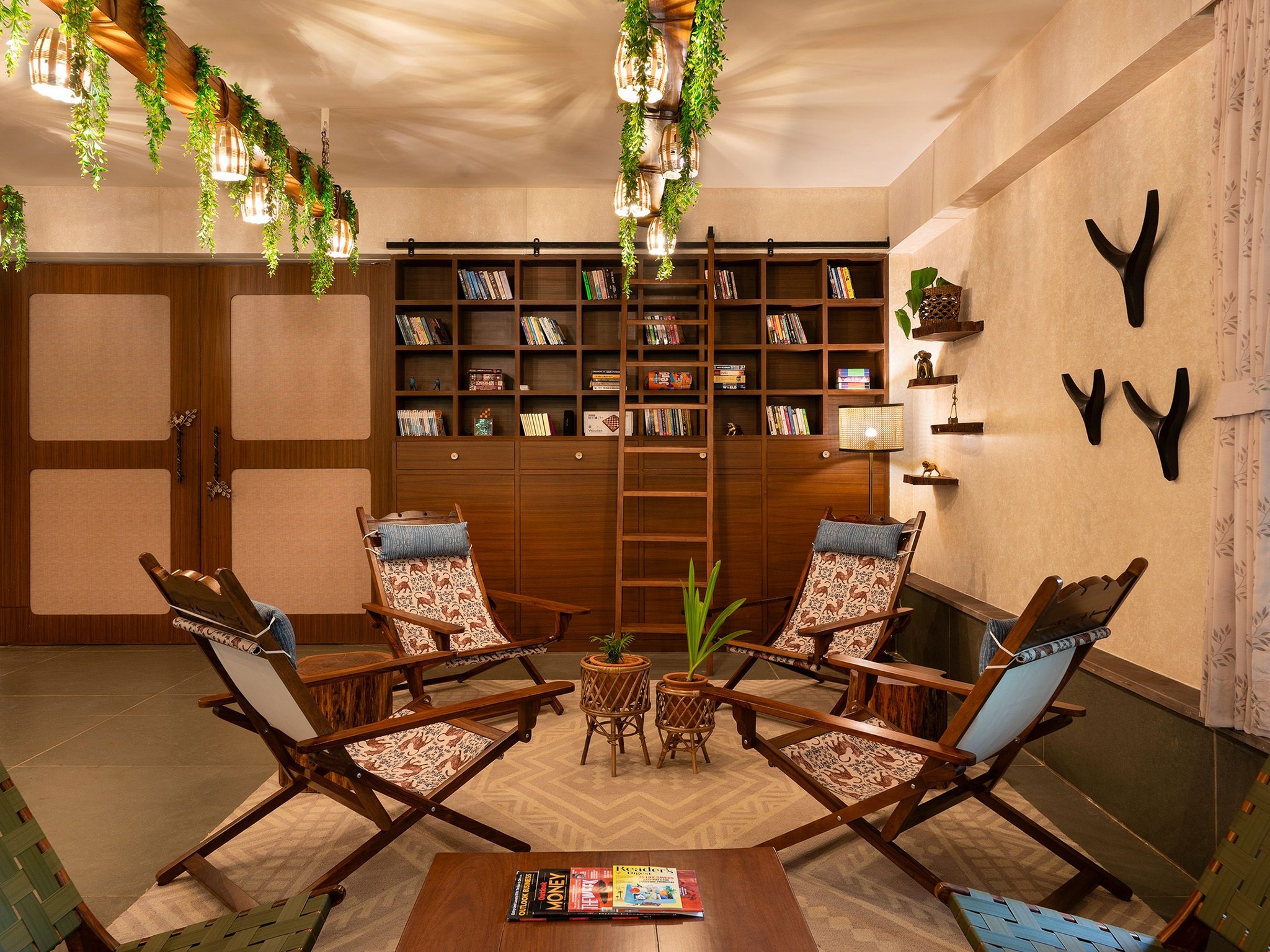
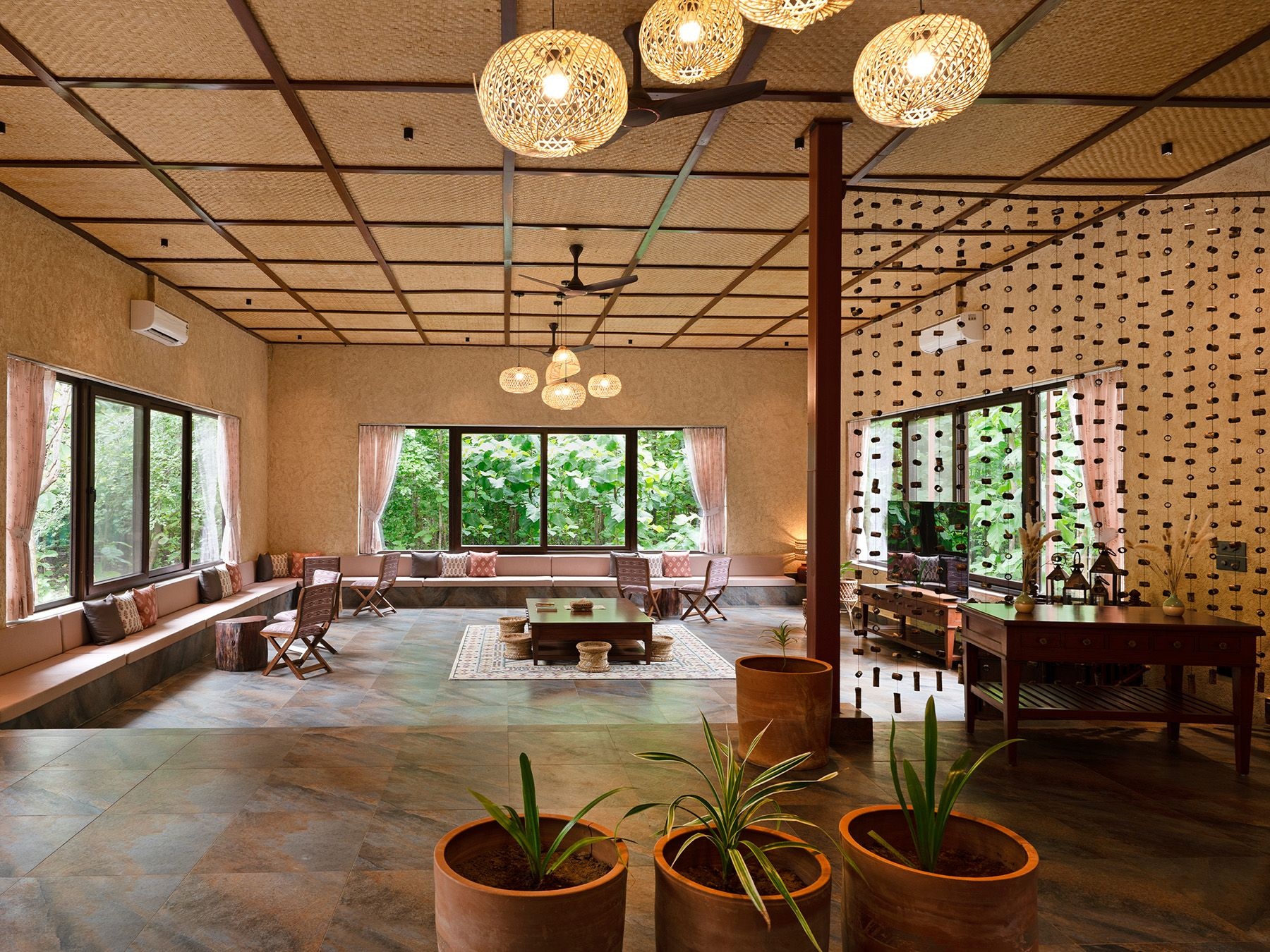
According to architect Deepika Sethi, who designed the interiors of the property, the brief was to combine a glamping aesthetic with the local crafts of the state. “I wanted to theme each villa according to an animal native to the state. Incidentally, each of the animals after which the villas are named—Bagh, Mayur, Hiran, Vanar, Gaj—have been spotted on the property.” Bagh Villa doubles down on the theme, named as it is after the bagh (tiger) and featuring walls adorned with bagh (wood hand block prints). “We used local artists and material as much as possible,” she adds. Bamboo, found in abundance in the surroundings, is also inside—on the placemats and even as partitions in the bathrooms.

Find the quiet disquieting? Head to the restaurant—Planters Room—where, depending on how social you’re feeling, you can chat with the other guests, play a round of Jenga, or bury your nose in your Kindle when you’re not being distracted by the view outside the windows. Salads come in dona (bowls made from the leaves of the native palash tree), and the condiments keep changing everyday. (I get my own lesson in chutney-making on the silbatta from the kind—and patient—chef; call me an expert on the five-minute, five-ingredient chilli chutney.)

Another option is also to grab a drink at the Elephant Bar, the poolside bar where you can catch some sun and spirits and amble back to your room like the gentle beast painted on the walls.

The staff is attentive. Every time I return to my villa from my brief excursions around the property, the cushions on the swing are rearranged, my curtains drawn or parted depending on time of day, the Makaibari tea bags restocked, a neem twig placed next to my toiletries next to a leaf spelling out “datun”, and company kindly offered when I tentatively head towards the walking trail winding around the resort’s periphery.

There’s a constant attempt to introduce guests to local experiences; the resort wants to be part of the local community, not occupy a bubble in it. One afternoon I go along on a visit to a home in Rakhi village nearby, where I get to feast on a home-cooked meal prepared by Rani. There is pakoda, not the deep-fried nuggets you’re imagining but flattened gourd pancakes that are shallow-fried, served alongside chicken curry cooked with turmeric leaves, a cherry tomato chutney. This is farm-to-table before it became a buzzword: I can see the cherubic cherry tomatoes glowing on the vines outside, the gourd hiding among the leaves, the turmeric plants whose brethren made it to the curry, pearly heads of garlic shyly peeking out of the dark soil. The rice and the wheat come from the fields that you can see from the terrace, and the mawa ladoos are made with milk from the cows munching away drowsily three metres away.

Back at the resort, dinner one evening is under a jamun tree, where in a lantern-strewn space and amidst an acrobatic and musical performance from members of the local Baiga community in front of a bonfire, I sample local delicacies like mahua pulao (the fruit tastes something between a raisin, a fig, and a date), stealing occasional glances at the inky wilderness behind me.

On another occasion, I head to Safari Lodge (aka the reception) and dabble with bagh printing, stamping bits of A4-size canvas with the embossed wooden blocks and the enthusiasm and hand-eye coordination of a two-year-old.

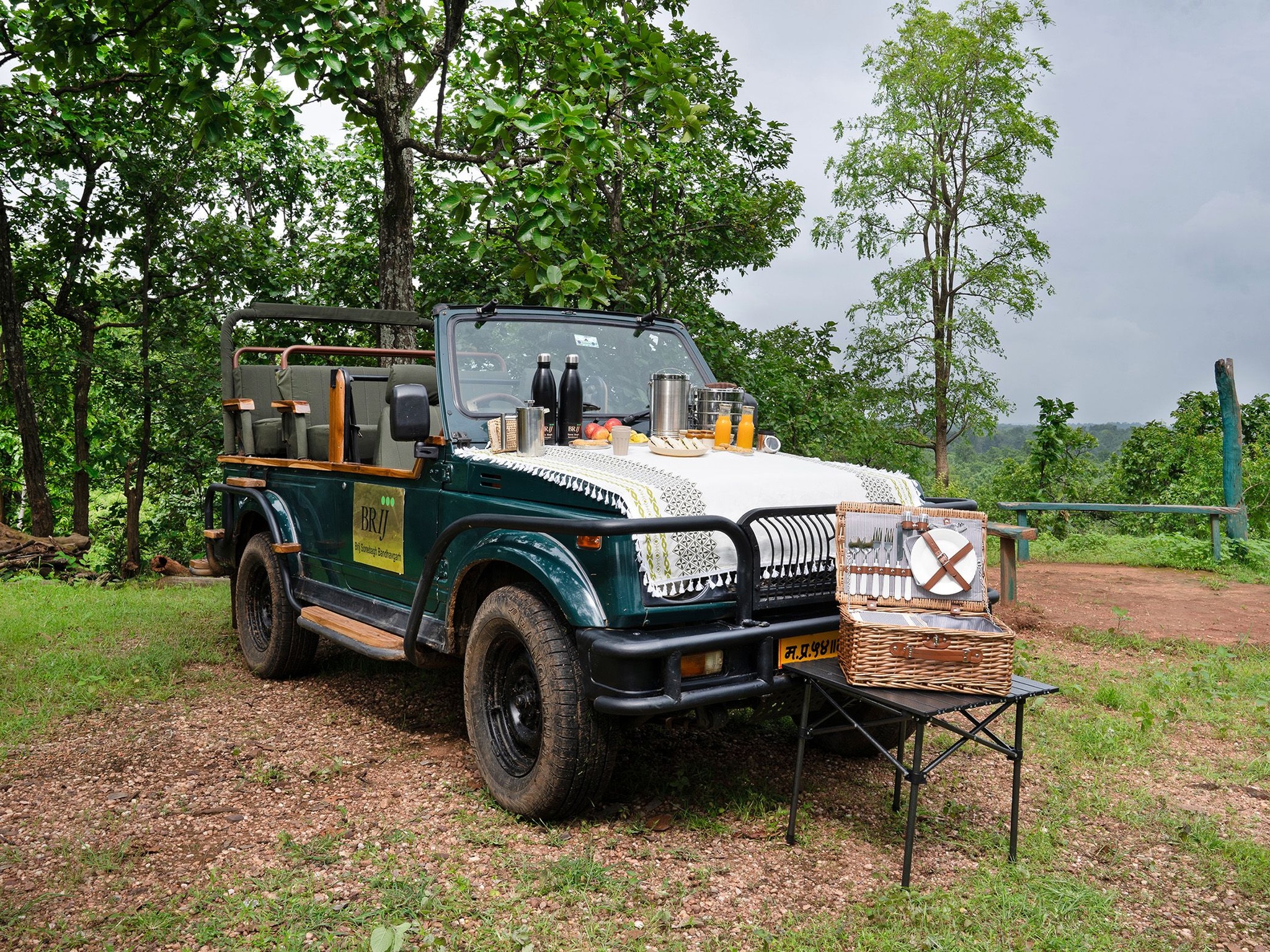
There’s even a sundowner picnic arranged for me one evening; I get a bird’s-eye view of the last safari jeeps cruising along the edges of the reserve’s buffer zone and goatherds accompanying their bleating herds across tiger territory as I sip my chai, binoculars in hand and the setting sun on my face, seriously hoping for some Jurassic Park-like action. (Turns out, bloody goat bits flung at windshields by pissy carnivores don’t happen quite as often IRL.)

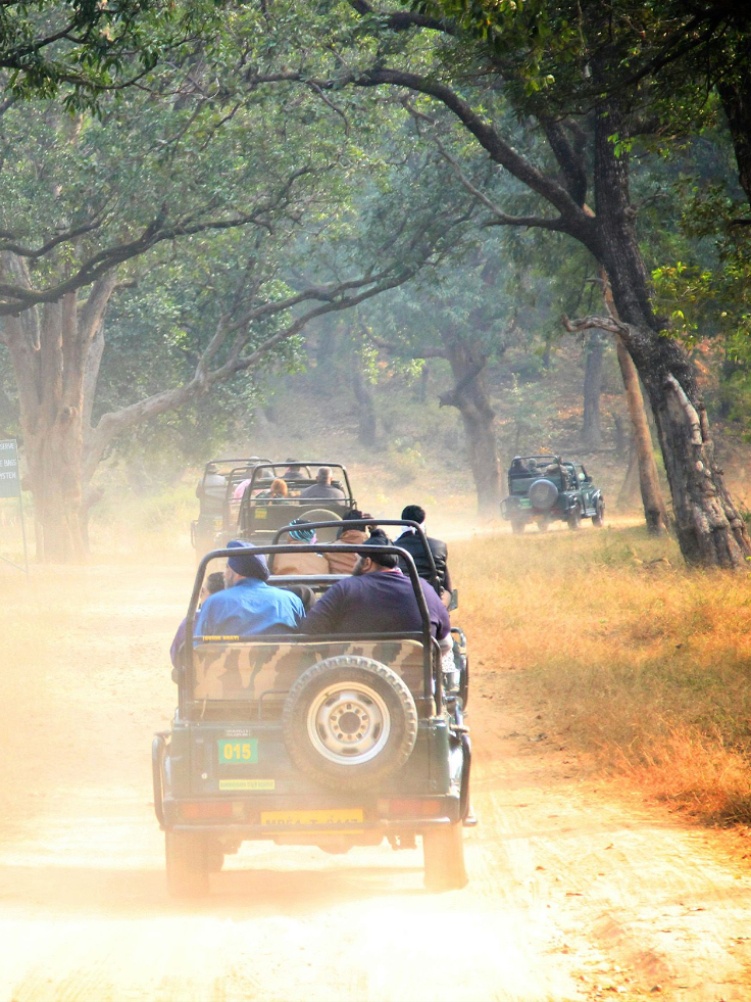
But few activities match the thrill of sitting in an open jeep at dawn and going headlong into the forest to spot the animal that the entire region’s economy revolves around. We (Suyash, the naturalist at Brij Sone Bagh, Satyen, the guide from the Forest Department, and I) set out early, in the blue-grey of dawn, ghostly pampas grass swaying next to the single-lane road that leads to the core area of the reserve. As a dozen GPS-equipped jeeps (their speed limit is monitored by the Forest Department) enter the reserve and branch off into the various routes they’ve been assigned, my head is on a swivel for the next five hours. I learn how to spot the difference between male and female deer, see nilgai as still as stone, and giant spider webs that glisten everywhere in the morning sunlight like Dr Strange’s portals. The one thing I don’t spot? Tigers. (Fellow safari-enthusiasts in another jeep have better luck and proceed to add salt to injury by letting me see the images they captured on their massive DSLR.)

Even then, bumping along the forest roads winding through sal trees and open grassland, sometimes sitting still, listening, when the langurs go into a tizzy, it seems like time well spent.

Later, back at the resort, I’m back on my swing, Hervé Le Tellier’s The Anomaly in tow and Blackie for company. Another culm sheath falls nearby. My ears perk up. Blackie’s too. Then it’s all quiet and good.

How to get there: Fly to Jabalpur, then 4 hours by road to Bandhavgarh

For reservations, email reservations@brijhotels.com or call +91 80690 57704

The Nod Newsletter

We're making your inbox interesting. Enter your email to get our best reads and exclusive insights from our editors delivered directly to you.