



Design14 Aug 20265 MIN

This Mumbai couple brought Durga and Art Deco under the same roof

One’s a morning person, the other is, decidedly, not. One leans East, the other looks West. Saim Ghani and Chirag Dengra’s home is a reflection of their distinctive sensibilities and common interests

Image

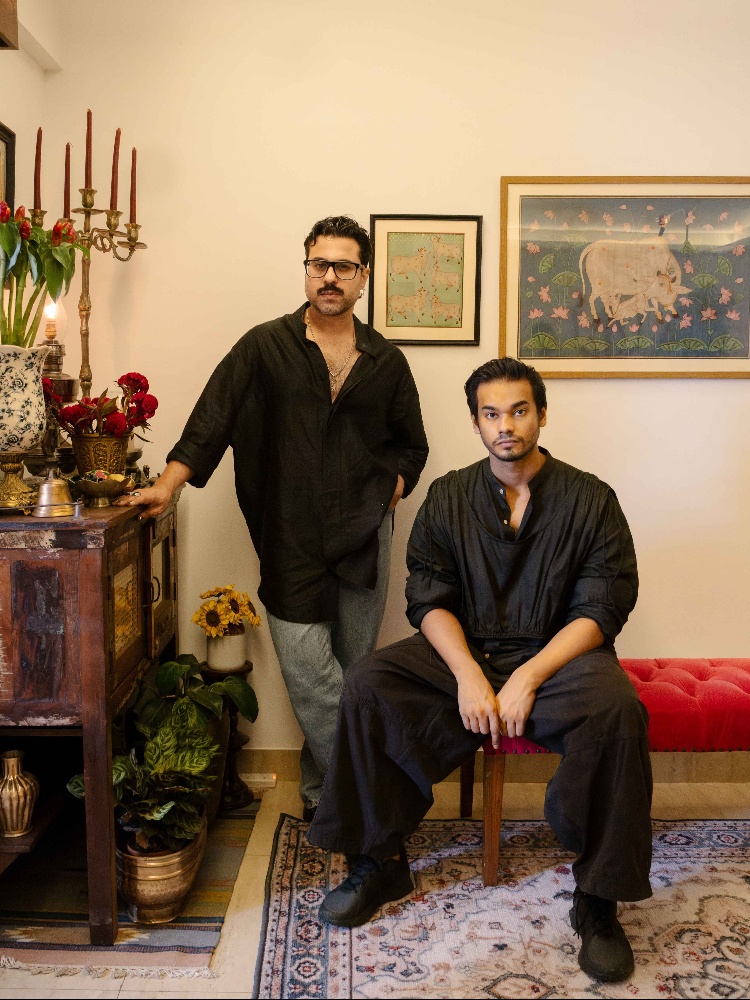
Saim Ghani and Chirag Dengra have created a home that harmoniously plays off their contrasting styles

Photographs by Aditya Sinha

“Take an Uber.”

“I don’t take Ubers.”

The first disagreement in Saim Ghani and Chirag Dengra’s relationship happened before they had even met. It was 10:30 pm when Dengra, in Kolkata for a wedding project, found himself with “too much time on my hands” and opened Grindr looking for “a date—or at least a good evening out”. Matching with Ghani, he suggested they meet for a drink that night. To Dengra, who had spent over a decade in Mumbai, it was a completely ordinary proposition. To Ghani, it was anything but. His driver had gone home, and besides, nobody in Kolkata ventured out that late.

Twenty-four hours later, after discovering they had many common friends, they were sharing a bottle of gin that turned into an all-night conversation. Somewhere between stories, they realised that despite never having crossed paths, their lives had been running parallel for years. They had often been at the same places, in the same room, too, without knowing of or interacting with each other. This was in 2022.

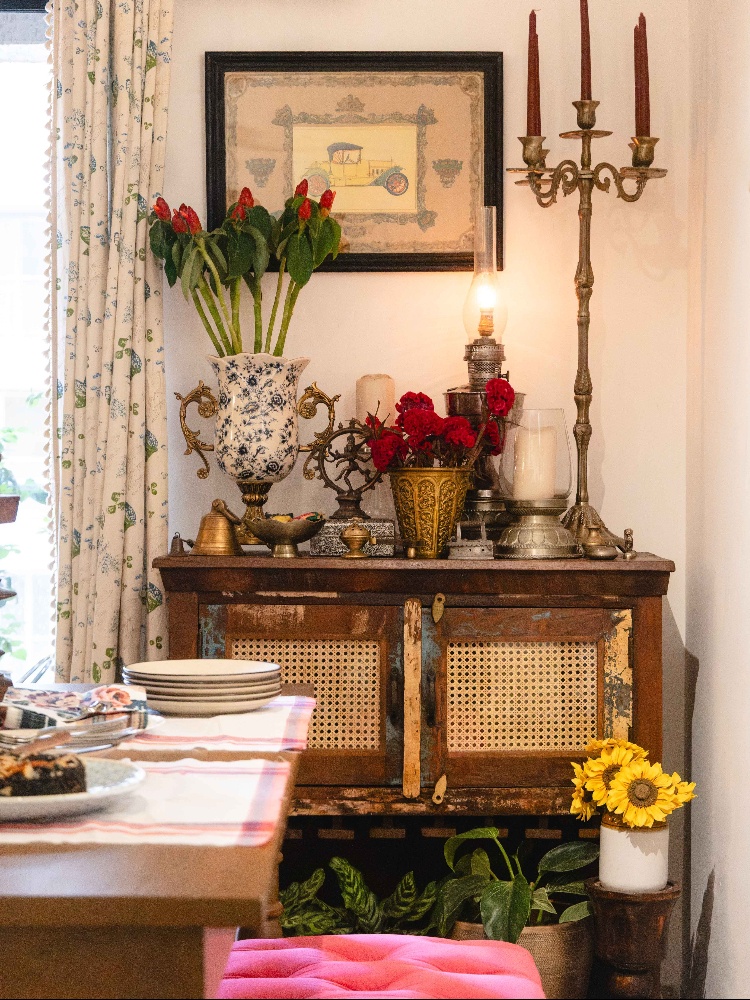
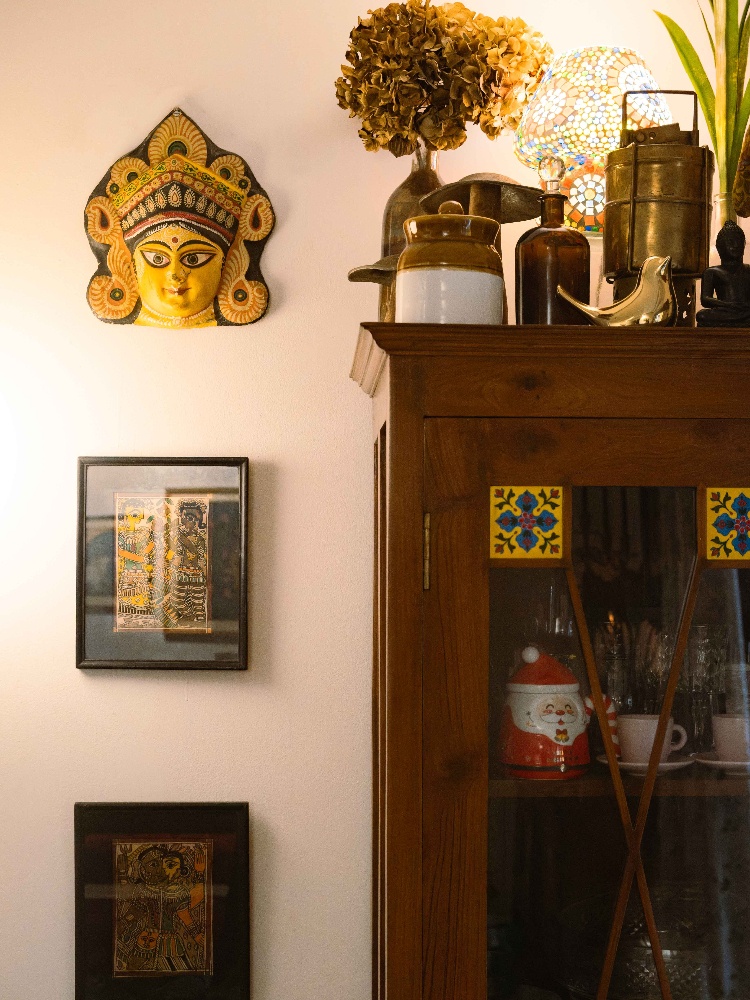
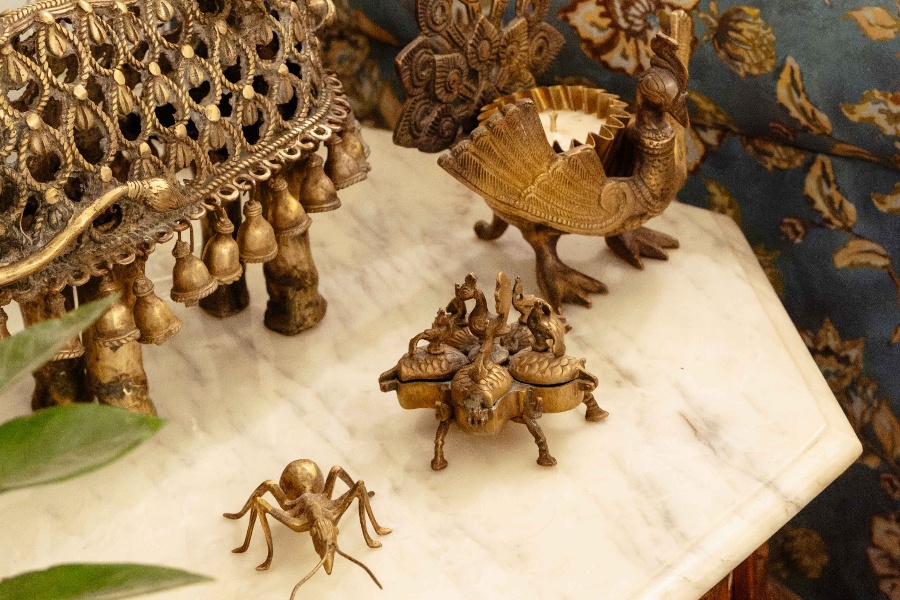
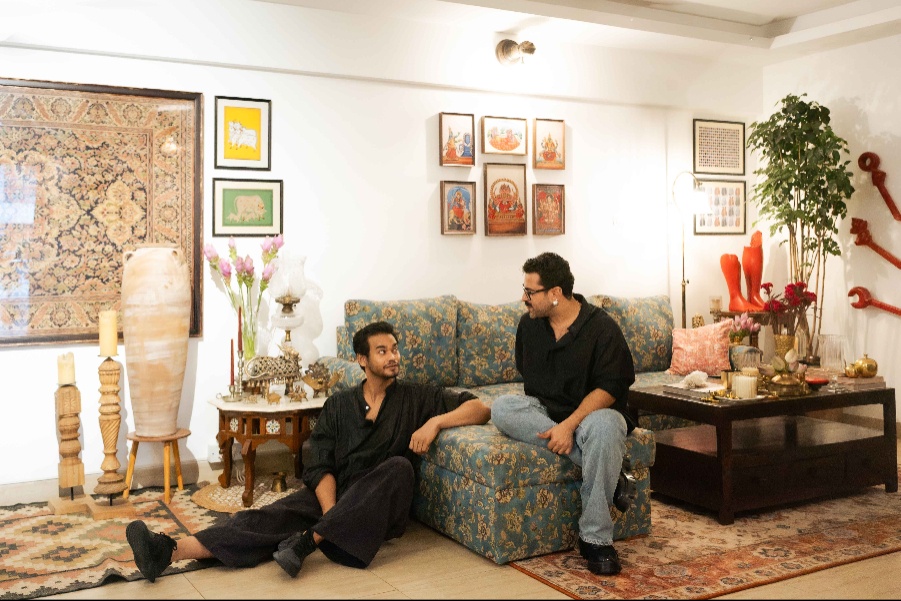
Cut to today, and the two have found a space to carved out distinct creative identities. At the couple’s Andheri apartment, where they have been living together for three years, you see this in the choice of decor which is deeply curated and individualistic—wooden finishes, lots of knick-knacks and one-of-a-kind wall art. The house has a lived-in quality to it; light filters through a balcony, illuminating the living room, but before all this their cockapoo, christened McQueen by the fashionable pet parents, comes bounding to the door with a warm welcome.

Dengra, now creative director at Interflora India, moved from Jabalpur to Mumbai with an MBA in marketing and little intention of pursuing a creative career, only to discover, almost by accident, a flair for floral design. Today he designs some of the most elaborate floral installations for high profile weddings and fashion-forward events.

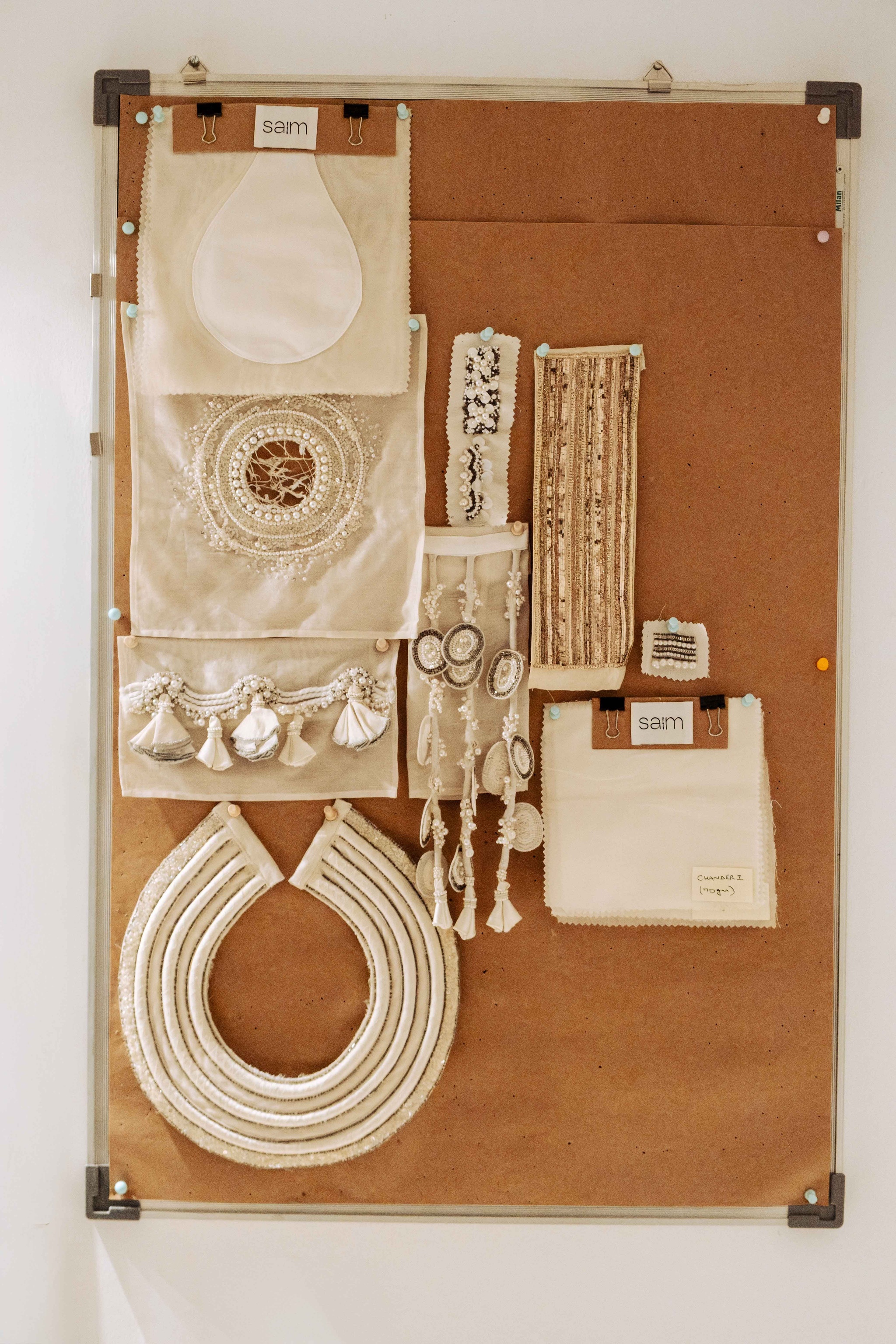
Ghani’s trajectory was more instinctive. He grew up in Kolkata, studied design at the National Institute of Fashion Technology and honed his craft for over eight years at Anamika Khanna before launching his eponymous clothing label in 2023.

A house of two minds

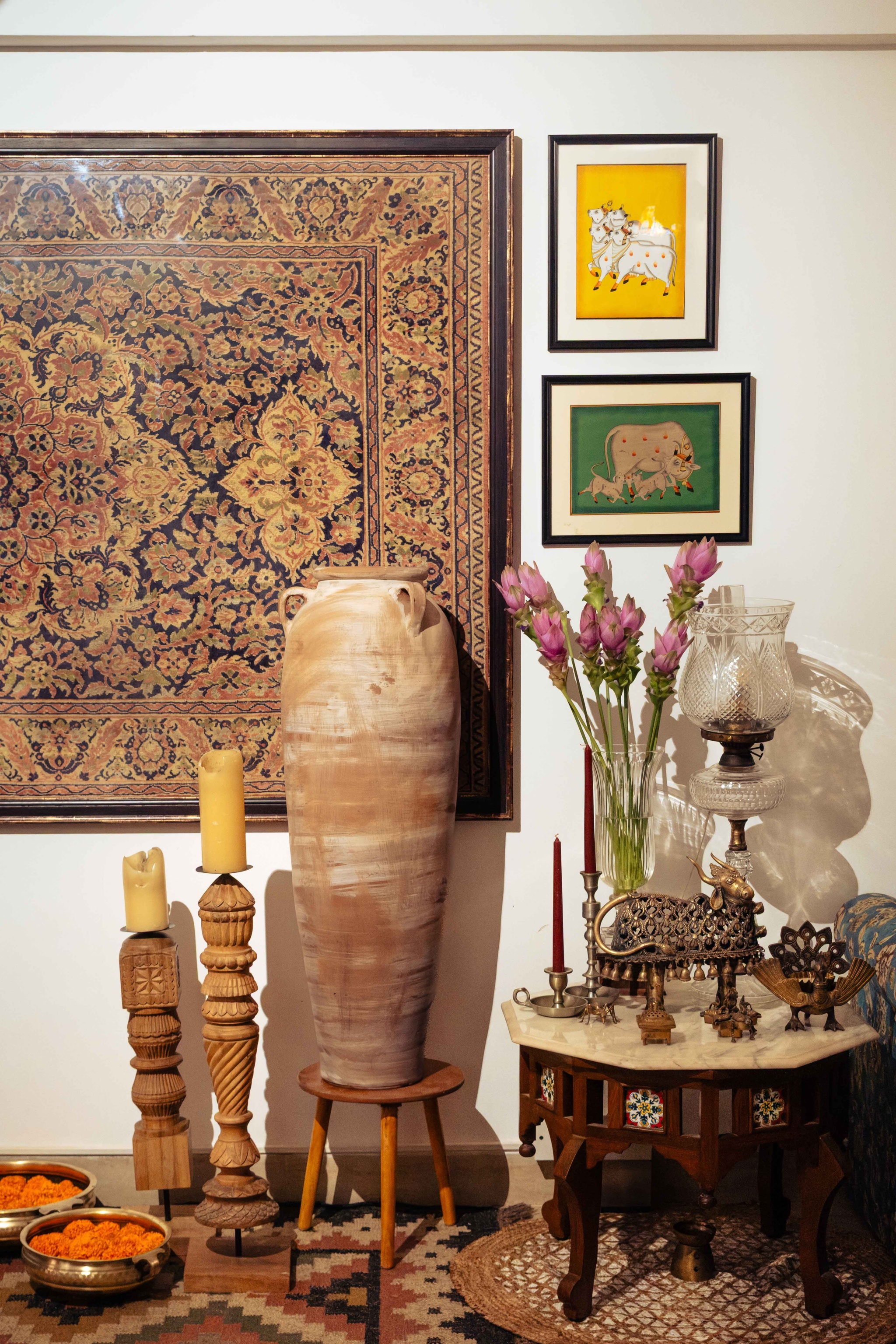
Their cosy shared space—a 3BHK in Mumbai’s Four Bungalows—is a reflection of their contrasting sensibilities; every room carries traces of both creatives, some obvious, others hard-won. “We fight a lot on it,” Dengra laughs. “There are parts that are just hidden. Some parts are just me. Some parts are not approved.”

When Ghani moved to Mumbai to live with his partner and see what life together might look like, there wasn’t much to negotiate. Dengra’s prior Bandra flat was modestly populated by a nondescript black couch, a two-seater dining table and some plants. His visual vocabulary, shaped by years of working with international floral designers, leaned towards European influences. In their current home, his love for Art Deco is reiterated in the chintzy floral couches and ceramic vases. “I could appreciate Indian art and Indian textiles,” he says, “but I wouldn’t aspire to have a Durga statue in my house,” he shares pointedly.

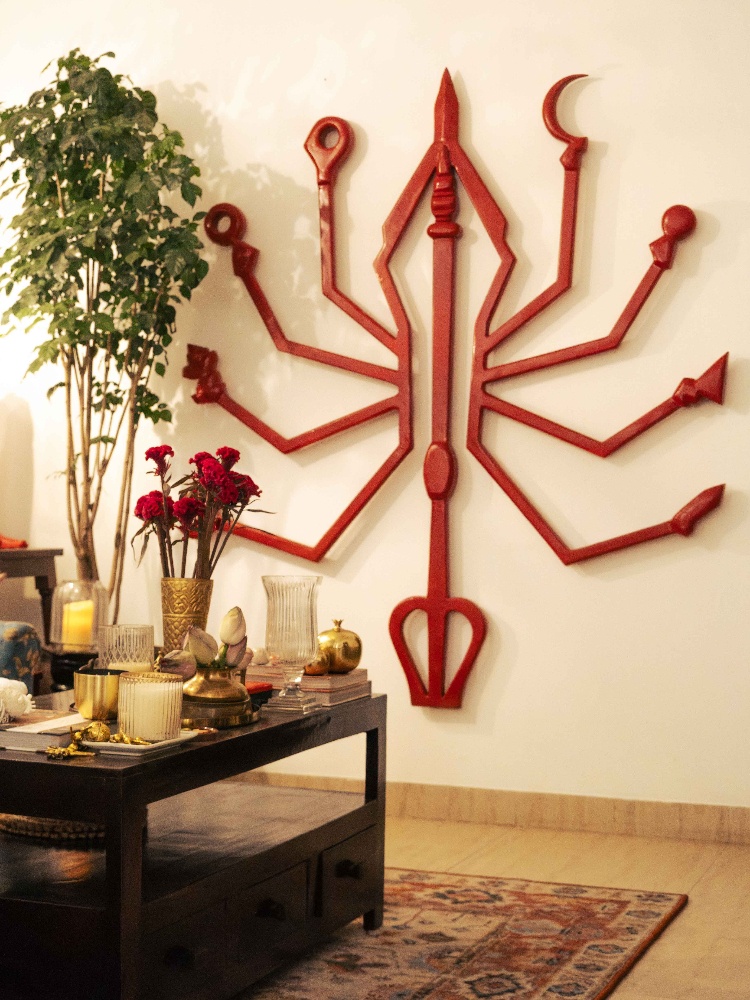
Ghani arrived with an entirely different frame of reference. Having grown up in a Bengali neighbourhood where Durga Puja was an annual event, his fascination lay in mythology, iconography, and the visual language of Indian culture. That curiosity would eventually become central to his label, whose early sketches included a shirt inspired by Durga’s many arms—a metaphor, he says, for modern life and the constant act of multitasking.

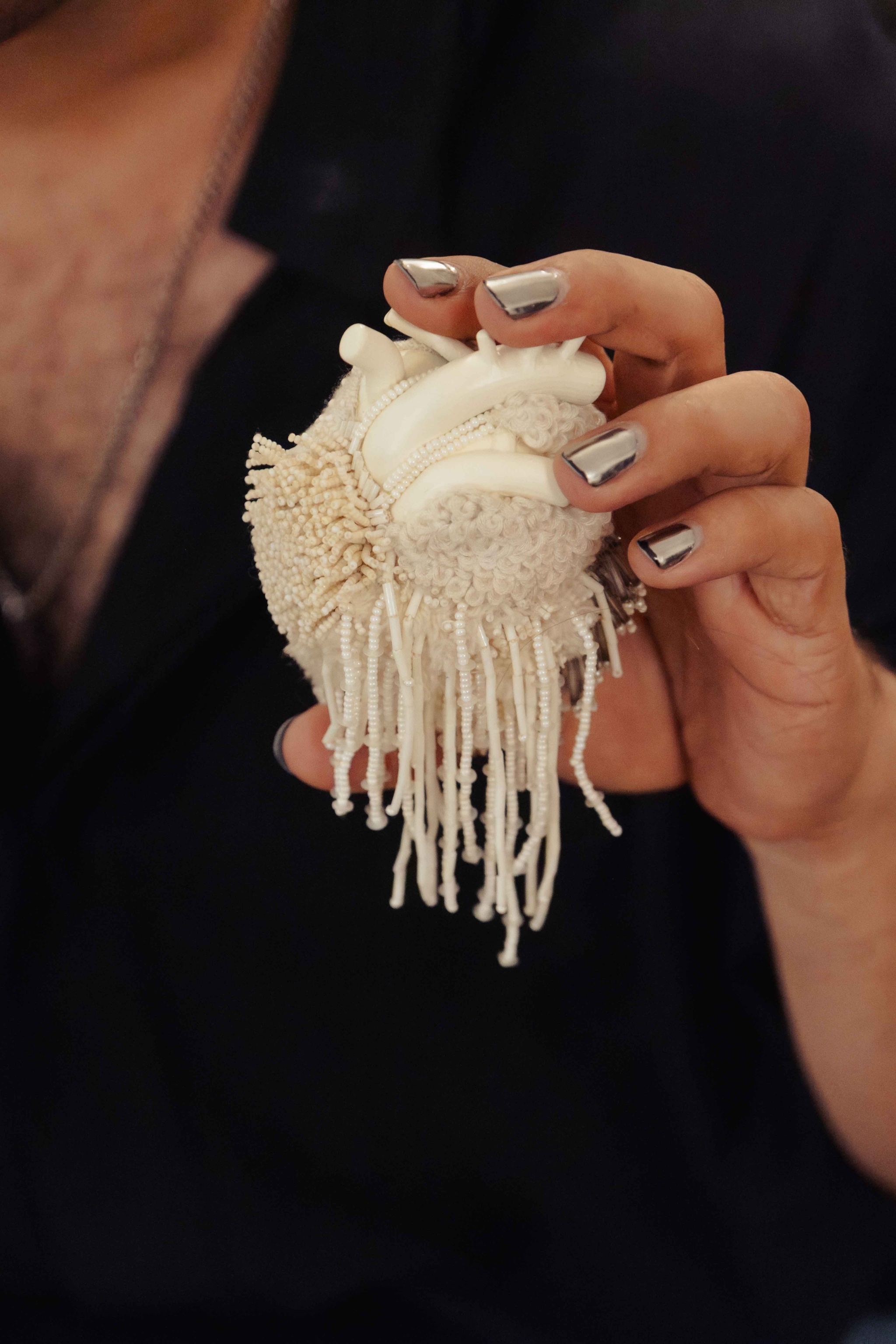
A crimson woven Kashmiri rug, a family heirloom passed down by Dengra’s great-grandmother, has not been draped on the floor but framed as a panel in their living room. The house is chock-full of curious objects, such as an embroidered beaded heart from Ghani’s eponymous label laid casually on the centre table. A chance discovery of a brass-face lamp—its grinning teeth peeking out from a dusty corner of an antique store while they searched for something entirely different—has since become the apartment’s focal point. Their first artwork purchased together wasn’t an expensive collectible but an illustration of a vintage car discovered in Savio Jon’s atelier in Goa. “Nothing has been bought with a purpose,” Dengra says. “Some are stolen from my mother’s house. Some are gifts. Some are picked up from our travels.”
Gendas and ganjis

For Ghani, inspiration rarely arrives through research. He’s never used Pinterest, wary that looking at too much before creating only blurs instinct. Instead, he collects moments from everyday life, letting them sit quietly until they return as garments. One of those memories begins with his mother. “My mom was Christian, so she never wore Indian clothes until she married my dad. She stopped wearing skirts and started wearing salwar kameezes. She always pinned her dupatta into these scallops. Growing up, I hated it because she’d pin it so stiffly, never letting it fall freely.” Years later, without realising it, that gesture resurfaced in his work: he began building those scalloped folds directly into T-shirts and blouses, permanently attaching the drapes so they held their shape. A domestic ritual became one of the signatures of his label.

It’s why Ghani resists the suggestion that he is “contemporising” Indian culture. “I don’t know if I like that word anymore,” he admits. Rather than looking backwards for inspiration, he sees design possibilities in the things most people stop noticing: the way domestic helps wear their saris higher to keep them clean, the silhouette of a ganji worn on the street, the ornamentation of temple sculptures. His collections don’t recreate these references literally; they distil them into shapes and proportions that feel instinctively modern.

Dengra too developed his creative instinct by looking deeply. He says he didn’t set out to become creative: “When I began working at Interflora in 2018, a florist wasn’t really a thing in India,” he says. “I was basically a glorified phoolwala.” What followed was an immersion into the global flower industry, from Dutch auctions, where millions of stems are traded each morning in a system that functions almost like a stock exchange for flowers, to an endless catalogue of varieties he’d never encountered before. But collecting references was only half the job. He realised that good floral design wasn’t about imposing a signature style. “Every family has a different aesthetic,” he says. “You take everything you’ve learnt from around the world and filter it down until it feels like theirs.”

For their home, Dengra leans towards antique red hydrangeas, white tulips and green berries, while Ghani is drawn to quintessentially Indian flowers like marigolds and white lotuses.

The space between

Their years of living together have turned them into each other’s most trusted creative collaborators, their contrasting approaches surfacing in the smallest daily habits. Ghani thrives in what he calls “creative chaos”, sketching on unruled paper amid scattered coffee mugs and fabric swatches, working out of their home. Dengra, on the other hand, needs a tidy workspace to function.

Over time, they’ve quietly borrowed from each other’s ways of seeing, One has become more methodical, while the other has learned to embrace uncertainty. “Being in a relationship with a fashion designer has fundamentally changed how I look at craft. I don’t think I would have appreciated my mother’s saris as much then as I do today,” shares Dengra. “Chirag has become a sounding board for all my design experimentations; he comes up with ideas I wouldn’t think of. A recent collection featured a pared-back skirt with oversized bows—an idea I resisted because it felt almost too simple. But Chirag pushed for it and it became one of the first pieces to sell out,” shares Ghani.

Away from deadlines, collections, and installations, life at home settles into a slower rhythm. Dengra is usually in the kitchen, happiest making his mother’s sticky toffee pudding or a slow-cooked mutton chambar. Ghani, meanwhile, gravitates towards the couch, where reality television and Grey’s Anatomy remain a dependable comfort watch. For all their creative overlap, mornings remain the one thing they refuse to compromise on. Ghani leaps out of bed ready to seize the day. Dengra, decidedly not a morning person, has instituted a house rule: no talking for the first 45 minutes. “Saim wakes up saying, ‘Babe, let’s go,’” he laughs. “I’m like, ‘Calm the f**k down.’” It’s perhaps the only part of their shared life where compromise still has to wait until after coffee.

The Nod Newsletter

We're making your inbox interesting. Enter your email to get our best reads and exclusive insights from our editors delivered directly to you.