Food18 Nov 20263 MIN

We’ve reached peak Bandra: meet Shuusk, contemporary matcha bar

If you think you’re not a matcha person, you need to try this newly opened 10-seater

Image

Don’t let my 400050 zip code, tote bag, and Moleskine deceive you—I am not a matcha person. At least I wasn’t, until last week.

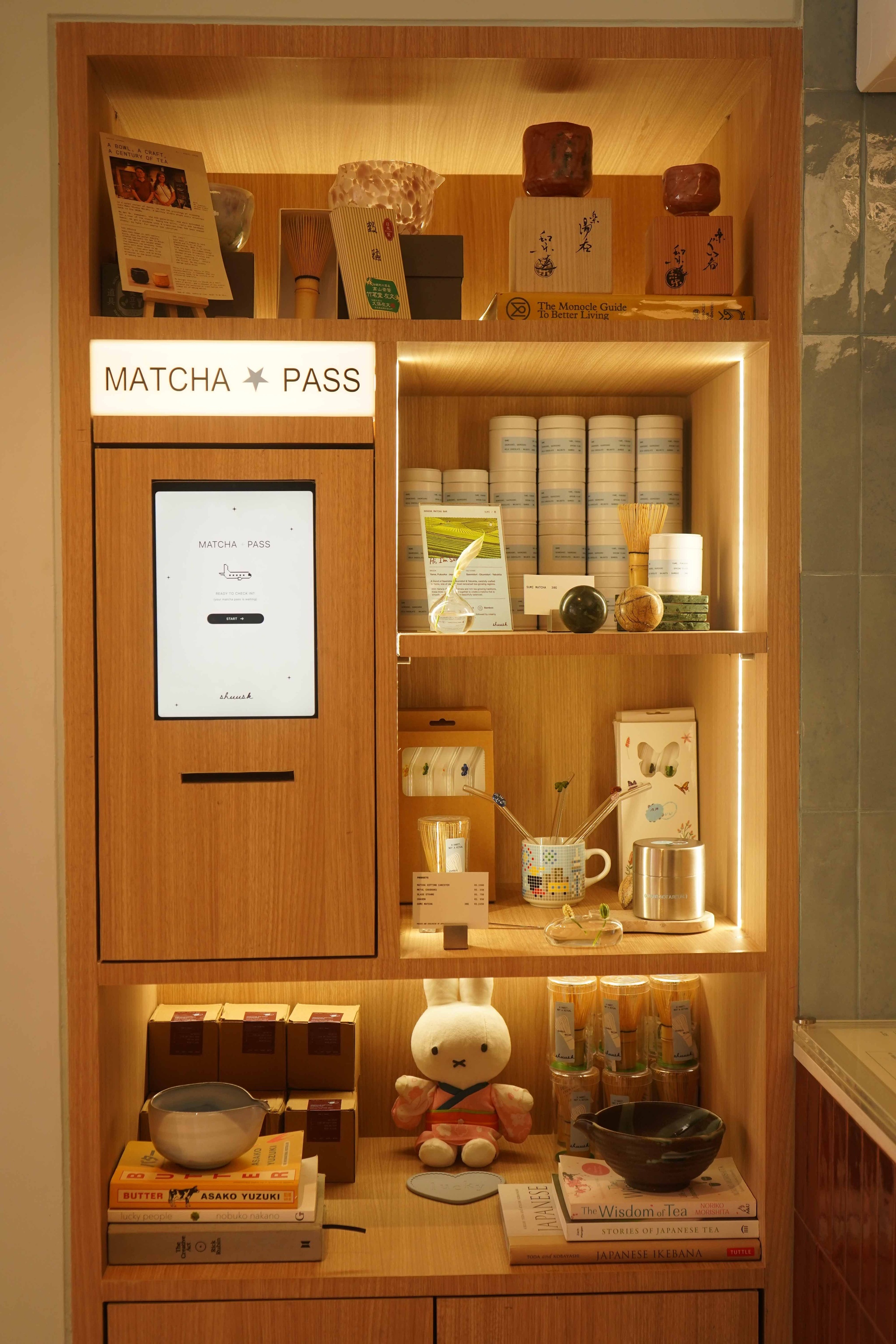
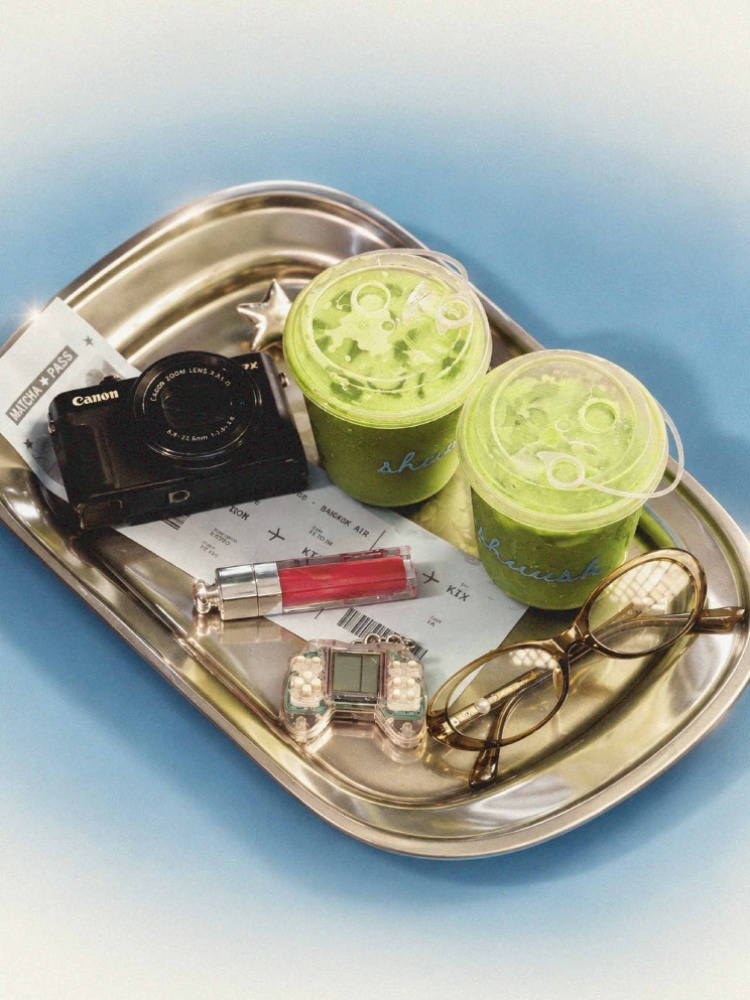
A free afternoon in common with my friends (unheard of) found me at a hidden gem in Bandra—a string of words that sound like a false promise now, luring you in only to stick you with a 45-minute line. But nestled in—you guessed it—Ranwar village, Shuusk, with its ethically sourced, clean ingredients, a staff who knows what they are selling, bright, airy interiors, 10 or 12 seats, and even a little photobooth, is yet to be tainted by a viral Reel.

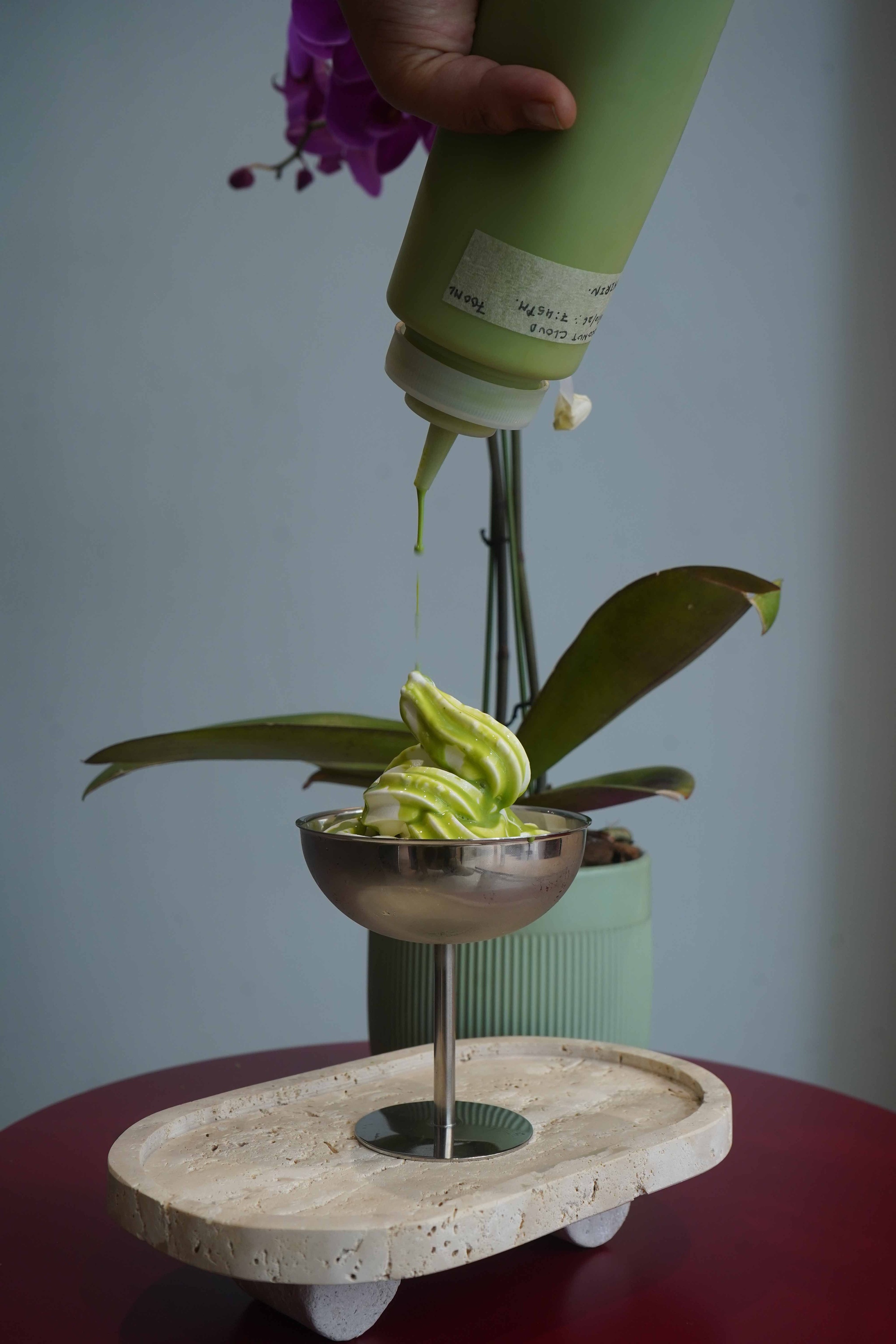
It is the rare Bandra cafe that feels like a secret worth keeping. There is just one thing. Their menu is all matcha (and a few nibbles, including coconut mochi in collaboration with chef Nikki, matcha affogato, and Hokkaido soft serve, with more to come).

The city has been more than flirting with matcha for the past few years, but this Mumbai cafe doesn’t simply dabble in matcha but focuses on it exclusively. It might seem like a gamble at first, but Harshika Lakhani Sarda, the 27-year-old founder of Shuusk, says, “Mumbai’s dining scene has evolved enough for matcha to be a main character.” In the past, Lakhani Sarda has dabbled in the luxury fashion and real estate spaces. Unless she’s on her two-minute lunch break, she’s the one you’re likely to find behind the counter. She takes me through their menu, which is bifurcated into matcha with milk and matcha without.

A social matcha drinker at best, I opt for the latter, insisting that the mixing of matcha with milk makes it taste too grassy. Harshika quickly educates me otherwise. “There is this misconception that the best matcha comes from Kyoto, but there is no best,” she tells me. “Kyoto matcha has a more vegetal flavour,” she says of the factor that might have brought matcha the bad PR.

With her husband and co-founder, Yash Sarda, she went from Kyoto to Kyushu trying over 150 types of matcha before landing on their blend. They source their matcha from Yame, Kyushu, where the colder climate yields a sweeter taste that requires little supplementing. This is their Sumi blend—translating to ‘ink’ in Japanese—a cultivar with a rich inky look once blended with milk. They also use a blend from Superbrew for their non-milk-based drinks.

They ask what percentage of sweetness you would like, clarifying that their 100 per cent is more like another cafe’s 50 per cent. “A lot of the matcha in the current cafe scene can feel more like a dessert or a milkshake,” says Lakhani Sarda. “We went to a family farm in Kyushu, worked on the farm, and lived with the family, who were kind enough to let us make our own blend once we understood the process.” That respect for the matcha translates into the details and the service.

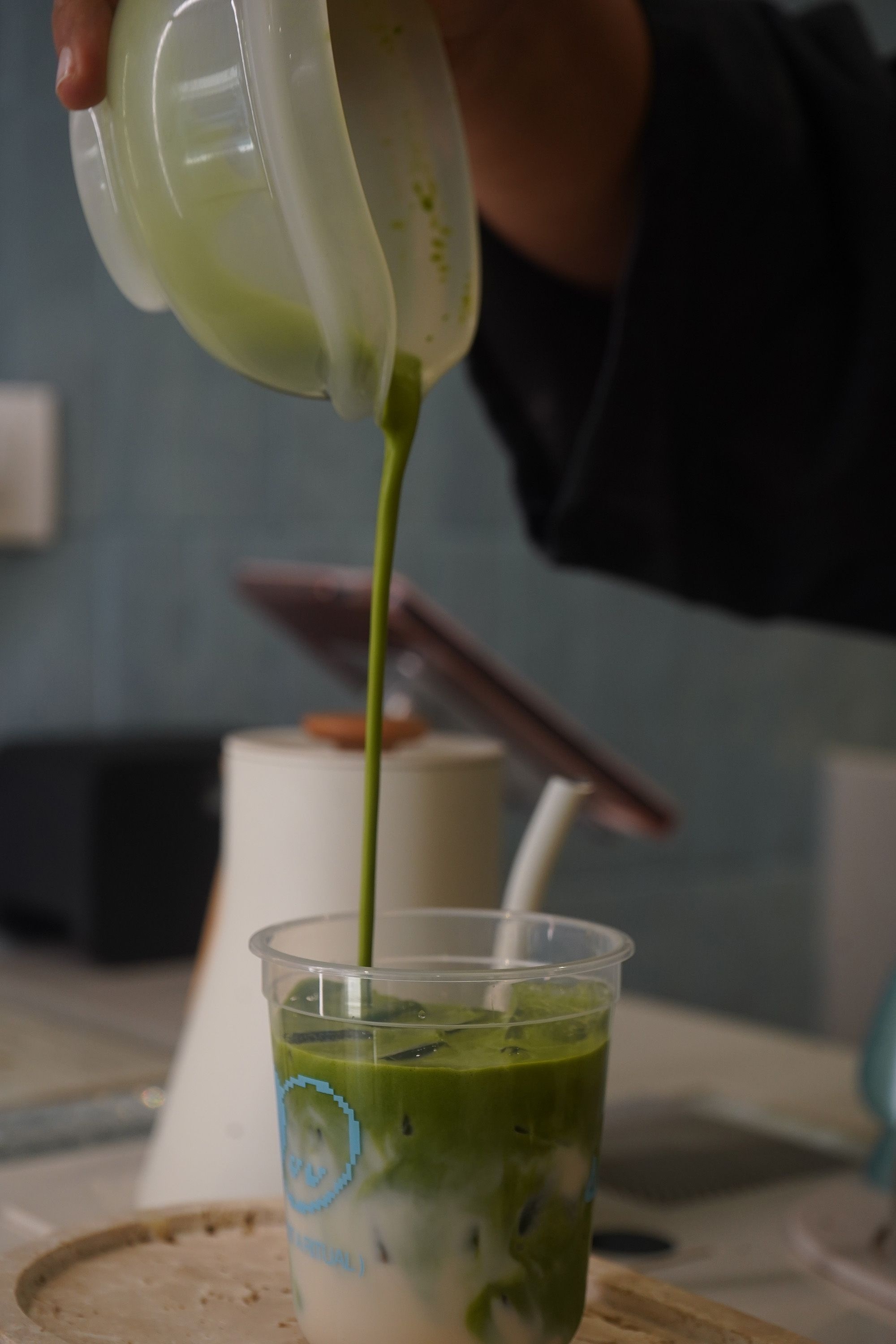
As I await my maple sea salt matcha latte (with milk), a boyfriend, here at the behest of his matcha-enthused girlfriend, considers getting something too. They recommend the coconut cloud matcha, aka the dad and boyfriend standard order. Elsewhere, a returning customer is asked if she wants her usual or another drink they think she might like—their Ichigo Rosemary latte, whose strawberry preserve comes from a women-led farm in Himachal—but not before asking if she finally found her wallet. An endearing quality for a cafe that opened its doors just about a month ago. This level of social battery might seem intimidating at first, but if you look up from your feed of Reels about how we need third spaces, you might find yourself in one. 

Of course, the cafe lifestyle isn’t cheap. With their cheapest drink at ₹420, not accounting for the alt milk its clientele is likely to opt for, it can be a little steep. But that’s the price of an establishment that doesn’t cut corners. (If you need to girl math it, though, they have a loyalty programme where every ninth matcha is on the house.)

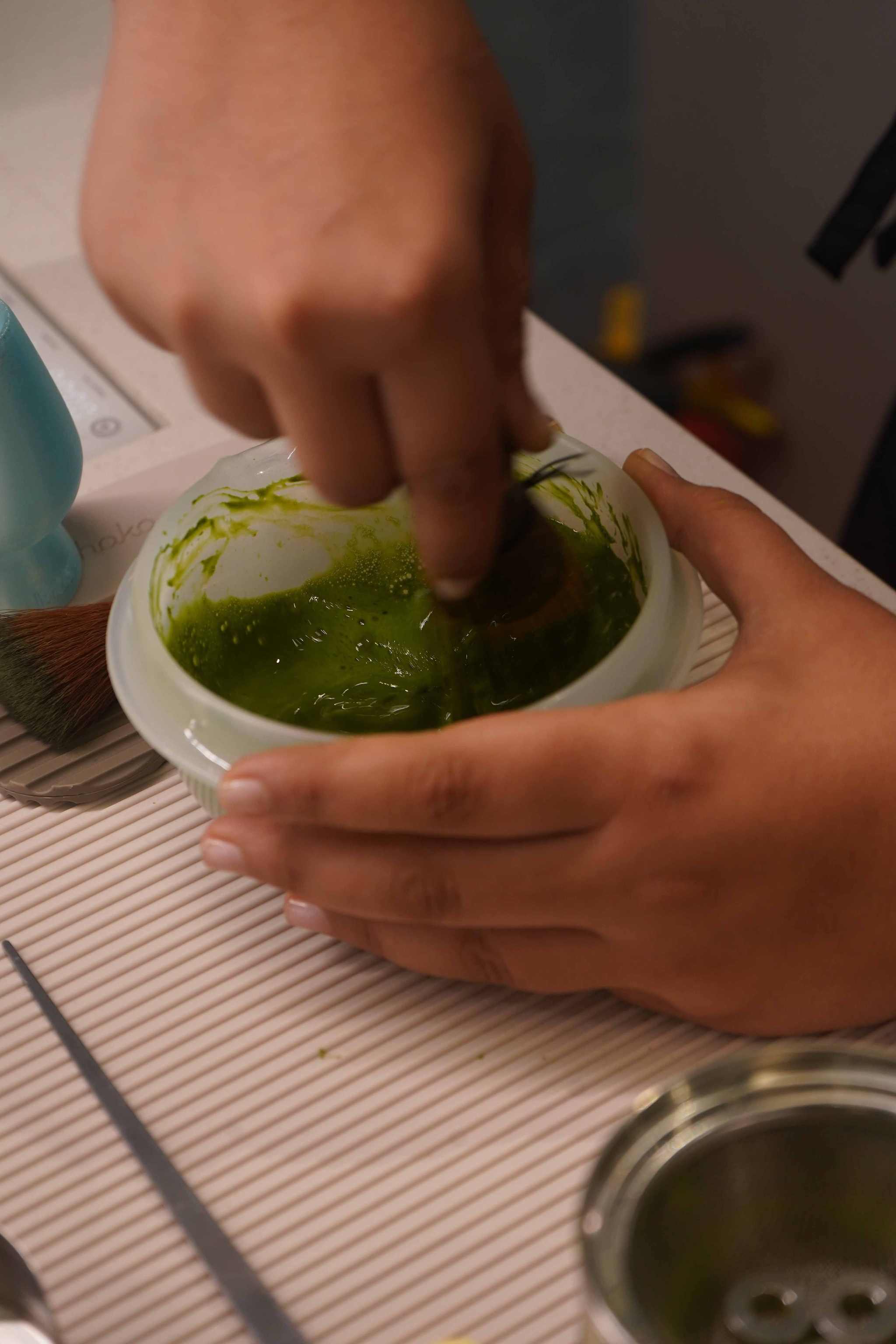
Quality is the first of three non-negotiables at Shuusk. The second is clean ingredients, and the third is consistency—they want their matcha to be just as good on a busy Saturday as it is on a quiet Tuesday. To ensure this, each matcha is whisked to order. Even when delivered at home, the drink arrives in a temperature-controlled bag with the matcha in a separate compartment, so it doesn’t oxidise, and ice packed separately so it doesn’t water down the drink.

Upon receiving my matcha, I am advised to shake it thoroughly and with abandon for its full effect. “Why Shuusk?” I ask of the cafe’s name. “We came up with the name in one of our tea ceremonies while tasting in Japan,” Lakhani Sarda tells me. “If you don’t have the right words to thank the tea master, you finish your tea in three sips, making a small slurp on the third one. That’s your way of showing you’re grateful for the tea. To me, that sound was ‘shuusk’.”

Typically, I can nurse even a cortado for hours at a time. A few quick minutes of shuusking later, my drink was gone. Four loyalty stamps later, I must admit Shuusk has rendered me a convert. Four more and my drink will be on the house!

Address: Ground floor, Baitul Saraf Building, Plot No 105, Hill Road, beside Union Bank, Ranwar, Bandra West, Mumbai - 400050

Phone: +9199200 51706

Timings: 10:30 am to 7:30 pm Tuesdays to Fridays; 11:30 am to 8:30 pm Saturdays and Sundays

Price for two: ₹800-1200

The Nod Newsletter

We're making your inbox interesting. Enter your email to get our best reads and exclusive insights from our editors delivered directly to you.