Until about a decade ago, whoever knew kawaii-themed cafes, omakase menus, izakaya bars would become ancillaries to India’s dining scene. Now, there are one too many, and Japanese cuisine, once reserved for fine-dining rooms like Wasabi by Morimoto in Mumbai and Megu in Delhi, has become more accessible, adventurous, and universally loved. It’s clear we love the cuisine and its sweet, sour, umami flavours.
So much so that restaurants are experimenting with these flavours in unusual ways: there’s wasabi in our ice cream and a crispy nori sheet in our cocktail. And somehow, it all works.
But here’s the thing—the very ingredients behind this boom are still mostly imported. Sikdang, omakase, izakaya and ramen bars across India rely on nori and wakame from Japan and gim from South Korea for that umami punch.
This, despite India’s own 12,000-km coastline hosts more than 800 species of seaweed. While potential seaweed farming is currently being explored at an industrial level, a handful of chefs, young conservationists and seafood entrepreneurs are trying to bring Indian seaweed varieties to our plate.
ADVERTISEMENT
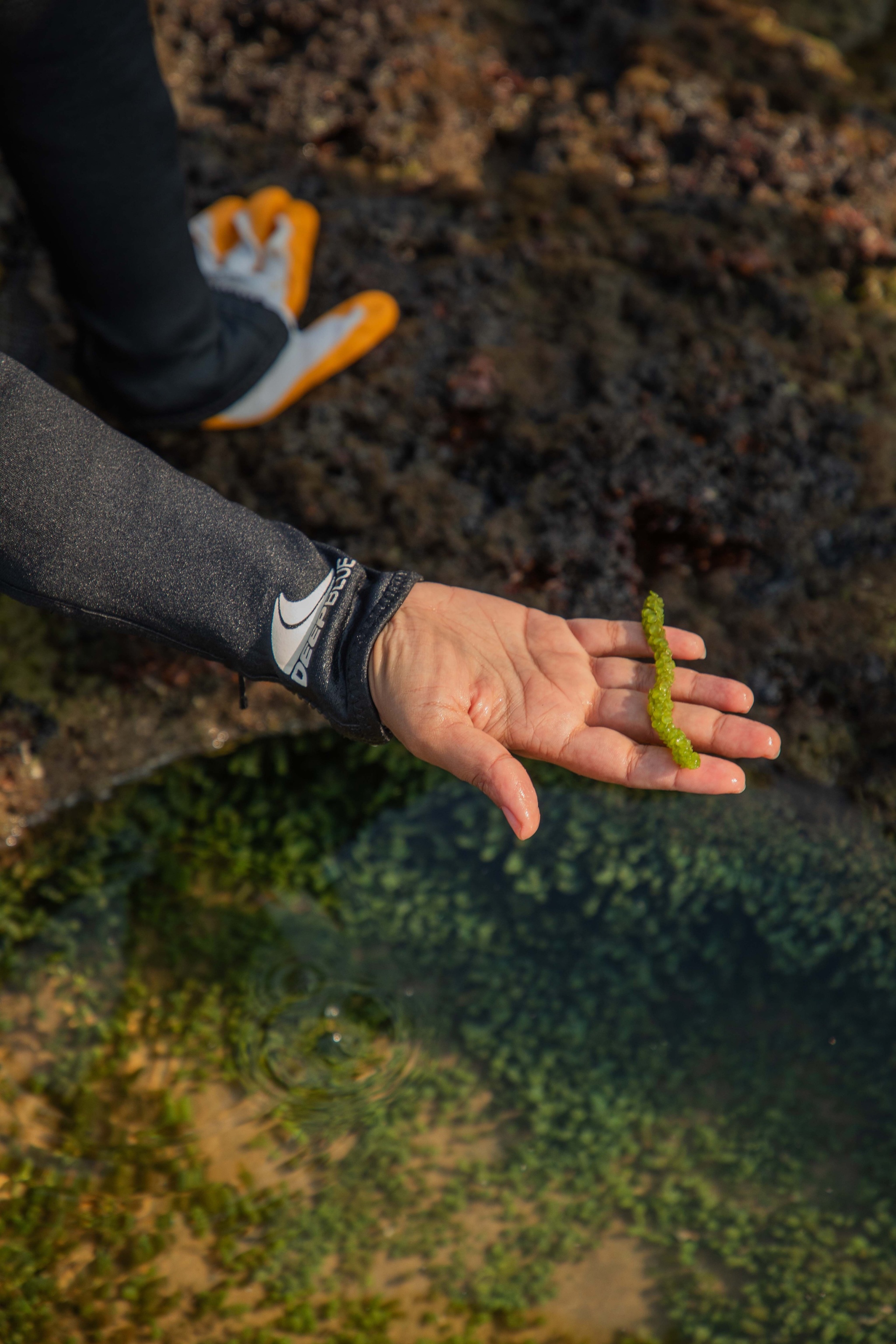
Caulerpa or sea grapes is commonly used as garnish
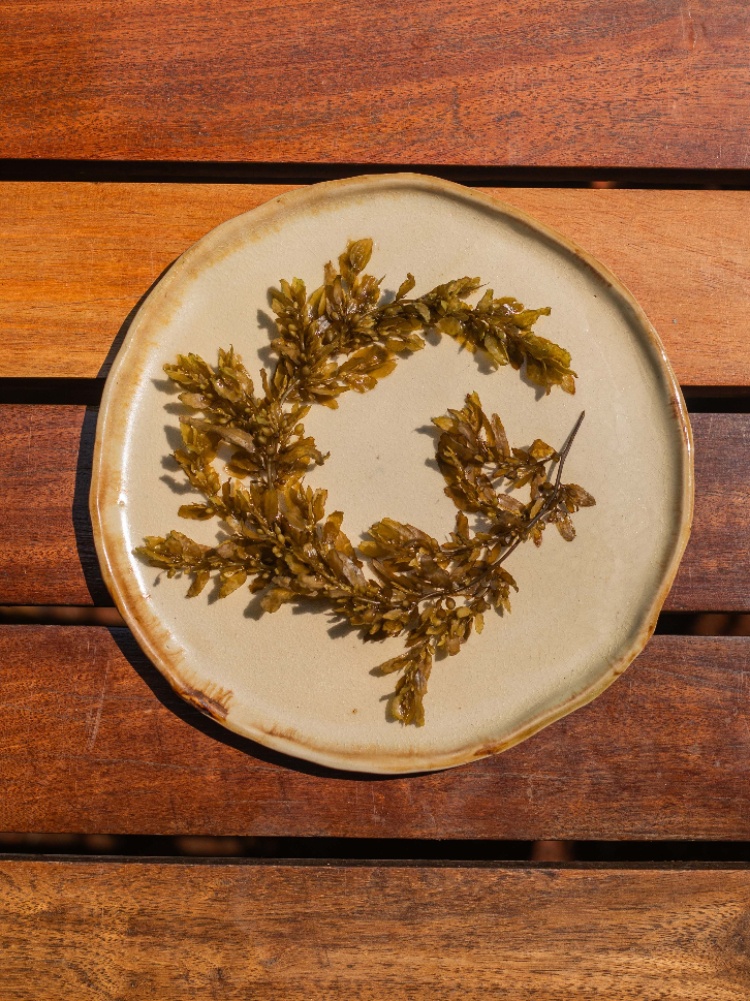
Gabriella D’Cruz lays out her finds from a seaweed foraging session in Sindhudurg
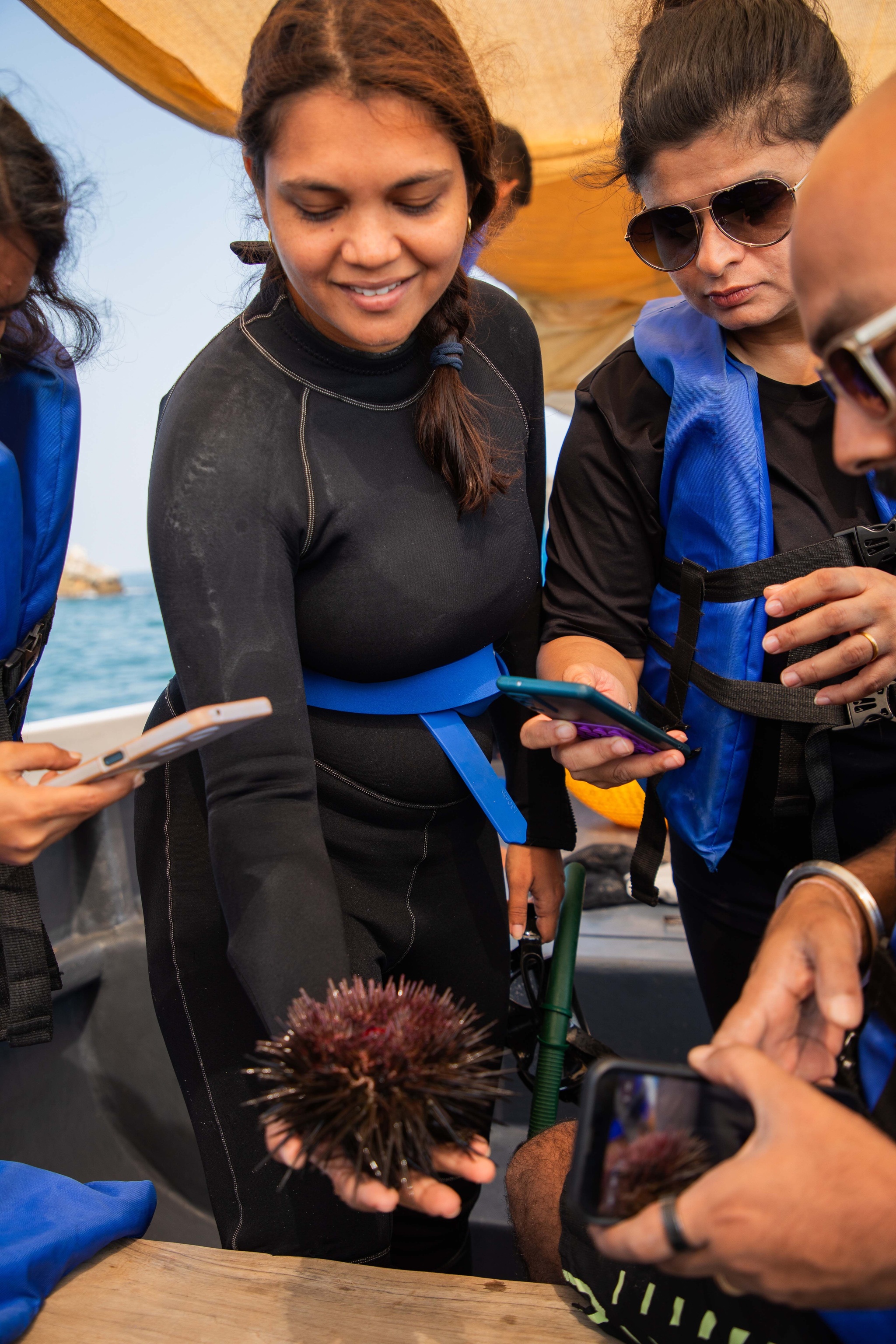
One such effort is unfolding along the shores of Sindhudurg’s Bhogwe Beach, where marine conservationist Gabriella D’Cruz forages for native Indian seaweed and sea kelp. For a curious group staying at the beautifully designed Coco Shambhala, she lays out her finds—an array of greens in varied shapes, sizes, and textures. D’Cruz encourages everyone to taste them as she explains the nuances of each: The greenish-brown sargassum resembles a fern but has air bladders at the base of each stem. It has an earthy and savoury taste with bitter and umami, best expressed when cooked. Spatoglossum, with broad brown leaves, tastes like raw mango; dictyota will remind you of pine leaves if they were flattened, but they are distinctly bitter to taste; ulva (or sea lettuce or aonori) grows in tight clusters and, as the name suggests, looks like lettuce from a distance. It is also the most palatable with a neutral profile. Then there is caulerpa or sea grapes that taste like bursts of brine (and is most likely to appear in your next cocktail). Along with padina, gracilaria, and acanthophora, these are the most commonly found seaweed species in the waters of the Arabian Sea.
ADVERTISEMENT
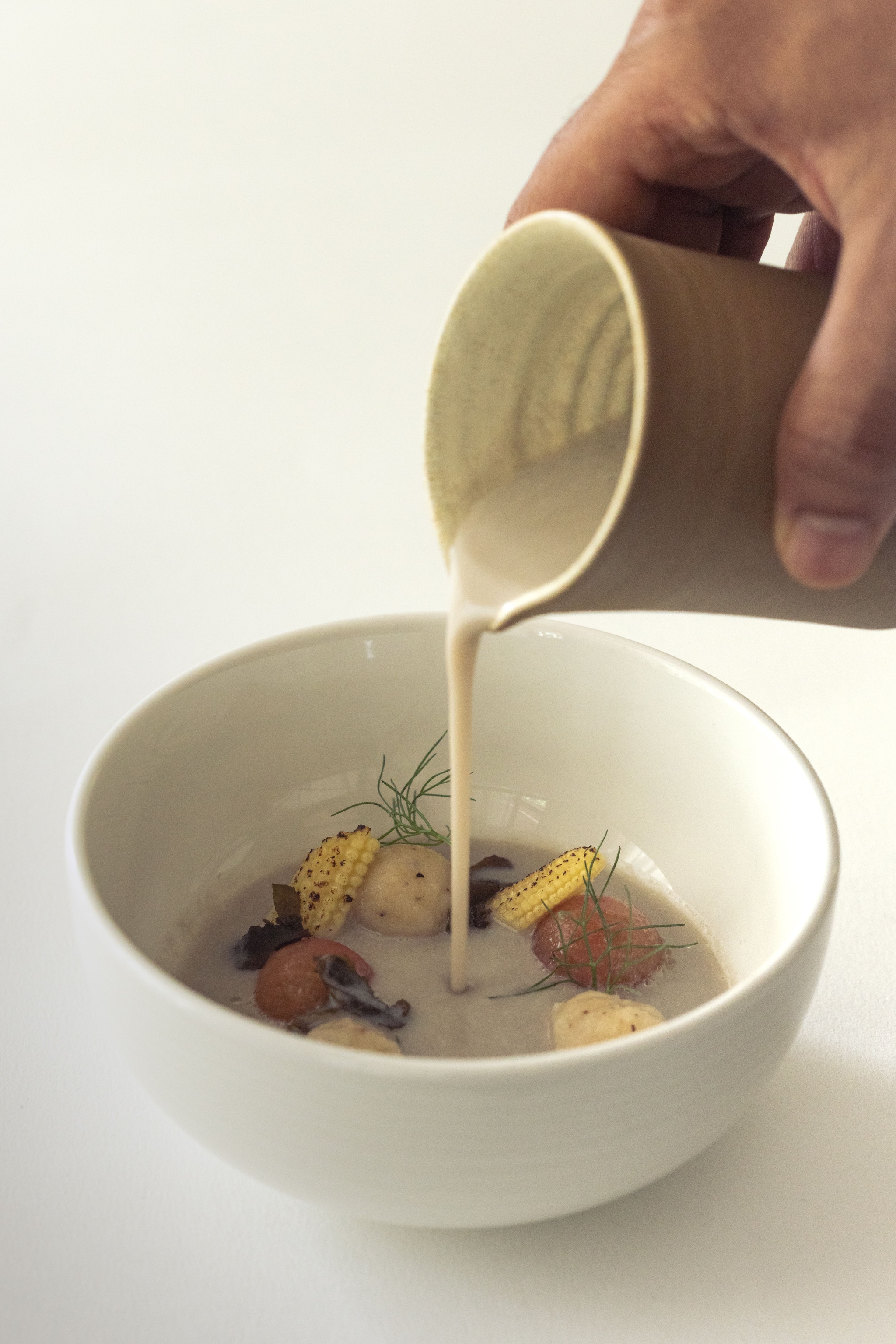
Pune-based Aragma uses sargassum in a umami-rich pandhra rassa-style broth served with chicken meatballs and red lentils
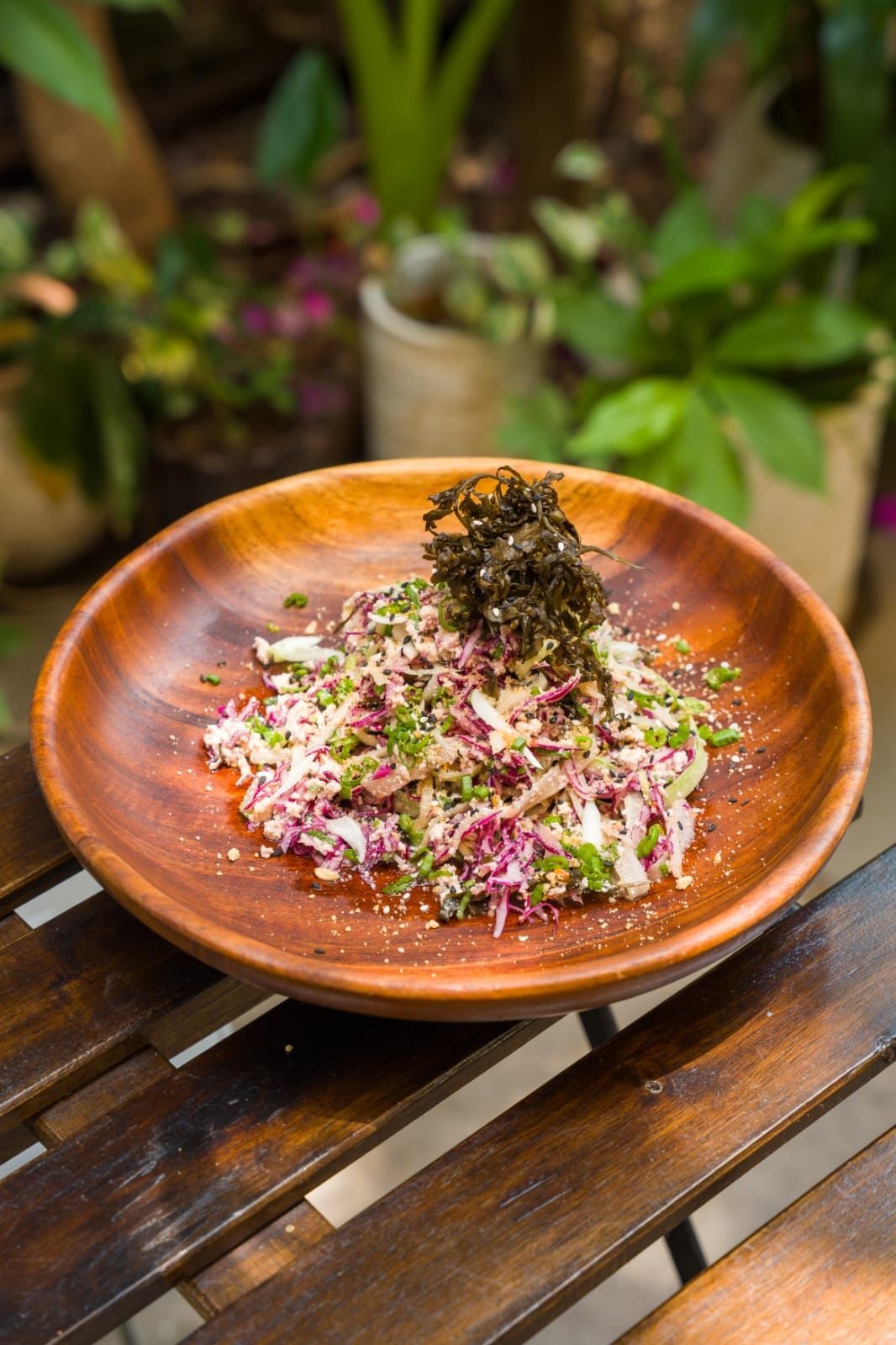
The tofu-seaweed salad at Mo's Cafe in Goa
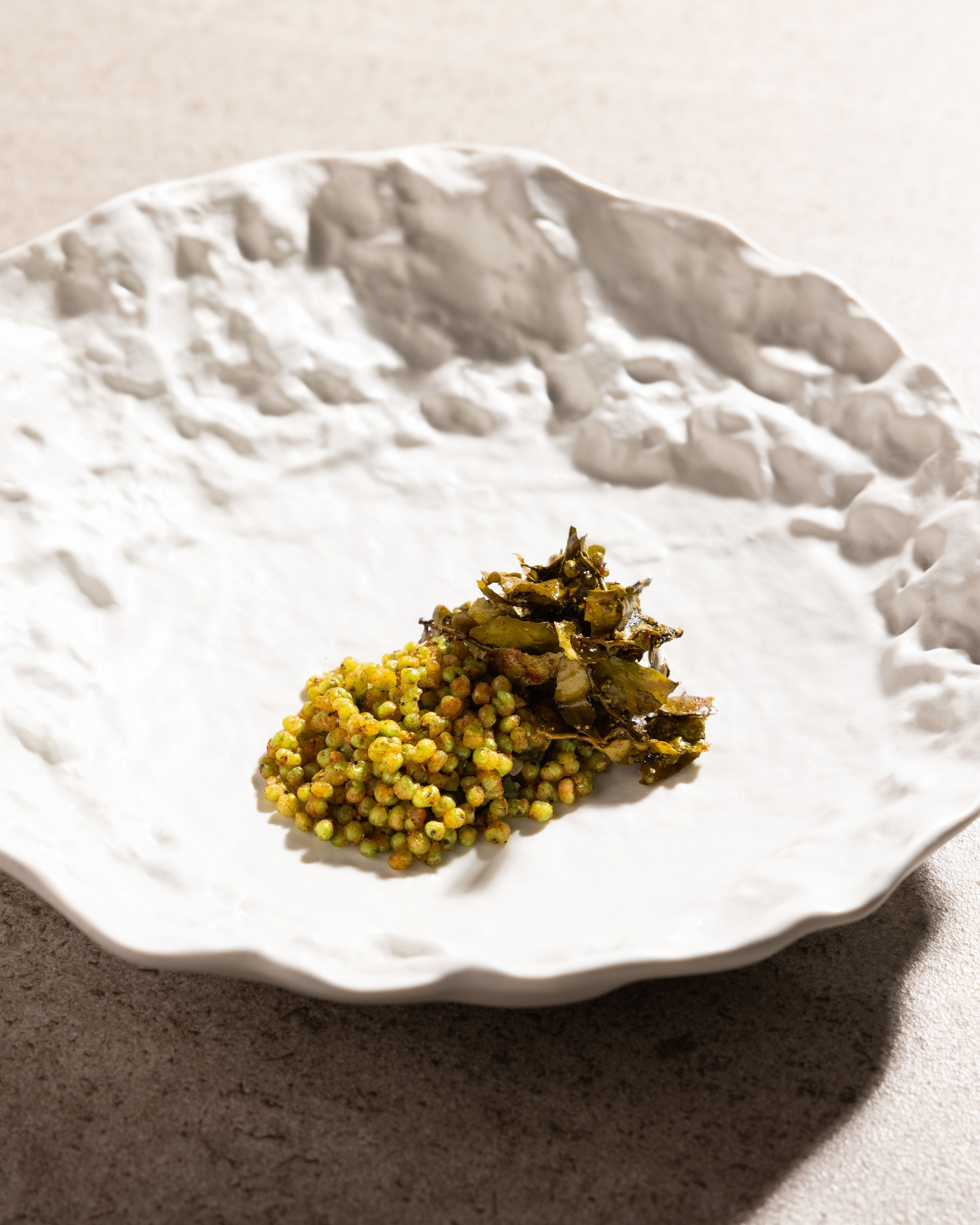
Mumbai's Masque has a seaweed and ponkh bhel that is a seasonal special
The Goa-based D’Cruz, who holds a degree in Biodiversity Conservation from Oxford, founded India’s first seaweed food company, The Good Ocean, in 2022. Her interest was sparked during a visit to Tamil Nadu in 2017, where she saw local women free-diving to harvest seaweed for pharmaceutical and algae-processing industries.
In the early days of building The Good Ocean, her work with fishing communities in Goa led her to chefs, who were curious and experimental. Conversations turned into tastings, and then trials. Suddenly, Indian seaweed began slipping into menus in broths, pickles, and as garnishes. Now, she regularly supplies to Hideaway and Mo’s Café and Bistro in Goa and works with Pune-based progressive Indian restaurant Aragma and Mumbai’s Masque.
In 2023, chef Varun Totlani had a first-hand experience underwater, in Goa, to see the wonders of the marine vegetation with D’Cruz and has been hooked since. “Spending time with Gabriella opened my eyes to the sheer diversity available to us. There are over 800 species along our coastline, yet it remains almost absent from our mainstream culinary vocabulary,” he says. At Masque, his Seaweed and Ponkh Bhel brings together two unique ingredients with limited exposure—ponkh or toasted green sorghum grains and Indian sargassum, which he pickles. The other dish is up and up Goa-inspired in a surf-and-turf format: fresh lobster grilled to perfection with a lobster shell bisque and Goan chorizo, topped with a generous helping of seasoned Indian seaweeds such as sargassum and sea grapes.
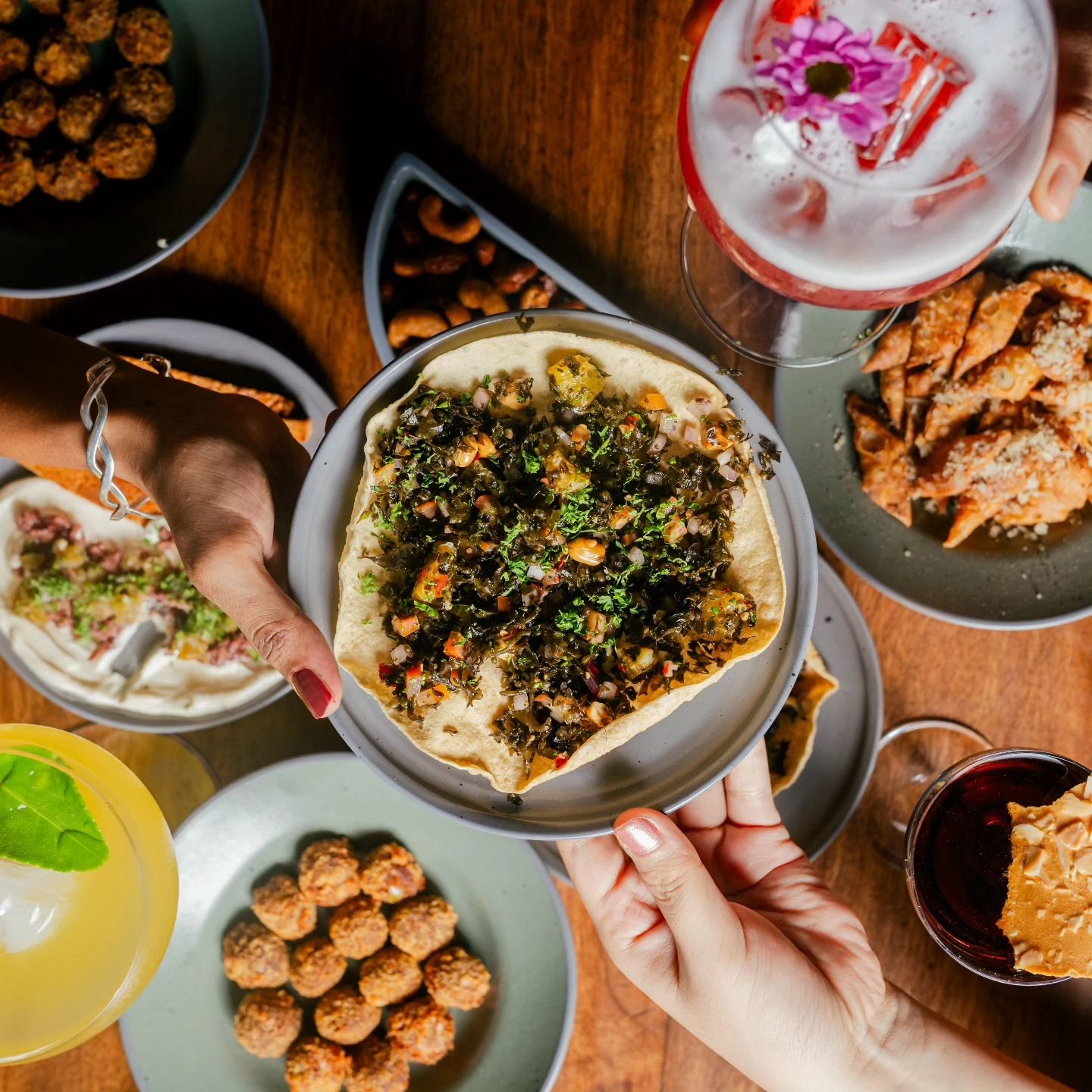
At Vagator’s Hideaway, tipplers can’t get enough of the seaweed appalam. The bar’s amazing take on a masala papad has become a menu staple, and uses The Good Ocean’s seaweed with orange segments, toasted shrimp powder, and sesame oil on a fried papad. Half an hour away, chef Moina Oberoi, a wellness chef and founder of Mo’s Café and Bistro in Panjim, says her training at Natural Gourmet Institute, New York, included a strong focus on the benefits of seaweed. After moving to Goa in 2020 and meeting D’Cruz, she was struck by the diversity of local seaweed species. Living with an autoimmune condition, Oberoi prioritises clean, local, and seasonal ingredients as a way of maintaining her health. That philosophy also defines the menu at Mo’s, where only five per cent of ingredients are imported. Oberoi’s Tofu Cucumber Seaweed Salad served with watermelon rind, red cabbage, and a soy dressing is one such local innovation. “We recently also introduced a seaweed chutney. It has a green chutney base of mint and coriander, and seaweed adds a layer of umami,” she explains.
Bars like Goa's Hideaway have built menu hits like their seaweed appalam with the produced sourced from The Good Ocean
Almost 95 per cent of The Good Ocean’s produce is of naturally occurring sargassum, harvested between November and February. It is harvested, cleaned in water to rinse out any ocean contaminants and then dehydrated in a dehumidifier to maintain its nutrition. While sargassum is the most shelf-stable once dehydrated, D’Cruz is now researching how to make the other Indian seaweed varieties as stable, considering transporting fresh seaweed is not viable. “Once out of water, seaweed starts deteriorating from UV damage. So, it has to be a quick turnaround process,” she explains.
Abhijeet Ghorpade, head chef at Pune’s Aragma used sargassum in an umami-rich pandhra rassa-style broth served with chicken meatballs and red lentils for their 2024 monsoon menu. But since then, the experiments have been far and in between, mainly due to challenges in steady sourcing.
Somewhere in Devgad, a few hours north of Goa, Arnav Mariwala of MariTide, a seaweed cultivation and processing company, is focusing on farming ulva (also called aonori) in stable environments to reduce this exact dependency on the sea and fickle weather. He started his regenerative seaweed cultivation set-up in 2023 after studying coastal ecosystems and climate-resilient engineering in California. He supplies to restaurants including Ground Up in Pune, The Lovefools in Mumbai and Yazu across Mumbai, Goa and Indore. “It works beautifully in salads, garnishes, broths, and sushi elements. Guests are often pleasantly surprised by the freshness and subtle flavour differences, and there’s a growing appreciation for locally sourced ingredients with a sustainable story,” says head chef at Yazu Goa, Tenzin Khetsok. At Ground Up fermentary in Pune, chef Gayatri Desai is experimenting with seaweed miso in collaboration with MariTide. Next month, Mariwala also has plans to retail dehydrated seaweed through his website once the FSSAI approvals come through.
Still, as an ingredient, Indian seaweed finds no mention in coastal cuisines. For D’Cruz and other seaweed crusaders, this is just the beginning. As more technical know-how becomes available to set up seaweed farms for the food industry, better alignment between demand and supply should also help ease cost pressures—making it easier for restaurateurs, chefs, and consumers to come on board. “In Japan, seaweed forms the functional base of the cuisine, whereas in India, we are sitting on a massive resource that we’ve barely scratched the surface of,” adds Totlani.
ADVERTISEMENT
The Nod Newsletter
We're making your inbox interesting. Enter your email to get our best reads and exclusive insights from our editors delivered directly to you.