




In recent years, Serendipity Arts Festival (SAF), Goa’s annual cultural jamboree, has emerged as the diamond of the events season. Through a multidisciplinary exploration of theatre, craft, and design, the week-long festival sees the art-focussed crowds descend upon Panjim. And 2025 marks 10 years of SAF, so the milestone programme is justifiably exciting. Among this year’s highly anticipated (and already almost booked-out) events is an exhibition curated by Sandeep Sangaru that divulges the everyday environment of Kashmiri artisans, an inter-generational retrospective on how colonisation shaped the Goan diaspora, and a participatory archive of ancient Indian games.
There are also one-off performances that warrant attention: on December 14, Kavan uses song and satire to reveal the young Ambedkarite experience. The next day, on December 15, a Belgian theatre group attempts a performance with no performers, no technicians, no stage crew, just a box as their lead. Meanwhile, Seconds Before Coming, scheduled for December 20, is a play that studies the interconnectedness of pleasure and abuse.
The culinary line-up is just as thrilling: Goa is a Bebinca invites the audience to taste chef Manu Chandra’s reimagining of Goan flavours through an interactive show. Similarly, the food research arm Edible Issues has an installation titled ‘Smell, Memory and Food Systems’ that studies how fragrance shapes remembrance and resistance. On the other hand, Prahlad Sukhtankar’s Salt Routes of India explores the political history of the freedom substance by shining a light on the people who craft it.
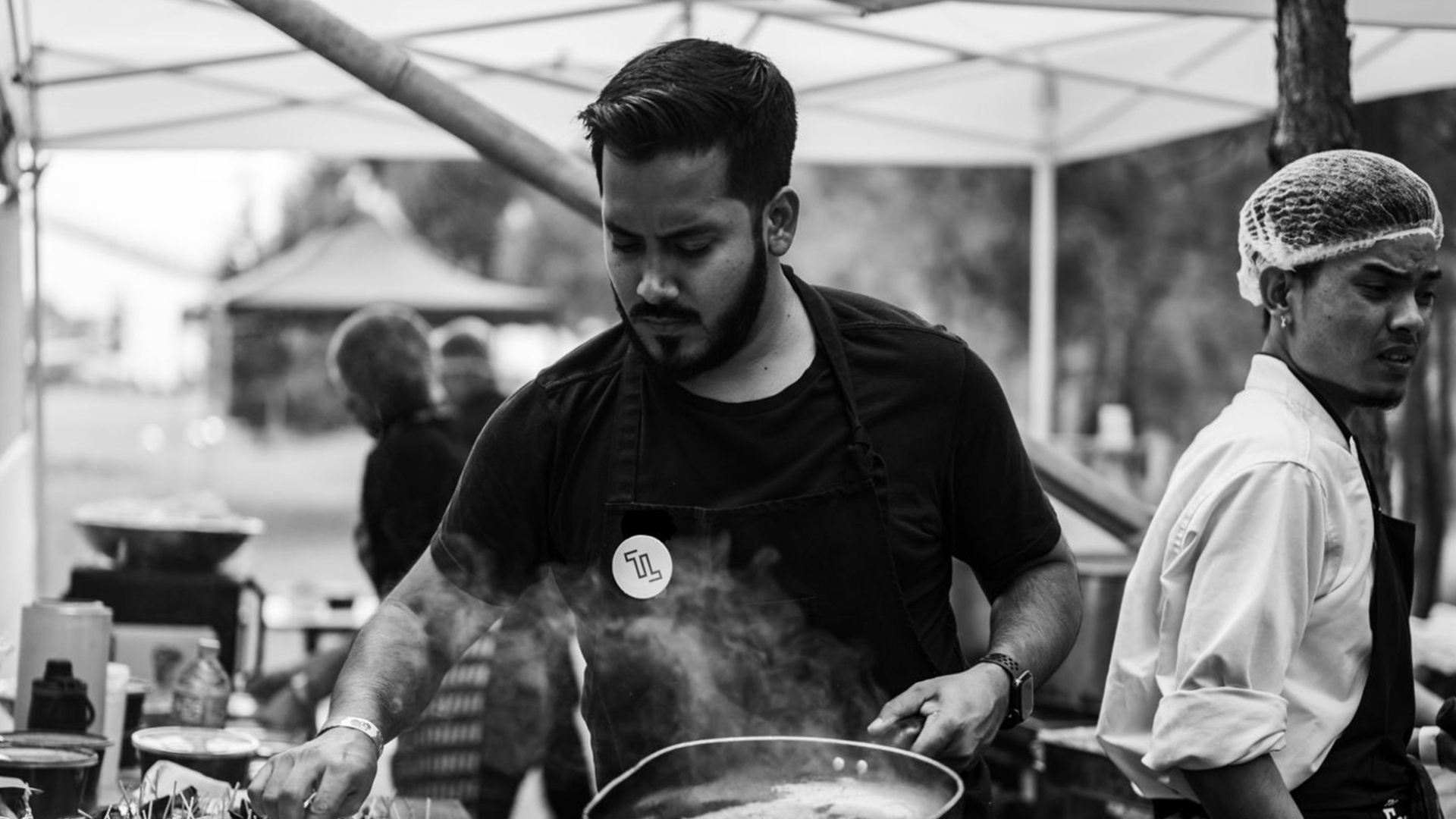
Yet across diverse interests and offerings, you are most likely to see most festival goers converge at ‘What Does Loss Taste Like?’. The multi-sensory installation by chef Thomas Zacharias of The Locavore in collaboration with impact design agency Immerse is nothing like you have seen before. Set in the year 2100, the experience explores how climate collapse, cultural amnesia, and tech will obliterate taste, memory, and biodiversity in food.
Radical as the idea may sound, it fits right in with Zacharias’s vision for his events and impact brand. Having helmed some of India’s most revered restaurants, including The Bombay Canteen, the chef realised he “wasn’t contributing to solving the loss of food systems in any eminent way”. He explains, “The genesis of [The Locavore] is to facilitate change through advocacy, events, travel and by partnering with farms at the grassroots.”
Their exhibit at SAF is a timely extension of this thought. After all, recent studies reveal that erratic rainfall and rising temperatures will cut down the yield of wheat by 10 per cent and chickpeas by 45 per cent in the coming years. Rain-fed rice crops are also expected to drop by 47 per cent by the year 2080. (Look at what’s on your plate today and imagine how much that is set to change!) “If we continue down this path, in a few decades the world will look like a sadder place… Most people in urban India are oblivious,” Zacharias says. “So, we want to take them into the future to experience this loss—in a nutshell, imagine Black Mirror meets Indian food.”
As if it wasn’t clear, this is not Love Story 2050 with singsong flying cars and romantic sci-fi. The installation may be set in the future, but it is very much rooted in plain facts. To create a plausible glimpse of what lies ahead, Zacharias and Sonia Parekh, the founder of Immerse, have built an expansive Assumptions Document backed by climate research, India-specific data and checked by academic experts. “We used this as a reference point to really flesh out character worlds. How would people in the future speak? How has the way they walk changed? Do they eat at all?” asks Parekh, shedding light on the research process.
The audience is ushered through five interconnected rooms, each exposing painful changes through multisensory touch points. While Zacharias and Parekh are tight-lipped about the details to retain an element of shock, they shared a snippet of the first space: “You enter an advertorial waiting room with backlit posters and voice-overs. When you look closer you realise the futuristic version of soil, water, and air are being sold as commodities,” the chef explains. The posters feature eerie marketing copy where soil is described as ‘mitti reimagined, each batch infused with extinct fungi and lentils’. Adding to the post-apocalyptic sentiment, the terms and conditions state ‘sunlight exposure voids warranty’ on the mud.
Chills, right? Well, that’s precisely the reaction that the team hopes to evoke. The other challenge that Zacharias and Parekh faced was to make this experience as hyperlocal as possible. “Often when you think of the future, the references are very Western,” shares the Immerse founder. “Our aim was to keep it Indo futuristic, exploring how our dining tables, communes, material textures, and colours will change. How will the architecture look? Will the temples still have carvings?”
This painstaking level of detail and deep research adds a layer of reality and relatability to the experience. You can’t just discard the experience as fiction when the depiction is so close to home. In a world where 10-minute deliveries make taste rapid and thoughtless, the installation’s makers want people to invest time to learn about food systems and the ripple effect our actions have on them.
And if a tiny part of you is thinking ‘Everyday life is hard enough. Who wants to go to a festival and surround yourself with more gloom and doom?’, Zacharias has plans in place to beat the pessimism. “We want to close the circle with possibility,” he says. “The final room is hopeful; it shows people they have the agency to create change.”
The 10th edition of Serendipity Arts Festival will take place in Panjim, Goa, from December 12 to 21. ‘What Does Loss Taste Like?’ is on view from December 14 to 21. Entry and access are free. Register online here