





Scroll through Reels long enough, and you’ll land on someone crediting their suspiciously smooth skin to Skinvive. Nicknamed the “glass skin injectable”, it’s become the buzziest four syllables in aesthetic medicine right now. But strip away the before-and-afters, and there’s more nuance to the treatment than your social media feed is letting on.
The science bit, minus the jargon
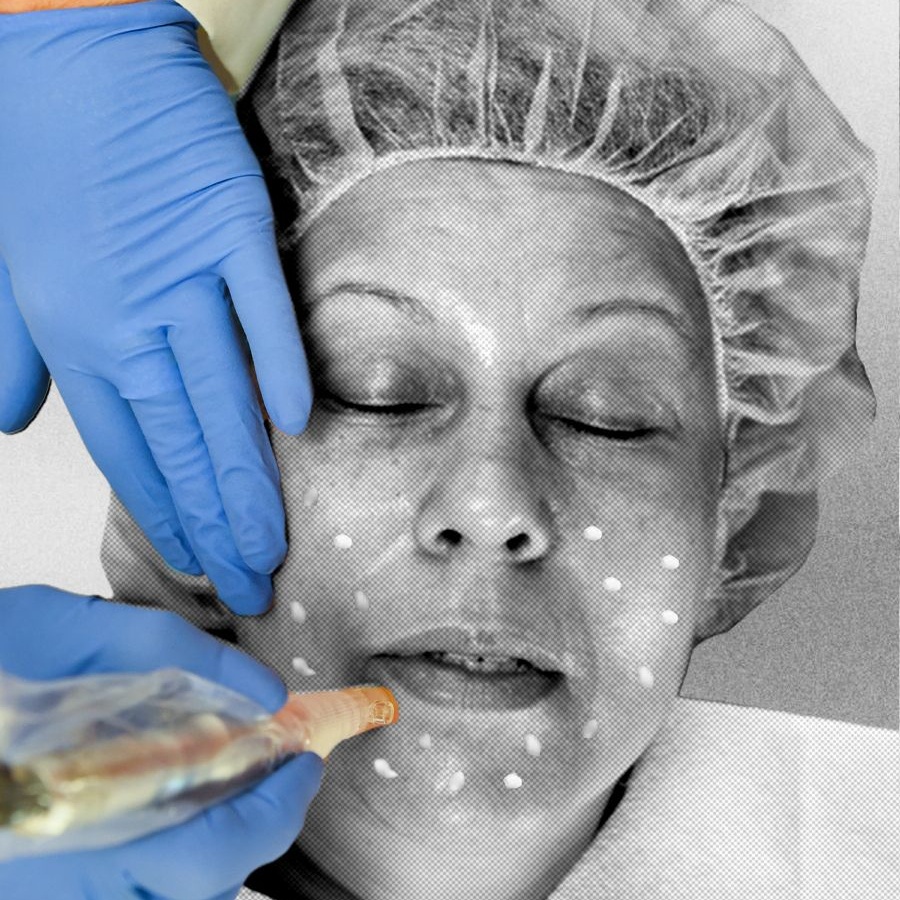
Skinvive is an FDA-approved treatment for smooth cheek texture in adults over 21 and works by placing microdroplets of hyaluronic acid—a sugar molecule capable of holding up to 1,000 times its own weight in water—just under the skin’s surface. The appointment itself is rather unremarkable: about 30 minutes under a numbing cream, then 10 to 15 minutes of injections that mostly register as pinpricks. Some redness, mild swelling, or a small bruise at the injection sites is normal, and it usually settles within a day or two. No real downtime.
If dermal fillers defined the 2010s, this one belongs to the current era of “undetectable aesthetics”, where looking well-rested beats looking obviously done. That shift has pushed demand toward treatments that upgrade skin quality instead of adding volume.
Dr Saloni Vora, dermatologist at Dr Sheth’s Skin and Hair Clinic, thinks social media has oversold what’s actually possible. “Glass skin is a hype,” she says. “Indians don’t have the genetic or hereditary feature of glass skin.” What Skinvive delivers is smoother, better-hydrated skin and a subtle radiance from a stronger skin barrier, not an Instagram filter come to life.
So how is this not a filler?
This is where most people get confused. Skinvive sits in a category dermatologists call skin quality boosters—treatments that improve how skin looks and feels without lifting, contouring, or adding volume. Fillers do the opposite: they replace lost volume and sculpt structure.
It also gets lumped in with Profhilo, but the two work differently. Both use hyaluronic acid, but Profhilo is built to stimulate collagen production alongside hydration, which makes it the better pick for skin that’s started to sag. Skinvive stays in its hydration lane—it’s about texture, not lift.
Somewhat ironically, this injectable isn’t for anyone chasing a dramatic transformation. Dr Vora says the ideal candidate is in their twenties or thirties, dealing with dehydration, dullness, or a skin barrier worn down by pollution, stress, and general modern-life chaos. It suits people who want to look fresher without anyone clocking that they’ve had work done. It won’t fix everything, though. Acne scars, deep pigmentation, or very visible pores are still a job for lasers, chemical peels, or radiofrequency microneedling. “Combination therapy works,” says Dr Vora. “It’s not that you did one treatment and all your problems are sorted.”
The real risk isn’t the needle
Good news for melanin-rich skin: Skinvive itself isn’t considered high-risk for post-inflammatory hyperpigmentation (PIH), a common concern after procedures on Indian skin. According to Dr Madhuri Agarwal, founder of Yavana Skin & Hair Clinic, PIH risk comes down to technique, not the product. “If they’re not experts, they don’t assess the skin quality and skin barrier properly.” Continuing potent actives like retinoids or vitamin C right before or after treatment can also add irritation, which eventually shows up as pigmentation.
Cost depends on the area and number of syringes—according to Dr Agarwal, Skinvive starts at around ₹15,000, with full-face treatments running between ₹45,000 and ₹50,000 and face-and-neck costing more. That’s roughly in line with Profhilo, though traditional fillers are priced per syringe.
The bigger risk isn’t the procedure; it’s who’s doing it. Dr Agarwal recommends sticking to board-certified dermatologists or plastic surgeons, checking credentials, asking for real before-and-afters, and being suspicious of steep discounts. “If somebody is giving you cheaper Botox or cheaper filler or cheaper Skinvive, there’s a likelihood that they may not be using a genuine product, or the optimum amount of it,” she says. Ask to see the product before it’s opened—an unsealed, sterile syringe is your proof it’s the real thing—and confirm it’s an FDA-approved brand bought through authorised channels.
The biggest misconception is still coming from social media. Patients walk in expecting filtered skin, which doesn’t exist. “There is nothing like flawless skin,” says Dr Vora. “Everybody has pores.” What you can actually expect is healthier-looking skin, not transformed skin: results show up around three to four weeks post-treatment and last five to six months, with most people going in twice a year.
In short, it won’t give you K-drama glass skin. What it will do is make you look like you slept eight hours and drank two litres of water for months at a stretch.