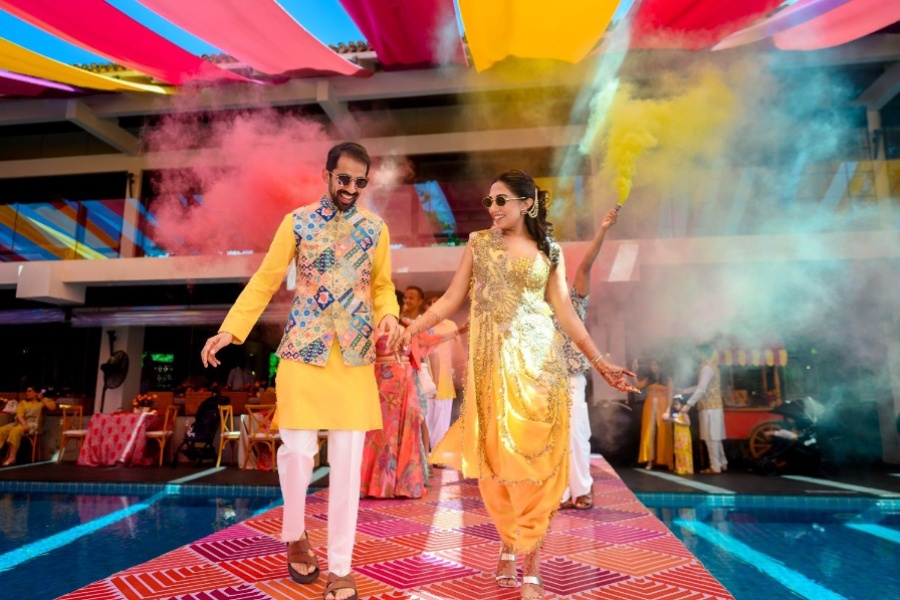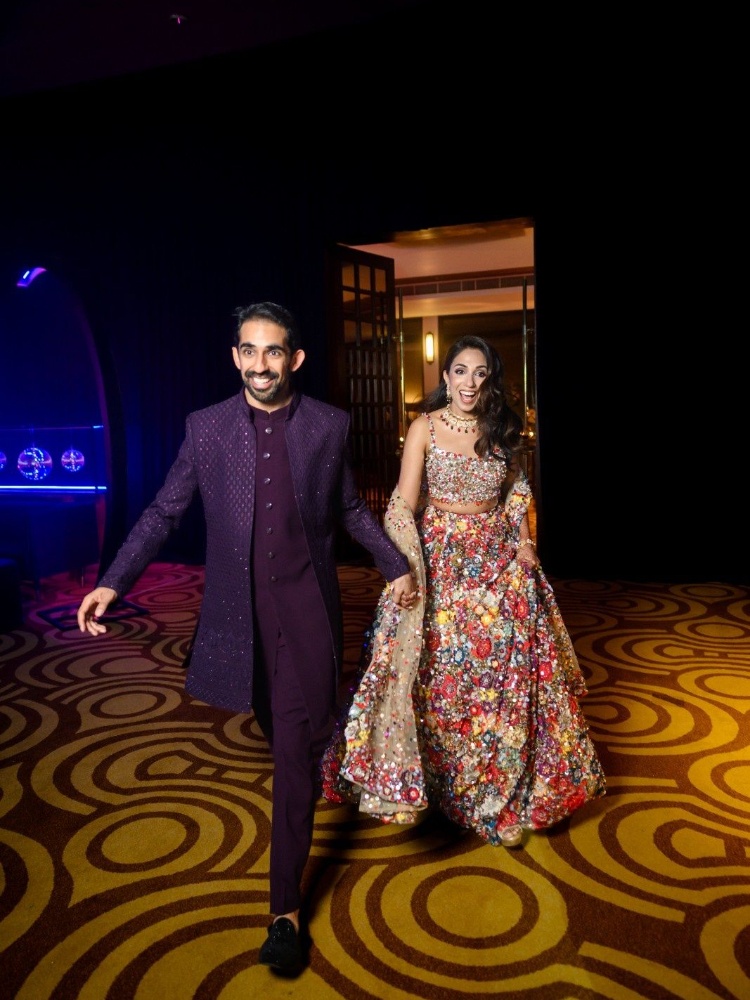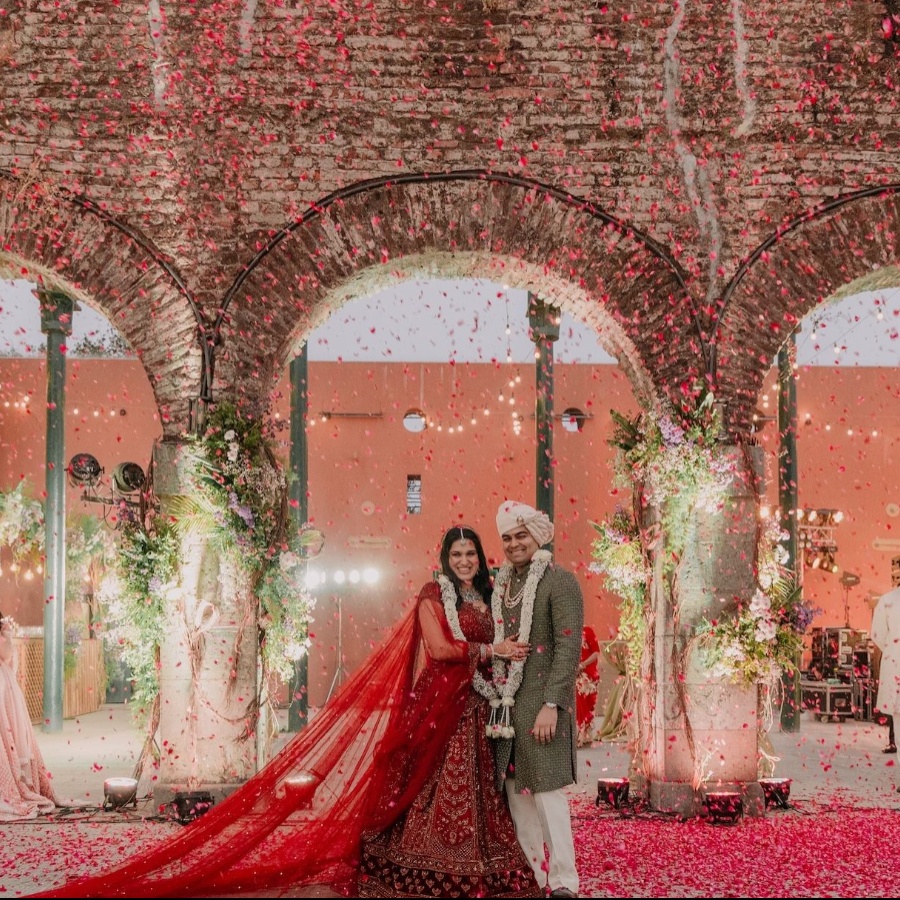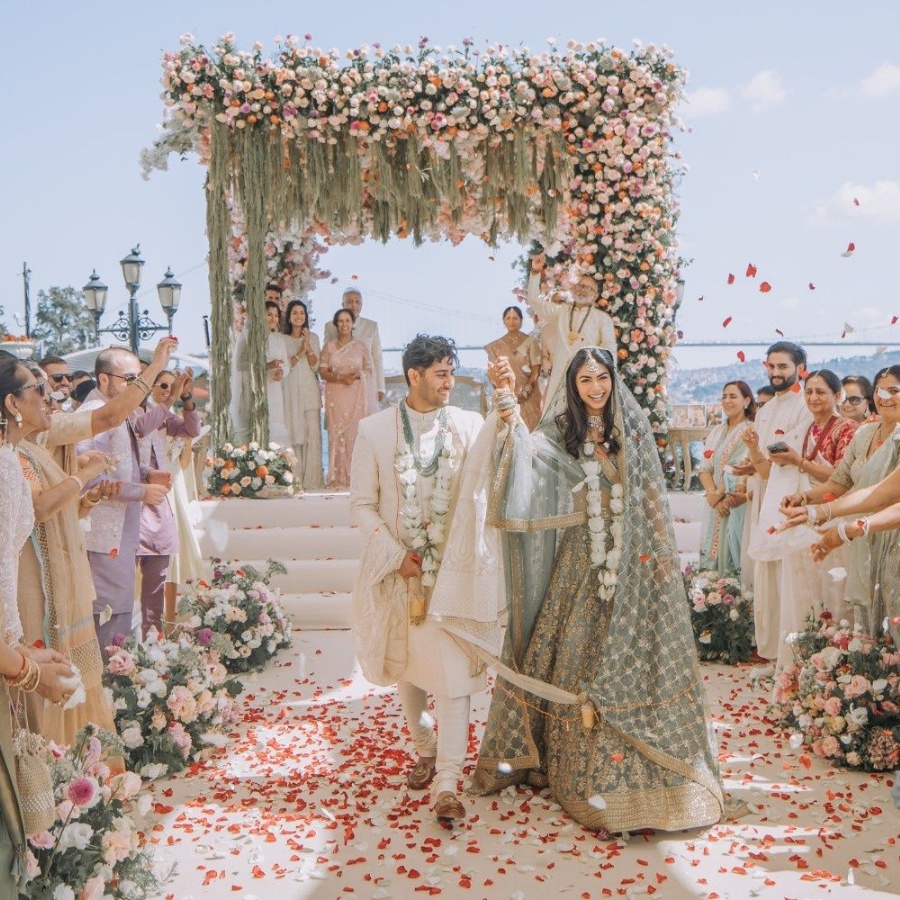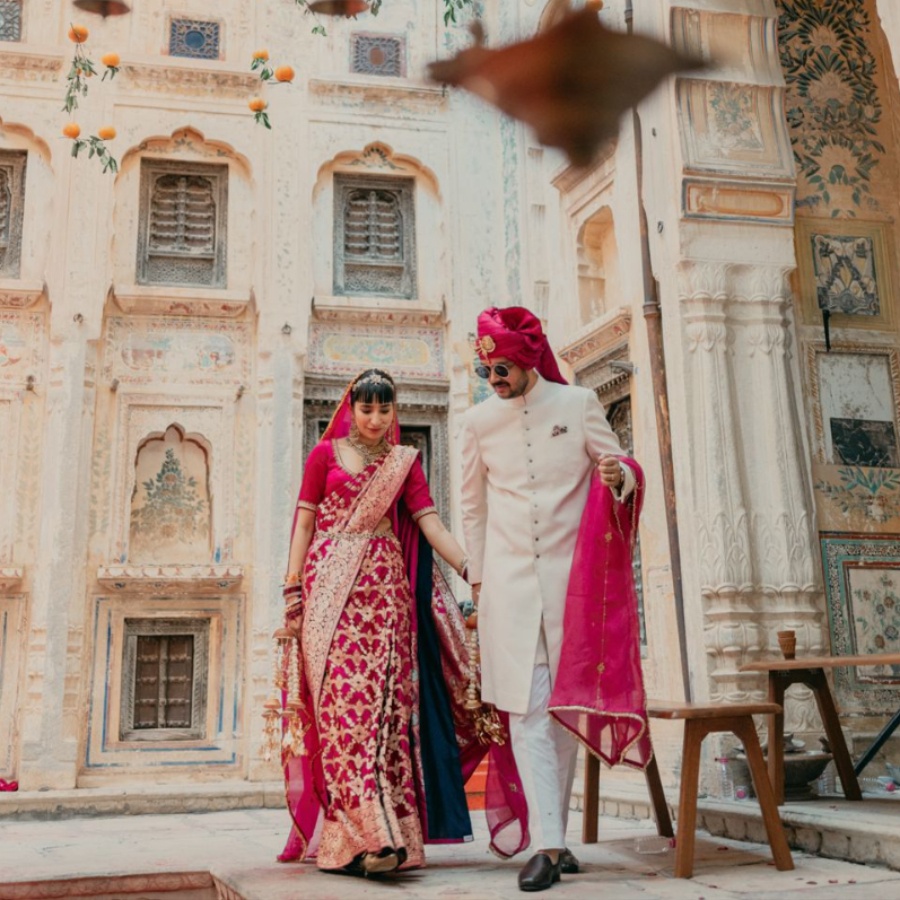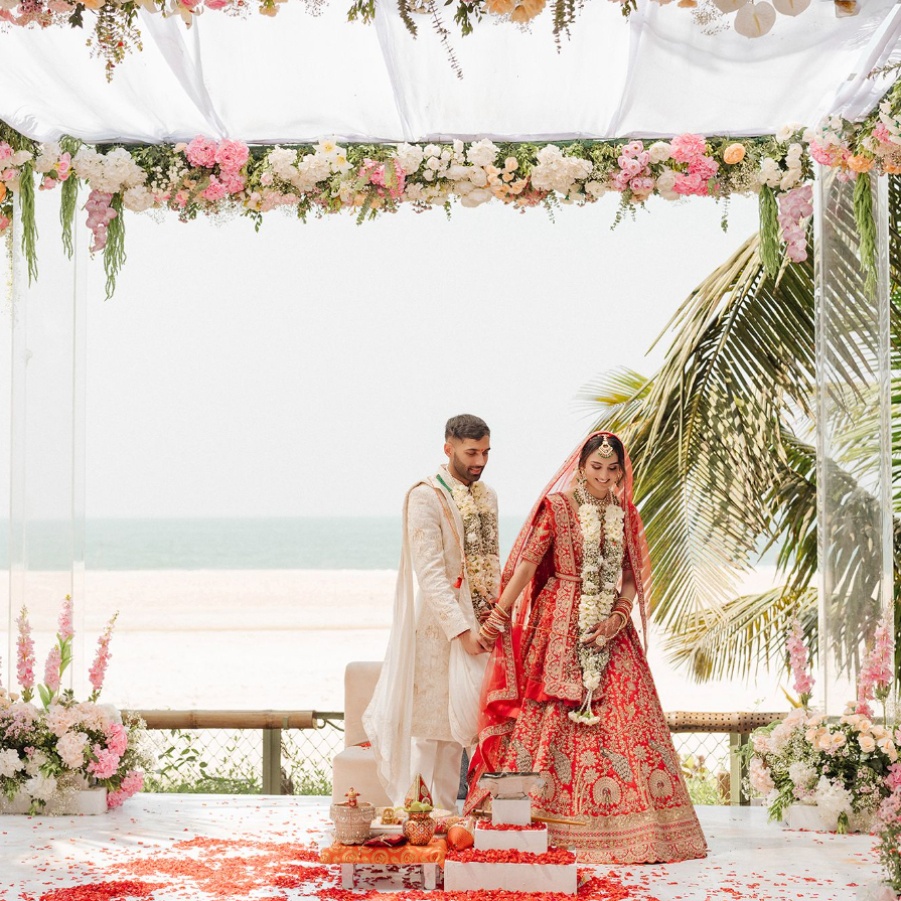




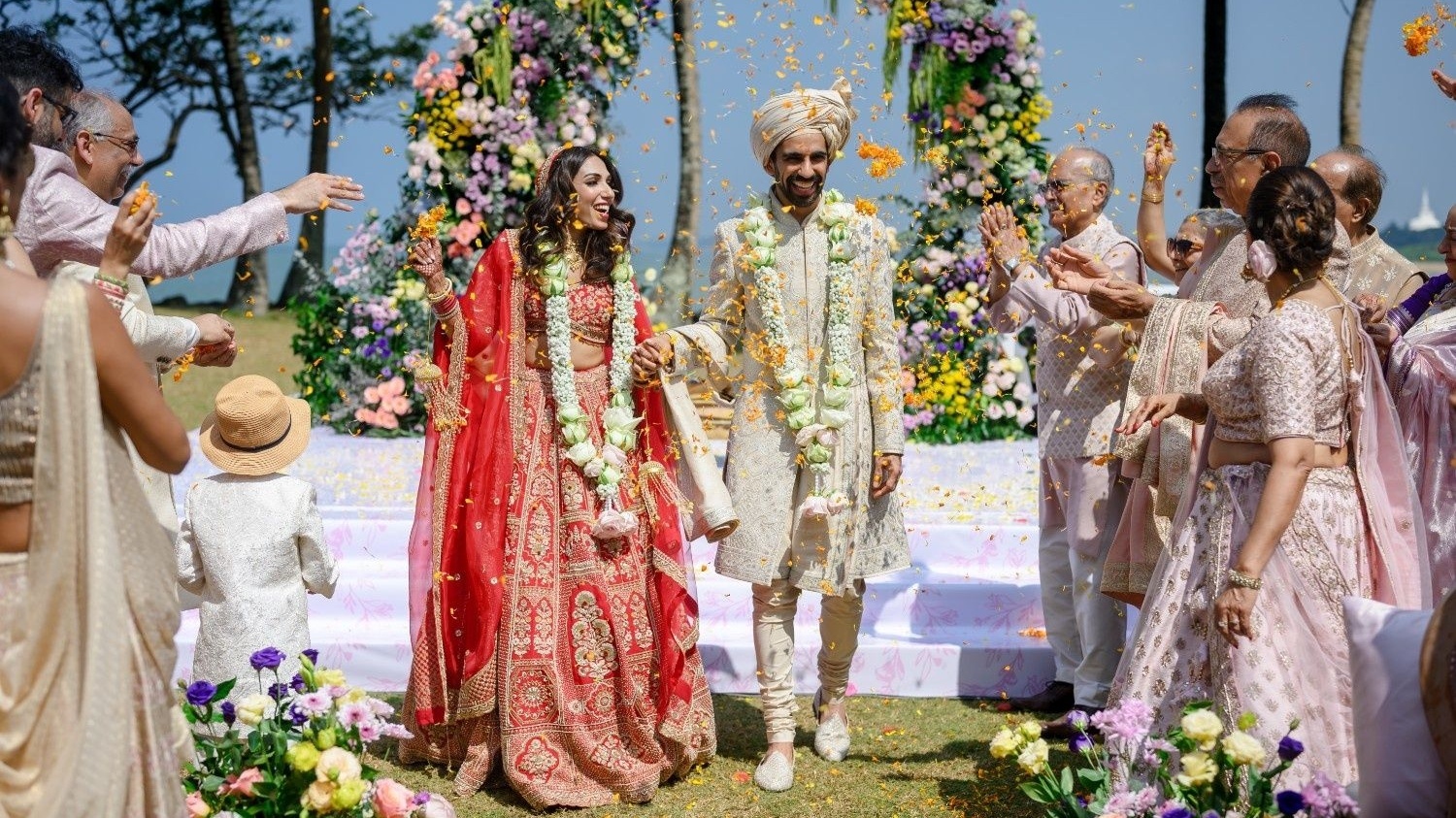

The bride and the groom are from opposite ends of the world. She is Australian Indian and he is Canadian Indian. For context, that is a 15-hour time difference, at the very least. But tech investor Tanya Raheja and tech founder Kunal Gupta knew they were the one for each other from their very first date.
Back in January 2024, Kunal was holidaying in Sydney and found Tanya on Hinge. A casual coffee hang turned into a walk in the park that finally turned into a date that lasted 11 whole hours. The next morning, Kunal, 40, flew out to Kerala for a three-week-long Ayurvedic retreat, with no access to his phone. Tanya, 35, wasn’t sure if she would hear back from him, all while he was already dreaming of their wedding. When the retreat wrapped up, Kunal changed his flights to fly back to Sydney and put down a deposit on a house, just to be closer to her.
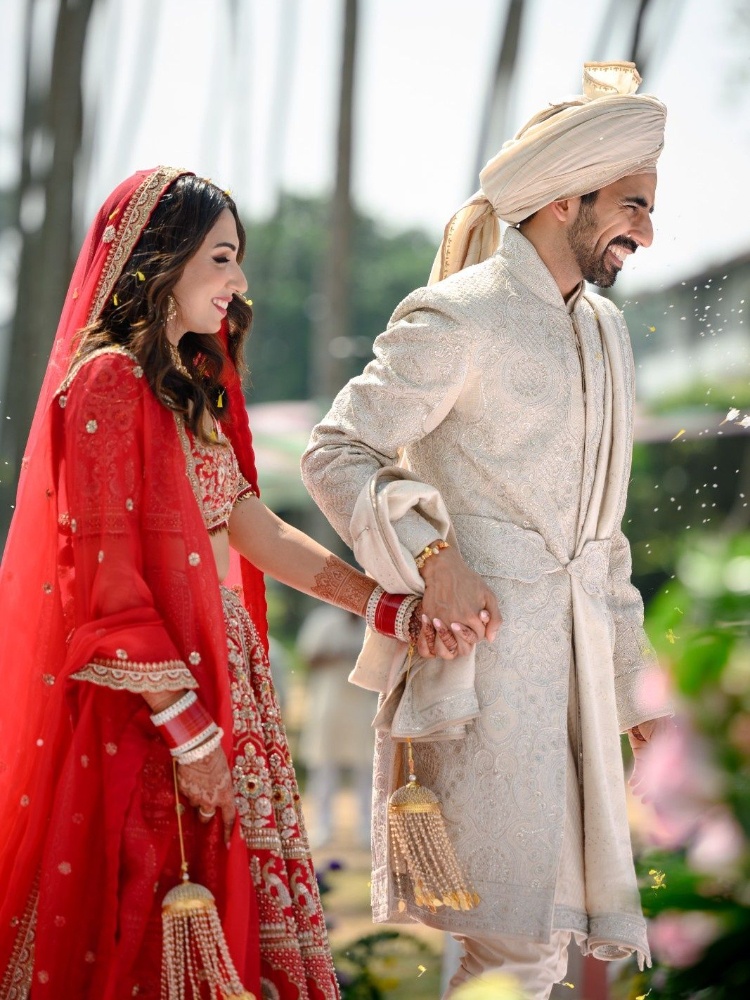
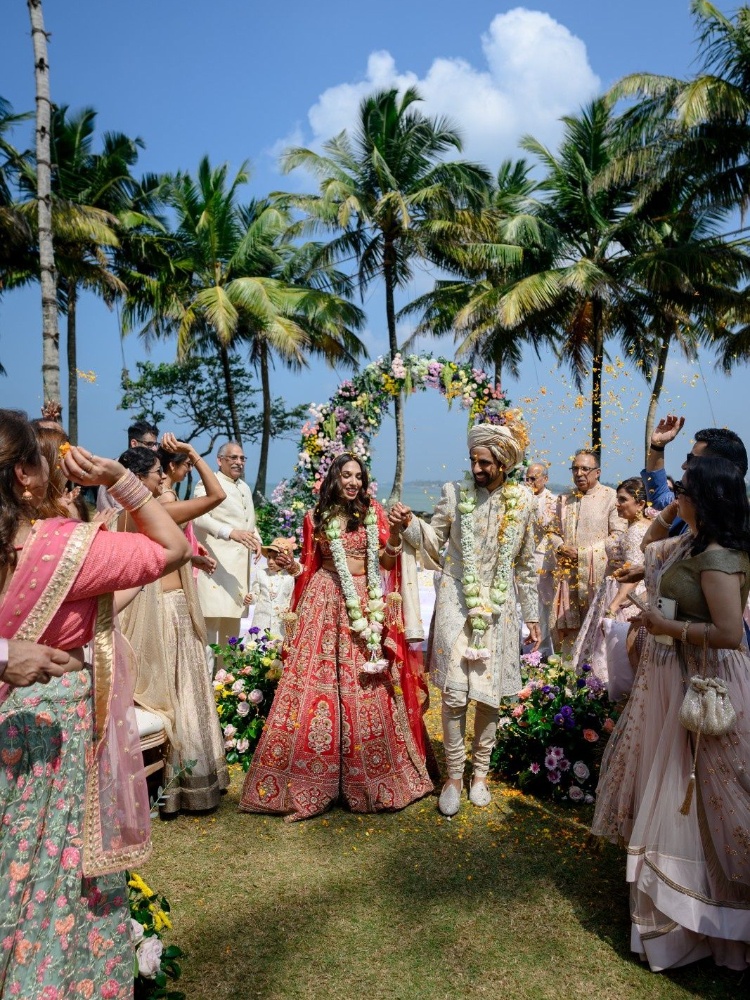
To repeat, this is all from the magic of one date and day together. A true example of “when you know, you know,” the couple was engaged by the end of the year. The whirlwind proposal was just as dreamy: Kunal whisked Tanya away to Hamilton Island and got down on one knee on a private beach. Staying true to the theme, they tied the knot in January 2026 on another beach, this time at Sri Lanka’s Anantara Kalutara Resort. Spread across three days starting with a white-themed welcome party, the entire wedding was strictly a no-phone zone.
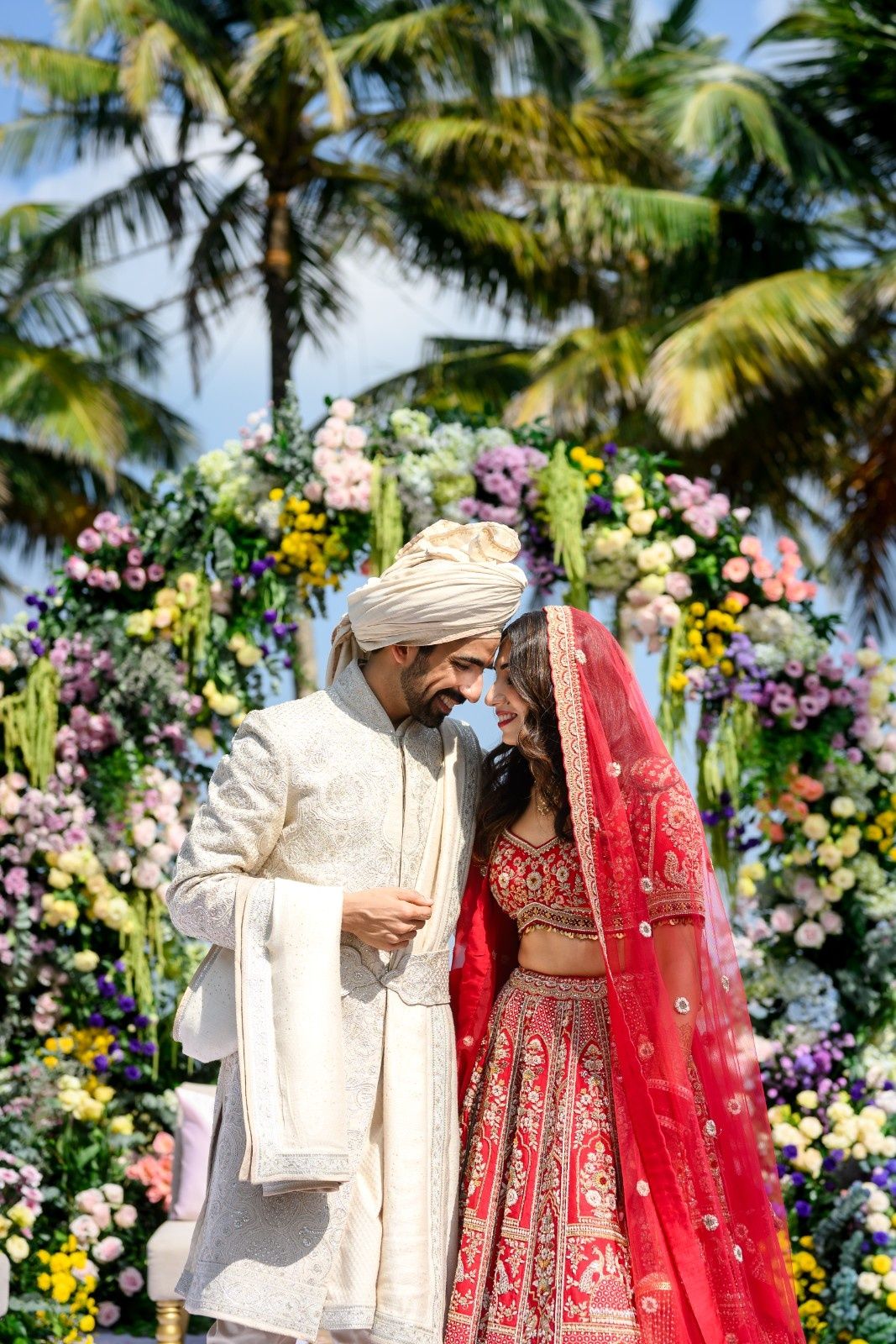
As the internet chats about going analogue, the bride and the groom embody the spirit—neither is on Instagram. That’s only one aspect of the unconventional approach: their ceremony was performed without a priest too. Below, Kunal and Tanya take us through the wedding and how they tailored the rituals to suit their story:
The wedding planning aka the business proposal
Tanya: We wrote a vision statement for our wedding, describing our most important values. The idea was to make sure the wedding felt representative of us. The document was almost like a business proposal.
Kunal: ‘Connection’ was one of the values. That’s where the idea for no phones came in. We wanted people to be present in the moment. ‘Authentic to us’ was another one; we wanted a more self-guided ceremony that blended Indian customs with Western traditions. And ‘fearless’ was one of the values too, which meant not being scared of what others may think. We had the planners print six large signs asking people to put away their phones. Even the emcee at every event reminded them.
The welcome party where everyone wore white
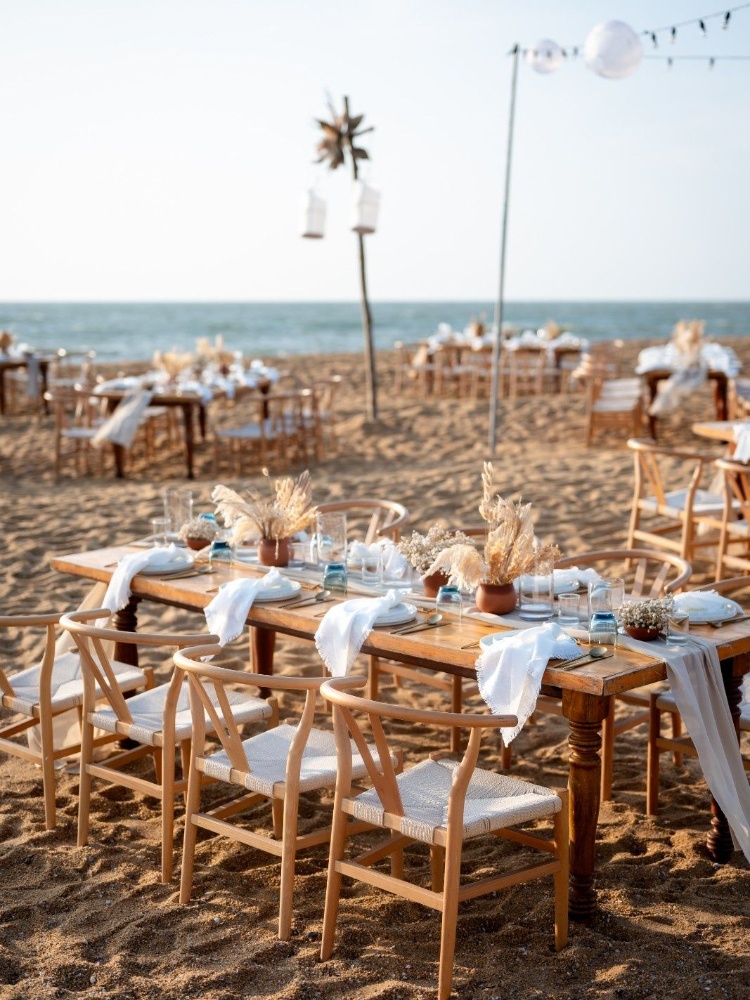
Tanya: I’m from Sydney, so I love the outdoors and the beach. I wanted one of the events to be there. Kunal loves to host white parties; it’s like his MO. So, we brought the two together for our welcome party. We also asked everyone to be barefoot so it feels like a grounding start. There was an inclusive milni too. Instead of just the close family exchanging garlands, we made it about the guests. We had garlands for the girl’s side and the boy’s side with different-coloured flowers. They had to take theirs and exchange it with someone from the other side.