



Fashion06 Jul 20264 MIN

Sisters who don’t fight over clothes? Meet the Namburu sisters

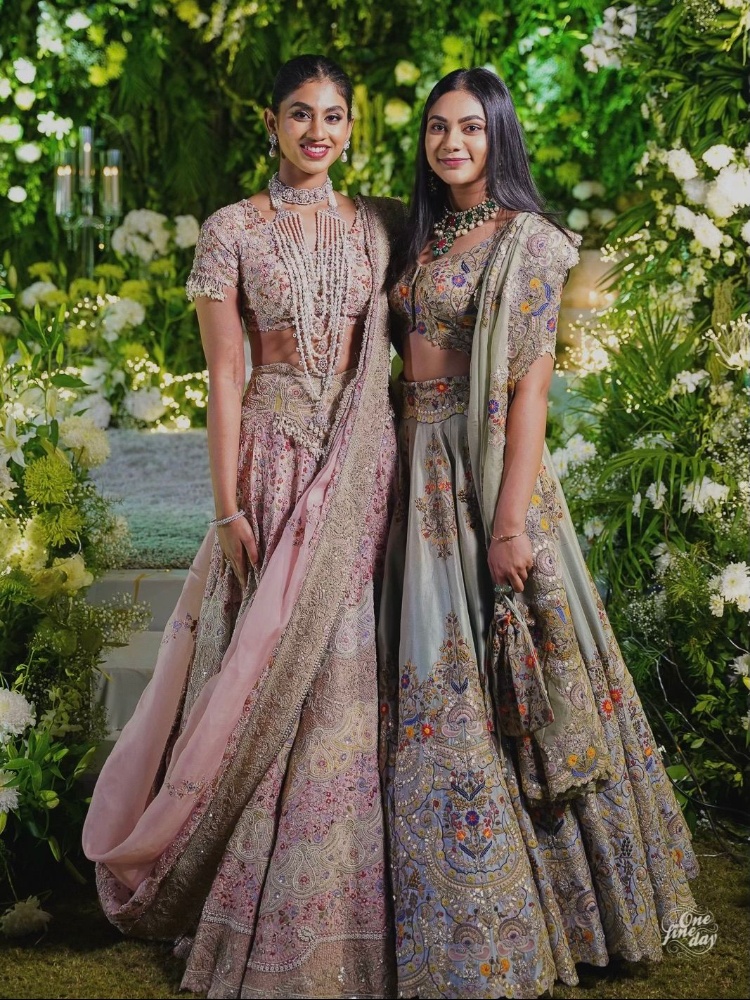
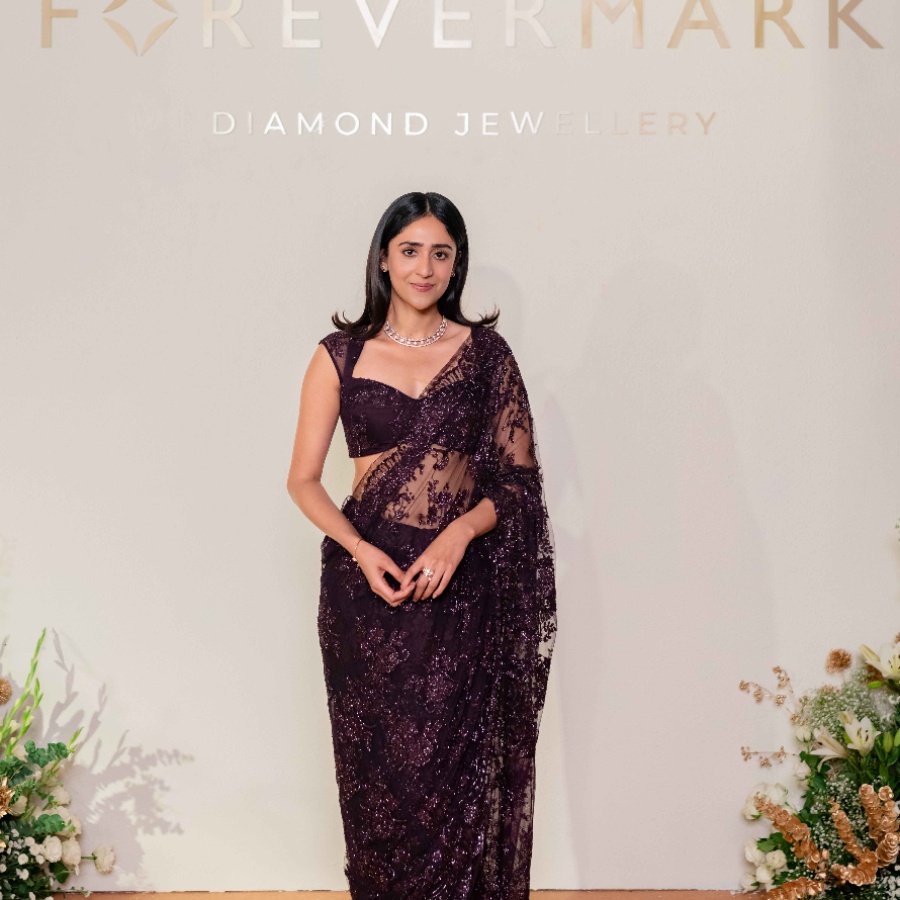
Shreya and Isha Namburu have wildly different styles but they both agree on the one label they love to repeat: Anamika Khanna

Image

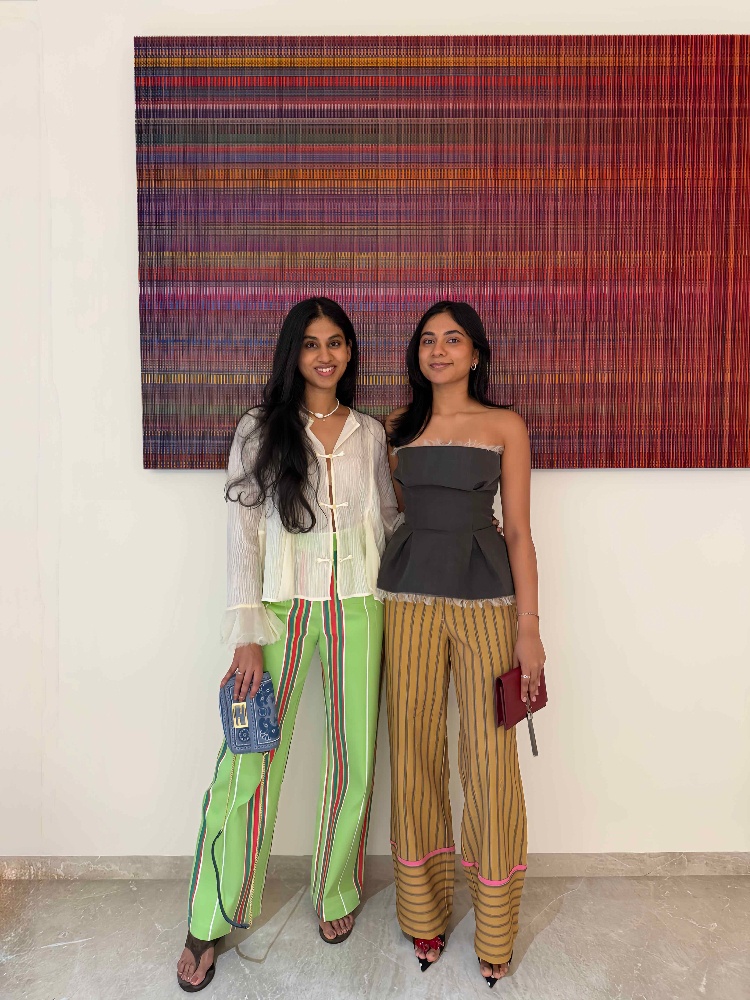
There’s a pulpy mango juice on the table—made at home and delicious—and two sisters trying not to talk over each other. They mostly fail. Isha and Shreya Namburu, five years apart and still finishing each other’s sentences, are settled into the living room of their palatial family home in Jubilee Hills, Hyderabad.

The two stylish siblings are part of the city’s elite social set—Isha recently returned from New York where she spent years working in marketing while Shreya, the elder one, founded Tiltrade, a chemicals trading platform, two years ago and is already eyeing international markets. Their wardrobes, much like the rest of their lives, are both entirely their own and somehow also shared—and if Shreya borrows something and forgets to return it, Isha has learned to simply show up and collect. 

Growing up, the sisters never fought over clothes, because the dynamic had already been decided. Shreya was the shopper, the one poring over every September issue of Vogue since she was 13, cataloguing Seventeen and Tiger Beat like research material. “I still have every copy,” she smiles. Isha, younger, simply helped herself. “I always wore her clothes,” she says plainly. “She was more interested in fashion growing up, and I just borrowed.”

Over time however that relationship to clothing has evolved. While Shreya describes herself as, “a hoarder. If I like a piece, it stays forever. I have clothes from 15 years ago and I’m not sorry about it. I literally feel like I’m thrifting from my own wardrobe,” Shreya laughs. Isha, on the other hand, runs a capsule wardrobe with the detachment of someone who finds joy in the editing. “I donate when I’m done,” says Isha.

Two wardrobes, one green dress

Their styles, they’ll tell you, have converged—but only up to a point. Shreya gravitates towards the feminine and flowy, anchored by really good tailoring. She’s devoted to French labels like Sézane and Soeur and on a recent trip to Spain discovered Sissel— a brand made entirely in India but tailored with a very European hand. Her wardrobe staples come from Australian brands like Bénni and Dissh, who she is drawn to for their languid, understated appeal. “Both brands are targeted towards a very specific kind of woman,” she explains. “It’s easier when you find a brand that gets you and you just go there. I don’t want to be shopping somewhere that's trying to cater to five different types of people.”

Safari Picture.jpg

Isha, by contrast, spent her New York years dressing for work first and everything else after that. The result is a closet that’s still chock full of brands like Frame, Aritzia or The Frankie Shop, for pieces that could go from the office to dinner, all of it anchored by statement jewels from Alexis Bittar. “She dressed up a lot in New York,” Shreya adds about her sister. “In the office, everybody around you was dressed up, but always in tailored suits and blazers.” Isha shrugs. “I got away with more fun clothes because I was in marketing. But yes, you always had to look nice, nice.” 

The clearest illustration of how their wardrobes are shared yet divergent is a single green Bénni dress—fitted and flowy, with the kind of ease that photographs well anywhere. Shreya bought it. Isha borrowed it and wore it to a bridal shower. “I would wear it on vacation,” Shreya says. “She took it somewhere completely different.” Each styled it differently too: Shreya added a belt, a chain, and a full stack of bracelets for a beachside-ready look. Isha, kept it more minimal, reaching for a statement belt or a single piece of jewellery, just enough to elevate the dress for a special occasion. “I accessorise a lot,” Shreya says. “She does one thing and somehow it’s enough.”
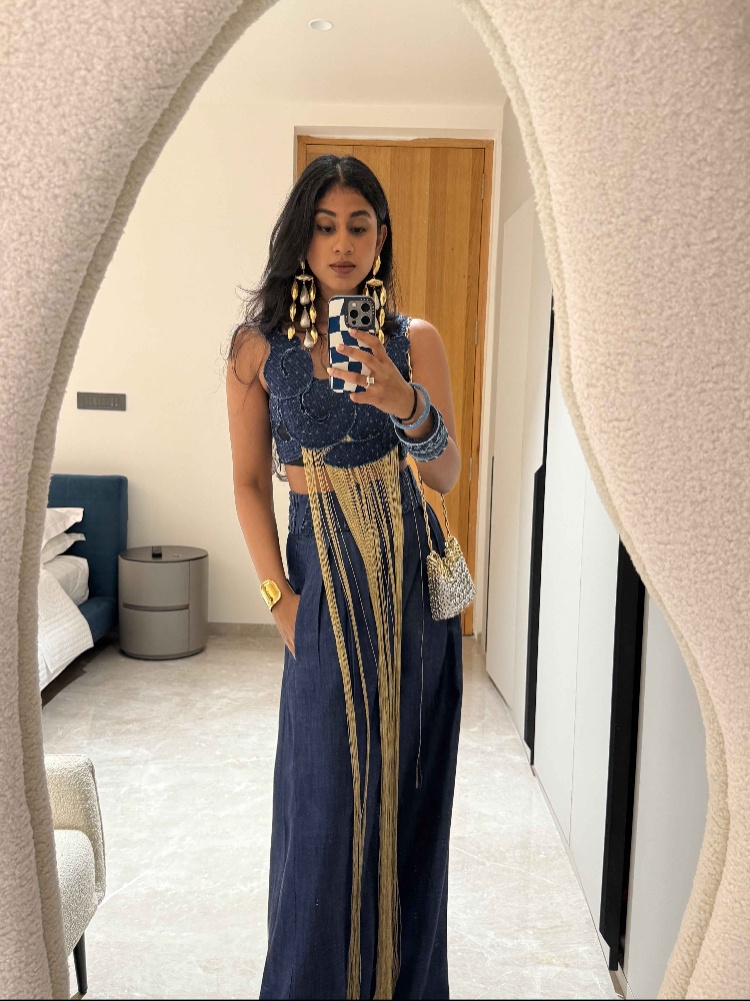
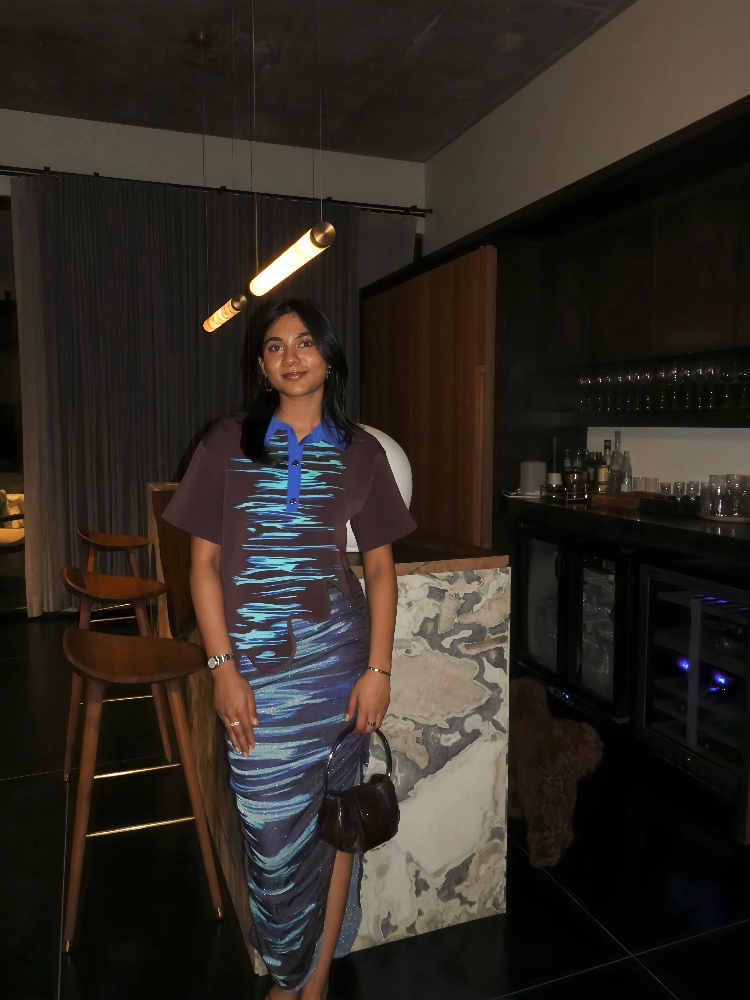
Accessories are actually where you can most reliably tell them apart. Shreya’s current obsession is sunglasses, she’s been collecting them across geographies, recently scoring a pair of vintage, blue Chanel frames in Japan (she’d been hunting them for years). On the next trip, she reveals that she’ll be looking out for a pair of white, vintage Cartier sunglasses. Isha meanwhile, is into caps: a growing rainbow of them in different fits and lengths, including a woven jute-style one picked up at Chelsea Market that she ends up reaching for constantly. “They all have different fits, different lengths at the front,” she says.

Then there are the hoodies, which is really Isha’s territory. She has every variation—cropped, long, oversized—mostly from Kith, whose athleisure she shops regularly. Shreya has never bought a single hoodie in her life. “Every time I travel, I just take one from her,” she says without apology.

The Indian wardrobe is a family archive

For Indian clothes, the Namburu wardrobe functions less like individual ownership and more like a shared archive. The designer they return to most is Anamika Khanna: many pieces were bought a decade ago, before the designer became the phenomenon she is today. “Every Anamika outfit I’ve worn, she’s worn three or four times at least,” Shreya says. “They always fit really well and they just keep looking good.”

Another name they return to, and feel is strongly underrated, is Jade by Monica and Karishma. “The work is better than most people’s,” Shreya says, “and you can mix and match: a top here, a skirt there.” For niche Indian labels, they gravitate towards custom designs from Delhi Vintage, Bodements, Aseem Kapoor, and Shivan and Narresh. For traditional weaves, it’s Hyderabad’s Shravan Kumar.

Some things, money can’t buy

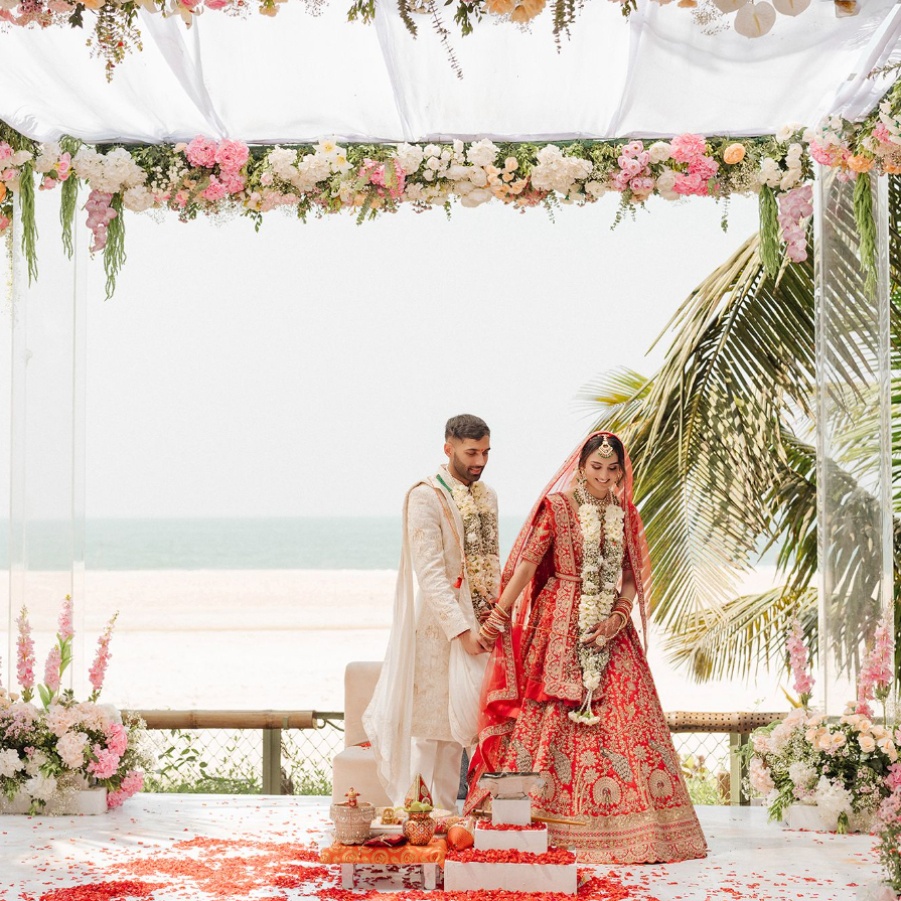
Ask them about their most treasured pieces and the conversation slows down, as they think intently. Shreya’s answer is immediate: her engagement ring, a pink Padparadscha sapphire from Kishandas & Co. “I always wanted a pink engagement ring,” she says. “Growing up, JLo had one. Anna Kournikova had one. When I saw those I thought, that’s what I want.” She got exactly that for her wedding in 2020.

Isha’s treasure is a Kith x TAG Heuer limited-edition Formula 1 watch from the Miami Grand Prix—picked up the day it dropped in 2024, which also happened to be the day McLaren and Lando Norris won for the first time. It’s the only hint that Isha is in fact, a huge F1 fan but she only hints at this passion by adding, “That one has a little bit of sentimental value.”

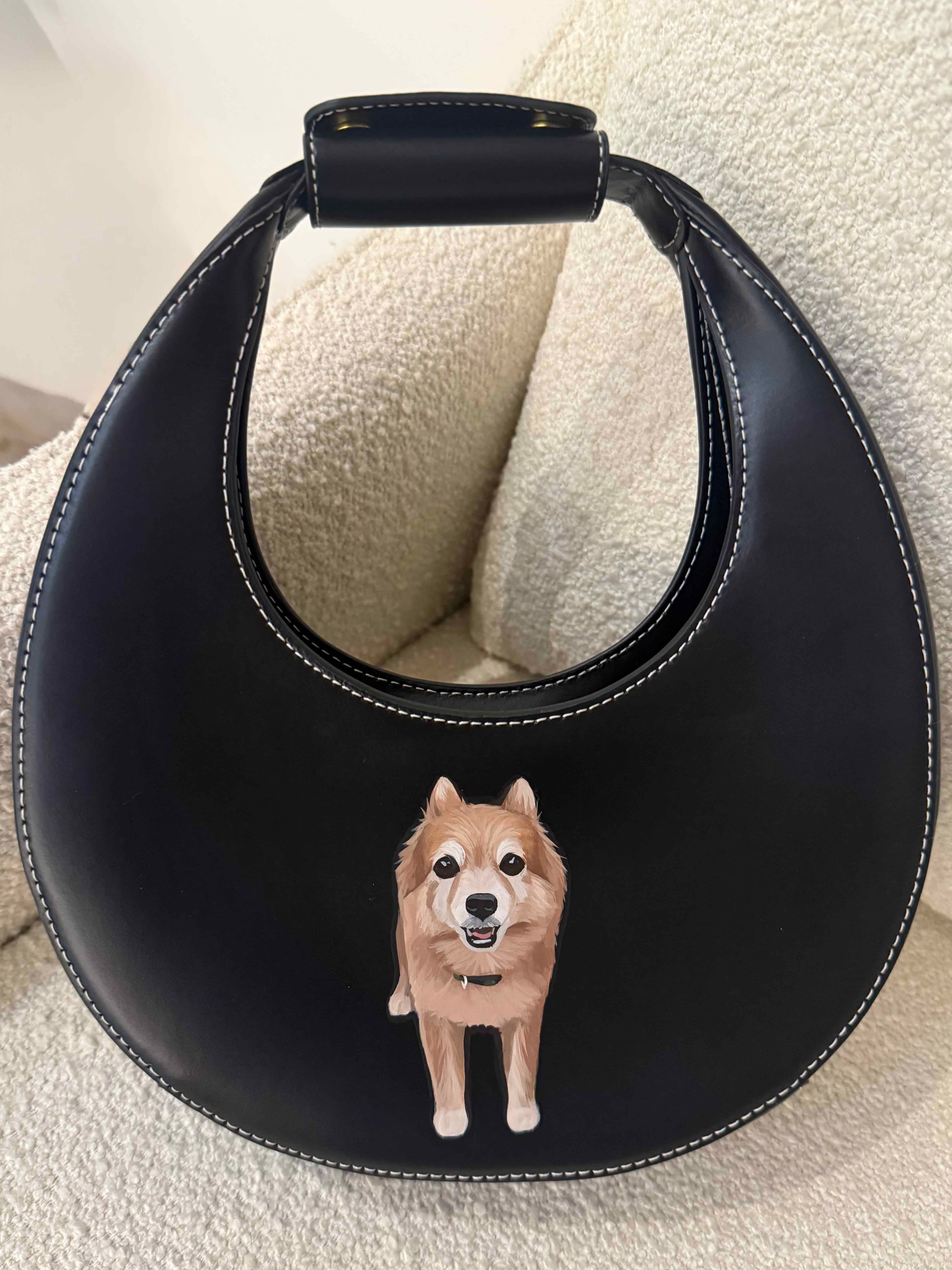
And then there is the piece that no amount of shopping could replicate: a custom Staud Moon Bag—small, structured, in its characteristic crescent shape—printed with a miniature portrait of their late dog, Roxie. “I don’t even use it,” Shreya says. “I just keep it.”

Roxie on Staud Moon Bag, The Nod Mag
The custom Staud Moon bag

Sisterhood of style

When it comes to shopping habits, Shreya has developed a newfound enthusiasm for vintage shopping that has Isha rolling her eyes—she’s now planning holidays to Japan simply to hunt down the pieces on her bucket list. On a recent trip, she came back with a vintage Cartier Ruban watch (a Panthère variant they don’t produce anymore) and a navy Margiela jacket of indeterminate gender that she loves precisely for that quality. “The boomers who actually wore the good clothes are finally putting them back on the market,” she notes.

Like any good older sister, she naturally kept her eyes open for gifts for Isha too. After trawling across twenty stores in Tokyo, she returned with a beige Chanel Boy Bag—the kind with 24-karat gold-plated hardware—which Isha now describes as a favourite accessory, overthrowing the last gift that Shreya got her, a small purple Bottega Veneta pouch. “I would never buy purple for myself,” Isha says. “But it works on everything.”

This, maybe, is the quiet logic of sisterhood and style: the person who knows you well enough to buy you the colour you’d never choose for yourself, and to get it exactly right.

The Nod Newsletter

We're making your inbox interesting. Enter your email to get our best reads and exclusive insights from our editors delivered directly to you.