



Fashion03 Jan 20264 MIN

The Cockney Sikh is not your average Punjabi uncle

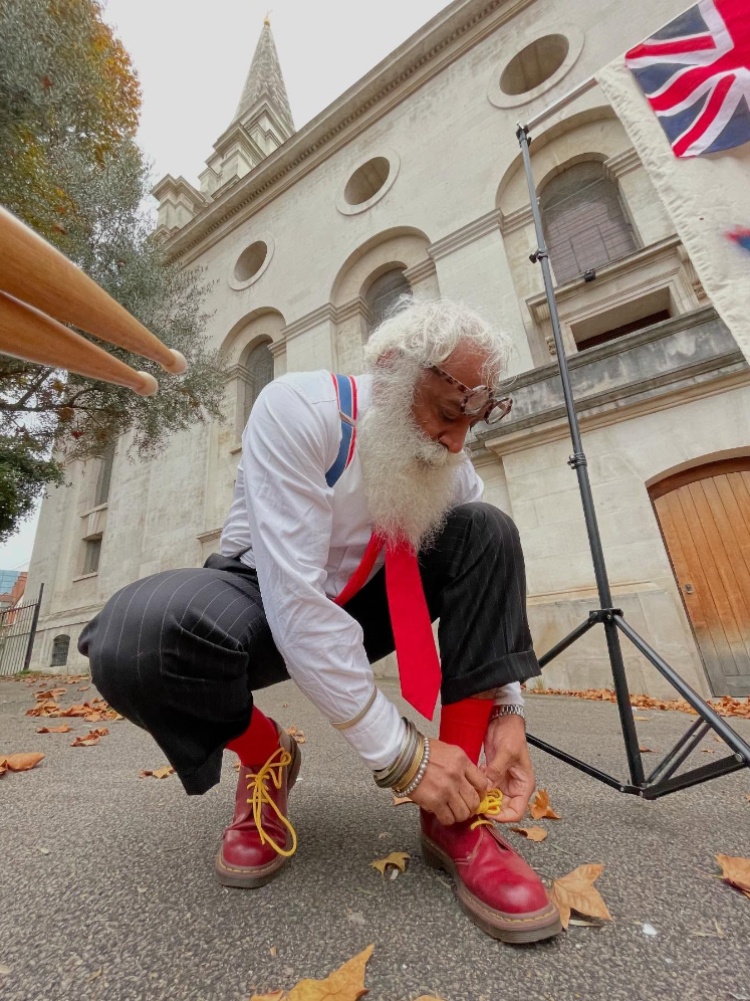
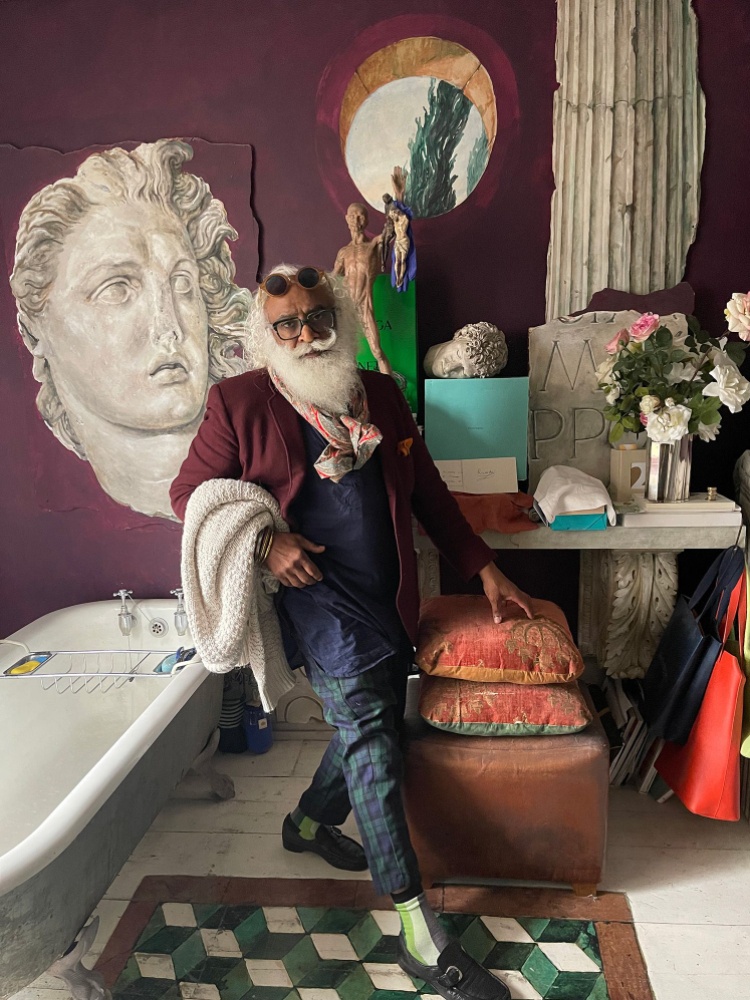
With his custom fedoras and delightfully mismatched suits, London-based multihyphenate Suresh Singh wants to bring his own brand of fashion anarchy to London streets

Image

Courtesy The Cockney Sikh

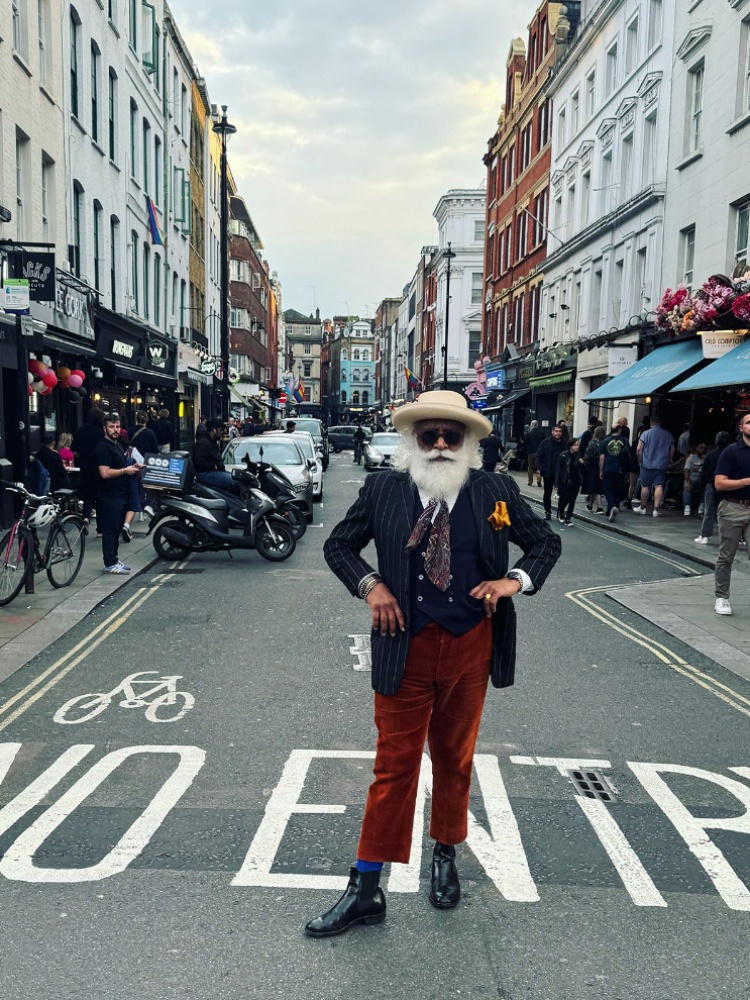
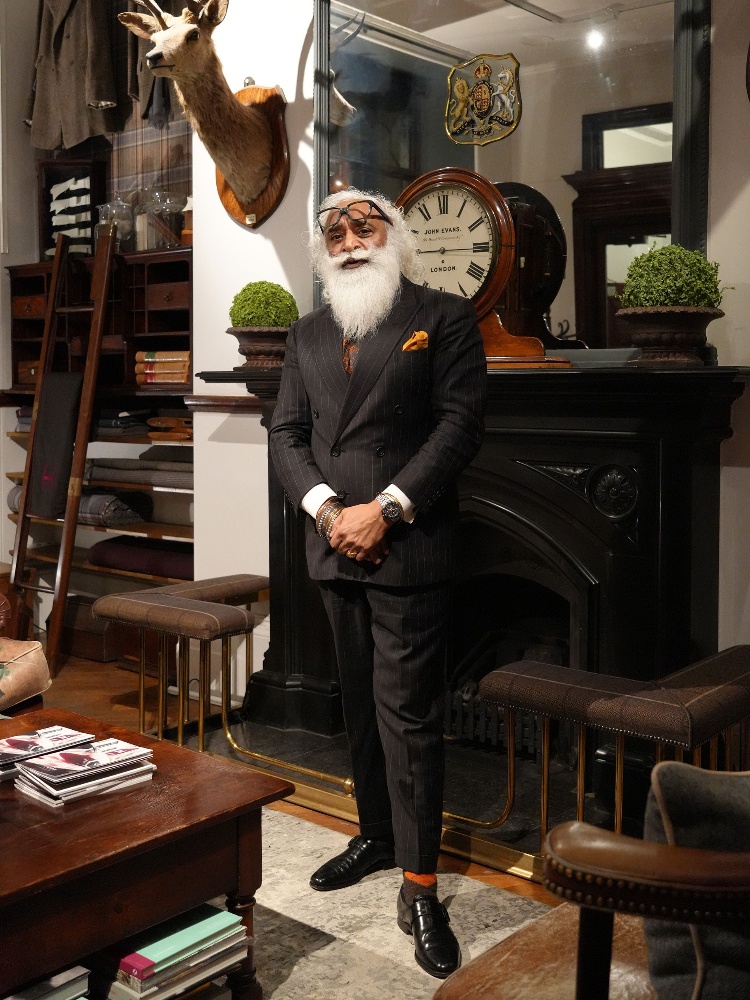
“What time is it there?” asks Suresh Singh. “10 pm,” I reply. “Ah, how beautiful. May God bless you,” he drawls in an east London accent on our Zoom call. Popularly known by his Instagram alias, The Cockney Sikh, Suresh Singh is a sexagenarian style icon whose infectious romanticism towards life most notably permeates the way he dresses. If you are a London resident, you might spot him traipsing around the streets of Spitalfields dressed in a sharp three-piece suit, its sobriety subverted by an aubergine turban or a bright orange sock.

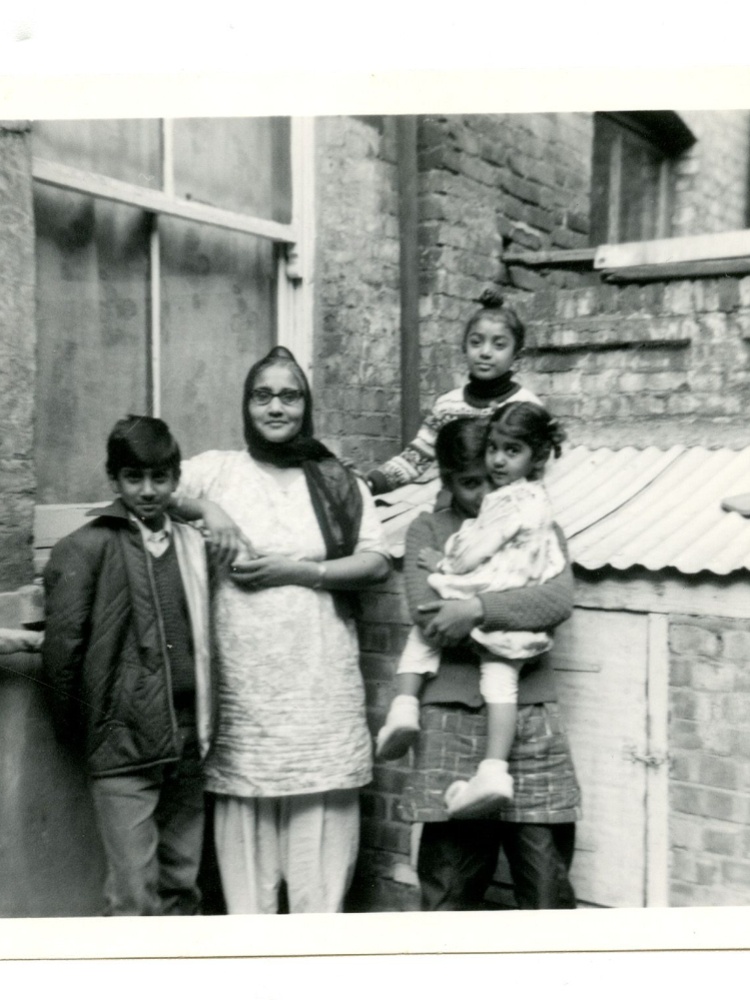
The trained architect, musician, and author was raised by immigrant parents who moved to London from Punjab in 1949. Armed with a box of shoe polish, his parents slept in doorways amongst vagabond Sikhs and Buddhists, under smog-infested skies. Ambition and good taste pulsed through their veins. As they worked their way up, his father began dressing in suits cut by Jewish and Irish tailors on Princeton Street. “From a young age, my mother taught me about beauty and aesthetics. And she never associated vanity with it; you could simply look good for yourself. This isn’t something commonly preached by South Asian parents to their sons, you know? But unlike other kids my age, I never walked out the house wearing a baseball cap or trackpants slung low on my bum!” he quips.
A conversation with Singh is akin to a treasure trove of nostalgia. His father, a passionate photographer, documented many slices of their life; those mementos are today proudly displayed at the Bishopsgate Institute under the Suresh Singh archive. His sense of style shaped through lived experiences, he delves into those defining moments and unique pieces he’s collected along the way. 

Punjabi hybridism 

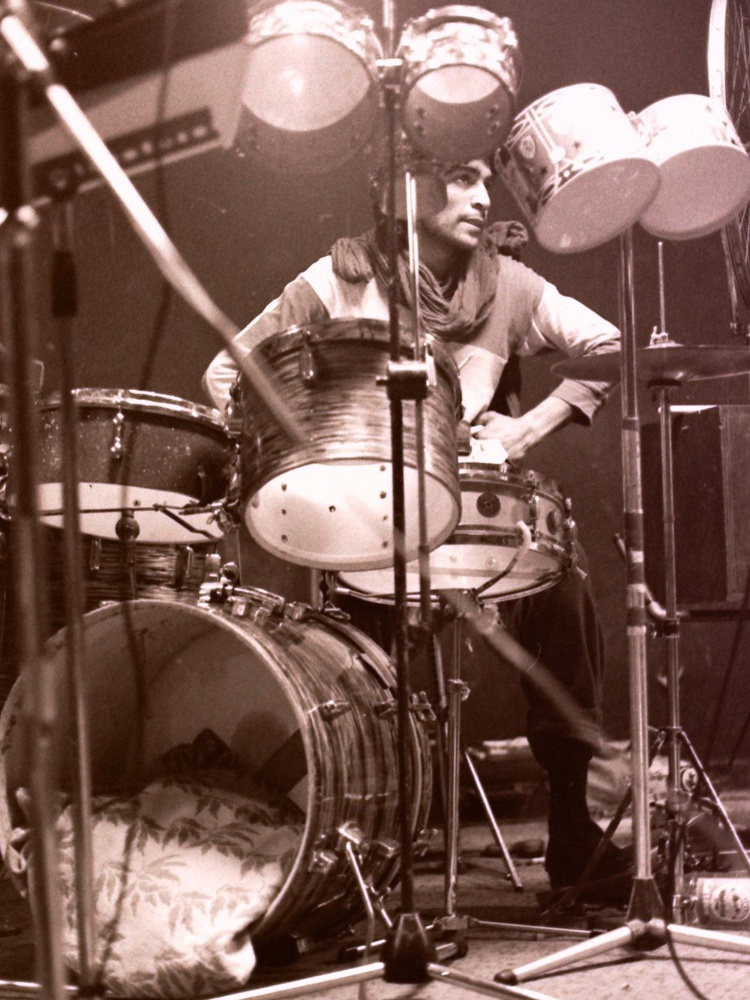
As a young man of colour, Singh knew early on that he was different, and the way he dressed became a form of expression. In 1977, London was immersed in the upswing of the Punk movement. Singh, a talented drummer, began touring with a band called Suzie, and slowly, the artform began to mould his personal style. “I was what some might consider the first Punjabi punk. I had my nose pierced and was wearing earrings. There was push-back on this—the other boys were wearing sordid jumpers from Marks & Spencer, their hair slick with Brylcreem. They always questioned how I dressed. But that’s the beauty of punk, that anarchic thinking that’s two fingers up to the system.” 

The young musician organically amalgamated his heritage with British subculture, pairing slouchy knits with his mother’s chunnis and tailored blazers with kurtas. He stood as a distinguished teenager amidst bandmates dressed in fuzzy argyles and buckled jeans, clothes synonymous with the movement, him rebelling in his own way. 

Dressing up as an active sport 

Singh doesn’t shop off the rack. His impressive collection of fedora hats are made by Lock & Co Hatters, the oldest hat makers in the world. Today, on the other side of the screen, he’s dressed in a crisp shirt by British label Turnbull & Asser, known for their made-to-measure clothing. The impeccable ensemble is finished off by corduroy trousers from Cordings of Picadilly, another quintessential old-school establishment. “How long does it take to put an outfit together every day?” I muse. “Hours! I’m starting the night before; this isn’t a part-time job, mate!” he laughs.

“My father’s mechanism to fight racism was that when he walked out of that street, the white man would say, ‘Wow, that brown geezer is dressed better than me, man.’ I am an architect, which can be very boring, so planning in advance is the default setting.” 

Other wardrobe essentials include handmade Scottish jumpers, a ring gifted to him by his mama ji, and Cutler & Gross glasses (because Sean Connery wore them). “I’ve always looked different, even when I sit in a gurdwara or a temple or the church, and I’m thinking, well, I’m the only one who’s looking like this. I quite like it, though—you know what I mean? I inherited this way of being fearless in my sense of style from my parents, and sometimes that in itself is a statement.”

A stitch, a story 

The warmth of familial ties carries forward into the present day. Beside a curated closet of Britain’s finest designers, Singh owns unique pieces that money can’t buy. A striped tank top hand-knitted by his mother when he was an adolescent, which once hung down to the knees of his frail frame, is his prized possession. “You’ll grow into it, bub,” my mum said. I wore it anyway; it was the ’60s and I often got stopped in the streets by the hippies asking me where I got it from. It’s a real piece of art.”

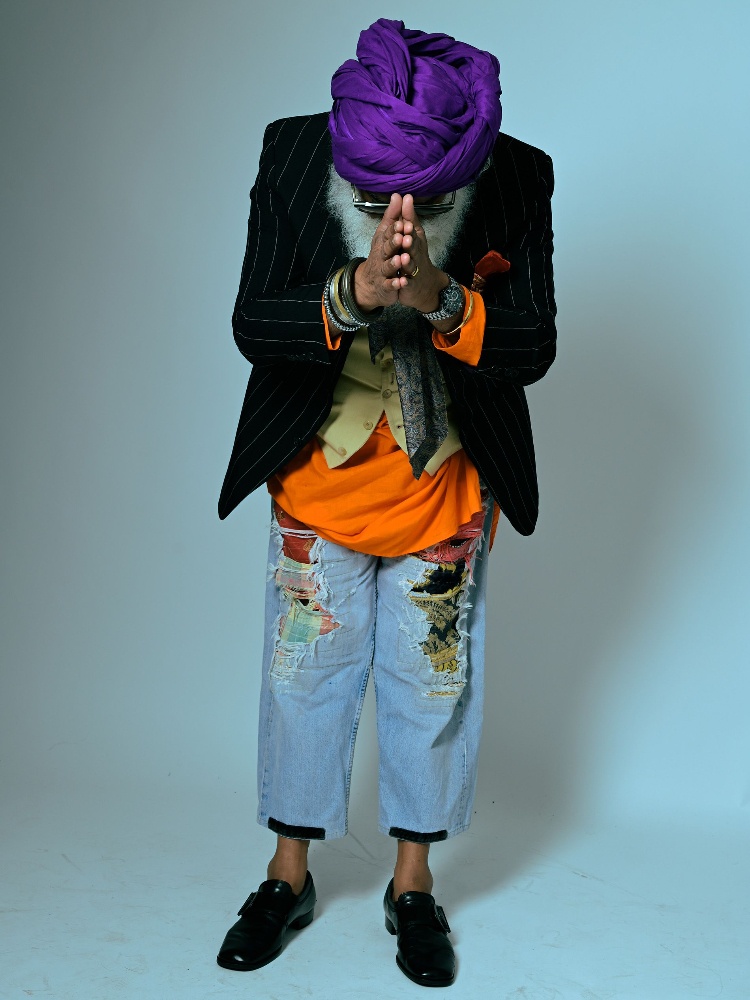
Singh’s wife, Jagir Kaur, is a gifted seamstress who has worked with renowned designers in London’s upscale Sloane Square, dressing celebrities such as Diana Ross. On home turf, she is the brains behind her husband’s many eccentric knitted ties. The pièce de résistance, however, is a pair of denim pants. She ingeniously patched the fraying trousers with slivers of fabric derived from the clothes their four children wore as infants, resulting in a wonderfully rugged and colourful patina that Singh wears like second skin. “I've told my kids, when I die, you better archive these, they’re really special.” 

The relationship between ageing and fashion is an intriguing one. Some settle in the rhythms of daily life, the youthful zest that once urged them to experiment sartorially feeling lacklustre, but in the case of the Cockney Sikh every day is a runway. “I've upped my gear, bro. I bump into east London kids who tell me, ‘Uncle ji, we want to look like you when we grow old.’ I’m going to give them a bit of a run for their money. When we leave, we leave with nothing, but we might as well go with a bit of swag.”

The Nod Newsletter

We're making your inbox interesting. Enter your email to get our best reads and exclusive insights from our editors delivered directly to you.