



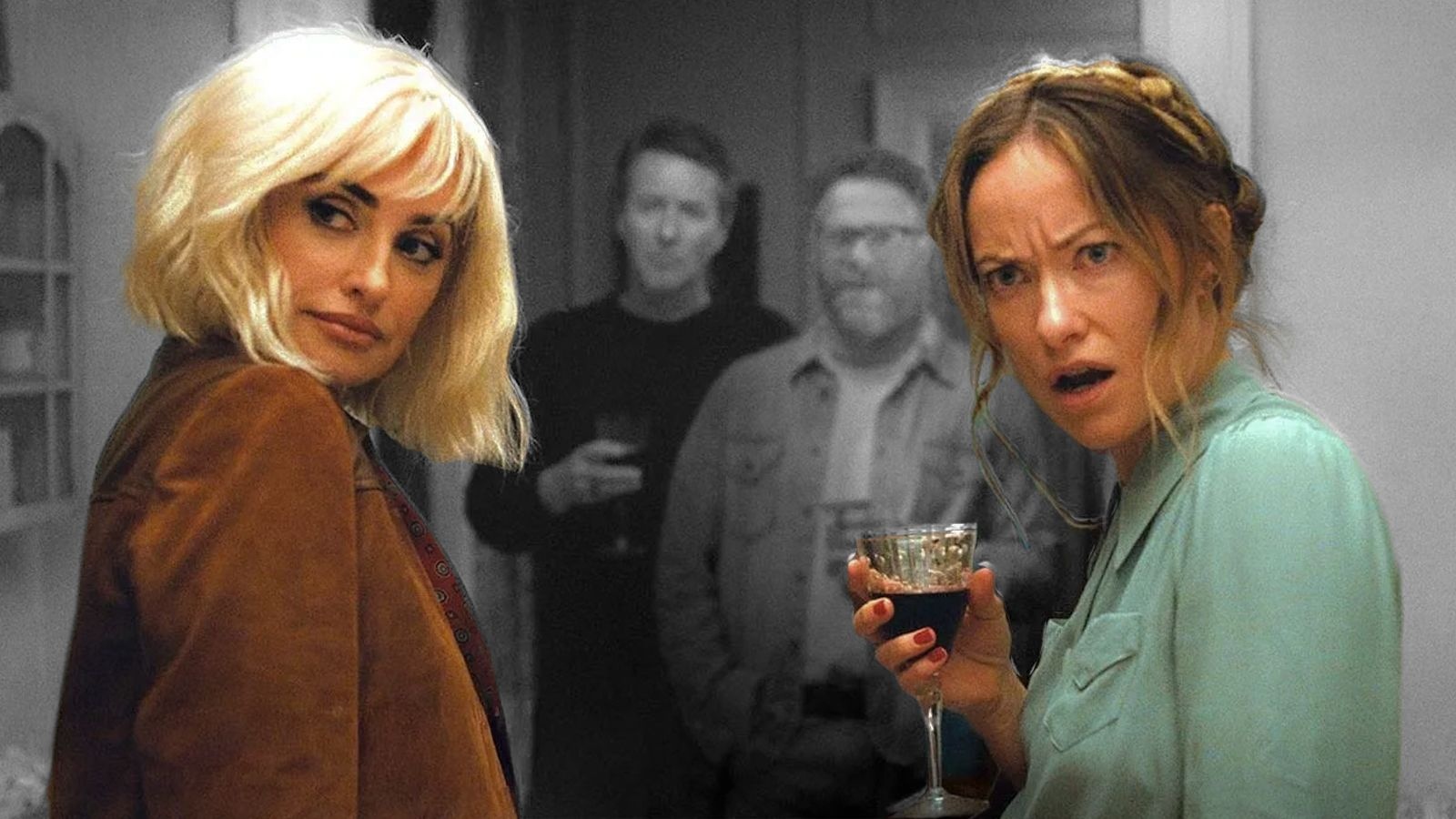

Duality, as much as we’d like to believe, is not a trait monopolised by Geminis. We all have two sides—one we reserve for people we owe manners to (that stranger you met on the train, a fellow traveller in a new country, the security guard at your office) and one to our partners, who we think will love us anyway.
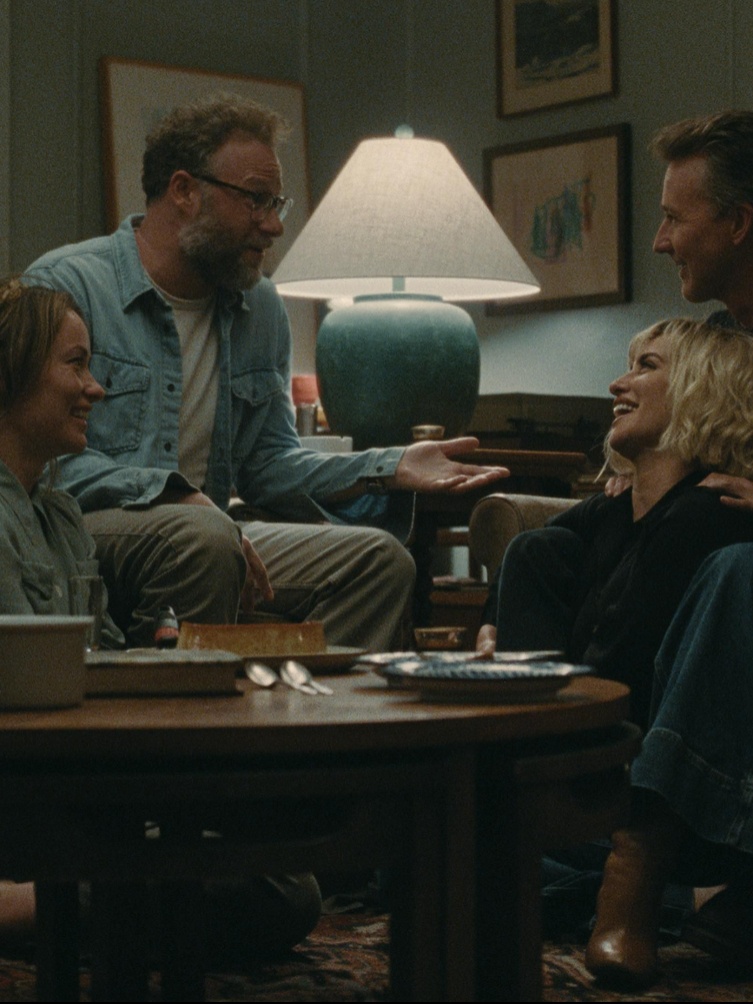
It’s a theory that echoes through The Invite, a movie that follows Angela (Olivia Wilde) and Joe (Seth Rogen), a long-time-married couple, and their uninhibited neighbours, Pina (Penélope Cruz) and Hawk (Edward Norton).
The movie is set in a single room in Angela and Joe’s apartment over an evening, when Angela invites their neighbours over for dinner, much to the standoffish Joe’s dismay. As the evening progresses, the characters—and their dynamics with each other—are peeled back layer by layer. Before the guests arrive, Joe and Angela’s marriage already feels frayed. Their patience with each other is hanging by a thread, and every interaction somehow turns into a fight.
It’s uncomfortable to watch but it’s also relatable—something every cishet couple in a long-time relationship has experienced more often than they would have liked to. The huff and puff around daily chores: Who washes the dishes? Who gets the laundry? Who scoops the cat litter everyday? And the mild annoyance around familiar habits that turn into everyday aggressions we belt out casually to the ones closest to us: the stray towel or sock left on the bed, the way he/she chews their food, and the overall grouchy feeling around someone whose habits you know too well. In the film, Joe is frustrated by small reminders, like leaving his shoes at the door or not smoking indoors. When he attempts to compliment Angela’s blouse, she responds with resentment, highlighting a deeper frustration stemming from her feeling unappreciated.
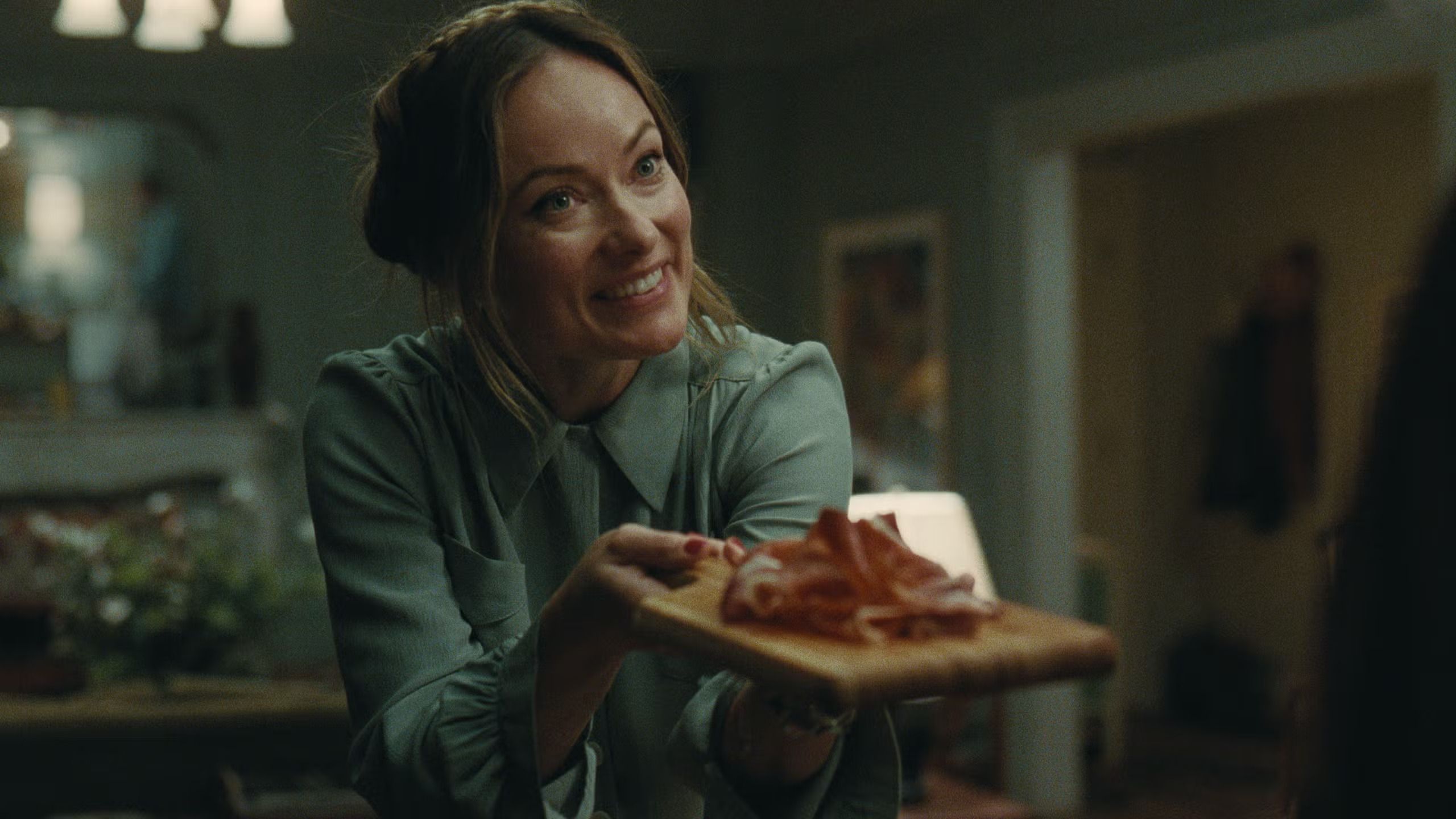
Their arguments are exhausting and it feels like they’ve had similar ones on loop often. At the dinner table, as much as their dry, snarky back-and-forth entertains, it brings to fore the underlying resentment Joe and Angela have for each other. Remember the dinner party scene in Benedict Cumberbatch and Olivia Colman’s The Roses? Much like that. As it becomes apparent that their marriage is in SOS mode, Pina and Hawk, the emotionally and physically intimate couple, feel visibly suffocated by the hostility in the room. Except, as the evening progresses, Joe and Angela start showing a different version of themselves.
Characters like The Roses, Angela and Joe, and even Marie and Frank of Everybody Loves Raymond, who fight often, are widely loved because they show us the mirror. We see ourselves in them and how unreasonably annoying we get when we are buzzing with unresolved conflicts. It also makes one wonder: why do we give our partners the worst piece of the pie?
These are issues often discussed in the therapist’s office. Esther Perel, the psychotherapist, author, and podcast host who served as a consultant on the movie, wanted to bring it into culture speak with Angela and Joe’s dynamics. Mission accomplished, Perel. Though, she also warns that constantly bickering doesn’t solely make a couple dysfunctional as long as there is repair afterwards and you still want to be around each other. Angela and Joe? Not so much.
Aradhana Asher, a Dubai-based homemaker in her forties, who’s been married for more than 15 years, feels that after that long the motivation to put effort into maintaining the emotional connection reduces. “We break into an argument over the most trivial things, like him not keeping his shoes in the rack or coming home and starting to work again. Or feeding our son junk food when I am away for a few days.” In his office, however, Asher says her husband is known as someone who is organised and takes ownership. He has had multiple promotions and is at a senior position in the company. “At home, I have to tell him what to do, which, honestly, doubles the load for me. I wonder: would he have climbed the ladder at work if his manager asked him why he didn’t do something and he said, ‘Well, you didn’t remind me.’” Asher says these retorts kill conversations. And talking about their hopes and dreams or even making plans is mostly off the table. Their conversations these days are usually logistical, like two colleagues talking about what to order for lunch.
Rashi Laskari, a Mumbai-based counselling psychologist, says couples often get stuck in a loop waiting for the other person to show appreciation first, explaining this cycle of general crankiness and simmering annoyances. John Bowlby’s attachment theory explains why this happens—our partners become our safe space, but that comfort can also make us lower our guard and become less mindful of our words and actions.
Others like Paritosh Dagli, a 42-year-old COO of an automative company based in Pune, feel it’s the grind of life that often leaves you depleted. It’s the toll of being nice to everyone around you that starts breaking down inside the familiar territory of home. “When I am so exhausted with work, commute, and having to be patient all day, I just want to unwind at home. When my wife complains about something, I get defensive instead of understanding her POV because my emotional bandwidth is at zero,” says Dagli, who has been married for 15 years.
It’s a sense of security that unfortunately gives us an illusion that the relationship can survive neglect or lack of effort. But what happens when our partner doesn’t meet our needs and expectations? Devankita Banerjee, a 35-year-old UI/UX designer, gets this.
Often described as the most relaxed person in her friend group, Banerjee used to find it difficult to cut her husband slack, which led to a loop of expectations and disappointments. The two are widely different people. She wants to go out on weekends, make spontaneous plans. He wants to unwind at home or do something relaxing. “I used to expect him to agree to what I want to do because it makes me happy, instead of understanding that he is different. Most of our fights used to start due to our intolerance with each other’s differences,” she shares. Banerjee notes that neither of them is like that with their friends or larger family. “We never expected our friends to have exactly the same preferences as us and we have always been more accommodating with them.”
Over the eight years of their marriage, they’ve worked on their communication. Now, he makes an effort to go out with her, and she doesn’t depend on him for all her plans.
Unlike Banerjee and her husband, Angela and Joe are yet to find a resolution. Their resentment is densely reflected in their interactions and even in the lack of intimacy between them (they haven’t had sex in a year). But when they swap partners, they are keen on the feeling of being desired that awaits them. Perhaps it’s not a lack of libido but a build-up of resentment that’s eaten away at their awe for each other.
Sometimes it’s basic biology. “With declining hormones, it’s even harder to feel motivated to be intimate, and having to have so many tabs open in my brain kills it,” shares Asher. At other times, it’s good old sexism: a study confirms that having a bulk of household work on your shoulders, with your partner only “helping” out, lowers libido in women.
For Dagli and his wife, who were both in high stress jobs, the daily grind and the subsequent bickering was killing the desire. “After I moved to Pune from Mumbai, where my wife still lives, things have improved. We look forward to meeting each other every weekend and spending quality time together. Our sex life is on fire,” he adds.
Living apart gave them the opportunity to unwind on weeknights without getting on each other’s nerves and be more intentional in their behaviour on weekends, like they would be with a friend you meet occasionally.
Laskari believes that love sometimes gets buried under years of hurt, disappointment, and defensiveness, but that doesn’t mean all is lost. The simple rules of companionship? Extend your partner the same kindness and patience you offer others. Replace frustration with empathy. Interpret each other’s intentions generously, and more importantly, forgive openly. That’s the quiet work behind long-term love.
It is something that Perel often talks about too. That relationships go through a cycle of connection-disconnection-connection. Hopefully, with Angela and Joe finally reaching a point where they can play the piano together, that’s their epilogue too.