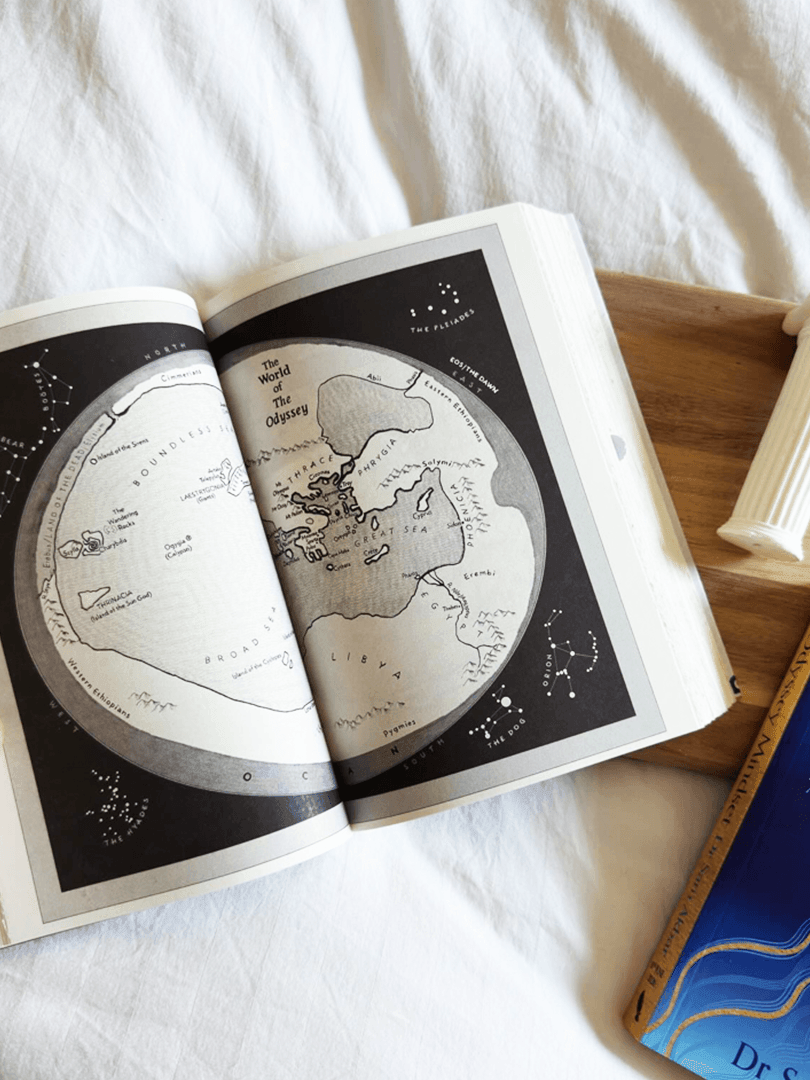




For years, The Odyssey has had a bit of an image problem. For many of us, it wasn’t the epic adventure that inspired countless stories but the dusty classic we half-read for school, promising ourselves we’d return to it “one day”. Apparently, that day is now. With Christopher Nolan’s The Odyssey sailing into IMAX last week, Homer’s nearly 3,000-year-old epic has become the latest book everyone’s suddenly reading. If your Instagram feed has looked suspiciously full of dog-eared copies lately, you’re not imagining it.
Of course, not everyone is reading it for the same reason. Some are genuinely curious about the original. Some simply want to be able to declare “The book was better” before the credits even roll. Others are preparing to become that friend who spends the movie whispering, “Actually, that’s not how it happens in the book.” A little literary clout never hurt anyone.
In an age of shrinking attention spans, people voluntarily picking up a 500-page Greek epic feels like a rare cultural win.
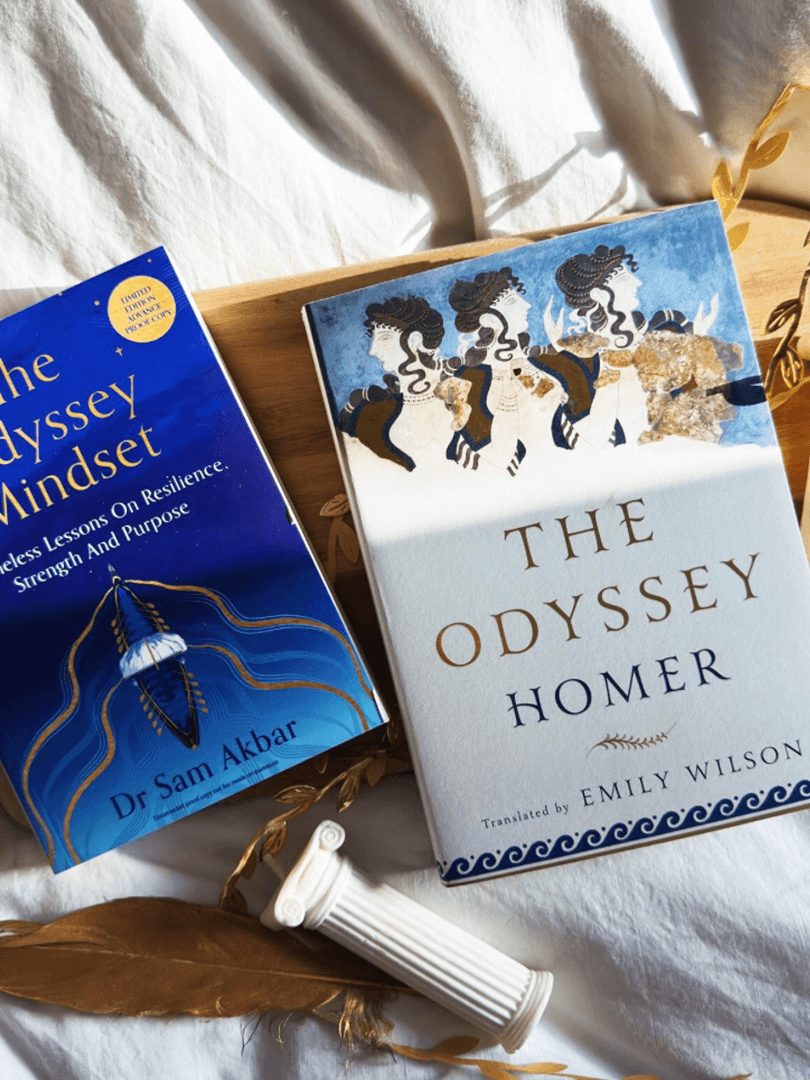
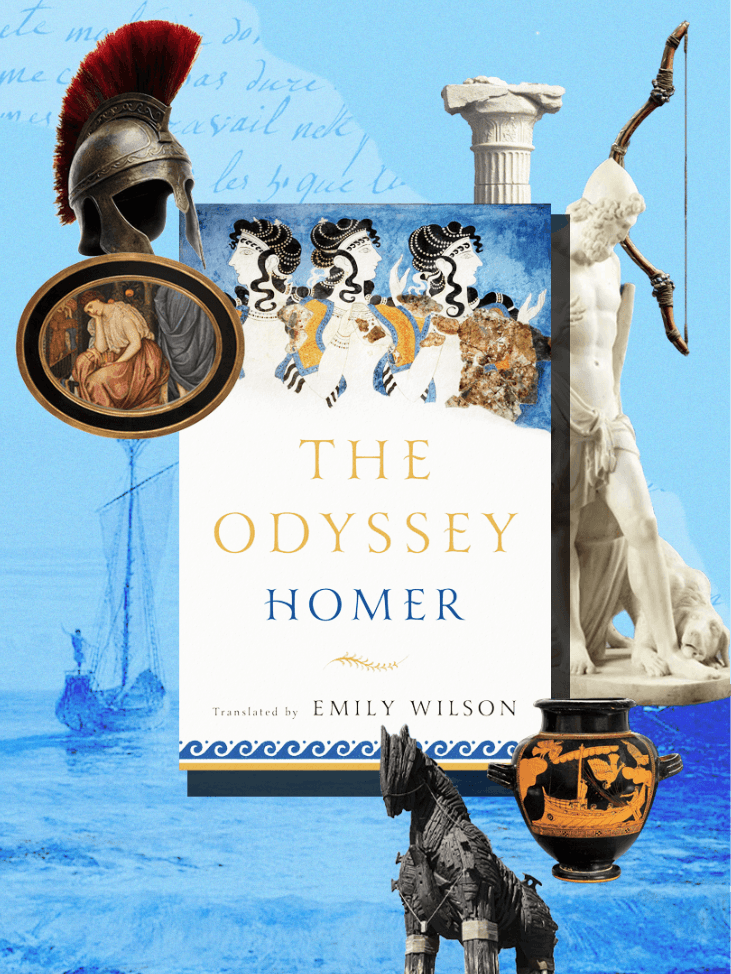
Scroll through BookTok or Instagram and you’ll find creators comparing translations, arguing whether Emily Wilson or Robert Fagles offers the best first read, posting annotated copies filled with pastel-coloured sticky tabs, documenting their progress through the poem and debating which edition first-time readers should pick up. Others timed their reading around the film’s release, treating the cinema as a finish line. In an age of shrinking attention spans, people voluntarily picking up a 500-page Greek epic feels like a rare cultural win. However, one edition, in particular, seems to be leading the charge.
Mithilesh Singh, the floor manager at Khan Market’s Bahrisons Booksellers says the recent rush has largely been driven by readers between 18 and 35 years old. “We’ve definitely seen a huge jump in sales of The Odyssey over the last month. Most people are specifically asking for Emily Wilson’s translation. Honestly, I’m surprised because it’s almost ₹2,000, which is quite expensive by Indian standards. We’re out of stock this week and have already ordered more because customers keep asking for it,” adds Singh. While most booksellers were reluctant to share exact sales figures, a representative at Kunzum Bookstore in GK-2 estimates it has sold 10-15 copies across different translations this month, an unusually strong run for a classic that usually sells at a much slower pace.
The spike isn’t limited to one bookstore. A representative from The Bookshop in Delhi says they’ve also noticed a steady rise in curiosity around the epic: “A few readers come in asking for a specific translation (Wilson’s), but most are simply asking for The Odyssey.” They believe the interest has grown after the film’s release rather than in anticipation of it. “It’s similar to what happened with Wuthering Heights. Once people watch the adaptation, they want to go back and read the original,” he adds.
Wilson’s translation keeps coming up for good reason. Published in 2017, it was the first complete English translation of The Odyssey by a woman. But what has really made it the internet’s favourite is how approachable it feels. Even its opening line has become a point of discussion. Where older translations describe Odysseus as “a man of twists and turns”, Wilson simply introduces him as “a complicated man”, immediately shifting the focus from a legendary hero to someone morally conflicted. Wilson has often said Homer’s poems were never intended to be locked away in classrooms. They were performed aloud for ordinary audiences, designed to be gripping, fast-moving stories rather than that texts readers had to stop and decipher with footnotes. Her translation tries to recreate that experience, making a 3,000-year-old poem feel surprisingly contemporary without losing its rhythm.
Hemshree Antani, a 30-year-old PR manager and longtime Greek mythology enthusiast, first read Stephen Mitchell’s translation when the film was announced two years ago, then revisited it last week right before the movie’s release, finishing the epic in just four days. “I finished it on the day the movie released and went for the 6:30 am show,” she says. While many readers are gravitating towards Wilson’s translation, Antani found Mitchell’s version equally accessible. Rather than judging the adaptation against the text, she saw it as something else entirely. “I don’t think adaptations are meant to replace the book or compete with it. The poem gave me the depth, the world, and the characters, while the film was Nolan’s interpretation. Everyone has read The Odyssey. The challenge is making people experience it differently, and I think he pulled that off.”