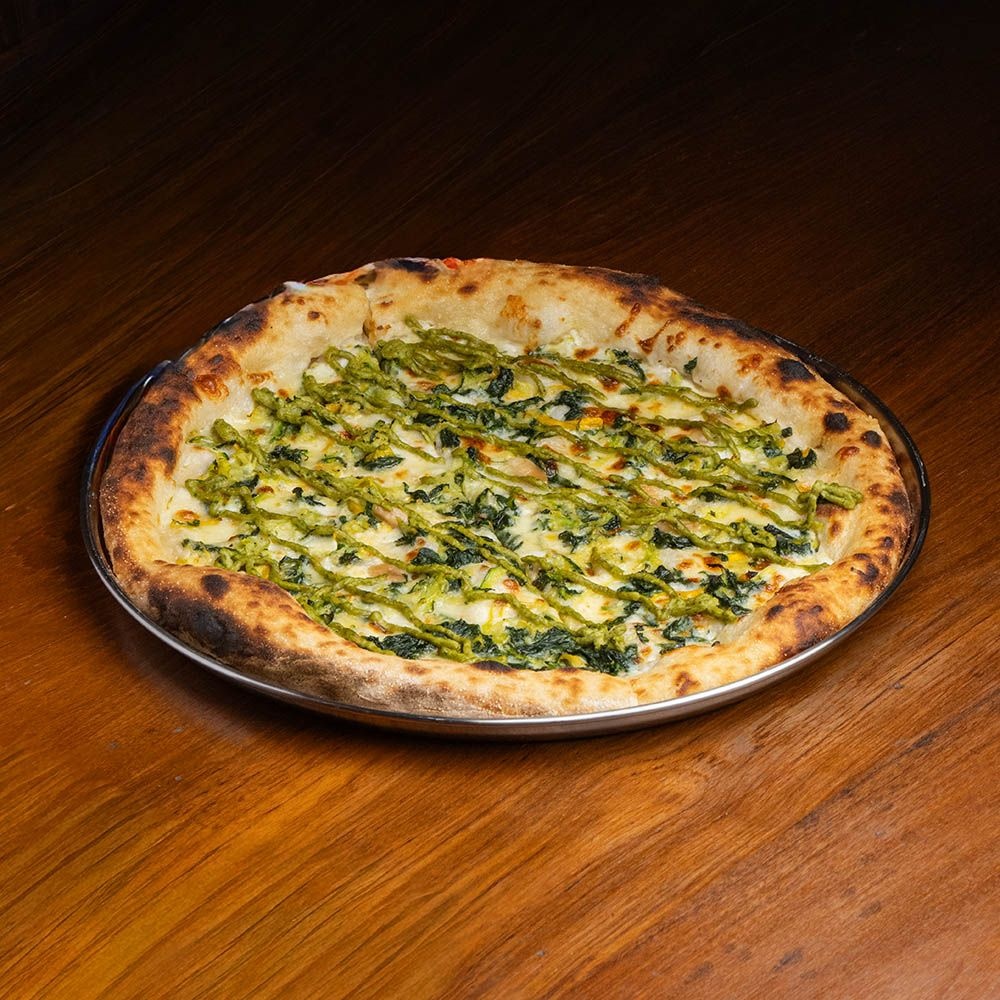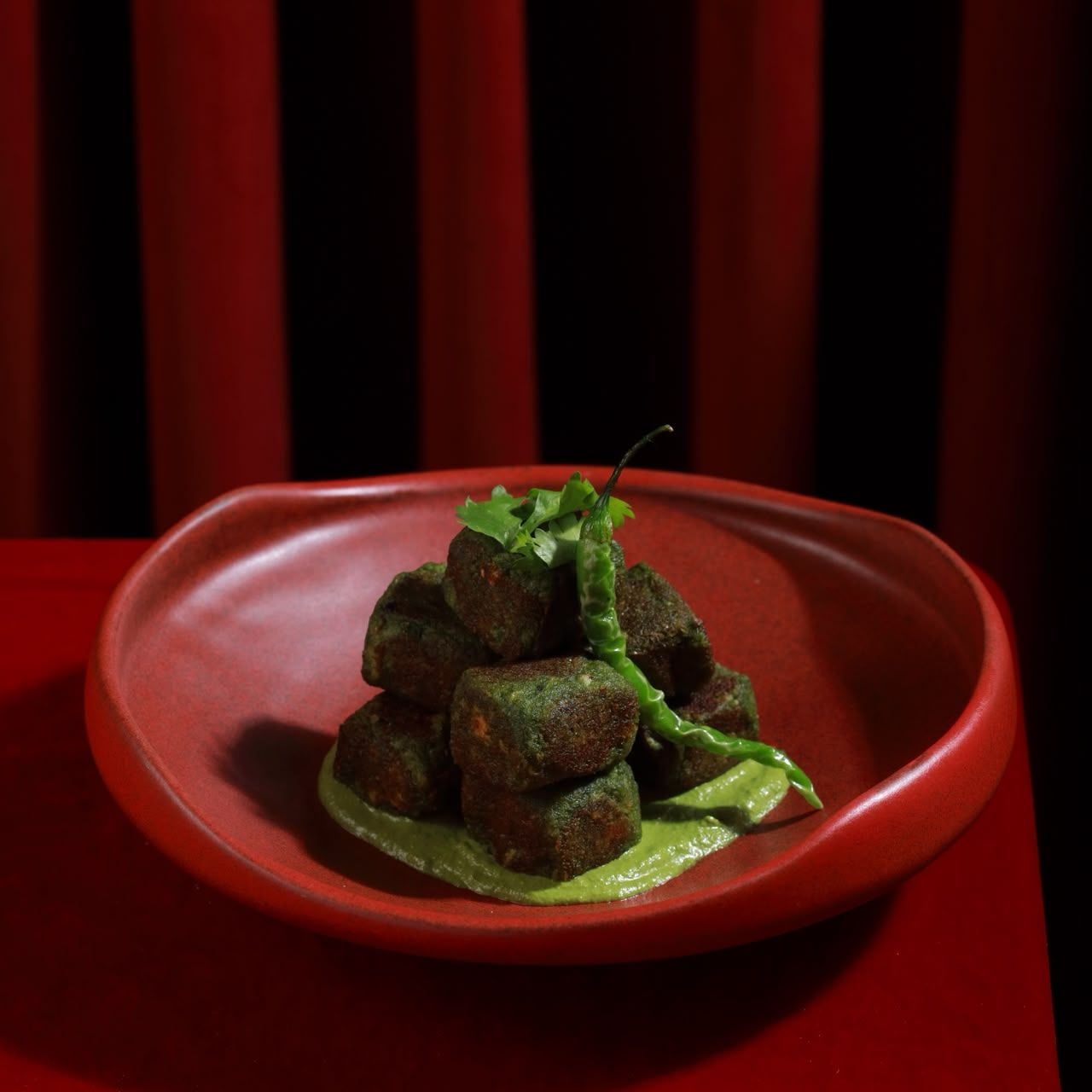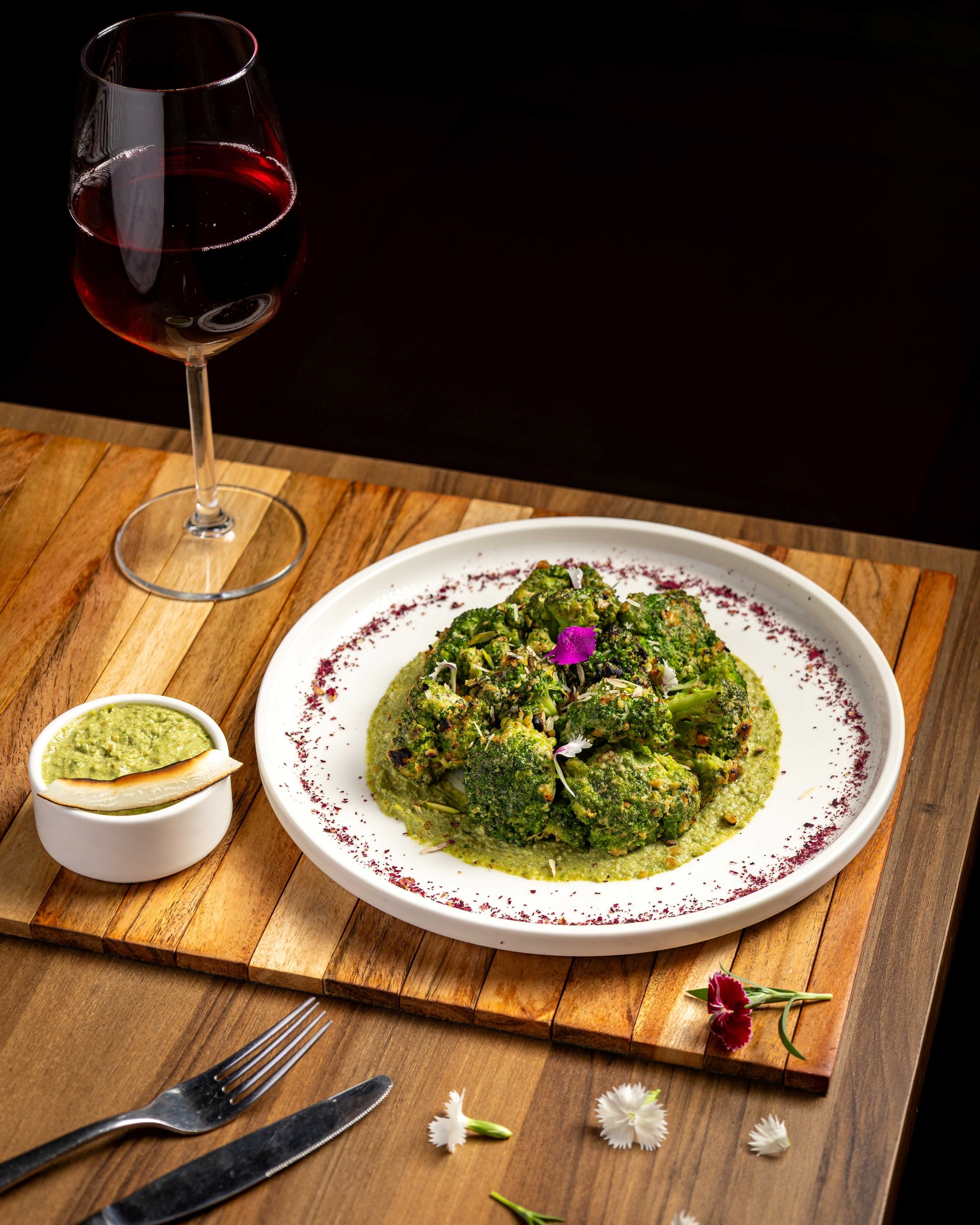




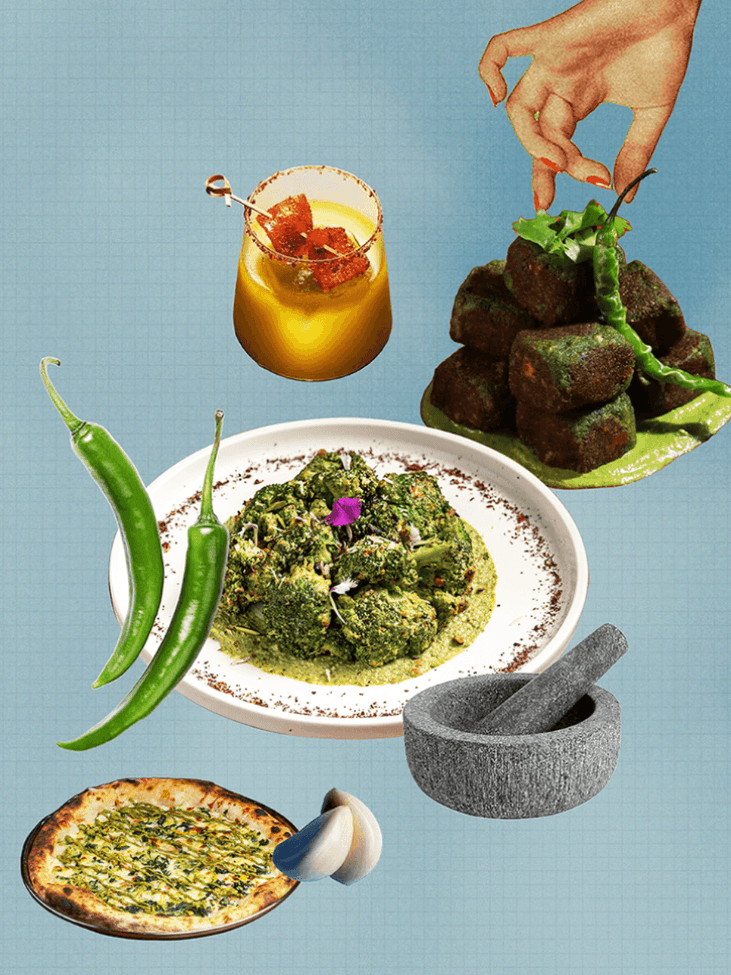

I was recently dining at Kalpaney, a vegetarian fine-dining restaurant in Bengaluru’s Indiranagar serving everything from north and south Indian fare to southeast Asian delicacies, when I got a taste of it. My naan came topped with an unassuming green paste. One bite into it, and the Mumbaikar in me immediately knew this wasn’t the plain ol’ coriander chutney or pesto. It was… thecha! My brain was not ready for this, but I was quite delighted nonetheless.
After spending most of my life in Mumbai, my family and I moved to Bengaluru around six years ago. We’ve since traded our vada pavs and sev puris for equally flavoursome kara bath and akki roti. So, stumbling upon a familiar flavour was a good surprise. But thecha on naan? Was it something I should have been prepared for?
Six months ago, ever since Malaika Arora’s homestyle recipe for thecha-coated paneer went viral (it is also served at her Bandra restaurant Scarlett House), thecha’s got a personality makeover of sorts. My feed has since been flooded with aajis sharing thecha recipes with the perfect chilli to peanut to coriander ratio, and I have followed Subko’s chef Daniel Trulson on his Dadar market run to pick the ingredients for this traditional Maharashtrian chutney that will eventually somehow find a spot on their menu.
Thecha is an accompaniment made with roasted green chillies, garlic, peanuts, and coriander, all hand-pounded in a mortar and pestle. In fact, ‘thecha’ itself comes from the Marathi word ‘thechne’, which means to crush or pound. It’s therefore not supposed to be a smooth paste but a chunky, coarse condiment. This was traditionally eaten with bhakri, a flatbread made of rice flour, salt, and water. The spicy—or as Maharashtrians say, zanzanit—thecha lends the otherwise simple meal depth with its flavour and heat.
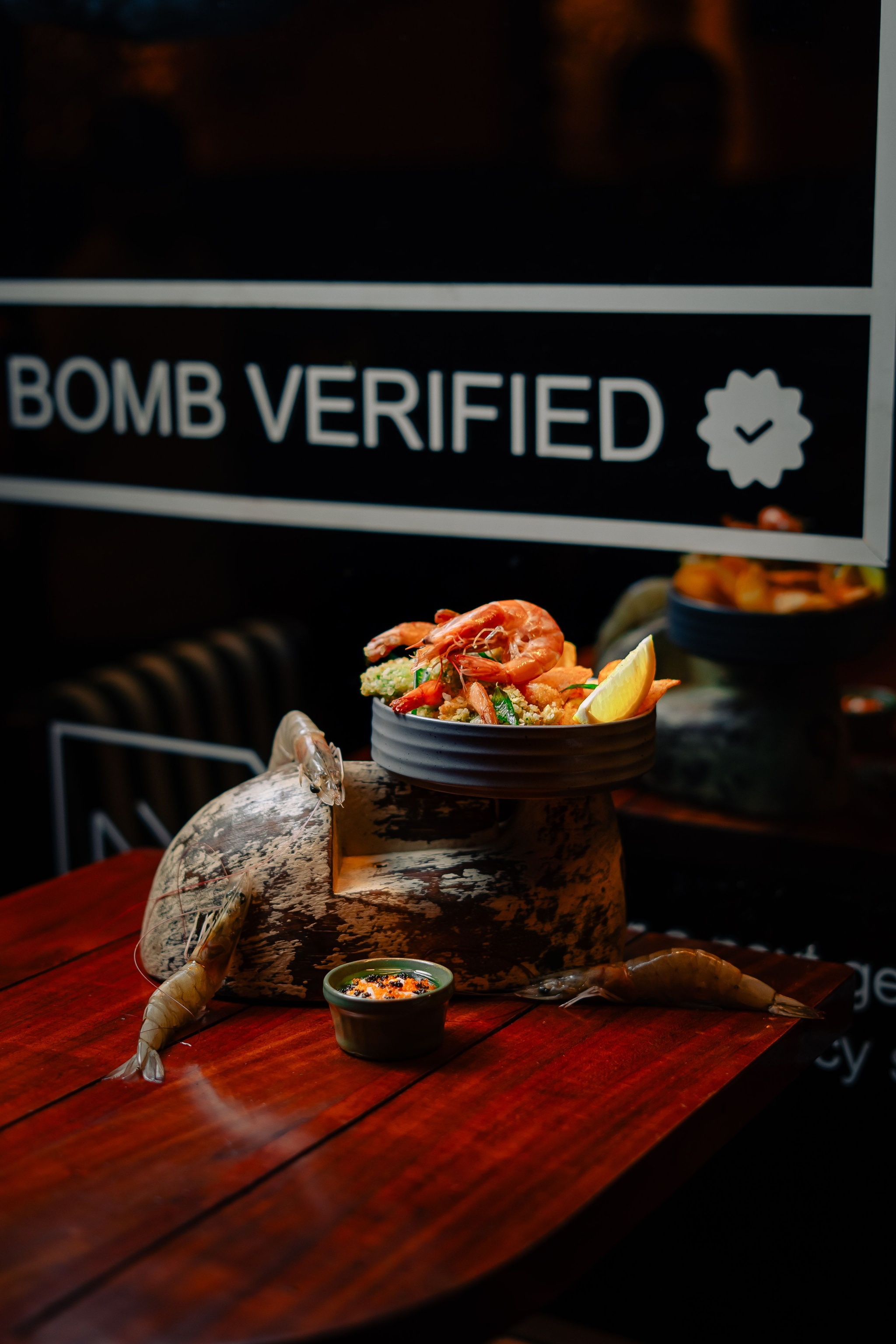
But let’s be clear: thecha is neither a new ingredient nor a recent discovery. What’s catching our attention is the innovative ways in which the humble Maharashtrian staple is being reimagined. The coarse green chutney is making an appearance on avocado toast, prawn fry, chilly chicken, and even cocktails. In the past, we’ve witnessed condiments like crispy chilli oil and gochujang go mainstream. Crispy chilli oil, known as hóng yóu in Sichuan cuisine and traditionally used as a dipping sauce or a dressing, is generously added on everything from omlettes to idlis today, while gochujang, the fermented sweet and savoury Korean staple, has made its way into salads and potatoe preps across the globe.