



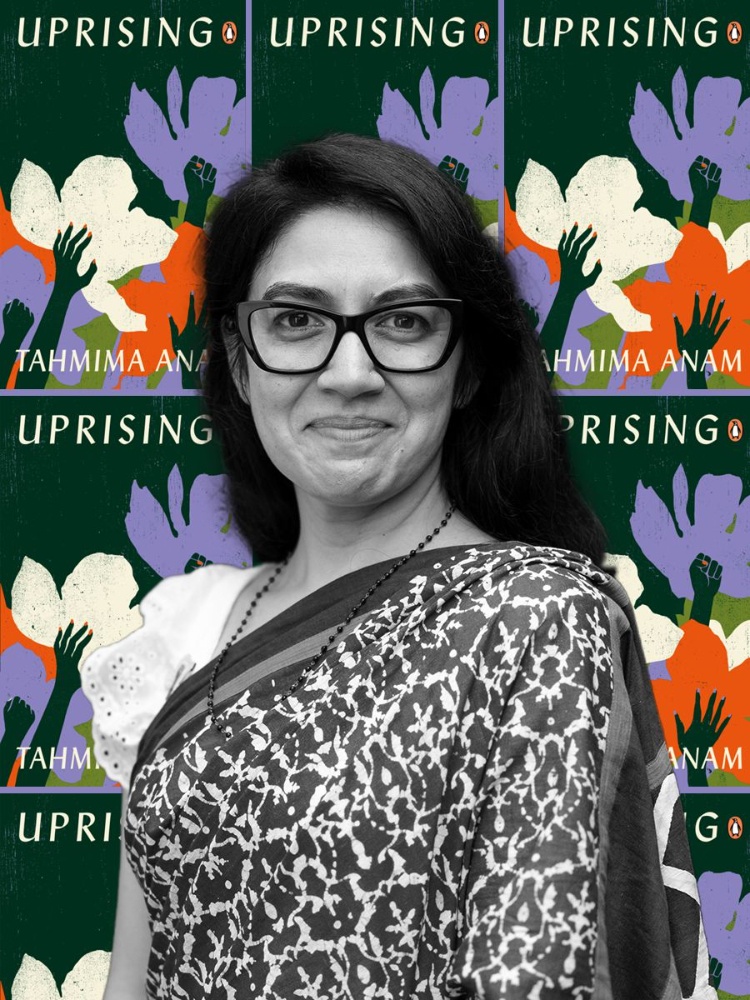

There is a point, somewhere midway through our conversation, when Bangladesh-born British writer, Tahmima Anam says something that quietly reframes her entire body of work. “I wanted,” she says, “to write what I don’t know.”
It is an unexpected admission from the 50-year-old London-based novelist so often associated with history. For two decades, Anam’s fiction has been inseparable from political memory. From the Bangladesh Liberation War of 1971 in A Golden Age (2007), to the moral aftermath of nationhood in The Good Muslim (2011), and more recently the seductive mythology of technology in The Startup Wife (2021), her novels have consistently explored the intimate ways history weaves itself into our lives. Unsurprisingly, her works also consistently crop up as essential reading for postcolonial literature modules in universities across the globe.
Despite the ample recurrence of political history and the resonance of deltaic folklore, Anam’s latest fictional offering feels markedly different. Uprising, released in June in India by Penguin Random House, has all the hallmarks of a work of fiction by Anam: politically ripe, deeply feminist, and attentive to structures of power. It follows the lives of a group of female sex workers on an unnamed brothel island in the mangroves of the Sundarbans delta, where their lives and those of their children are ruled by Amma. Part matriarch and full-time madam of the brothel island, Amma forces these women and their children into a life of inescapable destitution and oppression that is one day upended by the arrival of a new girl, Kusum Khan. Much like in the spirit of Tagore’s 1933 satirical dance drama Tasher Desh (The Land of Cards), Kusum’s arrival ushers a wave of newness and rebellion that incites the inhabitants of the island to rise up, leading to the novel’s pulsating crescendo of a climax.
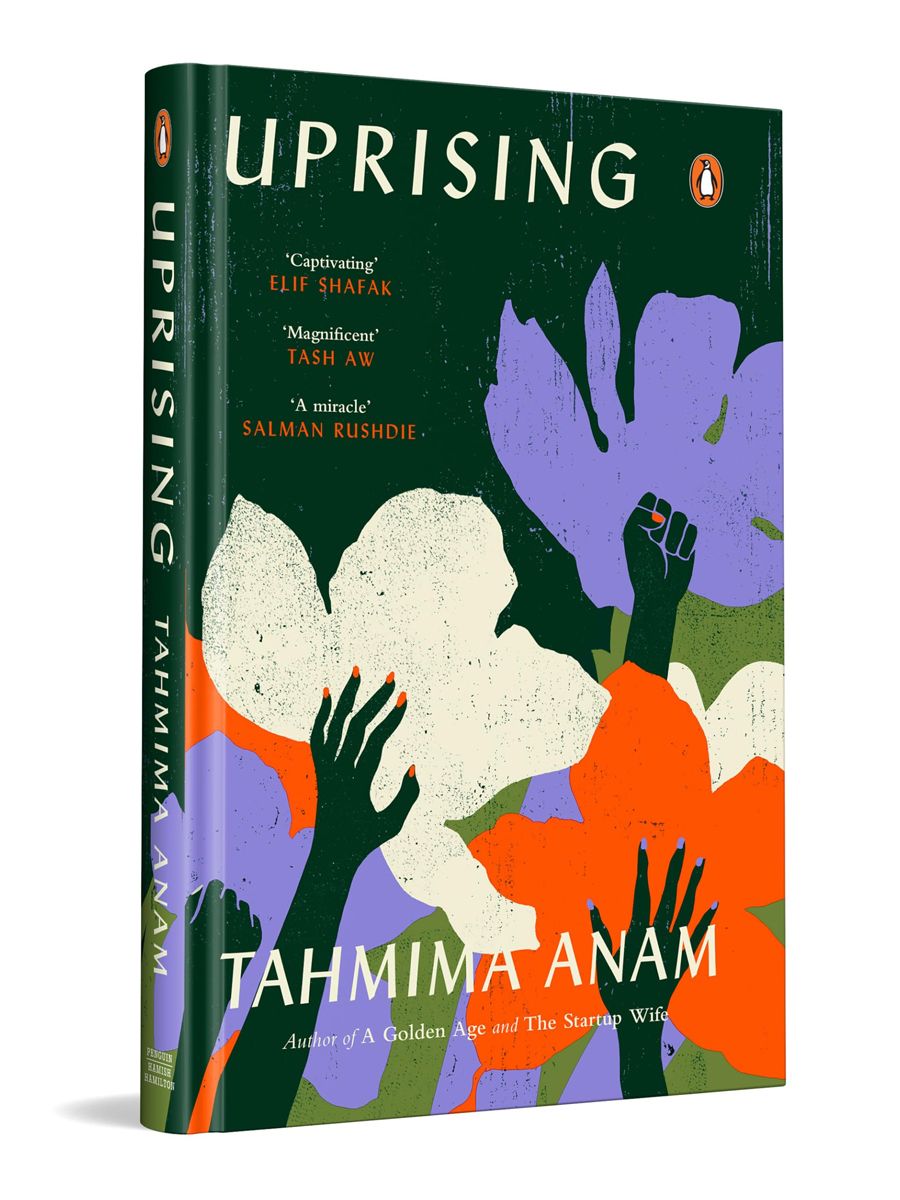
Yet, scratch beneath the surface, and it also stands as Anam’s boldest formal departure. The novel is narrated not by the women whose bodies bear the violence of the story but by their children in an uncanny collective voice. It is a fictional world not far removed from the ravages of reality but one where myth readily collides with ecological disaster, and the Subcontinent’s collapsing climate stands inseparable from patriarchy. In Anam’s own words, “It is not about women under an oppressive regime but about how they figure a way out of it.”
For more than a decade, Anam had known about Banishanta, the real brothel island that inspired the novel. She first heard of it during a visit to the Sundarbans 15 years ago and spent years researching it through photographs, documentary films, and archival material, making the striking yet firm decision never to set foot in the area until her manuscript was complete. “I didn’t want any of the characters in the book to be based on real people,” she explains, stressing the importance of building a world with the bricks of her own imagination.
“Once you’ve met the people living in the area, it’s difficult not to collapse the distinction between fiction and reality. This is the first book I’ve written about people who are furthest from my own subjectivity. No amount of anthropological research would allow me to live inside the minds of these women. The responsible thing, hence, was to make it purely a work of imagination.” It is a provocative answer in an age where creatives of all kinds are increasingly expected to justify every act of representation. Imagination, as Anam suggests, can sometimes be a more ethical space than false certainty.
The novel’s language moves with the cadence of oral storytelling: repetitive, incantatory, full of intentional double negatives, and almost liturgical. The children narrate as a collective “we”, recalling as much the chorus of classical Greek tragedies as the shared voices embedded in the sutradhars of south Asian storytelling traditions. Bon Bibi, the guardian spirit of the Sundarbans, also hovers over the novel like an unseen witness. For Anam, all of these stylistic decisions emerged from one foundational choice: using her language “to create a point of view, because everything else that the reader experiences follows from that”.
The result is a novel whose brutality eventually becomes bearable because its moral architecture rests on a foundation of hope. From its opening pages, Anam chooses a sense of inevitability over suspense, never letting the reader escape the trappings of their own foreknowledge. This structural decision eventually allows for a breakneck, propulsive rhythm that made for one of the fastest reads I have encountered in months. “I couldn’t ask readers to live in that world for too long,” she explains. “It had to feel propulsive. Also, if you don’t make readers empathise with the characters from the get-go, no one is going to turn the page, given how sordid the subject gets.” It is a deceptively simple observation from a writer whose fiction has always balanced ideology with emotional precision. “I’ve never written a novel that didn’t have a political purpose. I think that’s what art is for,” she adds.
I’ve never written a novel that didn’t have a political purpose. I think that’s what art is for.
The raw gut-punch of Uprising, by Anam’s own admission, is also a seminal point of personal growth for her as an artist. It has been two decades since A Golden Age first introduced readers to the history of her homeland, Bangladesh. But looking back, she describes that debut outing as “extremely soft”—a conscious rejection of masculine war narratives in favour of family, intimacy, and care. “I could never have written this book in my thirties,” she reflects. “Now I feel much more empowered to tell stories that make people uncomfortable.”
When I ask whether she has a favourite character in Uprising, Anam barely hesitates. “It has to be Kusum,” she says with a laugh, recalling her American editor questioning the novel’s ending (spoiler alert ahead). “In my eyes, she had to die so everyone else could live.” It is an observation that simultaneously reveals the author’s proximity to the subject matter’s urgent relevance as well as a necessary creative detachment. But beyond its feminist politics, Uprising also adds Anam to a list of authors that includes Amitav Ghosh, Gurnaik Johal, and Megha Majumdar, who are turning their attention towards ecological fiction. “But you simply can’t write a contemporary novel set in south Asia today without addressing the climate crisis and what’s happening to regions like the Sundarbans with rising sea levels, salinisation, and mass human displacement,” she reasons. “This has been happening for over a decade, and people like Amitav were some of the first to highlight it through their fiction. I think we are only going to see more stories where this becomes the immediate context for exposition.”
There is little optimism in this diagnosis, although optimism and hope, Anam insists, are different things. Towards the end of our conversation, I ask whether she still believes in hope and what she does to cling to it in times like ours. “It does sometimes feel like we are living through a fascist hallucination, and my hope on most days stands battered,” she says, showing few signs of the bravery with which she continues to publicly condemn technocratic regimes. “But,” she continues, “my faith lies in the Kusums of the world and the promise of change that comes with their brave arrivals.”
Uprising is published by Penguin Random House; ₹699.