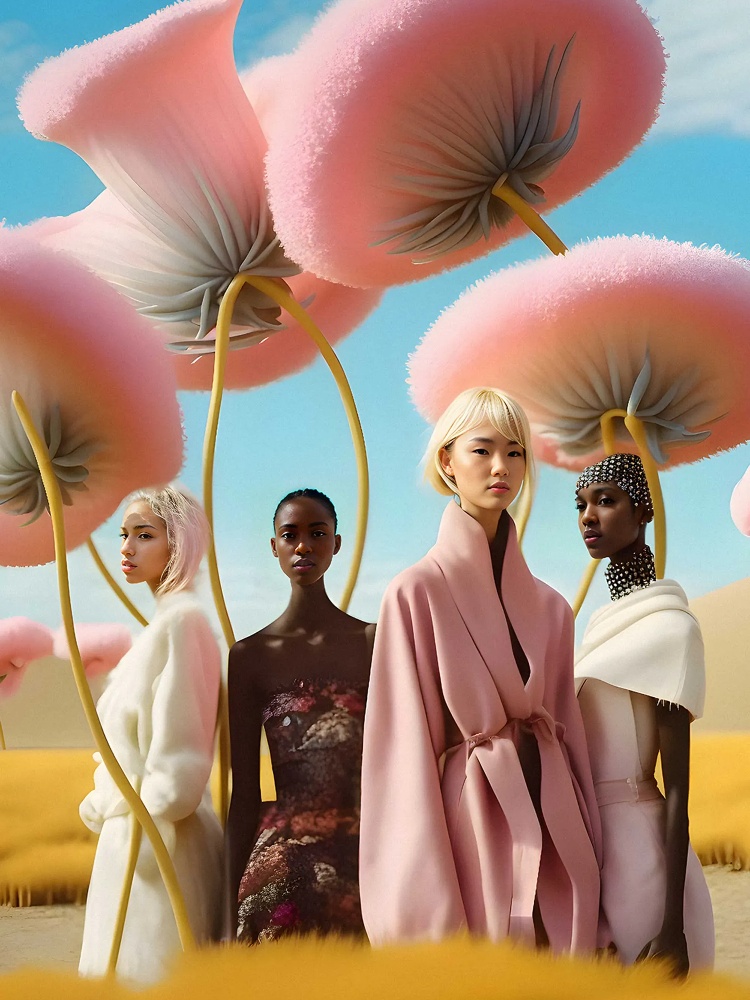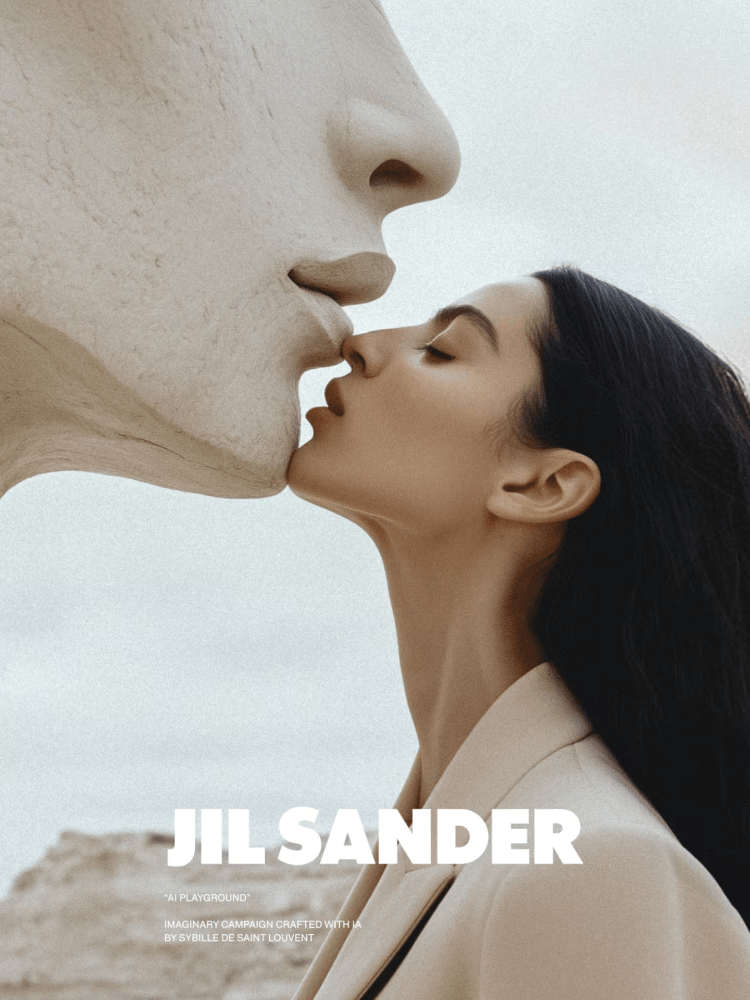





Creative sentiment toward AI right now is not exactly warm and fuzzy. As author Joanna Maciejewska’s widely memed quote goes, “I want AI to do my laundry and dishes so I can do art and writing, not for AI to do my art and writing so I can do laundry and dishes.” The subject, of course, is a heavily debated one: AI’s ‘dilution’ of art, the greatest marker of human experience and time. But another idea it opens up, particularly in the context of luxury fashion campaigns, is what the use of AI art signals—and the tenor of brands likely to use it.
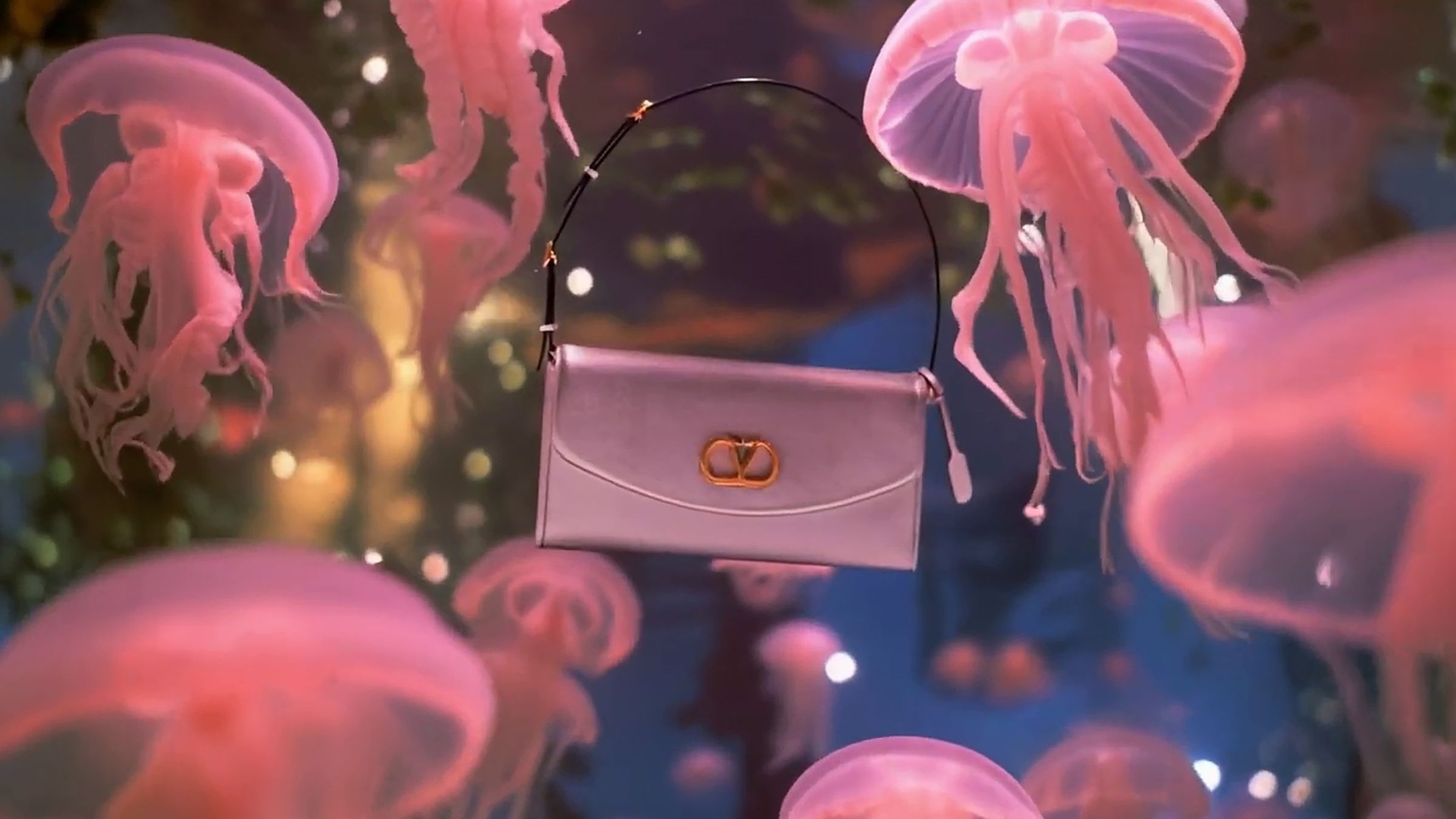
Valentino’s latest campaign called The Valentino Garavani DeVain Digital Creative Project featured the works of nine experimental artists—included visuals created using AI. One visual, in particular, a motion graphic by the production house Total Emotional Awareness which featured models linking arms to form the signature Valentino ‘V’ logo, rolling and unfurling amidst a mass of limbs and curly hair and floating, floral-beaded baguette bags, was met with instant backlash from fans who held the luxury maison to ‘higher’ standards. Click on the comments section, and it’s clear: “Call me a hater, but this feels cheap and not on brand”; “Didn’t think the AI slop on my feed would be coming from Valentino”; “Love Valentino, but this is a cheap, tacky AI mess”; and lastly, “AI does not match luxury and craftsmanship.” Similar reactions pepper the comments feed to Gucci’s latest AI generated video campaign. “There’s nothing desirable about luxury brands using AI to sell their product.”
It’s a question that’s important to ask at this juncture. Are brands, that have posited themselves as bastions of crafted couture and luxury fashion, defying their own DNA by using AI? The reason an AI campaign might feel like a more organic fit with a fast-fashion brand is that they perhaps seem to springboard off the same platform—cheaper, quicker, mass-produced. But when a luxury fashion brand chooses to use AI for its creative visuals, there's a chance for it to be perceived as either try-hard or inauthentic, simply because it lacks the human-led creative process, the craftsmanship, that makes up the bedrock of luxury fashion.
Sumit Vasisth, creative director at Ogilvy, has led many campaigns through his career and points out that luxury storytelling must be exact. “From a creative director’s lens, luxury has always demanded perfection—not just in product, but in the craft behind the image. Traditionally, that perfection comes from human mastery, storytelling, and emotional detail.” He does believe that “distortion has become the new realism”. “The avant garde often challenges what ‘luxury’ looks like. So, while AI may feel contradictory to conventional luxury codes, it is also pushing the category toward new forms of expression.”
Photographer Pranoy Sarkar thinks the two are incomparable. “I don’t think AI replaces photography or film. Any medium can look good if it’s used thoughtfully, and any medium can look cheap if it isn’t. It’s less about the technology and more about the intention and craft behind it.” Vasisth agrees. “Intent and execution determine its impact. When AI is used purely as a cost-cutting shortcut, audiences feel the loss of artistry. When it’s used to extend imagination, provoke emotion, or rethink beauty, it can become a powerful tool.”