Through the ages, most of the biggest womenswear designers have, unarguably, been men. From Gianni Versace to Alexander McQueen to Tarun Tahiliani, for decades men have designed for their ideal woman, and no one has questioned their right to decide what we wear. So, it’s particularly interesting to see what happens when women design for men, when those same questions about bodily autonomy and self-expression are approached from a female gaze.
We’re in the middle of a menswear renaissance of sorts—just look at the recently concluded Lakmé Fashion Week x FDCI, where the most eagerly awaited shows featured menswear—and a slew of female designers have joined the conversation. There are young names like Taarini Anand, who are just starting out, but also more established designers, including Rina Singh of Eka, Chinar Farooqui of Injiri, and Payal Pratap, who are foraying into menswear many years after establishing their womenswear labels.
For Farooqui, the process of adding menswear to her 16-year-old label was a long and slow one. “We’ve been working on it for the last seven years,” she says over the phone from Jaipur. “I had to find a whole new team; you can’t just have womenswear tailors and cutters making menswear. The training is entirely different.”
ADVERTISEMENT
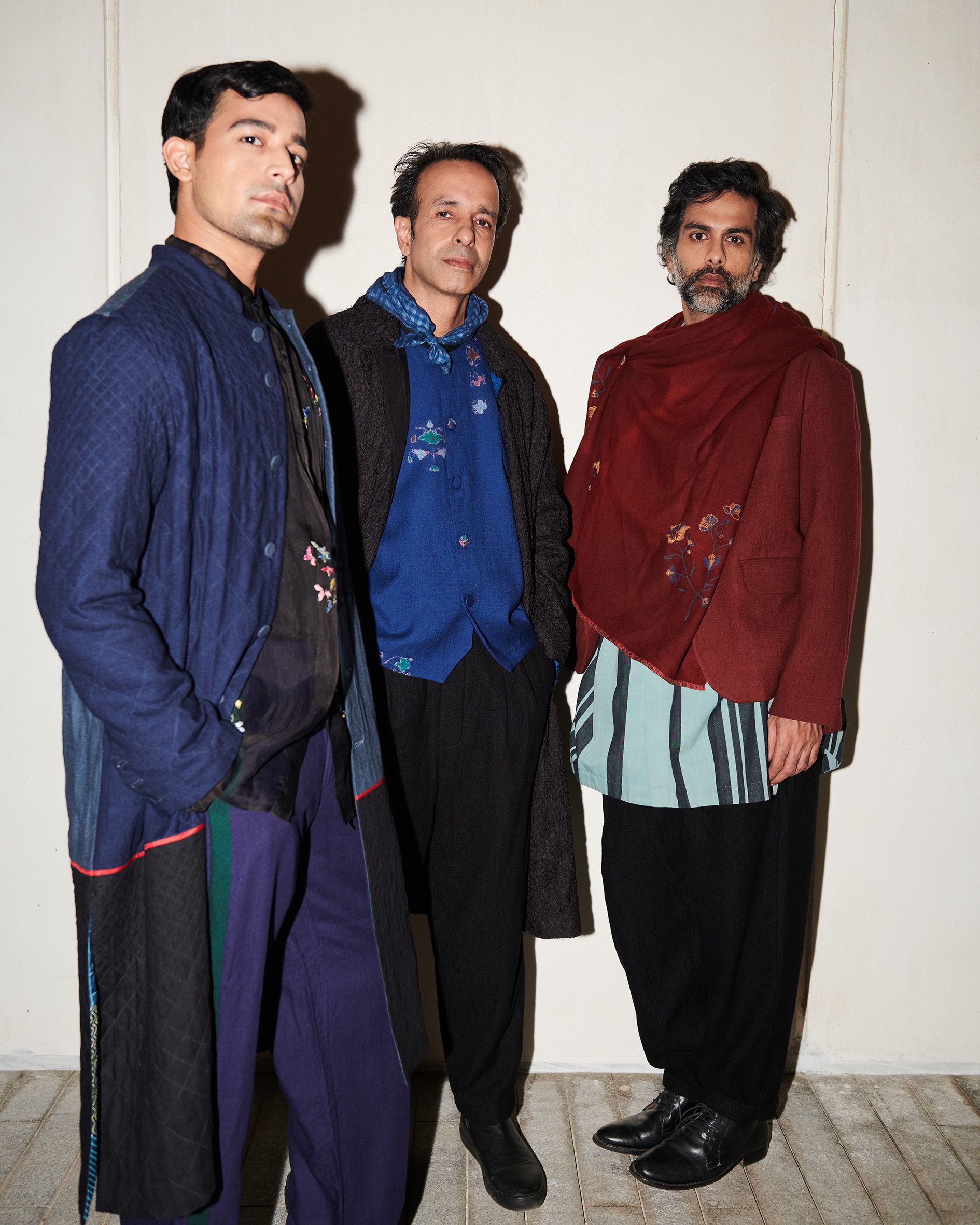
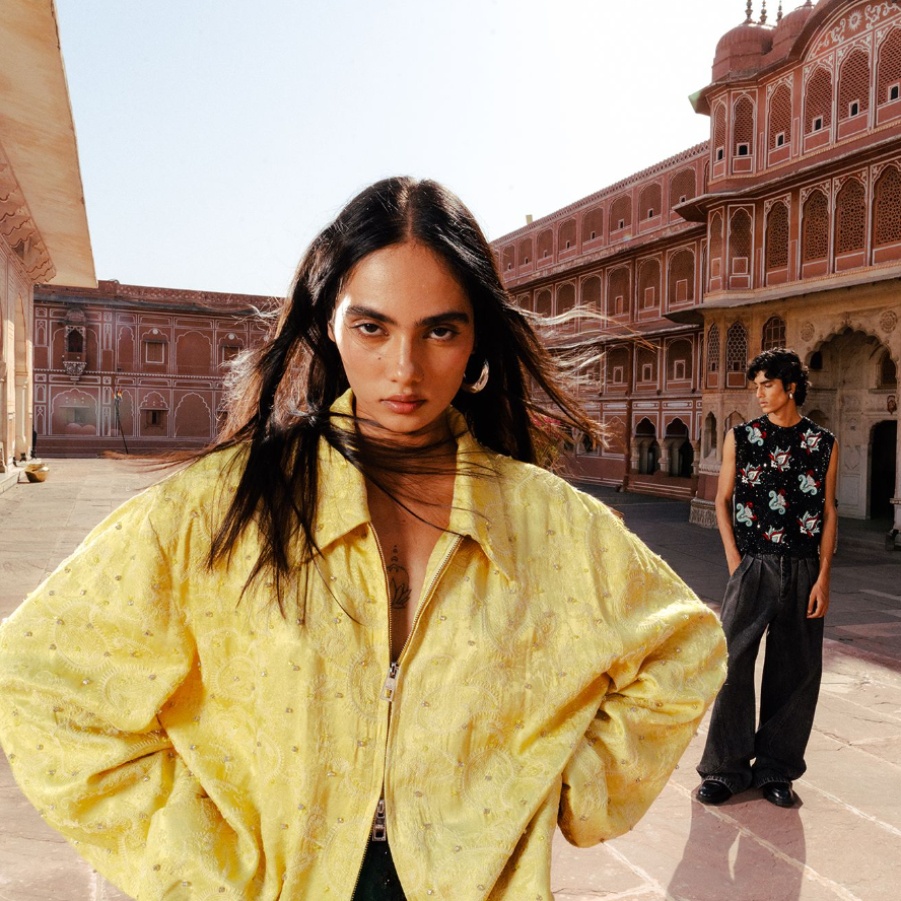
Injiri’s Chinar Farooqui says it took her seven years to develop her first menswear line
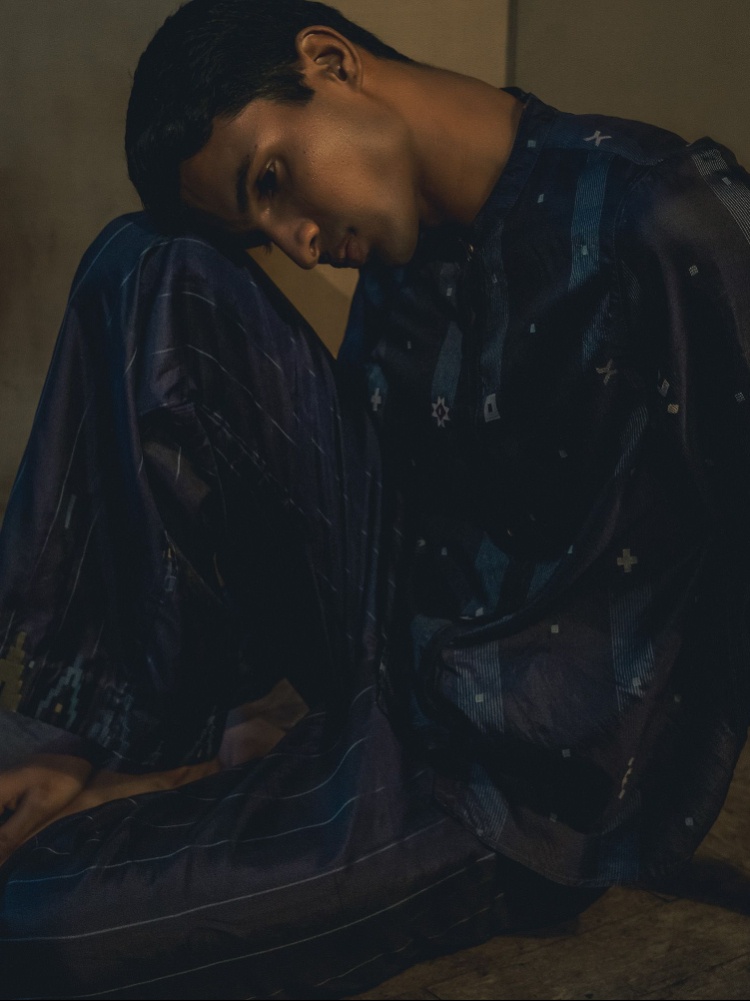
The collection continues Injiri’s engagement with craft but from the point of view of workwear
But looking at her first menswear collection, it’s clear that it’s an investment that paid off. The line is signature Injiri in that it’s textile- and craft-forward, but she’s filtered it through the lens of workwear—think lightweight jackets with touches of embroidery, bandhini shirts in shades of navy and charcoal, and Bhujodi-weave shirts shot through with delicate geometric motifs. “There’s something more everyday about these clothes [as compared to the womenswear]. The shapes are actually inspired by 19th-century workwear—smocks, work jackets, and other samples I’ve collected over the years from flea markets in Europe,” she says.
Male designers love to cite a female muse, an ideal type who embodies their vision. Did she have a male muse? Farooqui laughs when I ask her this. “I’m very inspired by Shyam ji, a spinner and weaver who wears his own handspun shirt in thick khadi with trousers. He wears the same thing in every single country he goes to; he is so proud of his past and where he comes from.”
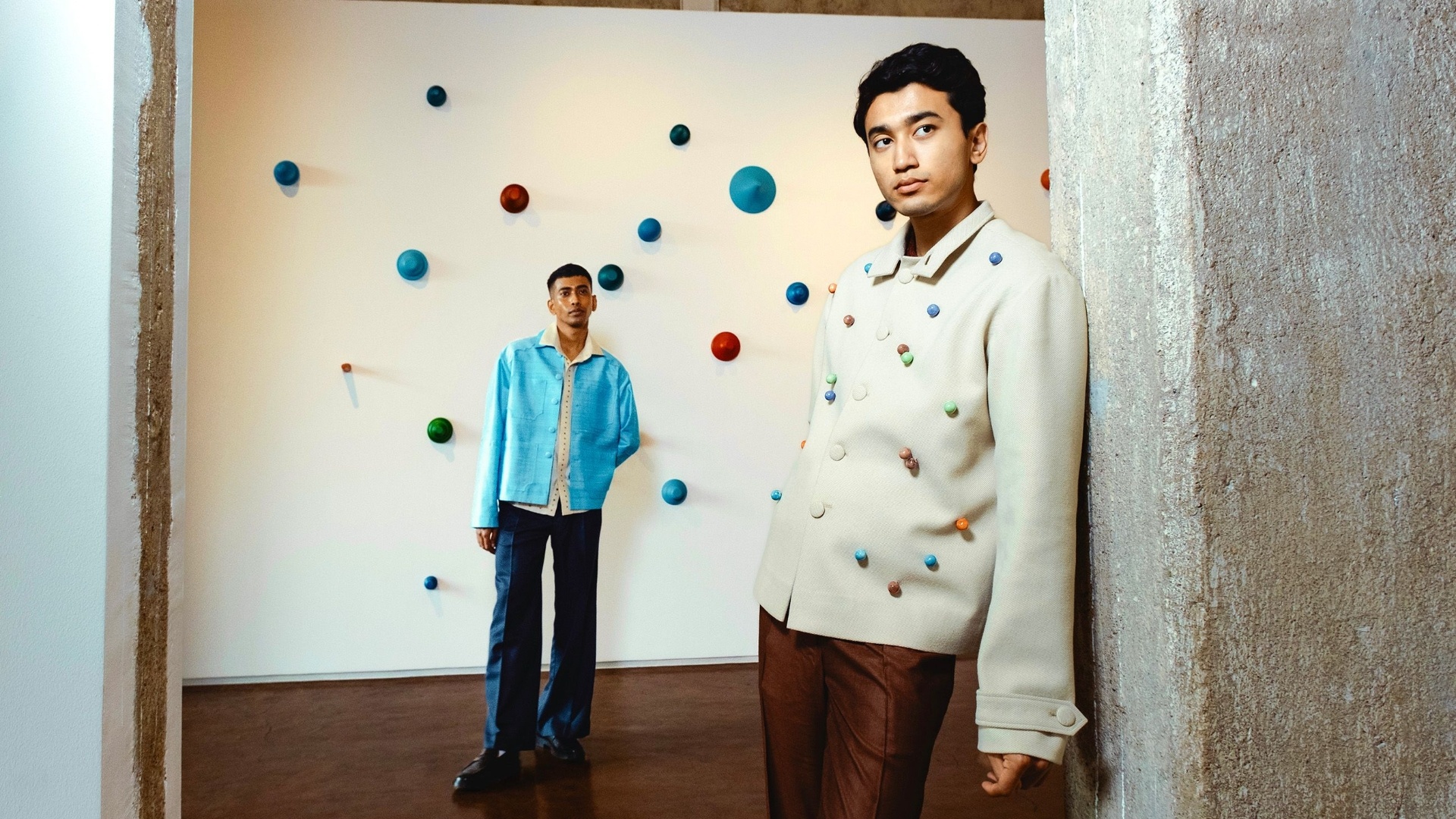
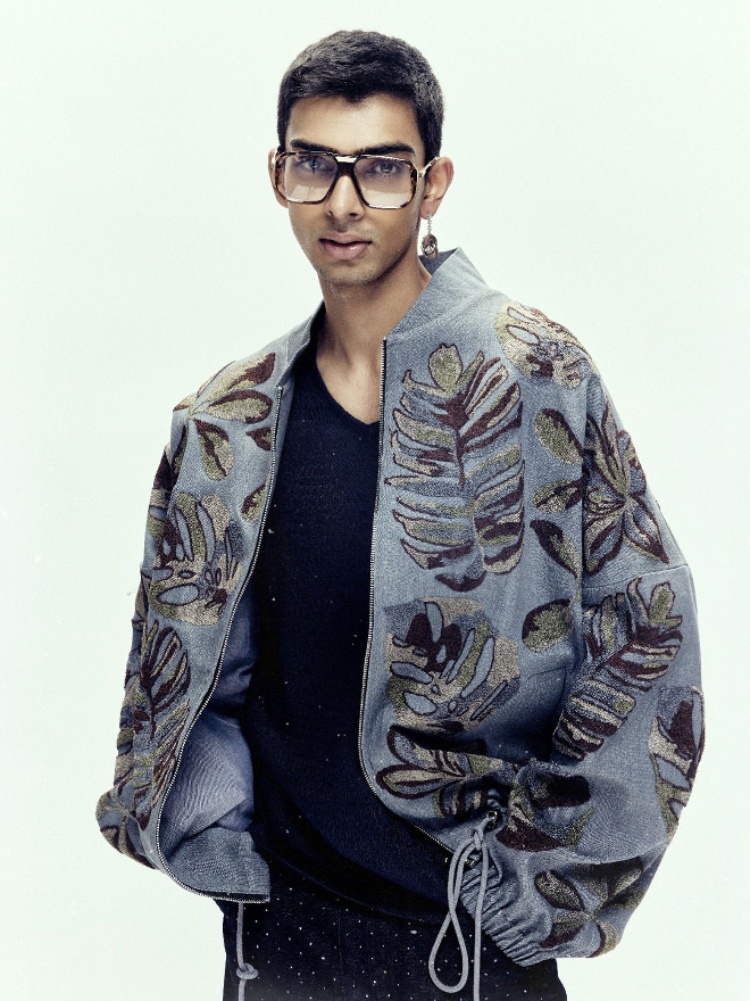
Mumbai-based Anand cares even less about the idea of a muse, preferring to look inwards for inspiration. She says, “I’m largely thinking of what I would wear if I were a man, so my clothes definitely have more of a feminine eye than traditional masculine clothing.” For the 24-year-old who speaks with the wisdom of someone much older and was part of the GenNext cohort at Lakmé Fashion Week this year, the distinctions between genders are not as important as developing a unique design language. All her garments have an element of play, whether it’s a wool jacket studded with candy-like ceramic beads, a pair of crochet shorts edged with lace, or simply a fun graphic pattern on one of her knitted cardigans. “What drove me to menswear initially was how restrained it is. There is a very strict rule book and rationale to why a certain detail exists or why a lapel is cut a certain way. To kind of put yourself in that box and then push the boundaries of that box slowly is what I found really exciting,” she says.
ADVERTISEMENT
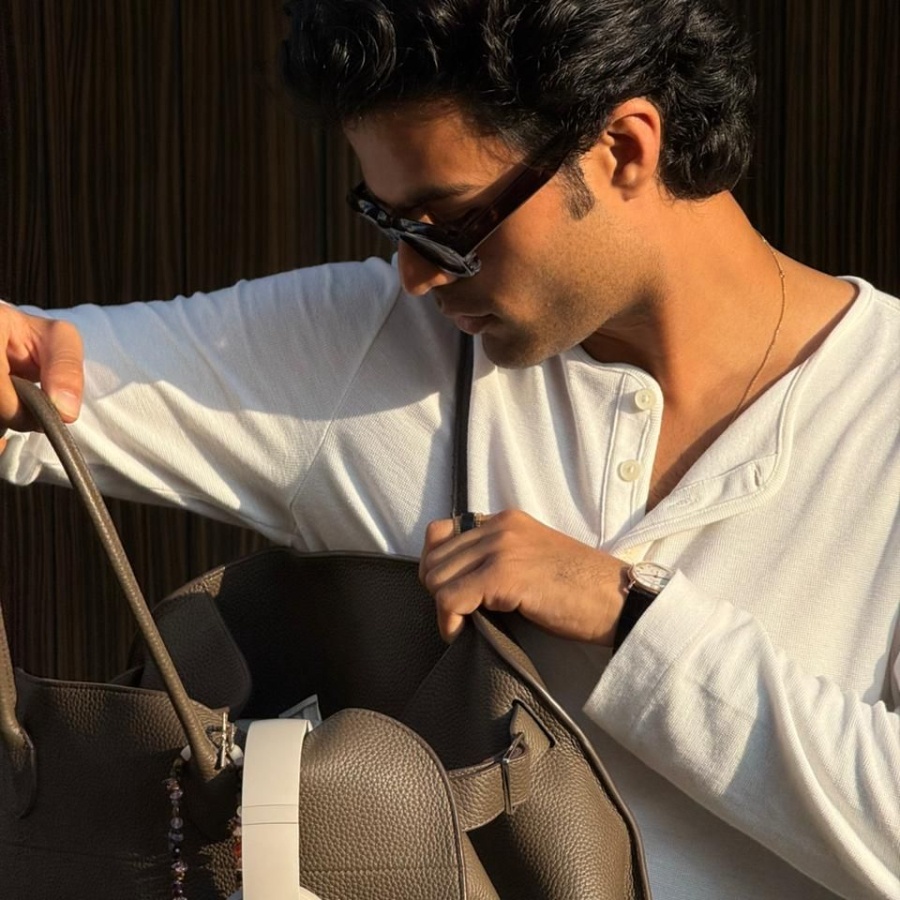
Taarini Anand is known for her playful knitwear
The designer enjoys mixing materials and textures to create her own design language
Because why can’t men have fun with style? Designers like Emily Adams of Bode or Grace Wales Bonner have proved that there is plenty of room for creativity in men’s wardrobes, that you can bring heritage and contemporary cool together to create something altogether unique. “There are men too who wake up with joy everyday, for whom dressing up is so important. Clothing pivots people’s lives, so how can I not bring that sentiment into a man’s life as well,” says Eka’s founder and creative director, Rina Singh.
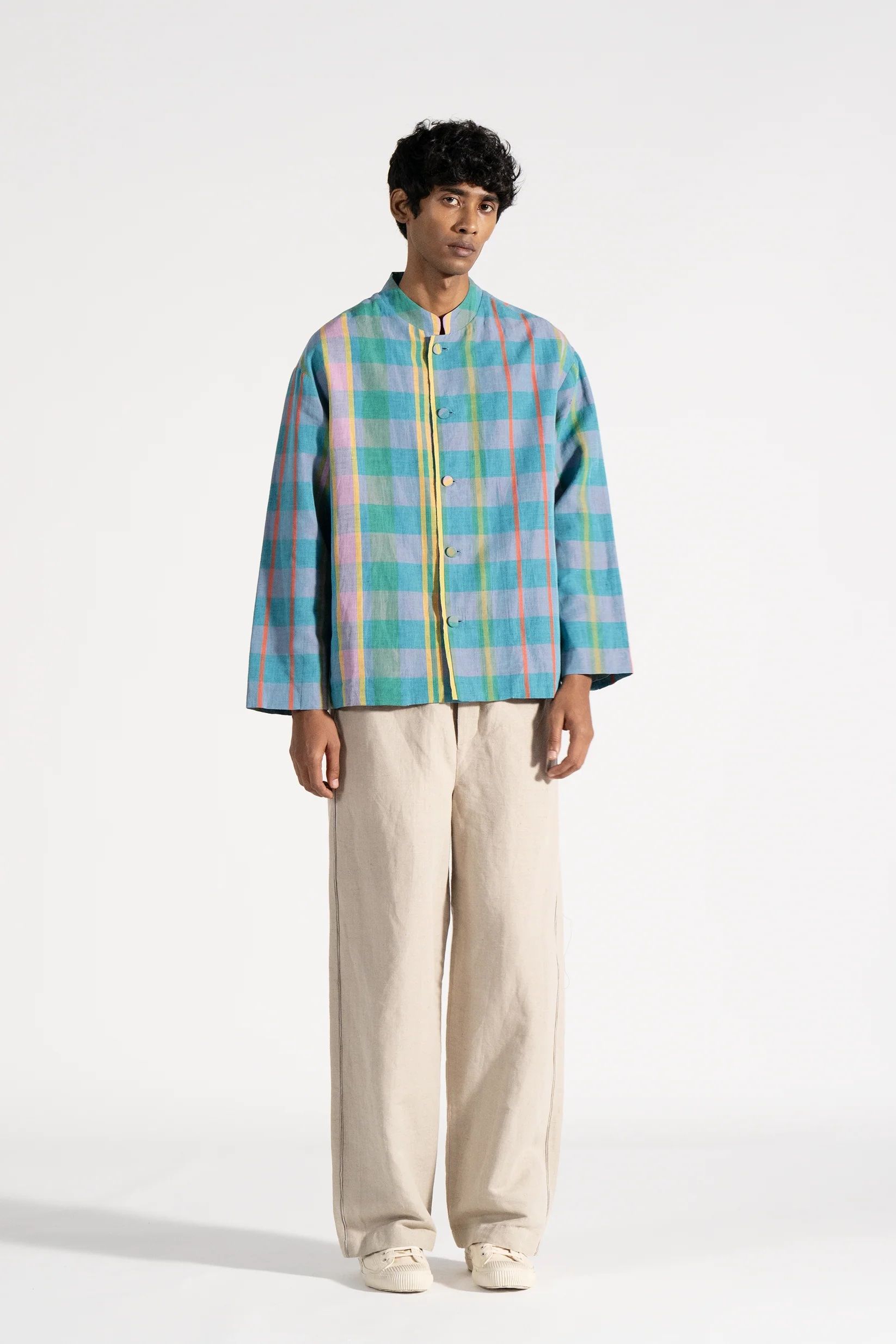
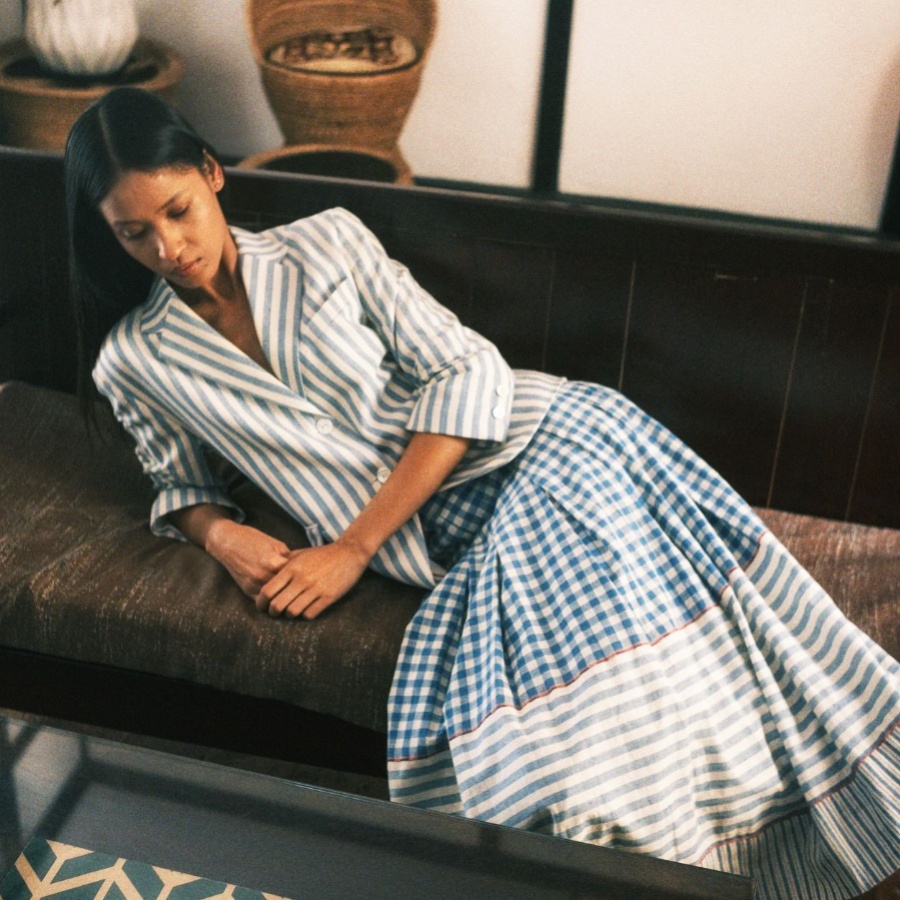
Singh had already started a small edit of menswear for her core line during the Covid-19 lockdown (her husband Sandeep Dua, who also works with her on the business, is the OG Eka man), but this year she decided use her more experimental textiles for a bright and colourful spring/summer 2026 offering. Think box-fit shirts and kurtas in summer-ready colours like pink, lime, and sea green or even candy-striped linen T-shirts. All the silhouettes are loose, breezy. The T-shirts, for example, are without shoulder and armhole seams, so they float on the body rather than restrict it. It’s a sharp contrast to the traditional, more Western approach to men’s tailoring.
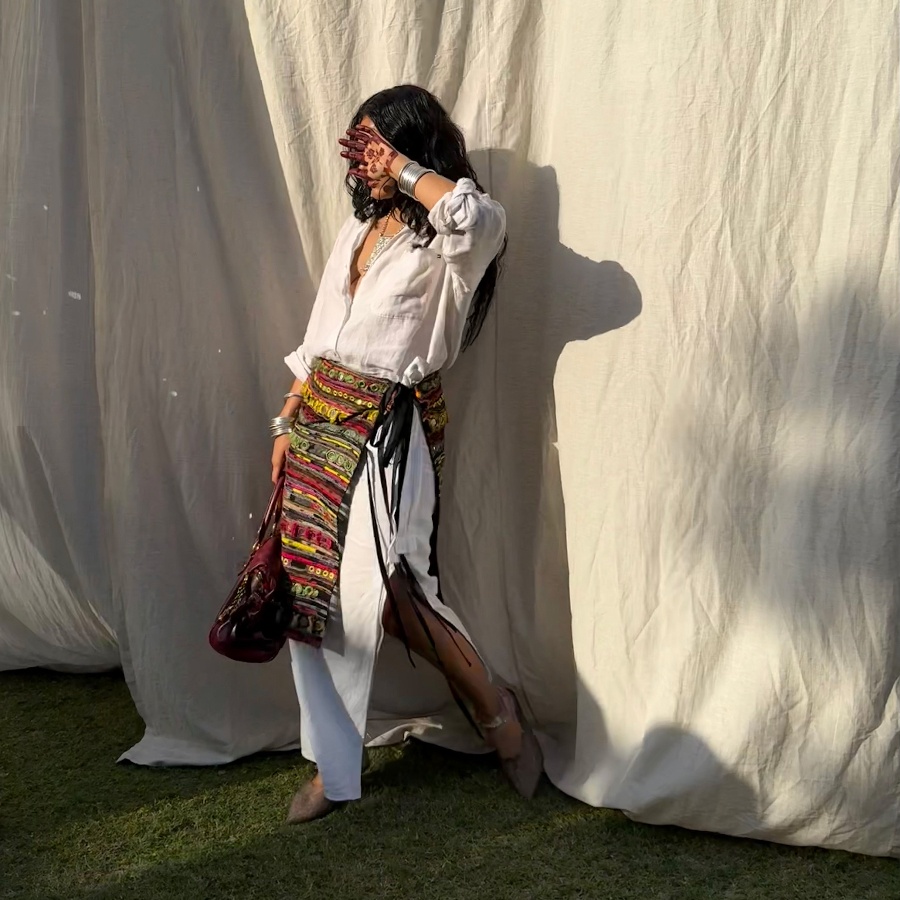
Rina Singh of Eka wants to bring volume into a man’s closet
“Volume is integral to Eka, to our textiles, and bringing that to a man’s wardrobe, to say that volume is flattering, is unique. It will make you look at yourself differently,” says Singh. It’s a silhouette that she feels is especially suited to the Indian man’s body type, the weather he deals with, and also a reflection of our own sartorial history. “The stitched garment came to India much later, from Islam. Before that we were adding kaliyan, doing gussets, adding panels.” She adds, “I want my clothes to give confidence—whether you’re an inch up or an inch down in size, at different ages and stages in your life.”
A troupe of Eka-wearing men
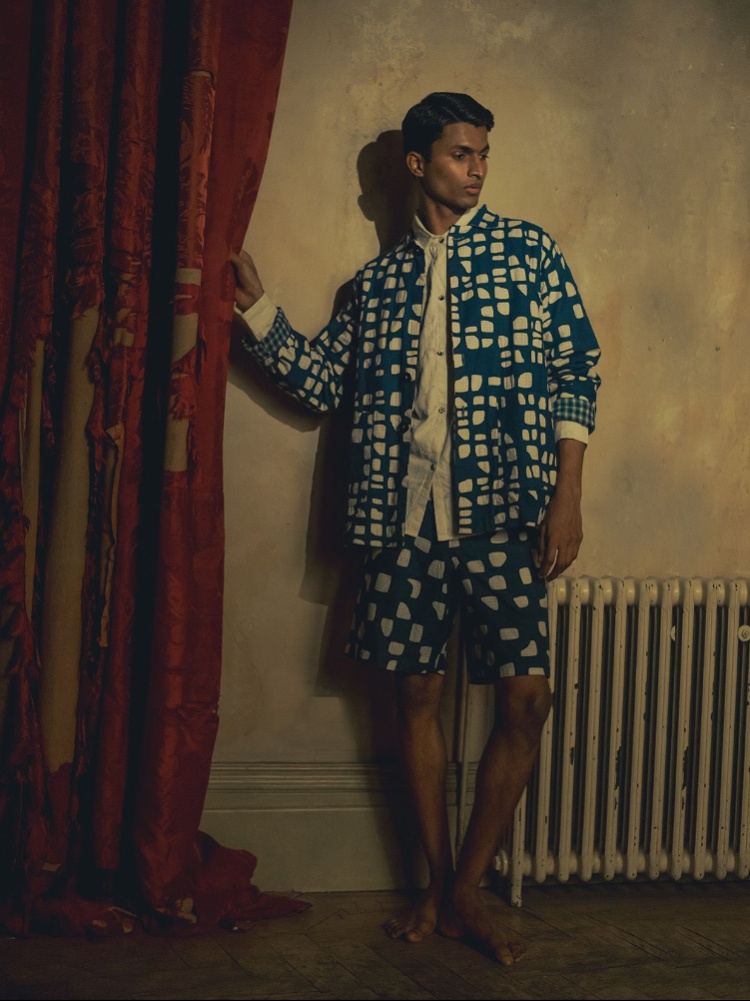
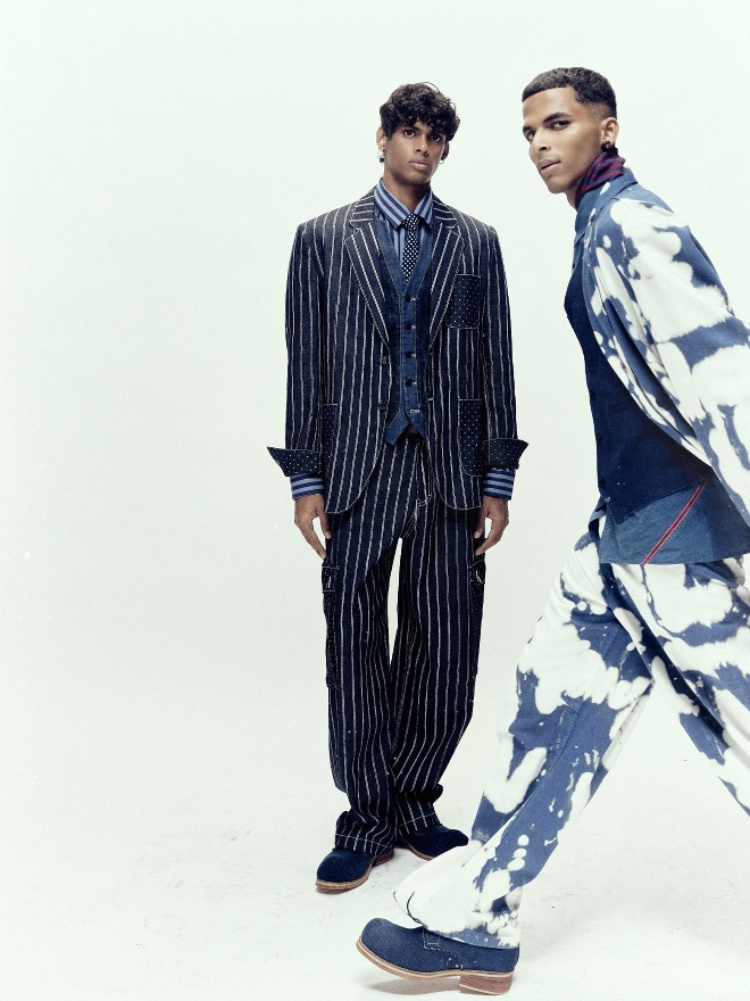
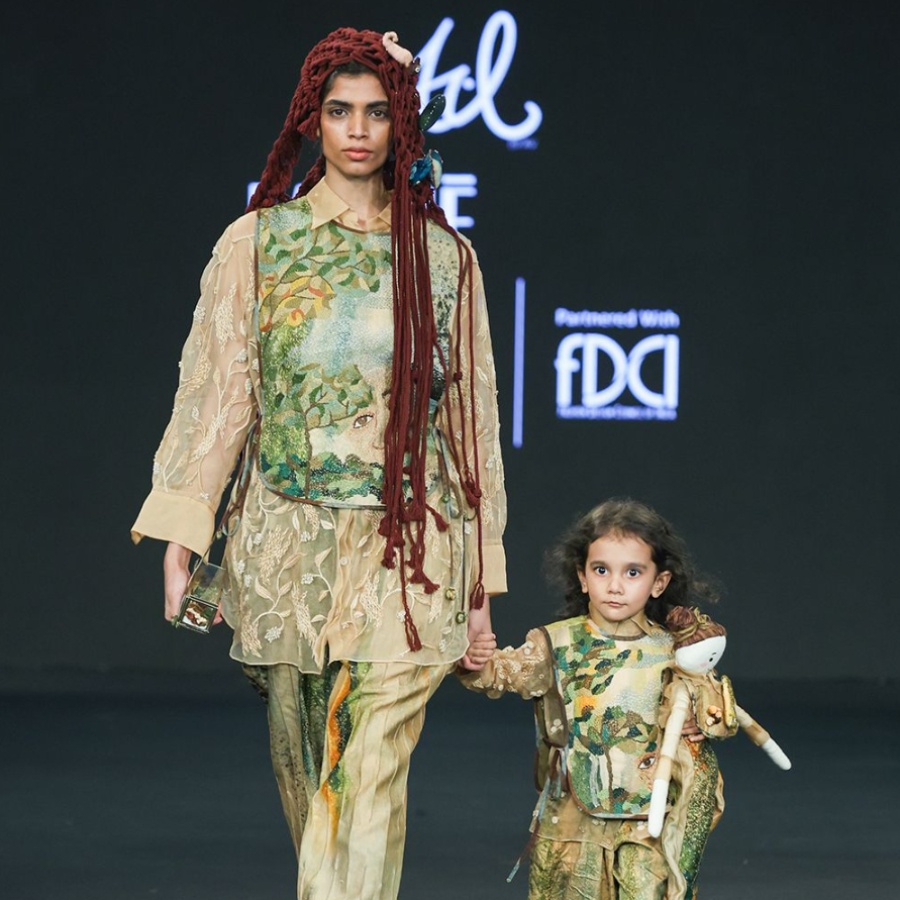
Fortunately, there are plenty of dapper dudes around who don’t mind thinking outside the box when it comes to fashion. Which is what Delhi-based Payal Pratap was banking on for her first menswear line released as part of a collaboration with R-Elan fabrics at Lakmé. Titled ‘Memories Pressed in Time’, a reference to her mother’s garden, the collection was a mashup of textiles and treatments—gingham checks, crochet, patchwork, different types of embroideries, tie-dye, block printing, laser printing, and more—all of it with denim as the base.
“I’ve learned restraint over the years, which was important for menswear. But I wasn’t holding back because I just feel like men are way bolder in their dressing now than before,” says Pratap. She even got compliments from her son and his friends. “That’s the highest praise of all,” she says with a laugh. The looks stand in sharp contrast to the last time she worked on menswear; that was before she launched her line over 12 years ago while helping husband Rajesh Pratap Singh build his own label. “I think mine is a little more playful, relaxed, younger. His is more structured, minimal, formal,” she says of the distinction between the two.
ADVERTISEMENT
Payal Pratap’s first menswear line showcases a mashup of techniques ranging from laser printing to crochet and patchwork
The collection was called ‘Memories Pressed in Time’, a reference to her mother’s garden
All these women seem to agree on one point: there’s an exciting feeling of possibility in menswear right now. After all, who wouldn’t want to tap into a new audience base? Especially one that has cash to spend and an eagerness to make an impact with what they wear. As Anand points out, the new guard of menswear client is much more curious, performative, but not in a loud way. “They’re always wanting to know a lot about how we’ve designed a piece, how we’ve constructed it, decided the details, the proportions...all of that. They’re very intentional and they’re looking for something that feels personal and unique.”