“Transitioning from morbidity to glamour is quite a pivot,” says Lopamudra, laughing. She’s not wrong. Before she was thinking about batik kaftans, jamdani saris, and QR code care labels, Lopamudra spent over 13 years working in healthcare, heading day-to-day operations at hospitals. Now, in her brand-new role as the founder of AltaRasa, a new multi-designer retail platform and flagship store in New Delhi’s Defence Colony, she’s diagnosing fashion fatigue.
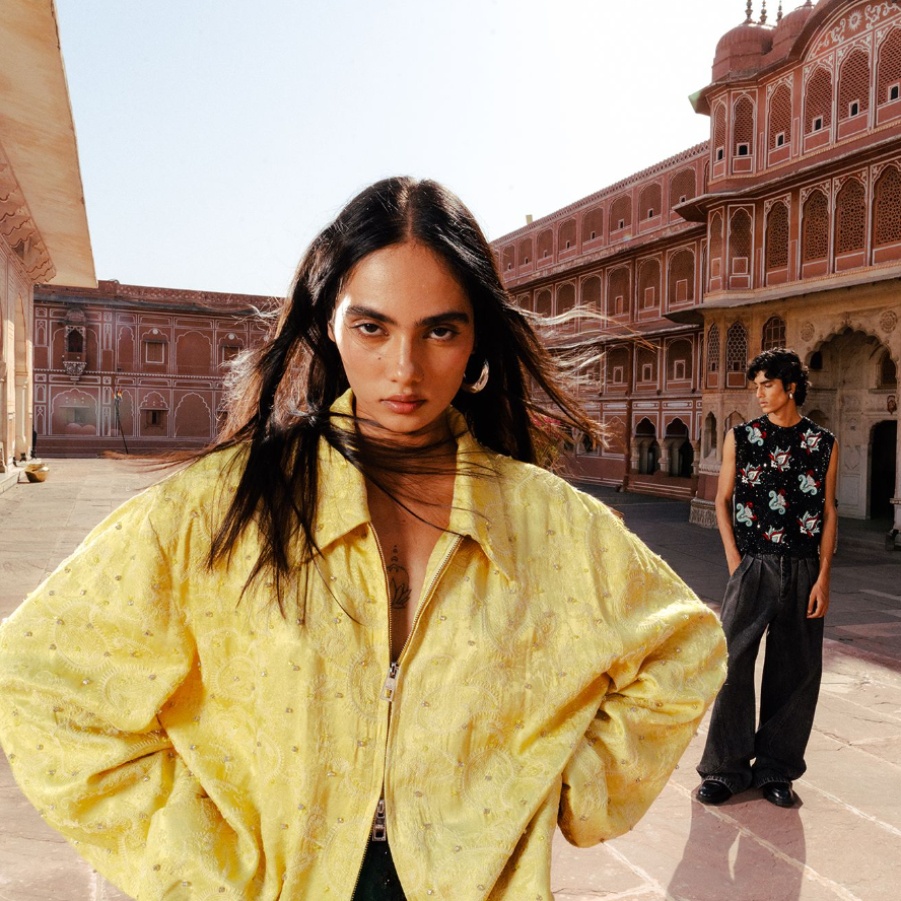
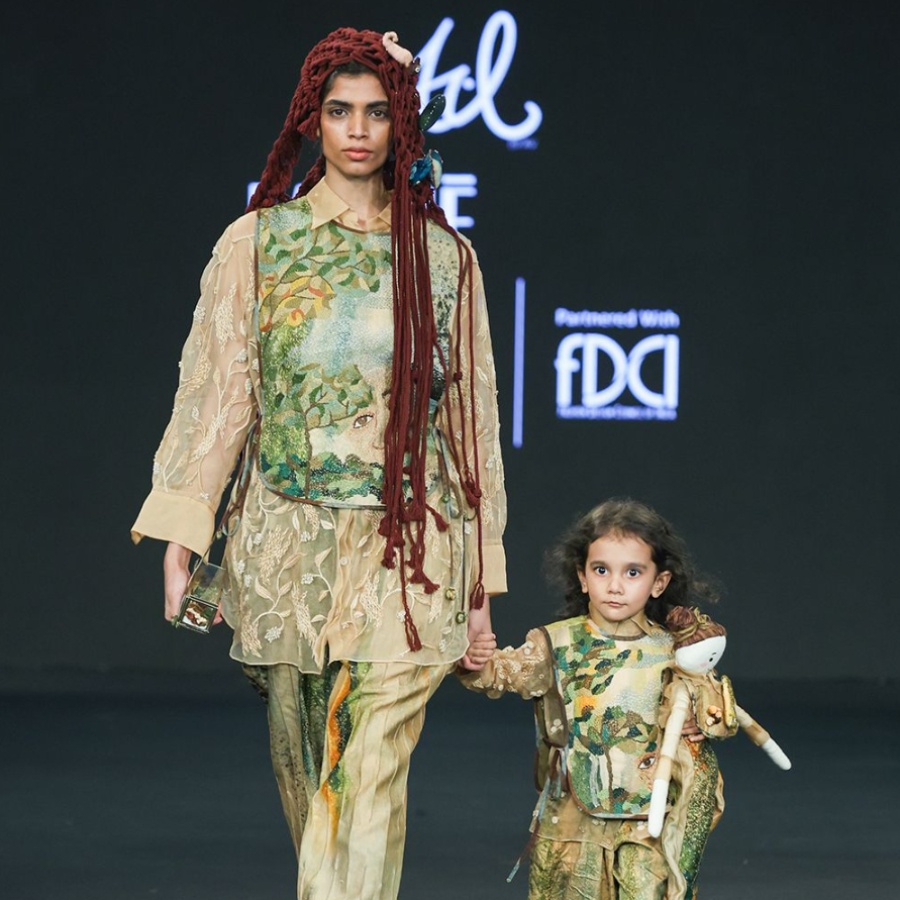
Her assessment? The Indian fashion retail landscape might be crowded, and while there’s no shortage of bridalwear boutiques and Instagram-famous labels, there’s space for a store that brings together south-east Asian designers from across the Subcontinent in a way that feels considered. At AltaRasa, hand-painted batik pieces by Sri Lankan designer Sonali Dharmawardena sit next to joyful, Bella Hadid-approved knitwear by Palestinian-origin designer Reema Al Banna of Reemami. There’s sculptural occasion wear by Indonesian designer Stella Rissa alongside established Indian labels such as Akaaro, Re-ceremonial, and Kiran Uttam Ghosh gracing the racks, while brands such as Idli by Thierry Journo—a Jaipur circuit favourite—can now be accessed by more consumers.
ADVERTISEMENT
Sonali Dharmawardena
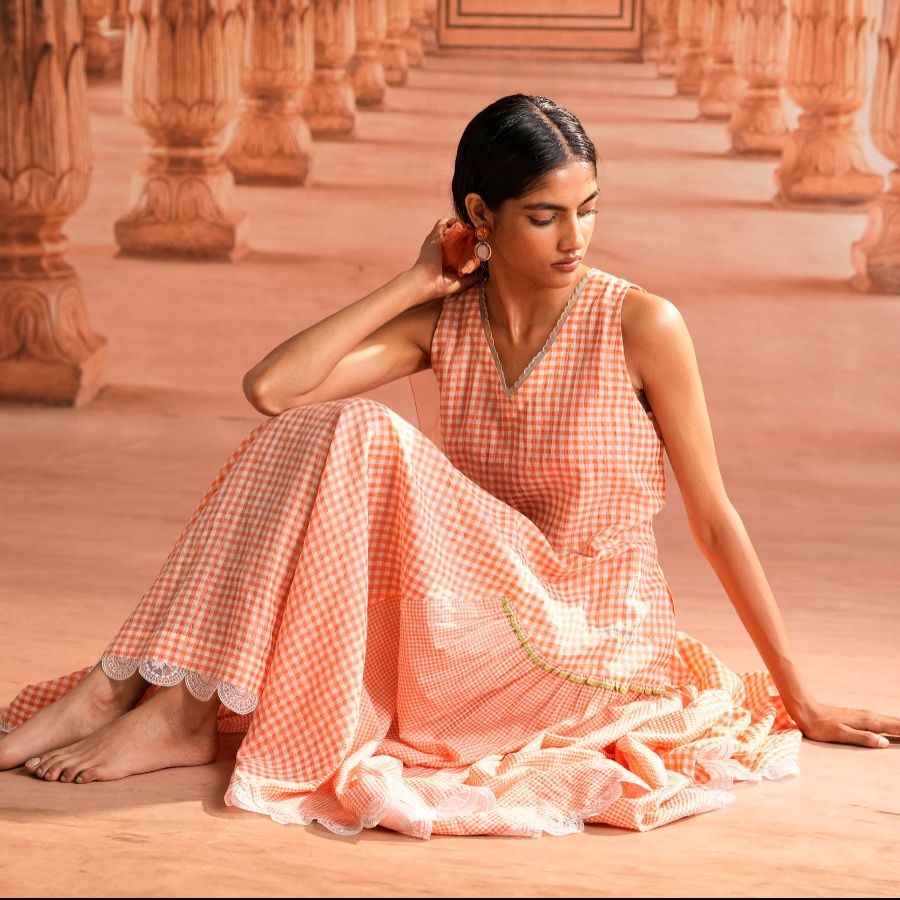
Idli coat and Studio Rigu dress
Reemami
“We wanted to juxtapose the known with the quieter brands doing incredible work,” Lopamudra explains of the labels you’ll find here, many of whom are debuting in India with AltaRasa. The platform also hopes to spotlight emerging labels such as Bejewelled, a Noida-based brand creating intricate Kutch-inspired jackets, bibs, and bags that, until now, largely sold through Instagram. “The idea is to keep discovering brands doing thoughtful work that may not yet be visible within mainstream retail,” she adds.
Many of the designers on the platform were first discovered through Dutta’s journeys across south-east Asia, often via pieces she encountered—and wore—herself. “People would constantly ask where something was from, and often they had never heard of the brand,” she recalls. Rather than sourcing collections remotely, Dutta visits designers in their studios, working with them to shape tightly edited selections. While AltaRasa champions regional craftsmanship, Lopamudra is careful not to define designers solely through geography. “What interests us is how these ideas can travel,” she says. A batik textile, whether from Sri Lanka, Indonesia or Bengal, can be reinterpreted as a dress, wrap skirt, scarf or sari in AltaRasa’s world.
ADVERTISEMENT
An embellished bib from Bejewelled
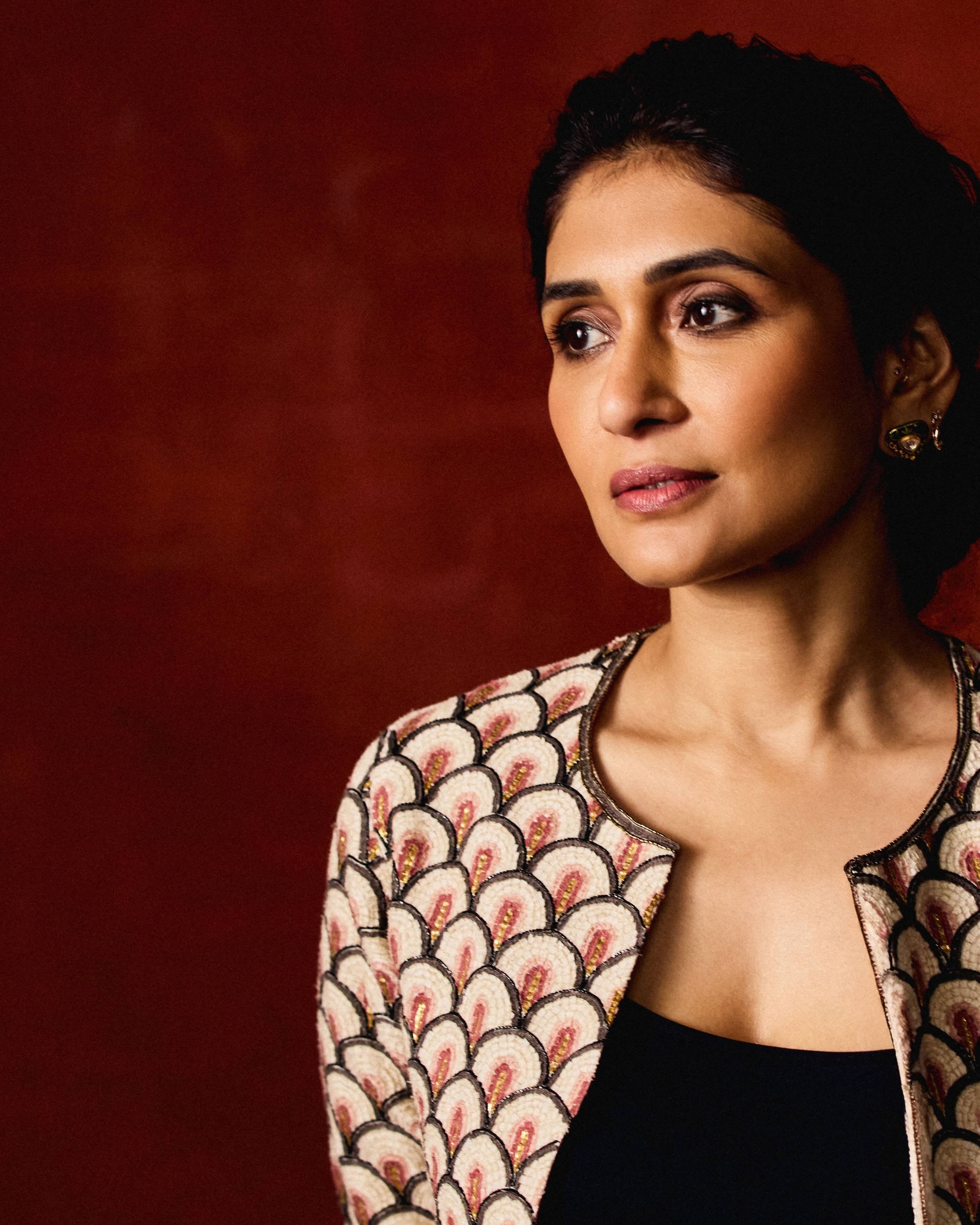
Lopamudra, the founder of AltaRasa
Lopamudra’s interest in fashion and textiles had long preceded the career shift. Growing up in Kolkata, she was surrounded by women who understood clothes as part of everyday life. At home, her mother and grandmothers wore soft cotton weaves as a daily uniform, while special occasions brought out rich Kanjivarams, chiffons paired with pearls, contrast blouses, and traditional Bengali drapes. “Beauty was always something to be contemplated, not loudly displayed,” she reflects. A student of English literature, she was equally drawn to the idea that clothing could carry narrative and emotional nuance. Some of her earliest fashion memories involve her grandmother sewing custom dresses for every grandchild using carefully chosen fabrics and prints, ensuring no two pieces were alike. That early lesson in individuality continues to shape her curatorial philosophy at AltaRasa today.
The name itself layers several meanings. ‘Alta’ comes from Latin for ‘elevated aspiration’, while the Sanskrit word ‘rasa’ refers to the idea of essence and sensory experience, reflecting the feeling of refined discovery that Lopamudra hopes to cultivate through the platform. There is also a subtle reference to her Bengali roots: alta, the crimson dye traditionally associated with celebration and femininity, is a detail echoed through the flagship store’s striking red entrance.
In a saturated shopping landscape, multi-designer stores are no longer a novelty; what sets AltaRasa apart is its hybrid concept, which integrates physical retail, e-commerce, and travelling pop-ups. “Luxury now is a 360-degree experience,” says Lopamudra, explaining that the idea was to build around how modern consumers engage with fashion today.
ADVERTISEMENT
AltaRasa’s first Mumbai pop-up
The Defence Colony store is designed as an immersive environment where customers can touch textiles, understand weaves, and learn how to care for what they buy. Each label bears a QR code care guide that offers practical information on preservation and maintenance, a detail that sounds small until Dutta cites how often people tend to dry-clean heirloom saris.
“People assume they need to clean the entire sari after every wear, when often it’s only the hem that needs attention,” she says. “Small interventions can dramatically increase the life of a garment.” She sees these resources as part of a larger shift towards mindful ownership. “The goal is for these pieces to be lived in, cared for, and eventually passed on.”
The digital platform attempts to extend that same intimacy across geographies. Pop-ups, meanwhile, function as “small cultural moments” allowing the brand to enter new cities, build communities, and remain agile.
This philosophy also extends to her approach to craft preservation. Rather than treating heritage textiles as static objects or occasion wear, Lopamudra advocates for their contemporary reinterpretation. “The younger generation is often unaware of the rich textile heritage we have,” she says. By working with designers to translate traditional weaves into more wearable silhouettes, AltaRasa hopes to ensure these techniques remain relevant to modern lifestyles. “We don’t want to exoticise a weave or reduce it to a cultural marker,” she explains. “It should be part of a larger story.”
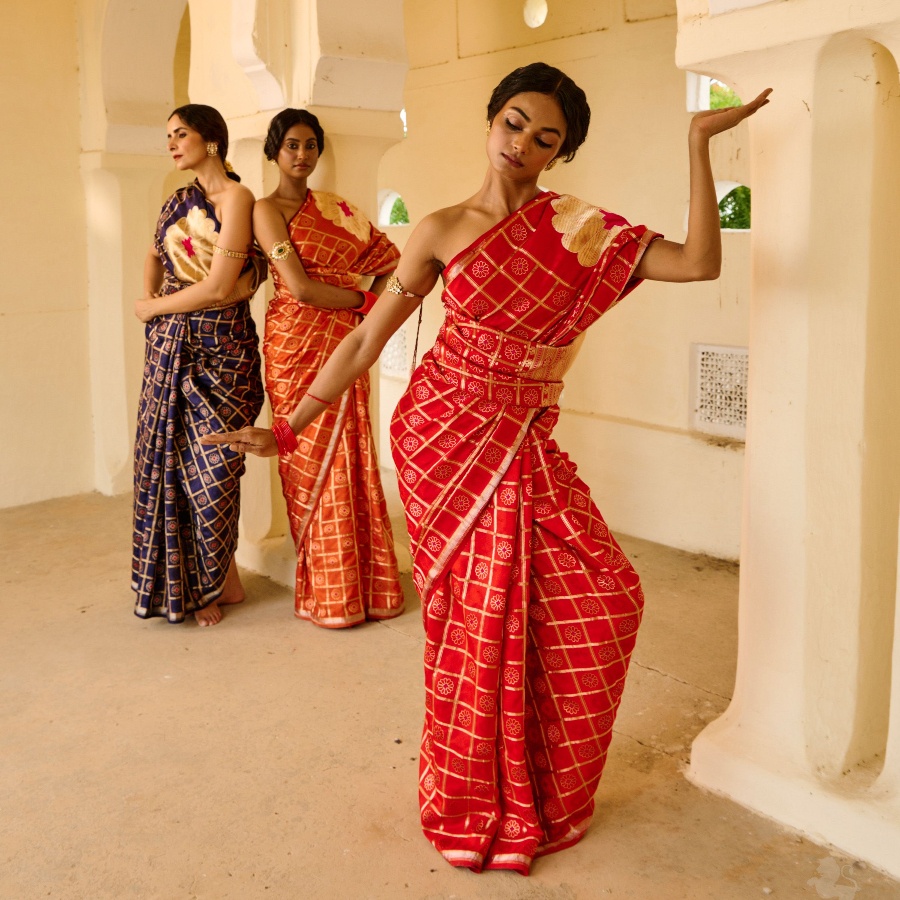
AltaRasa’s in-house sari label—a small curation personally sourced by the founder from weaving communities across India and Bangladesh—carries forward this perspective. A lifelong sari wearer, she advocates styling these pieces beyond conventional occasion dressing. “A Kanjivaram can be worn with a corset, a bolero jacket, even an embellished shirt,” she says. Through innovative drapes and styling hacks, this collection offers a cooler, millennial-friendly take on the traditional nine yards.
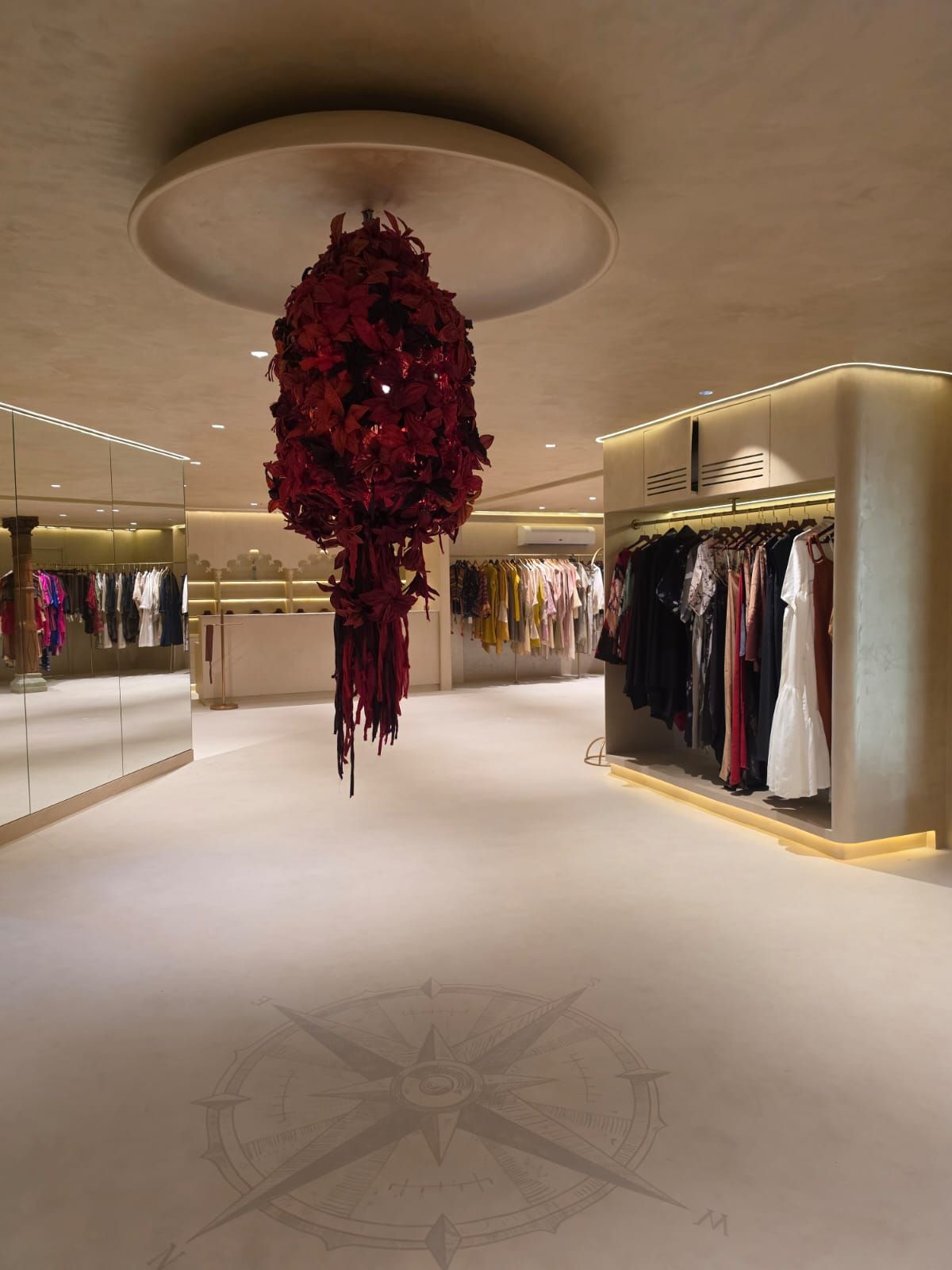
A preview of the AltaRasa flagship store in New Delhi
Lopamudra’s attention to detailing extends into the physical store space, the freshly launched Defence Colony flagship. Inside, an illustrated map of the undivided Subcontinent runs across the floor alongside motifs inspired by trade and migration routes, while a fabric chandelier crafted from textile offcuts and upcycled furnishings reinforces the brand’s commitment to materiality and reuse. The billing counter has even been imagined as a miniature trading post, replete with old school spice barnis inspired by the historic silk and spice routes. “The storytelling begins the moment you walk in,” says Lopamudra. “We wanted the space to feel like a journey of discovery.”