



Accessories08 Apr 20264 MIN

Jennifer Lawrence and Mary-Kate Olsen are fans of Yaser Shaw’s pashminas

Meet the Delhi-based designer giving the winter staple a “fun shawl” makeover

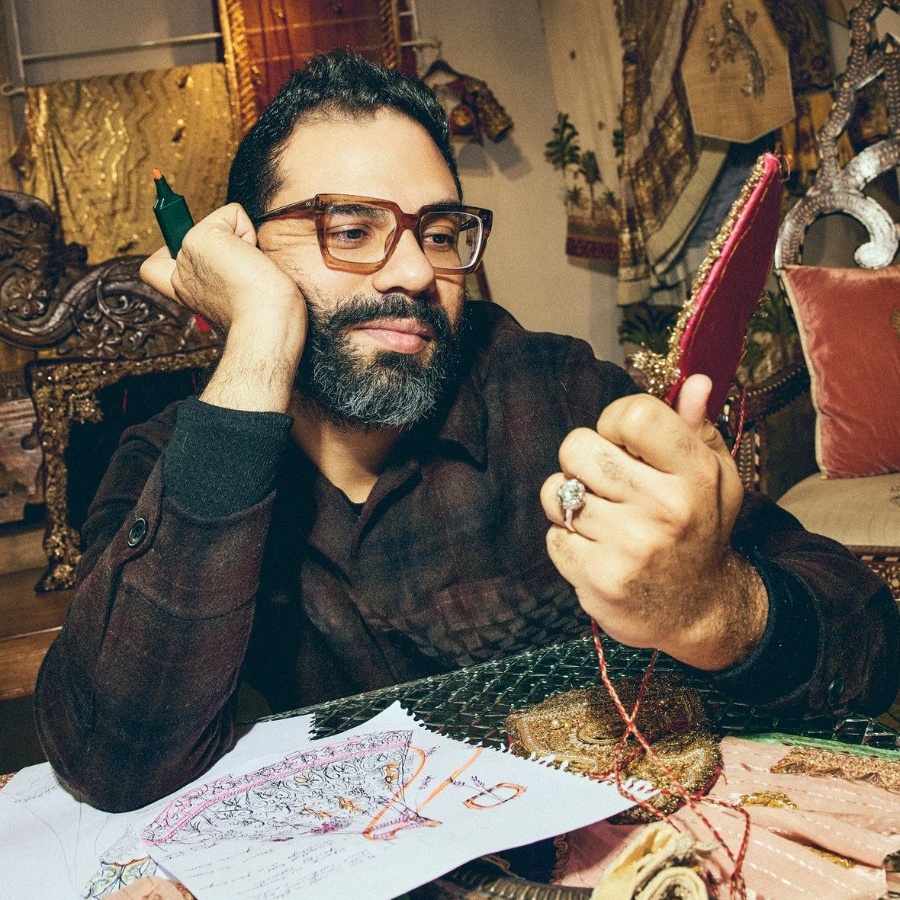
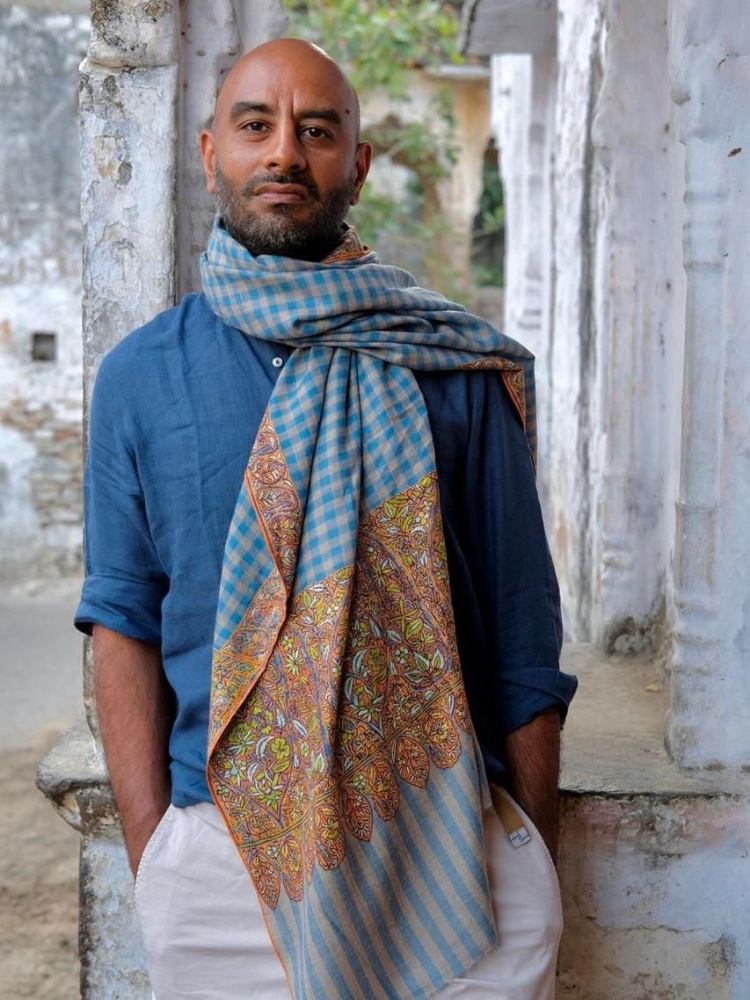
The designer Yaser Shaw

The designer Yaser Shaw

When you think of pashmina shawls, what usually comes to mind is a throw with oversized paisley borders or one covered in Mughal-inspired floral patterns. You might even go so far as to think of the pinnacle of ‘old white lady’ style—Dame Judi Dench. The actor loved her pashminas, and in a scene in The Best Exotic Marigold Hotel she even schools an Indian shopkeeper on how “a fine genuine pashmina requires the annual growth of three Changpa goats (she pronounces it shang-ra)” before absolutely losing the plot and paying ₹5,000 for four shawls. If the writers of the film had checked with fifth-generation pashmina specialist Yaser Shaw, they would have learned that the real deal might start at ₹10,000 but can go upwards of ₹1,50,000, the price a reflection of the slow, careful, multi-stage process that is the making of a pashmina.

A conversation with Shaw might have also taught them that pashminas don’t just have to be the purview of well-heeled senior citizens. The Delhi-based Kashmiri designer’s pieces come in surprising colour combinations—think bright pink, orange and grey checks, a deep-sea blue embroidered in rust tones, shades of green and brown—with tiny embroidered buties (rather than the expected paisleys on each corner) and more surprising motifs of butterflies, deer, cheetahs, and palm trees. You might even be lucky enough to come across a rare one with bandhani-inspired or tie-dye patterns or maybe even one with human figures. These variations might seem miniscule, but they were enough to rock the boat at Shaw Brothers, his family’s traditional pashmina business, whose origins stretch back to the 19th century. Which is why the 47-year-old Shaw eventually started his own eponymous label in 2010, where he now makes fewer but more carefully thought-out designs that can take between six to eight months to complete.
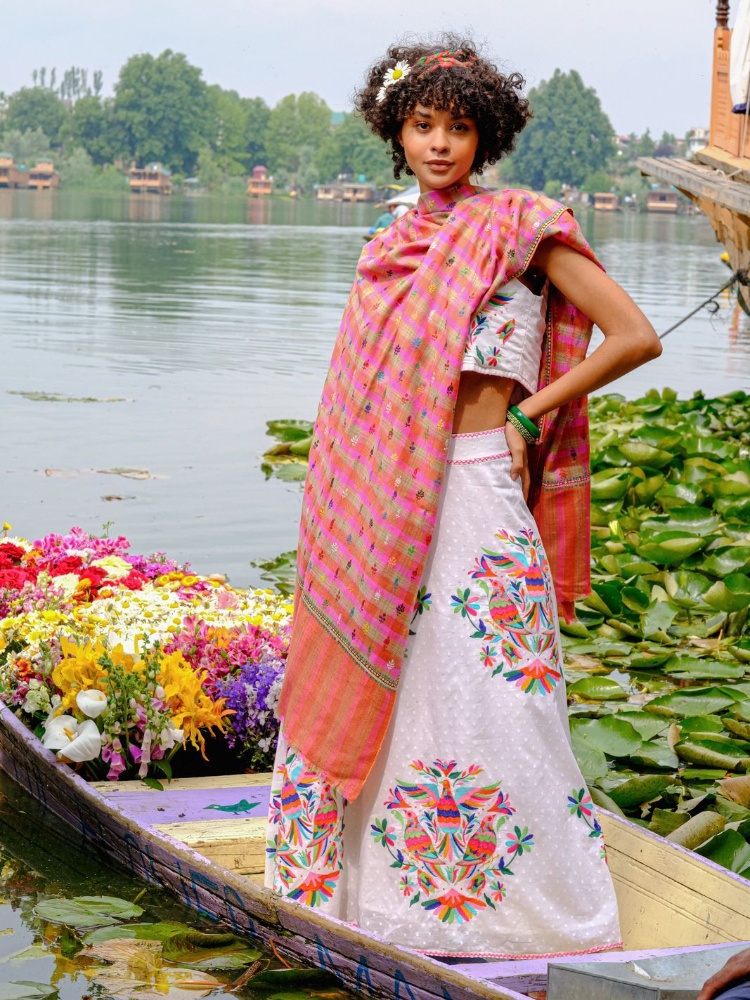
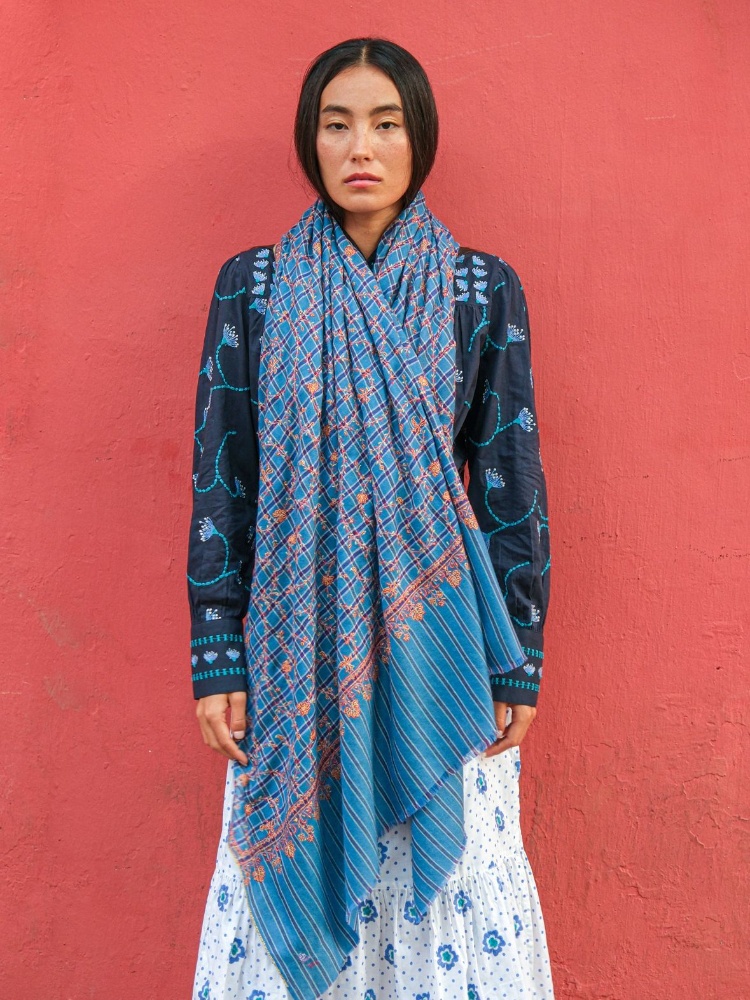
“Mine are more like fun shawls,” he says slowly, deliberately, over a video call from his family’s office-cum-store in New Delhi’s Defence Colony. Behind him are wooden shelves filled with colourful stoles and rolled-up carpets. “When you’re making pashminas traditionally, there’s a kind of fixed visual language, some limitations on what can be done, especially when you’re working with traditional looms and artisans who embroider by hand. I’m a bit more free-spirited, so I wanted to experiment more with colours. Or my motifs might be a bit asymmetric, mostly inspired by my travels.”

Shaw is careful not to say too much, preferring to let me ask the questions and repeating that the real distinction is only apparent when you see his pieces in person. Yet his designs are not exactly easy to get your hands on. He makes just a few hundred shawls a year, which retail in specialised boutiques or invite-only pop-ups around the world. Even his website is only viewable if you have the password. You’ve probably already seen them online, though, especially given the current resurgence of chic pashminas worn in an array of creative ways (I’m talking about Kendall Jenner wearing hers over what looked like her Alo workout gear).

His fans include Mary-Kate Olsen (who just last month paired a black and brown embroidered Yaser Shaw piece with Adidas Sambas, a bag from The Row, and a sleek coat), Jennifer Lawrence (at the time of this story we know she has three in different colourways), and all-round fashionable person Neelam Ahooja.

WhatsApp Image 2026-04-02 at 5.01.32 PM.jpeg
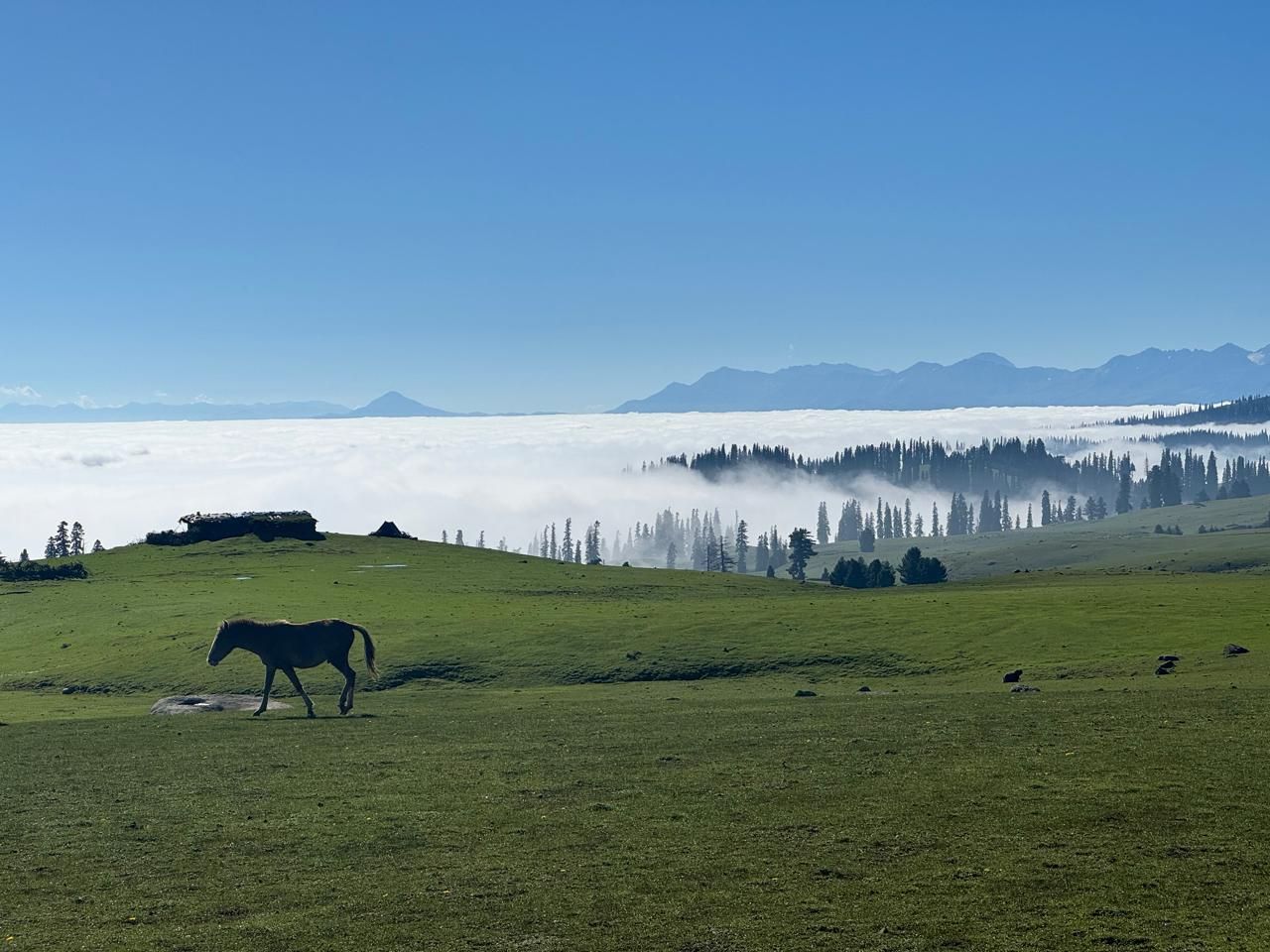
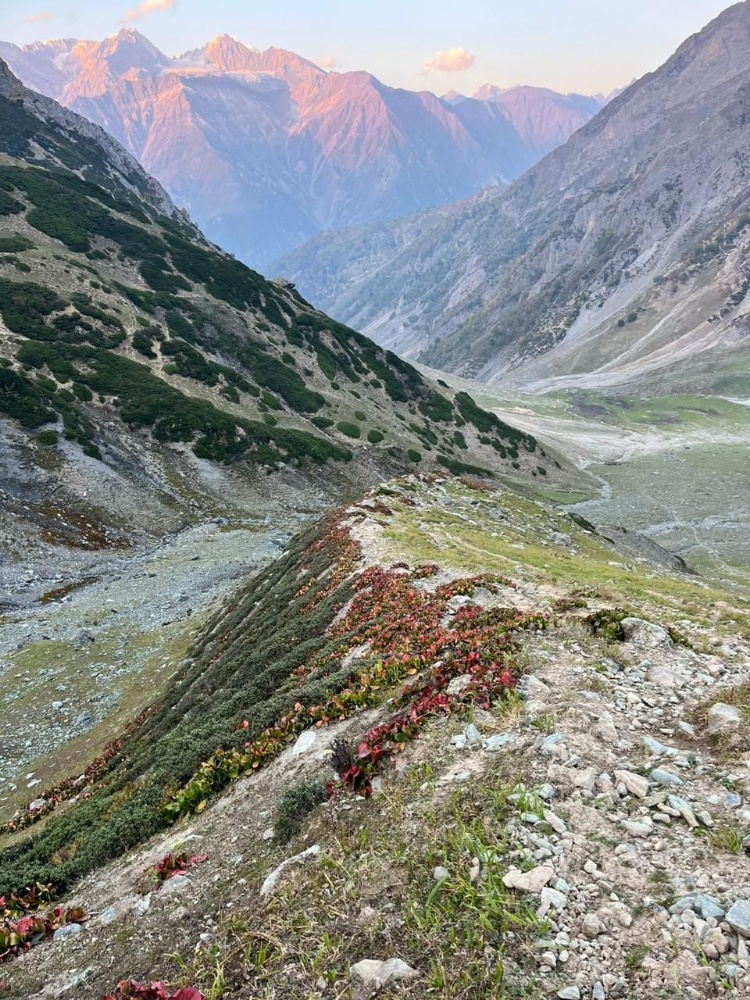
A postcard from Yaser Shaw’s travels in the Kashmir valley

For Shaw and his family, though, it’s rarely about the celebrity clientele. In their world, a pashmina is more than a shawl: “It’s something quieter, something that asks for patience.” Growing up in Srinagar, his first memories are not of the final product but of the artisans and raw materials, be it the yarn that is shipped from Ladakh, the weavers or the embroidery artists who use only natural light to ̧carefully assemble the final piece.

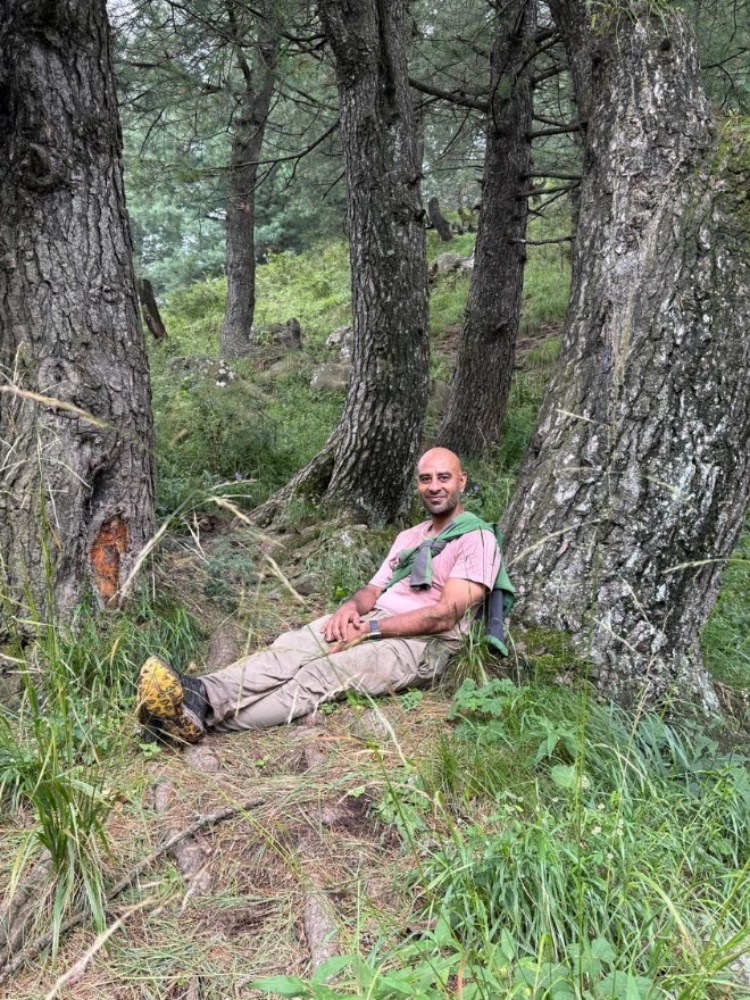
Later this month, Shaw says he’s making his annual visit to the high mountains of Ladakh, where he will hike with the goats whose soft wool is shorn just once a year, resulting in a yarn that is long, resistant to piling, and ultrafine—just 12 to 14 microns, thinner than a human hair. “I just have to find the green pastures and they will be there,” he says with a cryptic smile. The rest of the year Shaw can usually be found jetting anywhere between New York and Tokyo to visit his retailers or, when he’s not working, gorilla spotting in the forests of Rwanda, on safari in Africa, or his favourite place—trekking through the valleys of Kashmir. “When I’m back home I usually just pack my camping gear and walk for two, three or four days. I love being somewhere remote, somewhere quiet,” he says, probably thinking of his next trip, a hiking trail through Kazakhstan. For the rest of us, he recommends the Great Lakes Trek as a must-do while we wait and see if JLaw will get another Yaser Shaw piece for her collection. Maybe this time it will be one with gorillas instead.

The Nod Newsletter

We're making your inbox interesting. Enter your email to get our best reads and exclusive insights from our editors delivered directly to you.