




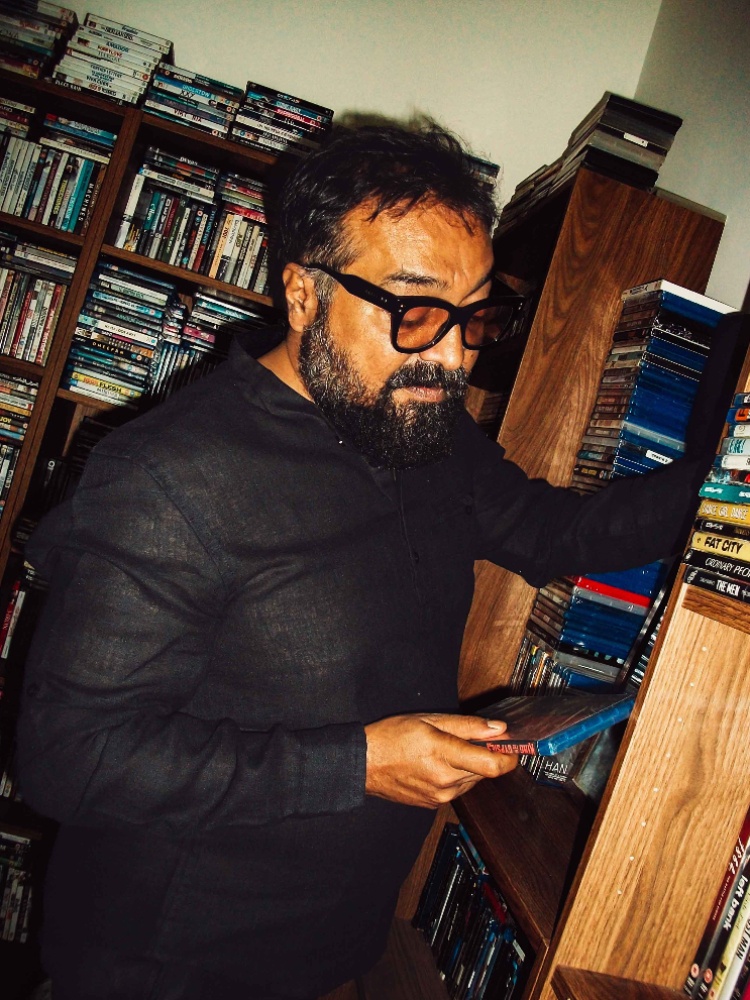

The chronicler of Uttar Pradesh’s akhara politics and the man who introduced most of us to Dhanbad’s coal mafia sprawl now lives a writerly life in the heart of Bengaluru’s Central Business District. You may spot him nibbling on Burmese small plates at cocktail bar Dali & Gala or catching the late-night show of a film at the PVR on Brigade Road. One autowallah he often encounters insists on giving him a ride, even when the Gangs of Wasseypur filmmaker says he prefers to walk. His Versova duplex days, with young Bollywood filmmakers, hungry writers, fans hanging on to their mentor’s every word, eagerly absorbing all he has to give, staying over, wanting more, are on pause for now. One friend described that house as a “throughfare”.
He says “Mumbai depresses me”; in Bengaluru he feels happy and is able to focus on his mental health.
These days Anurag Kashyap is praising Malayali filmmaker Chidambaram’s Balan: The Boy (2026) and urging anyone he meets to watch Pallaburusu (2026), a slice-of-life family-son Telugu comedy where a toothbrush takes on epic proportions. Not just the unofficial ambassador, today he’s also a prolific character actor and talent scout for the Malayalam, Telugu, Tamil, and Kannada industries—you could call him the new hype man of south Indian cinema.
The Versova nights have been replaced with a hangout featuring a new set of friends. Southern filmmakers send him their yet-to-be-released work and drop in to meet him. Kashyap, who moved to Bengaluru last year and has nurtured a cottage industry of indie filmmakers in Hindi cinema, is suddenly in their neighbourhood, accessible and happy to help. If he likes their films, he promotes them and connects them to regional filmmakers who will help market their movies.
He loves the geek quotient of the four film industries and how relatively untouched they are by censorship and propaganda today. “The editors in the south are mostly from YouTube. Their average age is 21 or 22,” he tells me when we meet at his airy apartment at a quiet cul de sac down the road from a Syrian Christian church. “Instead of narrating a script, directors [here] make the film in AI and show it to producers saying, ‘This is the film I want to make.’”
Apart from acting in half a dozen Malayalam, Telugu, and Tamil releases in recent years—playing a highly eccentric arms dealer with a penchant for pairing athleisure with gold chains (Rifle Club) or an investigating officer who is also an Ayyappa devotee (in Shaneil Deo’s Telugu debut Dacoit: A Love Story)—Kashyap is currently shooting or has recently wrapped up at least five more films. His first Kannada film, 8, where he plays a lead role, will be out soon. It’s different from the villainous psychopaths and policemen he usually plays. In the posters, he holds a football and stares pensively into the camera.
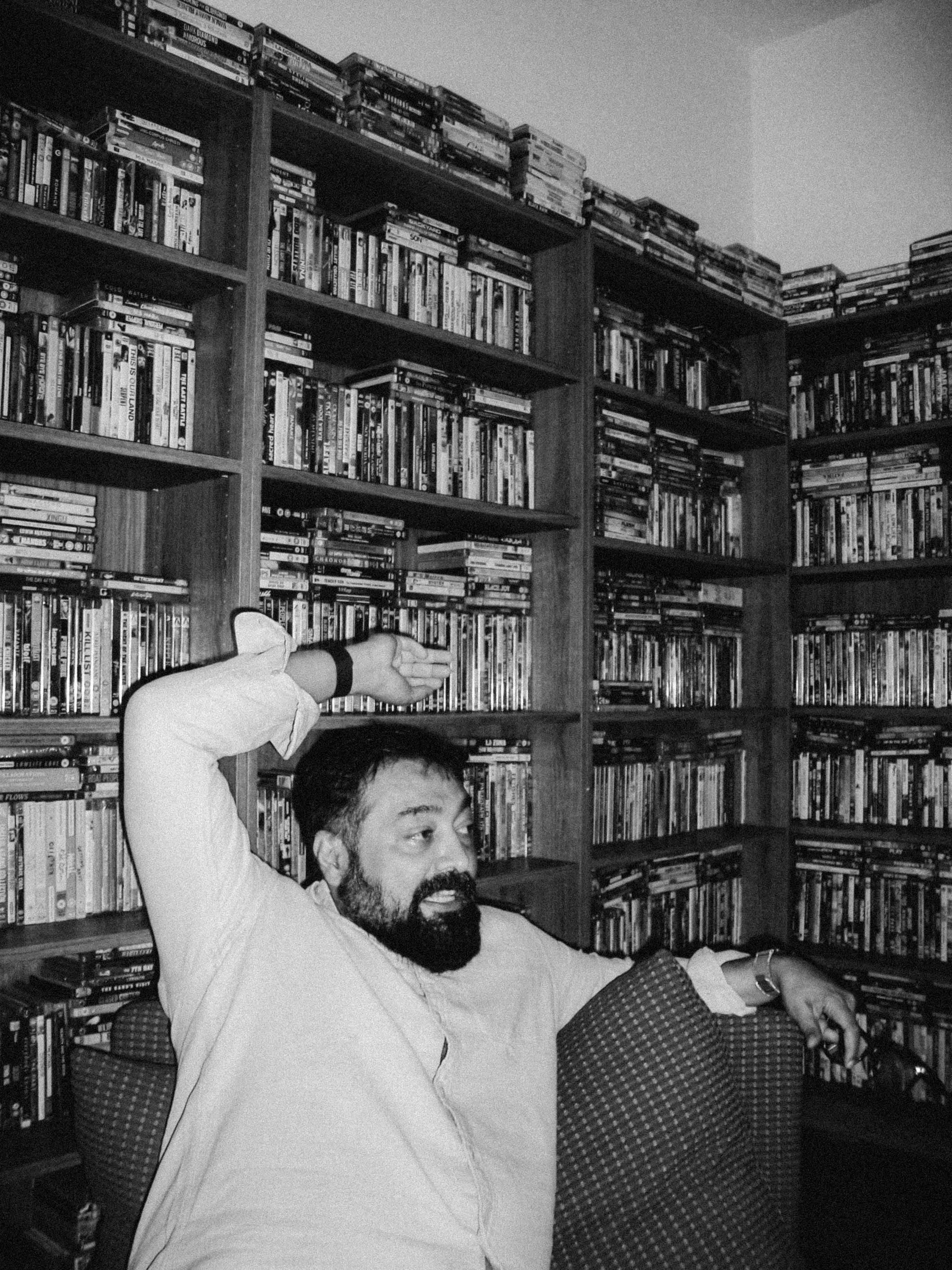
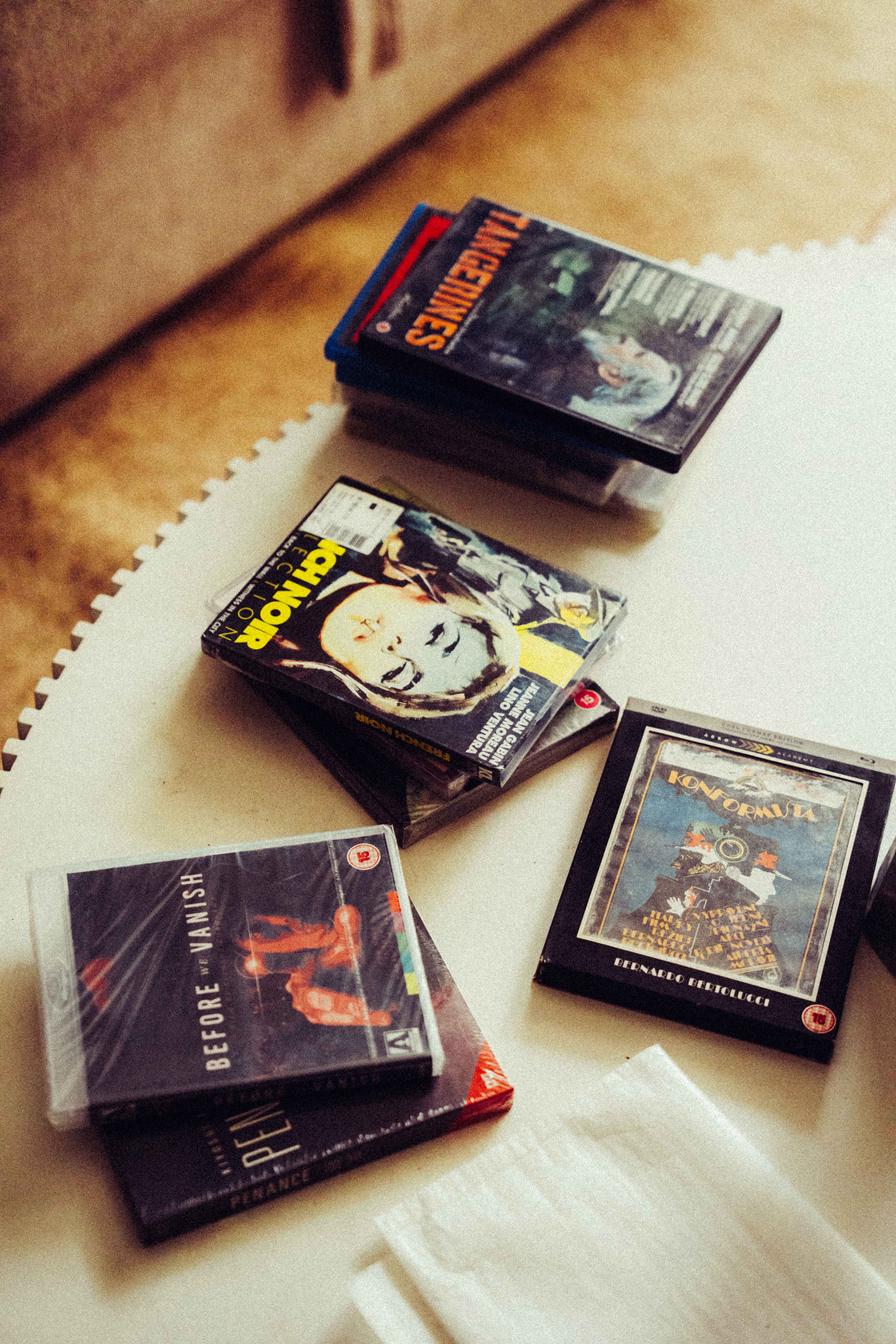
Kashyap doesn’t really enjoy acting. “My romance with southern cinema and acting is helping me in the sense that my financial stability comes from acting,” he shares. “I’m happy because it’s giving me space to write. I can spend time reading, I can spend time doing nothing.” The most important belongings he carried across cities are his book and movie collections, which are made up of titles that you are not likely to find on any streaming platform or Amazon. There are shelves devoted to Frank Capra’s filmography, rows filled with restored works by the Film Heritage Foundation and 4K DVDs featuring names like Fellini, Fassbender, Wong Kar-wai, and Yasujirō Ozu.
If he’s not celebrating his birthday surrounded by movies (he turns 54 today at the Venice International Film Festival) or watching films on the home cinema in his den, enveloped in the security blanket of his 15,000-plus DVD and Blu Ray collection neatly filed on the shelves around him, he’s writing prolifically. He may have left Mumbai, but he hasn’t left Hindi cinema. In Mumbai, the words dried up. Here, he can’t stop. “I’ve written or am in the process of writing films for Vikram [Vikramaditya] Motwane, Nikhil Mahajan, Sakshi Mehta, Akiv Ali, and Luv Ranjan, and some series for Anurag Goswami and for myself,” he says. “I’m just writing a lot.”
In Bengaluru, he’s moved on from the wreckage of Netflix pulling out of a long-gestating dream project, his adaptation of Suketu Mehta’s Maximum City. This was followed by Covid-19, no work, and depression. “My dealing with depression was drinking too much,” he says. Kashyap and his partners decided to shut down Phantom Films in 2018 during the #MeToo movement after sexual assault allegations against co-founder Vikas Bahl. “I realised I was also escaping the fall of Phantom. I did not grieve. So, the whole grieving happened during Covid,” he says. “I fell apart.”
Bandar (2025), Kashyap’s latest, problematic film on the unravelling of a man’s life after a false rape allegation, recently turned the spotlight on the movement again. He was drawn to this story despite knowing that there’s no comparison of rape statistics for men and women, and that data shows only a fraction of rape allegations against men are false. Kashyap said the criticism of the film was valid and that the released film wasn’t his final cut. (The producers have since filed a case against him for saying that.)
Feminist themes feature prominently in Kashyap’s brilliant two-part Nishaanchi (2025) a story of twin brothers and their mother (a hat tip to Salim-Javed films), yet he’s promoting Geetu Mohandas’s Toxic (he says it will “surprise” people), which has been slammed for its depiction of women as enablers of male brutality. This is classic conflicted Kashyap.
He draws on a conversation with friend and director Vetrimaaran, with whom he presented the 2025 gem Bad Girl. It barely drew female audiences despite being a thoughtful film about a young woman who rebels against societal conservatism. “Outrage sells more than empowerment. When people get outraged, they go to see for themselves,” he says. “It’s literally like an election. Buying a ticket is voting. Whatever film you vote for is the kind of film you’re going to get.”
These days filmgoers seem to be voting for propaganda. “A movie like Kerala Story 2 is a badly made film. It’s immature. It’s like giving a camera to a child who’s trying to make a film. But nothing matters because the film goes out and makes so much money. These are the conflicts in the head all the time. I’m living with these conflicts,” he says.