




Welcome to 2026, hope you’re keeping your vision board close this new year. Besides the classic hopes for better health, more wealth, catching flights and feelings, an overarching sentiment seems to colour our wishes—to touch more grass. Whether it looks like developing a niche offline hobby (felting! silver embossing! pen pal-ing!) or spending more minutes with family, the grand goal is to somehow escape the tantalising claws of the dopamine-pilled algo and stay firmly grounded IRL.
Let’s be real: this desire has been planting roots for at least a couple of years now. It was 2024 when run clubs, craft circles, and book meets became inescapable. In 2025 these events got sillier by infusing raves with marathons, bhajans, grocery stores…you name it. In the latter half of the year, boredom became aspirational. You had to raw dog eight-hour flights and film yourself doing absolutely nothing for 60 minutes to prove you are capable of cutting out all stimuli. We were (still are) so desperate to get away from our phones that we want to leave no stone unturned.
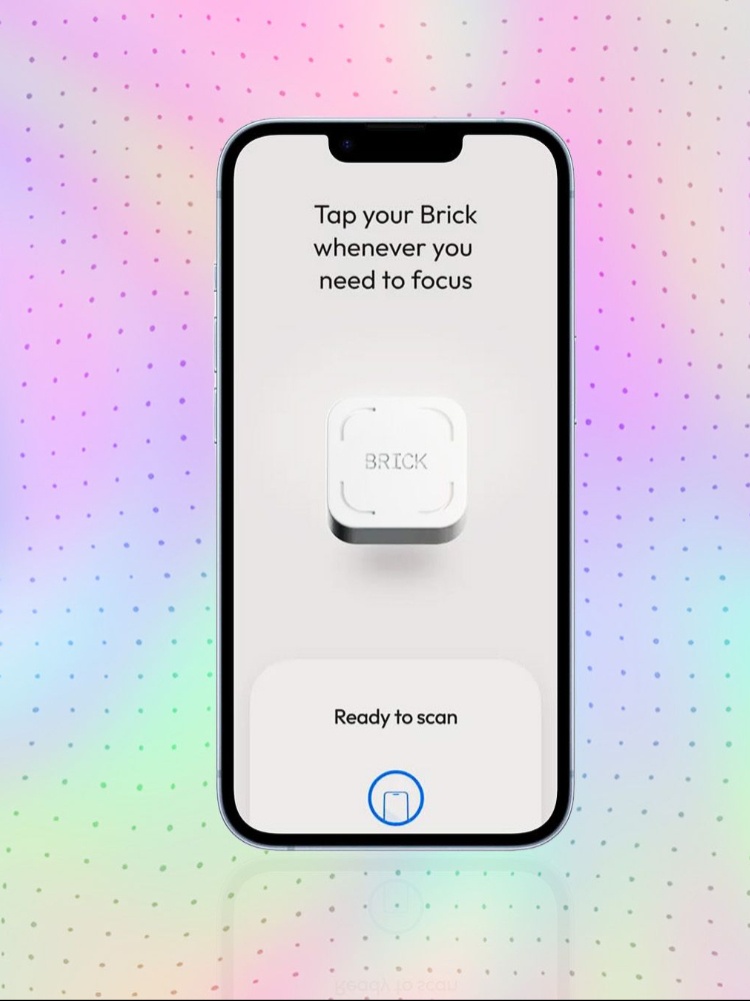
Turns out, after endless trial and error, we may have a winner. Everyone from The Cut and The New York Times to TikTok techies and Reddit sleuths swear that Bricking their phone cuts down screen time significantly. Nope, this does not mean switching to a dumb phone and it definitely isn’t dropping a brick on your mobile either. Let us explain. Often referred to as a “modern digital well-being tool”, a Brick is a small square device that blocks apps on your phone. Created by two University of Wisconsin grads back in 2023, the tool finally became canon at the tail end of 2025, primed for new-year, new-me investment. In India, it costs roughly ₹5,400 and has zero invisible subscription costs.
In case you’re thinking why you should spend money on an app blocker when those are free online, hold your horses. Unlike your phone’s in-built limit feature or the many apps (Opal, Forest) that promise to help you concentrate, be more present, stop procrastinating, yada yada, the Brick does not live on your screen right next to those very temptations. Once you limit social media, you can’t just tap “ignore limit” and scroll on Instagram as with most other blockers. Nope, not allowed. You have to physically tap your phone to the device to un-Brick it. This means if you’re sprawled on your couch, reading the first book of 2026, you can’t just open YouTube after page 10. You have to get up, go to your wardrobe, turn the key, find the Brick hidden in the back pocket of your leather jacket and tap your phone on it for that one quick meme hit between pages.
Most people reveal that the physical effort of walking to another room kills the impulse for a mini scroll, or, at the very least, gives you the chance to re-evaluate the decision before you make the jump. At a time when we crave nothing more than to be free from the invisible pull of our phones, the Brick promises all that and more. It also has different modes: for instance, your workout mode may block Instagram and YouTube but allow Spotify for playlists. Your deep-work mode may block all of them together. Suddenly, spending half the price of a concert ticket to win back your time feels like a no-brainer. Apparently, Reddit addicts have gone whole weekends without using their phones because of the device, while others have reduced screen usage by more than half.
Sounds like a dream, doesn’t it? After years of looking at tech advancement as sus, here is a device that is actually on your side. The entire aim is to help you disconnect from the very system that backs it. It sounds…almost too good to be true? Here’s the caveat: for all its wins, the Brick has a fundamental issue.
Years ago, we lost our agency to social media. Anytime you unlock your phone, your fingers involuntarily find their way to Instagram, Snapchat or its equivalent and then your brain goes: wait, what was I supposed to do? And now, when we are finally ready to break free from the reign of online validation, we are yet again handing over our agency and will to another device. The whip of control still very much lies outside the human form.
Sure, the desire may come from within, but the act places a lot of dependency on the Brick. What if, after days of progress, you lose the little device? What then? Do you shell out the money again or return to six hours of screen time? There’s also the tricky ploy of gamification. When you Brick your phone, a timer begins on your screen. It is packaged as a celebration of your self-control—you may start with two hours away but eventually build up to the whole day and you get to see your progress. But the ticking clock turns the no-stimulus exercise into a new game of you versus you. More importantly, when you crawl to the end of this game, expecting a reward, your win is access to the internet. Here, the very apps you were trying to run away from become the trophy you receive after a day’s hard work.
There’s no denying that we have a love-hate relationship with our phones at the moment. And perhaps it is true that if a device can become a crutch to break out of this cycle, we should probably use it. If you can’t go cold turkey, you siphon off slowly; something is better than zilch. And this opinion isn’t anti-Brick. Genuinely the promise does seem to deliver—just take it with a pinch of salt.
Remember decades ago when Facebook swore it would help us feel closer to our friends and to the world? Remember how exciting it was to reconnect with that neighbour you never thought you’d hear from again? And somewhere along the way, the same apps made us more isolated and distant than ever before. (This theory also stands true for the grand rise and fall of dating apps.) All this to say, we’ve been here already and should do better this time around. Lean on tech when you need to but do it with nuance. Do you need a device to Brick your phone when you’re trying to get an assignment out of the way without opening YT for the eleventh time? Maybe. Do you need it to stop looking at your screen while you’re hanging out with your friends? Or to remind you to leave your phone at home when you head out for a quick grocery run? Unlikely. If you want to cut down your screen time, you are your knight in shining armour, not a plastic square.