


I can’t remember the last time I posted on social media. It’s not an attempt to wean off Instagram or become social media sober. I’m not one of those enlightened people who have “transcended social media”, but I do see my own grid like a digital graveyard that I can’t be bothered to resurrect. Every few months, I tell myself I should post something—a trip, a story I enjoyed reading or writing, or a photo where the lighting has done me a favour—but decide against it because it feels like too much of a statement. So, I do nothing.
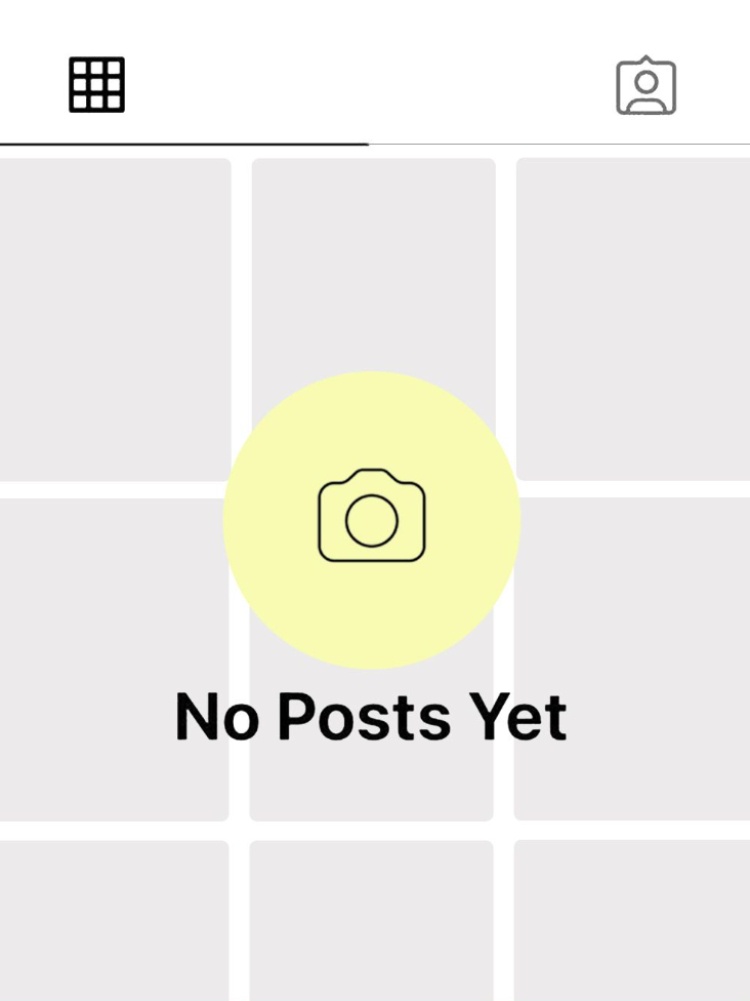
I’m not alone. Tap through profiles of people in their teens and twenties, and you’ll find the same ‘No posts yet’ text staring back at you. Grids have dried up. Stories are increasingly sparse. Social media is no longer “an amusement park for clinical narcissists” (as Moira Rose of Schitt’s Creek once put it) where posting your coffee order, uploading an entire dump of over 100 party photos on a Facebook photo album, and writing lengthy status updates that felt like thought bubbles were widespread and absolutely normal. We are all still online; we are just not posting.
In June, writer Kyle Chayka diagnosed this as ‘posting ennui’ in his New Yorker essay. In his piece, he predicts that we may be moving towards a point called ‘Posting Zero’, where “normal people—the unprofessionalised, uncommodified, unrefined masses—stop sharing things on social media”. But the more people I spoke with, the clearer it became that ennui is only half the story. The other half is privacy, fear, effort fatigue, and algorithmic boredom. When I bring this up with people, they shrug, as though the death of the grid were the most obvious thing in the world.
“My last post was in 2017,” says Maahi Gilder, a 24-year-old brand manager at Glitters Hardware, who claims she’s chronically online despite having no visible Instagram presence. “I love watching and sharing Reels. I actually run my company’s social media too. I’m everywhere except my own profile,” she shares cheerfully as though she’s hacked the system: maximum entertainment, minimum exposure. It wasn’t always like this. When Gilder was younger, she had a wholesome feed and only got rid of all her posts when she was starting university. “I didn’t want new people to be able to judge me within three seconds,” she says. “Instagram profiles sometimes feel like a résumé that you know people are going to come and stalk.”
For years, Gilder has been stuck with the pressure of having the perfect “comeback post” for her feed. “I feel like I’ve dug my own grave. It’s not that serious, but people are gonna be like, oh my God, she’s posting again. And that’s...too much.” Instead, she’s found refuge in Stories—the ephemeral halfway house between posting and not posting. “They’re relatively low-stake. The captions are easy, and there’s no overthinking,” she adds. Stories don’t need to be overproduced, permanent or representative. And they vanish in 24 hours.
Instagram’s Adam Mosseri can see it too, so much so he’s built a strategy around it. He knows “normal people simply aren’t sharing as much in public as they used to” but he’s found ways to keep you online so you can share stuff with your inner circle. Rohit Kukreja, a 28-year-old from Pune, deleted all his posts a decade ago, after he went to rehab. “I felt like I didn’t resonate with the person that I was in those old posts,” he says. Kukreja wiped his feed for a clean slate, and never got back to posting. He uses Instagram to watch memes, reels, and news but doesn’t feel the impulse to broadcast everything he enjoys. “It’s more fun in the DMs. You can chat shit about the reels you share,” he says.
For younger Gen Z-ers who grew up on social media, posting seems like a social high-wire act: if you’re perceived as cool, then posting is cool. If you’re embarrassing, then it’s embarrassing. “Cool posts look low-effort,” says Abigail Liu, a 16-year-old high schooler from Pune. “But they actually take a lot of time behind the camera. It’s also like a symbol of confidence, like, ‘oh, you’re confident enough to post about yourself or what you’re doing’. It really depends on the person it is coming from.”
For many teens, the idea of a grid post can seem paralysing. “Main grid posting is like fully encapsulating your vibe and tying your account together,” says Mumbai-based Ilvika Sinha, also 16. “So, just deciding what kind of vibe I want is kinda intimidating.” For her generation, a vibe isn’t fluff—it’s a carefully assembled visual identity, a shorthand for identity, taste, and how you want to be understood. And getting that wrong feels a lot worse than not posting at all.
Sinha joined Instagram at the age of eight and abandoned her grid when she turned 13. “When I was younger, I would post a lot trying to mimic what my older sister and my mom were doing. After a point, I was like, this seems kind of cringe, so I just stopped.” She calls this the era of “pretty people inflation”, where everyone on social media looks perfect. “I don’t think we were meant to see so many good-looking people and influencers. It’s tiring because literally everyone on Instagram just looks really good,” she says. “I think that also adds to people’s insecurities because if you feel like you’re below the standard, then posting on your main page just feels so scary.” Sinha recalls a time when her friend posted a selfie on Stories and a stranger replied with a rude comment (“You’re a solid six”) which made her “shut down” and stop posting entirely.
Both Liu and Sinha have private ‘finstas’, or ‘spam accounts’, on which they upload almost hourly updates from their day. “Almost everybody I know has three accounts,” Sinha tells me. There’s the main account, sacred and unused; the spam account with about 80 to 100 people for more on-the-surface stuff; and “the extra private spam”, which is like a digital diary shared with just 15 or 20 people. “People like to have extra private accounts to be really personalised to them.”
And this is the missing piece: young people aren’t posting less. They’re posting differently. The real content, lives, and selves have all migrated behind velvet ropes. Into private chats with Close Friends, WhatsApp groups, and Snapstreaks.
It’s not to say nobody's posting about their private life. Sinha has friends who are aspiring influencers and often upload reels that rack up thousands of views. Krishnaji Sanas, a 26-year-old realtor who also runs an event management company called Knowhere, is still committed to the old internet: public-facing, curated, but open. His only rules for posting are no alcohol, no cigarettes, nothing that would make a family member uncomfortable. He runs his social media like a family-friendly franchise, very PG-13 content, and maintains a private finsta “for people who won’t judge” him, fragmenting and tiering his identity based on his audience. “People are obsessed with scrolling but won’t post themselves,” he tells me, “I think it’s shady.”
Just recently, he posted a reel from a holiday and had a hard time convincing his friends to collaborate on the post: one refused because it didn’t match her grid aesthetic, another didn’t because she believes in nazar and didn’t want to jinx it, and the third quit posting after a breakup. “I think it’s a mix of social awkwardness and shyness, and a lot of people are influenced by nazar too,” he explains. “A lot of people in my age group are getting into the marriage phase, so they don’t want strangers or acquaintances to see something on social media and get the wrong idea. So they just avoid posting altogether,” he adds.
It seems the Instagram grid has become an empty stage most people no longer care to perform on. Shaun*, a 26-year-old who works at a London-based start-up (and wishes to remain anonymous), hasn’t updated his Instagram profile in over a decade. “I like to keep a low profile and updating people in my life via Instagram posts never really appealed to me anyway,” he says. Instead, he uses Snapchat to keep in touch with his friends and Instagram for football highlights, news, and memes. “Posting isn’t cringe, but it’s just not for me. I don’t like to rely on it as the medium to update my friends.”
To elder millennials and Gen Xers, what Instagram sold for a decade was the idea that our lives needed a broadcast—our dinners, sunsets, milestones, and even our workouts had cultural value. There was a time when we thought, If I don’t post about it, did it even happen? But now, the logic seems inverted: the more public it is, the less intimate something becomes. When I look at my own grid, I don’t see mystery, or coolness, or a lack of curation. I see the path of least resistance; letting life be lived instead of published. And maybe someday, I’ll post again—Gilder says she might too, after she figures out her comeback post. Liu and Sinha imagine themselves posting again in college, once the vibe crystallises. And Sanas, he will continue rallying the troops.
But for now, the grid remains silent, and everyone seems fine with that. The real action is elsewhere—in 30-person finstas and chaotic group chats. Posting isn’t dead. It’s just gone underground.