



Chronically Online06 Aug 20265 MIN

Calcutta Cowboy knows he has you stumped. But wait till you listen to him

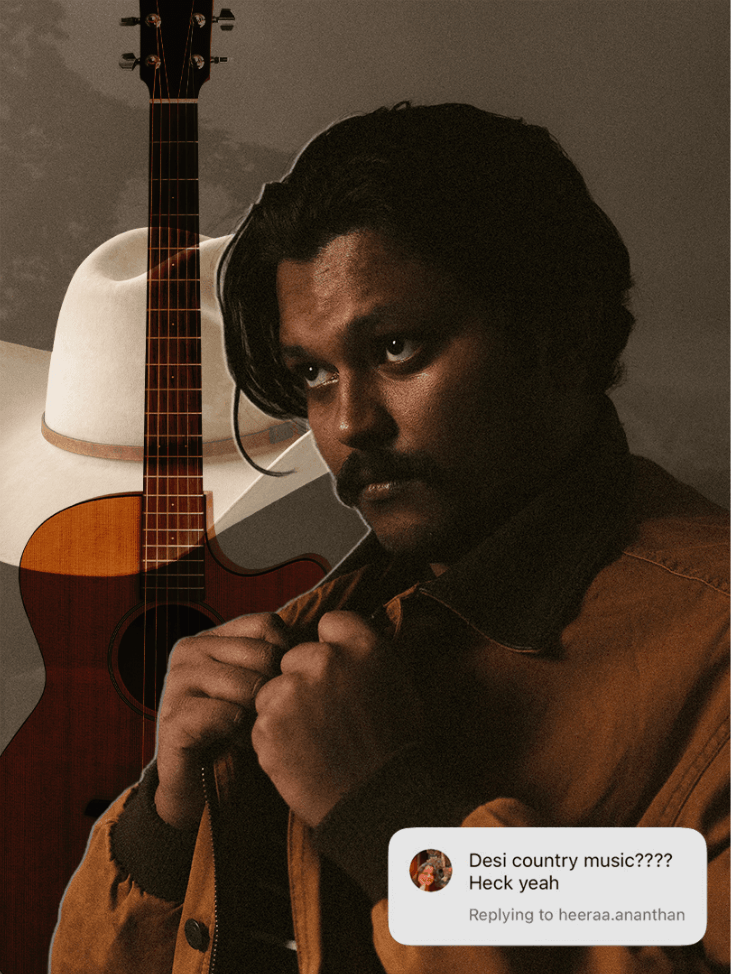
The kurta-and-Stetson-wearing, Johnny Cash-inspired “Indian country artist” knows that novelty is a hook. But he’s backing it up with honest songs

Calcutta Cowboy

Calcutta Cowboy, Arkin Pal, released a five-song EP, Brash and Broken, earlier this year

Arkin Pal has never lived anywhere long enough to call it home. India, Malaysia, Canada—his has been a childhood assembled out of moving boxes and new-school small talk. It’s the kind of biography that produces either therapists’ patients or tortured artists. Pal has, mercifully, chosen the second option—only not all that tortured—and he’s chosen to do it in a kurta and a Stetson, singing about desert highways in a voice trained on Andrew Lloyd Webber and Johnny Cash in roughly equal measure. He calls himself the Calcutta Cowboy. And as far as I can tell, nobody has tried to stop him.

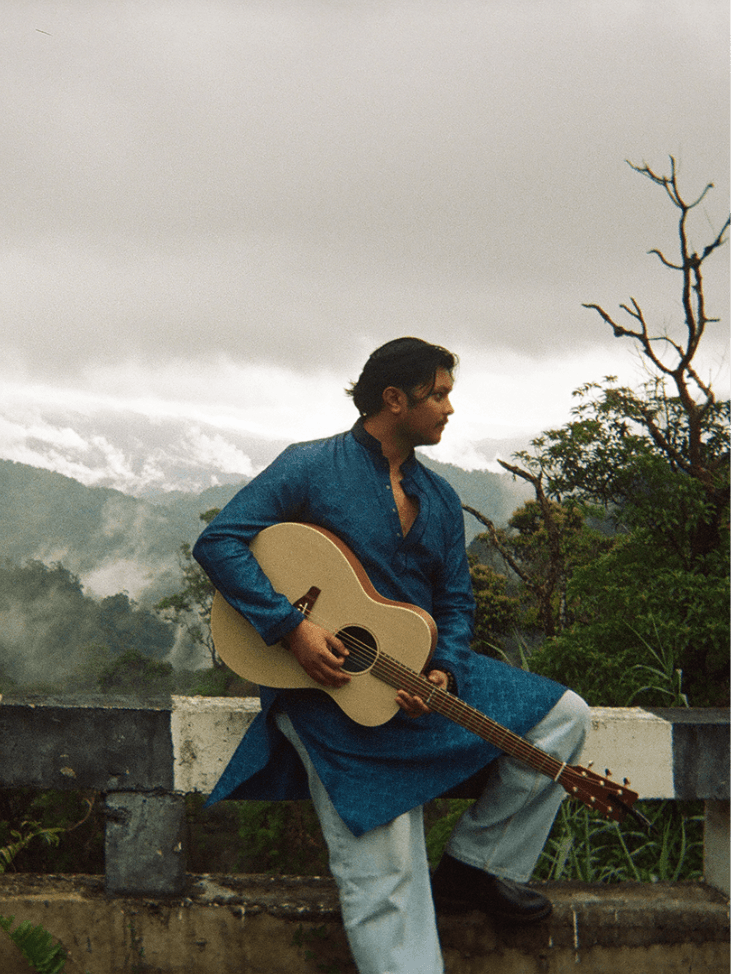
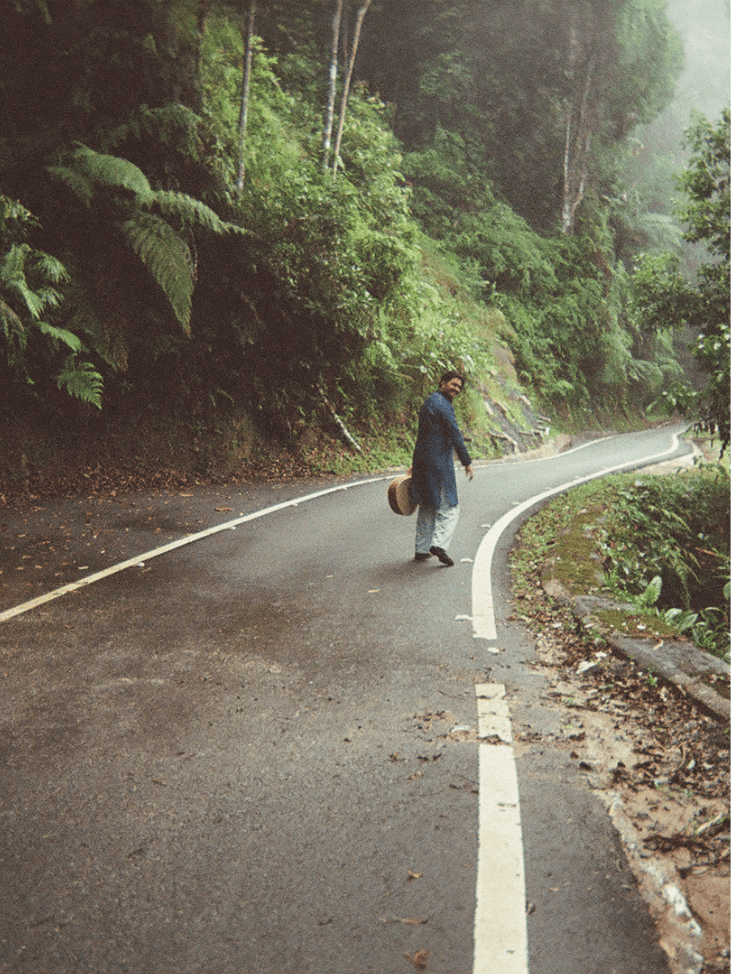
In fact, judging by the 1.3 million views on a Reel he uploaded just a month ago, the Calcutta Cowboy might be riding into unstoppable territory. On a cut from his song ‘Apathy’, he has superimposed the following text: “I bet you’ve never seen an Indian country artist before? I’m here to prove Desi boys can cook just as well as the boys out west.” The song is from his debut EP Brash and Broken, five songs built around “real human experiences, not country clichés”. Under this clip from the music video—which has him driving around “doing the Shah Rukh arms” in a sapphire-blue kurta on that sulphurous landscape somewhere north of Washington—sit almost 2,000 comments. Top one: “I’ll be damned, we really are taking all their jobs.”

Until 18 months ago, Pal wasn’t a singer at all. He was the guy behind the camera, cutting music videos for his friends’ bands out of a Vancouver production outfit, absorbing the industry from a less glamorous angle. It was filmmaking that he was interested in, professionally speaking—a natural progression for a teenager who was actively involved in musical theatre back in Kuala Lumpur. The songwriting arrived almost by accident, the byproduct of borrowing a guitar to jam with musician friends.

At first, that guitar was deployed to stitch together “atrocious pop songs”—and he doesn’t wish to dwell on that, except to say his listening habits cover a truly wide range, from Sabrina Carpenter to Chappell Roan to Ween and Hans Zimmer—so it was a bit like trying out hats to see which fits.

“From an artistic point of view, I really wanted to tell stories,” Pal says. “I’m such a third-culture kid, just constantly moving around. Country as a genre has this nostalgia and this sense of home that I’m really searching for. I love the idea of a travelling bard and a wanderer.” At this point he mentions an earlier musical education—a bequeathment, if you will, via his father, of the musical stylings of Joan Baez, John Denver, Simon & Garfunkel and, of course, Johnny Cash.

And so, in 2024, he began to put together the songs. With the exception of his friend and business partner Luke Brown, also a musician, almost nobody around him bought it at first. He remembers the reactions ranging from “you’re crazy” to “country music will never work in India”. It wasn’t entirely discouraging—in fact, it’s why he has leaned into the whole “only desi cowboy in the whole world” angle. But back then, only he and “about six other people stuck to our guns”.

The five-song EP that resulted, Brash and Broken (released on May 7), is actually a mood board with hooks. ‘Gary Johnson’ sounds like a bar anecdote set to a two-step. ‘Stranger’ and ‘Wait, a Minute’ do the actual emotional labour of working the space between “not quite Indian, not quite West”. ‘Apathy’ gets more resonant with each passing day with lines like “But I’d like to say/ The pain that we feel/ Reminds me that tomorrow doesn’t/ Come for free”. He seems to be singing it straight—no ironic distance, no wink—which is either the bravest choice available to him or the only one, since a wink would sink the whole premise.
In March, when he was beginning to promote ‘Gary Johnson’, he claims to have gained over 19,000 IG followers. “During the same period we’ve done just under 300K streams on Spotify on all the songs,” he shares. “For one week, ‘Wait a Minute’ held the No 1 position on iTunes India Country Charts.”

Pal says the reaction he’s chasing is confusion first, conversion second. “The reaction I get everywhere is, what the fuck is this,” he guffaws on our call, sitting in Kuala Lumpur, where he’s been the last nine months to spend time with his parents. “And I think that’s the best reaction I want. It’s that curiosity that gets paid off—you’re confused, but you’re enjoying this fresh new take.”

The songs, inspired by “personal experiences, people-watching and the stories of working people”, do demonstrate that troubadour-ish depth that characterised a generation of singer-songwriters of the counterculture. These can take anywhere between a single night and six months to write. “Videos are a much later consideration, and operate on their own timeline, to be fair,” he adds. None of this is a one-man job, and Pal “has a rotating cast of folks who help in various places”, but a tight crew is yet to be assembled.

What’s with the look? “If you cut the kurta in half and add some frills,” he says with the air of a fashion designer on the cusp of a breakthrough, “it doesn’t look that far off from the old-school Indian cowboy look. I wanted the fashion to be a bridge. I didn’t want it to be a completely Indian project that happens to be doing country music, and I didn’t want it to be a gimmick where I’m just a brown dude wearing completely Westernised clothing.”

So, while he’s manifesting a Fabindia x Calcutta Cowboy merch stall at Coachella imminently, the longer plan is becoming a bridge between cultures. Somewhere down the line, he wants to explore a meeting point between the sitar and, say, the pedal steel—once these songs have earned people’s trust, of course. It’s a patient theory of persona-building, but patience is not usually rewarded by Instagram.

Pal talks about “positioning” and “target audience” and content banks with the fluency of someone who has already internalised that the art and the marketing of it are both things the artist must work on in 2026. “If the algorithm picks up your music, that’s great, your marketing has succeeded, but that doesn’t reflect on you as an artist,” he says, also talking about how much his country-music-loving father, once a marketing executive at companies like Raymond and Pidilite, has helped him understand these nuances. “Don’t stop if the algorithm is supporting you. Don’t stop if it isn’t. Those are two different victories.”

Whether this packaging outlives its novelty is the open question. Country music in India—heck, anywhere in the world outside the American mid-West, I’d wager—has become more of a punchline than a genre. Pal is aware of this. To him, the current country music landscape is a bland, boring mash of songs about “my truck and my stadium and my girl at the bar”. What he’s trying to put out isn’t party anthems with a yodelling hook, but something with the integrity, the authenticity, the soul of the OGs—those songs “about working people, by working people, about, like, real stories”.

What constitutes real country music, then? I bring up Lil Nas X who, I sheepishly admit, was the last time I paid attention to the genre. “I think there are always going to be people who push a genre in extremely unexpected ways,” he says. “I’m not the biggest Lil Nas X fan, but at the same time, there were so many people who listened to that song and probably a couple hundred who never listened to country, determined that that was the country song that they listened to. So, you know, it became a hit. And a hit is a hit. I will always respect that.”

Calcutta Cowboy may not want to make music like Lil Nas X, but he does find himself in the vicinity of a peak like young Mr Hill did in 2018. Perhaps the difference is in the making of this music, to market it now. 2026’s version of an emerging artist doesn’t get the luxury of figuring that out in private anymore. Even as Pal works to not cringe at himself being in front of the camera and prioritises getting fitter because he knows he’s going to need it now as he returns to the tour circuit, he is building the myth and stress-testing it in public, at the same time, in real time, hat and all. It’s either the smartest way to start a career—or the only way left.

The Nod Newsletter

We're making your inbox interesting. Enter your email to get our best reads and exclusive insights from our editors delivered directly to you.