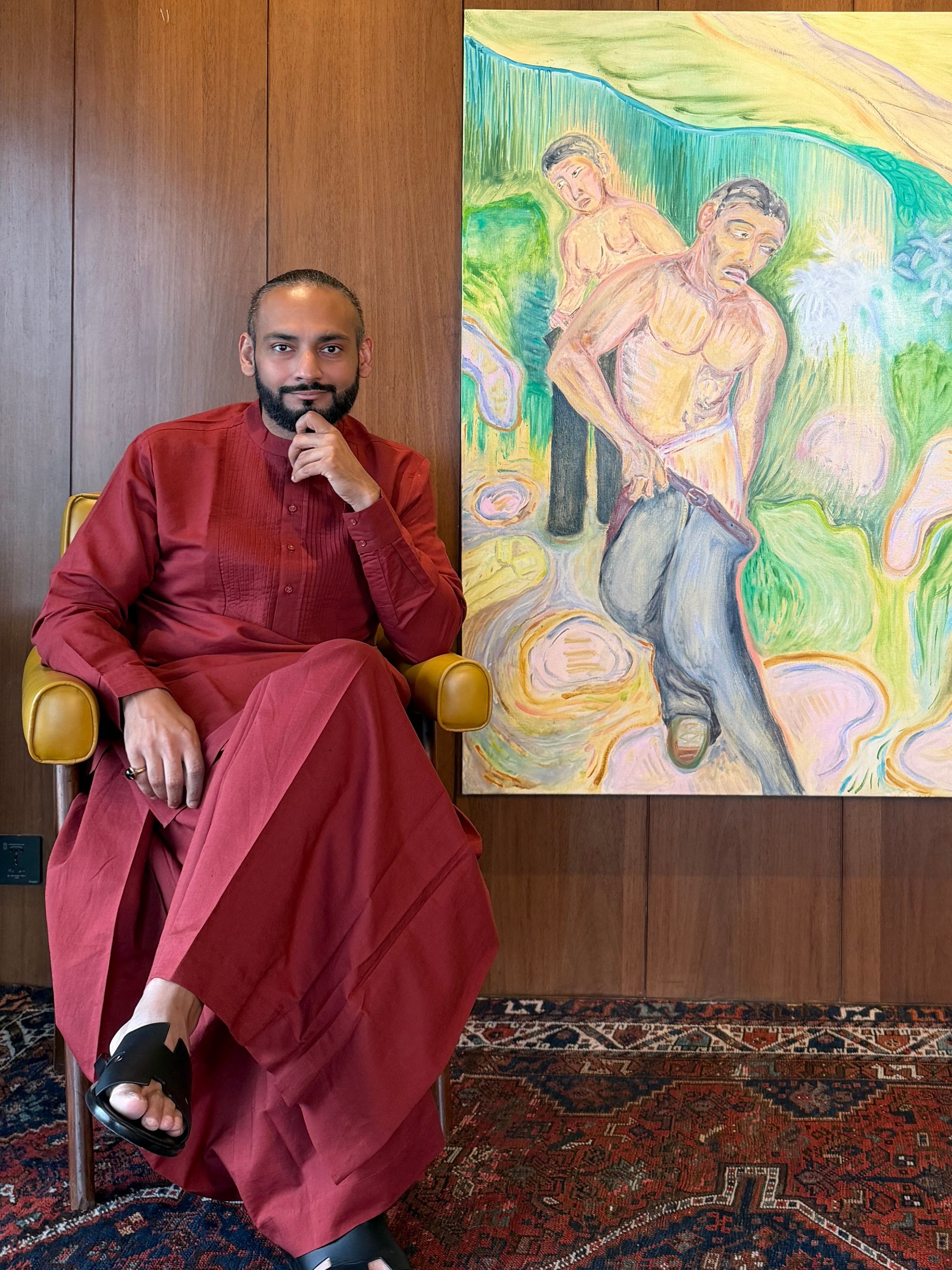
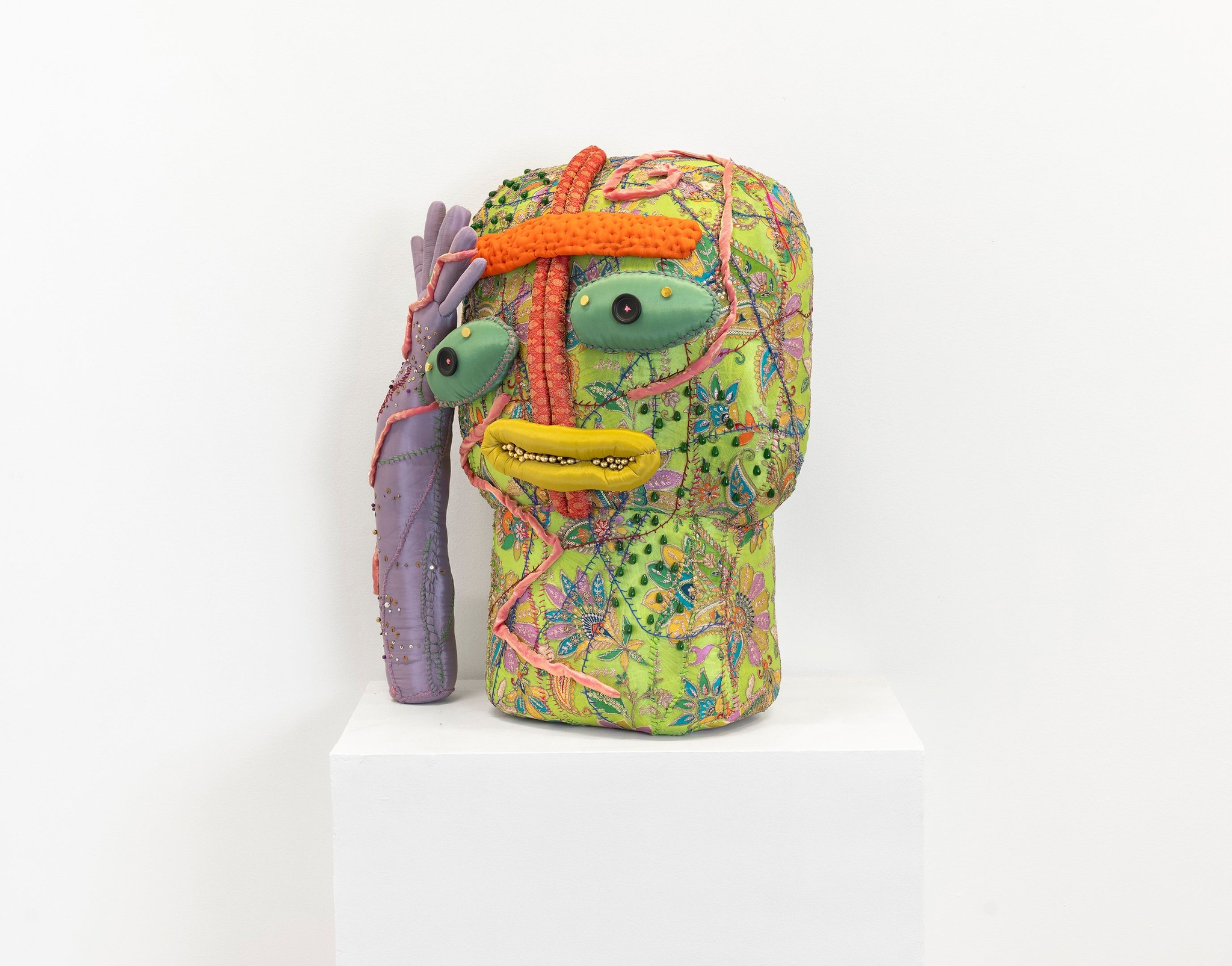
He began collecting almost a decade ago, with an interest in textile-based works partly informed by his family’s background in textile exports. His collection includes works by Lavanya Mani, Haku Shah, and Vinita Mungi. The couple were travelling to London when I spoke to them, and while they will miss this year’s edition of Art Mumbai, they’ve identified a few works they’re interested in, including pieces by Al-Qawi Nanavati and Vishwa Shroff (both Tarq).
Consider both the global and the local perspective
Udit also sees a growing awareness among younger buyers, who see art as a “liquid and appreciating asset”. As Indian artists gain traction internationally, their profiles are increasingly reflected in the prices their work commands.
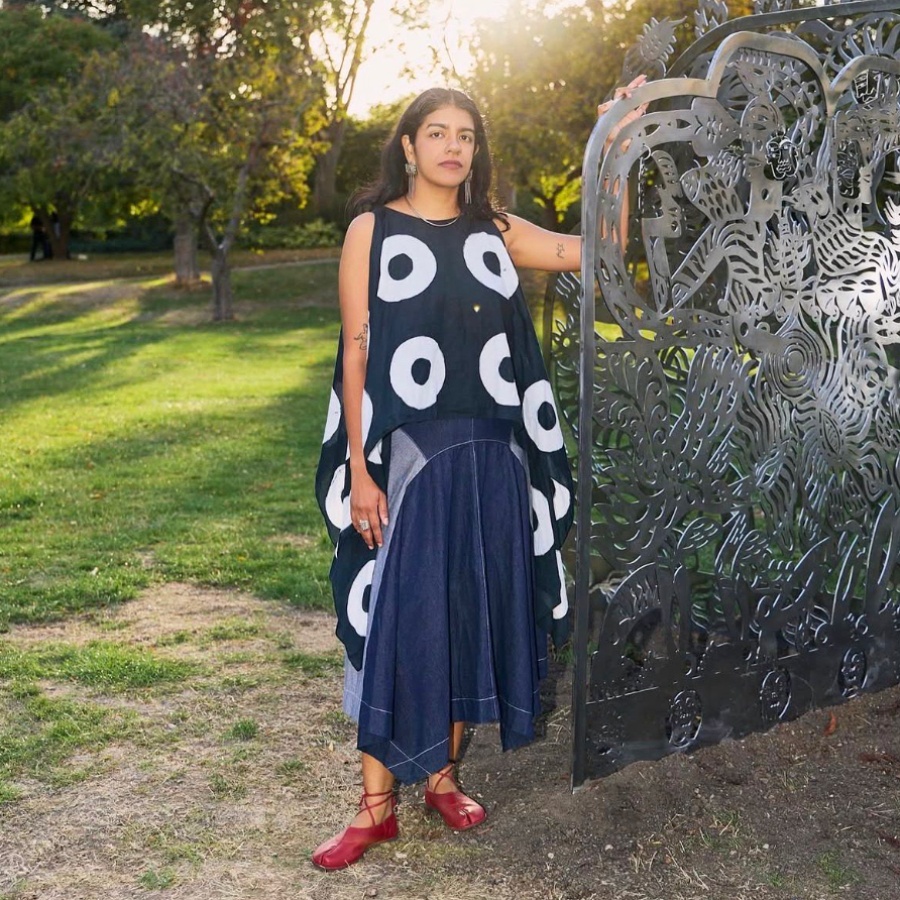
Rithika Merchant, for instance, collaborated with the Chanakya School of Craft on ‘The Flowers We Grew’, an installation presented at the Musée Rodin in Paris as part of Dior’s 2025 haute couture show, and had a solo presentation with Tarq at Art Basel earlier this year. Tarini Sethi, who made her Mumbai debut with a solo exhibition at Chemould CoLab in 2023, was the only Indian artist at Frieze Sculpture this year, where she presented her four-panel stainless-steel sculpture ‘The Sun Bathes Its Friends and Neighbours’.
Art & Charlie is presenting two artists who have attracted attention internationally: Deepak Dhiman, whom Johal describes as a “talent to watch”, and Sukanya Ayde. “From Delhi to Amsterdam, Vienna to Paris, Dhiman has elicited much interest. His work on the facade of the Asia Now venue, Monnaie de Paris, as part of the billboard, is a proud moment for us,” says the gallery’s director Ayesha Parikh. Delhi-born Ayde’s collaborations with luxury houses have included window displays for Cartier in Dubai, Delhi, and Mumbai, and festive windows for Hermès at Mumbai’s Jio World Plaza last year.
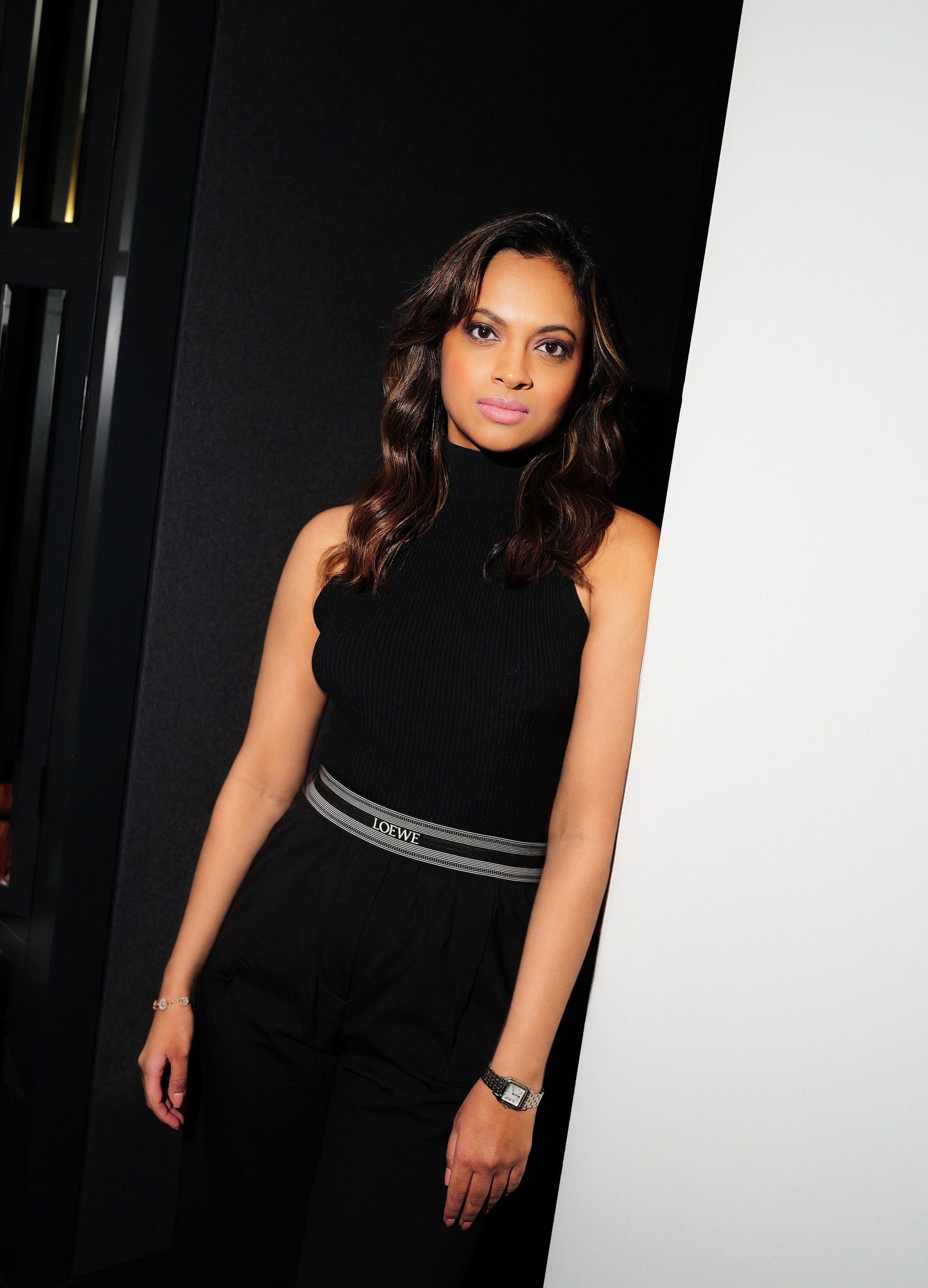
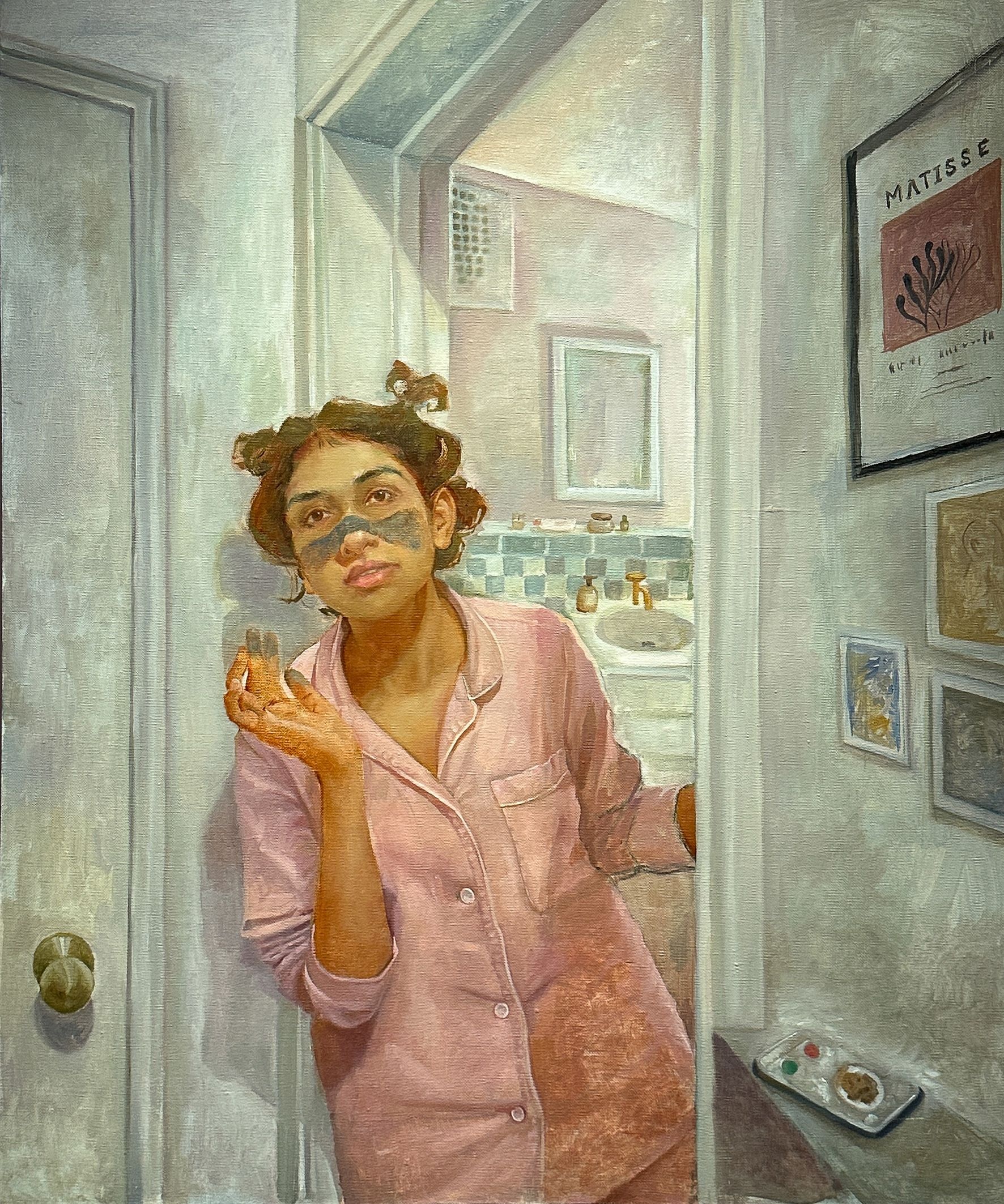
For Mumbai-based psychotherapist and mental health counsellor Malika Noor Mehta, however, the appeal of a work has little to do with its investment potential. She spent years on Tarq’s waitlist for a work by Rithika Merchant before bringing one home from Art Mumbai last year. The return, for her, is the pleasure of living with the work itself. “Rithika’s is perhaps the most expensive piece I own and one that I intend to keep forever.”
Mehta studied photography and grew up around art. Her mother is art historian and curator Tasneem Zakaria Mehta, honorary director of the Dr Bhau Daji Lad Museum, and her childhood home included works by artists such as Nalini Malani and Reena Kallat.
“A lot of my approach to collecting comes from observing my mother. When mama started collecting, she would ask herself: ‘Who do I want to support? What narratives do I want my home to hold?’ So much of her collecting focused on contemporary women artists, particularly those who might not have had the same opportunities or platforms to have their voices heard [as their male counterparts].”
That emphasis on supporting artists continues in Mehta’s own collection. Some of her most recent purchases came through Immerse, a residency and fellowship for emerging Indian artists and curators at Somaiya Vidyavihar University. The 2026 programme culminated in an exhibition from April 1 to May 3. “I bought works by Madhav Vyas, Sudip Jana, and the photographer Aakash Gulzar, whose black-and-white photographs of Srinagar really struck a chord with me.”
Mehta has taken Thursday, November 12, off to visit the fair, when many collectors and art-world insiders are expected to attend. She’s particularly looking forward to seeing works she’s earmarked at Muziris Contemporary—paintings by Santhi EN, whose compositions evoke the rhythms of village life in Kerala, and Smitha GS, whose vibrant, verdant forests have caught her eye. At Tarq, she’s keen to see work by Al-Qawi Nanavati and Natasha Preenja aka Princess Pea.
Beyond the usual categories
Entrepreneur, art patron and Immerse co-founder Siddharth Somaiya, 36, admits he hasn’t had much time to keep up with what’s happening at Art Mumbai this year. He is, however, looking forward to a panel he’ll be moderating at the fair, titled ‘Living Legacies’.
Somaiya’s own collecting practice is medium-agnostic and focuses largely on emerging artists, including Jayeta Chatterjee, Sahil Kumar, and Satyanarayana Gavara. “I acquire works to support an artist, rather than to build a collection. I ask myself: Is this work opening up a conversation about something that’s important to the artist or to the country? The two things I look for are depth and the ability to execute.”
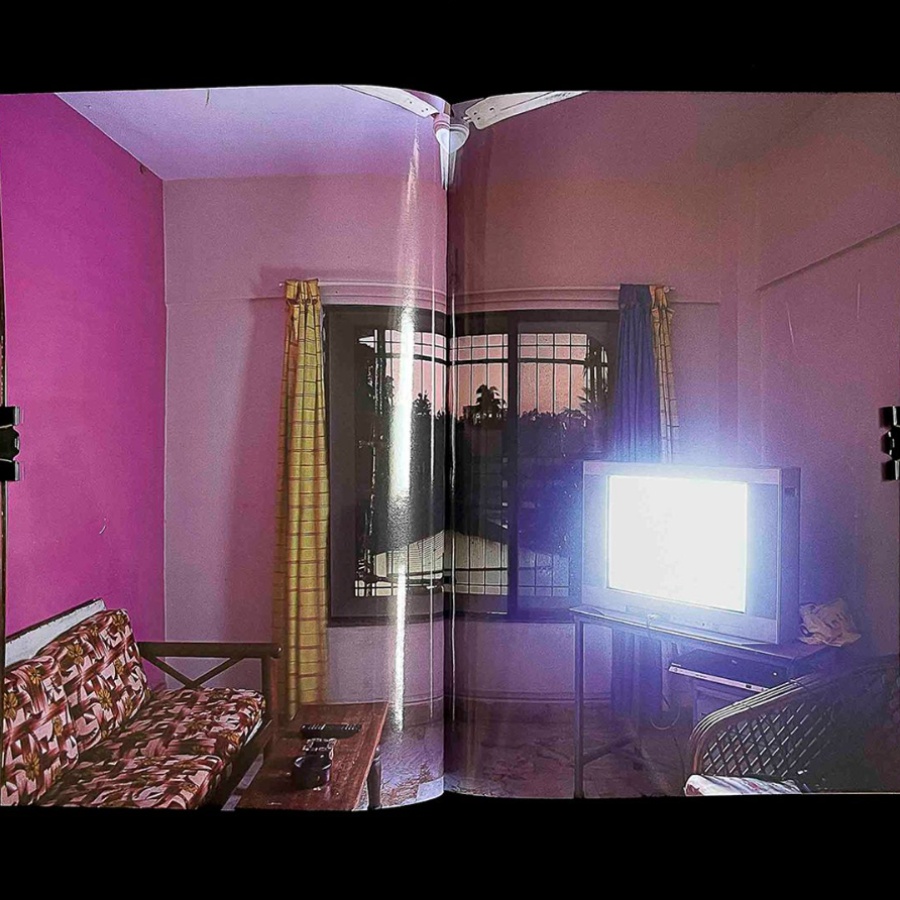
Thirty-three-year-old Mumbai-based artist Viraj Mithani offers an example of a collector whose choices don’t fit neatly into conventional categories. His collection includes works by Siji Krishnan, Gurjeet Singh, and Roshan Chhabria, among others. In the week before Art Mumbai, he acquired a photo collage by British surrealist Stella Snead, who spent time in Bombay between 1960 and 1971 and had a darkroom in Juhu.
Mithani first encountered Snead’s work at a talk hosted by The Richard Saltoun Gallery at Soho House. The gallery, which represents her estate, is making its Art Mumbai debut this year. He was drawn to the breadth of Snead’s practice, spanning painting, photography, photo collage, writing, and documenting her travels. The work also resonated with him on a personal level: it brought to mind his grandfather’s photographs of Juhu beach from the same period. “My grandfather was a photographer and artist, with a practice operating completely outside the art world.”
Gallerist Joe Cyril of Muziris Contemporary suggests the market is seeing a healthy churn, with traditional categories being upended. “We’re seeing established younger collectors looking at serious works, while traditional collectors, partly in response to soaring prices for the Moderns, are turning to contemporary art. Our recent show of original street artworks by Guesswho, for instance, attracted interest from these collectors.
“Before Covid, younger collectors were often associated with younger galleries and emerging artists, while mid-career and senior collectors gravitated towards mid-career artists and Modern art. That divide is dissolving. The new influx of collectors is age-agnostic in what they choose to look at.”
Johal echoes the sentiment. “I went down a very traditional path: collecting Moderns and then getting into contemporary art. The younger lot are heading straight in. They’re buying solid works that are not easy to sell, including installation works. I’m very impressed with these 28- to 35-year-olds who’ve just entered the market. They’re putting their money where their mouth is. I think they should be mentoring me.”