This is your last chance to step into Tarini Sethi’s steel portal in London
Meet the only Indian artist at Frieze Sculpture 2026, whose intricate steel gates draw on Indian mythology to imagine fantastical bodies and worlds beyond our own
A little girl is throwing mud at Tarini Sethi’s sculpture. Nearby, a man is doing push-ups. Other visitors are poking their fingers through its metalwork, tugging at its moving parts and taking selfies. Sethi, sitting beside the work made up of four interconnected lattice panels, in London’s Regent’s Park, watches the scene unfold. It’s hardly the hushed, hands-behind-your-back experience of a gallery, and that’s exactly what she likes about it.
“I’ve given it off to the people of London. They can do what they want with it, in many ways,” the Delhi-based artist says of ‘The Sun Bathes Its Friends and Neighbours’, her four-panel stainless-steel sculpture at Frieze Sculpture 2026. “It’s the public’s piece.”
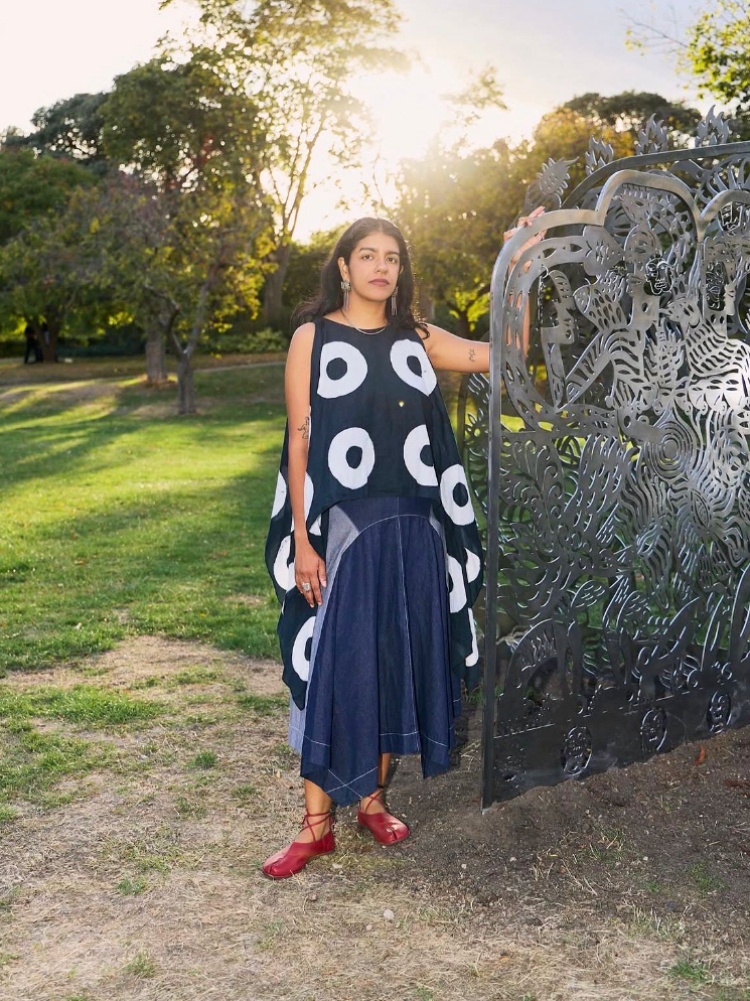
Presented by Rajiv Menon Contemporary, the work is part of the free outdoor exhibition at Regent’s Park that kicked off in September and runs until November 1. Sethi is the only Indian artist among this year’s 11 participants. Her sculpture resembles a portal into a densely populated universe, with figures, foliage, and fantastical bodies intertwined across four gates. Look closer, and the forms begin to reveal themselves—a limb here, an animal there, a figure that seems to have wandered in from a mythology nobody has quite written down yet.
Born in 1989, Sethi grew up in New Delhi, where art was part of everyday life. Her father ran a papermaking factory, and she and her sister spent school holidays experimenting with paper and making things. That early fascination with the material has followed her into a practice that spans drawing, painting, and metal sculpture.
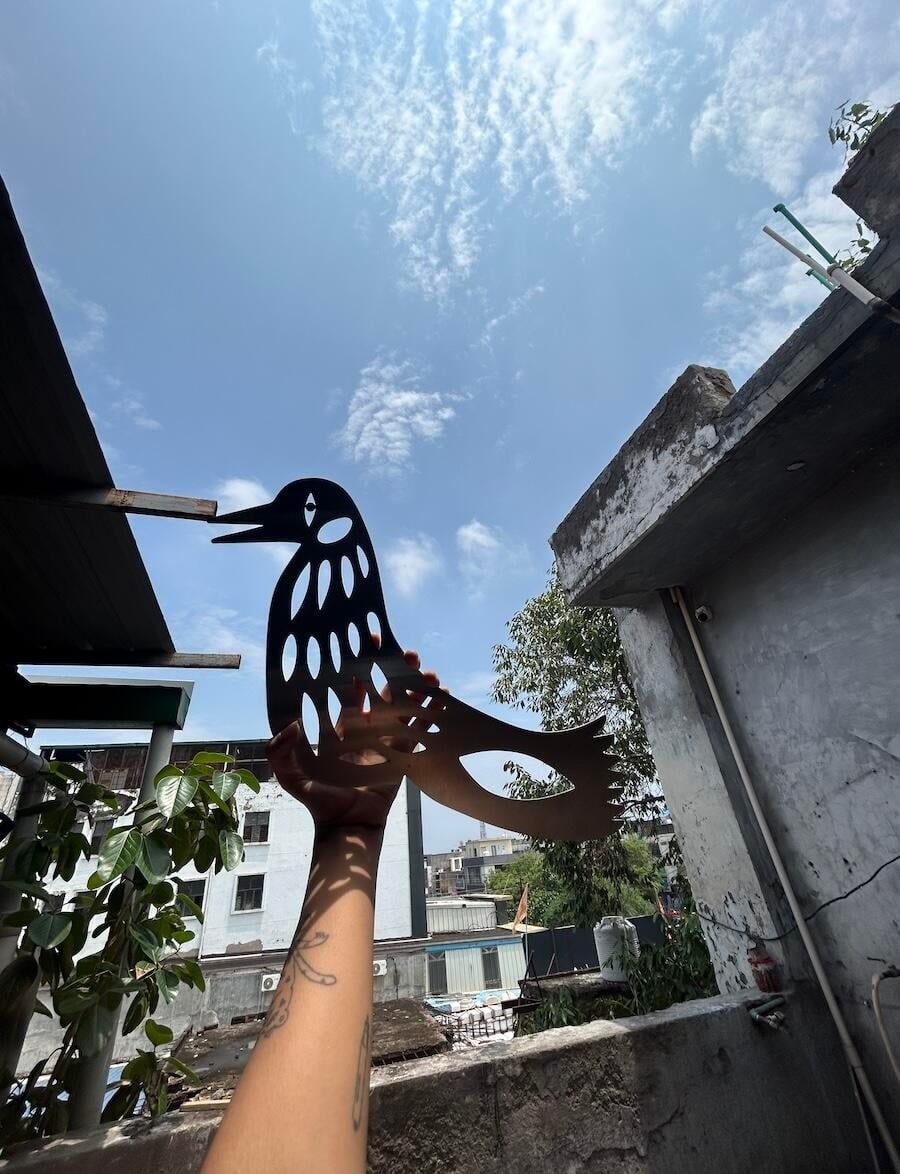
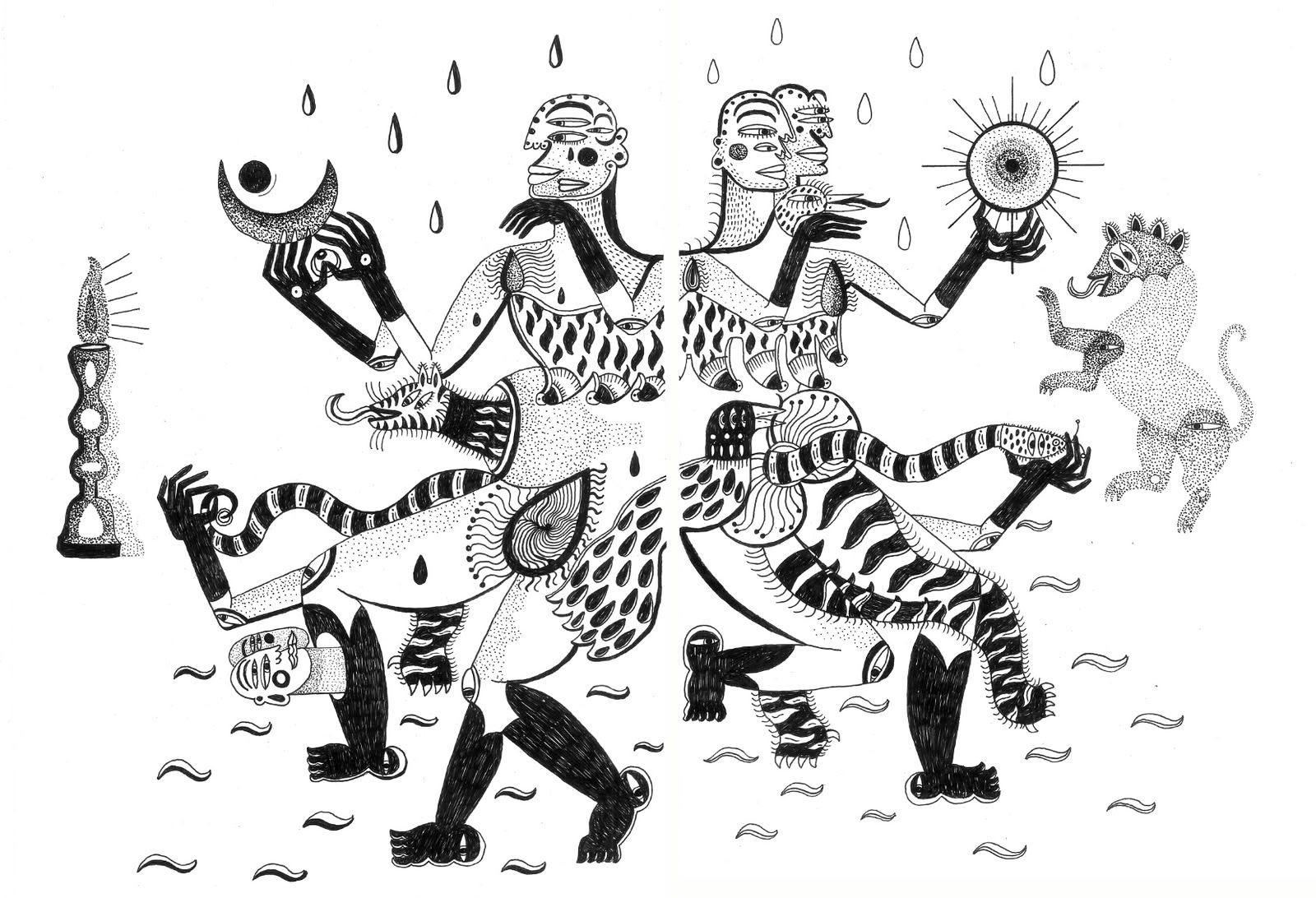
However, the paper-cutting has since grown considerably more ambitious. Her sculptures now translate the delicateness of cut paper into polished steel. Her work draws on the visual traditions of Indian miniature painting, Kalighat, Kavad, Tholu Bommalata, as well as the imagery of multi-limbed deities and their animal mounts. But the artist isn’t interested in illustrating familiar myths. She borrows their visual language to invent her own.
ADVERTISEMENT
The installation is currently on view at London’s Regent’s Park
Photograph by Linda Nylind
Sethi is the only Indian artist to display at Frieze Sculpture this year
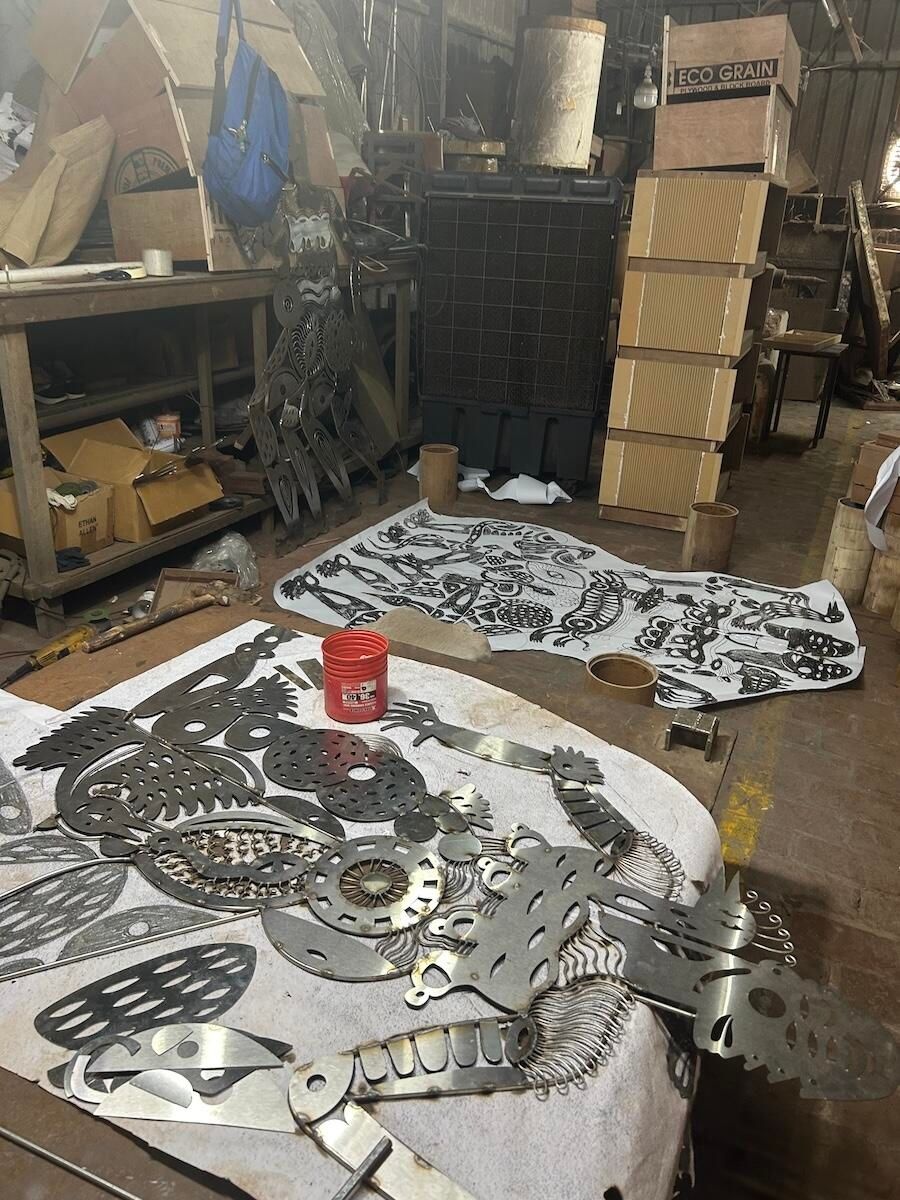
'The Sun Bathes Its Friends and Neighbours' took around four months to assemble
“My work imagines future worlds where the body becomes a site of infinite possibility,” says the artist, who studied Political Science at Lady Shri Ram College before earning a BFA in Drawing from Pratt Institute in New York. In her artistic worlds, human and animal forms bleed into one another, gender and biology are no longer fixed categories, and the grotesque can be as compelling as the beautiful. Her work is also deeply psychosexual, exploring desire and the restrictions placed on bodies. Against a backdrop of communalism, political disillusionment, and environmental destruction, she is today interested in imagining what life might look like if we could move beyond the anxieties of the present.
For Frieze, that meant building four gates that invite visitors into a world where the distinctions between humans and nature begin to dissolve. In Indian art, gates are more than entrances. They are thresholds, places of transition and transformation. Flame motifs run through this sculpture, bringing together ideas of creation and destruction. Their polished steel reflects whoever stands before them, making the viewer part of the composition.
“The sun and the moon become extra mediums,” she says. Sethi wanted the shadows to extend the sculpture beyond its physical structure, allowing the work to spill into the surrounding park. As the light shifts, so does the sculpture, its shadows stretching and changing across the grass. What it means is that the work is not quite the same from one hour to the next, and its final form depends on the weather, the light, and whoever happens to wander past.
Sethi is currently working on a piece inspired by the Ravan effigies sold on the streets around Dussehra
Getting it to the park, however, involved a less fantastical set of considerations. The process took almost four months, followed by a month of insurance checks. Could a child climb it and get hurt? What if someone fell into it? Would it break if people tugged at it? Even utopias, it turns out, need risk assessments. Once the sculpture was installed, Sethi got to see what happened when people encountered it without a gallery guide telling them what to think. Visitors tested its boundaries, peered through its gates, and made it part of their afternoon picnic in the park. After the exhibition ends on November 1, the sculpture will leave Regent’s Park, though its next destination hasn’t been confirmed yet.
Back in Delhi, Sethi found inspiration for her next project in the paper Ravan effigies sold on the streets around Dussehra. For Art Mumbai, which takes place between November 12 and 15 in Mahalaxmi Racecourse, she is creating a diptych of two A4 drawings for Sister Library, featuring a two-headed figure split across two sheets, one side dark and the other light. “I was thinking about myths and stories, and the rich cultural history and mythology India has, and what I can take from it.” Sethi isn’t interested in just illustrating the battle between good and evil. She points to Sri Lanka, where Ravan is not necessarily regarded as the villain—though he is in the version of the Ramayana many Indians know. Good and evil, she suggests, are not always as neatly divided as the stories we inherit.
Her interest in questioning established ideas also extends to technology. On AI, Sethi is pragmatic. She doesn’t believe artists and writers can be stopped from using it, comparing the anxiety surrounding AI to earlier technological shifts. What she would like to see is regulation and greater transparency about how artworks are made. “I feel like we can’t stop artists and writers, or anyone, from using AI anymore,” she says. “I want to know if an artist has made a sculpture using AI or used their hands. That’s all.”
For now, though, Sethi is taking a step back from the art-world circuit. After weeks in London installing the sculpture and giving tours, she has returned to Delhi, where she has been reading RF Kuang’sBabel and Yellowface, watching The Diplomat and Slow Horses, and spending more time in her garden. “Right now, nothing is pulling me towards anything except sitting on my swing and looking at the sky,” she says. “Which is a boring answer, and very unlike me.”
‘The Sun Bathes Its Friends and Neighbours’ will be on view as part of Frieze Sculpture 2026 till November 1 at The Regent’s Park, London
ADVERTISEMENT
The Nod Newsletter
We're making your inbox interesting. Enter your email to get our best reads and exclusive insights from our editors delivered directly to you.