



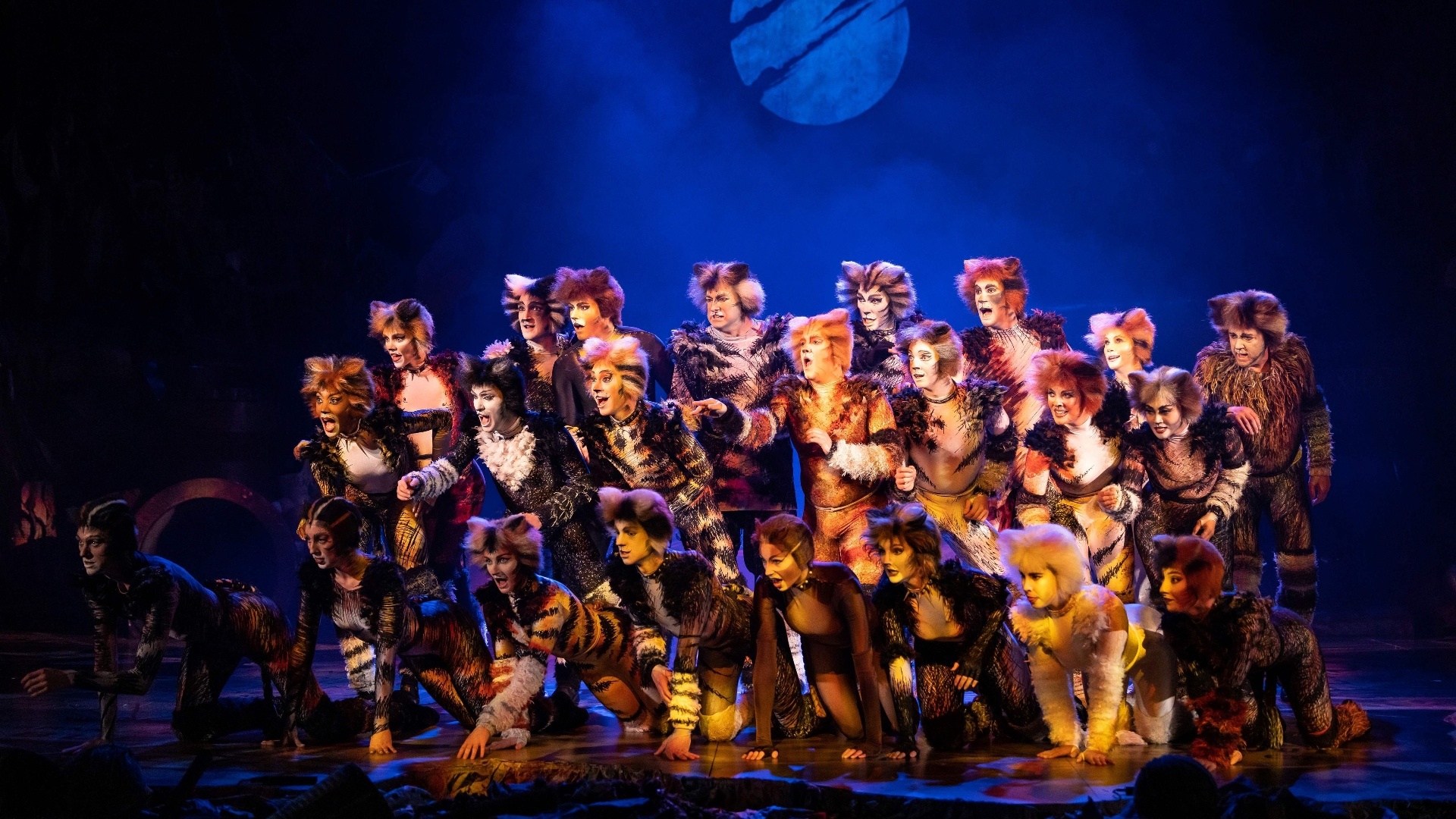

Before Hamilton had audiences rapping in the aisles and before The Phantom of the Opera became synonymous with theatrical spectacle, there was Cats. What began as a collection of poems about eccentric felines in TS Eliot’s Old Possum’s Book of Practical Cats evolved into one of the most successful musicals ever staged. Set over the course of a single night, the musical follows a tribe of Jellicle Cats gathered for their annual ball, where one cat is chosen to ascend to the mysterious Heaviside Layer and be reborn into a new life. Since its 1981 West End debut, Andrew Lloyd Webber’s adaptation has captivated audiences with its blend of music, movement, and imagination, turning characters such as Grizabella and Macavity into musical-theatre icons. This year, 45 years after its premiere, the Jellicle Cats are finally making their India debut at Mumbai’s Nita Mukesh Ambani Cultural Centre (NMACC).
One of the reasons Cats has endured for more than four decades is that it asks audiences to fully surrender to its world. “The characters are coming through the audience. You’re really made to believe that you’re in this different world,” says resident director Matt Krzan. “The set is so big in scale that it makes them look small. All those things really transports you to this magical world.”
For Krzan, the production’s arrival in India is particularly special. His association with Cats stretches back more than two decades, beginning in 2004 when he joined the musical as a swing performer covering multiple roles. He later played both Macavity and Munkustrap, worked alongside original director Sir Trevor Nunn and choreographer Dame Gillian Lynne, became dance captain, and eventually resident director. In many ways, that relationship began long before he stepped onto a stage.
Growing up, Krzan repeatedly watched the filmed version of Cats on VHS, fascinated by its music, choreography, and theatrical world-building. Years later, the musical would become his first professional job after graduating from theatre school. Having experienced the show as both a fan and performer, he believes its longevity lies in the fact that beneath the spectacle it tells a surprisingly universal story. “The main storyline is about acceptance and forgiveness,” he says. “That’s something that will always be relevant, perhaps even more so today than it was back then.”
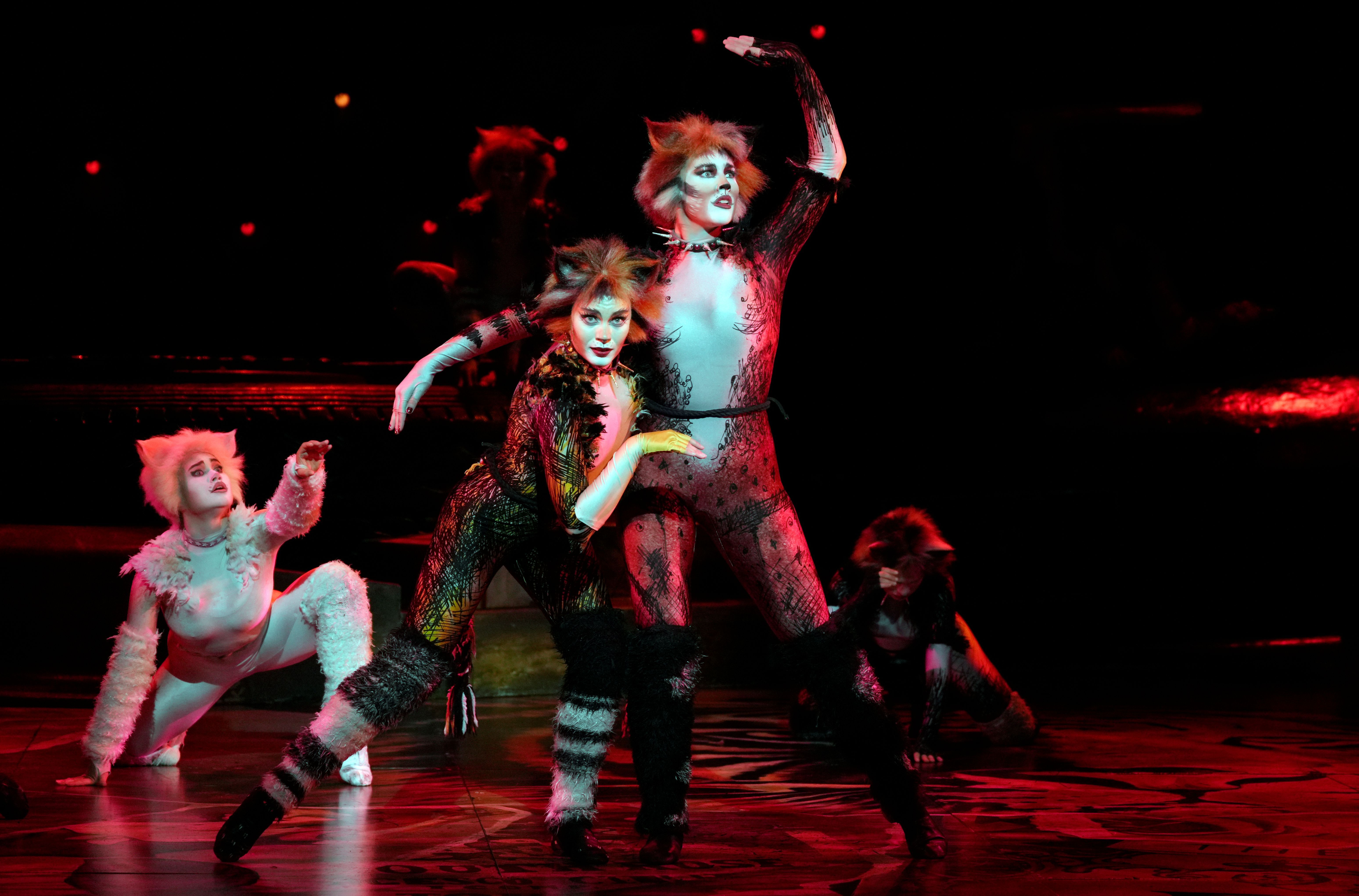
Theatre historians often credit Cats with helping to usher in the era of the “megamusical”—the kind of large-scale theatrical spectacle that would later give rise to global blockbusters such as Miss Saigon, Wicked, Mamma Mia! and even Lloyd Webber’s own The Phantom of the Opera. Its instantly recognisable cat-eyes logo became one of the first globally marketed theatre brands, while its oversized set, elaborate makeup, and immersive staging helped redefine audience expectations of what a musical could look and feel like. Much of that visual legacy can be traced back to the costumes.
Originally designed by John Napier, the feline looks have become among the most recognisable images in musical theatre. Yet maintaining that visual identity in 2026 requires a surprising amount of innovation. “The fabric that we had available 45 years ago and the process to make those costumes was very hand-based and time-consuming,” says Frankie van Straten, head of wardrobe for international production. Earlier versions of the show relied on painstakingly hand-painted bodysuits that needed constant upkeep. Today, those original drawings have been digitally adapted and printed directly onto stretch fabric. “You’ve got the original design without the labour-intensive upkeep of having to repaint it almost weekly,” van Straten explains.
The costumes may have evolved, but the physical demands of the show have not. He points to the Jellicle Ball sequence as evidence. “There is no other musical like it where there is a 14-and-a-half-minute intense dance break,” he says. The choreography is so punishing that performers rotate through multiple pairs of shoes through the run. In some cases, a single performer can have nine to 11 pairs assigned to different characters, each one hand-painted by the wardrobe department. A single pair takes between 40 and 45 minutes to paint.
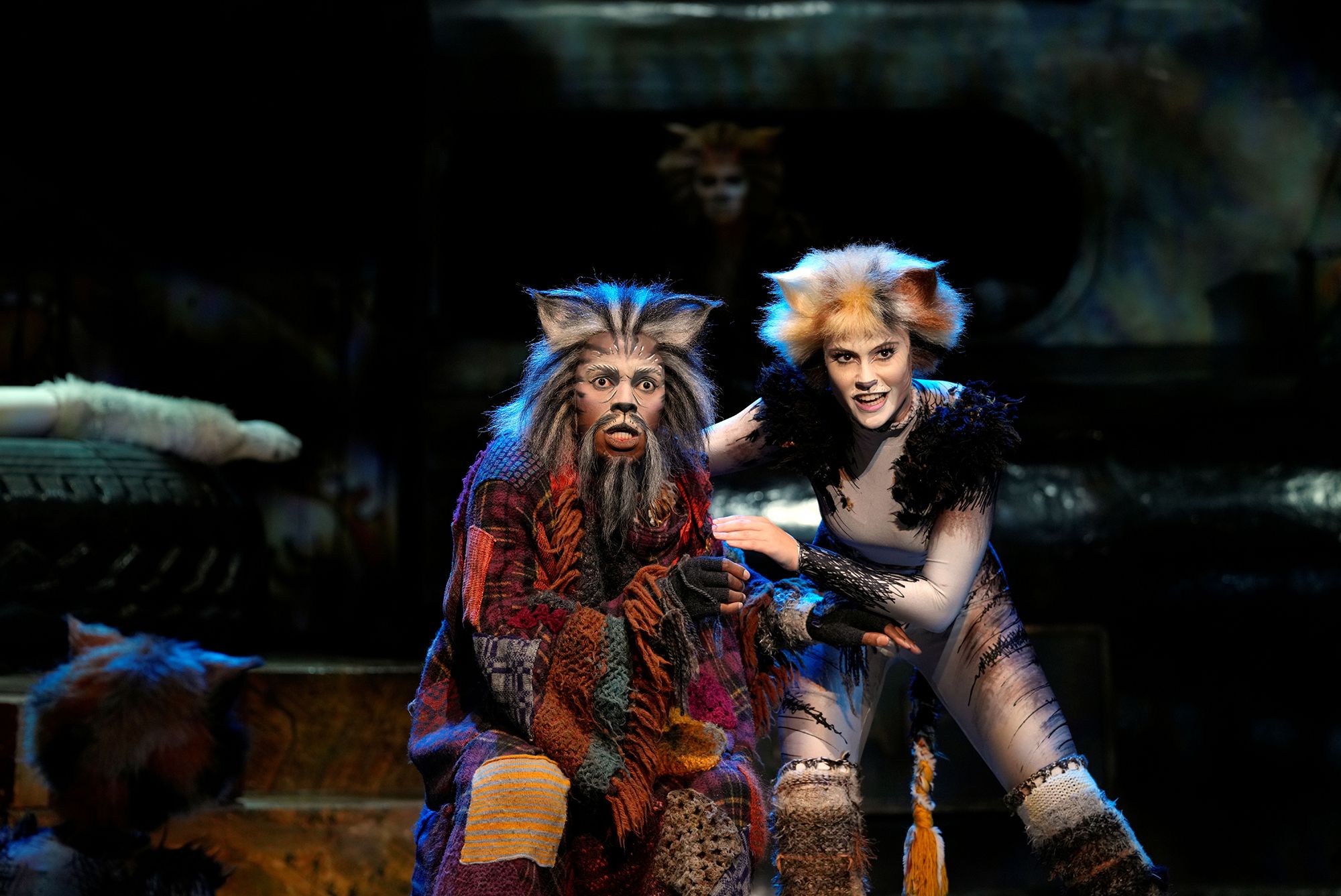
Few musicals have embedded themselves in popular culture quite like Cats. Over the decades, it has been parodied, referenced, and reinvented countless times, appearing everywhere from The Simpsons and Family Guy to Glee and The Diary of a Wimpy Kid. In the stage production, each cat gets a moment in the spotlight, but none more memorably than Grizabella, the faded “Glamour Cat” whose longing for acceptance forms the emotional backbone of the show. At the NMACC production, the role is played by Cindy Ann Abrahams, who joined the troupe last year and describes the experience of performing in Cats as “the Olympics of musical theatre”.
Given the legacy attached to both the character and its most famous song ‘Memory’, Abrahams deliberately avoided studying too many past interpretations. “I was very careful not to watch any of their performances because I wanted it to be my own. I wanted to find my own truth and my own experience,” she says. What helped her most, unexpectedly, was the rehearsal process itself. While the rest of the cast often worked together, she was frequently separated from the group, mirroring Grizabella’s isolation within the story. “It was painful because you know these people, but we’re not in the same space,” she says. “I kept feeling isolated the entire time.”
That sense of longing culminates in ‘Memory’, a song so famous that many audience members know it even if they have never seen the musical. Abrahams was acutely aware of the responsibility that comes with performing it. “People usually just come for ‘Memory’,” she says. “I needed to make sure that it was something special that the audience connected with.”
Cats is on at The Grand Theatre, NMACC, Mumbai, from June 17 to 28, 2026. For tickets, book here